Ghada Amer
Ghada Amer Stitches the World Together
Artist Spotlight · The Collection Editorial
“I want to give women the right to have their own sexuality, to own it, not to be ashamed of it.”
Ghada Amer, Interview Magazine
In the spring of 2023, the Brooklyn Museum presented a sweeping survey of Ghada Amer's work that drew audiences from across the art world, reaffirming what curators and collectors have long known: Amer is one of the most vital and intellectually generous artists working today. Her canvases, threaded through with embroidery and glazed in pools of acrylic gel, seem to breathe and shimmer under gallery lighting. The show reminded a new generation that Amer's practice, spanning more than three decades, has never stopped asking urgent questions about desire, autonomy, and the female gaze. Ghada Amer was born in Cairo in 1963 and spent her formative years navigating between Egyptian culture and Western art education.
Ghada Amer
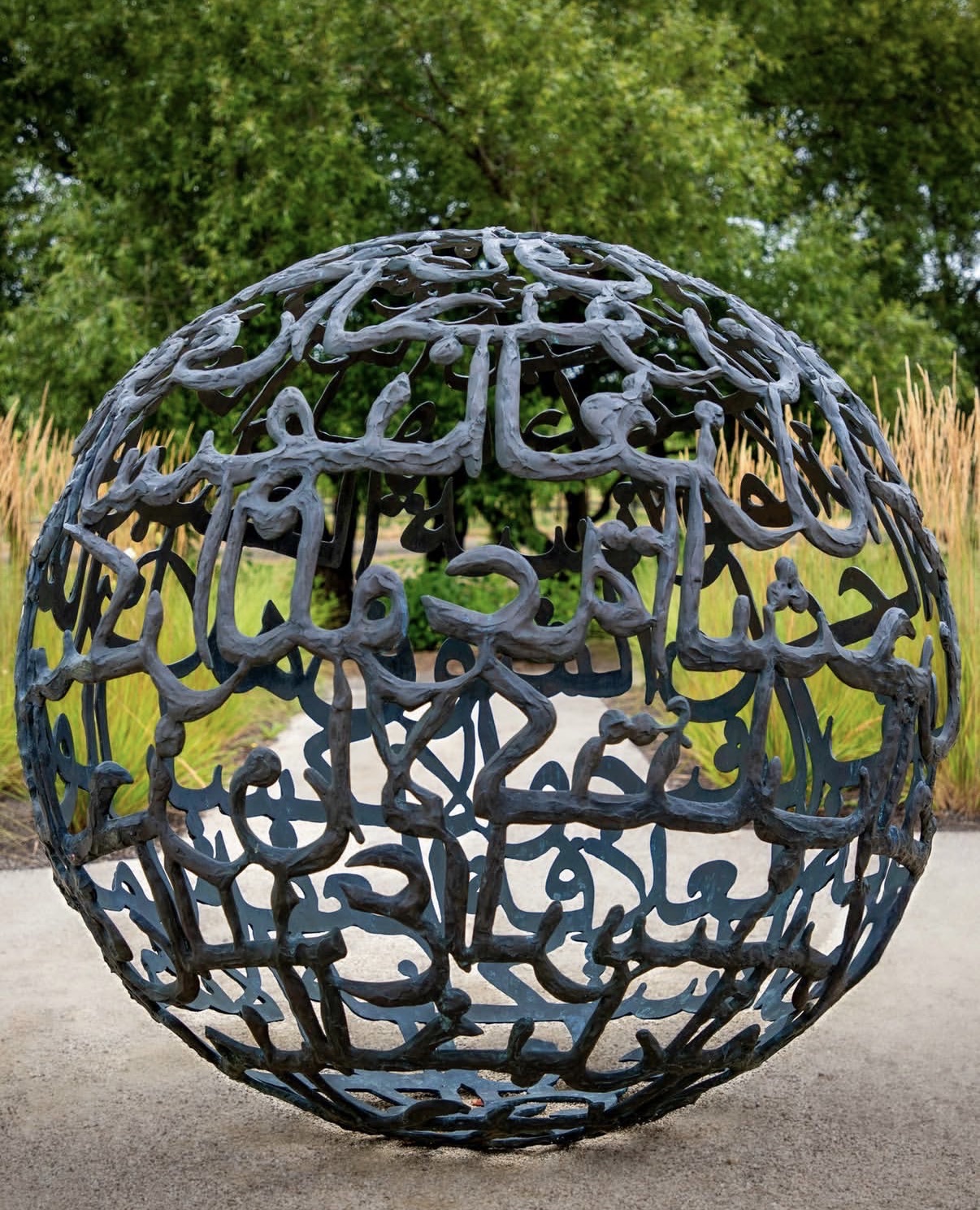
The Words I Love the Most, 2012
She moved to France as a teenager and eventually enrolled at the Villa Arson in Nice, where she studied fine arts and encountered the full weight of the Western canon, a canon that had largely ignored or distorted the representation of women. It was there that a pivotal and quietly furious realization took shape: the medium of painting had been used for centuries to objectify women, and Amer intended to reclaim that territory entirely. She later moved to New York, which became her permanent home and the city most closely associated with her international career. Amer's breakthrough came in the 1990s when she began incorporating embroidery directly onto painted canvas.
The choice of embroidery was radical in its simplicity. It was a medium historically assigned to women as domestic labor, a form of productivity that was never accorded the status of fine art. By weaving colored thread through large scale canvases depicting figures drawn from pornographic magazines, Amer performed a double act of subversion: she elevated a feminine craft into the arena of high art while simultaneously forcing the art world to confront its own complicity in the sexualization of female bodies. The figures in these works are not passive.
Ghada Amer
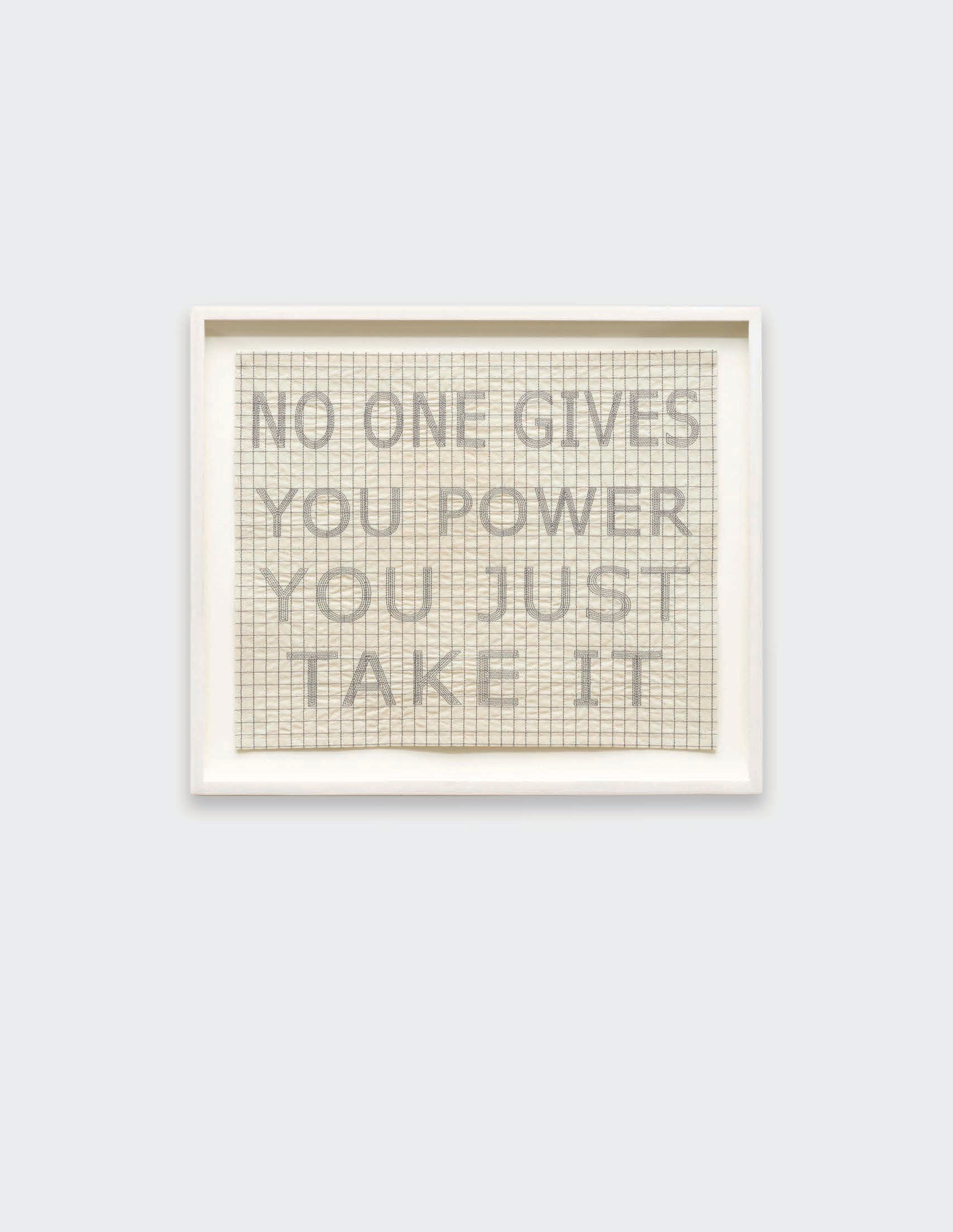
WITCHES, No One Gives You Power You Just Take It, 2023
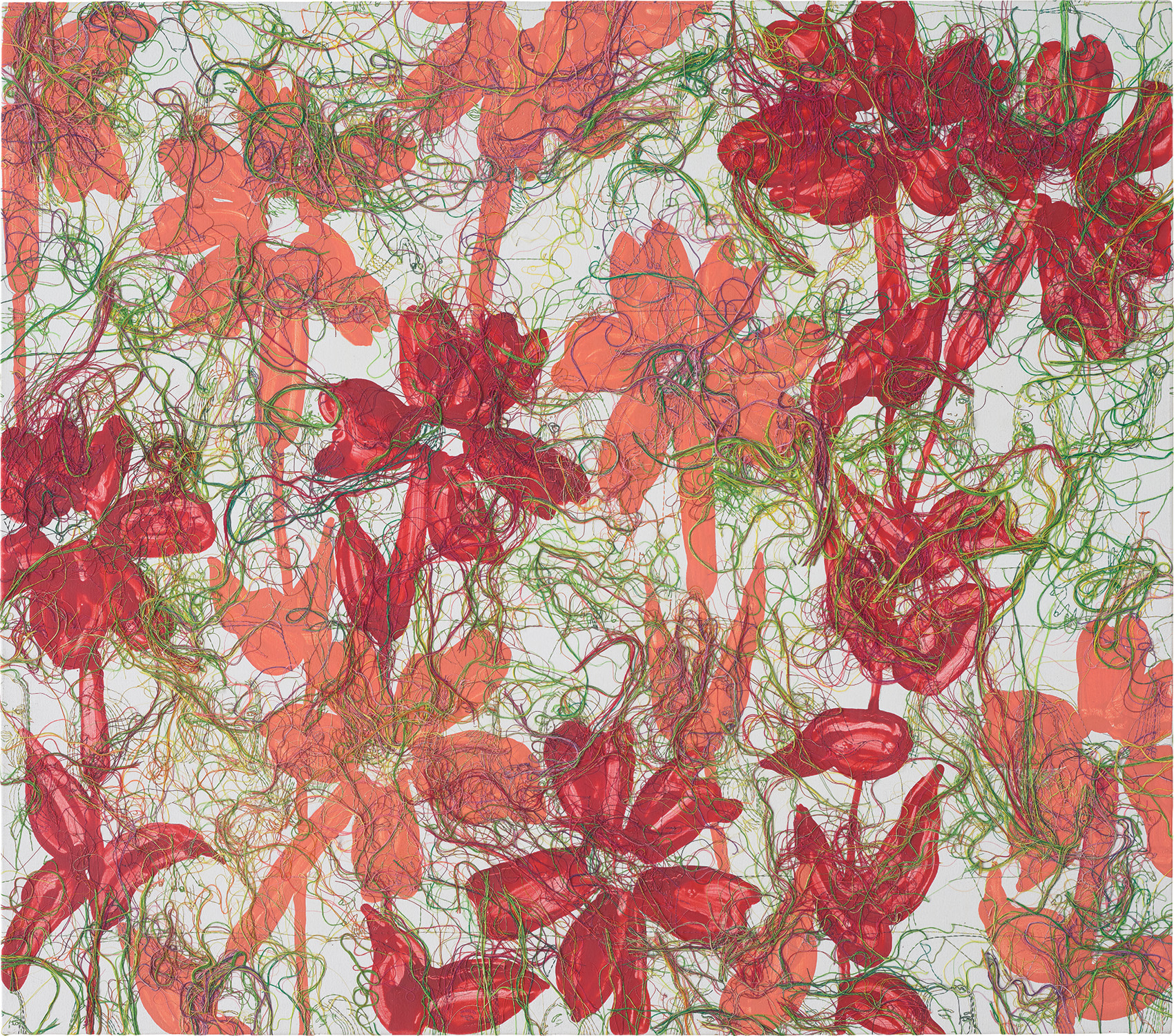
They are looping, dense, almost frantic in their repetition, as if asserting their existence through sheer insistence. The signature Amer canvas is immediately recognizable and yet endlessly rewarding on close inspection. Works such as "I Do Not Love You" and "In Red and pale RFGA" demonstrate how her process layers meaning upon meaning. Threads hang loose or curl across the surface, creating a kind of visual noise that obscures as much as it reveals.
“Embroidery was the only thing women were allowed to do. I wanted to take it and make it powerful.”
Ghada Amer, Bomb Magazine
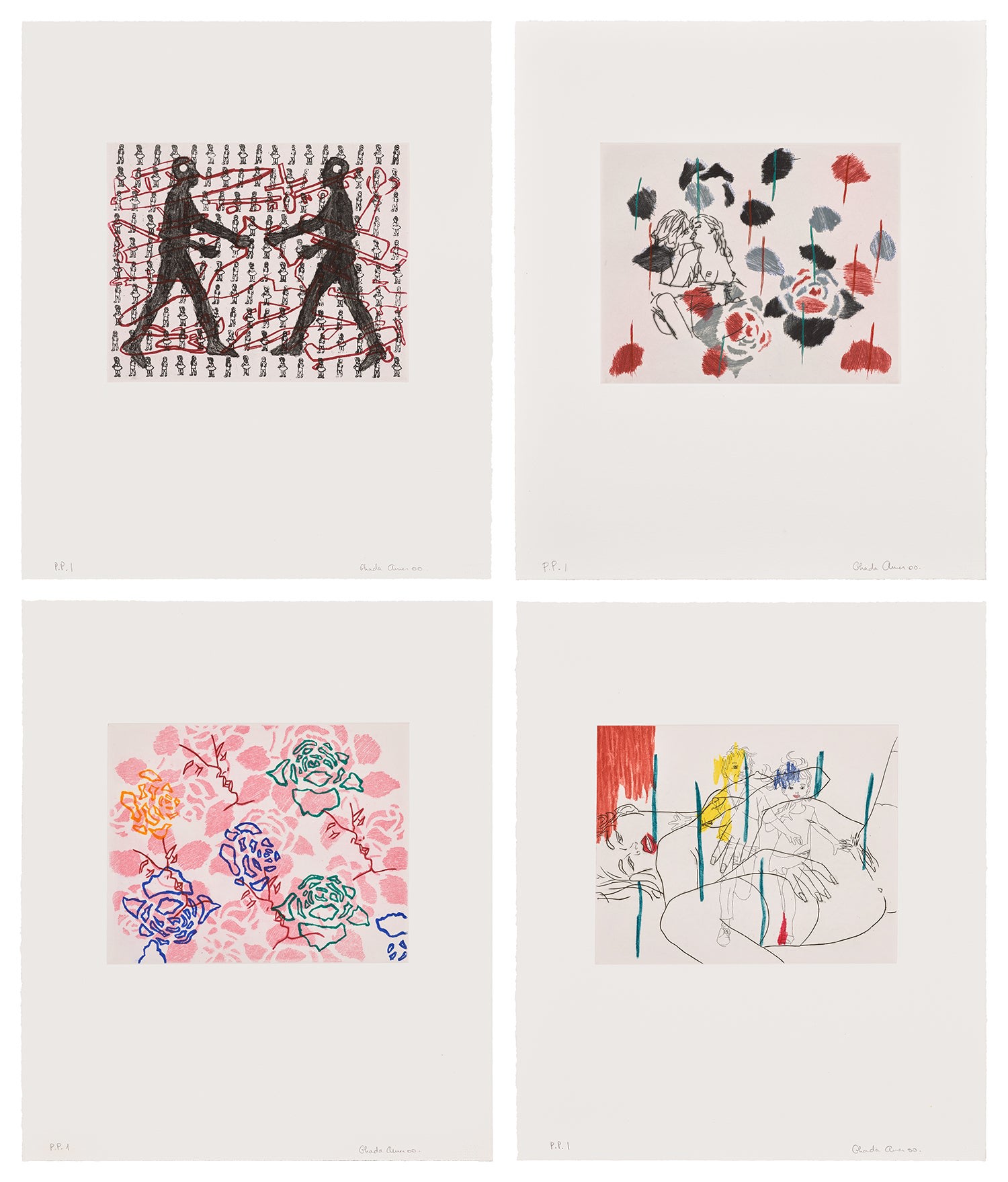
The gel medium she applies over the embroidery traps the thread beneath a luminous skin, giving the paintings a quality that is simultaneously intimate and sealed off, personal and withholding. Her works on paper, including pieces like "Targets" from 2005, bring a rawer energy, with crayon, ink, and embroidery working together in a way that feels almost like a sketchbook made public. The etching and aquatint series, produced in collaboration with master printmakers, demonstrates that her concerns translate powerfully across media, with "Snowy White Heart" and "The Perfumed Garden" showing how color and textile can coexist in the print medium with real conviction. Amer has been shown at the most significant institutions in the world.
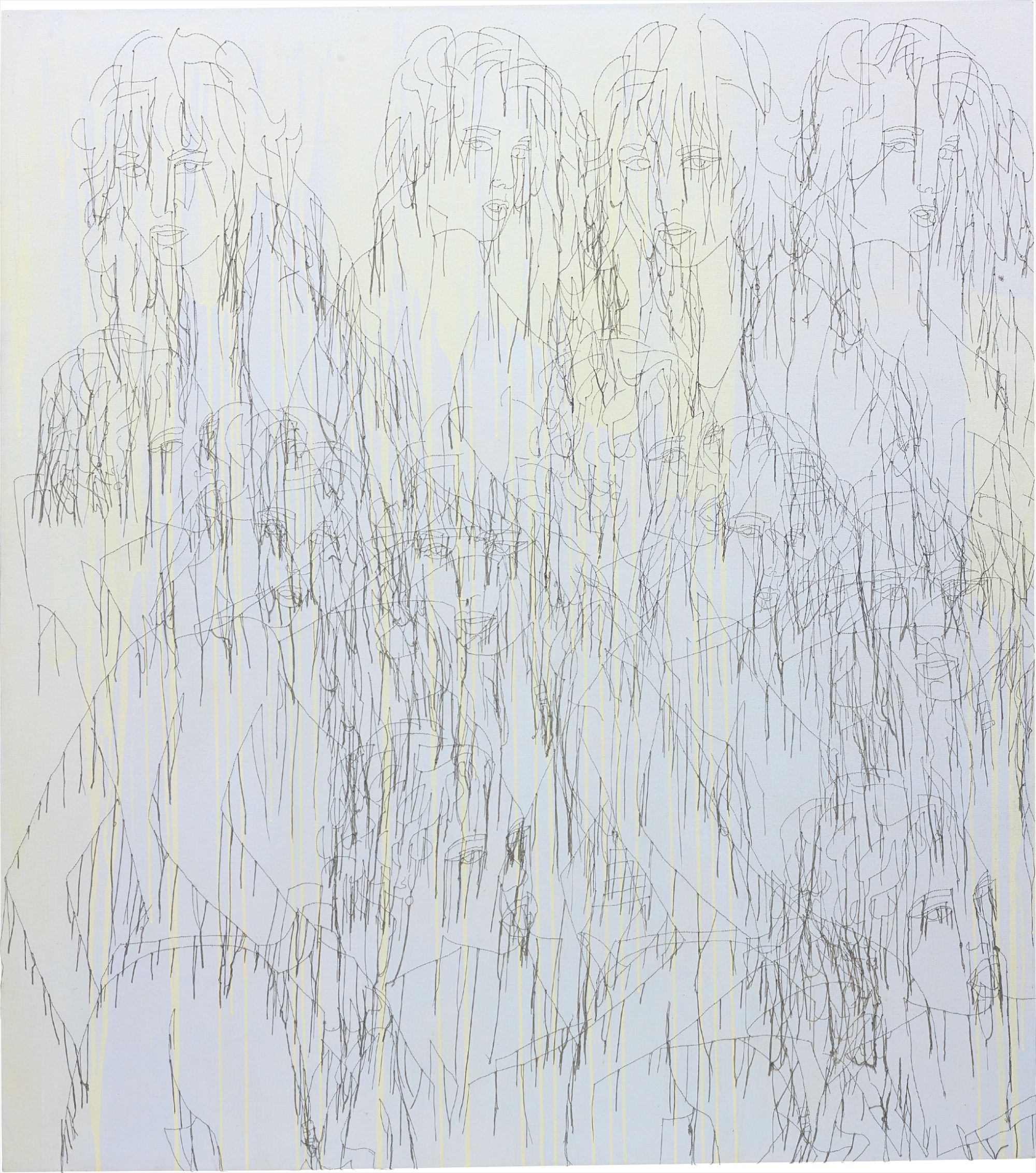
Ghada Amer
Grey Iman
Her work entered the collection of the Museum of Modern Art in New York and the Centre Pompidou in Paris, and she represented Egypt at the Venice Biennale in 1999, a moment that announced her firmly on the global stage. Deitch Projects in New York gave her early and important support, and she has since worked with Gagosian Gallery, which has helped place her work with major institutional and private collectors internationally. Her auction record has grown steadily over the past decade, with significant results at Christie's and Sotheby's reflecting genuine collector enthusiasm rather than speculative heat. Works on canvas tend to command the strongest prices, but her prints and works on paper offer an accessible and intellectually rich entry point for collectors building a serious collection.
For collectors considering Amer's work, several qualities distinguish a strong example. The interplay between the painted ground and the embroidered surface should feel resolved rather than decorative: in the best works, neither element could exist without the other. The presence of gel medium, which Amer has used consistently since the early 1990s, is a marker of her mature practice. Works that engage directly with her central themes, the female body, the politics of looking, the reclamation of feminine labor, tend to hold both critical and market value more durably than peripheral works.
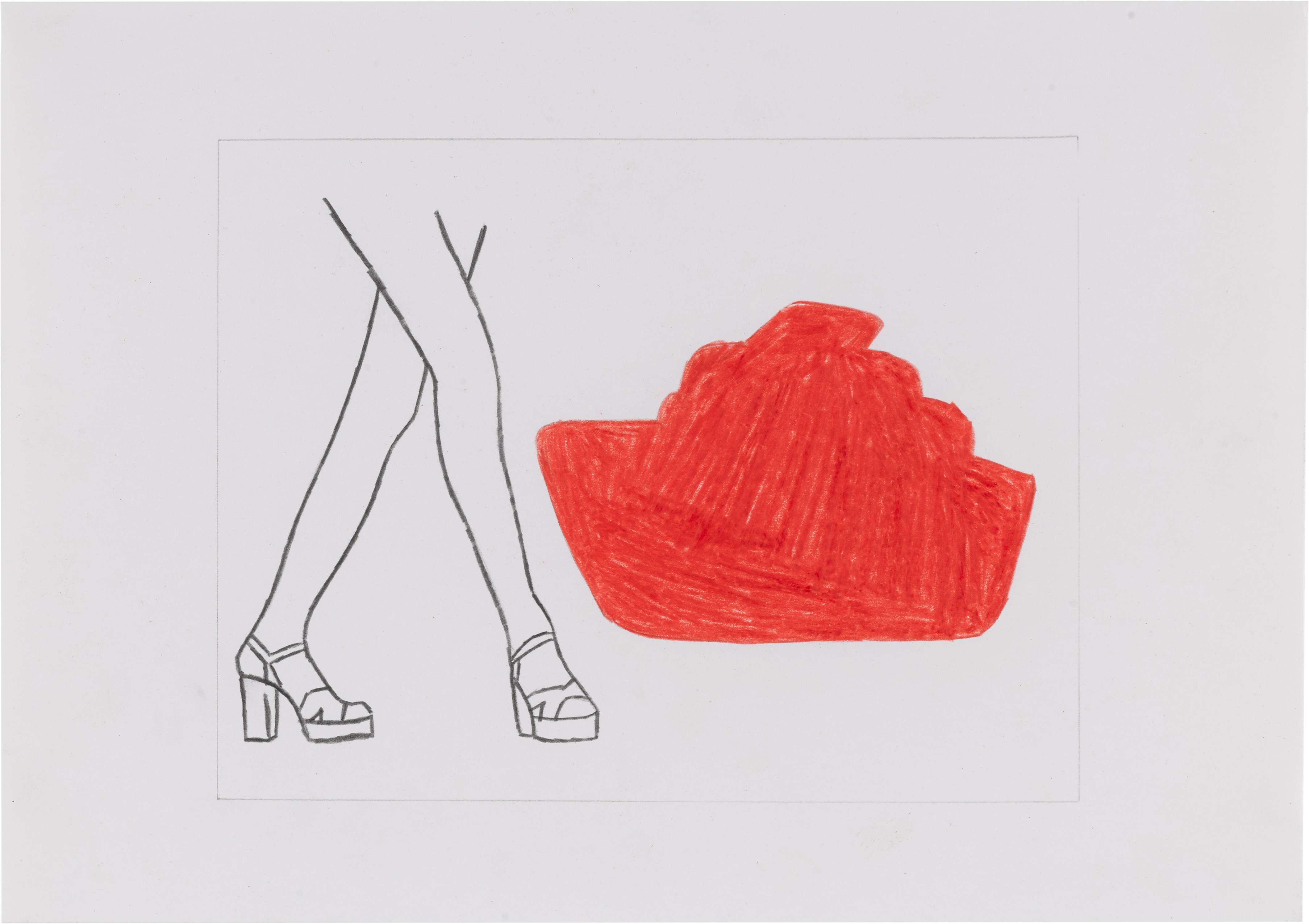
Ghada Amer
Untitled (Legs), 1992
Her prints, produced with care and in limited editions, are particularly worth attention, as they document her thinking at key moments and are often undervalued relative to her canvases. In the context of art history, Amer belongs to a generation of artists who fundamentally expanded what painting could mean. She is in conversation with artists like Kiki Smith, whose interest in the female body as a site of knowledge and vulnerability echoes Amer's own concerns, and with Tracey Emin, whose confrontational use of textile and autobiography shares a DNA with Amer's embroidered surfaces. There are also meaningful connections to the legacy of feminist artists from the 1970s, including Miriam Schapiro and Judy Chicago, who first insisted on the political legitimacy of craft based media.
Amer's contribution was to take those arguments further and to embed them in a practice that was also deeply personal, shaped by her experience as an Egyptian woman in Western art institutions. What makes Ghada Amer matter profoundly today is the way her work refuses to age into mere art historical reference. The questions she has been asking since the early 1990s about who gets to look, who is looked at, and what images do to the people they depict are if anything more pressing in an era of algorithmic image distribution and ubiquitous screens. Her canvases are not polemics; they are generous, sensuous, and at times very funny.
They invite long looking and reward it. For any collector serious about the art of the late twentieth and early twenty first centuries, Amer is not a discovery waiting to be made but a certainty that deserves its rightful place at the center of any meaningful collection.
Featured Works
Explore books about Ghada Amer