Georges Gardet
Georges Gardet, Master of Living Bronze
Artist Spotlight · The Collection Editorial
There is a particular kind of wonder that strikes a visitor encountering a Georges Gardet bronze for the first time. The animal seems not to have been cast but caught, frozen mid breath, every feather or tendon rendered with such fidelity that the metal itself appears to soften. In the grand salons of the Paris Salon, where Gardet exhibited with distinction across the final decades of the nineteenth century, audiences would gather around his sculptures the way one gathers around a vivarium, half expecting movement. That capacity to suspend disbelief, to make cold material feel warm and alive, is the quality that continues to draw collectors to his work more than a century after it was made.
Georges Gardet
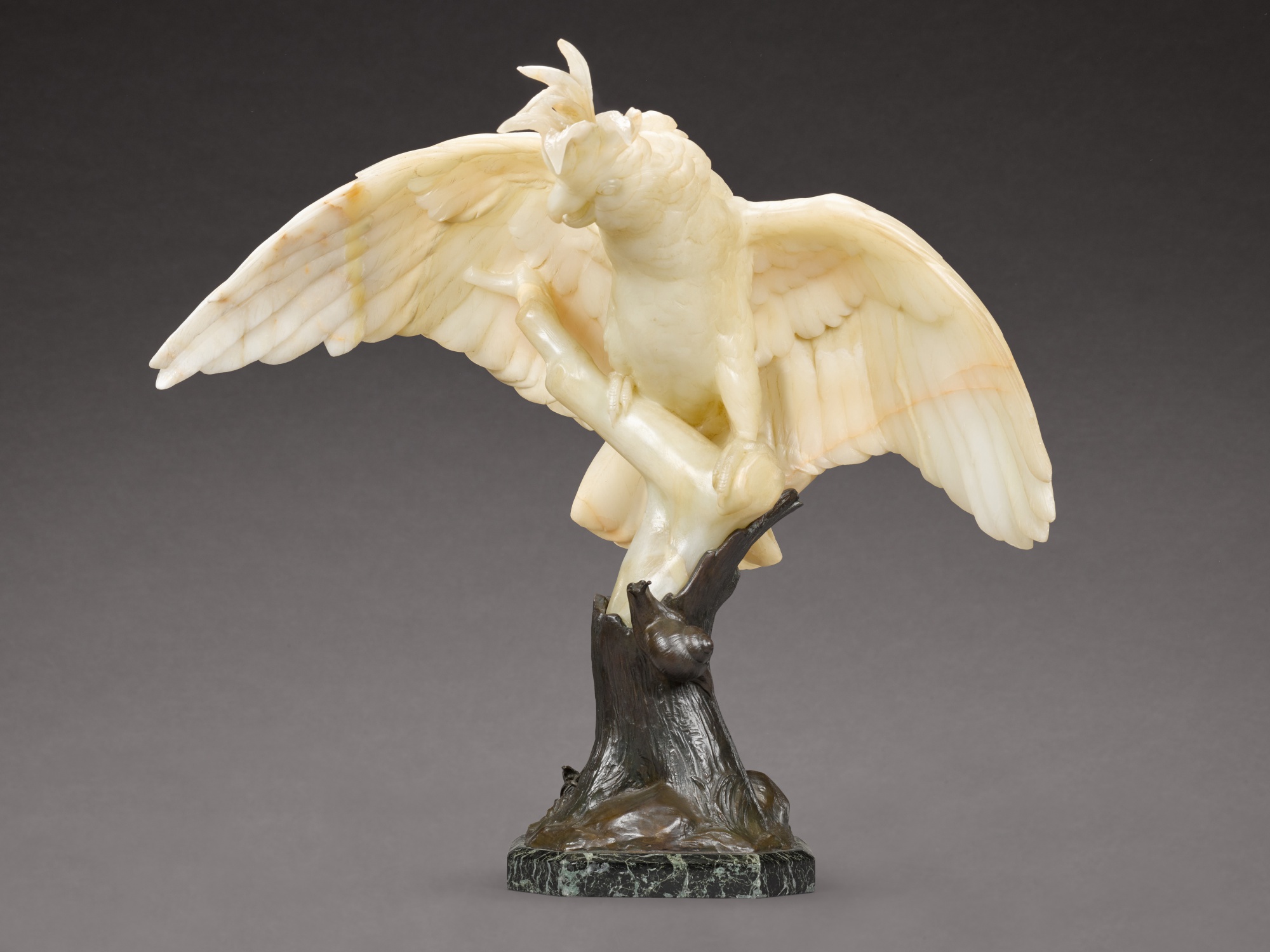
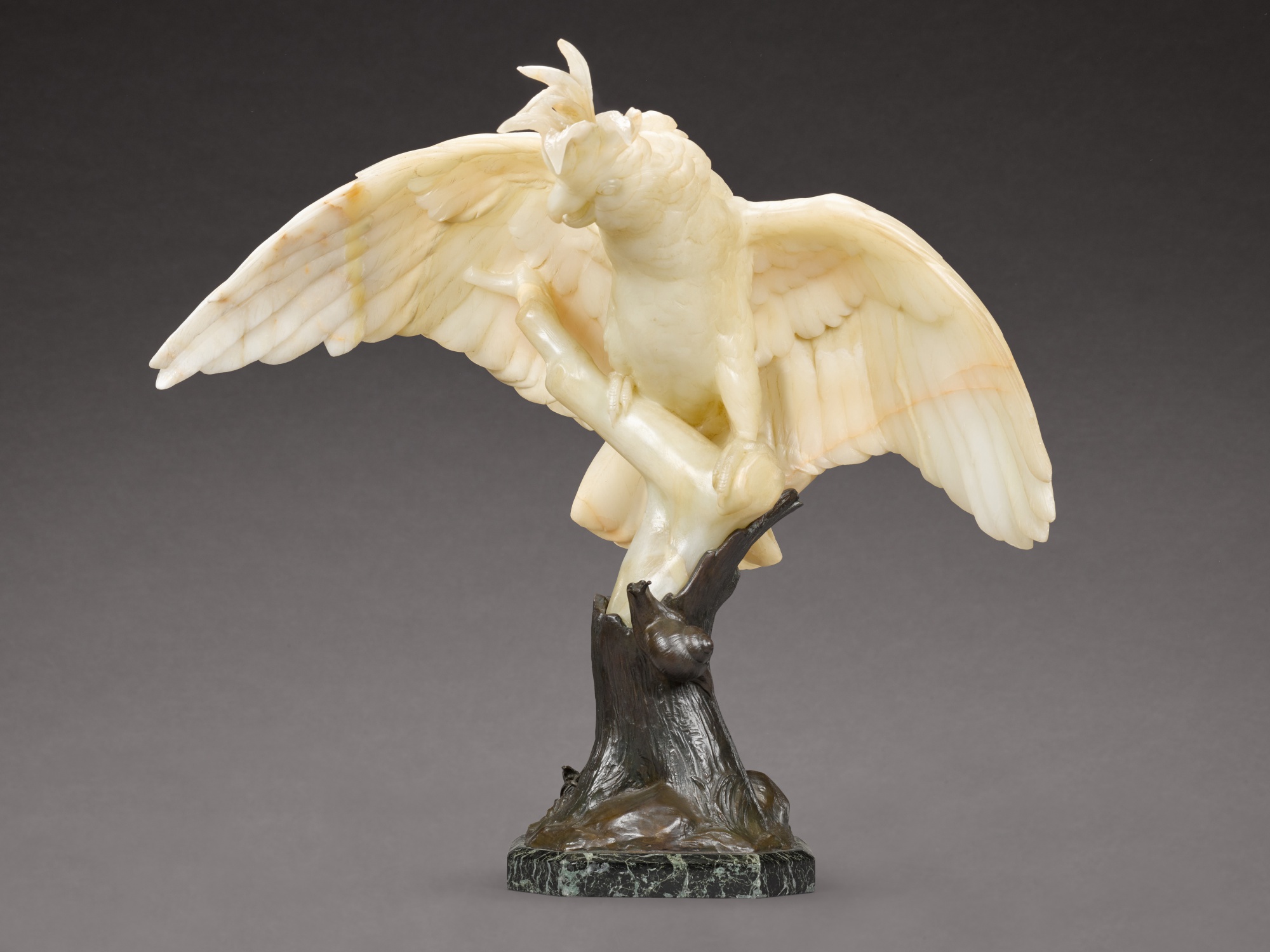
Cockatoo
Georges Gardet was born in Paris in 1863, entering the world at a moment of tremendous creative ferment in the French capital. The Second Empire was giving way to a republic, and the artistic institutions of France were simultaneously conservative and restless, clinging to academic tradition while absorbing new energies from naturalism and the emerging fascination with the animal world. Gardet grew up in this atmosphere and found his calling early. He entered the studio of François Jouffroy, one of the most respected academic sculptors of the era and a professor at the École des Beaux Arts, whose influence instilled in Gardet an exacting technical discipline and a reverence for classical form.
Under Jouffroy, Gardet learned to see sculpture as the art of weight and presence, lessons that would remain visible in everything he made. The Paris Salon was the proving ground for any sculptor of Gardet's generation, and he rose to its challenges with remarkable consistency. His entries throughout the 1880s and 1890s established him as one of the foremost animaliers of his day, a tradition with deep roots in French sculpture stretching back to Antoine Louis Barye, the undisputed patriarch of the form. Where Barye's animals often carried a romantic ferocity, locked in struggle or poised for the kill, Gardet brought a more contemplative naturalism to the genre.
Georges Gardet
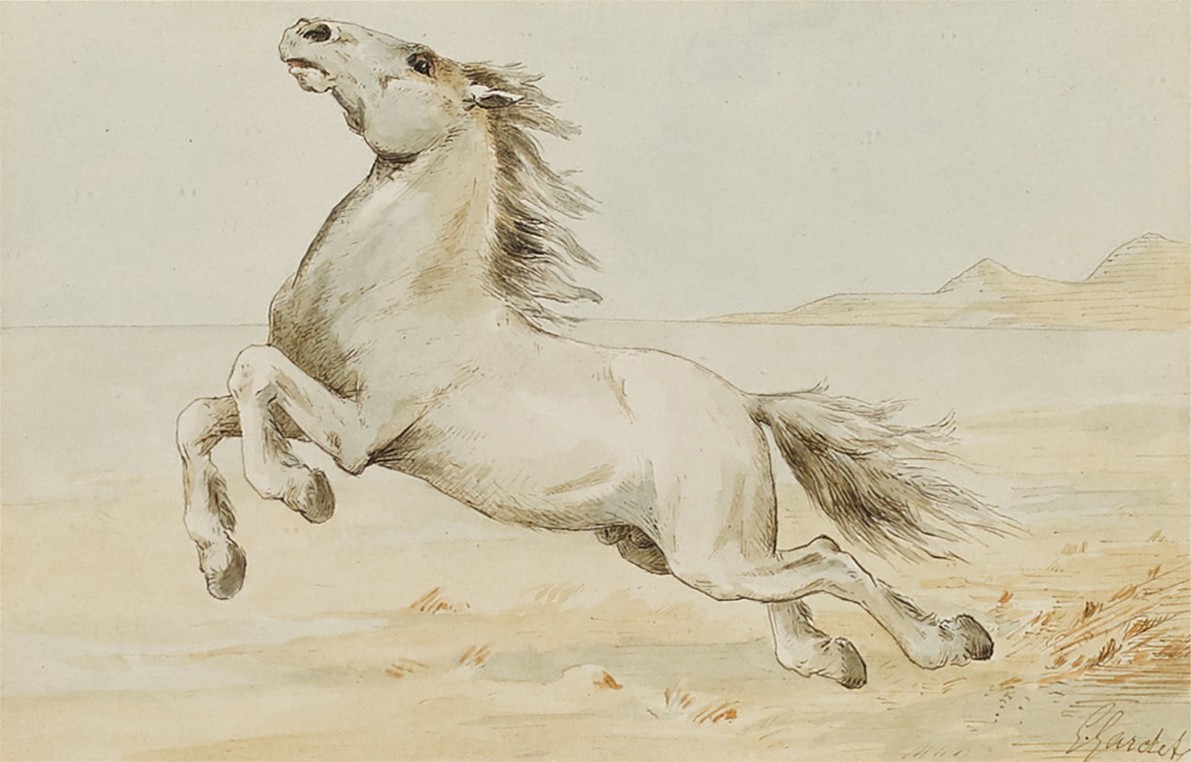
Horse Rearing in a Landscape
His creatures exist in a state of composed alertness, observed rather than dramatized, and that distinction gave his work a quality of intimacy that set it apart. He also drew on the legacy of Pierre Jules Mêne and Emmanuel Frémiet, animaliers who shared his commitment to precise anatomical study, and in many ways Gardet can be understood as the culminating figure of that lineage. Gardet's practice was grounded in sustained observation. He spent considerable time studying living animals, a method he shared with the great animaliers before him, and this dedication is evident in the results.
His bronze animal figures achieve a specificity that goes well beyond surface description. The musculature beneath the skin, the particular set of a jaw, the way a bird's crest rises in alertness: these are not generic impressions but individual observations translated into enduring form. Two works currently available through The Collection offer an instructive sense of his range. The first, titled Cockatoo, combines onyx and bronze on a green veined marble base, demonstrating Gardet's fluency with luxury materials and his understanding of how different substances could be orchestrated to heighten a sculptural effect.
The white bird rendered in bronze against the richness of the onyx and marble is a study in contrast and refinement, the kind of object that commands a room without overwhelming it. The second work, Horse Rearing in a Landscape, executed in pen, ink and gouache on paper, reveals an entirely different register of his talent. Here the artist worked on paper with the confidence of a draftsman fully in command of his subject, the rearing horse both anatomically convincing and compositionally bold, the landscape setting giving the image a romantic sweep that places it in conversation with the equestrian traditions of French academic art. From a collecting perspective, Gardet occupies a position of considerable appeal.
He is established enough to carry genuine art historical weight but not so universally known that exceptional works are impossible to find at thoughtful prices. Collectors drawn to the French academic tradition, to the animalier school, and to the broader category of nineteenth century bronze have long regarded him as a significant name. His bronzes appear regularly at auction houses in Paris, London and New York, where they attract serious bidding from collectors who understand the quality of craftsmanship involved. Works in mixed materials, such as the onyx and bronze Cockatoo, represent a particularly refined category of his production, appealing both to those who collect sculpture and to those with an eye for decorative objects of the highest order.
The condition of the patina, the quality of the casting, and the presence of a foundry mark or signature are all points worth examining when considering a Gardet acquisition, as his reputation has made him a subject of later reproduction. To understand Gardet fully is to understand the broader ecosystem of French animalier sculpture, a movement that took the natural world as its primary subject at precisely the moment when natural history museums, zoological gardens, and scientific illustration were transforming how educated Europeans understood animals. The Paris Jardin des Plantes, with its famous ménagerie, was a resource and an inspiration for generations of French sculptors, Barye included, and Gardet would have known it intimately. His work sits in productive dialogue with contemporaries such as Prosper Lecourtier and Léon Bureau, sculptors who shared his commitment to the genre, as well as with the broader tradition of academic naturalism that flourished under the Third Republic.
Collectors who appreciate the work of Barye and Frémiet will find in Gardet a natural complement, a voice that brings its own distinctive register of quietness and precision to a tradition defined by its ambition. The legacy of Georges Gardet is one of sustained excellence in a demanding and often underappreciated form. Animal sculpture requires a dual mastery: the sculptor must command the full technical vocabulary of the medium while also possessing the observational patience of a natural historian. Gardet possessed both, and the works he left behind stand as testimony to what that combination can achieve.
In a contemporary art world that has rediscovered the pleasures of craft, materiality, and careful looking, his sculptures feel newly relevant. They ask the viewer to slow down, to approach closely, to give the kind of attention that rewards itself. For collectors building collections with depth and historical range, for institutions seeking works that speak to the long human fascination with the animal world, and for anyone who has ever stood before a bronze and felt it breathe, Georges Gardet remains an artist of uncommon importance.
Explore books about Georges Gardet