George Segal
George Segal: Humanity Cast in Eternal Light
Artist Spotlight · The Collection Editorial
“I discovered that when I used real objects in a scene, the plaster figure and the real object were equals.”
George Segal, interview with the Smithsonian Archives of American Art
There is a particular stillness that descends when you stand before a George Segal sculpture. The figure beside you, white as chalk and silent as memory, feels less like an object and more like a presence, a neighbor paused mid thought, a stranger waiting for a bus that never quite arrives. This quality, at once monumental and intimate, has made Segal one of the most emotionally resonant sculptors of the twentieth century, and institutions from the Smithsonian to the Museum of Modern Art continue to return to his work as a touchstone for understanding what it means to render the human condition in three dimensions. His legacy, rather than fading, grows more urgent with each passing decade.
George Segal
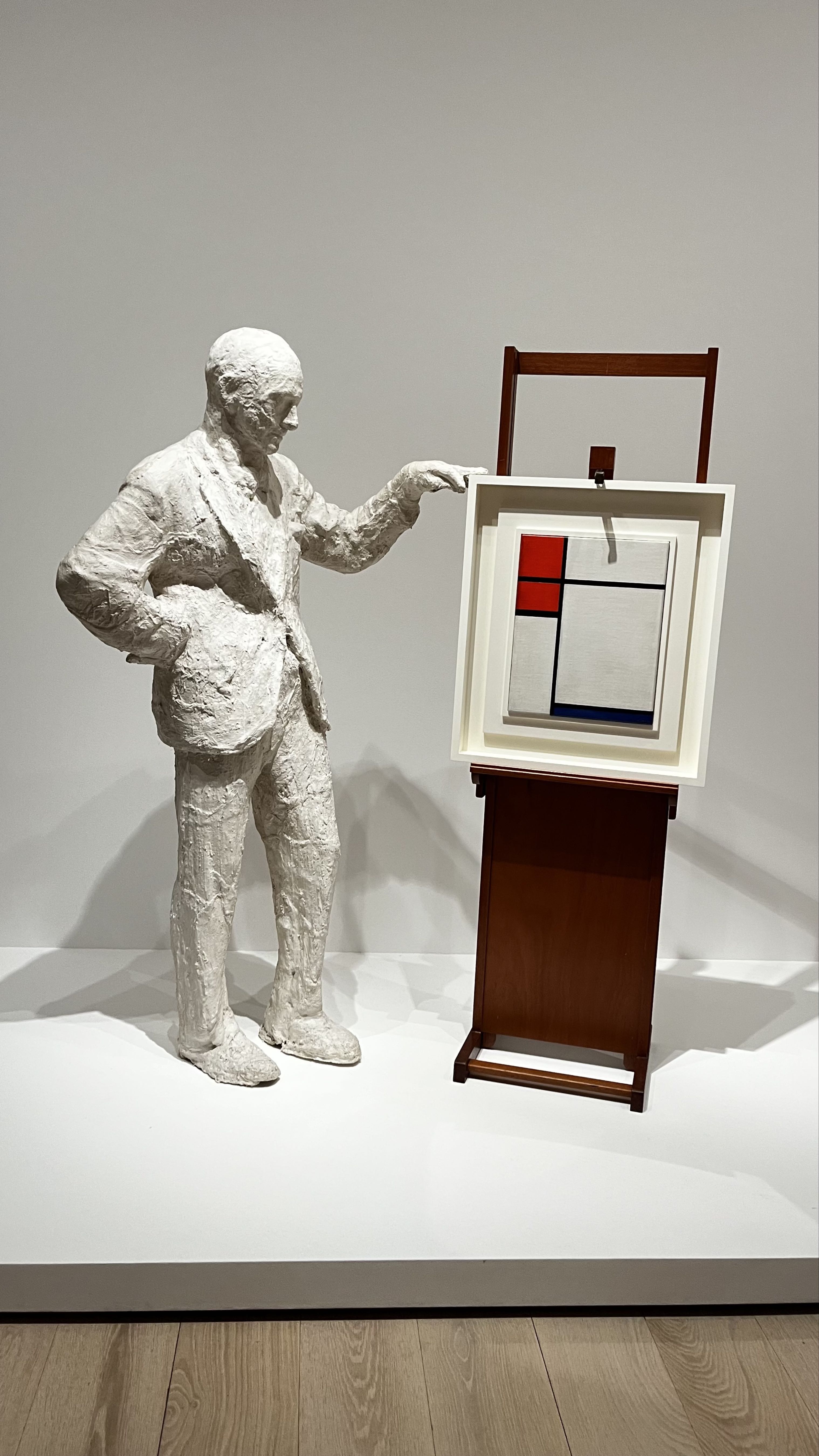
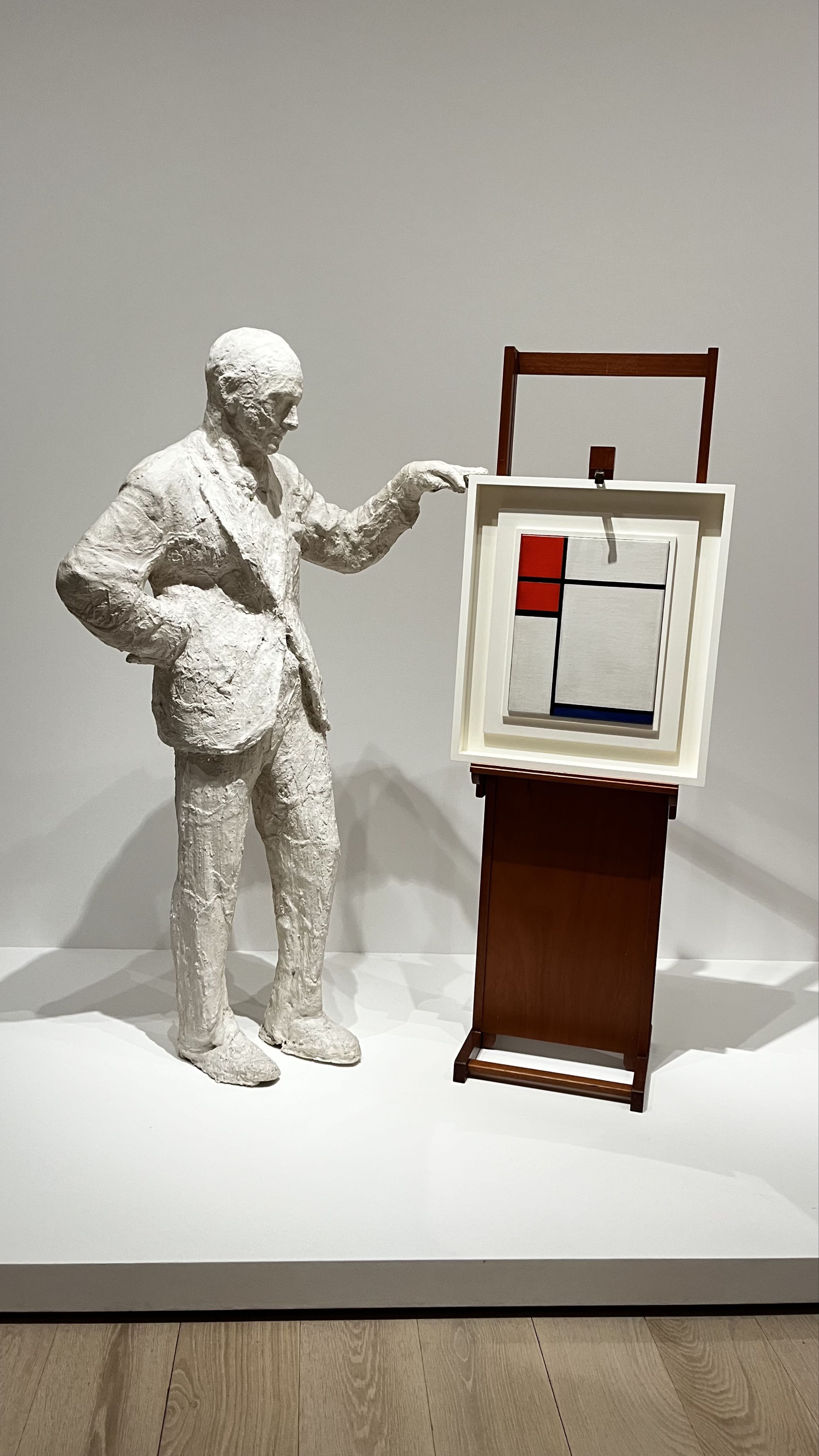
Portrait of Sidney Janis with Mondrian, 1967
George Segal was born on November 26, 1924, in New York City, and grew up in the Bronx and later in South Brunswick, New Jersey, where his family ran a chicken farm. This agricultural upbringing, unglamorous and grounded in physical labor, never left him. It inflected his sensibility with a deep respect for working bodies, ordinary people, and the textures of everyday American life. He studied at the Cooper Union in New York, then at Rutgers University, where he earned his Bachelor of Science in Art Education in 1949 and later completed a Master of Fine Arts.
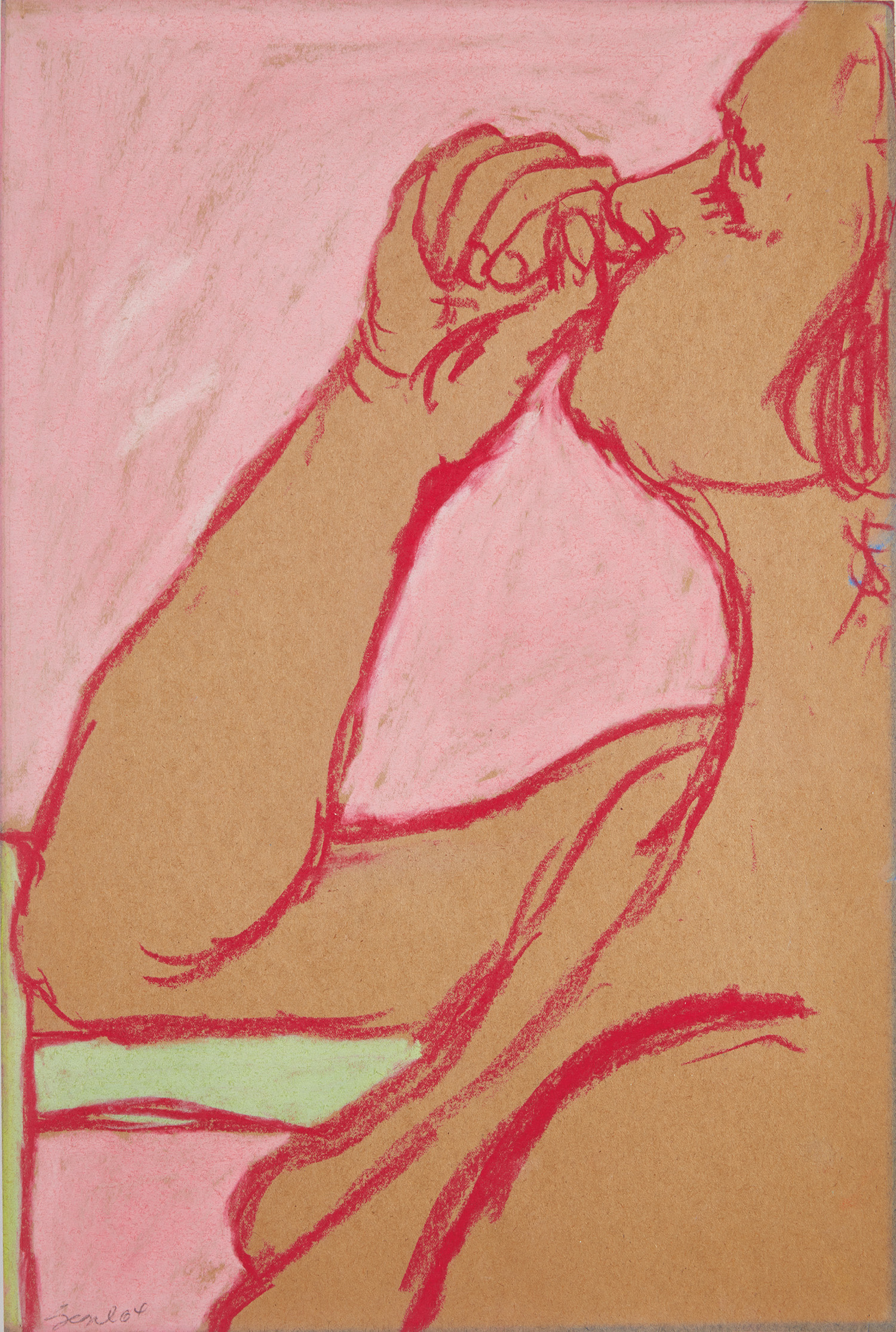
At Rutgers he encountered a circle of artists who would reshape American art, most importantly Allan Kaprow, whose experiments with happenings and environmental art helped crystallize ideas that Segal was already beginning to explore. In his early career, Segal painted, and his canvases from the late 1950s, including works such as "Woman" from 1959, reveal a painter deeply engaged with the gestural traditions of Abstract Expressionism while simultaneously drawn to the figure. The tension between abstraction and representation that characterized so much postwar American art played out vividly in his studio. The decisive breakthrough came around 1961, when Segal began experimenting with plaster bandages as a sculptural medium.
George Segal
George Segal
By wrapping live models in the bandages, letting them dry, and then reassembling the hollow shells into complete figures, he discovered a process that was fundamentally collaborative, empathetic, and irreversibly tied to a specific human body at a specific moment in time. The results were unlike anything else being made. What distinguished Segal from his Pop Art contemporaries, artists like Roy Lichtenstein, Claes Oldenburg, and Andy Warhol, with whom he was frequently grouped, was his refusal to treat the human figure as sign or symbol. Where Pop Art often drained the body of interiority, Segal insisted on its weight, its fatigue, its longing.
“I'm very interested in the quality of loneliness, of people withdrawn into themselves.”
George Segal
His plaster people lean on counters in diners, sit alone on park benches, and pause in doorways. They inhabit real objects, actual chairs, genuine windows, period furniture salvaged and incorporated into the tableau, creating an uncanny effect that blurs the line between sculpture and theater, between art and archaeology. Works like "Portrait of Sidney Janis with Mondrian" from 1967, in which a cast of the legendary art dealer stands before an actual Mondrian painting, achieve something profound: a meditation on connoisseurship, friendship, and the passage of time that no purely painted portrait could replicate. Over the decades, Segal's practice expanded in both material and ambition.
George Segal
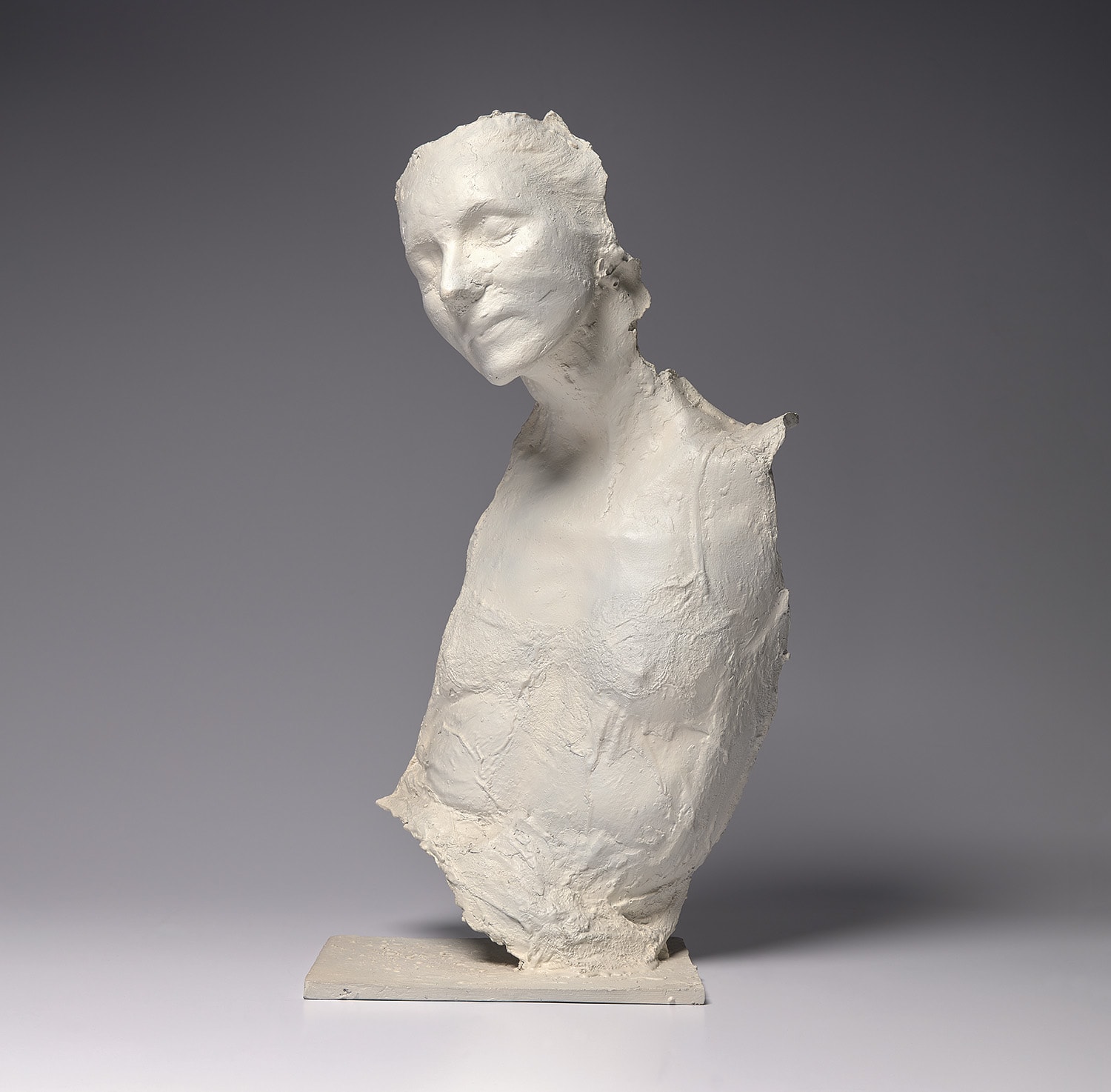
Woman in Lace, 1985
He embraced bronze casting and introduced rich surface patinas, from warm gold to deep green to the signature luminous white that became his most recognizable aesthetic choice, as seen in works like "Woman in Lace" from 1985 and "Woman on Park Bench" from 1998. These bronzes carry all the solemnity of traditional public monument making while retaining the vulnerability of his original plaster process. His public commissions brought his vision to civic spaces across the United States, and his work for the Holocaust Memorial in San Francisco and the Gay Liberation Monument in New York's Christopher Street Park, unveiled in 1992, demonstrated that his humanism was not merely aesthetic but deeply political. The Gay Liberation Monument, one of the first public sculptures in the world to honor LGBTQ+ lives, remains an act of profound civic courage and tenderness.
For collectors, Segal's work presents a remarkable range of entry points. His multiples, including editions such as "Girl in a Chair" and the cast acrylic and fiberglass "Chicken" from his contribution to the 1966 portfolio "Seven Objects in a Box," offer accessible ways to engage with his practice and have become treasured collectibles in their own right. His drawings in chalk pastel are luminous and underappreciated, capturing the same quiet dignity as his sculpture but in a medium that rewards close, private looking. At the upper end of the market, major plaster assemblages and early painted bronzes command serious attention at auction at houses including Christie's and Sotheby's, where his works have consistently demonstrated the blue chip strength of his reputation.
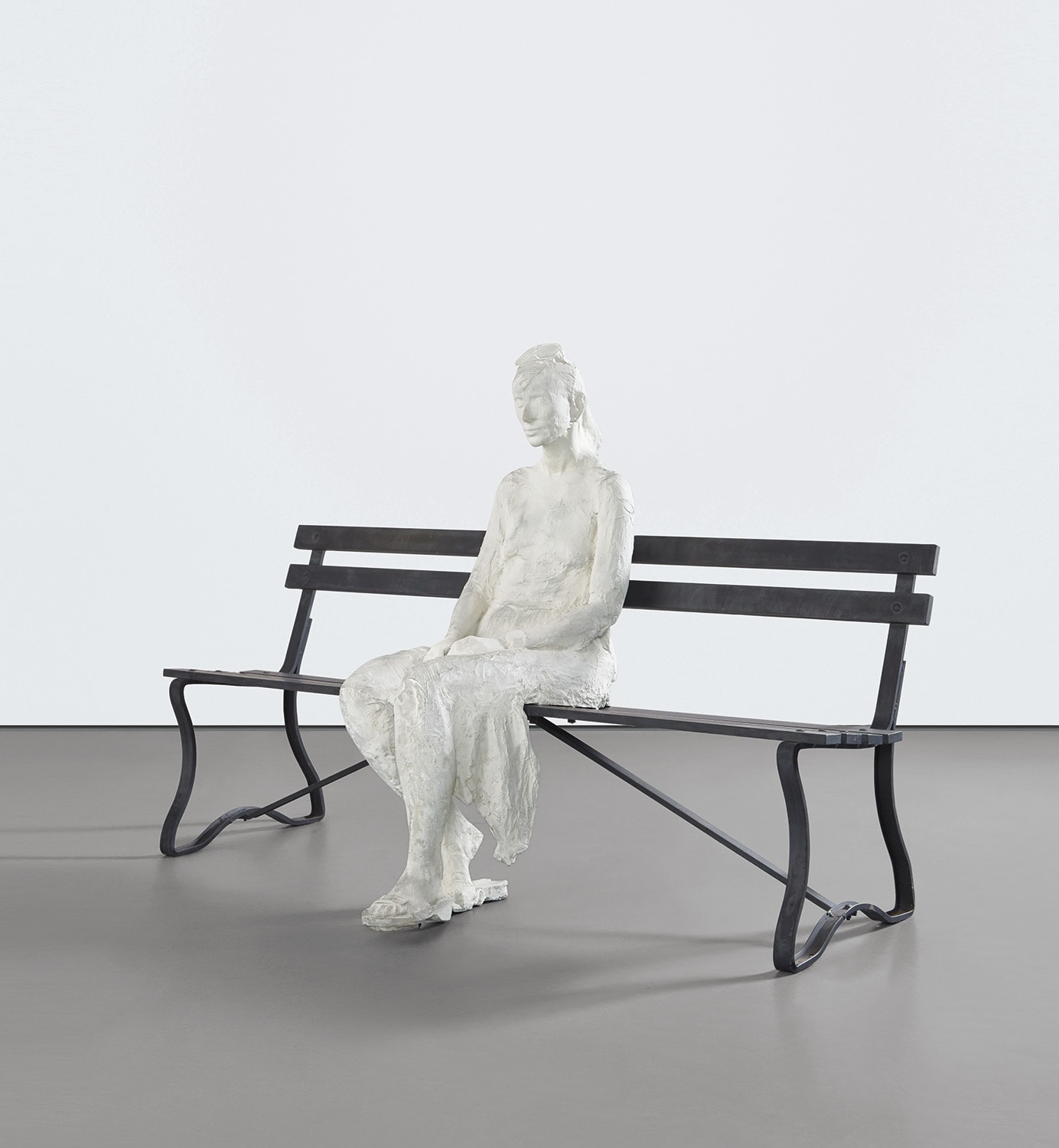
George Segal
Woman with Sunglasses on Bench, 1983
Collectors who approach Segal often find themselves building a relationship with an artist whose emotional range deepens rather than narrows upon repeated study. Segal's place in art history is secure but also productively complex. He sits at the intersection of several major movements without being wholly claimed by any of them. He shares with the Happenings movement a fascination with real space and real time.
He shares with Pop Art an attentiveness to American consumer culture and vernacular environments. He shares with Social Realism a moral commitment to representing lives that mainstream culture overlooks. Artists who invite comparison include Edward Kienholz, whose environmental tableaux similarly transformed found objects into charged psychological spaces, Duane Hanson, whose hyperrealist figures pursued related territory through entirely different means, and John De Andrea, who brought the cast figure tradition into later decades. Together, these artists constitute a lineage of deep figurative humanism within postwar American art that deserves far more sustained critical attention than it typically receives.
George Segal died on June 9, 2000, in South Brunswick, New Jersey, having lived long enough to see his work enter permanent collections at the Museum of Modern Art, the Hirshhorn Museum and Sculpture Garden, the Art Institute of Chicago, and dozens of other major institutions worldwide. What endures is not only the formal innovation of his technique but the generosity of his gaze. He looked at ordinary people, waitresses and shopkeepers, sunbathers and mourners, and he found in them a dignity worthy of permanent record. In an era when so much contemporary practice concerns itself with spectacle and disruption, Segal's quiet insistence on presence, on the irreducible fact of a body in space, feels not nostalgic but necessary.
To collect his work is to welcome that presence into your life, and to be reminded, again and again, that to be human is already extraordinary.
Explore books about George Segal
George Segal: Sculptures
Martin Friedman
George Segal
Sam Hunter
George Segal: A Retrospective
Phyllis Tuchman
George Segal: Paintings and Drawings
Constance M. Lewallen
George Segal: Environmental Sculptures
Jan van der Marck