George Rouy
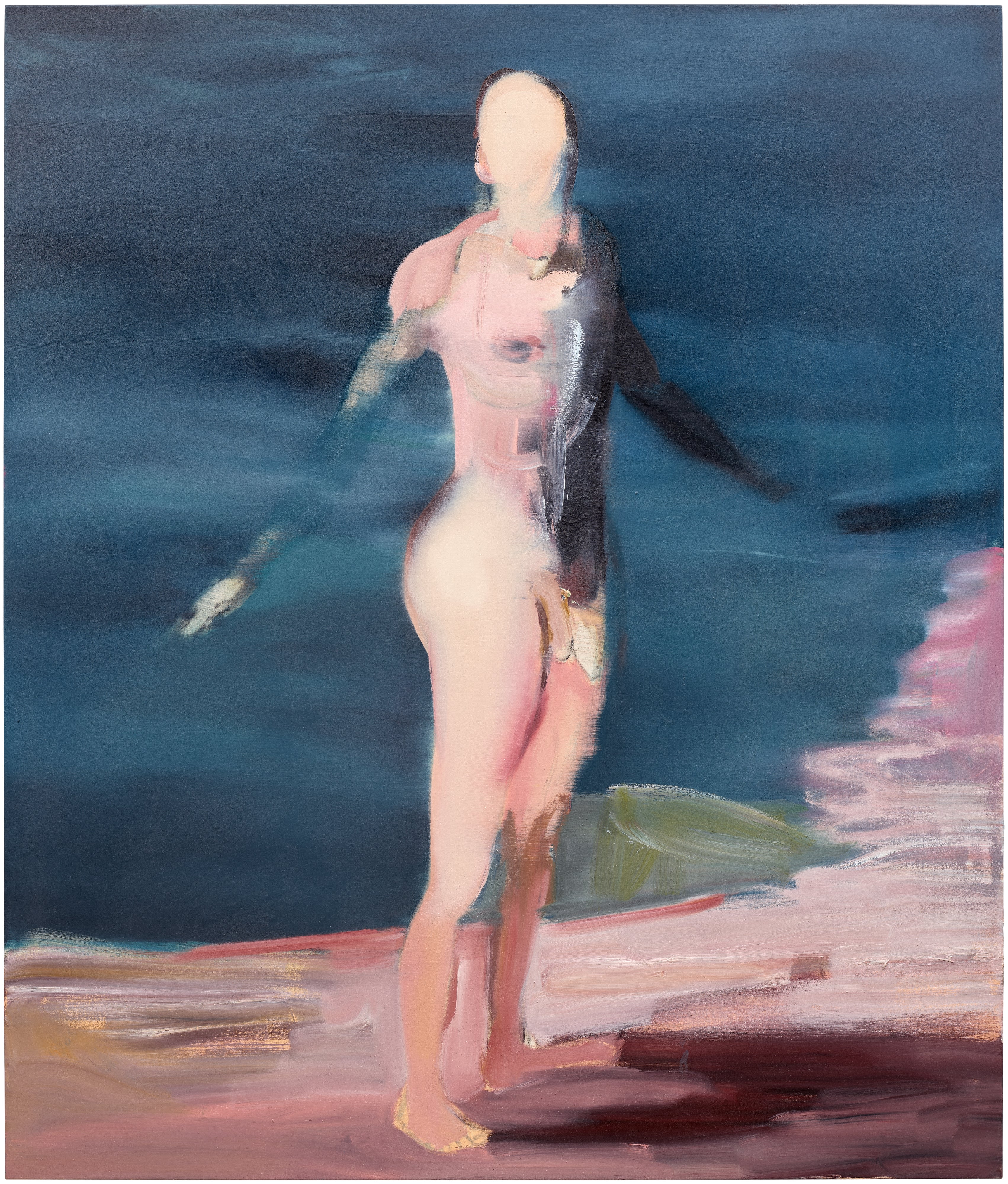
George Rouy, Painting the Body Electric
Artist Spotlight · The Collection Editorial
Something remarkable has been happening in the studios and auction rooms where contemporary figurative painting is most closely watched. George Rouy, the British painter born in 1993, has emerged as one of the most compelling voices of his generation, his canvases commanding serious attention from collectors across Europe, Asia, and North America. His rise has been swift but not accidental, built on a body of work that is at once viscerally immediate and quietly profound, paintings that lodge themselves in memory long after you have left the room. Rouy grew up in England and came of age at a moment when figurative painting was staging one of its periodic and always thrilling returns to the centre of contemporary practice.
George Rouy
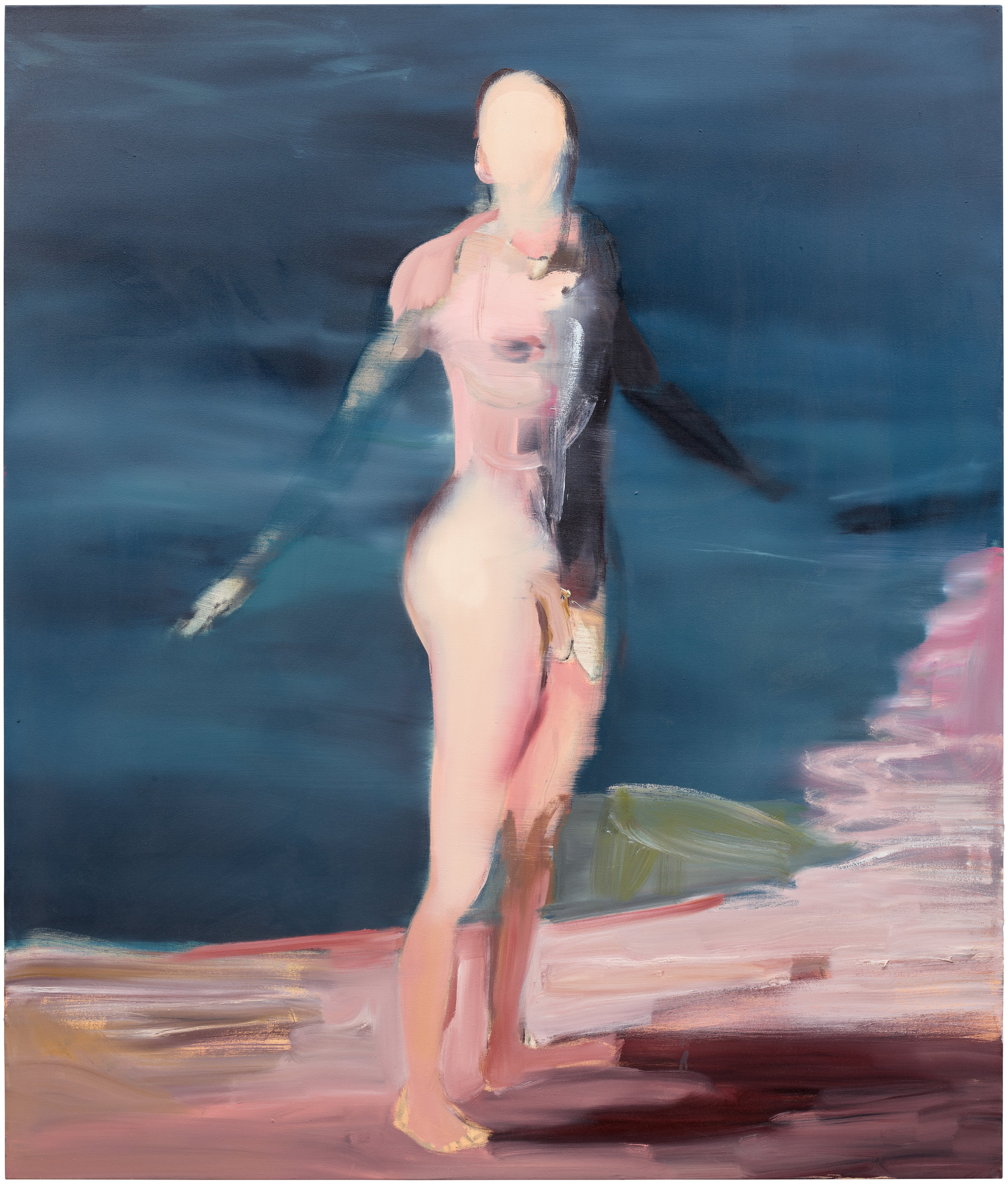
The Shape of Absence, 2022
He studied at Camberwell College of Arts, part of the University of the Arts London, an institution with a strong tradition of nurturing painters who work from the body and from lived experience. That formation gave him both technical rigour and a freedom to push against convention, a combination that would prove essential to everything he made next. His early practice drew on the long tradition of the figure in painting while refusing to be contained by it. Artists such as Francis Bacon, Egon Schiele, and the great Cecily Brown hover in the background of his work, not as direct influences to be copied but as evidence that the human body, rendered with honesty and pressure, can carry the full weight of emotional and psychological experience.
Rouy absorbed those lessons and then set about finding his own language, one built on smearing, layering, and a wilful refusal to resolve his surfaces into easy legibility. The signature move in Rouy's work is the blur. His figures, whether singular or entangled with one another, exist in a state of beautiful and unsettling incompletion. Flesh is pushed across the canvas, features are obscured, bodies merge at their edges into fields of colour and incident.
George Rouy
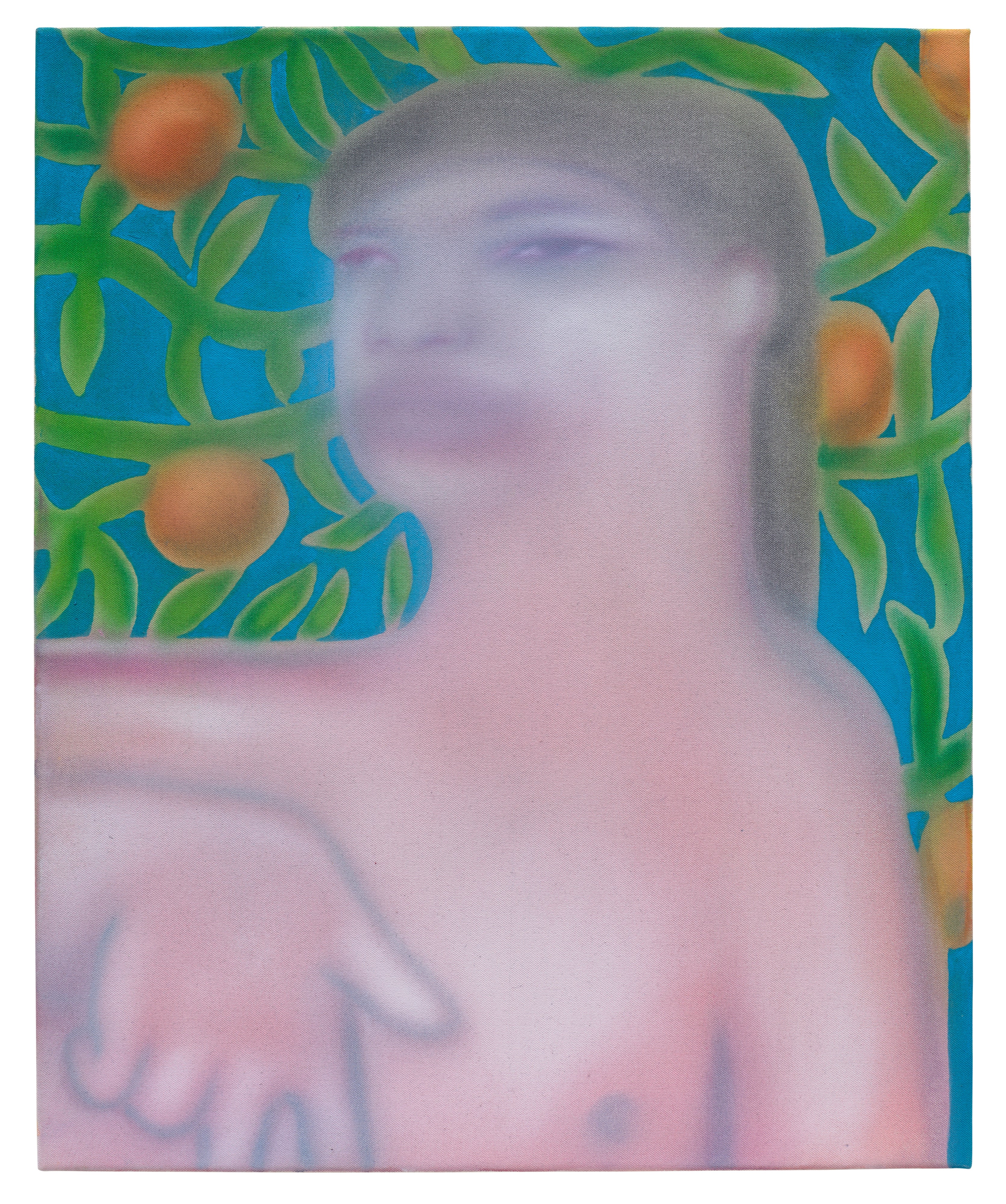
Curious Orange, 2018
This is not accident or laziness but a highly controlled technique that creates the sensation of watching something in motion, something that cannot quite be held or fixed. The effect is simultaneously tender and destabilising, suggesting that identity, desire, and vulnerability are states that resist the finality of being pinned down. Among his most celebrated works, "The Shape of Absence" from 2022, rendered in oil and acrylic on canvas, demonstrates the full maturity of this approach. The title itself operates as a kind of instruction, asking the viewer to attend not only to what is present but to the charged negative space around and within the figure.
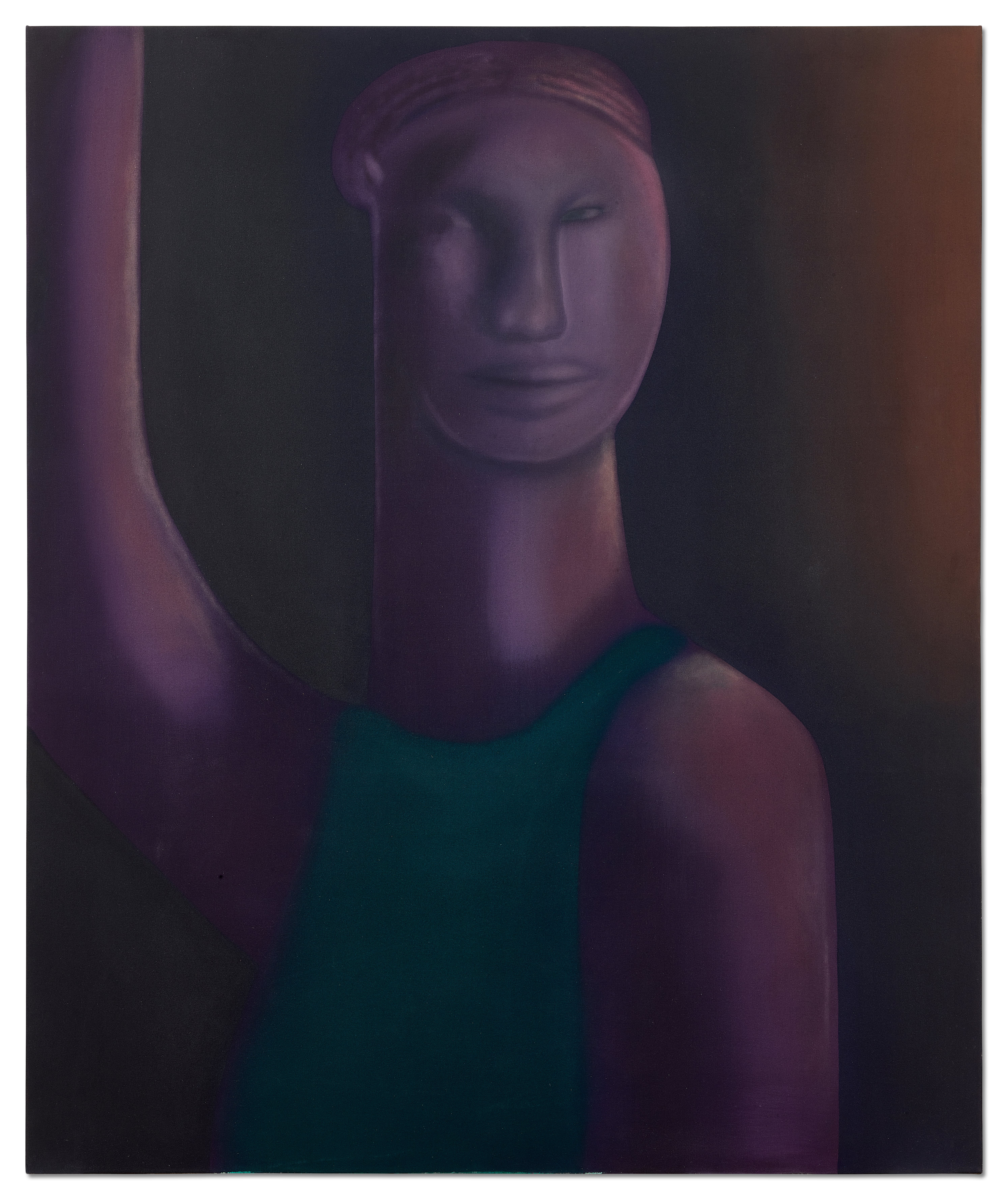
"Hero" from 2021 carries a similar weight, the single figure positioned with a quiet monumentality that belies the instability of the surface. His 2019 painting "Waiting by the Window," with its bilingual title that reaches across English and Chinese, speaks to the international dimension of his reception, a work that found resonance with collectors far beyond the London scene in which he first emerged. His 2018 canvases, including "Curious Orange," "Posing in Our Image," "Gentle Refusal," "Lovers in Red," "Vanity," and "Basking," read together as a remarkable sustained burst of creative energy, establishing the vocabulary of smeared acrylic and psychologically charged bodies that would define his reputation. For collectors, Rouy represents a genuinely exciting proposition.
George Rouy
Waiting by the Window 在窗邊等待, 2019
He belongs to a generation that includes painters such as Jadé Fadojutimi, Francesca Mollett, and Issy Wood, artists who are reshaping what British painting looks like in the twenty first century, and his work holds its own in that distinguished company. His canvases have appeared at auction with increasing frequency and ambition, and the prices they achieve reflect not only market enthusiasm but a genuine critical seriousness that distinguishes him from artists whose success is purely speculative. Collectors who have moved early on his work, particularly the paintings from 2018 and 2019, have found themselves in possession of pieces that feel foundational to the story of his development. The international dimension of his collecting base is worth noting.
The bilingual title of "Waiting by the Window" is not merely a stylistic gesture but evidence of genuine engagement with collectors and institutions in Asia, where his sensibility, influenced at a distance by the long tradition of East Asian approaches to the partially rendered figure, has found a receptive audience. His screenprint "Tearing of the Savage Breast" from 2022, produced on Somerset paper with full margins, represents a thoughtful extension of his practice into editions, making his work accessible to a broader range of collectors without diluting the intensity of his vision. Within the broader context of art history, Rouy occupies a position that is genuinely original even as it acknowledges its debts. The existential drama of Bacon is present, as is something of Schiele's excoriating attention to the vulnerability of the unclothed body.
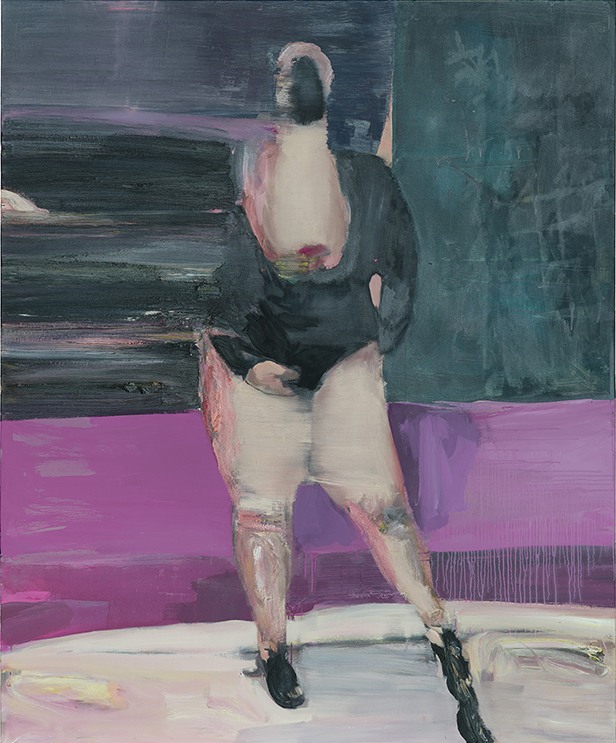
George Rouy
Hero, 2021
But Rouy's figures are not tormented in the way Bacon's figures are tormented. There is tenderness here, even in the most psychologically loaded moments. His entangled bodies carry intimacy as much as anxiety, and it is this complexity, the refusal to choose between comfort and disquiet, that gives the work its unusual depth. What makes Rouy matter today, beyond the market momentum and the critical acclaim, is the seriousness with which he engages with what it means to be a body in the world.
At a moment when images of the human form are everywhere and yet somehow cheapened by their ubiquity, he insists on painting as a space of genuine encounter. His canvases demand time and reward it. They ask you to sit with ambiguity, to tolerate not knowing exactly what you are looking at, and to discover that this tolerance opens onto something rich and true. For any collector building a serious engagement with the painting of this era, his work is not optional.
It is essential.