George Leslie Hunter
George Leslie Hunter, Scotland's Brilliant Sun Seeker
Artist Spotlight · The Collection Editorial
When the Scottish National Gallery of Modern Art brought together a landmark survey of the four painters known as the Scottish Colourists, the room devoted to George Leslie Hunter stopped visitors in their tracks. His canvases seemed to vibrate with an almost unreasonable joy, the kind of pictorial happiness that feels both effortless and hard won. Among his peers Samuel John Peploe, Francis Cadell, and John Duncan Fergusson, Hunter is perhaps the most instinctive, the most restless, and in many ways the most surprising. To spend time with his work is to understand why collectors who discover him rarely stop at one.
George Leslie Hunter
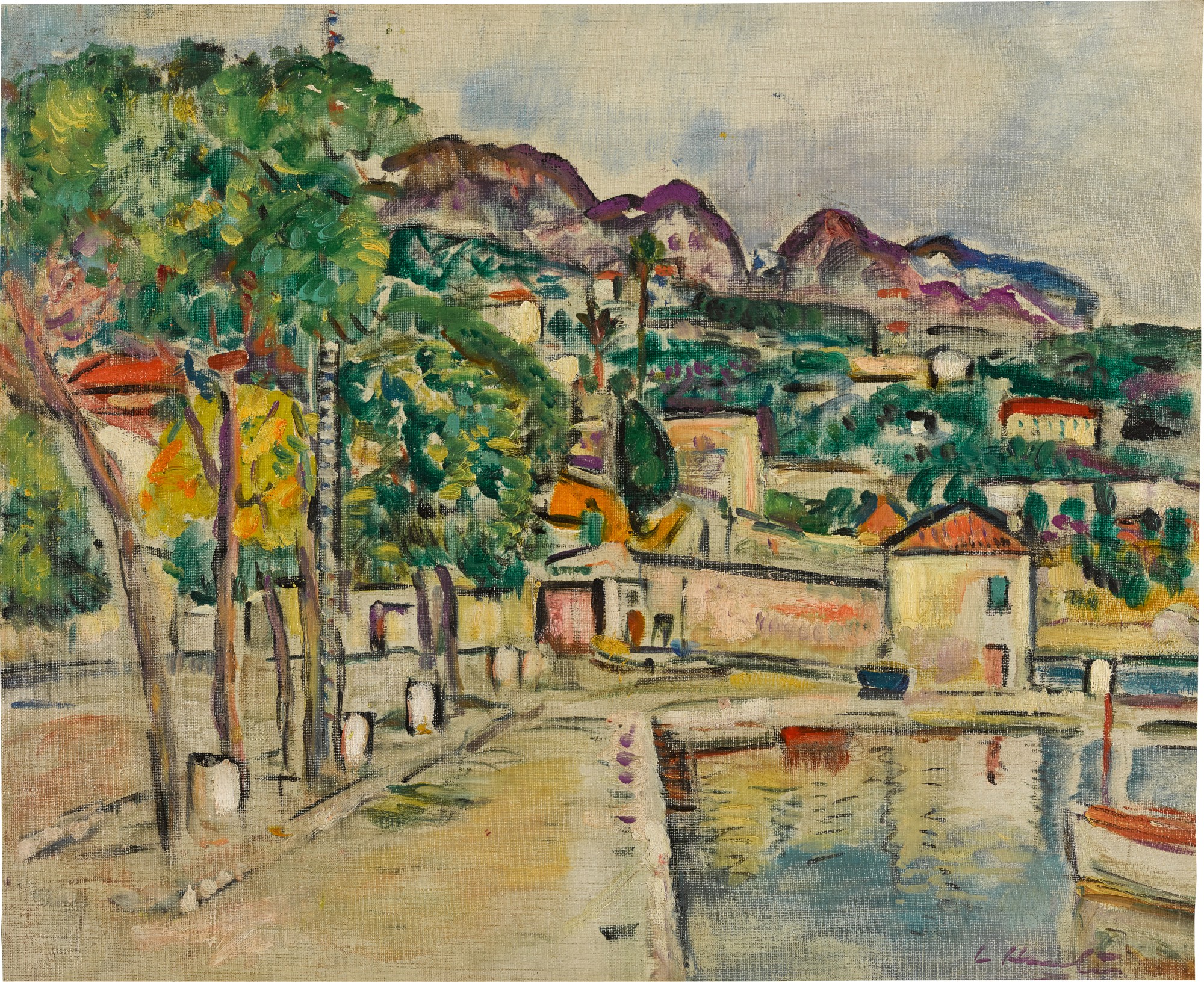
The Harbour, Villefranche, 1928
Hunter was born in Rothesay on the Isle of Bute in 1877, and his early life was marked by extraordinary geographical displacement. His family emigrated to California when he was a teenager, and he spent formative years in San Francisco, working as an illustrator and absorbing the vivid light of the American West Coast. The catastrophic San Francisco earthquake of 1906 destroyed a significant body of his early work, a loss that might have broken a lesser temperament but seemed instead to sharpen his resolve. He returned to Scotland and then made his way to Paris, where encounters with the work of Paul Cézanne, Henri Matisse, and the Post Impressionist circle reshaped everything he thought he knew about colour and structure.
Paris in the early twentieth century was the crucible in which Hunter's mature vision was forged. He absorbed the lessons of Cézanne with particular intensity, understanding that colour could carry the weight of form without surrendering its sensory pleasure. Unlike some of his Scottish contemporaries who approached French modernism with a degree of caution, Hunter threw himself into its possibilities with characteristic abandon. His palette grew warmer, his brushwork freer, and his compositions began to achieve that quality he would pursue for the rest of his life: the sense that light itself is the true subject of every painting, whether the nominal subject is a bowl of fruit, a Fife cornfield, or a harbour wall in the south of France.
George Leslie Hunter
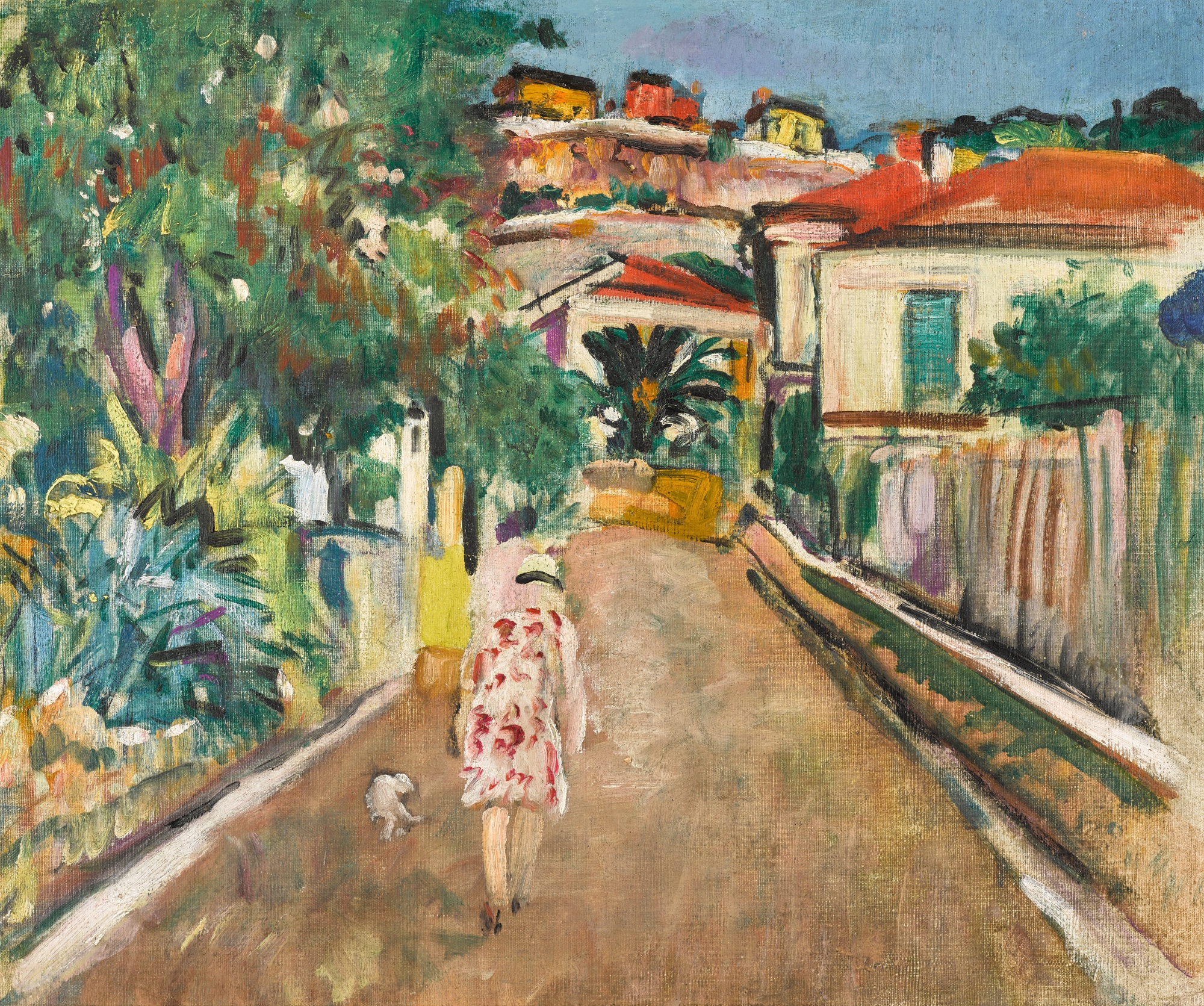
A Street in Villefranche, 1927
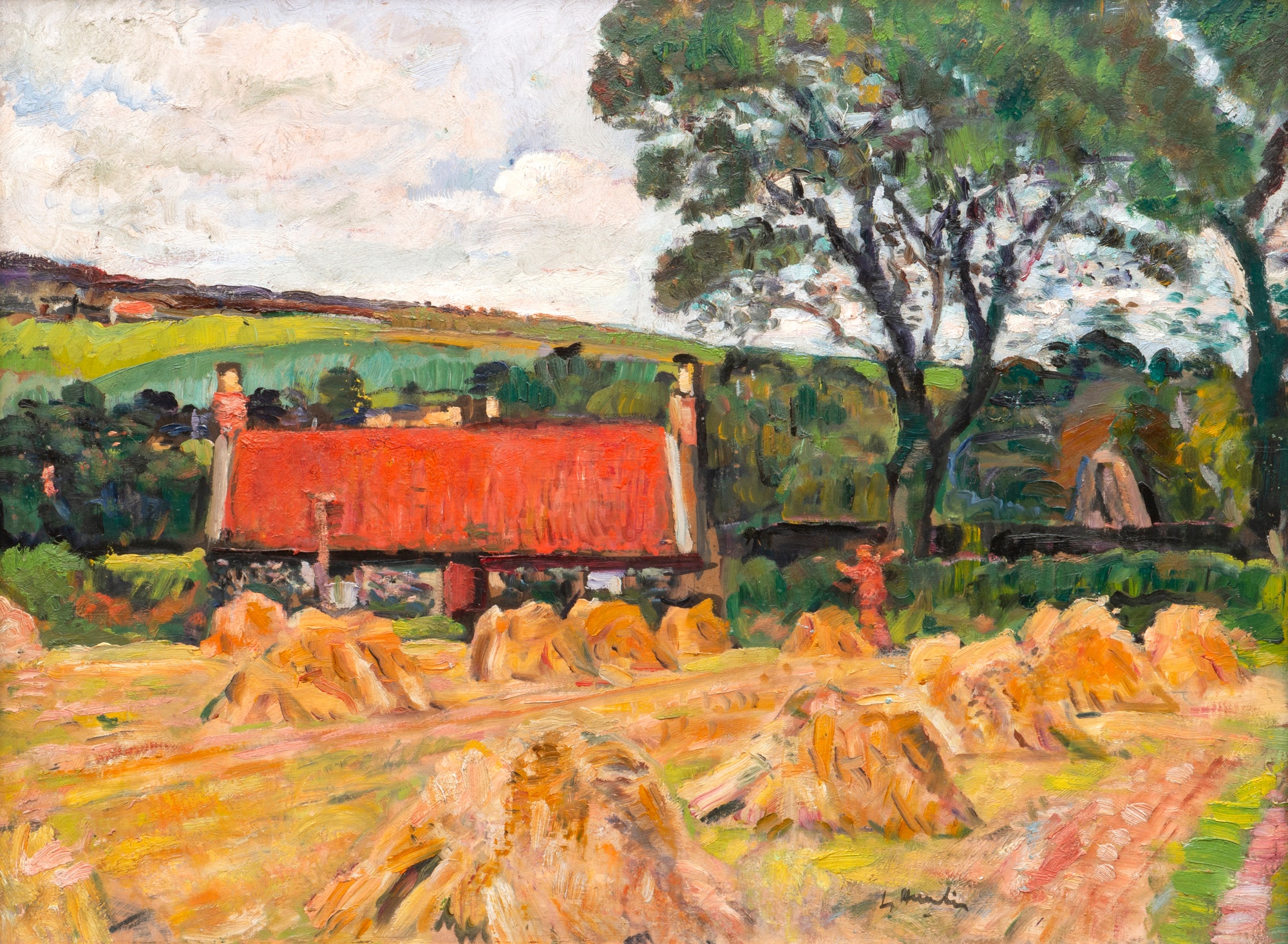
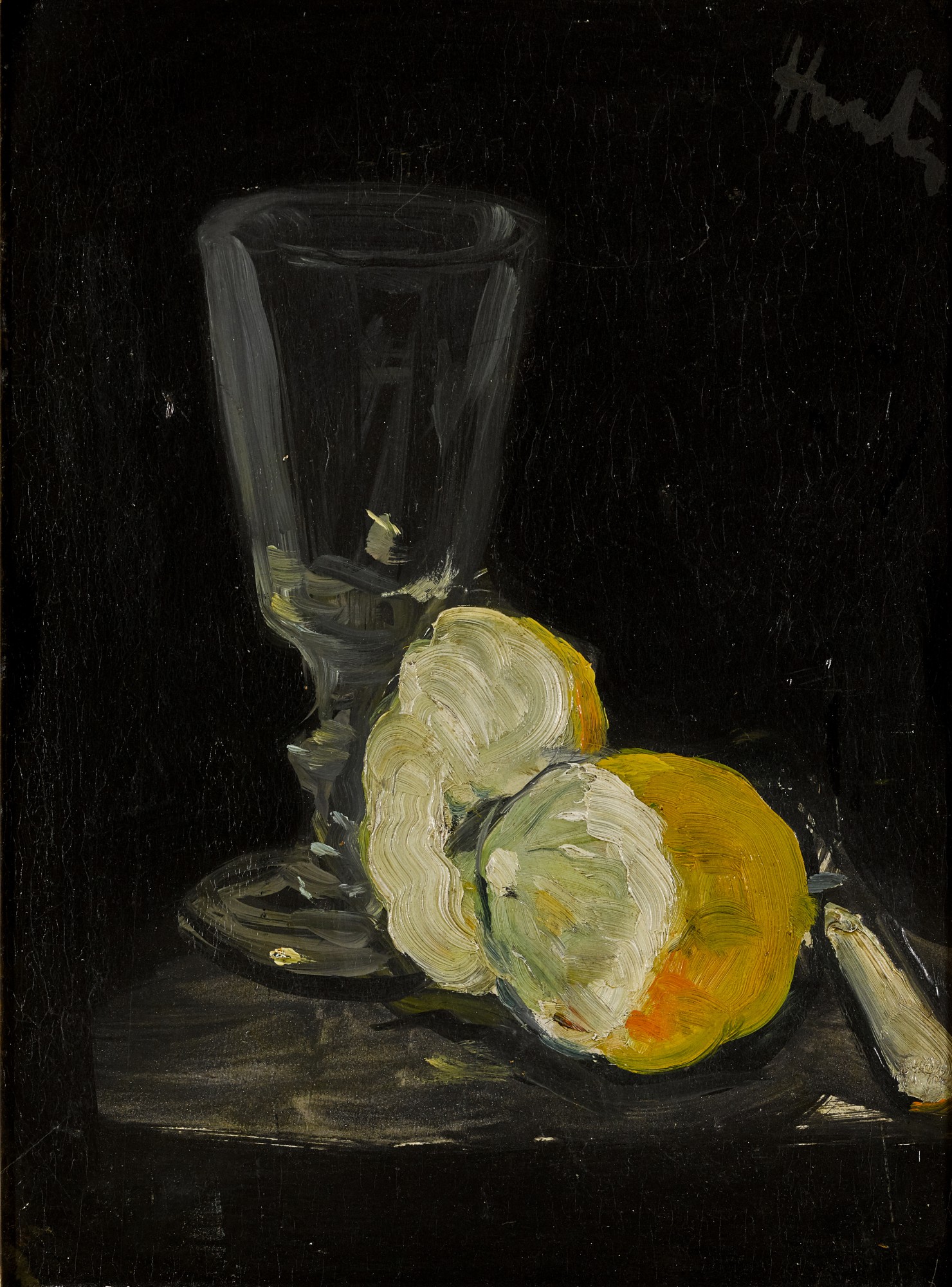
The arc of Hunter's career is neatly illuminated by the works that collectors prize most highly today. "Still Life of Lemon, Glass and Knife" from 1913 shows the artist already in command of a personal language, the objects on the table rendered with a directness that owes something to Cézanne but belongs entirely to Hunter. A decade later, "Cornfield in Fife" of 1923 reveals how deeply he had rooted his modernist vision in Scottish soil, the golden field shimmering with an almost Mediterranean intensity under a northern sky. His travels to the French Riviera in the late 1920s produced some of the most luminous works of his career.
"The Harbour, Villefranche" of 1928 and "A Street in Villefranche" of 1927 capture the particular quality of coastal Mediterranean light with a confidence that places Hunter comfortably alongside the great European painters of that era who were drawn to the same coastline. The drawing "In Nice" of 1927, rendered in wax crayon and black ink, shows the same sensibility at work in a more intimate register, his line quick and observant, his colour instinctive. For collectors, Hunter presents a compelling proposition that combines genuine art historical significance with real aesthetic pleasure. His still life compositions in particular have drawn sustained attention at auction, with works appearing regularly at Lyon and Turnbull, Bonhams, and Christie's Scotland.
George Leslie Hunter
Still Life of Lemon, Glass and Knife, 1913
The still lifes tend to be more densely worked and compositionally ambitious than many of his landscape sketches, and pieces such as "Oriental Vase, Red Apples and Pink Roses in a Glass Vase" from 1916 demonstrate his gift for orchestrating complex arrangements of colour and texture into images of remarkable coherence. Works on paper, including the pen and ink "A Village Lane" of 1924 and the crayon study "Plage à Juan les Pins" of 1927, offer collectors a more accessible entry point into his practice while revealing the quickness and sureness of his observational gifts. When assessing Hunter's work, condition and provenance are particularly important, as the uneven circumstances of his life meant that his output varied considerably, and works that have remained in private Scottish collections since his lifetime carry a particular resonance. To understand Hunter fully it helps to see him in the company of his fellow Colourists, but also in relation to the broader European conversation of his time.
His chromatic ambitions place him in dialogue with Matisse and with the Fauvist moment, while his structural rigour echoes Cézanne. Closer to home, comparisons with Peploe are natural and instructive: both painters were passionately committed to the still life and to the southern French landscape, but where Peploe tends toward a crystalline precision, Hunter is warmer and more atmospheric, more willing to let sensation lead the way. Fergusson's bold figurative work and Cadell's elegant interiors round out the quartet, and serious collectors of Scottish modernism typically find that acquiring work by all four gives each individual painter a richer context. Beyond Scotland, Hunter's work resonates with collectors of Camden Town Group painting and with admirers of early twentieth century French modernism more broadly.
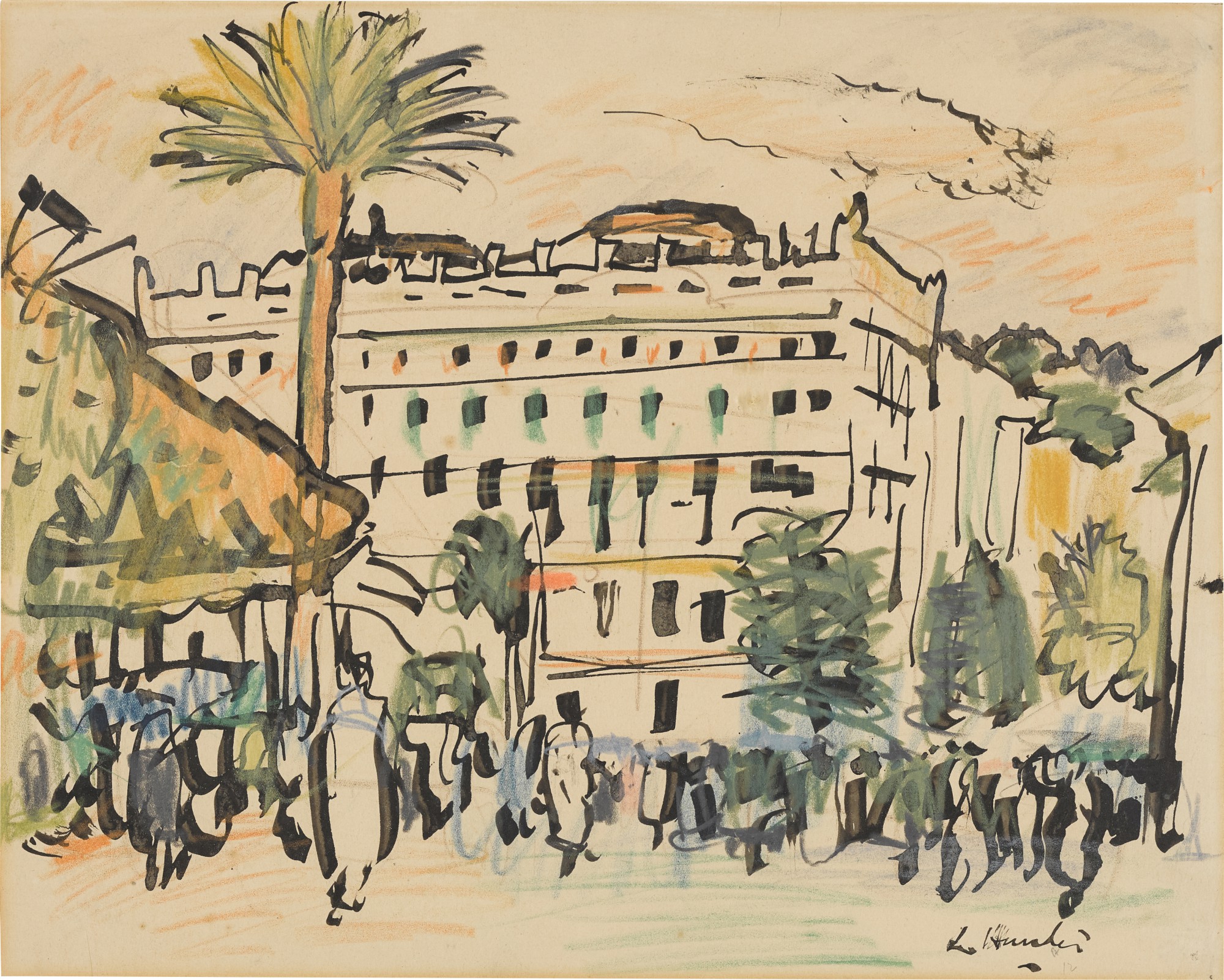
George Leslie Hunter
In Nice, 1927
Hunter died in Glasgow in 1931, leaving behind a body of work that was celebrated in his lifetime by discerning collectors and critics but has since grown steadily in stature. His first major solo exhibition in London at the Leicester Galleries in 1923 drew attention from collectors and reviewers who recognised something genuinely original in his vision. Today, with renewed scholarly and curatorial interest in the Scottish Colourists as a whole, Hunter's place within that constellation feels more secure than ever. His paintings remind us that modernism was not only a Parisian or a metropolitan achievement: it happened wherever a sufficiently open and hungry eye met the world with genuine curiosity.
For collectors who believe that beauty and rigour are not in opposition, George Leslie Hunter offers paintings that make that argument with every brushstroke.
Explore books about George Leslie Hunter
George Leslie Hunter
William Hardie
George Leslie Hunter: Paintings and Drawings
Duncan Macmillan
The Scottish Colourists: Peploe, Cadell, Hunter
William Hardie
George Leslie Hunter and the Scottish Art Scene
Elizabeth Cumming

Leslie Hunter: A Retrospective Exhibition
Scottish National Gallery of Modern Art