Genesis Tramaine
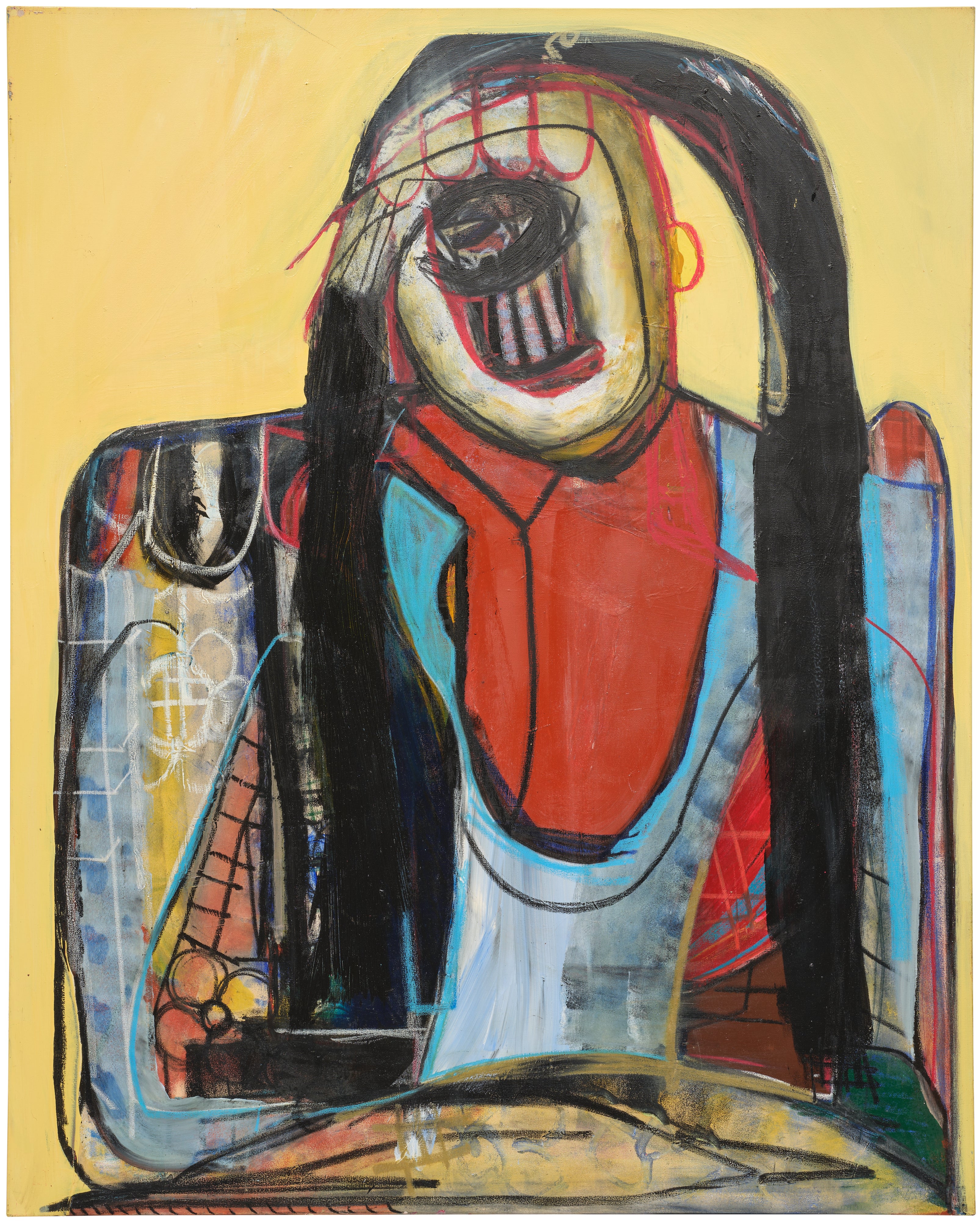
Genesis Tramaine Paints the Sacred and Seen
Artist Spotlight · The Collection Editorial
There is a particular quality of light that radiates from the paintings of Genesis Tramaine, one that feels less like reflected color and more like something emanating from within. Over the past several years, Tramaine has steadily built one of the most spiritually charged and visually arresting bodies of work in contemporary American painting. His canvases, dense with acrylic, oilstick, spray paint, and in some cases materials he identifies as Yeshua and holy spirit, have drawn the attention of serious collectors and cultural observers who recognize in his practice something rare: a figuration that is simultaneously devotional, political, and alive. Born in 1983, Genesis Tramaine grew up immersed in the textures of Black American spiritual and community life.
Genesis Tramaine
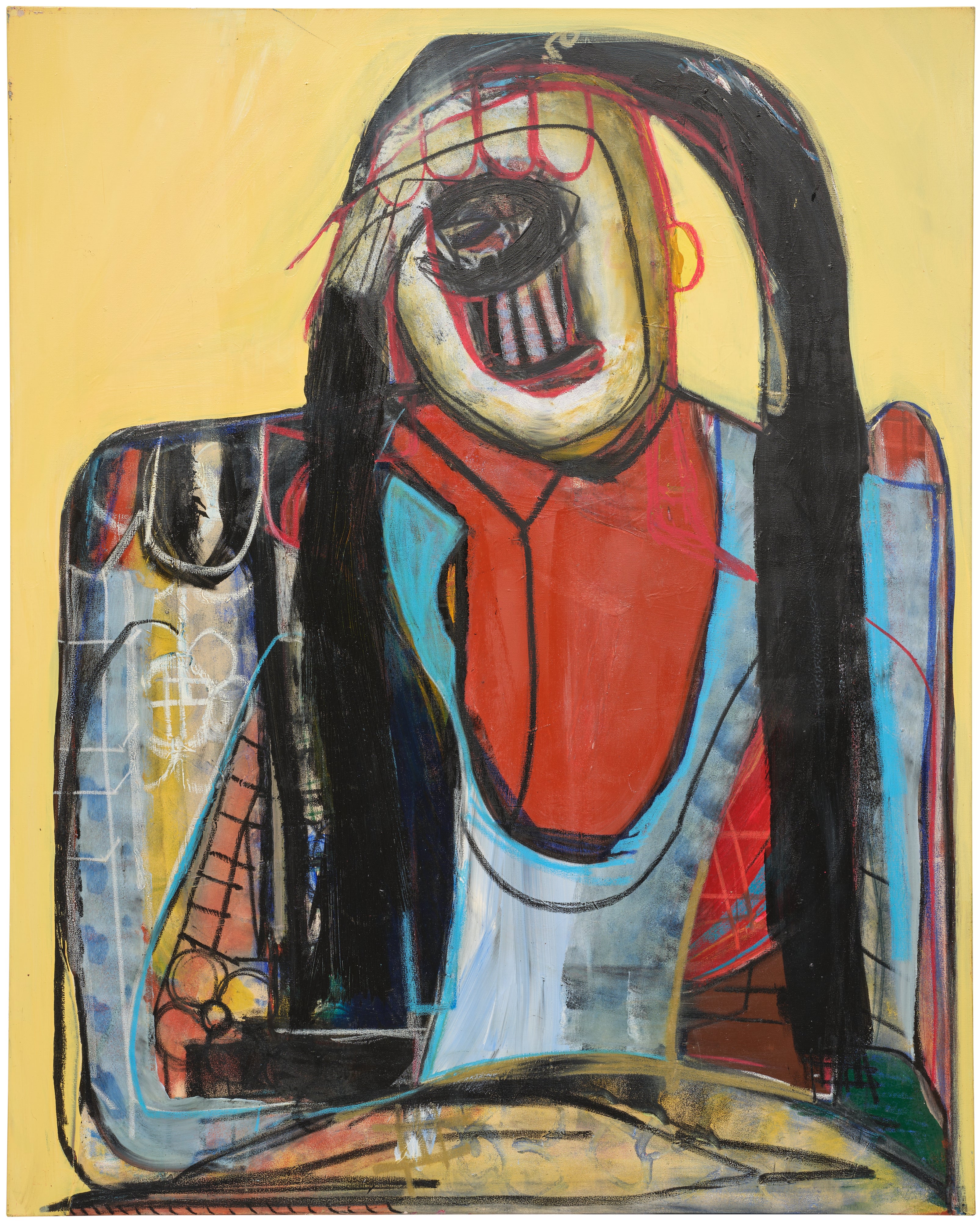
THIS LOVE OF MINE, 2019
The church, with its heightened color, its call and response, its insistence on the sacred presence within the everyday, left a permanent mark on how he sees the world and how he chooses to represent it. That formation is not incidental to his art. It is the architecture beneath everything. His visual language draws equally on the traditions of Black American gospel culture and the bold, flattened forms of graphic design, creating a pictorial space that feels both ancient and urgently contemporary.
Tramaine came to painting through a path shaped by genuine calling rather than institutional trajectory. His work began to gain meaningful attention in the mid to late 2010s, a period when conversations around Black figuration in contemporary art were intensifying across the market and critical discourse alike. He emerged not as a product of that moment but as someone whose convictions had already been forming in private, whose practice was rooted in something too personal and too spiritually serious to have been assembled in response to trend. That authenticity is precisely what distinguishes him and what collectors who have found his work tend to describe first when speaking about it.
Genesis Tramaine
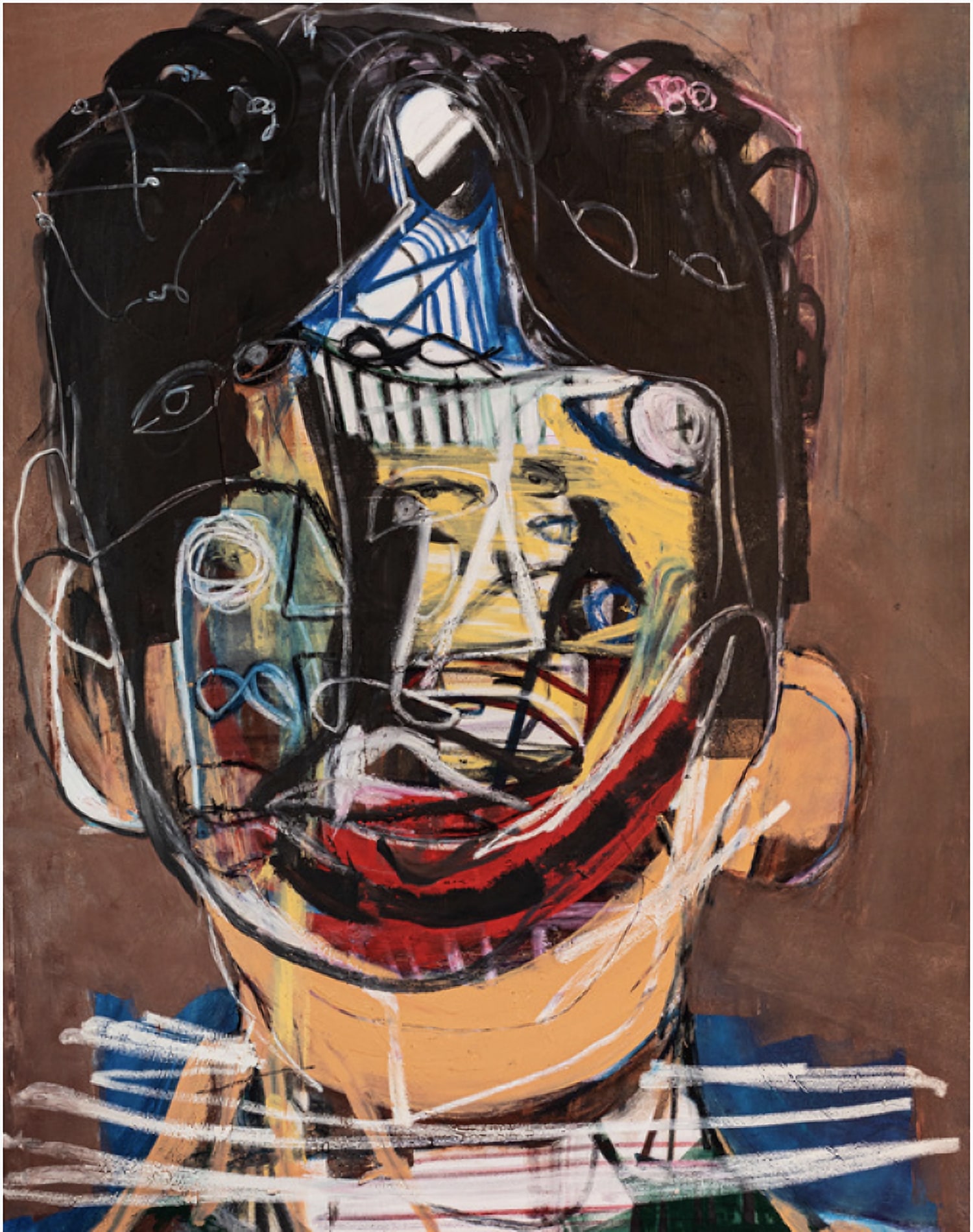
Black Boy with Vision, 2019
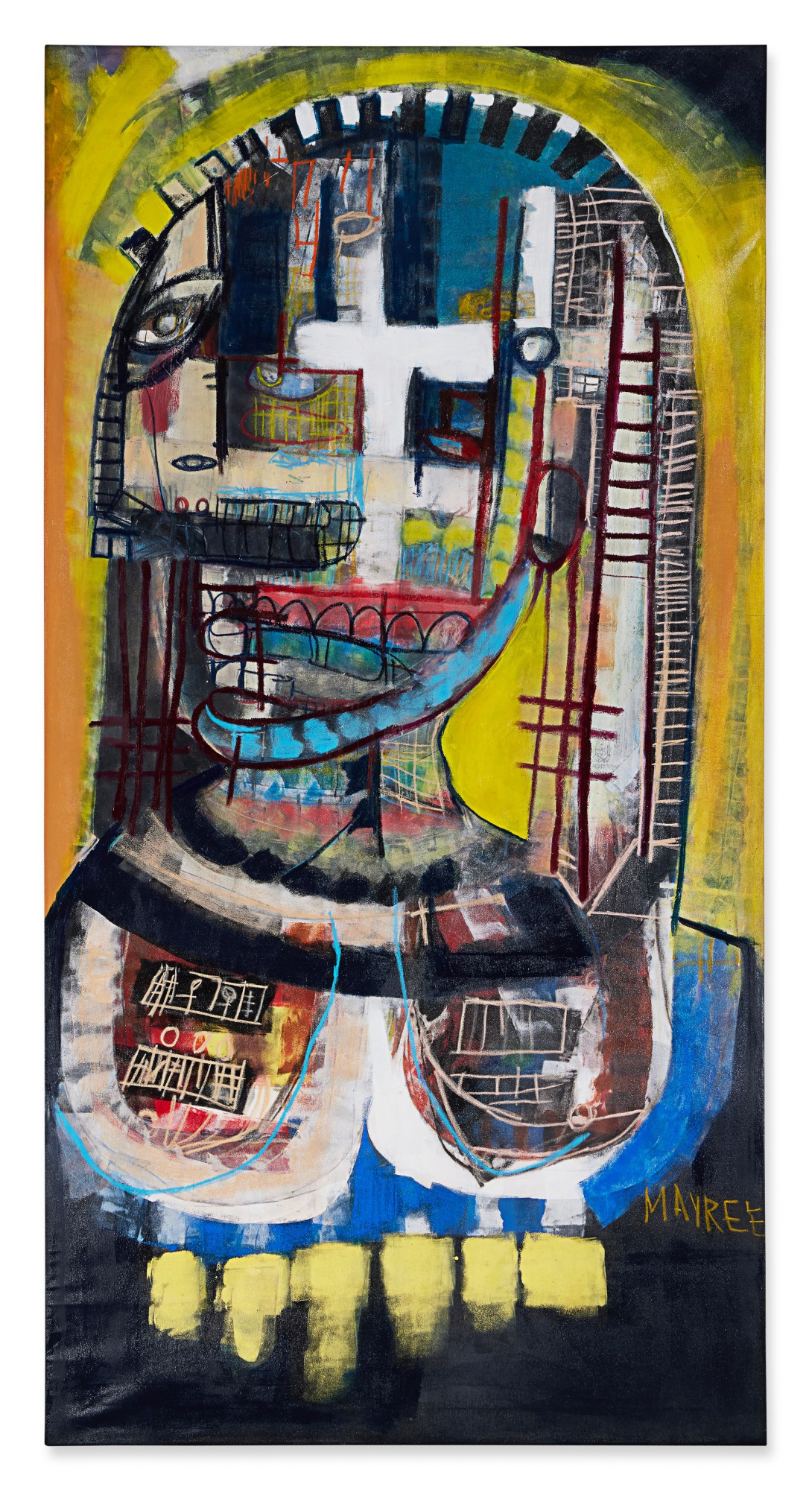
The paintings themselves are an experience in layering, not just of materials but of meaning. Works such as "May'REE" from 2018, executed in acrylic, spray paint, gouache, paint sticks, and oil on denim, demonstrate the range of Tramaine's material intelligence. Denim as a support carries its own cultural weight, its associations with labor, with Black American style, with the everyday sacred. Against that ground, his figures emerge with a quality that is both iconic in the religious sense and iconographic in the art historical sense.
The subject, rendered with stylized features and surrounded by fields of charged color, becomes both a specific person and a figure of universal spiritual significance. The 2019 works represent what many regard as a defining period in his output. "THIS LOVE OF MINE," "Black Boy with Vision," "God of Gods," "Mother of Suns of Thunder," and "Saint. Mother.
Genesis Tramaine
May'REE, 2018
Mary" all share a compositional confidence and a chromatic intensity that signals an artist who has fully inhabited his vision. "Black Boy with Vision" is particularly important as a cultural object: the title alone carries the weight of a counter narrative, an insistence on future and interiority for a subject that broader culture has too often reduced. The painting does not argue this point. It simply presents it as fact, with the calm authority of someone who has already won the argument.
By 2020, with works such as "Brother Abinadab" and "I Have All That I Need," Tramaine's material notations had grown even more spiritually specific. The listing of holy spirit as a material in the medium description of "Brother Abinadab" is not rhetorical flourish. It is a declaration of process, a statement that the making of the work involves an invocation that cannot be separated from the physical act of painting. This places Tramaine in a lineage that includes artists for whom the studio is a sacred space, from the Abstract Expressionists who spoke of painting as encounter to artists like Romare Bearden and Jean Michel Basquiat, who brought vernacular spiritual and cultural material into the formal language of contemporary art.
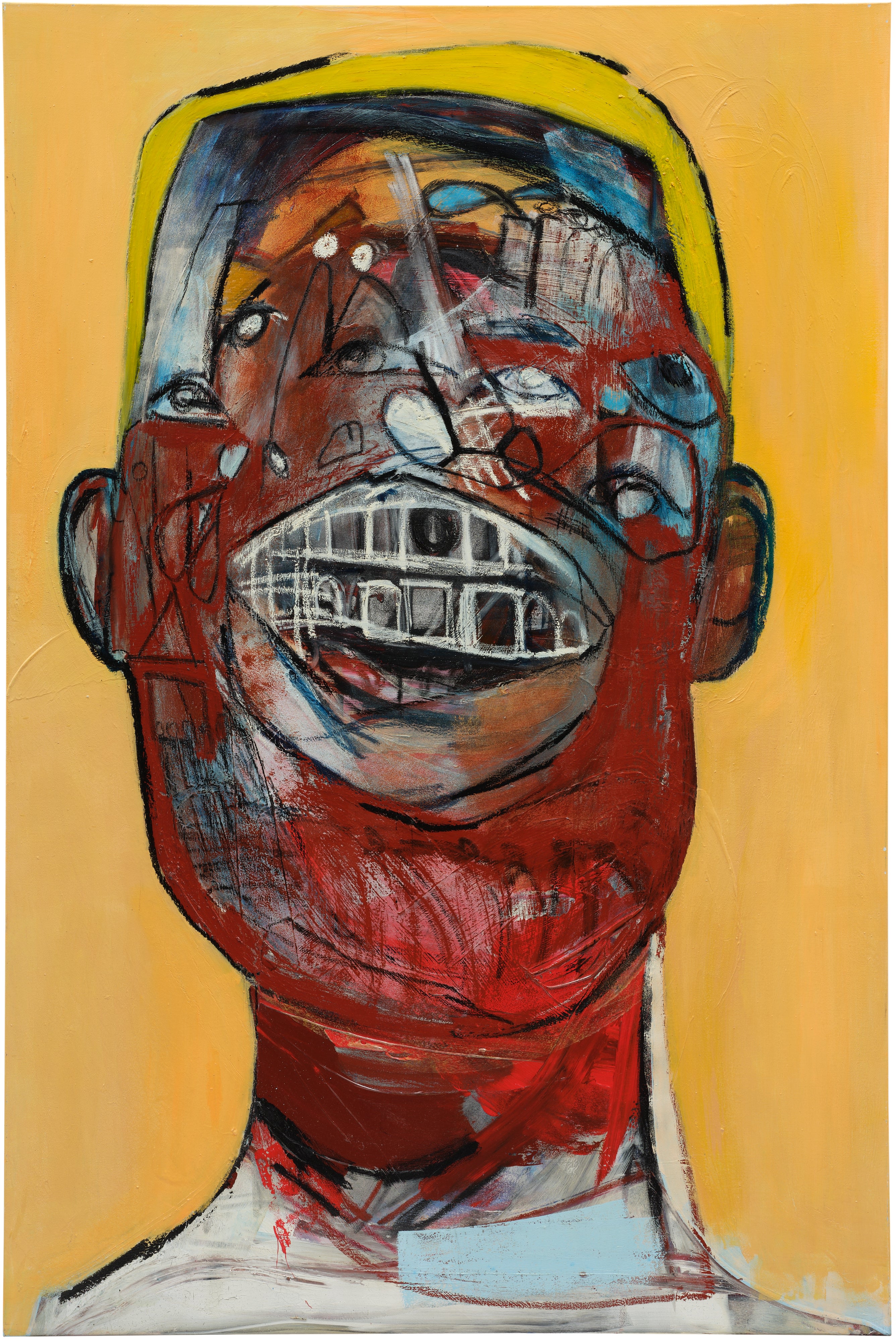
Genesis Tramaine
God of Gods, 2019
Tramaine belongs in that conversation and adds to it something distinctly his own. From a collecting perspective, Tramaine's work presents a compelling proposition. His paintings are grounded in a coherent and deeply held worldview, which means that the body of work has internal logic and continuity. Collectors who acquire one canvas find themselves drawn toward understanding the broader system of imagery, the recurring figures, the spiritual naming conventions, the material choices that accumulate into a full cosmology.
Works on unusual supports such as denim carry additional interest for collectors attuned to the ways that material choice extends meaning. The mixed media approach, combining spray paint with oil pastel and oilstick and acrylic, produces surfaces of genuine complexity that reward close looking over time. These are paintings that change as you change, which is one of the quieter marks of lasting quality. In terms of art historical context, Tramaine occupies a distinct position within the broader resurgence of Black figuration that has characterized so much of the most important painting of the past decade.
His peers and contemporaries in spirit, if not always in direct relation, include artists who have brought devotional intensity and cultural specificity to the figure: one thinks of the kind of radical tenderness that runs through the work of artists committed to rendering Black subjects with full interiority and spiritual depth. What separates Tramaine is the degree to which the sacred is not metaphor but method. The materials are prayers. The titles are scripture.
The figures are congregants and saints simultaneously. Genesis Tramaine matters today because he is making the kind of work that future generations will look back on as having captured something true and necessary about this moment in Black American spiritual and cultural life. His canvases refuse the separation between the holy and the human, between formal ambition and communal purpose. They are objects of beauty in the technical sense and objects of witness in the ethical sense.
For collectors building serious holdings in contemporary American painting, his work represents not just an opportunity but an obligation to pay attention.