Gene Davis
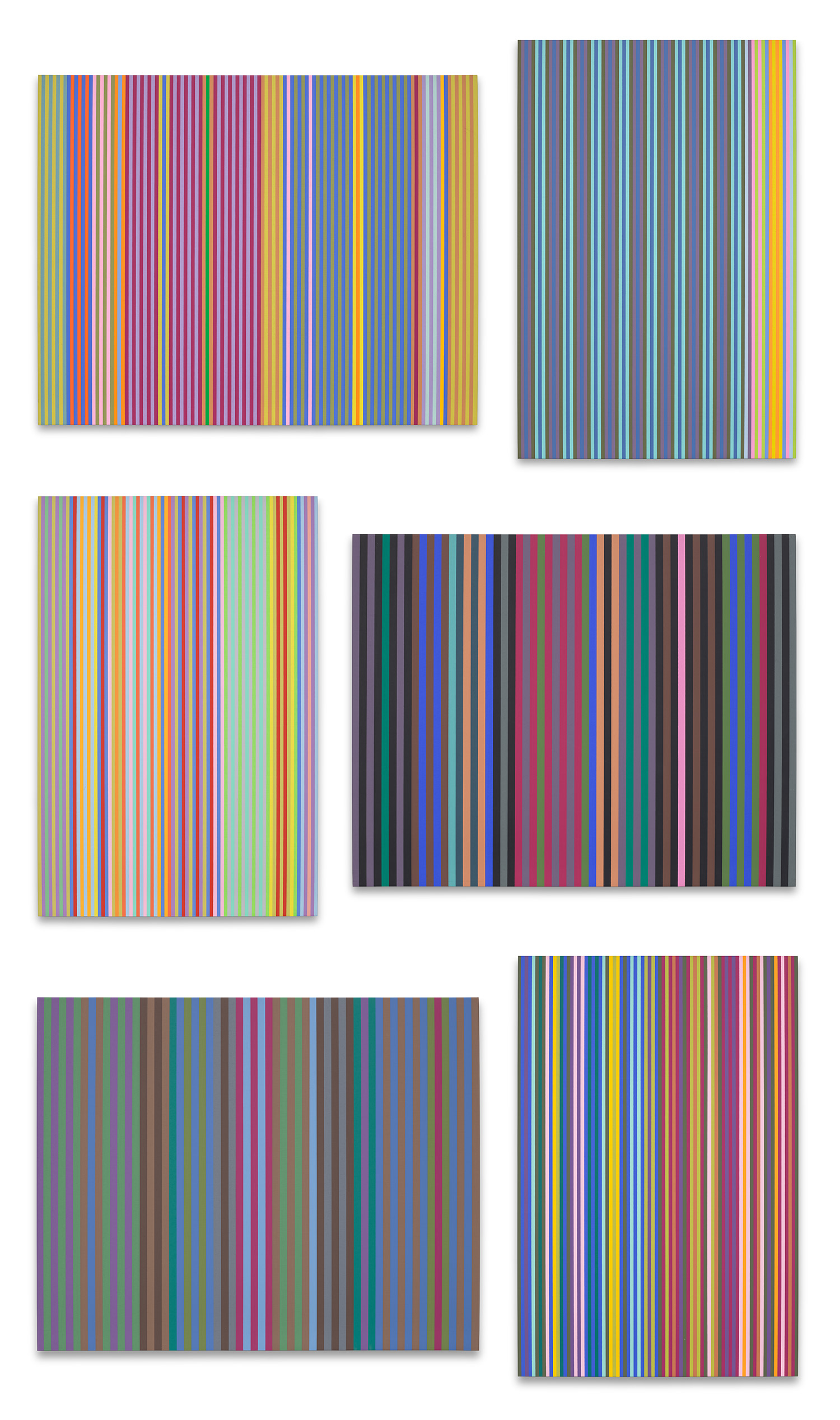
Gene Davis: The Painter Who Freed Color
Artist Spotlight · The Collection Editorial
Stand before one of Gene Davis's great stripe paintings and something unexpected happens. The eye does not rest. It travels, bounces, and hums across columns of color that seem to breathe against one another, each vertical band asserting itself while simultaneously yielding to its neighbor. It is a visual experience that feels both utterly simple and inexhaustibly complex, and it is precisely this quality that has kept Davis's work alive and vital in the decades since his death in 1985.
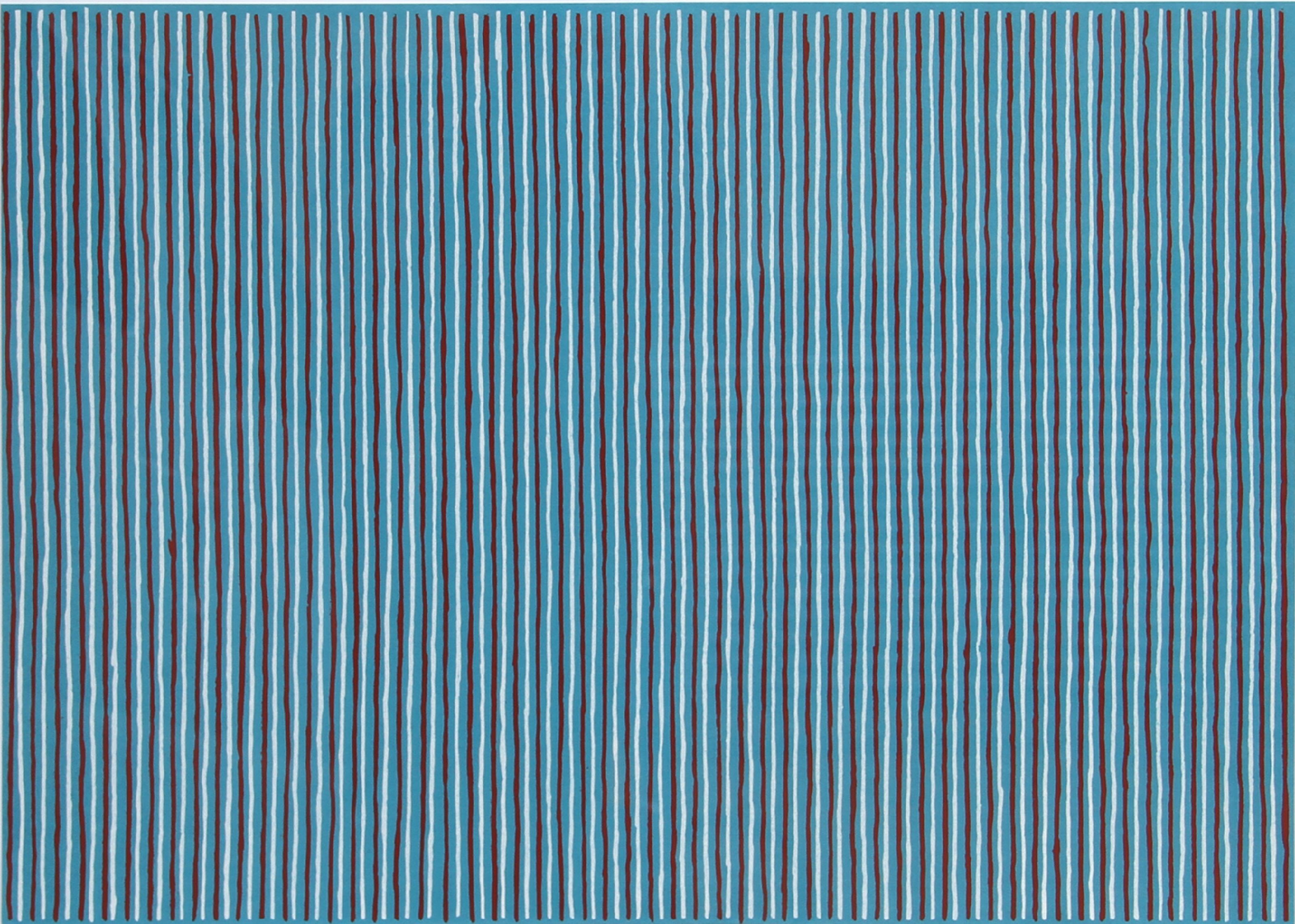
Gene Davis
Sonata
Major American institutions, from the National Gallery of Art to the Hirshhorn Museum and Sculpture Garden, hold his paintings in their permanent collections, and the art market has continued to reward collectors who recognized early that Davis was not a footnote to American modernism but one of its most singular voices. Gene Davis was born in Washington, D.C., in 1920, and he is inseparable from that city in the way that certain artists become synonymous with the places that shaped them.
He came to painting relatively late and without formal art school training, working as a journalist and sportswriter before devoting himself fully to the canvas. That outsider formation may well have freed him from certain orthodoxies. He did not arrive at abstraction through the prescribed routes, and the work reflects a self taught confidence, a willingness to follow a formal idea wherever it led without asking permission from prevailing taste. By the late 1950s and into the 1960s, Davis had found his subject: the vertical stripe.
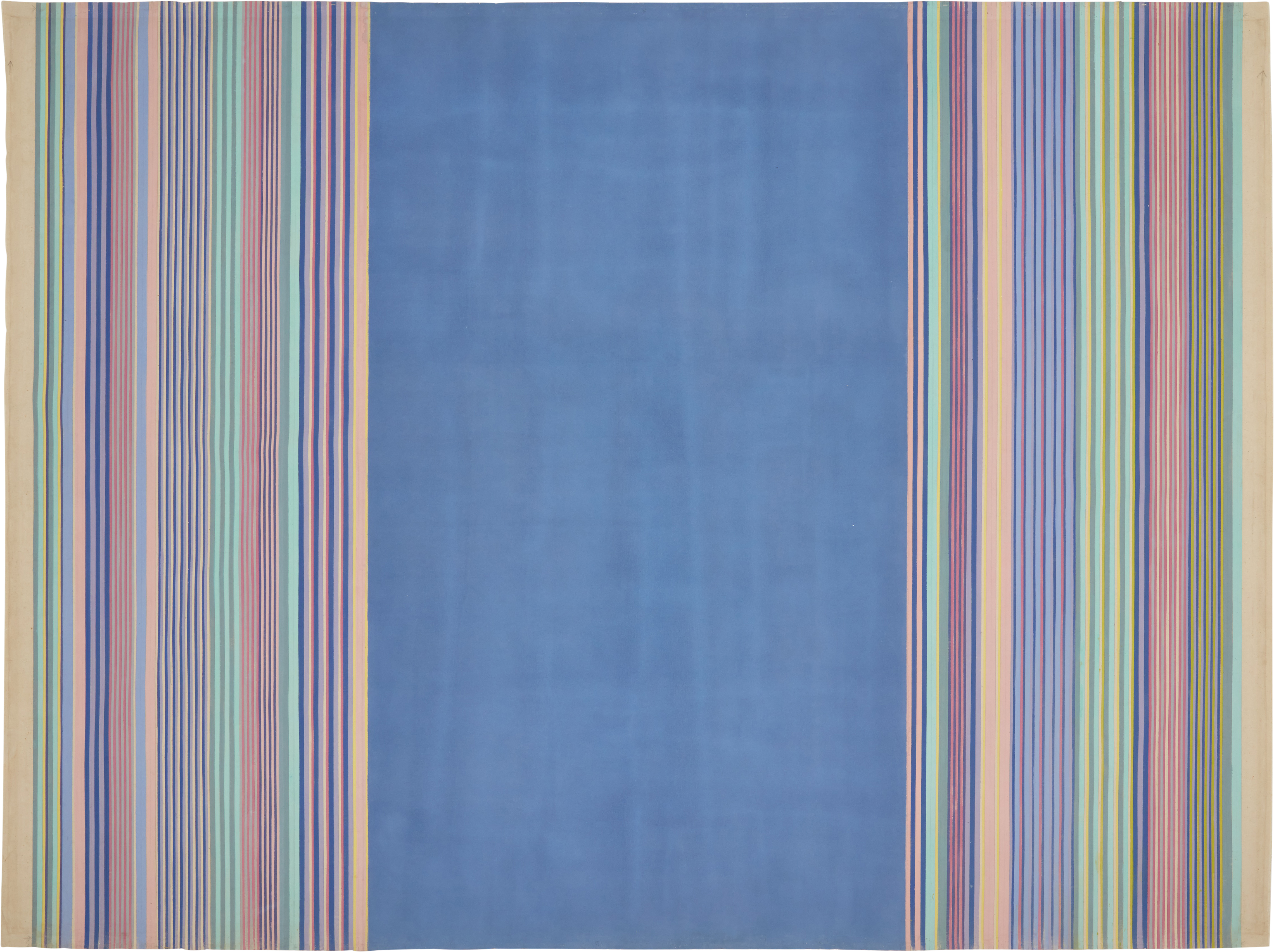
Gene Davis
Queen of Diamonds, 1980
What sounds reductive in description becomes, in practice, an engine of extraordinary expressive range. He would arrange bands of color across canvases that could run to extraordinary lengths, varying their widths, sequencing their hues with a composer's attention to rhythm and resolution. The stripe was his syntax, and through it he developed a language capable of everything from quiet meditation to something approaching visual thunder. He became a central figure in what would come to be known as the Washington Color School, a movement that also included Morris Louis, Kenneth Noland, and Sam Gilliam, artists who shared a commitment to color as the primary carrier of meaning in painting.
The Washington Color School emerged partly through the influence of the critic Clement Greenberg and the galvanizing presence of artist and teacher Hans Hofmann, but it developed its own distinct character, one less beholden to the gestural intensity of New York Abstract Expressionism and more invested in the optical and emotional properties of color itself. Davis fit within this conversation while also standing apart from it. Where Louis worked with stained, poured veils of pigment and Noland pursued circular and chevron forms, Davis committed to the stripe with a kind of monastic discipline. His paintings reward prolonged looking in the way that music rewards repeated listening: the structure becomes more apparent even as the emotional effect deepens.
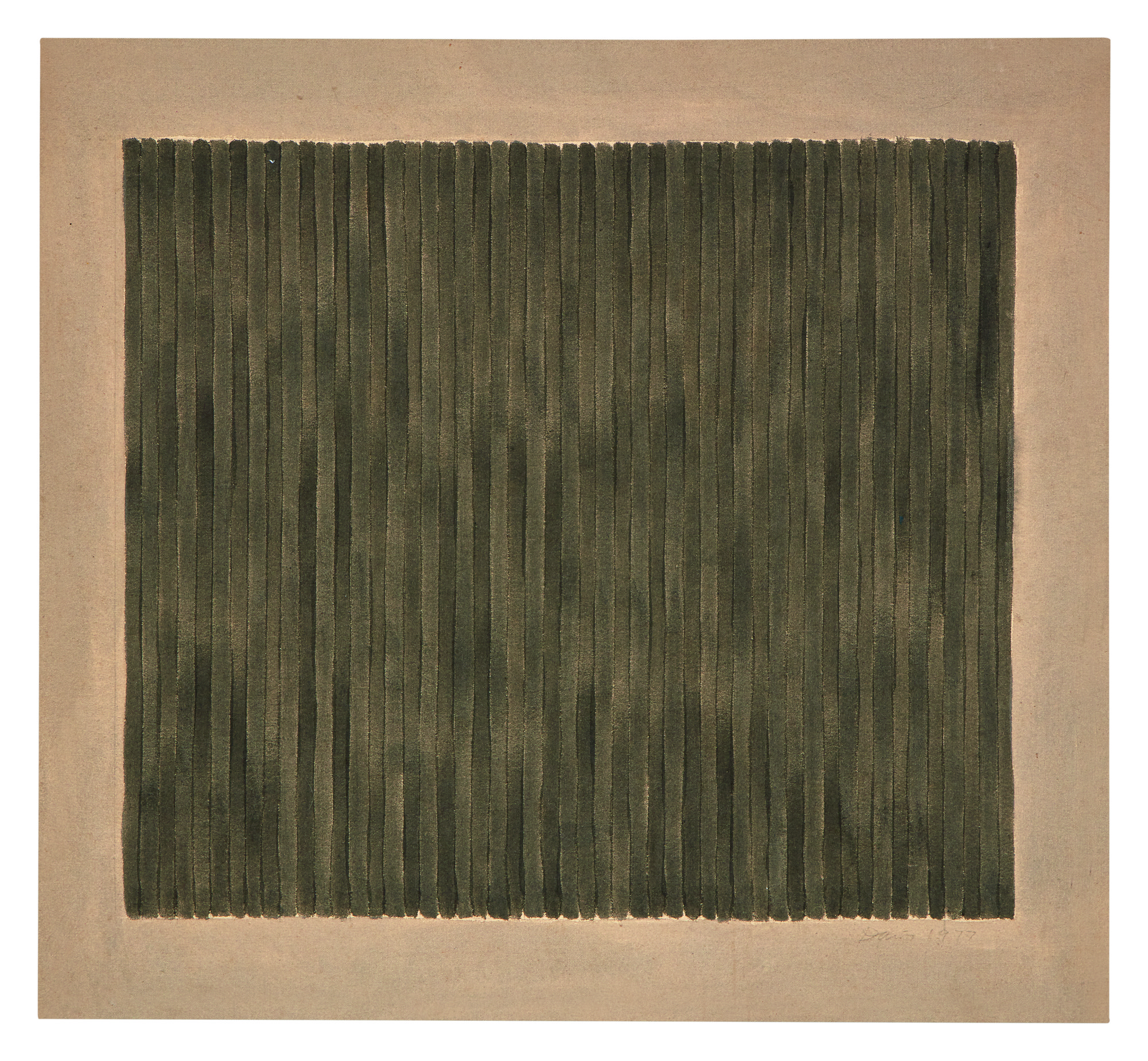
Gene Davis
Untitled
Among his most celebrated works, "Black Dahlia" from 1971 demonstrates the dramatic power of his palette, using dark anchoring tones against which other colors ignite. "2 Plus" from 1970, a diptych in acrylic on canvas, shows his interest in how the stripe format could be extended and complicated across multiple panels, each section in conversation with the other. "Queen of Diamonds" and "Queen's Gate," both from 1980, belong to a mature period in which Davis's command of color sequencing had reached a peak of assurance, the arrangements feeling at once inevitable and surprising. His print work, including the "Series 1" portfolio published by Petersburg Press in New York and London and the screenprint "Jack In The Box," extended his visual ideas into multiples, making his formal investigations accessible to a broader range of collectors without diminishing their rigor.
Davis also worked at monumental scale. His outdoor murals brought the stripe painting into public space in ways that were genuinely radical, treating city surfaces as canvases and inviting populations who might never enter a museum to encounter serious abstract art. The Franklin's Footpath mural created in Philadelphia in 1972 remains one of the most ambitious examples of public abstract art in American history, covering a vast parking lot surface with stripes that could only be fully apprehended from above. It was a work that challenged every assumption about where painting could live and who it was for.
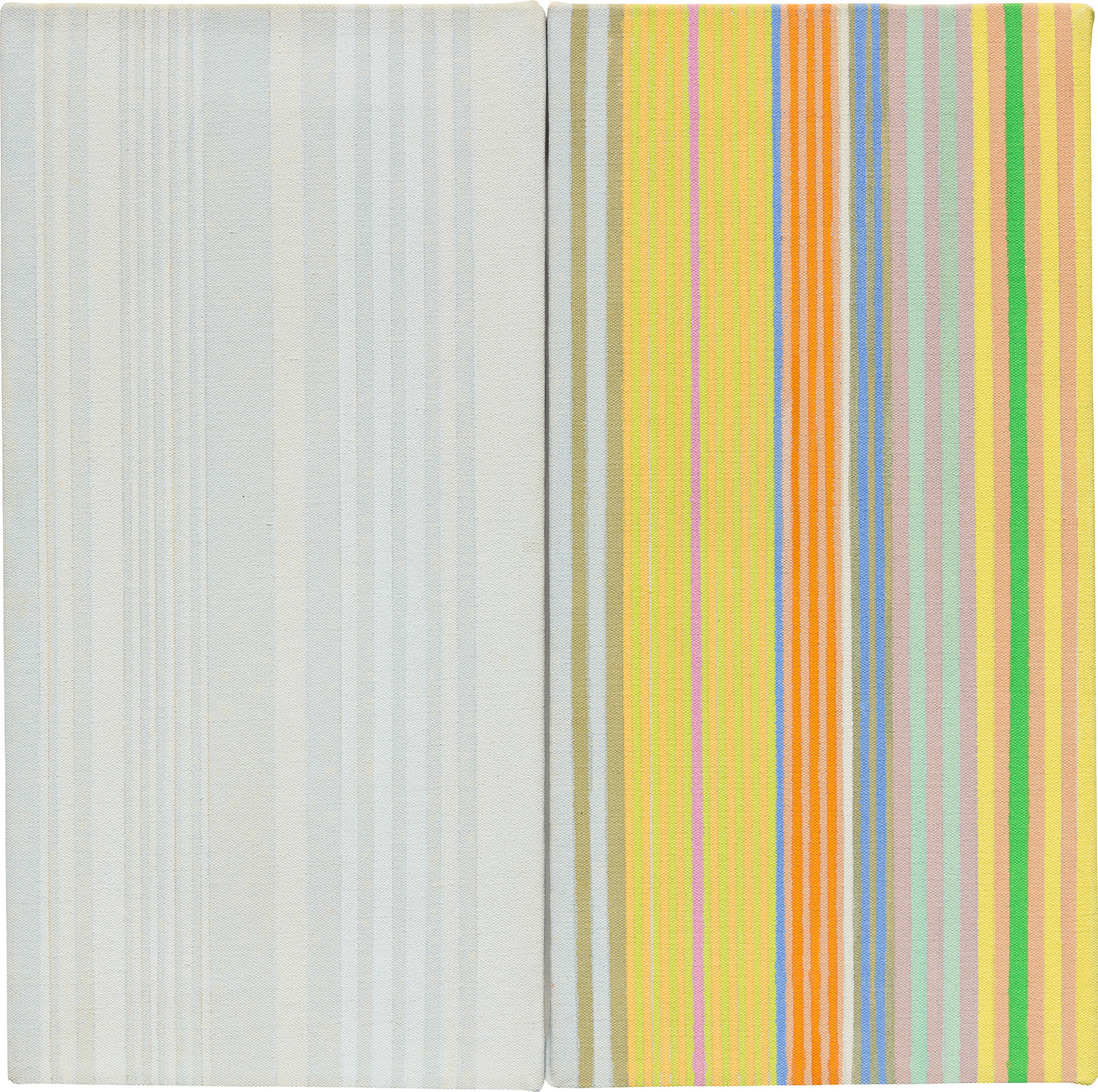
Gene Davis
2 Plus, 1970
For collectors, Davis presents a compelling case across multiple entry points. Works on paper and prints such as the Smithsonian screenprint and the Petersburg Press portfolio offer access to his formal thinking at price points below major canvas works. The acrylic paintings on canvas represent the core of his achievement and have seen sustained institutional and market interest. When evaluating a Davis, collectors and advisors tend to look at the complexity and ambition of the color sequencing, the scale of the work, and its provenance.
Works from the late 1960s through the early 1980s are generally considered the strongest period, and signed works with clear exhibition histories command premium attention. The artist's estate has worked to maintain scholarly and market clarity around his output, which adds confidence for serious buyers. Within the broader arc of postwar American art, Davis sits in illuminating proximity to artists working across Color Field painting, Minimalism, and what was sometimes called Systemic Abstraction. His work invites comparison with Frank Stella's early stripe paintings, though Davis arrived at his format independently and pursued it with different emotional intentions.
He shares with Ellsworth Kelly a devotion to color relationships and with Bridget Riley an interest in optical effects, though his sensibility remains distinctly American and distinctly rooted in Washington rather than New York. That geographic distance from the art world's commercial center may have cost him some recognition during his lifetime, but it also gave his practice a kind of integrity that collectors have come to prize. Gene Davis died in 1985, but his paintings continue to generate the experience he spent a career pursuing: the sensation of color as a living, relational force rather than mere decoration or illustration. At a moment when the art world regularly rediscovers artists who worked outside the dominant narratives, Davis is increasingly understood not as a regional figure or a secondary voice in the Color Field conversation, but as a painter of primary importance.
His best works ask nothing of the viewer except attention, and they repay that attention abundantly.