Gelitin
Gelitin: Joy, Chaos, and Collective Wonder
Artist Spotlight · The Collection Editorial
There is a photograph, grainy and vertiginous, that has taken on the quality of legend. Somewhere around the year 2000, four young Austrian artists quietly cut through the sealed glass of a World Trade Center window on the 91st floor, constructed a makeshift balcony from materials smuggled in over months, stood outside in the open New York sky at sunrise, and then disappeared, leaving almost no trace. The project, known as The B Thing, was documented and later published as a limited artist book, and it became one of the defining acts of early 21st century art: a gesture simultaneously absurd, sublime, illegal, and deeply poetic. That is Gelitin in miniature, and also in full.
Gelitin
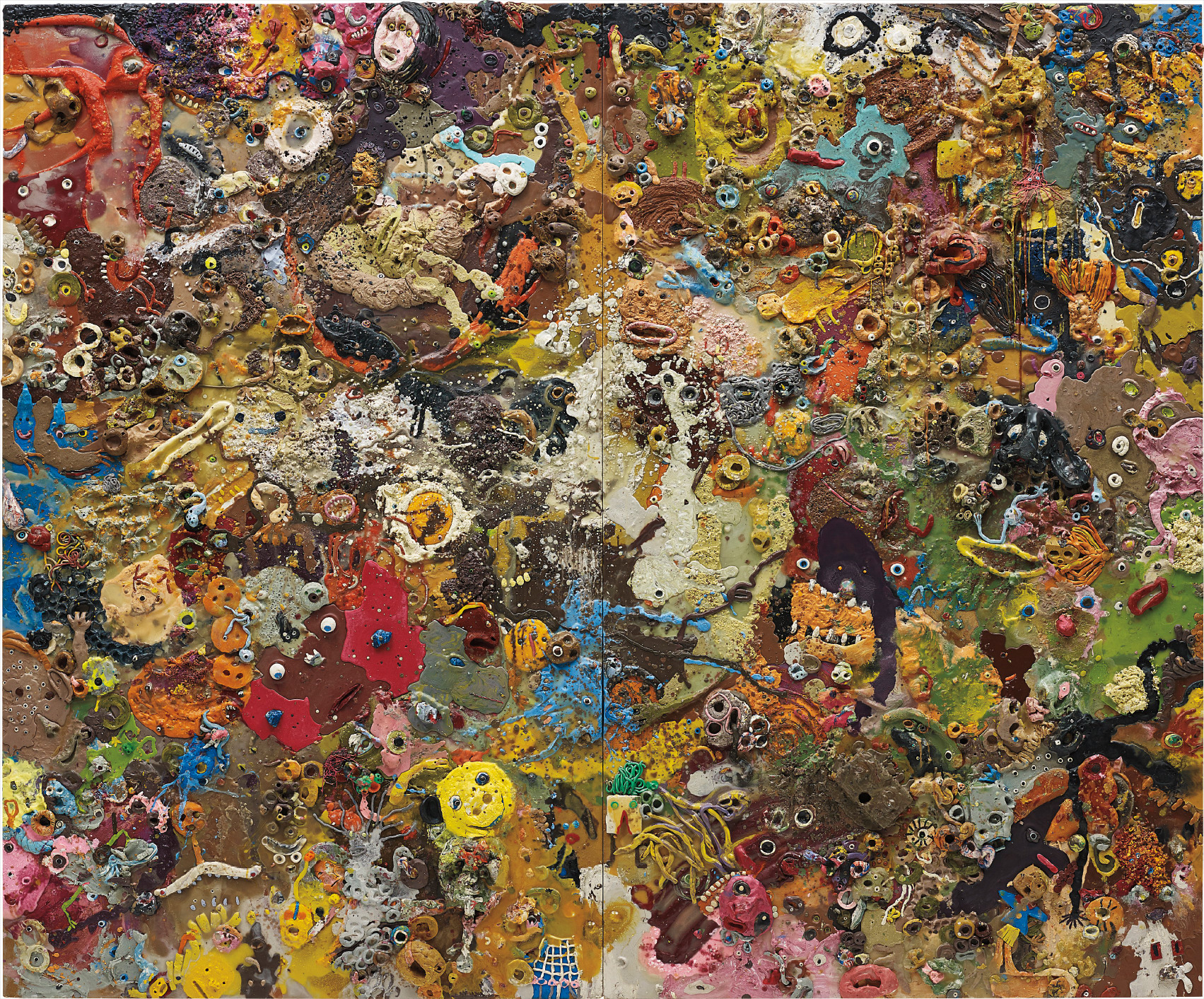
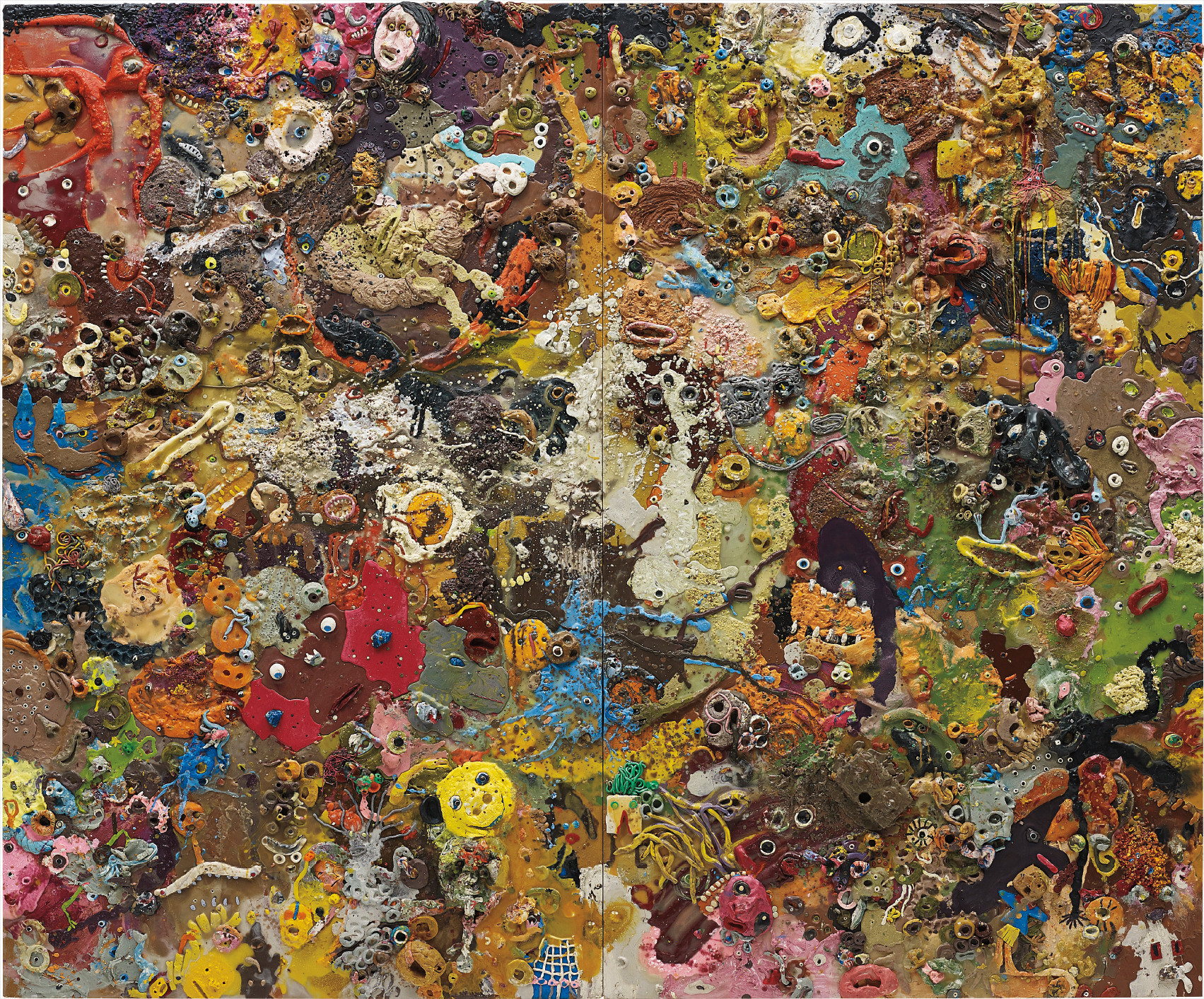
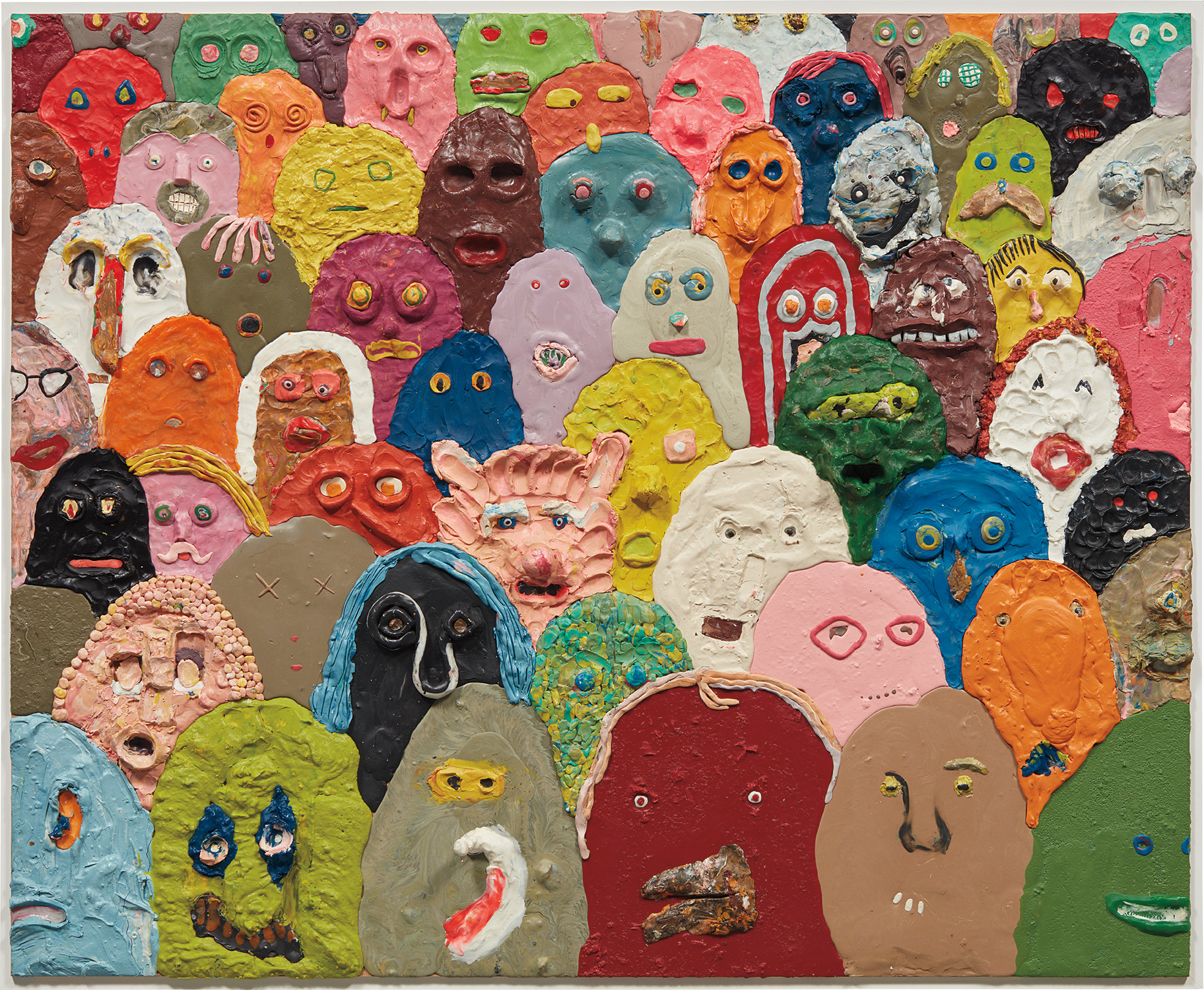
plasticine on wood, in 2 parts, 2008
Gelitin was formed in Vienna in the late 1970s, with all four members born around 1978, and the group grew out of a shared sensibility forged in the particular atmosphere of Austrian youth culture and the legacy of Viennese Actionism. Ali Janka, Tobias Urban, Wolfgang Gantner, and Florian Reither came together as teenagers at a summer camp, and the bonds formed there became the foundation for a decades long collaborative practice. Where the Viennese Actionists of the 1960s pursued transgression through visceral, often violent performance, Gelitin inherited that appetite for boundary dissolution but filtered it through absurdist humor, communal joy, and an almost childlike delight in material play. Vienna gave them a context for thinking about the body, about institutions, and about what art is allowed to do.
Their early work announced an ambition that was both institutional and anti institutional at the same time. The B Thing was not just a stunt. It was a meditation on presence, on the invisibility of labor, on what it means to claim space within the most fortified monuments of capitalism, and on the ephemerality of experience as a valid artistic category. The fact that the World Trade Center no longer exists gives the work a grief it never intended, and yet the documentation persists, circulates, and continues to generate conversation about what performance and intervention can mean.
Gelitin
Ralf
It set the terms for everything that followed: work that asks for your participation, your laughter, your discomfort, and occasionally your disbelief. Across the next two decades, Gelitin built a body of work that spans enormous participatory installations, intimate sculptures, exuberant paintings, and objects made from plasticine that blur the line between painting, sculpture, and children's craft. Their appearances at the Venice Biennale brought international audiences into contact with environments that defied easy categorization, rooms transformed into collective playgrounds where the social contract between viewer and artwork was cheerfully torn up and renegotiated. Major museums across Europe and the United States have hosted their projects, and each venue has contended with the same productive challenge: Gelitin does not make work that sits quietly on a wall and waits to be observed.
Their work insists on relationship, on the mess of being alive together in a room. Among the works available to collectors, the plasticine pieces represent a particularly compelling thread in the group's practice. Works such as their plasticine on wood panels from 2008 and 2009, and their plasticine with glitter on wood constructions from 2007, carry the DNA of everything Gelitin does: process is foregrounded, authorship is collective and yet personally inscribed, and the material itself carries a deliberate charge. Plasticine is a substance associated with childhood, with non seriousness, with the provisional and the unfinished.
Gelitin
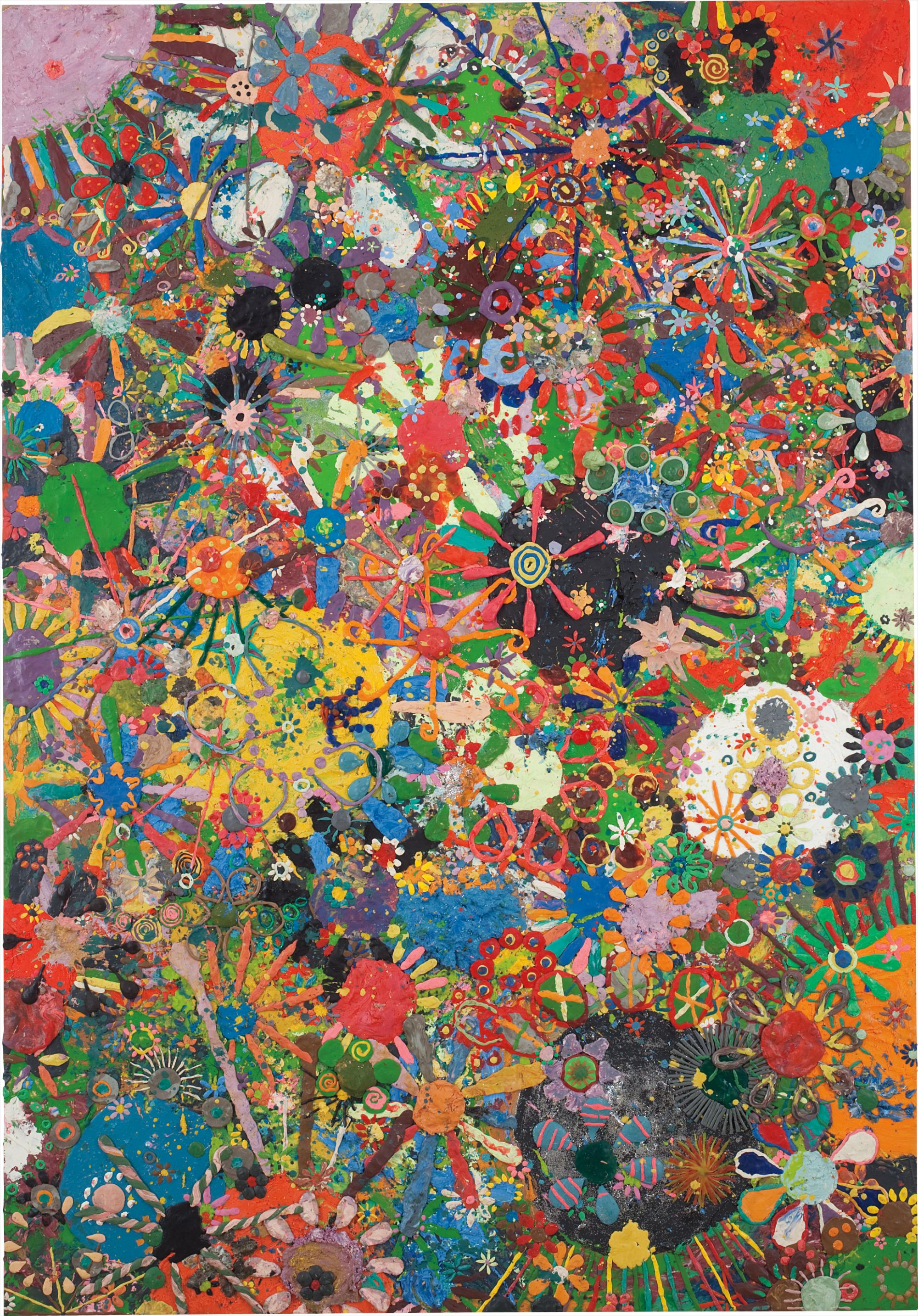
Flower Painting
In Gelitin's hands it becomes a genuine medium, loaded with color and texture, its soft permanence a rebuke to the hierarchies of art materials. The works are signed and numbered, often bearing the names of individual group members alongside the collective signature, a reminder that collaboration here is not the erasure of individual presence but its multiplication. Their Guernica from 2006 takes a further step, invoking Picasso's great howl of political anguish and reprocessing it through the group's irreverent lens, asking what it means to hold grief and absurdity in the same image at the same time. For collectors, Gelitin offers something genuinely rare: works that carry intellectual and art historical weight while also being, in the most generous sense of the word, fun to live with.
The plasticine works in particular reward long looking. They are objects with personality, with humor embedded in their making, and with a provenance that connects the collector to one of the most consistently surprising collaborative practices of the past thirty years. Collectors drawn to artists such as Paul McCarthy, Mike Kelley, or the Haas Brothers will find in Gelitin a kindred sensibility, one that treats materials as agents of meaning and the studio as a space of genuine freedom. The market for Gelitin works has grown steadily as institutional recognition has deepened, and works with clear provenance and intact signatures, particularly those numbered within the group's own inventory system, represent a strong foundation for any collection focused on post conceptual European practice.
Gelitin
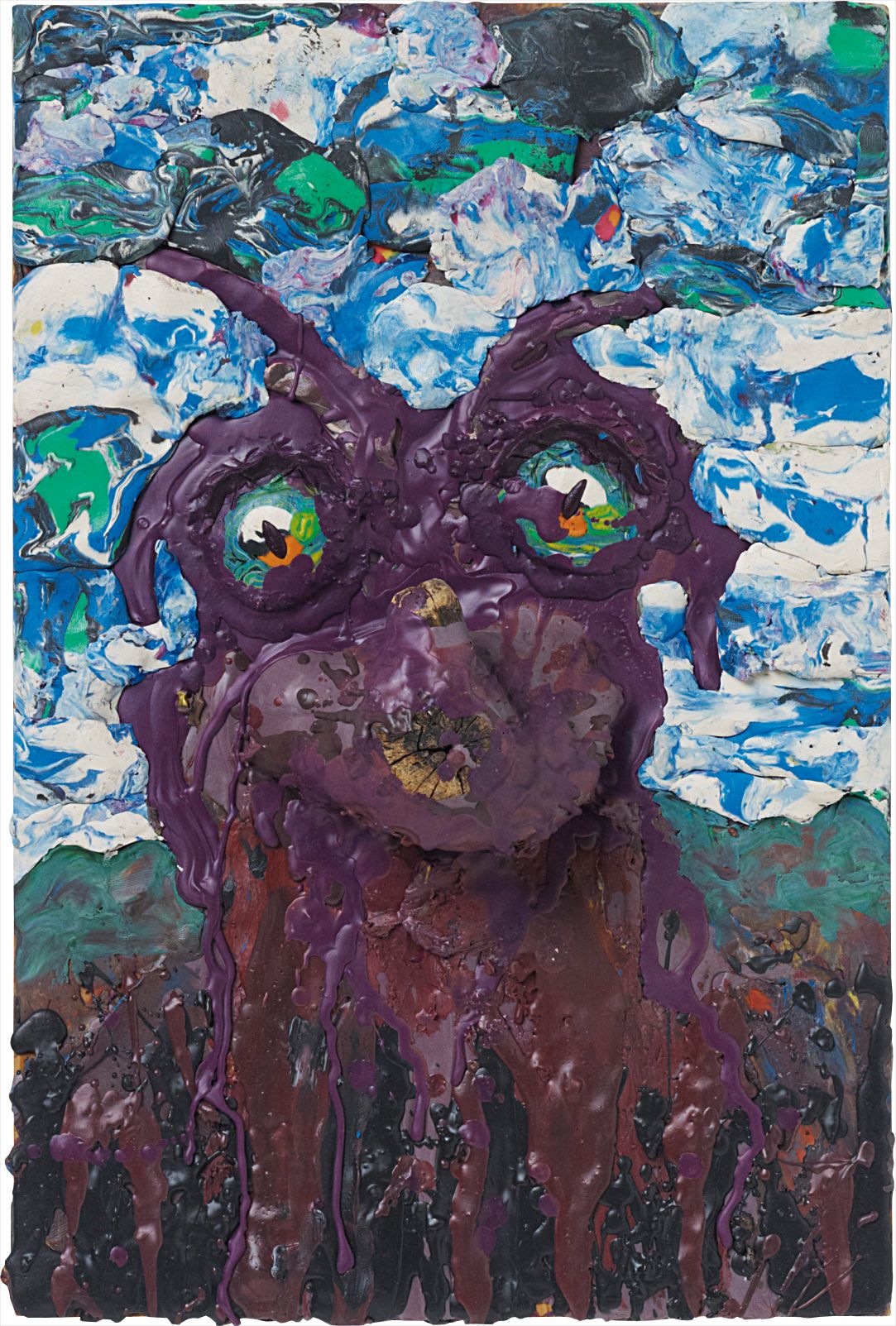
Plasticine on panel, 2009
Gelitin occupies a distinctive position in the broader map of contemporary art. They belong to a tradition of collaborative practice that includes the playful institutional critique of Fischli and Weiss, the participatory ambition of Rirkrit Tiravanija, and the material irreverence of Paul McCarthy, but they are not reducible to any of these comparisons. What sets them apart is a quality that is genuinely difficult to manufacture: warmth. Their work is critical without being cold, transgressive without being cruel, and participatory without being coercive.
They seem to believe, against considerable evidence to the contrary, that art can make people happy, and they pursue that belief with the rigor of conceptualists and the energy of performers who have never quite decided to grow up. At a moment when the art world is rightly asking questions about what institutions are for and who gets to participate in culture, Gelitin's entire practice reads as an answer delivered in plasticine and laughter. They have spent thirty years insisting that art belongs to everyone who shows up willing to be surprised, and the works they leave behind carry that insistence in every handprint and every carefully inscribed signature. To collect Gelitin is to collect a belief in the transformative potential of collective joy, which is, when you think about it, as good a reason to collect anything as any.
Explore books about Gelitin