Gaston Chaissac
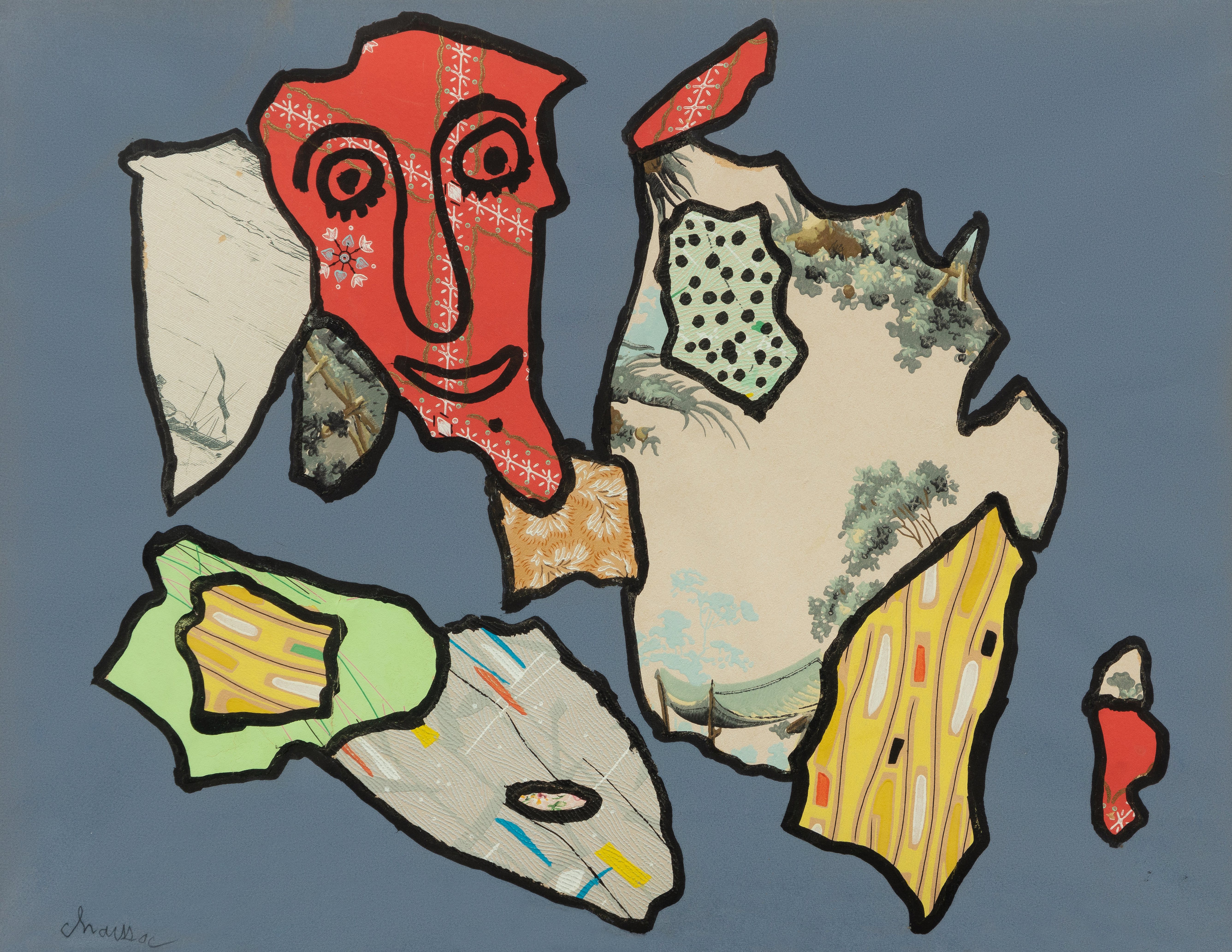
Gaston Chaissac, Joyful Architect of Raw Invention
Artist Spotlight · The Collection Editorial
“I am a rustic modern painter, a village modern painter.”
Gaston Chaissac, correspondence with Jean Dubuffet
In the spring of 2014, the Musée de l'Abbaye Sainte Croix in Les Sables d'Olonne mounted a landmark retrospective honoring one of French art's most singular and undersung voices. The occasion served as a timely reminder that Gaston Chaissac, who spent much of his life in near total rural isolation, had quietly produced one of the twentieth century's most original bodies of work. Painted wooden panels, ink drawings pulsing with nervous energy, collages assembled from the most humble of materials: the exhibition made clear that Chaissac had not merely participated in the avant garde conversation of his era but had enriched it in ways that continue to reverberate through contemporary art practice. For collectors who have spent years tracking the market for works of genuine individuality, his name carries a particular weight, that of an artist who arrived at his vision entirely on his own terms.
Gaston Chaissac
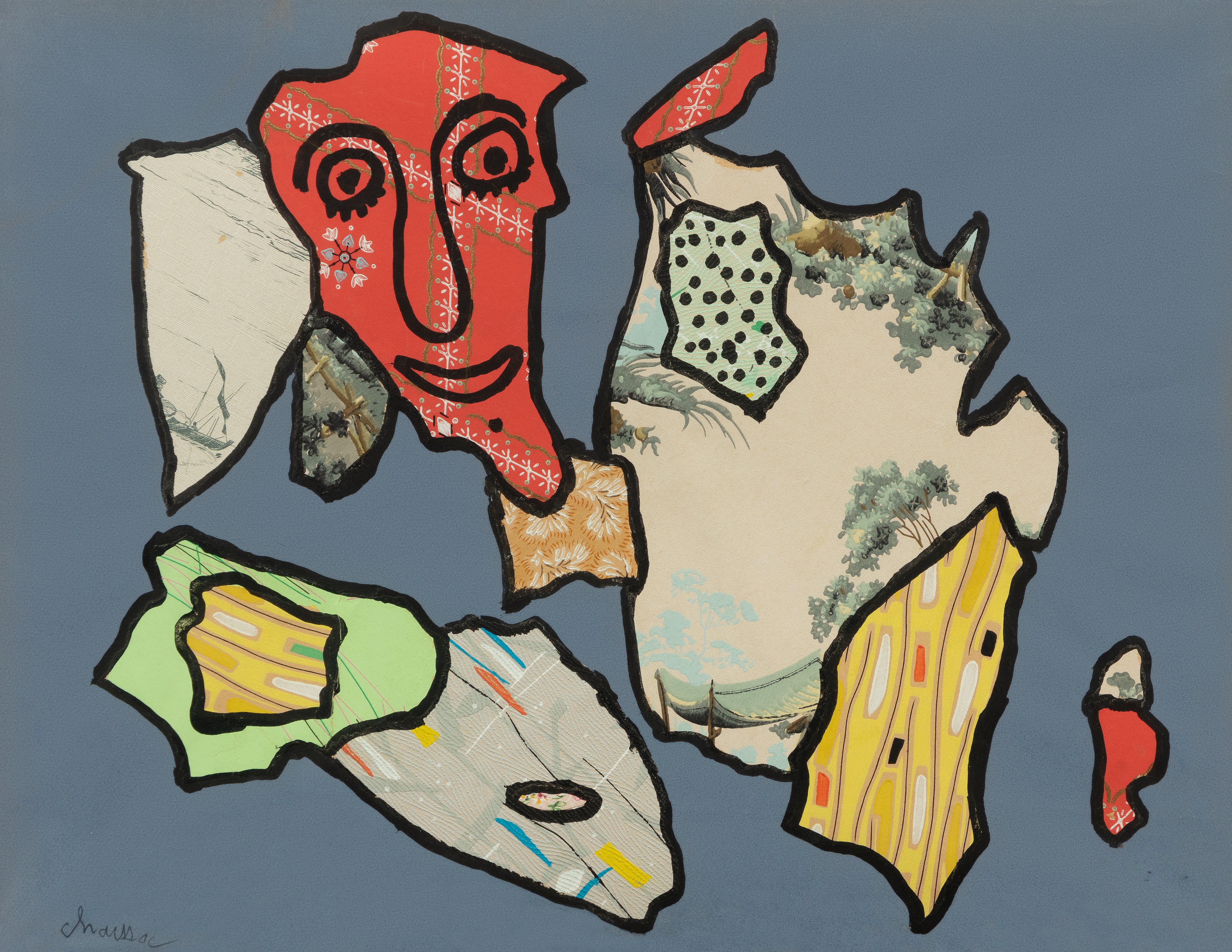
Untitled, 1963
Chaissac was born in 1910 in Avallon, a quiet town in Burgundy, to a family of modest means. His father was a cobbler, and Gaston spent his youth moving between trades and struggling with poor health, a situation that would define the material conditions of his entire life. He received no formal art education, and for much of his early adulthood the idea of becoming an artist seemed entirely remote. The decisive turn came in Paris in the late 1930s, when he encountered the German painter Otto Freundlich, a figure of enormous generosity who recognized something latent and powerful in Chaissac's earliest experiments.
Freundlich encouraged him to pursue his instincts without apology, a permission that proved transformative and irreversible. Through Freundlich, Chaissac was introduced to the circle of abstract and avant garde artists working in Paris at the time, including the milieu around the journal Art Concret. Yet he never truly belonged to any school or movement. After marrying Camille Guibert in 1942, he moved to the Vendée in western France, settling in small villages where he would spend the remainder of his life in genuine provincial isolation.
Gaston Chaissac
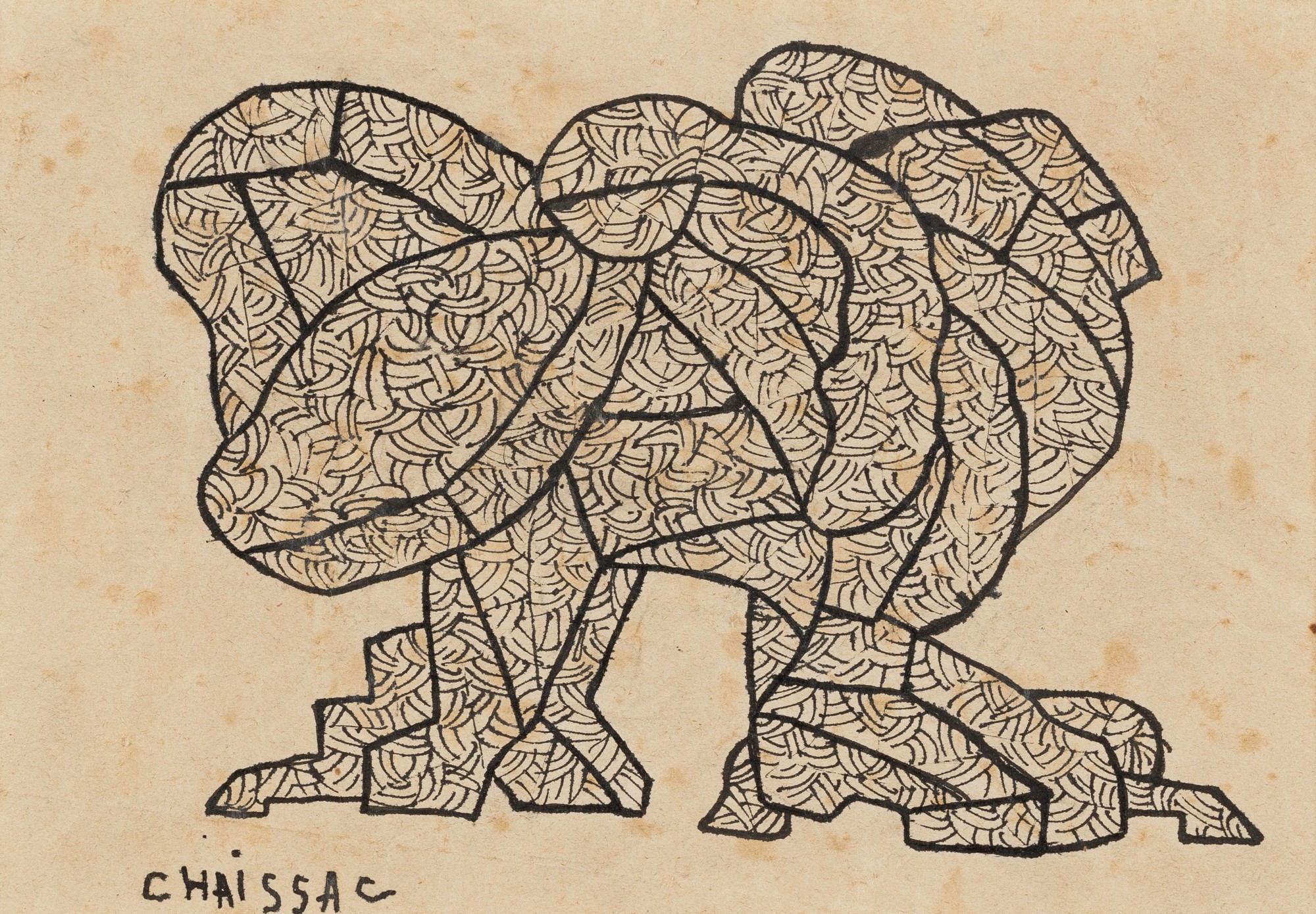
Sans titre
It was here, far from galleries and critical attention, that his art found its fullest and most extraordinary expression. The distance from Paris may have denied him institutional support, but it gave him something rarer: the freedom to develop a visual language accountable to no one but himself. The work Chaissac produced across the 1940s and 1950s established the vocabulary for which he is now celebrated. His figures, totemic and often hieratic, recall tribal masks and folk carvings while remaining entirely his own invention.
He worked on whatever surfaces were available to him: scraps of cardboard, pieces of old wood, the backs of envelopes. He painted with house paint and shoe polish as readily as with oils, and his collages incorporated found papers, packaging, and ephemera gathered from his immediate surroundings. Jean Dubuffet, who championed the idea of Art Brut as a counterforce to academic culture, recognized a profound kinship in Chaissac's practice and corresponded with him extensively from the late 1940s onward. Their exchange, preserved in a remarkable body of letters, is one of the most illuminating dialogues in postwar French art history.
Gaston Chaissac
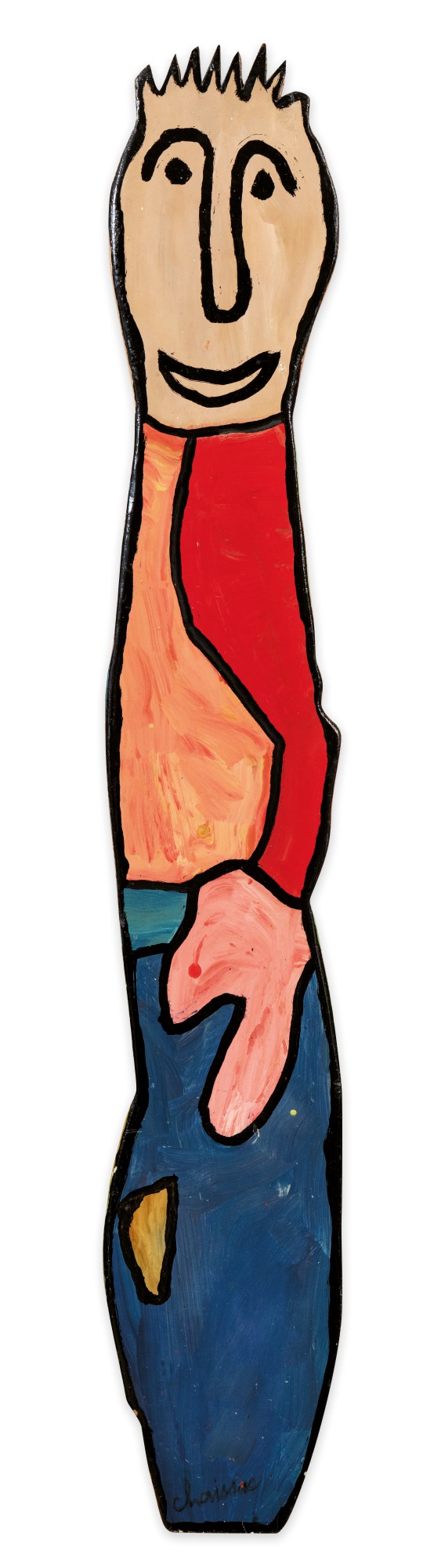
Le coiffé en brosse, 1963
Among the works available on The Collection, "Le coiffé en brosse" from 1963 stands as an exemplary statement of his late manner. Executed in oil on wood, the painting presents one of his characteristic figures with a directness and physical presence that is immediately arresting. The surface carries the texture of its modest support with pride rather than apology, and the image radiates the confidence of an artist who had long since stopped seeking permission. The gouache and paper collage from the same year demonstrates his equal fluency in more intimate formats, layering material and mark with an intuitive rightness that resists any sense of accident or naivety.
These works reward sustained looking, revealing new decisions and small formal inventions with each return. The market for Chaissac has grown steadily and meaningfully since his death in 1964, driven by collectors who value originality above fashion. Major auction houses in Paris have brought significant works to sale over the past two decades, and results have reflected a growing international appetite for Art Brut and its adjacent territories. Collectors who have built holdings around artists such as Jean Dubuffet, Adolf Wölfli, or Aloïse Corbaz often find Chaissac a natural and deeply rewarding complement, though his work operates at a register that is warmer and more playful than many of his Art Brut contemporaries.
He belongs equally in the company of artists like Jean Michel Basquiat and Karel Appel, figures who drew on vernacular and instinctive sources to produce work of genuine pictorial force. For those approaching his market for the first time, works on paper offer an accessible and often spectacular entry point, while his painted wooden objects remain among the most sought after and distinctive objects in any serious collection. What makes Chaissac so compelling to the contemporary eye is precisely the qualities that kept him marginal during so much of his lifetime. His refusal of academic convention, his resourcefulness with materials, and his consistent humor feel entirely at home in a cultural moment that prizes authenticity and questions inherited hierarchies of artistic value.
He was doing something genuinely radical from a farmhouse in the Vendée, corresponding with Dubuffet by letter and painting on salvaged wood, and the work has not aged by a single day. Institutions across France, including the Musée des Arts Décoratifs in Paris, hold important examples of his work, and his influence can be traced in the practices of younger artists who may not even know his name. For collectors who believe that the history of twentieth century art is still being fully written, Gaston Chaissac represents one of its most joyful and necessary discoveries.
Explore books about Gaston Chaissac
Gaston Chaissac
Jean Dubuffet
Gaston Chaissac: Catalogue Raisonné
Lyle Ashton Harris and Michel Tapié
Chaissac
Alain Jouffroy
Gaston Chaissac: Retrospective
Centre Culturel de Vendée
L'Art Brut de Gaston Chaissac
Francine Marquet