Ganesh Pyne
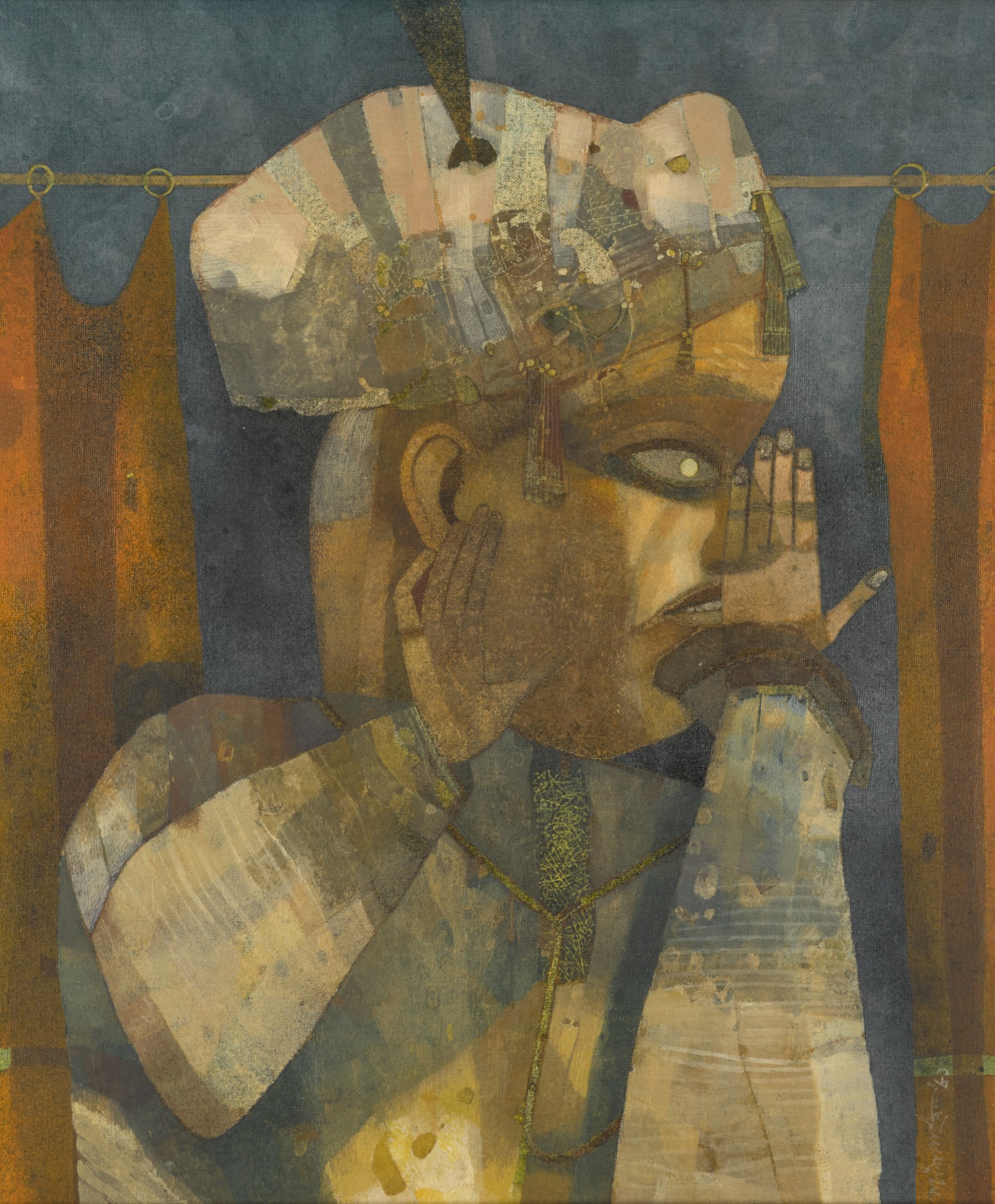
Ganesh Pyne: Master of India's Twilight World
Artist Spotlight · The Collection Editorial
There is a moment, standing before a Ganesh Pyne tempera, when the eyes adjust. What first appears as shadow slowly resolves into form: a figure crouching at the edge of a dream, a lamp burning against absolute darkness, a narrative suspended between waking and sleep. That quality of slow revelation is no accident. Pyne spent decades perfecting a visual language so precise and so personal that it remains, more than a decade after his passing in 2013, entirely without parallel in modern Indian art.
Ganesh Pyne
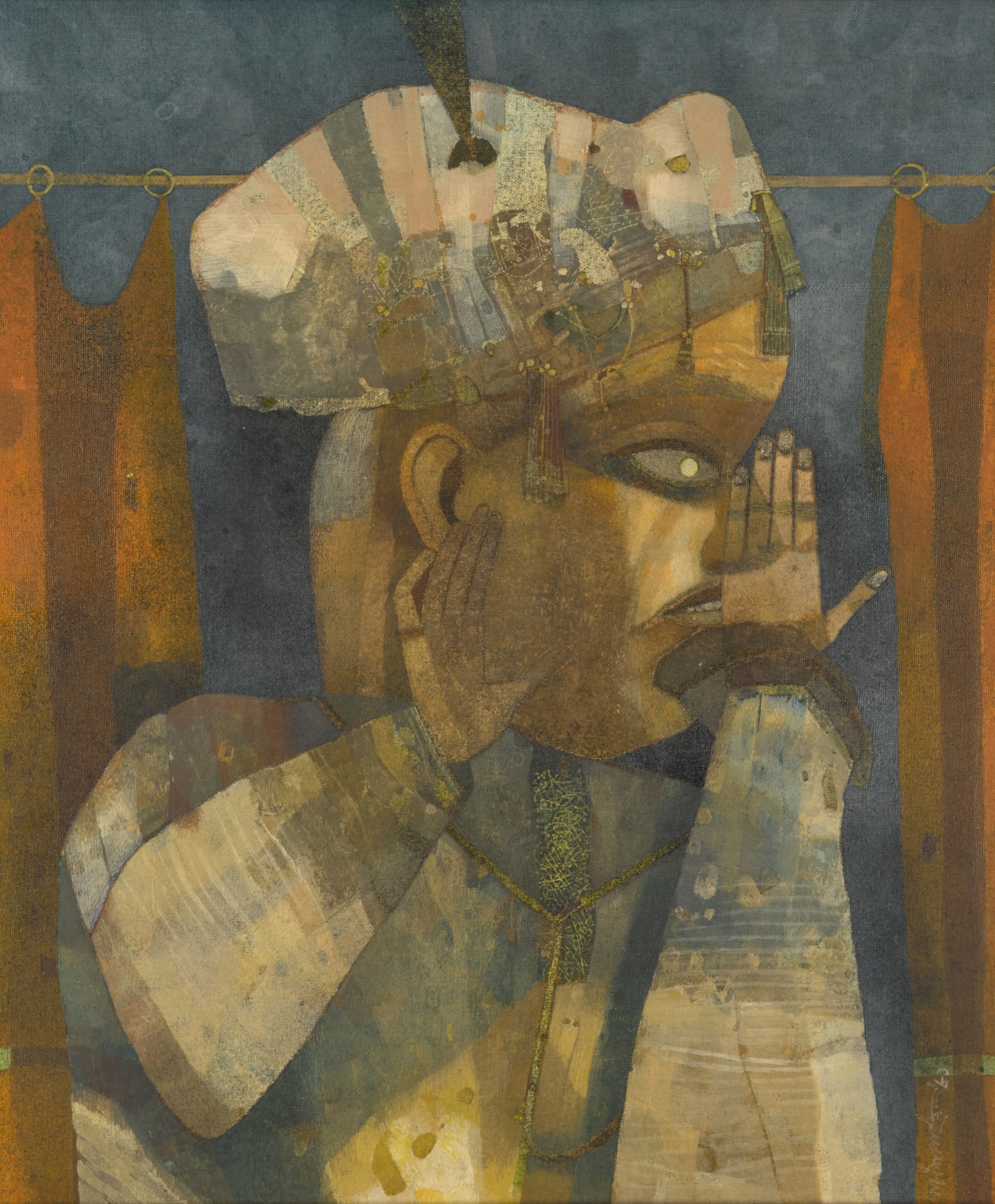
Untitled, 1981
As institutions across South Asia and collectors worldwide continue to reassess the canon of twentieth century Indian modernism, Pyne stands ever more clearly as one of its most singular and irreplaceable voices. Born in Calcutta in 1937, Pyne grew up in a city that was itself a study in contrasts: colonial grandeur pressing against intimate neighbourhood life, intellectual ferment coexisting with poverty, ancient myth living inside the modern street. The Bengal famine of 1943, which he witnessed as a child, left a permanent mark on his imagination. He has spoken of the skeletal figures that moved through Calcutta during those years, and one can trace that memory through decades of his work, in the attenuated limbs and hollow eyes that populate his nocturnal scenes.
He studied at the Government College of Art and Craft in Calcutta, where he trained rigorously in classical technique, a foundation that would later allow him to push tempera into territory no one had previously explored. Pyne came of age as an artist in the orbit of the Calcutta Group, the pioneering collective founded in 1943 that sought to bring international modernism into dialogue with Indian artistic traditions. Though he was associated with the group's spirit and its rejection of academic conservatism, Pyne ultimately carved a path that was deeply interior and resistant to any single movement or ideology. While contemporaries explored abstraction or social realism, Pyne turned inward, toward Bengali folklore, the poetry of Rabindranath Tagore, the iconography of classical mythology, and the imagery of his own recurring dreams.
Ganesh Pyne
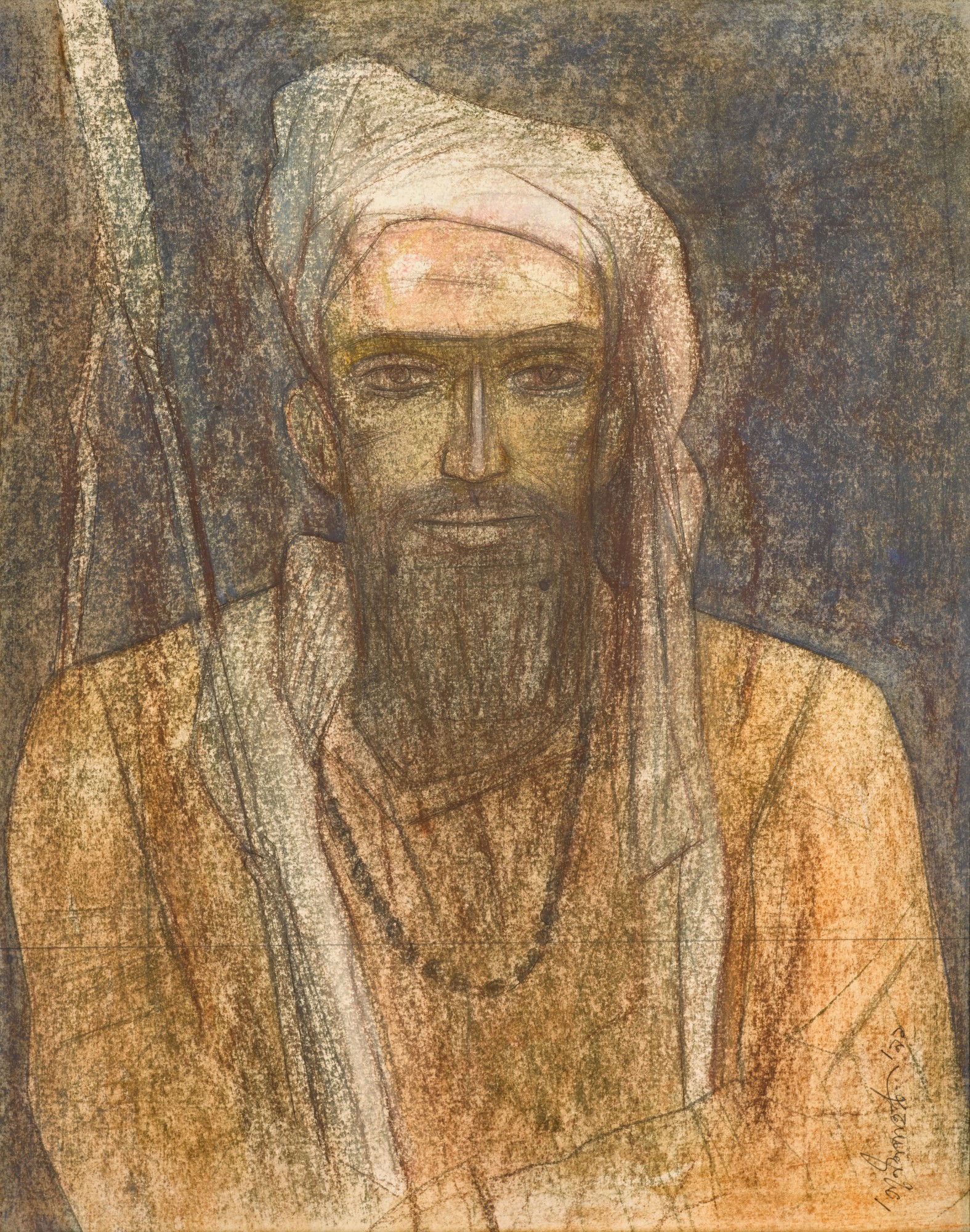
Untitled (Baul), 1991
He worked almost exclusively on a small scale, a deliberate choice that intensified the intimacy and the strangeness of everything he made. The signature of a Pyne work is unmistakable. He built his surfaces slowly, applying tempera in thin, luminous layers on mountboard or paper, achieving a depth of tone that seems almost to glow from within despite the prevailing darkness of his palette. Earth browns, ash greys, and deep ochres form the ground against which ghostly figures enact their timeless dramas.
The subjects return again and again: solitary wanderers, skeletal trees against nocturnal skies, ritual objects rendered with devotional care, and enigmatic encounters that feel simultaneously ancient and urgently present. Works such as Encounter in the Twilight Zone and Crossing the Fountain exemplify this vision, their titles alone conveying the threshold quality that defines his world. The Egg Seller, with its tender attention to the ordinary made mysterious, shows another facet of his gift: the ability to locate the mythic within the mundane. Among the works that collectors and scholars return to most often are his Baul paintings, which draw on the tradition of Bengal's wandering poet musicians whose philosophy of spiritual seeking outside institutional religion resonated deeply with Pyne's own sensibility.
Ganesh Pyne
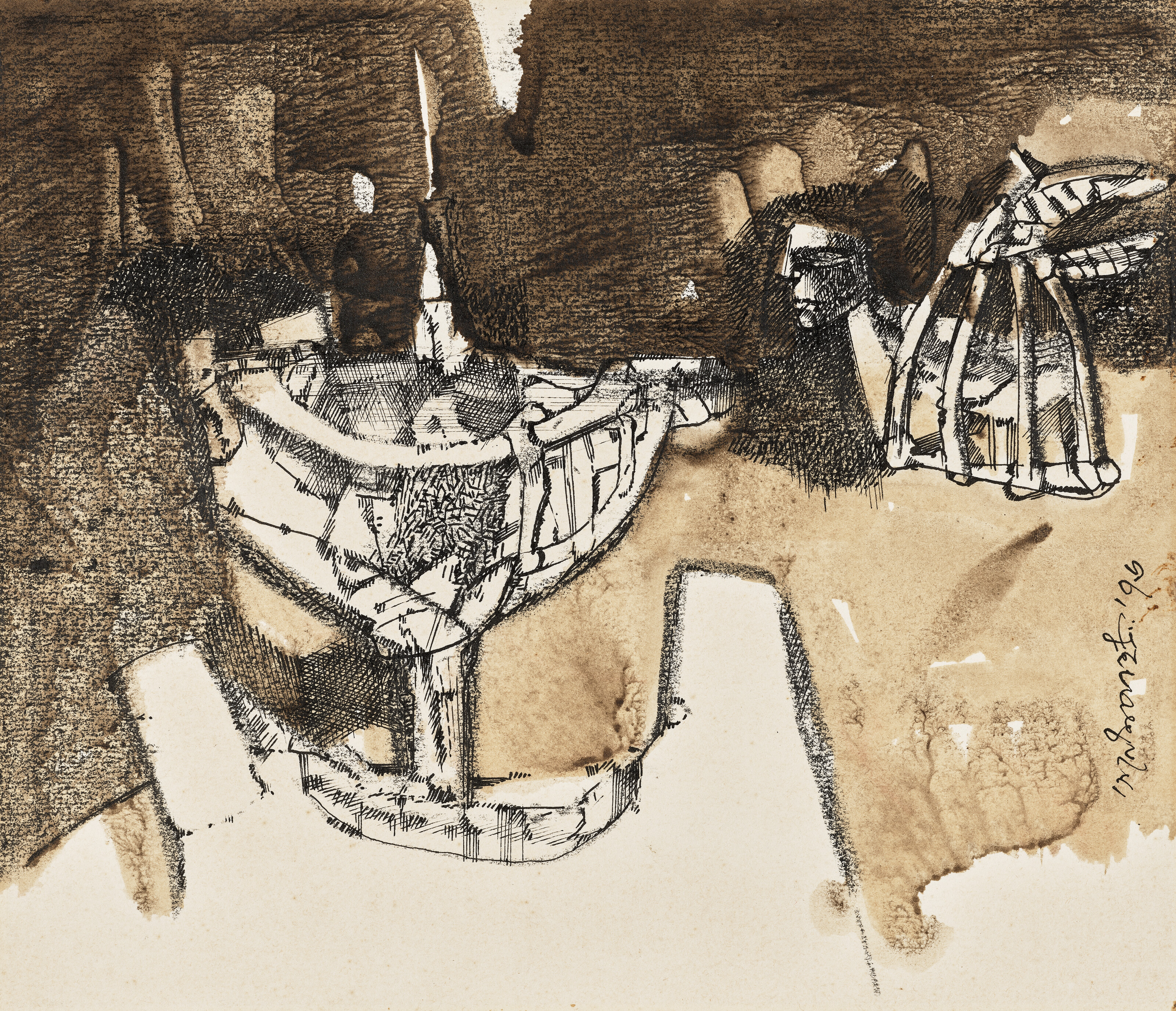
Untitled (After Crossing the Fountain)
Untitled (Baul) from 1991, rendered in watercolour, pastel, ink and pencil on paper laid on card, is a work of remarkable layered complexity, the medium itself a kind of metaphor for the accumulation of spiritual and artistic traditions Pyne was synthesising. His Untitled of 1981, in tempera on mountboard, is a canonical example of his mature command: restrained, perfectly calibrated, and quietly devastating in its emotional weight. These are not works that announce themselves. They require time, attention, and a willingness to be drawn in.
In the market, Pyne occupies a position of genuine distinction. His works are held in the National Gallery of Modern Art in New Delhi, which represents the highest level of institutional recognition for an Indian artist, and they appear in major private collections across India, Europe, and the United States. At auction, his temperas and works on paper have attracted serious attention from collectors who recognise the rarity of his output: he was not a prolific artist by temperament, and works of the quality that reach the secondary market are correspondingly precious. Collectors drawn to the intersection of South Asian modernism and the broader history of visionary or symbolist painting consistently find in Pyne a figure who repays sustained engagement.
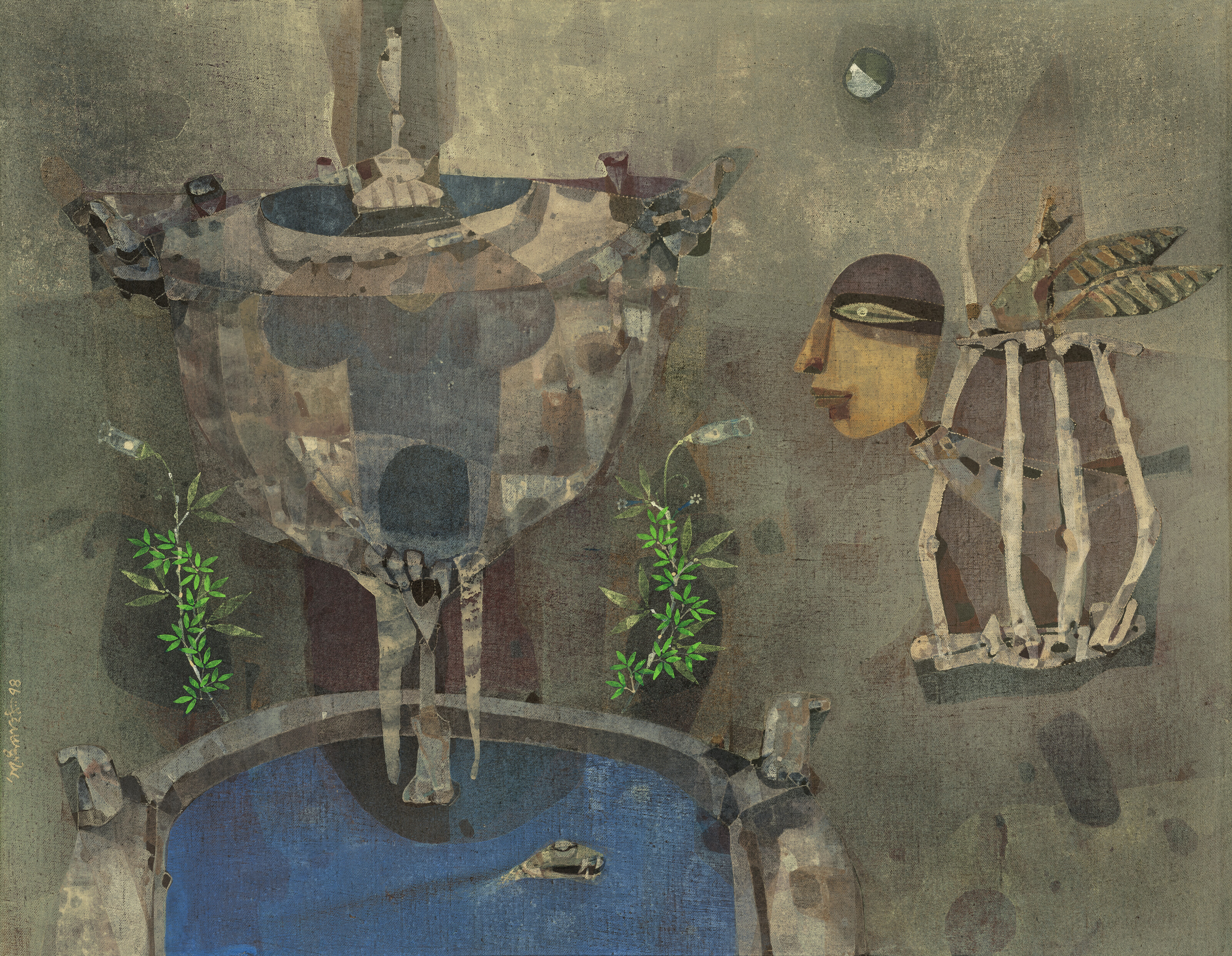
Ganesh Pyne
Crossing the Fountain
His work sits comfortably in conversation with international peers in the tradition of intimate, psychologically charged figurative art, while remaining rooted in a specifically Bengali cultural imagination that gives it irreplaceable depth and specificity. To understand Pyne's place in art history, it helps to consider him alongside artists who similarly built hermetic visual worlds from myth and personal experience. In the Indian context, his meditative introspection and folkloric sources connect him to a lineage running from the Bengal School through to artists like Bikash Bhattacharjee, whose dark psychological figurative work shares something of Pyne's atmosphere, though arrived at through entirely different means. Internationally, one might think of Paul Klee's enchanted small scale universes, or the symbolist intensity of Odilon Redon.
Pyne knew these traditions and absorbed them on his own terms, producing a body of work that belongs to world art history without ever ceasing to be profoundly, specifically Bengali. The question of Pyne's legacy grows more pressing and more rewarding with each passing year. He worked quietly, gave few interviews, and maintained a studio practice of monastic focus in Calcutta throughout his life, resisting the international art world's appetite for spectacle or biography. What he left behind is a body of work of extraordinary coherence and depth, a world unto itself.
For collectors today, acquiring a Ganesh Pyne is not simply a matter of securing a significant object. It is an invitation into a sustained meditation on memory, mortality, beauty, and the stubborn persistence of the imagination. These small paintings contain multitudes, and they reward a lifetime of looking.
Explore books about Ganesh Pyne