Friedel Dzubas
Friedel Dzubas, Where Color Becomes Pure Feeling
Artist Spotlight · The Collection Editorial
There is a moment, standing before a large Friedel Dzubas canvas, when the eye stops searching for an entry point and simply surrenders. The color arrives not as decoration but as atmosphere, as something closer to weather or light filtering through water. It is this quality, at once immediate and mysteriously deep, that has drawn renewed attention to Dzubas in recent years, as major institutional collections including the Museum of Modern Art in New York, the Metropolitan Museum of Art, and the Museum of Fine Arts in Boston continue to hold and champion his work. For a generation of collectors discovering Color Field painting with fresh eyes, Dzubas represents one of the movement's most emotionally direct and technically refined voices.
Friedel Dzubas
Encounter
Friedel Dzubas was born in Berlin in 1915, into a city crackling with modernist ambition and political tension in equal measure. He studied art in Germany before the rise of National Socialism made remaining untenable, and he eventually made his way to the United States, arriving in New York in 1939. That crossing was formative in more than the biographical sense. It placed him, at precisely the right moment, inside the most generative conversation in twentieth century art.
New York in the 1940s was a crucible, and Dzubas found himself absorbing the energy of Abstract Expressionism while quietly charting a course that was distinctly his own. In those early New York years, Dzubas studied with Hans Hofmann, whose teachings about the push and pull of pictorial space and the structural weight of color would echo throughout his career. He moved in the circles surrounding Franz Kline and Willem de Kooning, figures whose gestural force was reshaping what painting could do. But Dzubas was drawn less to the muscular drama of the brushstroke and more to questions of chromatic resonance, of what happens when color is freed from the obligation to describe and allowed instead to simply radiate.
Friedel Dzubas
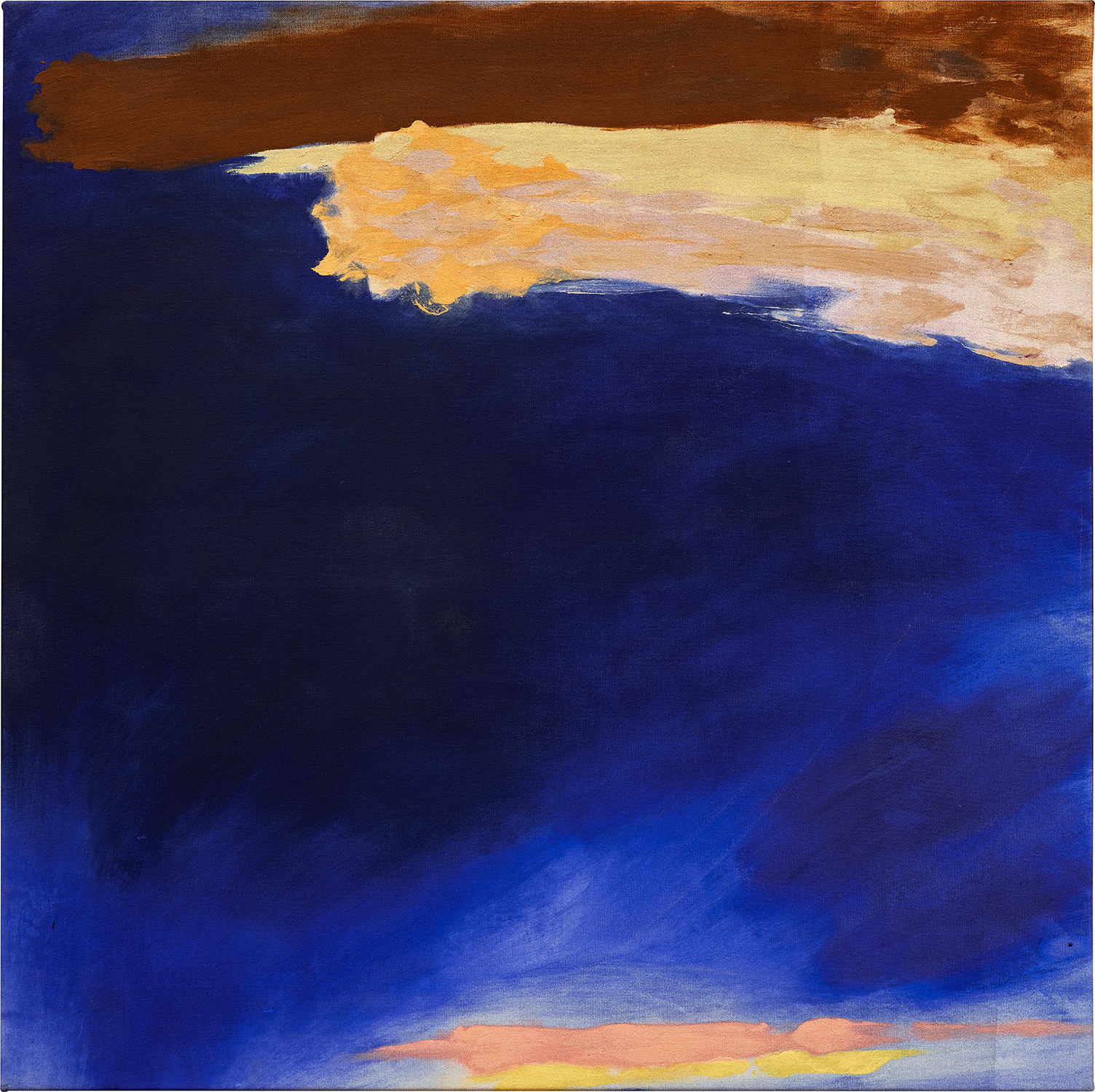
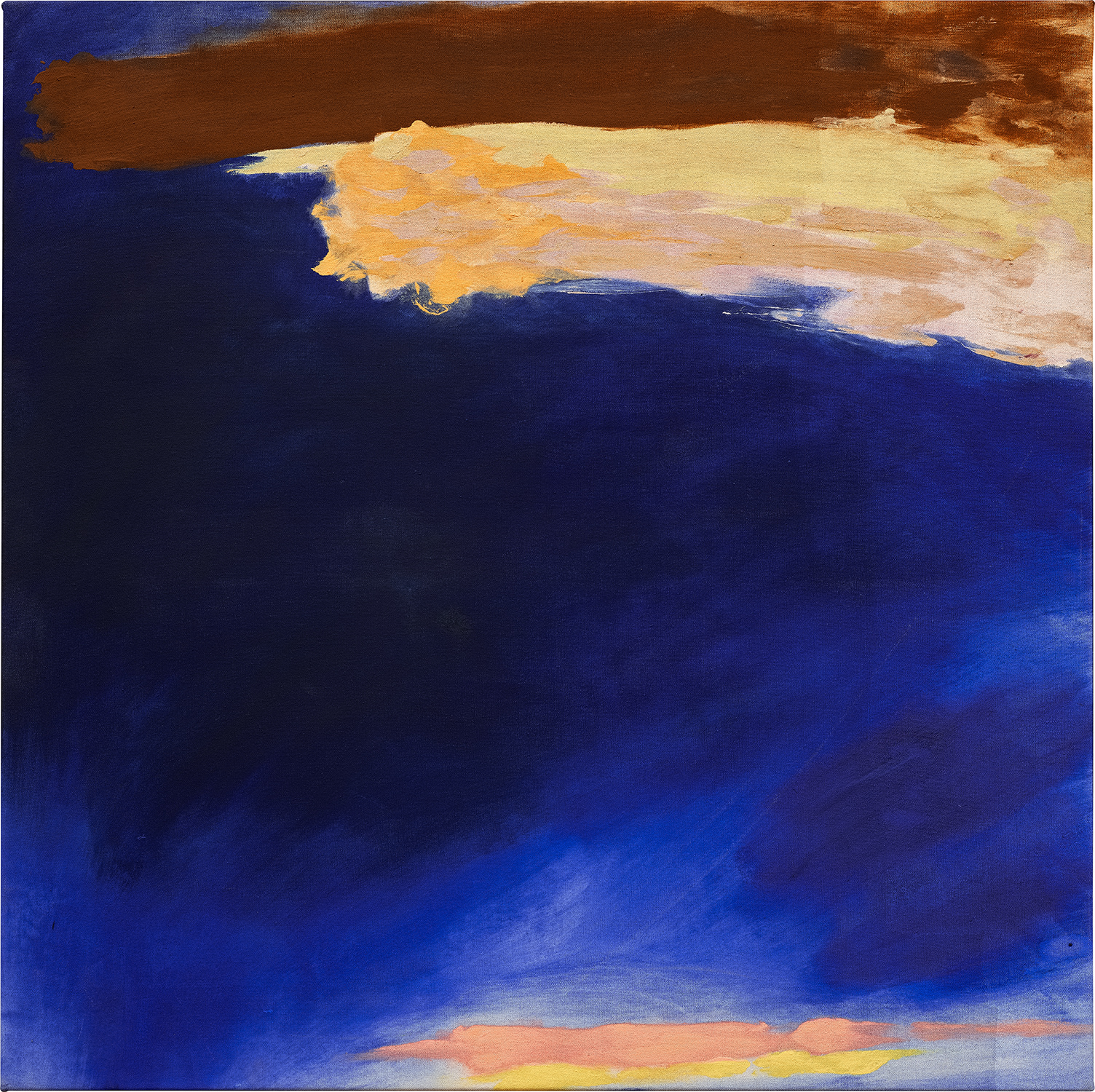
Placidum, 1987
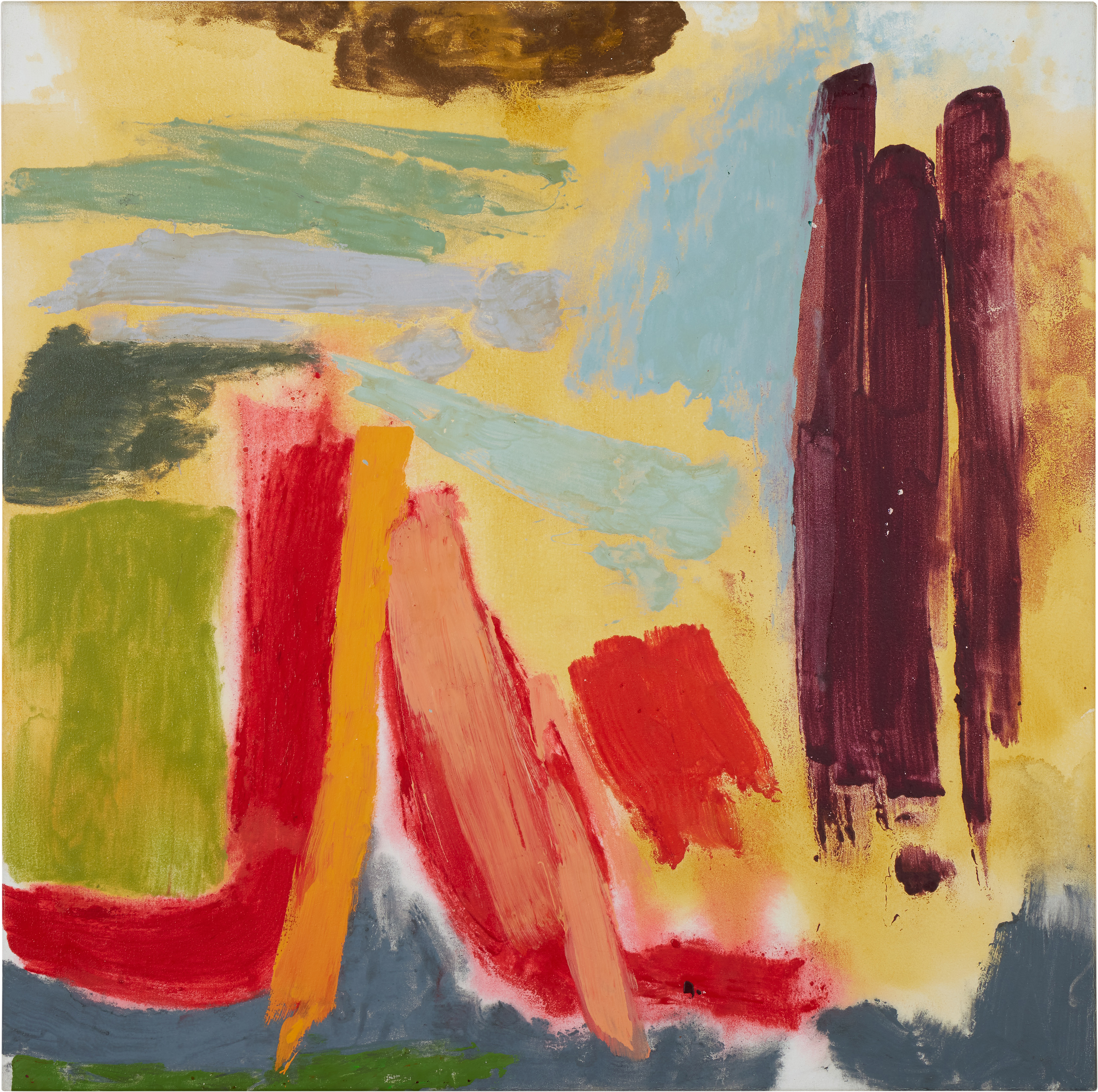
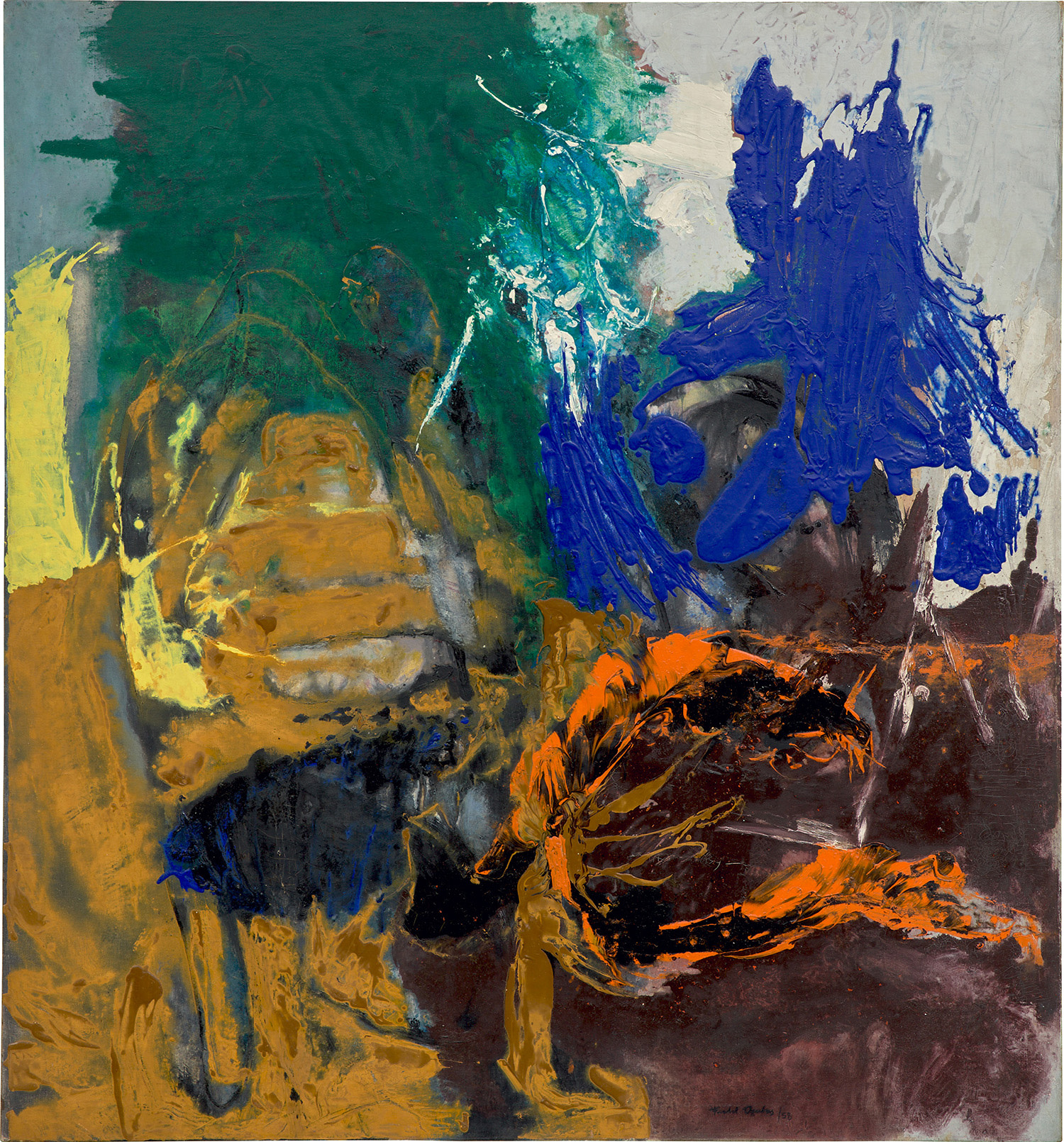
The paintings he made in the late 1950s, including works like the oil on canvas Fallen Dream from 1958, show an artist already moving purposefully toward that investigation. The pivotal shift in Dzubas's practice came through his close friendship with Helen Frankenthaler and his engagement with the soak and stain technique she had pioneered. By allowing thinned paint to seep into unprimed canvas, he discovered a method that dissolved the boundary between color and ground, creating surfaces that seemed to emit light from within rather than reflect it from without. This was not imitation of Frankenthaler but a genuine parallel development, a kindred sensibility finding its ideal instrument.
Through the 1960s and into the 1970s, Dzubas refined this approach with increasing ambition and scale, producing canvases in which broad, loosely bounded zones of color drift and overlap in ways that feel both inevitable and impossible to predict. Key Largo, painted in 1964, captures this period beautifully, its warm, liquid color evoking a particular quality of coastal light without ever resorting to representation. By the late 1970s and through the 1980s, Dzubas had arrived at full mastery. His adoption of Magna acrylic paint, a medium favored by several Color Field painters for its brilliance and flexibility, allowed him to work at even greater scale while maintaining the luminous, stained quality that defined his vision.
Friedel Dzubas
Fallen Dream, 1958
Works from this period, including Placidum from 1987 and Night Shuttle from 1983, both in Magna acrylic on canvas, demonstrate the full range of his chromatic intelligence. He was working with color the way a composer works with harmony, understanding that certain combinations create tension and resolution, warmth and coolness, expansion and depth. Placidum in particular carries an almost meditative stillness, its title suggesting the Latin for calm, and the painting delivers precisely that, a sustained, unhurried radiance that rewards extended looking. For collectors, Dzubas offers a compelling intersection of art historical significance and visual pleasure.
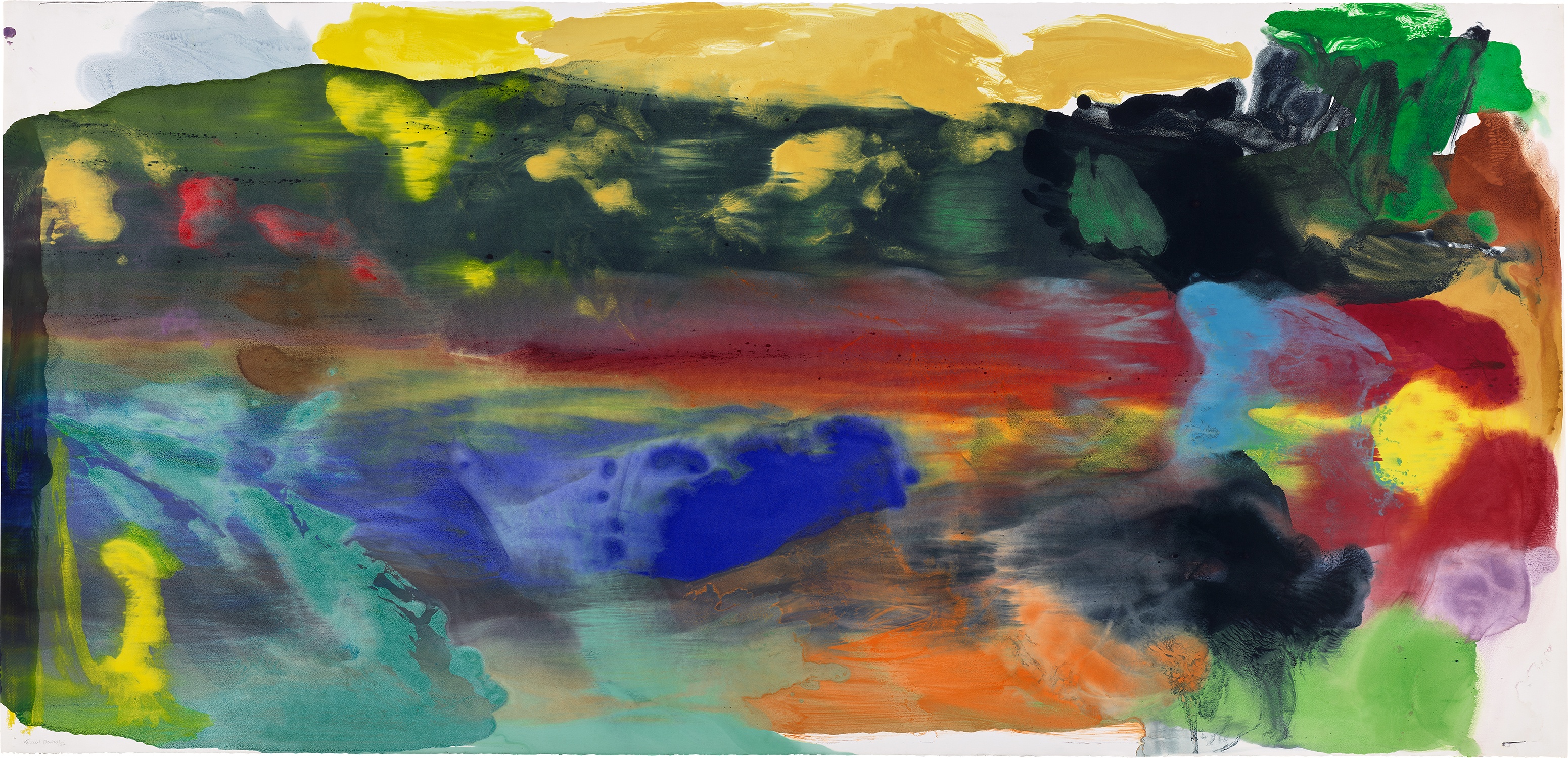
His works span a wide range of scale and medium, from intimate works on paper including watercolor and acrylic studies that reveal his thinking at close range, to monumental canvases that transform the spaces they inhabit. The monotype works, produced in acrylic on handmade wove paper, are particularly prized for their rarity and the directness they offer into his process. When works by Dzubas appear at auction or through the secondary market, they tend to attract serious attention from collectors who understand his place within the Color Field canon alongside contemporaries such as Morris Louis, Kenneth Noland, Jules Olitski, and Larry Poons. His prices remain accessible relative to those peers, which experienced collectors recognize as a genuine opportunity rather than a reflection of quality.
Friedel Dzubas
Friedel Dzubas
Dzubas held teaching positions over the course of his career and was associated with galleries in New York that positioned him within the serious critical conversation of his time. Clement Greenberg, the influential critic who championed Color Field painting as the logical evolution of modernist abstraction, was an admirer of his work, and that endorsement placed Dzubas within a lineage that runs from the New York School through the most rigorous formal painting of the postwar era. His work was included in important group exhibitions that defined the movement for subsequent generations, and his influence on younger painters working with color and stain has been acknowledged by artists who followed. What makes Dzubas feel urgent today is precisely what made him quietly radical in his own moment: his insistence that color alone, without gesture, narrative, or symbolic scaffolding, is sufficient to produce an experience of genuine emotional and perceptual depth.
In an era when painting continues to search for its footing, his canvases stand as evidence of a practice pursued with total conviction and extraordinary refinement. He died in 1994, leaving a body of work that has only grown more luminous with time. For collectors who want to engage with the core ambitions of American modernism through paintings of lasting beauty, Dzubas remains one of the most rewarding discoveries the field has to offer.
Explore books about Friedel Dzubas