Frida Kahlo
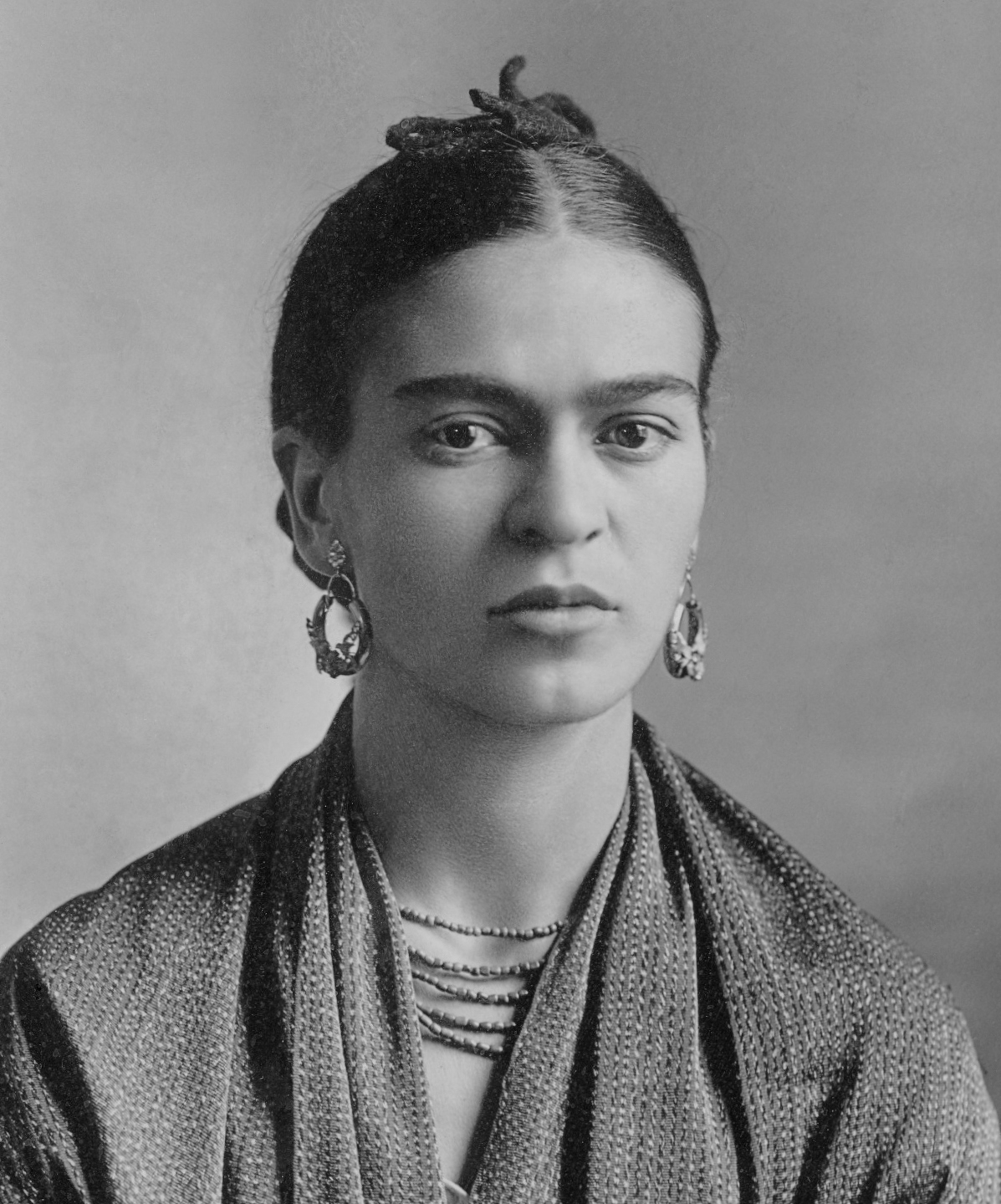
Frida Kahlo: A Vision Entirely Her Own
Artist Spotlight · The Collection Editorial
“I never painted dreams. I painted my own reality.”
Frida Kahlo
In 2024, the Jardín Botánico in Mexico City hosted a landmark immersive retrospective drawing hundreds of thousands of visitors to the legacy of one of the most beloved painters of the twentieth century. That same year, global audiences streamed exhibitions, documentaries, and cultural tributes celebrating Kahlo's enduring relevance. Nearly seventy years after her death, Frida Kahlo does not feel like history. She feels immediate, alive, and urgently necessary.
Frida Kahlo
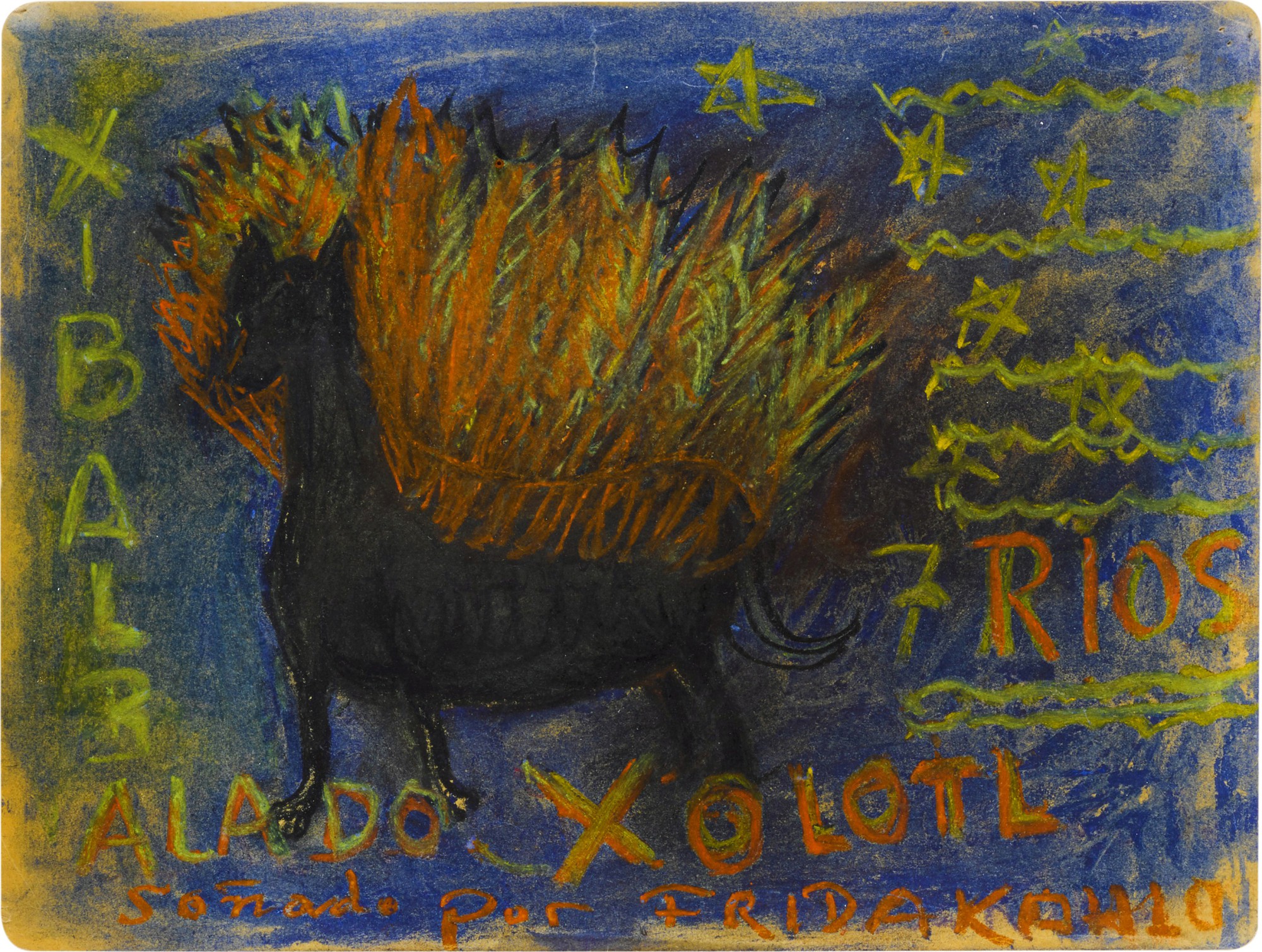
Xibalba-Alado-Xólotl, 1950
Her face, her flowers, her pain rendered luminous in oil and pigment continue to move people across every language and culture. There is simply no other artist quite like her. Magdalena Carmen Frida Kahlo y Calderón was born on July 6, 1907, in Coyoacán, a neighbourhood on the southern edge of Mexico City, in the house that would later become the famous Casa Azul, or Blue House. Her father, Guillermo Kahlo, was a German Hungarian photographer of considerable sensitivity and skill, and he took a particular interest in young Frida, encouraging her intellectual curiosity and taking her with him on photographic expeditions around the city.
At age six, she contracted polio, which left her right leg thinner than her left, a difference she would disguise for the rest of her life beneath long skirts from the Tehuantepec region of Oaxaca. These early experiences of physical difference and resilience would become foundational to everything she made. The event that most profoundly shaped Kahlo's artistic life came in September 1925, when she was eighteen years old. A bus she was riding collided with a streetcar in Mexico City, leaving her with catastrophic injuries including a shattered spinal column, a broken collarbone, broken ribs, and a steel handrail that pierced her hip and exited through her pelvis.
Frida Kahlo
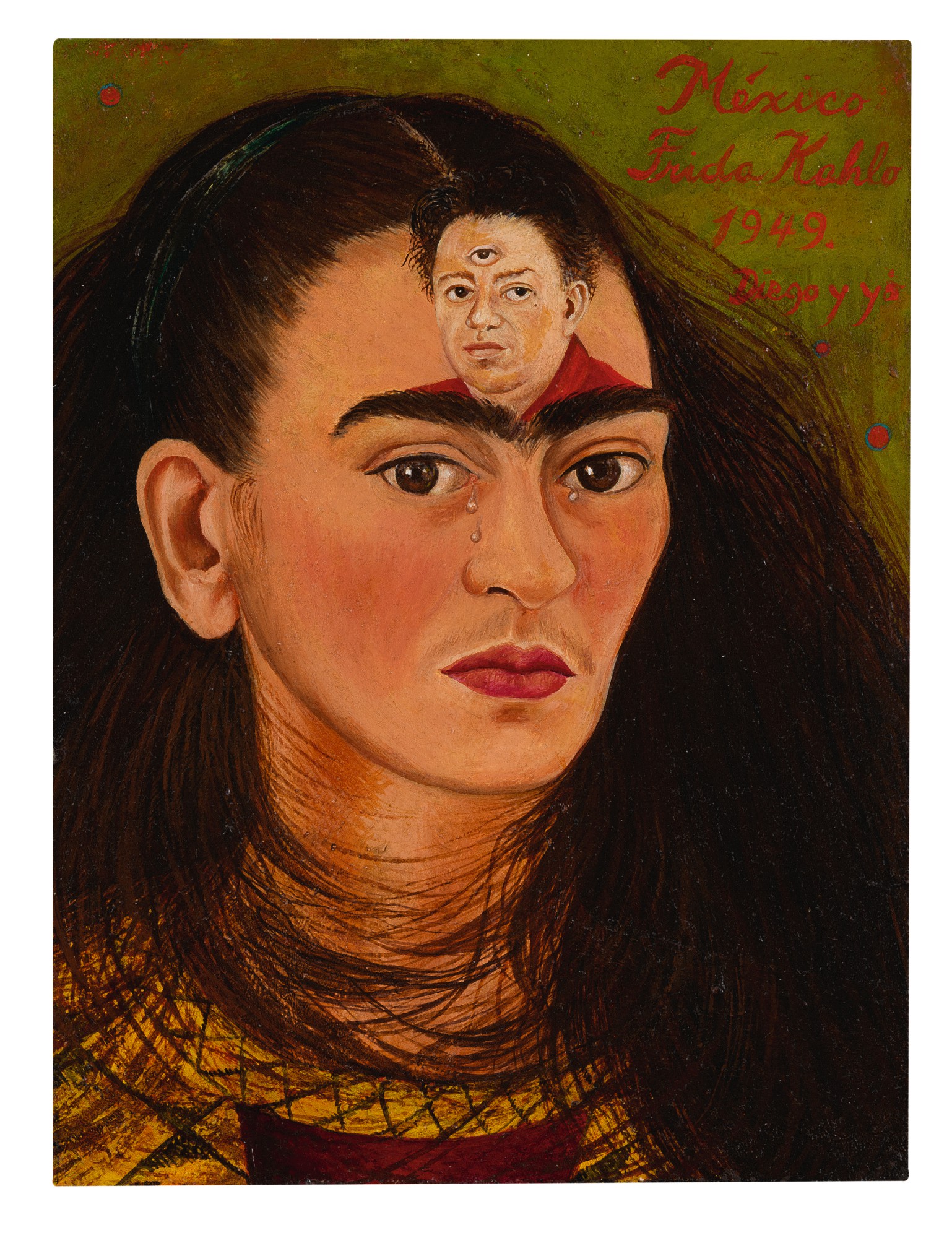
Diego y yo
She spent months in a full body cast, immobilised and in extraordinary pain. Her mother commissioned a special easel that could be used lying flat, and a mirror was fixed to the canopy above her bed. It was during this period of enforced stillness that Kahlo began to paint in earnest, initially working from her own reflection. Out of confinement came one of the most original artistic practices of the modern era.
“I paint myself because I am so often alone and because I am the subject I know best.”
Frida Kahlo
Kahlo's work defies easy categorisation, which is part of what makes her so endlessly compelling. She was embraced by the Surrealists, and André Breton famously described her work as a ribbon around a bomb, though Kahlo herself resisted the Surrealist label with characteristic directness, insisting she did not paint dreams but rather her own reality. Her paintings draw on Mexican folk art, pre Columbian imagery, Catholic iconography, and European portraiture in equal measure, fusing them into something wholly personal. Her palette is at once fiercely vibrant and emotionally complex, capable of conveying anguish and celebration within the same square inch of canvas.
She worked primarily on a small scale, which gives her paintings an extraordinary intimacy and concentration of feeling. Among her most celebrated works is Diego y yo, painted in 1949, a small oil on Masonite in which Kahlo portrays herself with her husband, the muralist Diego Rivera, appearing as a third eye at her forehead. The painting was made during a period of profound emotional turmoil in their marriage and captures with devastating precision the way another person can come to inhabit your very consciousness. It is one of the most psychologically penetrating self portraits in the history of art.
“Feet, what do I need them for if I have wings to fly.”
Frida Kahlo, diary entry
The Collection is proud to feature this remarkable work. Also available through the platform is Xibalba Alado Xólotl, a 1950 pastel and crayon on paper that demonstrates Kahlo's deep engagement with pre Columbian mythology. Xólotl is the hairless dog deity of Aztec tradition believed to guide the dead through the underworld of Xibalba, and Kahlo's depiction of the creature is both tender and otherworldly, showing a side of her practice less widely known but equally extraordinary. For collectors, Kahlo represents one of the most significant and sought after names in the modern Latin American canon.
Her market has strengthened considerably over the past two decades, driven by global museum retrospectives and an ever growing appreciation for her historical importance. In 2021, Diego y yo set a record at Sotheby's New York when it sold for 34.9 million dollars, becoming the most expensive work by a Latin American artist ever sold at auction at that time. Works on paper, including pastels and drawings from her later years, represent an extraordinary opportunity for collectors to engage with her practice at a different register of intimacy.
These works reveal Kahlo thinking, experimenting, and feeling in real time, unmediated by the long processes of oil painting. Kahlo's place within art history is best understood alongside a constellation of artists who shared her commitment to deeply personal, politically charged imagery. Her husband Diego Rivera, along with muralists José Clemente Orozco and David Alfaro Siqueiros, formed the great triumvirate of Mexican modernism with whom she was in constant dialogue, even as her own work moved in a profoundly different direction. Internationally, she resonates with figures such as Paula Modersohn Becker, whose introspective portraiture broke new ground for women artists in Europe, and Leonora Carrington, the British born surrealist who made Mexico her home and shared Kahlo's interest in myth, the body, and the inner life.
Together these artists form a lineage of extraordinary women who remade what painting could be. The legacy of Frida Kahlo is not simply one of pain transcended, though that narrative has its truth. It is above all a legacy of an artist who refused to be anything other than completely herself. She invented her own iconography, her own vocabulary, her own mythology, and she did so without apology or compromise.
At a moment in global culture when questions of identity, embodiment, and self representation have never felt more pressing, Kahlo speaks with startling directness. The Casa Azul in Coyoacán continues to draw visitors from around the world, and institutions from the Tate Modern in London to the Museum of Modern Art in New York have given her work the sustained, serious attention it commands. To collect Kahlo is not merely to acquire a painting. It is to become part of a conversation about what it means to be human that she began almost a century ago and that shows no sign of ending.
Explore books about Frida Kahlo
Frida: A Biography of Frida Kahlo
Hayden Herrera
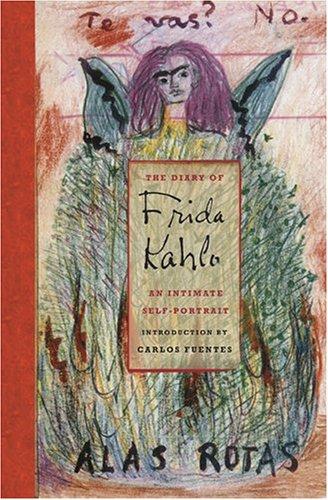
The Diary of Frida Kahlo: An Intimate Self-Portrait
Frida Kahlo
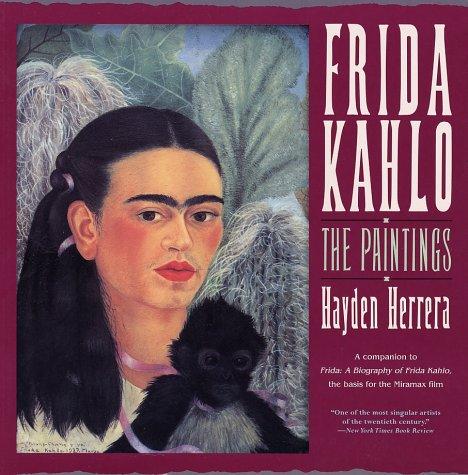
Frida Kahlo: The Paintings
Jaime Brihuega
Frida Kahlo: A Life
Christina Burrus
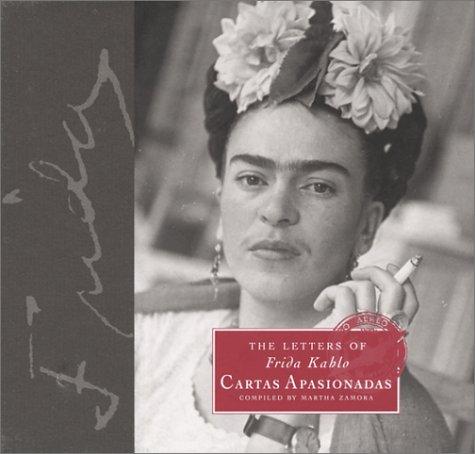
The Letters of Frida Kahlo
Frida Kahlo
Frida Kahlo: Icon and Artist
Duncan Grant
Frida Kahlo and Her Contemporaries
Helga Prignitz-Poda
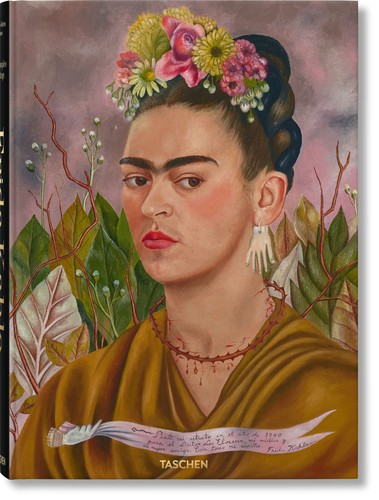
Frida Kahlo: The Complete Paintings
Rius