Fredrik Værslev
Fredrik Værslev Lets the World Paint Itself
Artist Spotlight · The Collection Editorial
There is a particular kind of attention that Fredrik Værslev commands in a room, and it is not the attention of spectacle. When his paintings were shown at Galerie Neu in Berlin and through his long association with Andrew Kreps Gallery in New York, visitors found themselves pausing not because the works announced themselves loudly, but because they required something slower, something more like patience. In recent years, as conversations around process, ecology, and the limits of authorship have moved to the center of contemporary art discourse, Værslev's practice has felt less like a niche proposition and more like a necessary one. His work asks a question that only grows more urgent with time: what happens when you give the world a canvas and simply step back?
Fredrik Værslev
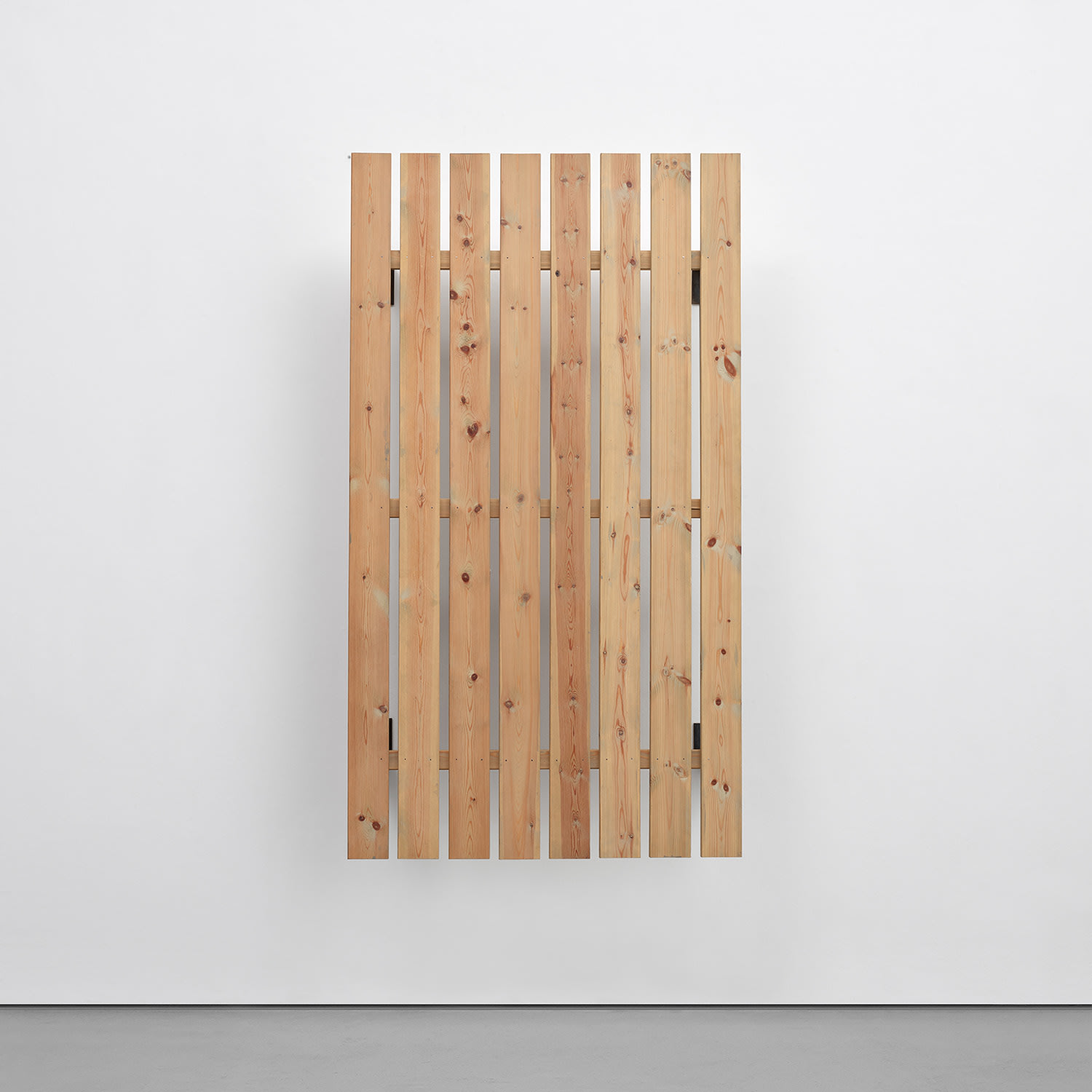
nails on wood and steel, 2012
Værslev was born in Norway in 1979, and the landscape of that country, its long winters, its particular quality of dampness, its timber architecture, its sense of nature as something that does not wait for human permission, seems to have shaped his sensibility at a foundational level. Norwegian modernism carried within it a strong tradition of craft and material honesty, and Værslev absorbed those values while also pushing against them. He came of age artistically at a moment when painting was under sustained interrogation, when artists across Europe and North America were asking whether the medium could carry genuine conceptual weight or whether it remained trapped in its own historical prestige. Værslev's answer was to take the question seriously and find a way through it that was entirely his own.
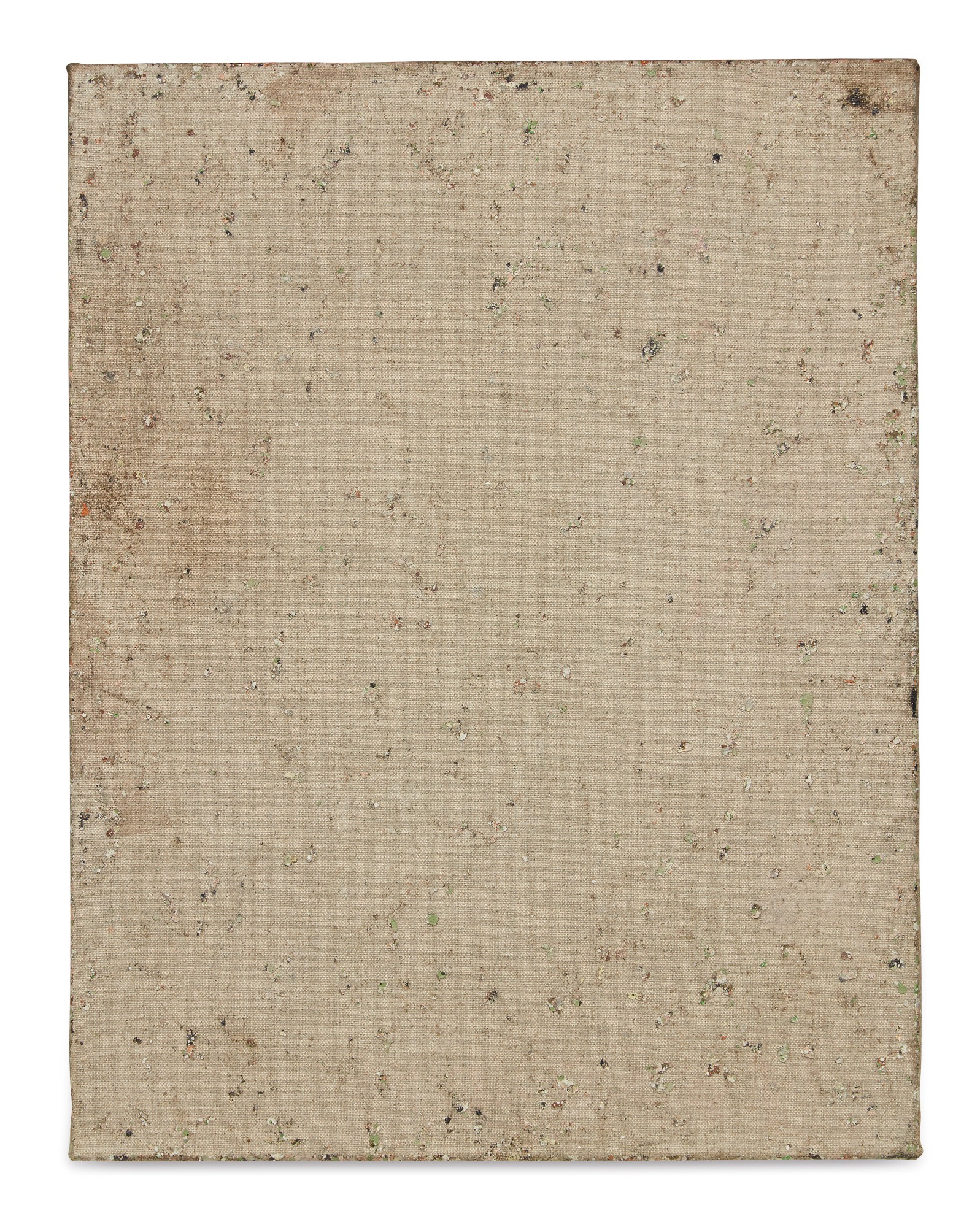
His early works already showed an interest in the kinds of paint and surface associated with building and maintenance rather than fine art production. House paint, spray paint, primer, varnish, tar, rust, lacquer: these are the materials of a handyman or a construction worker, not a trained studio painter in the classical sense. Works from around 2010 and 2011 in the collection record make this abundantly clear, with canvases bearing combinations of spray paint, liquid asphalt, acrylic, corrosion protective spray, white spirit, and fixative. The surfaces read as both painting and as document, as if the canvas had been a wall somewhere and the wall had lived a life.
Fredrik Værslev
Untitled, 2010
This is not accidental grime or romantic decay. It is a rigorous material logic. The breakthrough that brought Værslev sustained international recognition was the Terrace Paintings series, in which canvases were placed outdoors on the terraces of domestic Norwegian houses and left to receive whatever the climate offered. Rain pooled and dried.
Mold took hold. Seasonal light left its gradients. The artist set up the conditions and then withdrew, allowing the environment to become a collaborator in the most literal possible sense. The resulting works are painterly in the richest way, full of tonal complexity and surface incident, while also being fundamentally honest about how they were made.
Fredrik Værslev
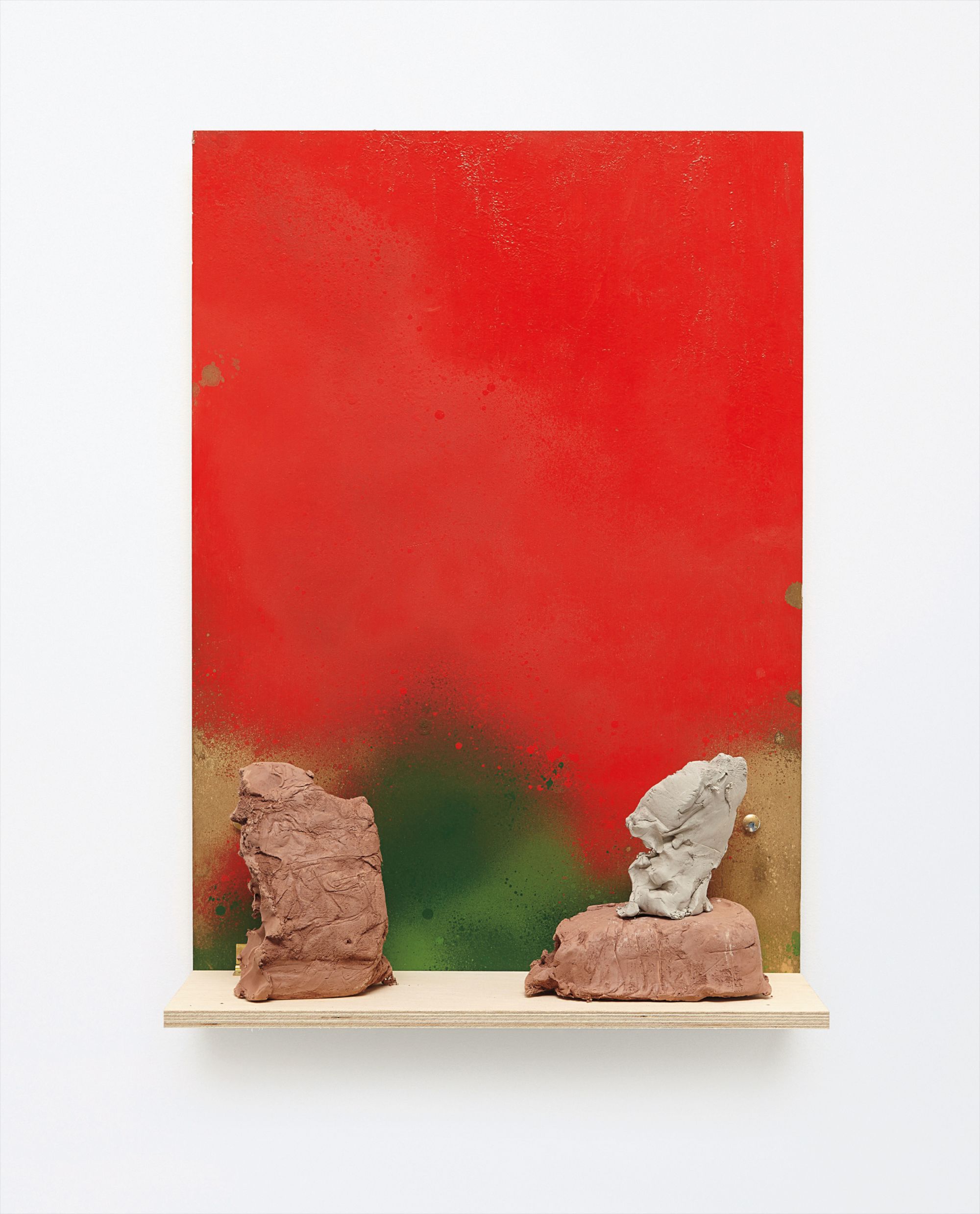
Shelf paintings (Pottery in October #8)
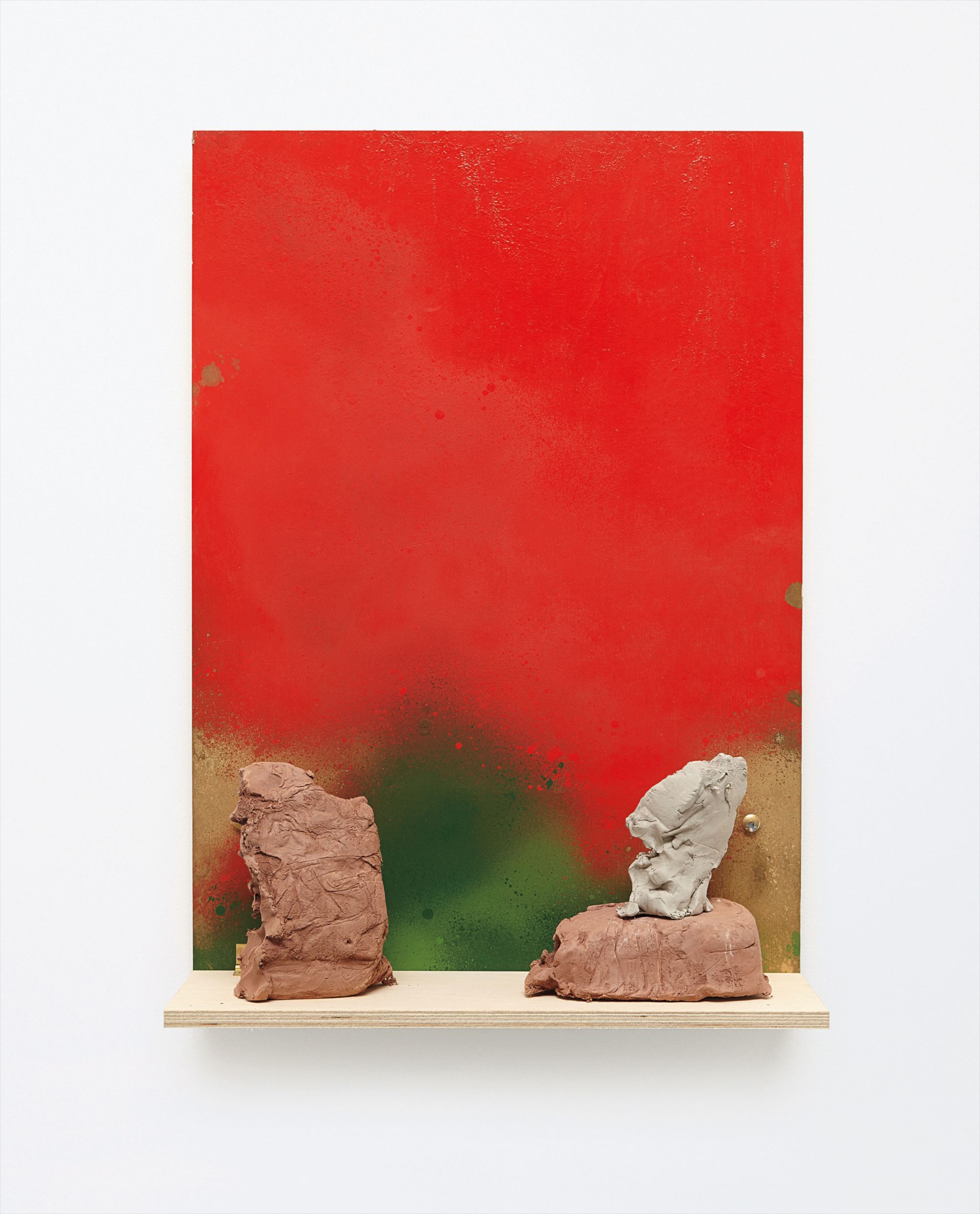
They belong to a tradition that includes the chance operations of John Cage, the process art of Robert Morris, and the weathered surfaces that artists like Lawrence Weiner explored theoretically, but Værslev grounds all of that thinking in objects of remarkable physical presence. The Shelf Paintings series, including works like Shelf Paintings (Pottery in October No. 8) in spray paint on plywood with birch shelving, brass screws and hinges, and ceramic objects, extends this logic into domestic and sculptural territory. These works function as paintings that are also furniture, as display systems that are also art objects, as things that hold other things.
The ceramic objects placed on the shelves are not props or decoration. They are participants, casting shadows, creating relationships of scale and color, making the work breathe differently depending on the light conditions of any given room. Collectors who live with these works report that they change constantly, that a morning visit is a different experience from an evening one, that the work never quite settles into a single definitive state. Works like Untitled (Der Konig des Waldes No.
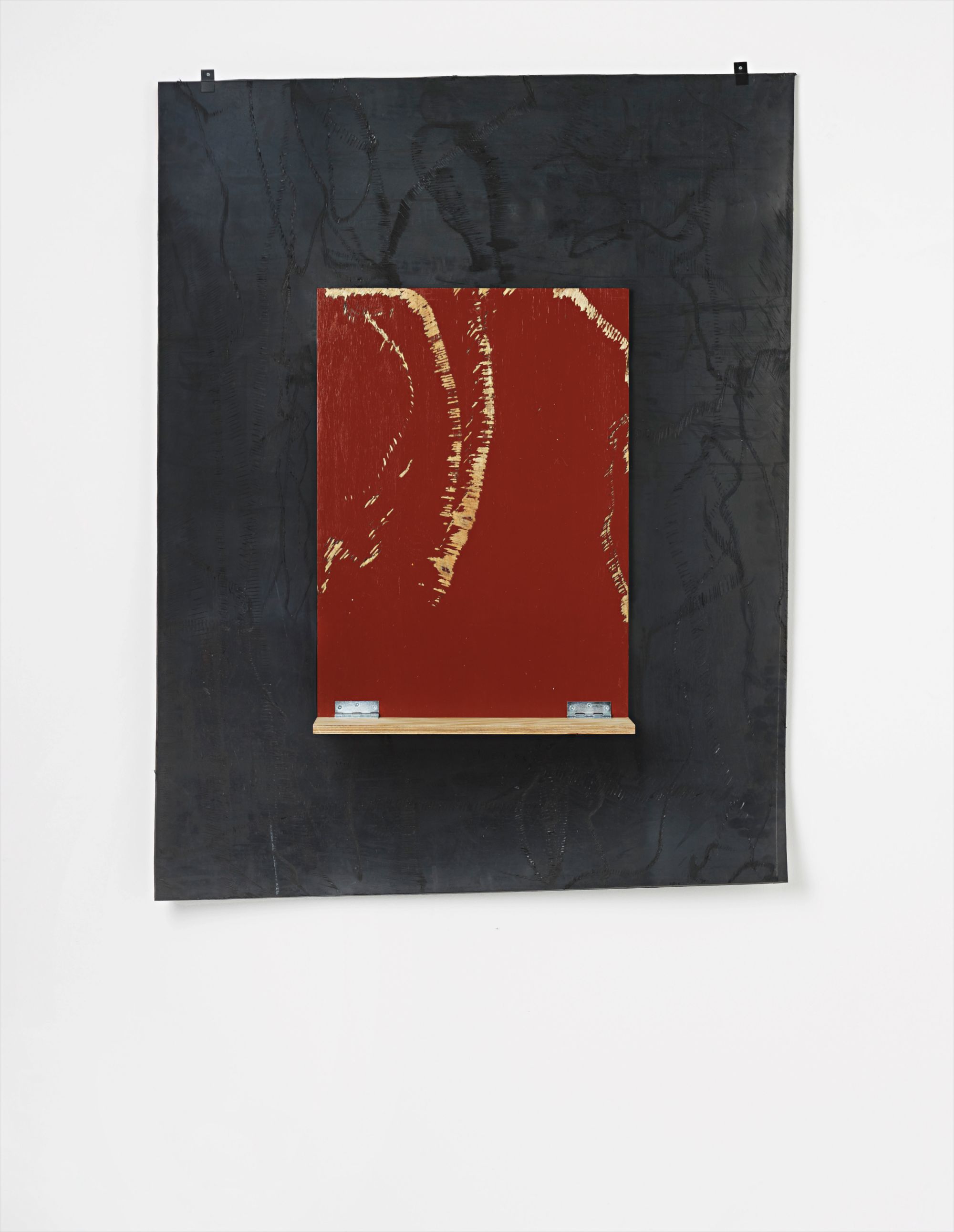
Fredrik Værslev
Rubbish #11
05) from 2012, made with house paint, oil, and spray paint on spruce and Siberian larch with steel supports, demonstrate how seriously Værslev takes the material specificity of his wooden substrates. Spruce and Siberian larch are not neutral or interchangeable. They carry grain, resin, smell, and history. When paint is applied to wood rather than canvas, the relationship between surface and mark changes entirely, and Værslev exploits this with precision.
The steel supports that hold these works are not afterthoughts. They are part of the work, making visible the infrastructure of display that most paintings prefer to conceal. For collectors, Værslev represents a compelling proposition on several levels. His work is genuinely difficult to replicate or to situate within easy market categories, which means that serious collectors acquire it because they believe in it rather than because it fits a trend.
The range of materials and formats in his practice means that there are works at various scales and price points, from smaller spray paint works on plywood to larger and more complex environmental pieces. What collectors consistently respond to is the sense that these objects have been somewhere, that they carry time within them in ways that conventionally made paintings do not. In a market where surface novelty often crowds out depth, Værslev's work rewards long acquaintance. Within art historical terms, Værslev sits in productive conversation with a number of important figures.
The relationship to Arte Povera is real, particularly in the use of humble and industrial materials to make works of genuine beauty. The dialogue with American process art of the 1960s and 1970s is equally present, though Værslev's sensibility is distinctly Northern European, colder in palette and more architecturally inflected. Artists like Theaster Gates, who also takes the materials of construction and maintenance seriously, or Oscar Tuazon, who works at the intersection of architecture and sculpture, occupy adjacent territory, though Værslev's commitment to painting as a specific and irreducible category sets him somewhat apart. What makes Værslev matter at this particular cultural moment is precisely his refusal to resolve the tensions his work sets up.
He is a painter who questions the authority of the painter's hand. He is a process artist who produces objects of great visual sophistication. He is a conceptualist who cares deeply about physical experience. As art conversations increasingly engage with ecology, with the nonhuman, and with the limits of individual authorship, Værslev's practice reads less like a provocation and more like a model.
The world has always been a collaborator in everything we make. He is simply honest enough to put that on the label.
Explore books about Fredrik Værslev