Frederick William MacMonnies
MacMonnies: Bronze, Beauty, and Bold Vision
Artist Spotlight · The Collection Editorial
In the grand rotunda of the Brooklyn Museum, a bronze figure of a woman mid stride, arm raised, a small child balanced with precarious delight in her outstretched hand, once caused one of the most spectacular public controversies in American art history. That work, Bacchante and Infant Faun, completed in 1894, was rejected by the Boston Public Library after a furious moral outcry, and yet it endured. It traveled, it multiplied in cast, and it ultimately secured its place in the permanent collections of the Metropolitan Museum of Art and the Boston Museum of Fine Arts. Today, as American Beaux Arts sculpture enjoys a sustained critical and market renaissance, Frederick William MacMonnies stands at the center of that reappraisal, recognized not merely as a craftsman of extraordinary technical gifts but as an artist who pushed the boundaries of what American sculpture could feel and say.
Frederick William MacMonnies
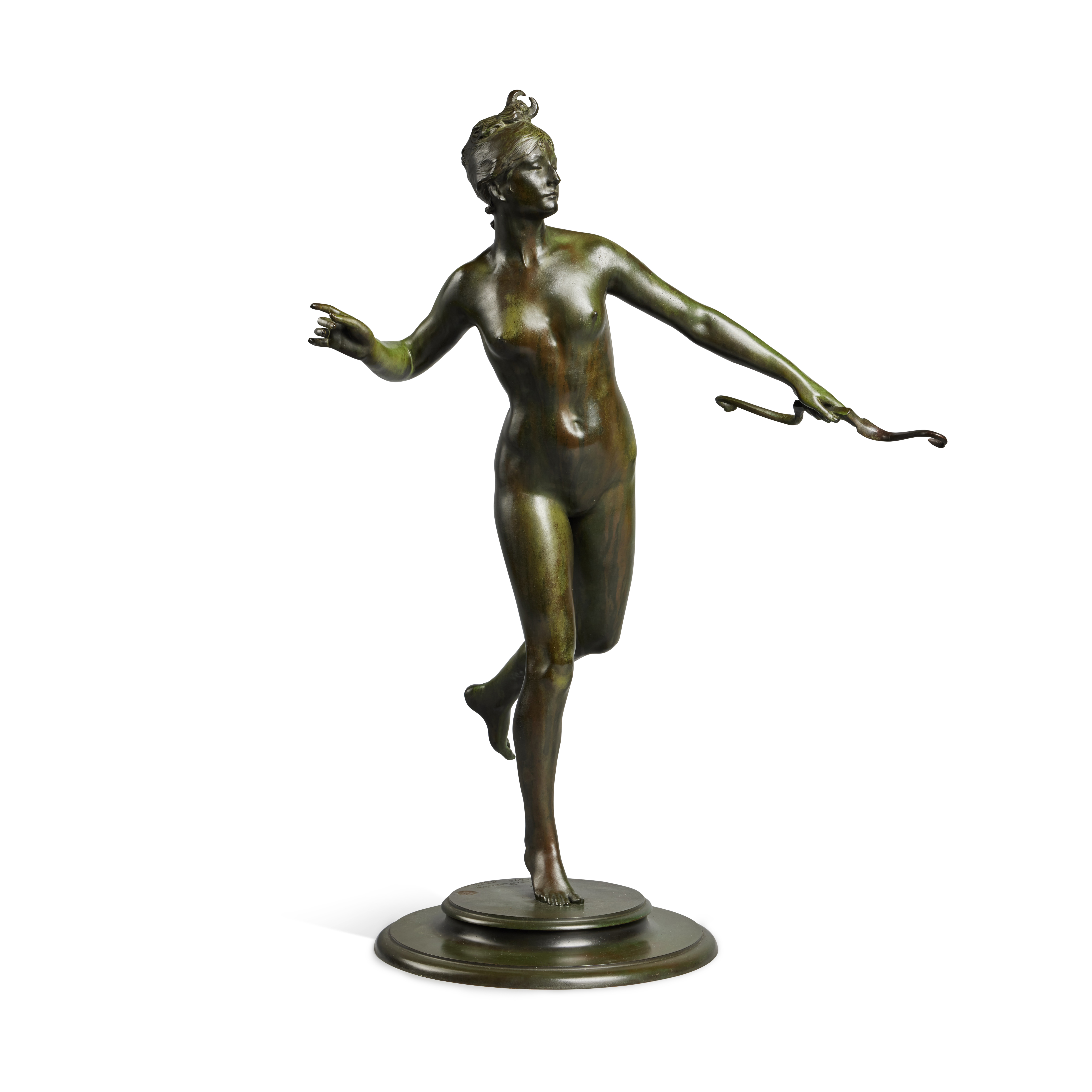
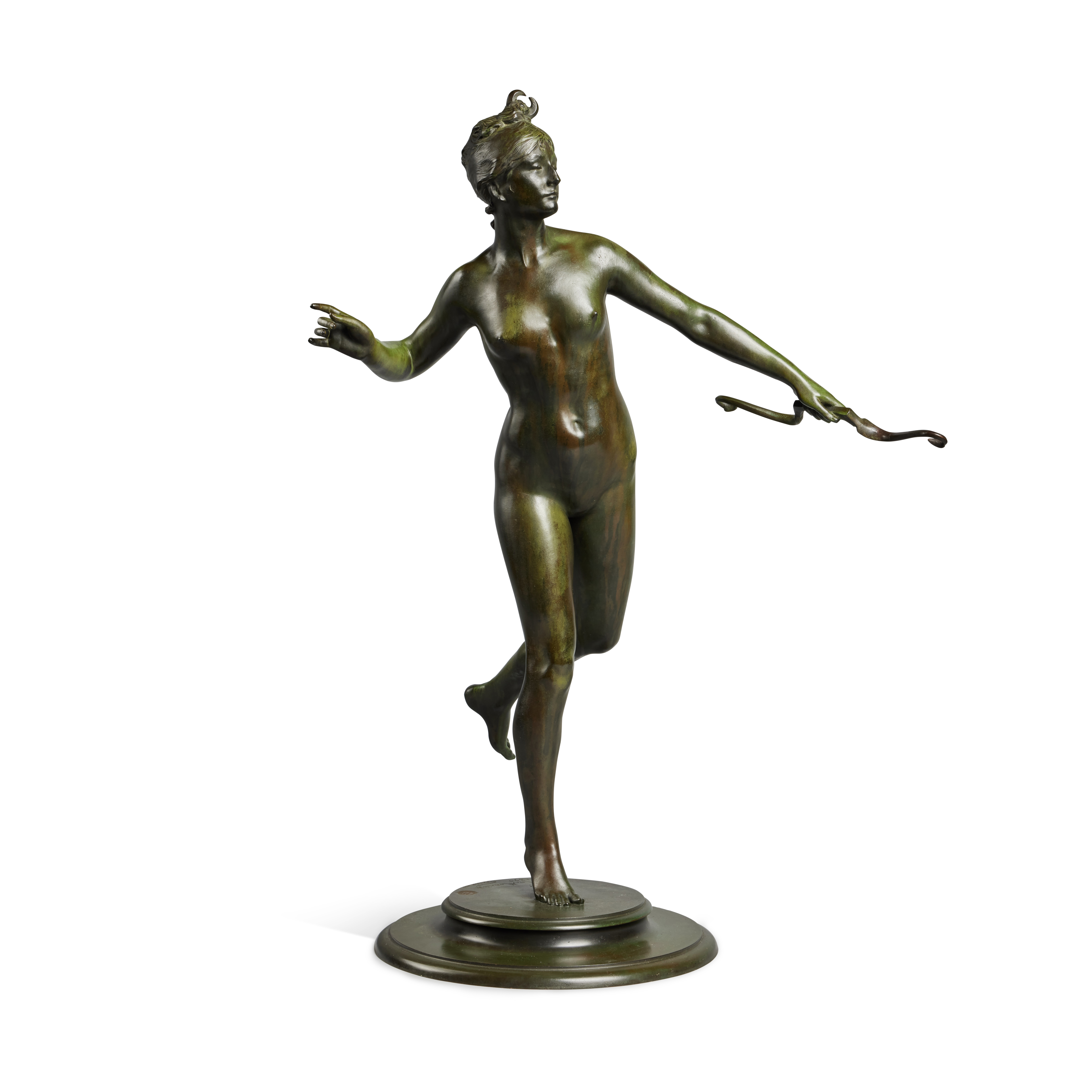
Diana, 1890
MacMonnies was born in Brooklyn, New York, in 1863, into a world that offered little obvious path toward the refined European academicism he would eventually master. He showed artistic aptitude early, and at the age of sixteen he found his way into the studio of Augustus Saint Gaudens, then the most celebrated sculptor in America. Saint Gaudens recognized something exceptional in the young MacMonnies, and the apprenticeship that followed was formative in the deepest sense. Working alongside one of the great figures of American art gave MacMonnies not only technical grounding but an understanding of sculpture as a public, civic, and deeply emotional art form.
It was the kind of education that no academy alone could provide. In 1884, MacMonnies traveled to Paris, which was for American artists of his generation what Florence had been to an earlier era, the place where ambition became discipline and discipline became art. He studied at the prestigious Ecole des Beaux Arts under the sculptor Alexandre Falguiere, absorbing the French academic tradition with a fluency that surprised even his instructors. His facility was remarkable.
Frederick William MacMonnies
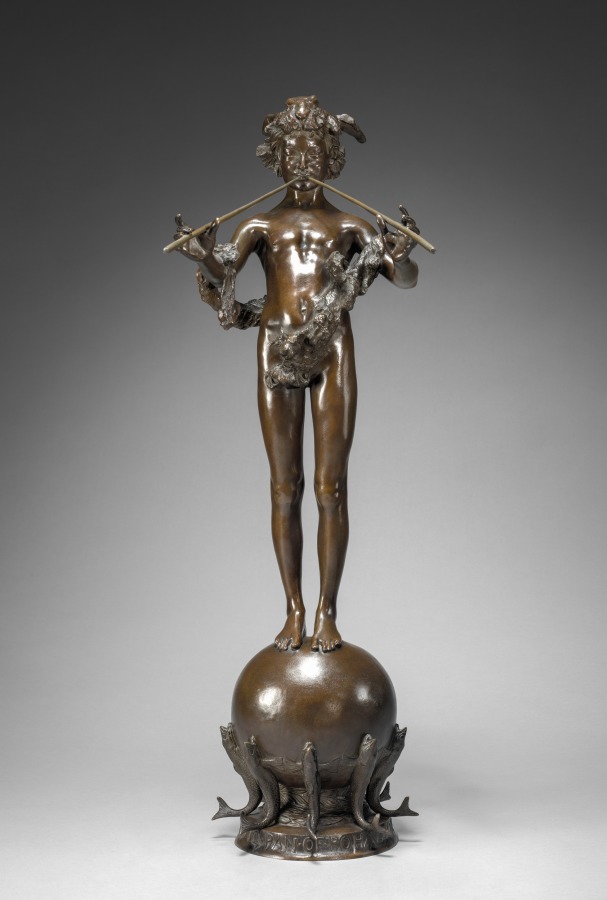
Pan of Rohallion, 1890
He won prizes, attracted patrons, and within a few years had established a studio in the Montparnasse neighborhood that would become a gathering point for fellow American expatriates. He would spend much of his working life between Paris and the United States, carrying the sensibility of the one into the expectations of the other. The year 1890 marked a period of astonishing creative output. Diana, cast in bronze that year, reveals the full range of MacMonnies at his most confident.
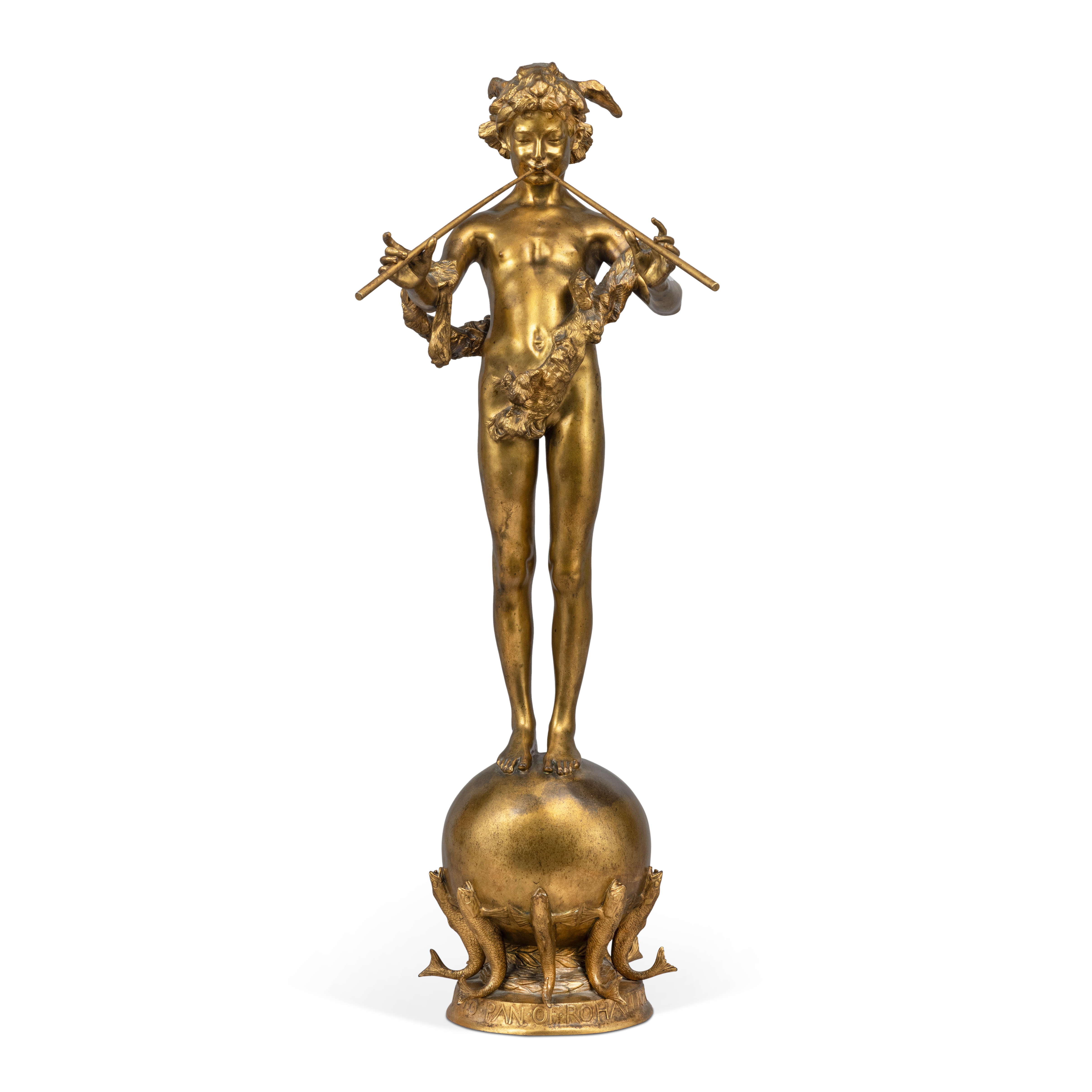
The figure is taut, athletic, and luminous in its surface finish, the goddess of the hunt rendered not as cold allegory but as a living presence caught in a moment of absolute physical authority. Pan of Rohallion, also dated to 1890 and produced in both standard bronze and a richly worked gilded bronze variant, demonstrates his gift for mythological subject matter that feels genuinely inhabited rather than merely decorative. The gilded version in particular has a warmth and theatricality that speaks to the influence of his French training while remaining distinctly personal in its playful energy. Collectors who have encountered Pan of Rohallion in person often describe the work as possessing a quality of arrested motion, as though the figure might at any moment resume its dance.
Frederick William MacMonnies
Pan of Rohallion, 1890
Bacchante and Infant Faun, completed in 1894, remains the work most inseparable from MacMonnies's reputation, and rightly so. The sculpture was a private commission and was subsequently offered as a gift to the Boston Public Library, which had been designed by the celebrated architectural firm of McKim, Mead and White. Charles McKim was an ardent admirer of the work. But the figure of a nude woman, wine in hand, laughing and balancing an infant above her head, proved too much for Boston's civic guardians.
The outcry led to the work's rejection, a decision that scandalized the American art world and drew international attention. The controversy, far from diminishing the work, elevated its status as a serious and boundary challenging achievement. The Metropolitan Museum of Art acquired a cast and placed it on view, where it was met with admiration. MacMonnies had, almost inadvertently, forced a national conversation about artistic freedom and public culture.
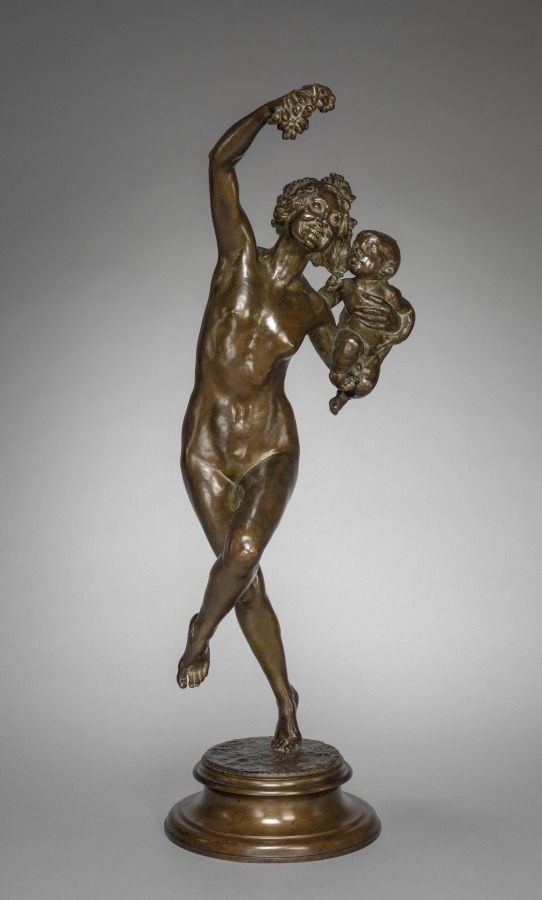
Frederick William MacMonnies
Bacchante and Infant Faun, 1894
For collectors approaching MacMonnies today, the market presents a compelling picture. His bronzes appear at major American auction houses with meaningful regularity, and examples in good original patina with clear provenance consistently attract serious bidding. The most sought after works are the mythological subjects, particularly pieces that demonstrate the quality of his Parisian casting relationships and the refinement of his studio finishing. Collectors drawn to the American Beaux Arts tradition often hold MacMonnies alongside contemporaries such as Augustus Saint Gaudens, Daniel Chester French, and Paul Wayland Bartlett, artists who shared his commitment to the grand figurative tradition and his belief that sculpture could carry genuine emotional and philosophical weight.
His work also invites comparison with French masters such as Alexandre Falguiere and Jean Baptiste Carpeaux, whose influence can be felt in MacMonnies's fondness for animated, twisting figures full of internal life. What makes MacMonnies particularly compelling to the thoughtful collector is the sense of a fully realized artistic personality behind every object. He was not a manufacturer of pleasing forms but a sculptor with genuine ideas about beauty, movement, and the relationship between the mythological past and the living present. His expatriate life gave him access to the finest foundries and the most sophisticated critical culture of his era, while his American roots kept him tethered to a tradition of public ambition and democratic grandeur.
The tension between those two worlds is visible in the best of his bronzes, works that are at once refined and exuberant, technically flawless and emotionally direct. Frederick William MacMonnies died in New York in 1937, having lived long enough to see the taste for Beaux Arts grandeur fall somewhat out of fashion in the era of modernism's ascent. But the cyclical nature of art historical attention has returned him to a place of genuine prominence. Museum retrospectives, scholarly monographs, and a growing collector base have combined to restore his reputation to something close to what it was at the height of his powers.
For those who believe that technical mastery and imaginative ambition are not competing values but complementary ones, MacMonnies offers a body of work of exceptional richness. To hold one of his bronzes, to follow the surface with the eye and feel the accumulated intention of a supremely gifted hand, is to understand why his legacy endures.