Frederic Remington
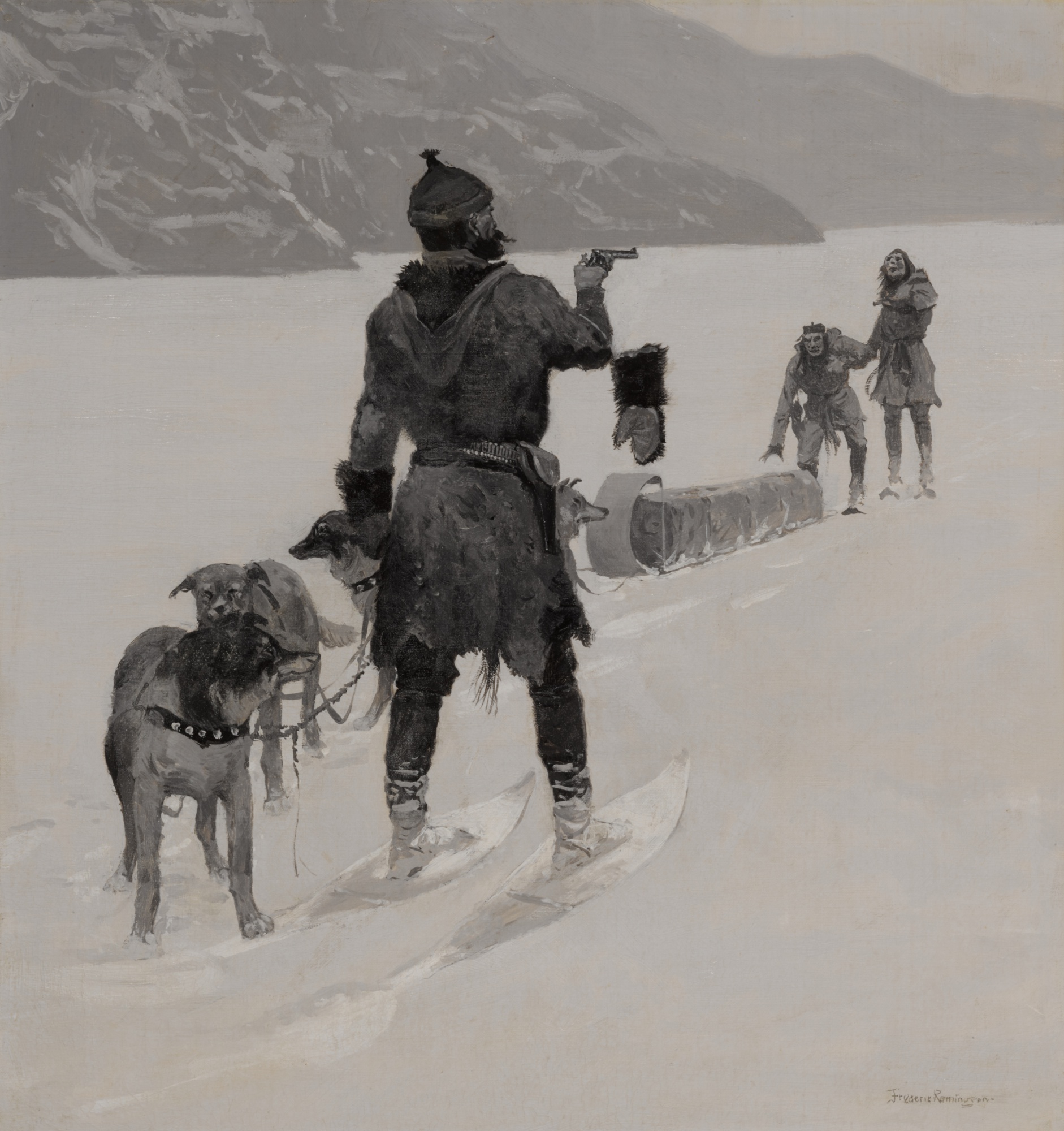
Frederic Remington: The West Alive Forever
Artist Spotlight · The Collection Editorial
“I knew the wild riders and the vacant land were about to vanish forever, and the more I considered the subject the bigger the forever loomed.”
Frederic Remington, personal writings
Stand before a Frederic Remington bronze and something remarkable happens. The metal seems to breathe. A horse mid stride threatens to complete its leap, a soldier's shoulders carry the weight of a continent, and the vast, ungovernable American West presses in from every direction. It is no accident that the Smithsonian American Art Museum, the Amon Carter Museum of American Art in Fort Worth, and the Frederic Remington Art Museum in Ogdensburg, New York continue to draw devoted audiences to his work more than a century after his death.
Frederic Remington
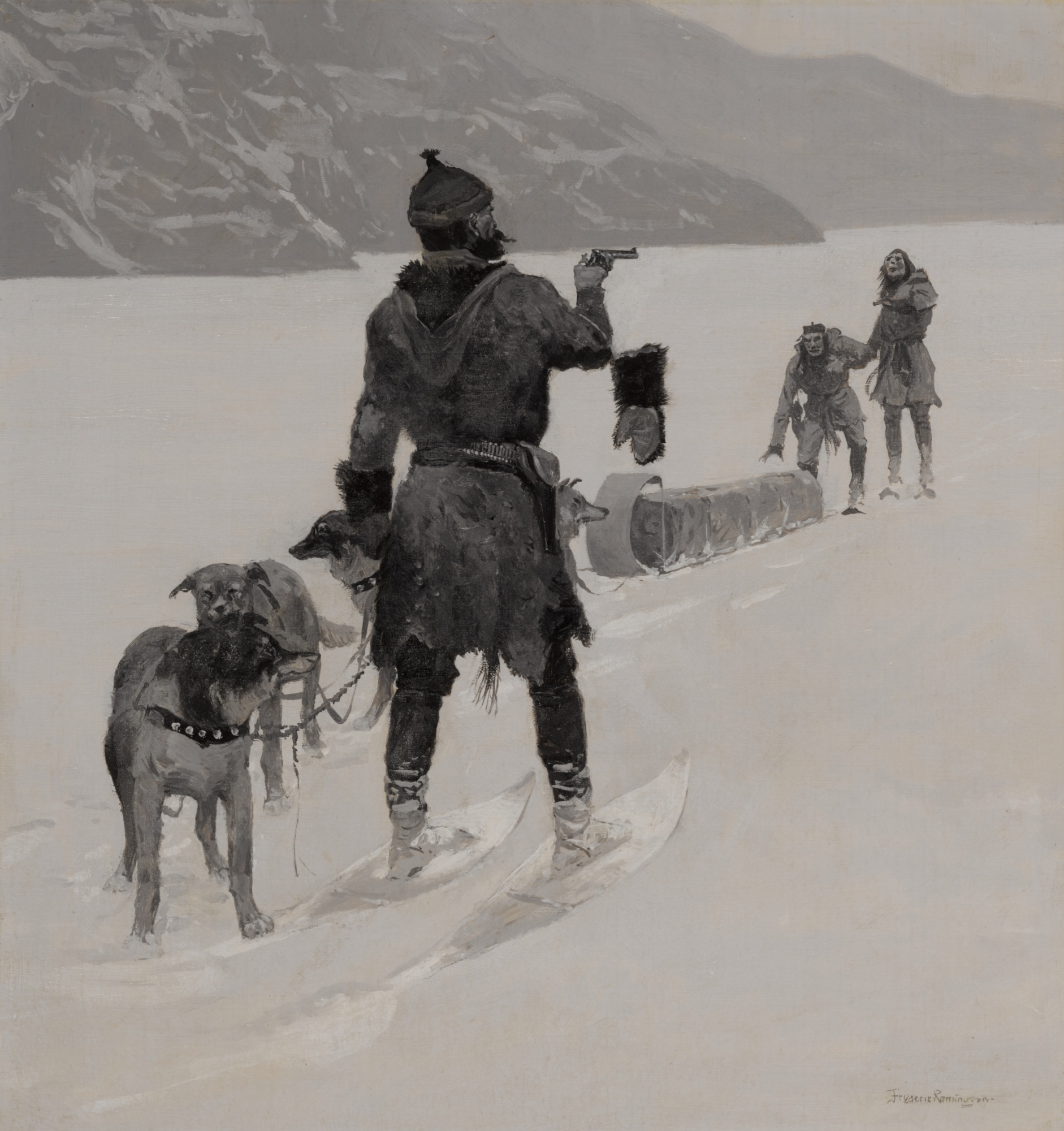
Hands Off, 1902
Remington did not simply document a vanishing world. He invented the visual grammar through which Americans still understand their own mythology. Frederic Sackrider Remington was born on October 4, 1861, in Canton, New York, the son of a newspaper publisher who served as a cavalry officer during the Civil War. His father's stories of horses, discipline, and open terrain planted something deep in the boy's imagination long before he ever set foot west of the Mississippi.
He studied briefly at the Yale School of Fine Arts beginning in 1878, one of the earliest formal art programs in the United States, before the death of his father in 1880 interrupted his education and set him adrift. He was restless, physically imposing, and entirely unsuited to the counting houses and newspaper offices that seemed to be his practical options. What he needed was space, and America in the 1880s still had plenty of it. His first journeys into the American West and Southwest came in the early 1880s, when he traveled through Kansas, Arizona, and the Montana Territory.
Frederic Remington
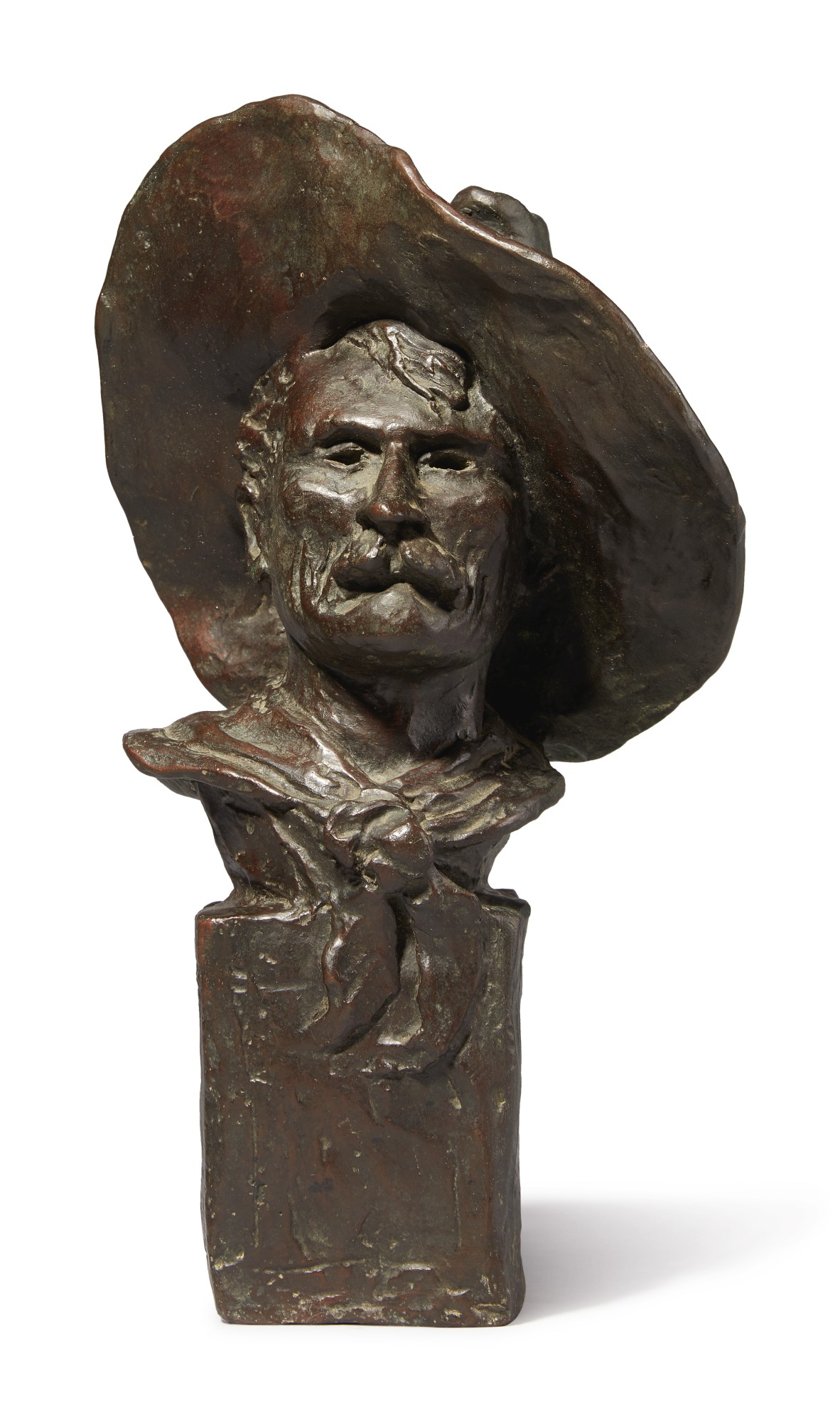
The Sergeant
He bought a sheep ranch in Kansas in 1883, lost money on it, and returned east briefly before the pull of the frontier proved irresistible. These early years of direct observation were foundational. He sketched constantly, filling notebooks with the postures of cowboys at work, the musculature of quarter horses, the texture of military uniforms worn thin by weather and hard riding. When Harper's Weekly published his illustration of a cowboy on their cover in January 1882, a career was effectively announced.
“I have always wanted to be a great artist. I have been content with nothing less.”
Frederic Remington, letter to his wife Eva, 1900
By the late 1880s he was one of the most sought after illustrators in America, his images of cavalry campaigns, Native American warriors, and open range cowboys appearing in magazines, books, and newspapers across the country. Remington's development as a fine artist unfolded in productive tension with his success as an illustrator. He began exhibiting paintings at the National Academy of Design in New York in 1887, the same year he traveled with General Nelson Miles during the final campaigns against Apache resistance in the Southwest. His early canvases were muscular and direct, built around action and narrative clarity.
Frederic Remington
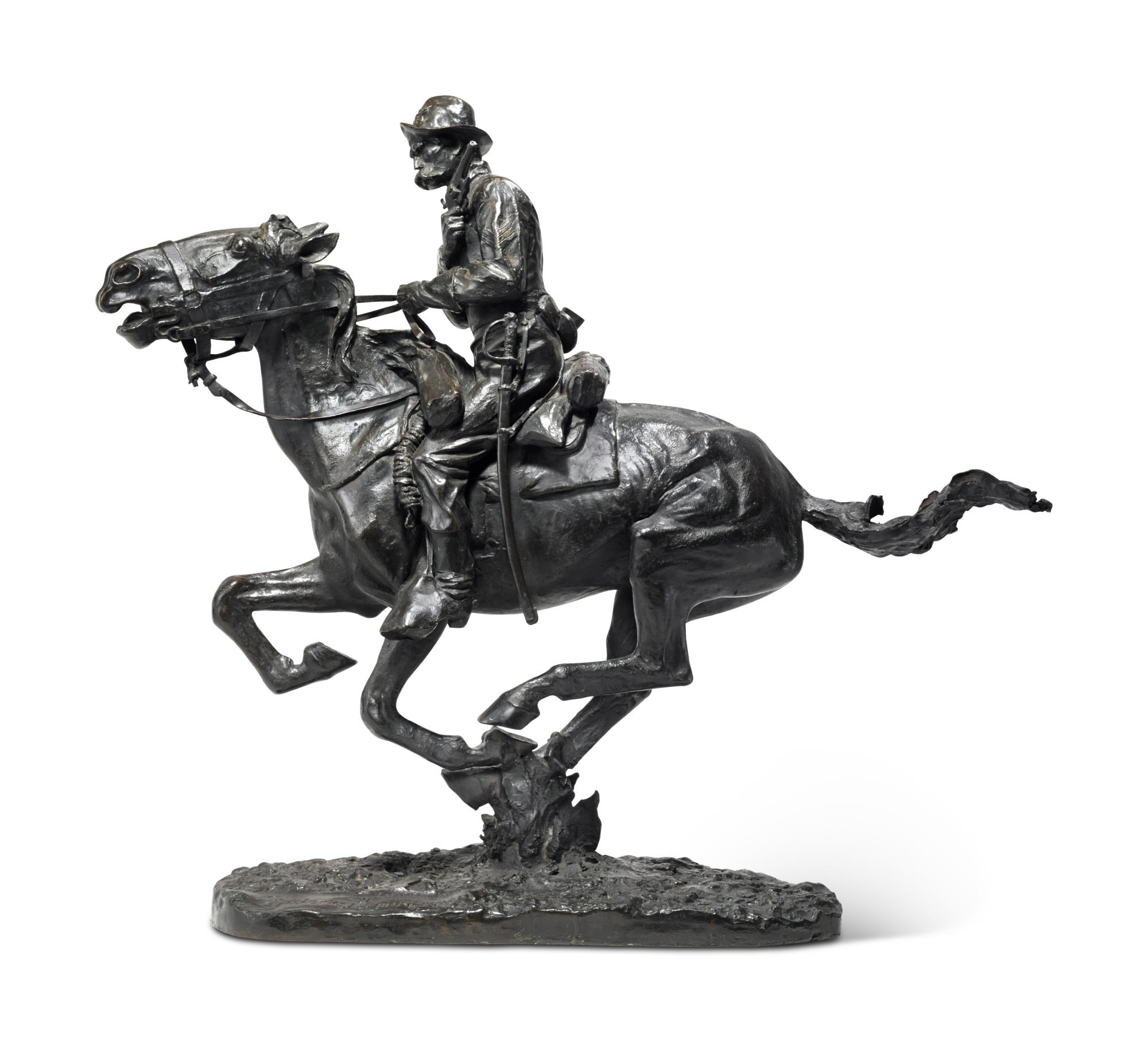
Trooper of the Plains
But as the 1890s progressed, something more complex entered his work. He became increasingly interested in the quality of light at dusk and at night, in the silence that followed movement, in the psychological interior of the figures he painted. The nocturnal paintings he produced in the early 1900s, works suffused with blue shadow and strange stillness, represent some of the most quietly radical art made in America at the turn of the century. Among the works available on The Collection, several reveal the full range of Remington's ambition.
Hands Off, painted in 1902 in oil en grisaille on canvas, demonstrates his mastery of tonal painting, a technique that strips color away and forces the eye to read form through pure gradation of light and shadow. The grisaille approach here is not a preparatory sketch but a finished artistic statement, cool and resolute. His bronzes are equally commanding. The Broncho Buster, first cast in 1895, was Remington's debut in sculpture and an immediate sensation.
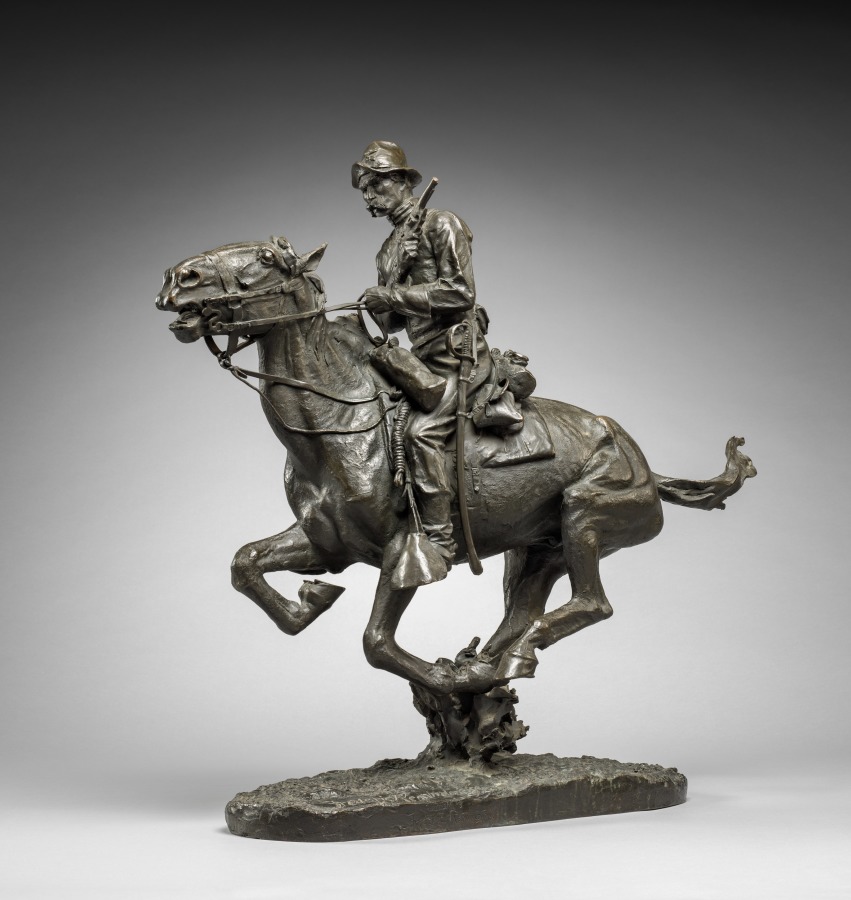
Frederic Remington
Trooper of the Plains-1868, 1908
He had taught himself the lost wax process with characteristic impatience and ambition, and the result was a work that captured explosive kinetic energy in a medium that resists it. The Sergeant and Trooper of the Plains, with their dark brown patinas and precise anatomical observation, show a sculptor at the height of his powers, memorializing the ordinary military man with the same seriousness usually reserved for generals and statesmen. Trooper of the Plains 1868, cast in 1908 near the end of his life, carries a particular elegiac weight, as though Remington understood he was preserving something that no photograph could adequately hold. For collectors, Remington occupies a singular position in the American art market.
His bronzes have long been understood as foundational objects for any serious collection of American art, and major examples have consistently achieved strong results at auction. Christie's and Sotheby's have both seen significant bidding activity around his sculptural work, with important casts of The Broncho Buster and Coming Through the Rye drawing competitive attention from institutional and private buyers alike. Collectors are advised to pay close attention to cast numbers and foundry marks, as Remington worked with the Henry Bonnard Bronze Company and later Roman Bronze Works in New York, and the distinctions between lifetime casts and posthumous editions matter considerably to both value and historical significance. His paintings on canvas, particularly the nocturnal works and the later impressionistic pieces, remain somewhat underappreciated relative to his bronzes and represent a compelling area of focus for discerning buyers.
Remington's place in art history sits at a productive crossroads. He is often discussed alongside Charles Russell, whose parallel career as a painter and sculptor of Western subjects makes the two men natural points of comparison, though Remington's formal training and New York connections gave his work a different kind of ambition. His interest in depicting Native American subjects, while filtered through the perspectives and limitations of his time and culture, engaged questions of representation that later artists including Oscar Howe and T.C.
Cannon would address with very different voices and purposes. Understanding Remington fully means holding both his extraordinary visual gifts and the ideological frameworks of his era in view at the same time. What endures in Remington's work is not nostalgia, though nostalgia is certainly present, but something more urgent: a lifelong argument with time itself. He knew that the world he was painting was disappearing even as he painted it, and that knowledge sharpens every bronze and every canvas with a particular intensity.
He died on December 26, 1909, at his home in Ridgefield, Connecticut, just days after emergency surgery, at only 48 years of age. The brevity of his life makes the volume and quality of what he produced all the more astonishing. For collectors today, to own a Remington is to hold a piece of American visual consciousness, an object made by someone who understood that art is how a culture chooses to remember itself.
Explore books about Frederic Remington
Frederic Remington's Own Outdoors
Frederic Remington
Frederic Remington: A Life
Mark Diedrich
The Frederic Remington Art Museum Collection
Michael Edward Shapiro
Frederic Remington: The American West
Paul Hutton
Remington Letters
Frederic Remington, Peggy Samuels (editor)
Frederic Remington: Selected Letters
Peggy Samuels
The Sculpture of Frederic Remington
Michael Edward Shapiro, Peter Hassrick
Frederic Remington and the North American Indian
Peter Hassrick