Franz Kosler
Franz Kosler's Tender Vision Deserves Your Attention
Artist Spotlight · The Collection Editorial
There is a particular kind of pleasure that comes from encountering an artist who worked with quiet dedication, far from the loudest conversations of his era, and finding that his pictures still carry a charge that feels entirely alive. Franz Kosler, the Austrian painter who lived and worked between 1864 and 1905, is precisely this kind of discovery. His oil paintings of figures drawn from across the cultural world he inhabited reward sustained looking, and collectors who have begun to seek out his work are finding in it a warmth and technical confidence that places him firmly among the most appealing academic painters of the late nineteenth century. Kosler was born in Austria in 1864, arriving into a cultural moment of remarkable richness.
Franz Kosler
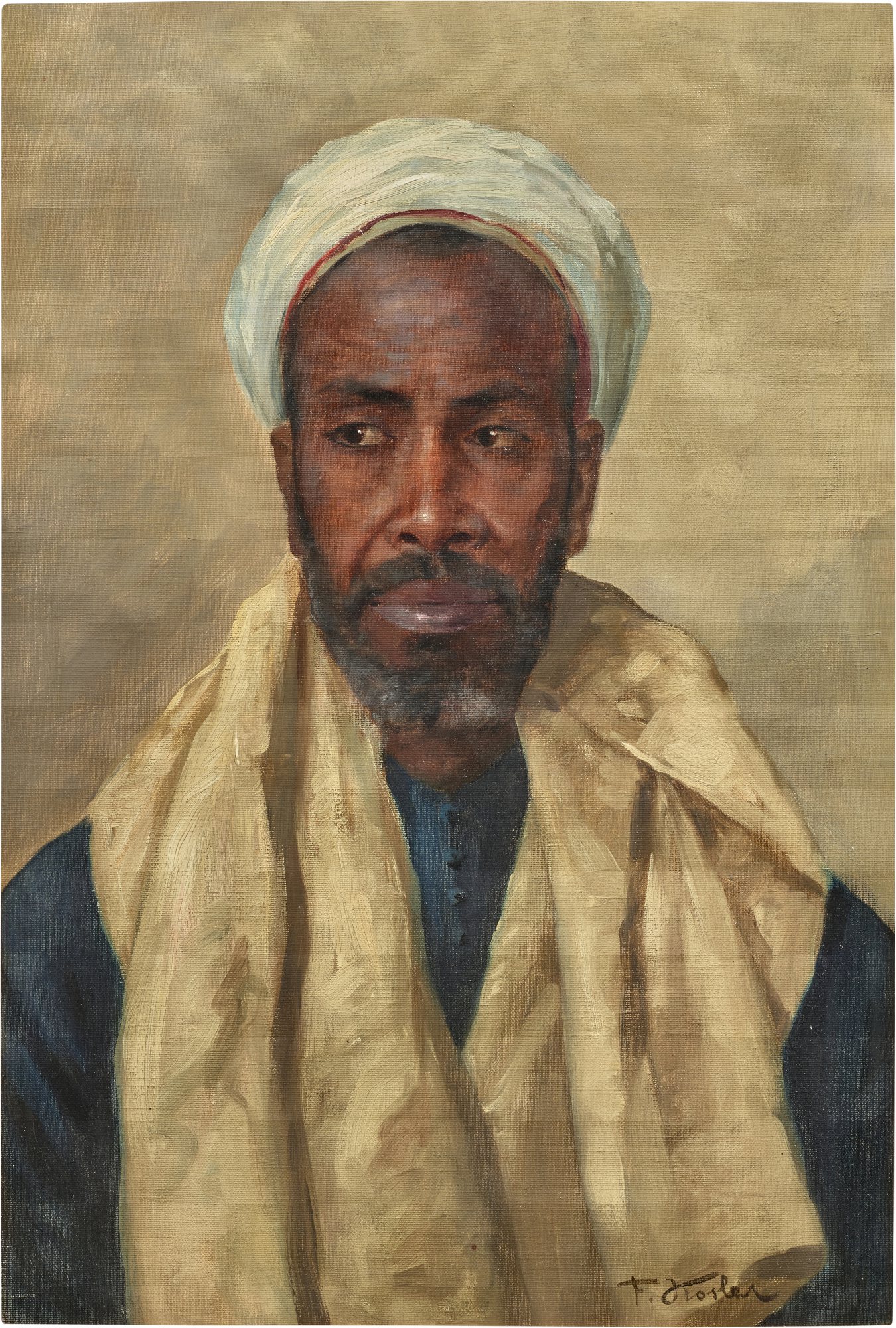
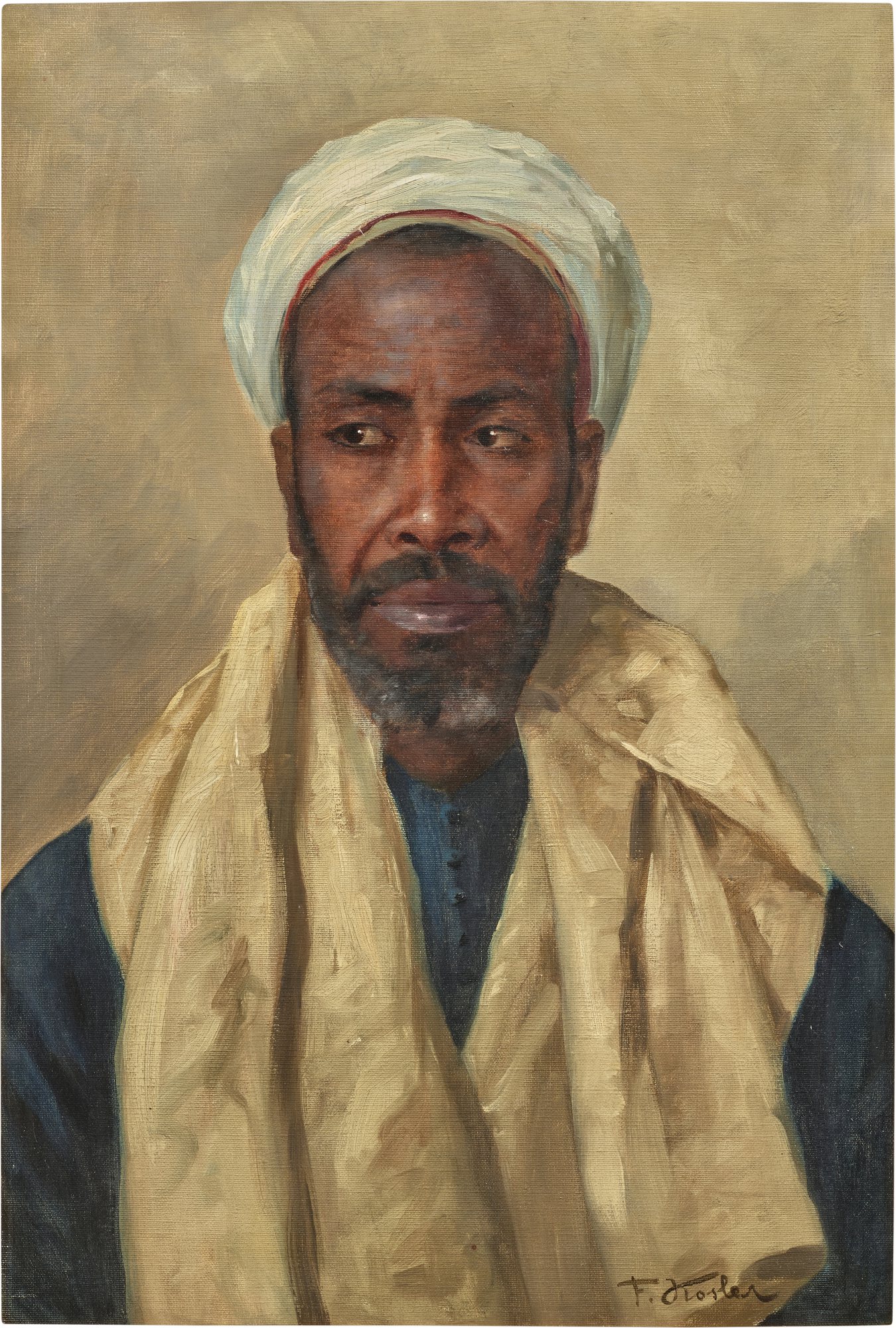
A Nubian Man
The Austro Hungarian Empire at that period was a crucible of artistic ambition, and Vienna in particular had developed institutions that trained painters to a standard of technical excellence that the rest of Europe recognized and respected. Young artists of Kosler's generation grew up understanding the European academic tradition not as a constraint but as a living language, one that gave them the tools to describe the visible world with extraordinary precision. Kosler absorbed this tradition through study at prominent European academies, where he encountered the rigorous demands of academic drawing and the craft of constructing a picture from tone, light, and carefully observed form. The formation of an academic painter in this period almost always involved travel, and Kosler's development was shaped by exposure to traditions and subjects beyond the borders of the empire.
The late nineteenth century saw a wave of European painters drawn to North Africa and the Middle East, a movement that produced some of the most technically refined and visually ambitious figurative painting of the era. Artists including Jean Léon Gérôme, Ludwig Deutsch, and Rudolf Ernst had demonstrated that the encounter between European academic technique and subjects drawn from other cultures could produce works of unusual power and beauty. Kosler engaged with this tradition thoughtfully, and its influence is legible in some of his most celebrated surviving works. The painting known as "A Nubian Man" stands as one of Kosler's most compelling achievements.
Franz Kosler
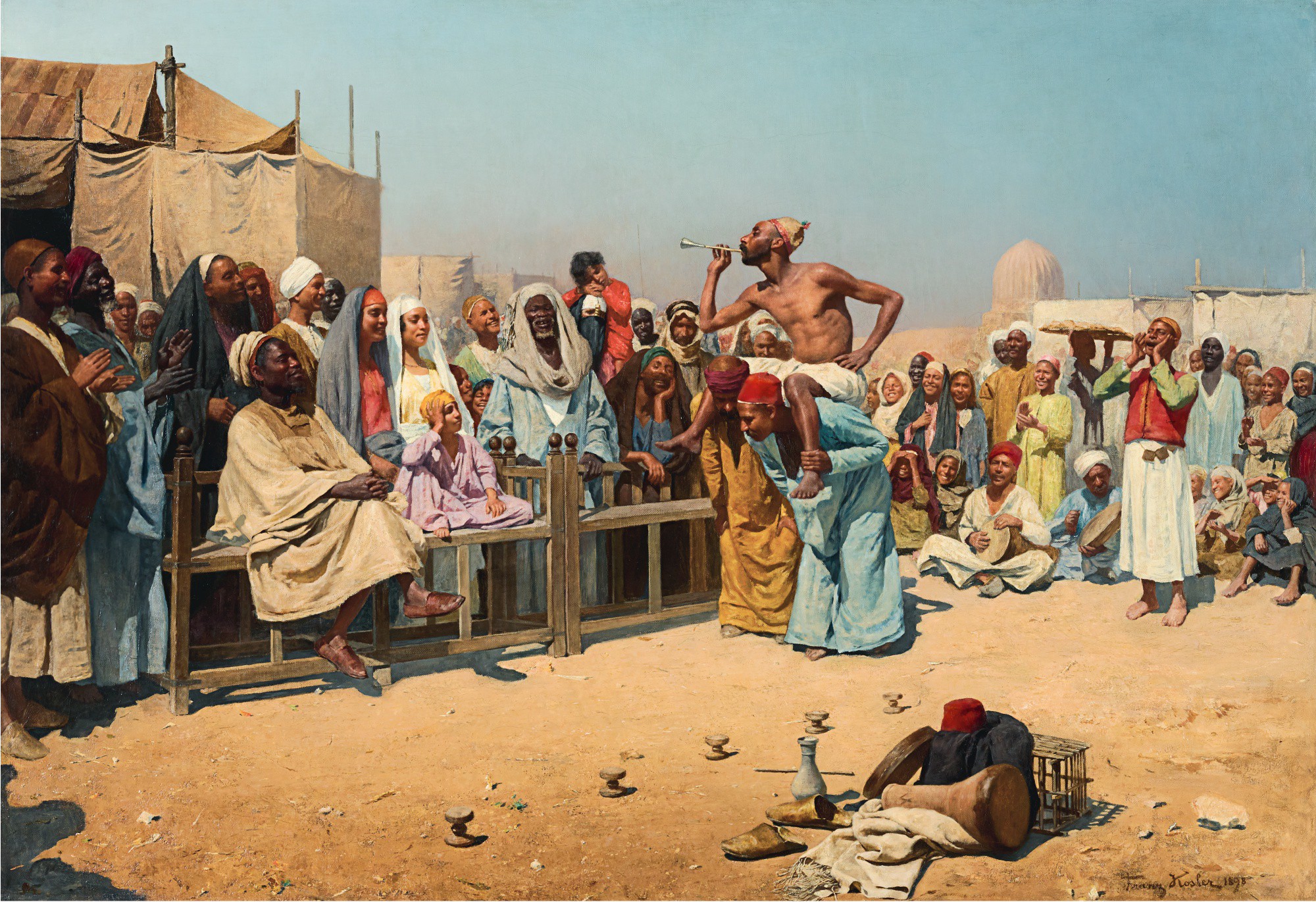
The Entertainers
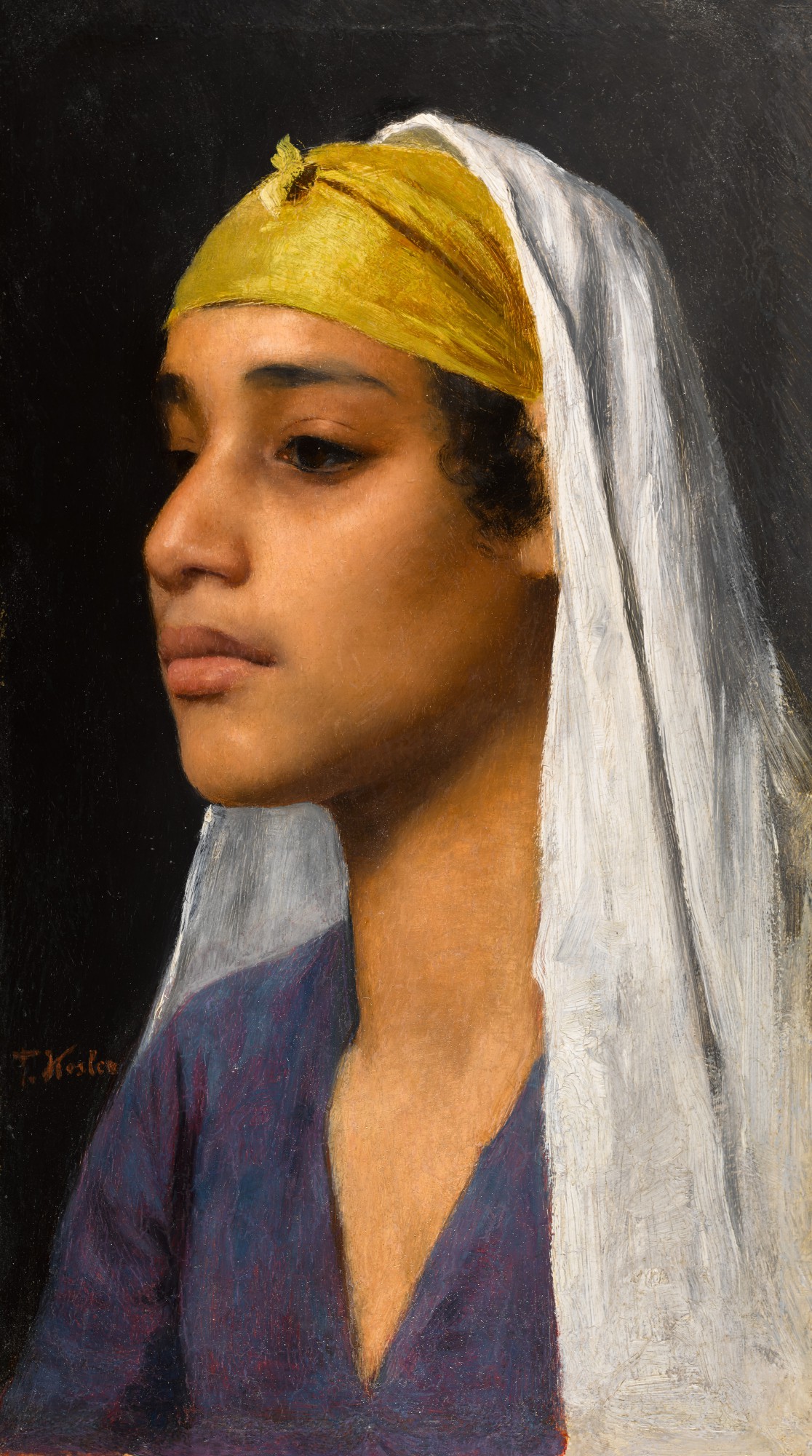
Executed in oil on canvas, the work demonstrates the full range of his technical gifts: a warm tonal palette, careful attention to the fall of light across a human face, and a compositional confidence that allows the subject to occupy the picture with dignity and presence. The work belongs to a tradition of Orientalist portraiture at its most humanizing, the kind of picture in which a European academic painter trained his full attention on an individual rather than a type. Similarly, "Young Egyptian Girl," painted on panel, reveals Kosler's gift for intimate portraiture on a smaller scale. The panel format encourages a kind of concentrated looking, and Kosler rewards that attention with passages of extraordinarily delicate paint handling, particularly in the rendering of the subject's features and expression.
"The Entertainers" adds another dimension to our understanding of Kosler's range. The genre scene format, in which figures are caught in a moment of shared activity, allows Kosler to demonstrate his command of narrative composition and his sensitivity to the social textures of daily life. His works in this vein share something with the domestic and theatrical scenes of contemporaries working across Europe in the same decades, artists who understood that the life of ordinary people, rendered with care and skill, constituted a subject worthy of the most serious pictorial attention. Across these works, Kosler's warm tonal palette functions almost as a signature, bathing his figures in a light that feels generous and observant at once.
Franz Kosler
Young Egyptian Girl
For collectors, Kosler represents the kind of opportunity that a well advised eye can recognize before the broader market fully catches up. His works have appeared at European auction houses, where they have attracted the attention of specialists in academic and Orientalist painting, a market that has shown consistent strength over the past two decades as collectors have returned with fresh appreciation to the technical achievements of the nineteenth century academic tradition. The Orientalist school in particular has benefited from serious scholarly reconsideration, with institutions and private collectors alike recognizing that the finest works in this tradition combine virtuoso execution with a genuine curiosity about the world beyond Europe's borders. Kosler's best pictures sit comfortably within this reassessment.
In terms of art historical context, Kosler belongs to a generation of Central European academic painters that also includes figures such as Hans Makart, whose influence on Viennese taste was enormous, and the generation of Austrian academicians who carried the traditions of Munich and Vienna into the early twentieth century. The Orientalist dimension of his work connects him to a broader European conversation that included Gérôme and Deutsch, while his genre scenes and portraits place him within a specifically Austrian and Central European tradition of intimate figurative painting. Understanding Kosler in this network of influences and contemporaries enriches the experience of looking at his individual pictures, and locating him within this history adds depth to the pleasure of collecting his work. Franz Kosler died in 1905, at just forty one years of age, and the brevity of his life means that his surviving body of work is limited in scale.
This rarity is itself part of what makes his pictures compelling to thoughtful collectors. Each surviving canvas or panel represents a sustained act of looking and making, a record of an artist who brought the full weight of a serious European academic training to bear on subjects he clearly found fascinating and worthy of his best efforts. His work reminds us that the late nineteenth century produced not only famous names but also painters of genuine accomplishment who deserve to be known more widely. The growing interest in Kosler among discerning collectors reflects a broader and welcome recognition that the history of European academic painting is richer, more various, and more rewarding than a narrow canon has sometimes suggested.
To live with one of his pictures is to share in the particular quality of attention he gave to the world, and that is a genuinely rare thing.
Explore books about Franz Kosler