Franz Ackermann
Franz Ackermann Maps the Whole Glorious World
Artist Spotlight · The Collection Editorial
When Franz Ackermann arrived at the German Pavilion of the Venice Biennale, he brought with him something rare in contemporary painting: a sense that the entire churning, overcrowded, neon lit surface of modern life could be rendered as pure color and form. His installations have filled institutional spaces from the Museum of Contemporary Art in Los Angeles to the Kunstmuseum Wolfsburg, and his reputation has only deepened with time. Right now, as collectors and institutions alike reassess the painters who most honestly grappled with globalization, Ackermann stands out as a figure of genuine prescience and sustained visual power. Born in Neumarkt Sankt Veit, Bavaria, in 1963, Ackermann came of age in a Germany that was itself undergoing profound transformation.
Franz Ackermann
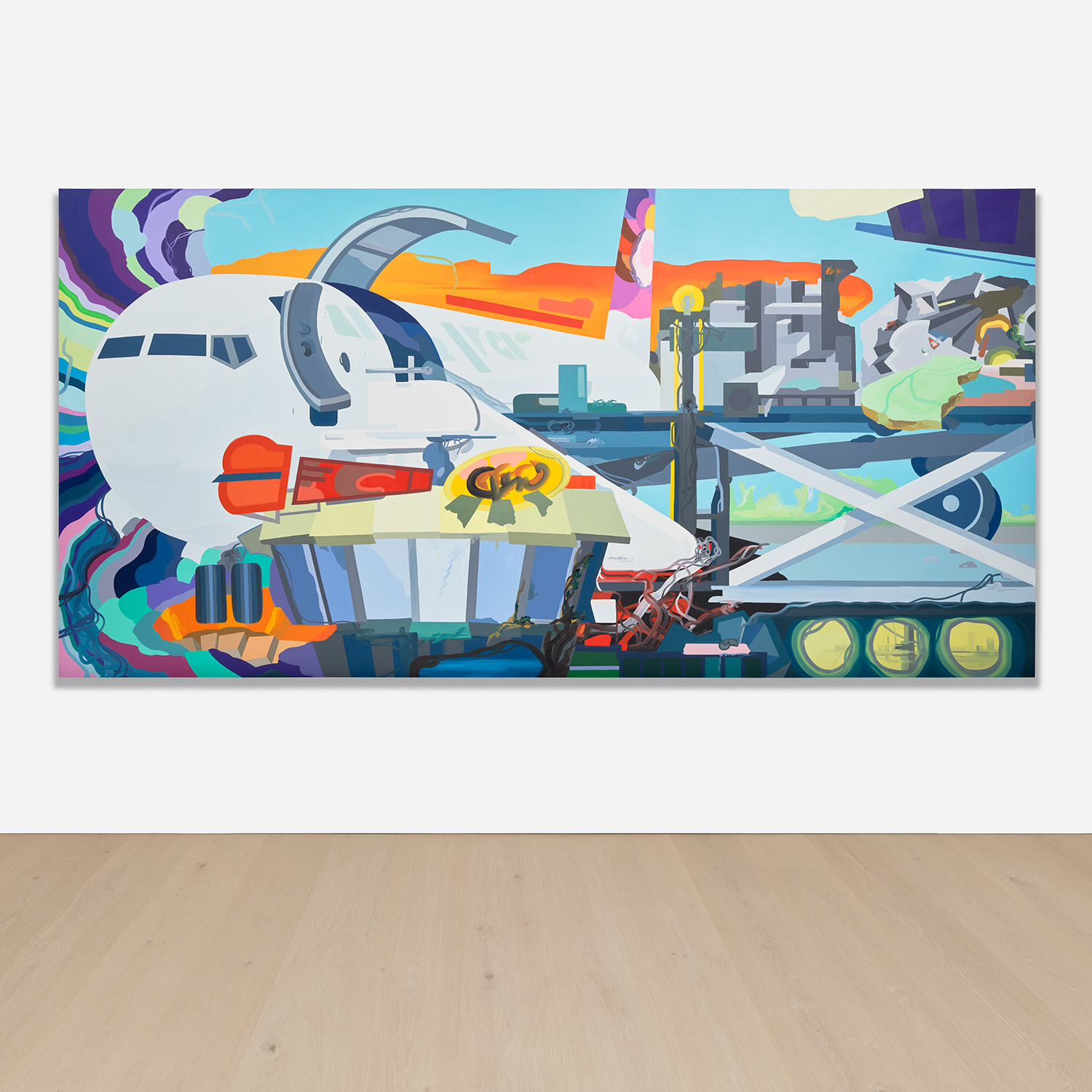
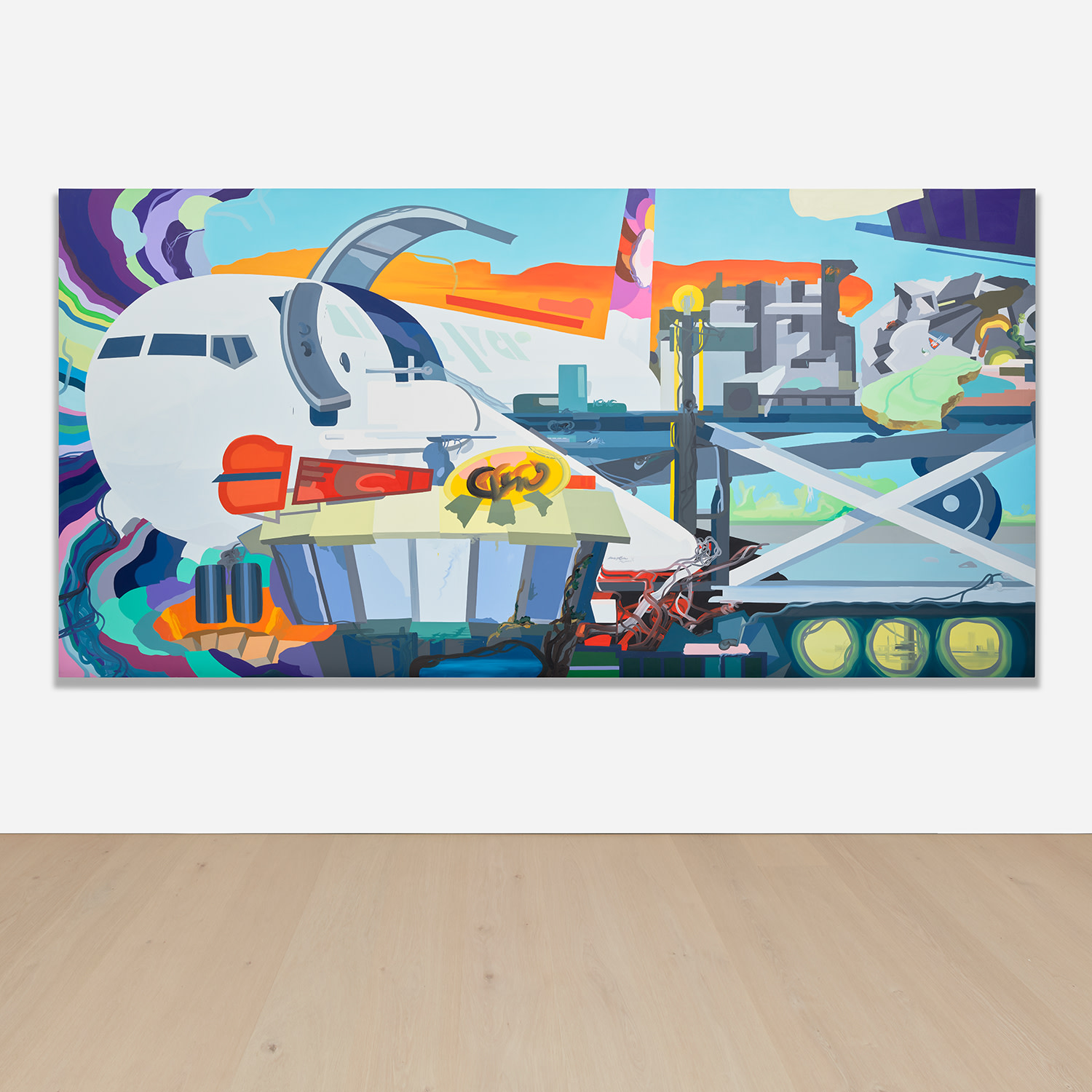
Boarding, 2002
He studied at the Akademie der Bildenden Künste in Munich before continuing his education at the Hochschule für Bildende Künste in Hamburg, where he was shaped by a generation of German painters wrestling seriously with abstraction and its discontents. That dual formation, rooted in both Bavarian tradition and the more conceptually restless atmosphere of Hamburg, gave Ackermann an unusual breadth. He was never content to work entirely within inherited frameworks, and his early travels to Southeast Asia in the 1990s would prove to be the catalyst that transformed a promising painter into a genuinely original one. It was during those travels that Ackermann developed the practice for which he is now celebrated: small, intense works on paper executed in transit, in hotel rooms, on trains and in airports, which he called Mental Maps.
These pocket sized studies were not sketches in any conventional sense. They were autonomous works that recorded the psychological and sensory experience of moving through unfamiliar cities, the disorientation of jet lag and the overstimulation of global consumer culture rendered as dense, swirling fields of color. Over time, these intimate studies became the raw material for large scale paintings and immersive site specific installations, creating a practice that operated fluidly across scales and media. The leap from a small gouache made in a Bangkok guesthouse to a mural that engulfs an entire gallery wall is not a contradiction in Ackermann's work.
Franz Ackermann
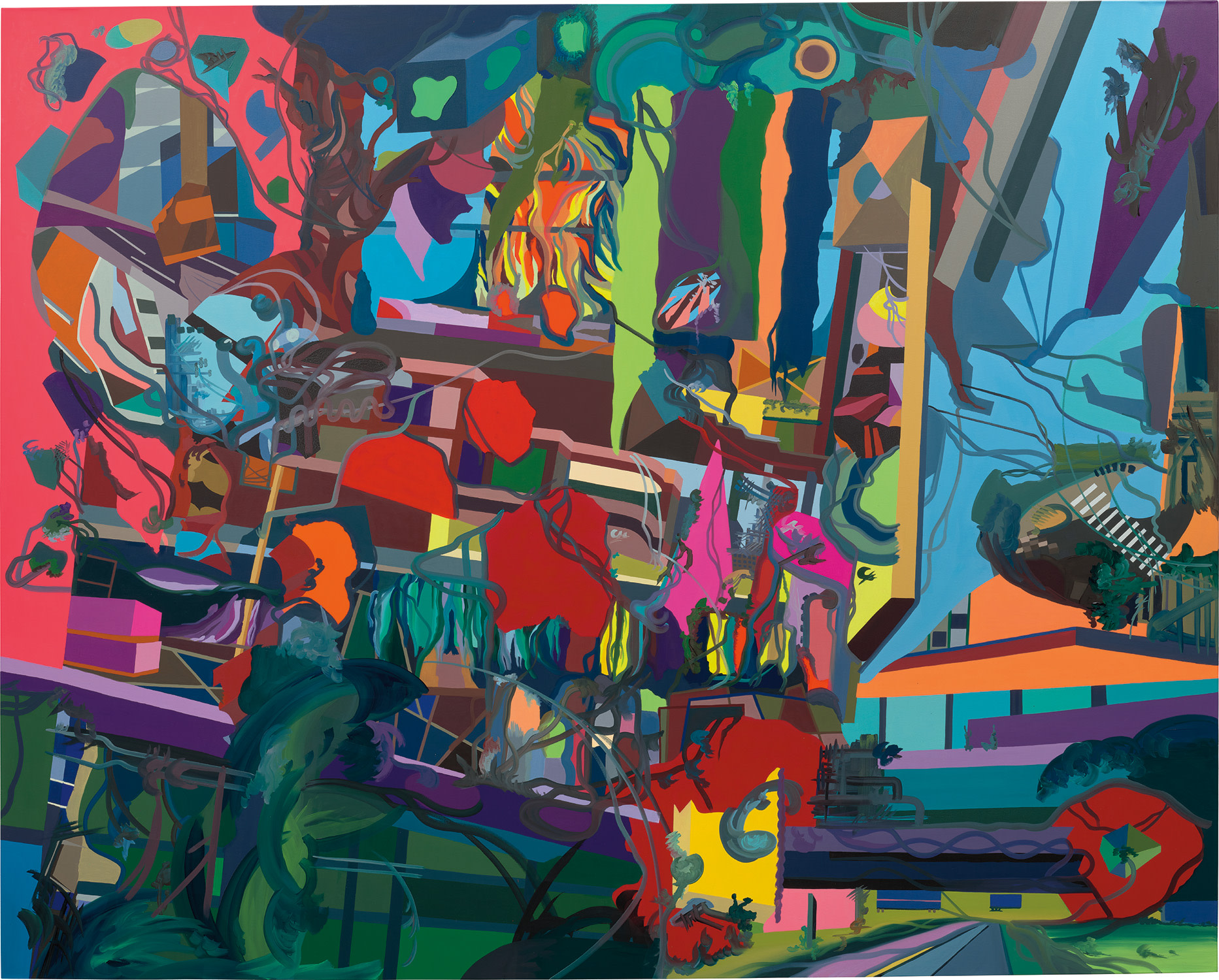
Rupalee: former cultural center, 2010
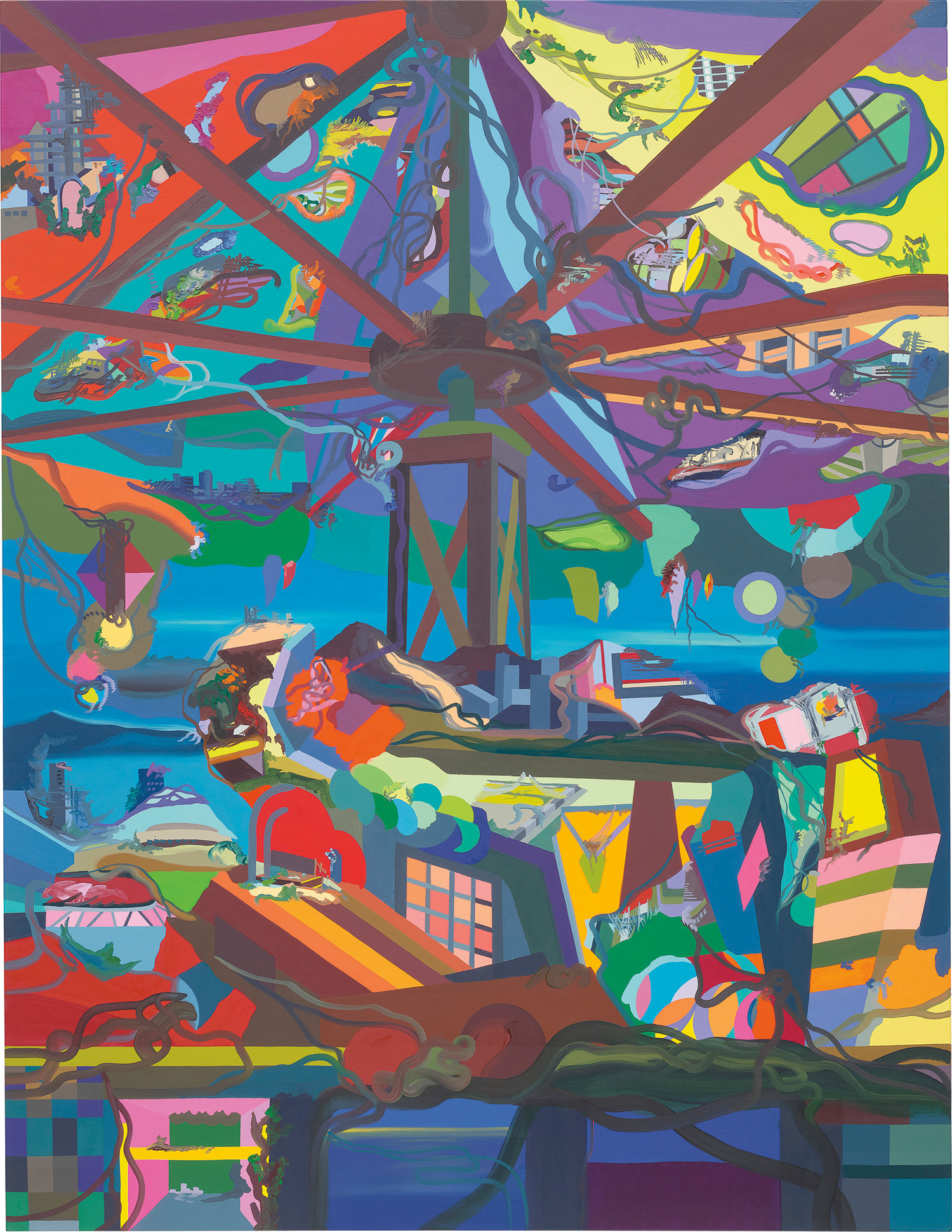
It is the point. The signature works that have defined Ackermann's career share a quality that is difficult to describe but immediately felt: they seem to vibrate with accumulated information. A painting like Boarding from 2002 condenses the experience of international air travel, with all its strange suspension of identity and place, into a composition of almost hallucinatory intensity. The ACRA series and works such as ACRA 50 miles from 2011 extend this logic geographically, grounding the abstract vocabulary in specific coordinates while remaining fully non representational.
Evasion XVIII, created in 1998, is one of the works that established his international reputation, its dense layering of form suggesting a city seen from above and inside simultaneously. These are paintings that reward sustained attention, offering new passages and relationships the longer you spend with them. Ackermann's installations deserve equal consideration alongside the paintings. When he intervenes in an architectural space, he does not simply hang works on walls.
Franz Ackermann
ACRA - 50 miles, 2011
He transforms the entire environment, using painted walls, hanging elements and spatial interventions to create something closer to total immersion than conventional exhibition. This capacity to think at the scale of a room, or a building, while maintaining the same conceptual and chromatic logic that drives the smallest works on paper, is one of the qualities that distinguishes him from painters who simply work large. The experience of walking through one of his installations has been compared to entering a map of a city that exists somewhere between memory and projection. From a collecting perspective, Ackermann's work presents an unusually rich range of entry points.
The works on paper, including gouache and mixed media studies, offer access to the most immediate and intimate layer of his practice, the raw nerve of the Mental Maps project, at scales and price points that make them compelling for collectors at various stages. The oil paintings on canvas, particularly those from the late 1990s and the first decade of the 2000s, represent the mature statement of his practice and have been acquired by significant institutional and private collections internationally. Works such as Transit from 2012 and Rupalee: former cultural center from 2010 demonstrate the range of emotional registers he can achieve within a sustained visual language. Collectors drawn to Neo Expressionism and to the broader legacy of German painting will find in Ackermann a figure who absorbed those traditions and redirected them toward genuinely contemporary concerns.
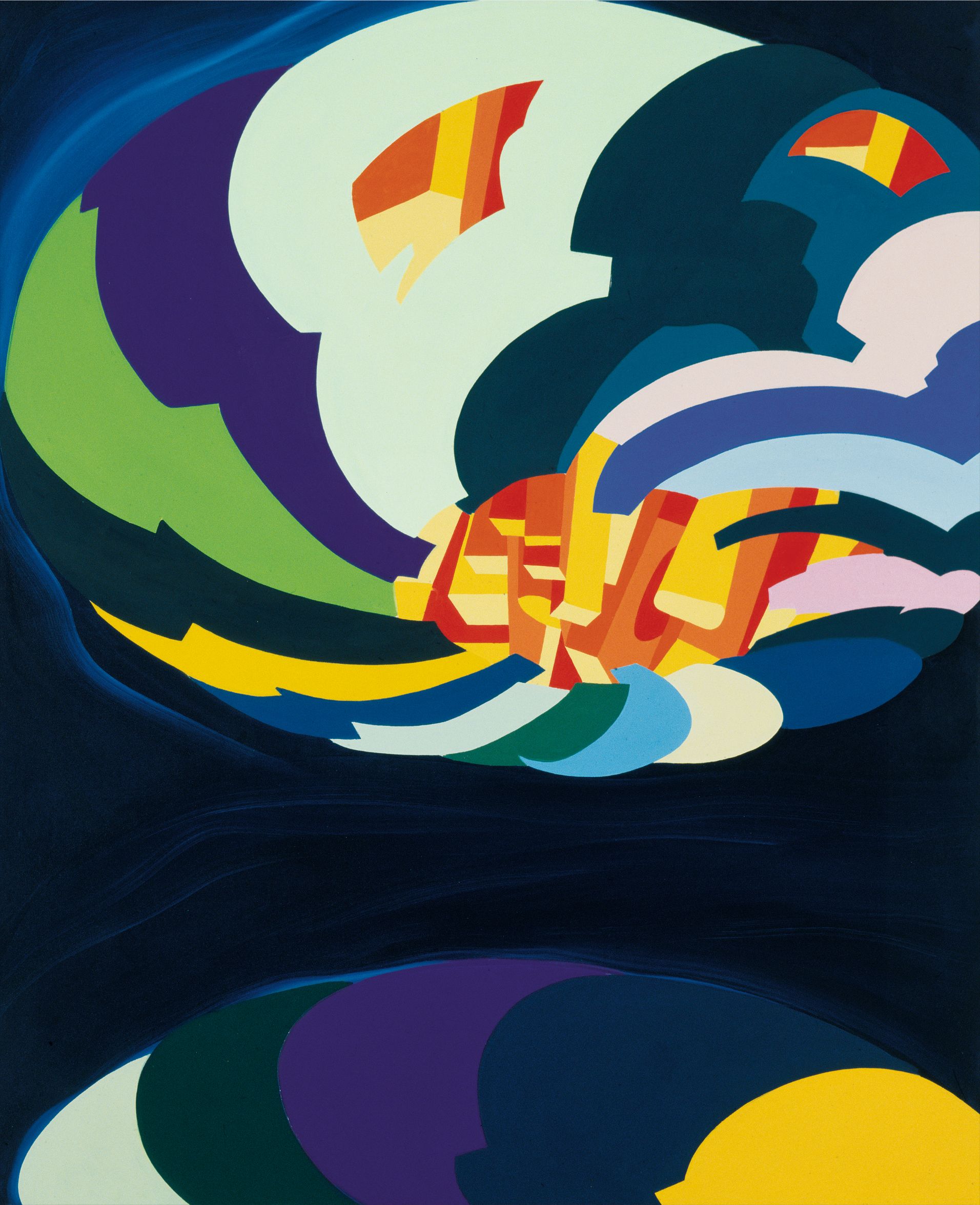
Franz Ackermann
Epicenter X
In the context of art history, Ackermann belongs to a generation of European painters who refused the binary choice between pure abstraction and figuration, finding instead a third path that drew on urban experience, travel and the texture of contemporary life. His work enters into productive dialogue with painters such as Katharina Grosse, whose large scale spatial interventions share something of Ackermann's ambition, and Albert Oehlen, whose embrace of visual noise and complexity offers a useful point of comparison. The broader tradition of psychedelic abstraction and the legacy of the Situationist International, with its mapping of psychogeographical experience, also echo through his practice, though Ackermann's version is more exuberant and less polemical than either of those reference points. What makes Ackermann genuinely important today, rather than merely historically interesting, is the accuracy of his diagnosis.
The world he began mapping in the 1990s, its dizzying connectivity, its proliferation of non places, its simultaneous celebration and anxiety around globalization, is the world we now fully inhabit. His paintings do not document this condition from a safe distance. They enact it, pulling the viewer into a field of sensation that feels at once overwhelming and beautiful, disorienting and alive. For collectors building a serious engagement with painting from the past three decades, his work is not simply desirable.
It is essential.