Frank Gehry
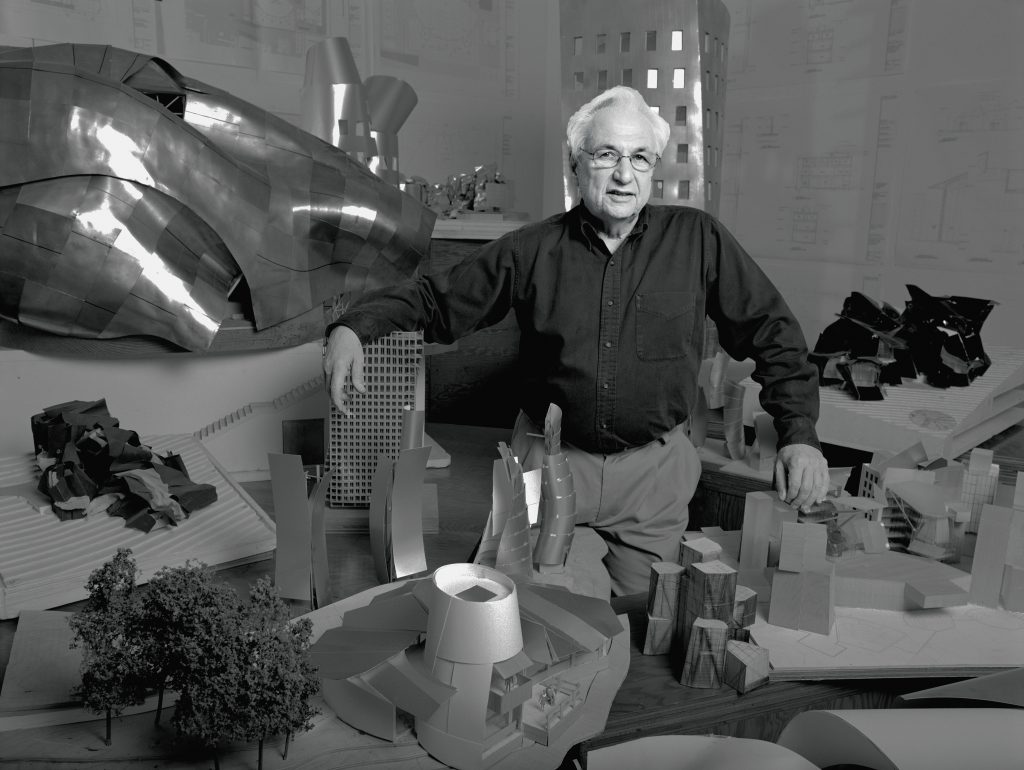
Frank Gehry: Architecture Elevated to Pure Art
Artist Spotlight · The Collection Editorial
“Architecture should speak of its time and place, but yearn for timelessness.”
Frank Gehry
When the Guggenheim Museum Bilbao opened its doors in October 1997, something fundamental shifted in the way the world thought about buildings. The titanium clad curves of Frank Gehry's masterwork caught the Basque light and seemed to move, to breathe, to belong simultaneously to the earth and to the imagination. That single structure drew millions of visitors to a city few outsiders had previously had reason to visit, sparked an international conversation about the transformative power of design, and cemented Gehry's reputation as the defining architectural visionary of his era. He was not simply building.
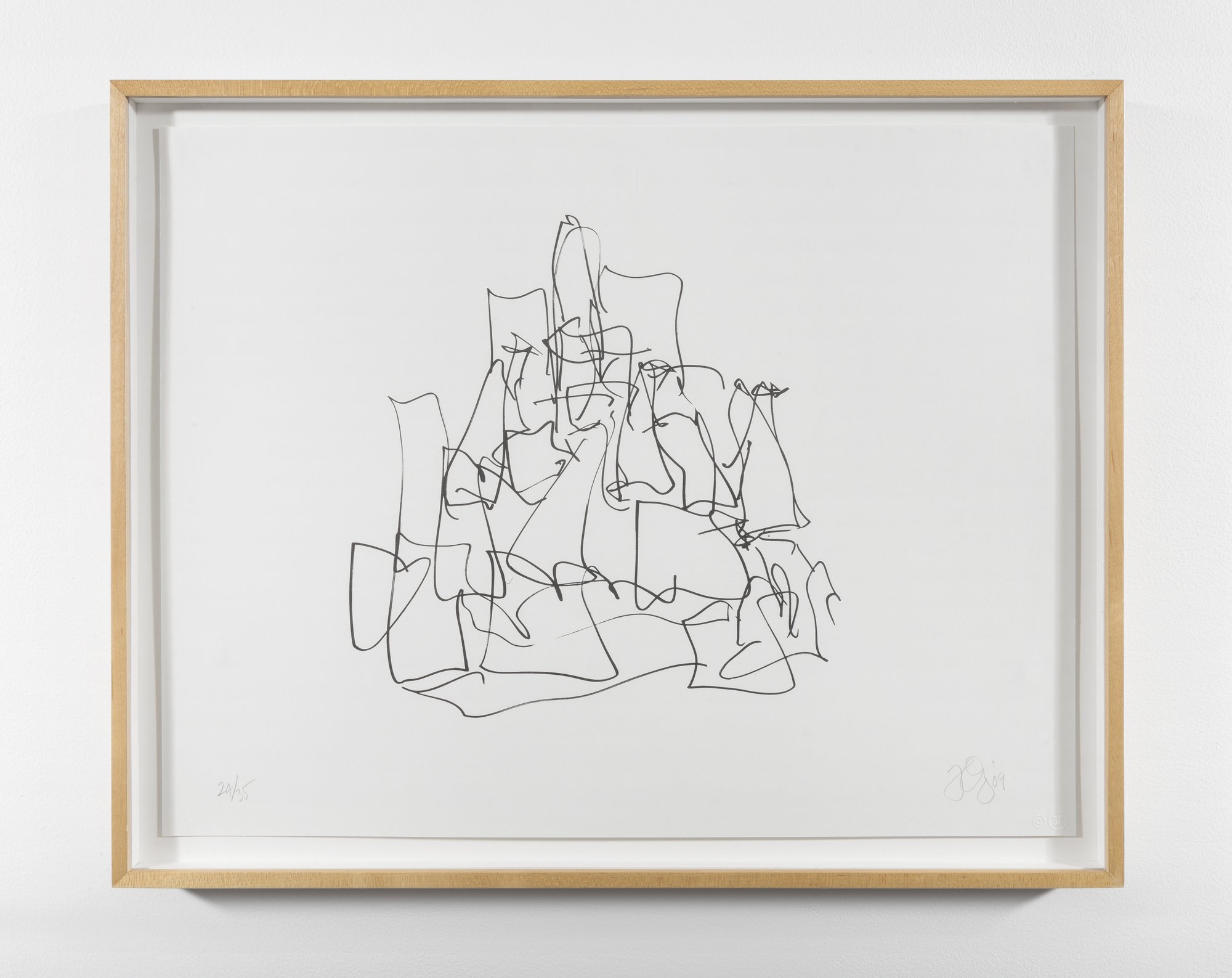
Frank Gehry
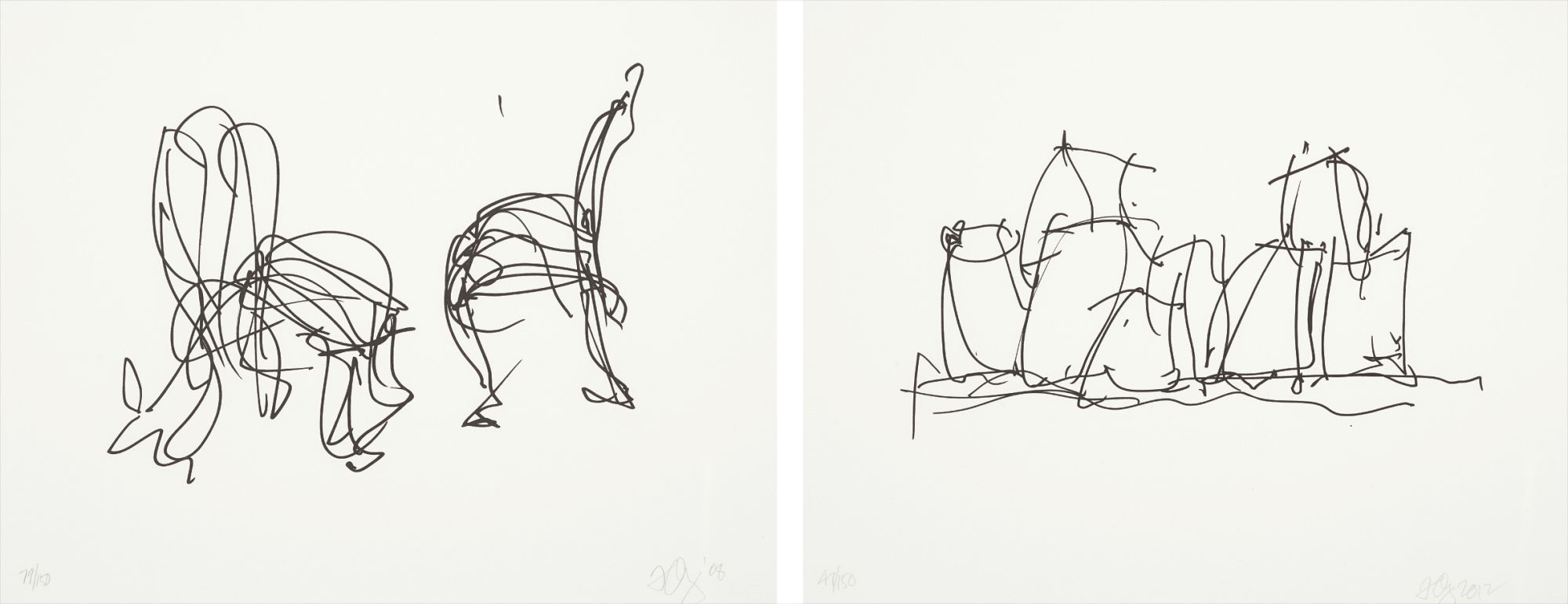
Study 3, 2009
He was making art at a scale that few sculptors had ever dared to attempt. Born Ephraim Owen Goldberg in Toronto, Canada, in 1929, Gehry spent his formative years absorbing the textures of an immigrant Jewish household before his family relocated to Los Angeles in 1947. The move proved decisive. Southern California in the postwar years was a place of restless reinvention, where modernism mixed freely with popular culture, where the line between fine art, craft, and commerce was productively blurred.
Gehry studied architecture at the University of Southern California and later at Harvard's Graduate School of Design, but it was the artists he befriended in Los Angeles who would shape his visual sensibility most profoundly. His close friendships with figures including Claes Oldenburg and Richard Serra introduced him to a way of thinking about form, material, and space that was fundamentally sculptural rather than strictly architectural. Gehry's early practice in Los Angeles during the 1960s and 1970s was marked by a willingness to experiment with the cheapest and most overlooked of industrial materials. Corrugated metal, chain link fencing, and raw plywood became the vocabulary of a new kind of building, one that refused to conceal its own construction.
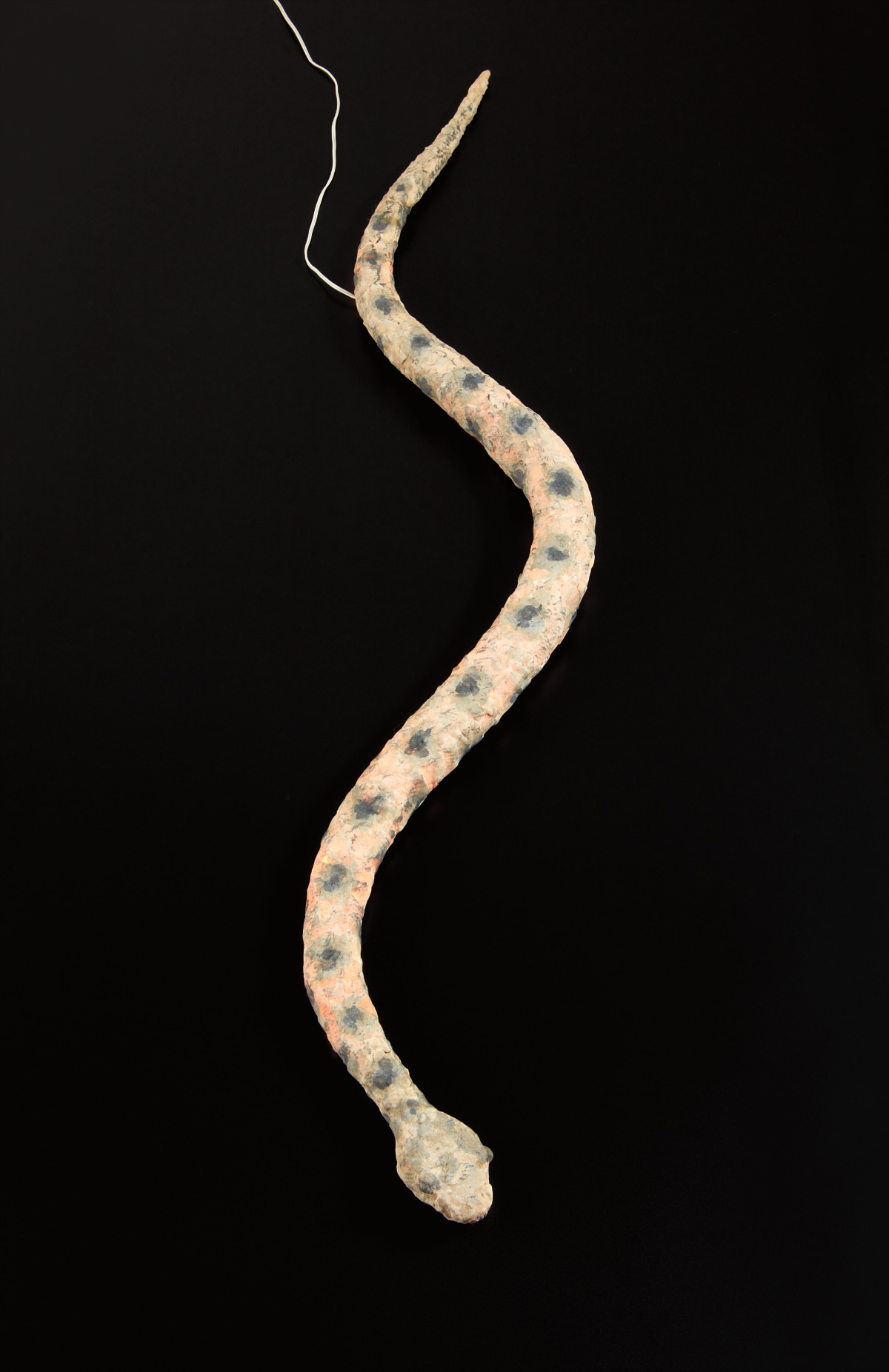
Frank Gehry
“Snake" lamp
His own home in Santa Monica, which he began transforming in 1978, became a living manifesto. He wrapped an existing modest Dutch Colonial house in layers of industrial material, creating fractured, colliding volumes that shocked neighbors and fascinated critics in equal measure. It was an act of creative courage that announced a genuinely new architectural sensibility, one rooted in the traditions of West Coast avant garde art as much as in the European modernism he had studied. The decades that followed brought a series of landmark commissions that mapped the full range of his ambitions.
“I approach each building as a sculptural object, a spatial container, a space with light and air.”
Frank Gehry
The Walt Disney Concert Hall in downtown Los Angeles, completed in 2003, brought his billowing stainless steel forms to his adopted hometown and gave the city a cultural anchor of enduring civic pride. The Dancing House in Prague, completed in 1996, demonstrated that his approach could be both playful and deeply responsive to urban context. The Lou Ruvo Center for Brain Health in Las Vegas, completed in 2010, showed that the emotional intensity of his forms could serve the most serious of human purposes. Throughout all of these projects, the connective thread was an insistence that buildings should carry the expressive charge of great sculpture, that people who walk through space deserve to feel something.
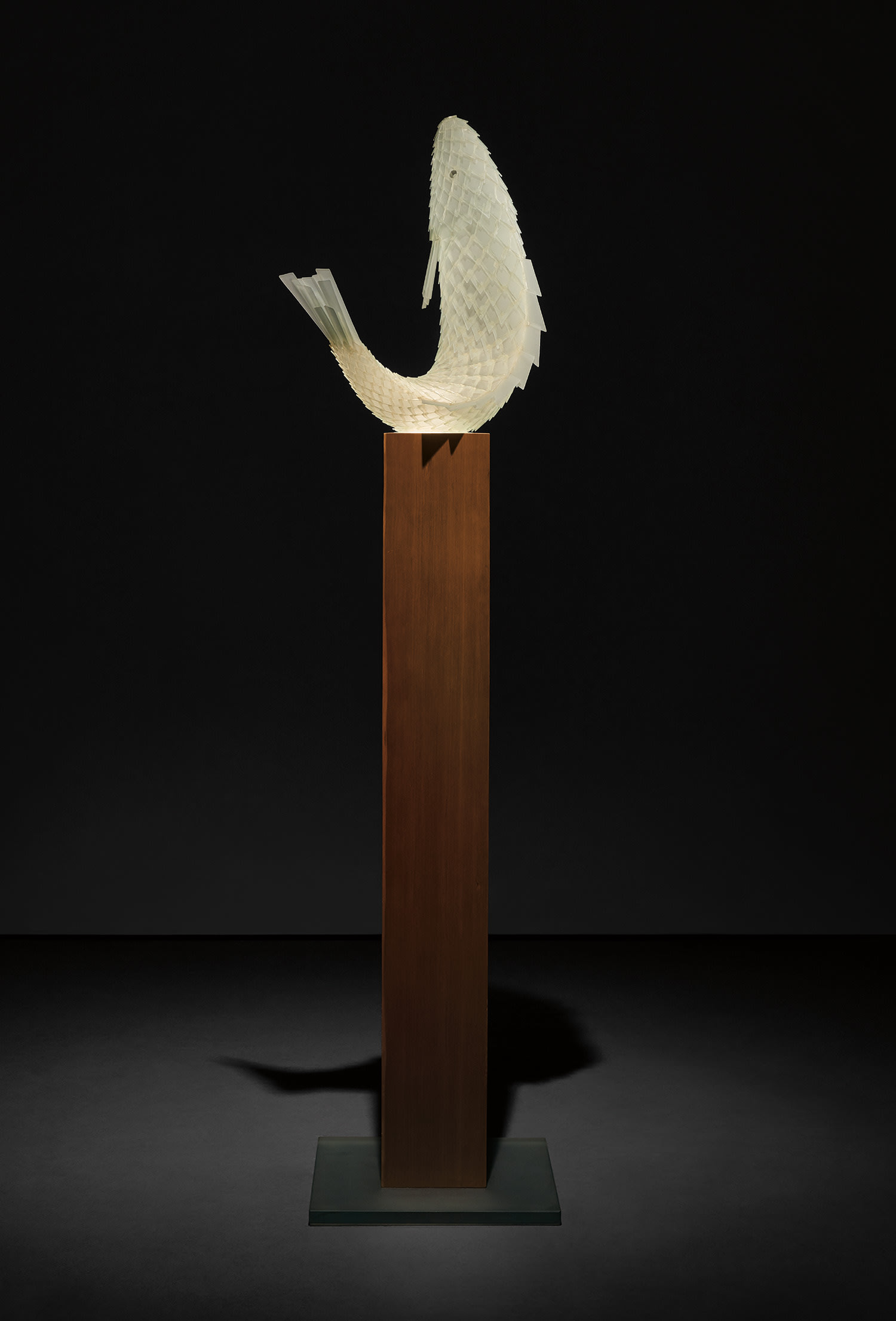
Frank Gehry
Fish Lamp, 1987
What many collectors and admirers find most rewarding about Gehry is the way his creative impulse extended beyond architecture into objects that can be lived with and closely studied. His Fish Lamp series, begun in 1984, emerged from a personal obsession with the form of the fish, a shape he has described as a kind of antidote to the tyranny of the classical column. Created in painted papier mâché and later in shattered glass, these luminous objects occupy a space between sculpture and functional design that feels entirely characteristic of his sensibility. His corrugated cardboard furniture line, Easy Edges, introduced in the early 1970s, applied the same industrial material philosophy to domestic objects and demonstrated a democratic impulse in his design thinking.
Works on paper and prints, including his 2009 lithograph Study 3, offer collectors a window into the gestural, improvisational quality of his creative process, revealing the hand and the thinking behind the grand built forms. From a collecting perspective, Gehry's editioned works and design objects represent an exceptional entry point into a body of work that has achieved genuine blue chip status in the broader cultural marketplace. His fish lamps in particular have attracted serious attention at auction and in private sale, with collectors drawn to their combination of biographical significance, formal invention, and the direct connection they offer to the sculptural concerns that animate all of his work. His signed prints, including works produced for significant cultural and political causes such as the Obama Victory Fund editions of 2008 and 2012, carry both art historical interest and a sense of civic commitment that resonates with many contemporary collectors.
Frank Gehry
Frank Gehry
The relative scarcity of his editioned works compared to the global appetite for his name means that quality examples continue to hold and reward attention. Within the broader context of late twentieth century and contemporary art, Gehry occupies a position alongside artists and architects who similarly dissolved the boundaries between disciplines. His conversation with the traditions of deconstructivist architecture connects him to figures such as Zaha Hadid and Daniel Libeskind, while his friendships and affinities with postminimalist sculptors place him in a lineage that runs through Serra, Oldenburg, and beyond. Like those artists, he understood that the most powerful gestures are often the ones that feel both inevitable and completely unexpected, that the best work carries the feeling of having been discovered rather than merely designed.
Frank Gehry passed away in 2025, leaving behind a legacy that spans continents, decades, and disciplines. His buildings have become among the most visited and photographed structures on earth, and his objects and works on paper continue to find passionate new admirers among collectors who understand that his contribution to visual culture extends far beyond the skylines he transformed. To own a work by Gehry is to hold a piece of a genuinely singular creative intelligence, one that approached every problem, whether it was a concert hall for ten thousand or a lamp for one room, with the same combination of curiosity, irreverence, and profound artistic seriousness. That quality is rare in any era, and it is the reason his work continues to matter so deeply.
Explore books about Frank Gehry
Frank Gehry: Complete Works
Peter Reed
Frank Gehry: The Complete Works
Francesco Dal Co
Gehry Draws
Frank Gehry
Frank Gehry: Selected Works
Mildred Friedman

Frank Gehry: The Guggenheim Bilbao Museum
Vittorio Magnago Lampugnani
Frank O. Gehry: Selected Writings and Interviews
Frank Gehry
Frank Gehry: Buildings and Projects
Hal Foster
Frank Gehry: 1991-1998
Peter Reed