Frank Auerbach
Frank Auerbach: Paint, Presence, Pure Devotion
Artist Spotlight · The Collection Editorial
“I think a painting has to be worked at. It has to be fought for. The image has to be discovered, not just depicted.”
Frank Auerbach, interview with Catherine Lampert
When the Tate Britain mounted its major Frank Auerbach retrospective in 2015, visitors encountered something rare in contemporary museum culture: a coherent and utterly singular world, built painting by painting over six decades, with an intensity that felt almost physical. The exhibition confirmed what a devoted circle of collectors, critics, and fellow painters had long understood. Auerbach was not simply one of the great British painters of the postwar era. He was one of the great painters, full stop.
Frank Auerbach
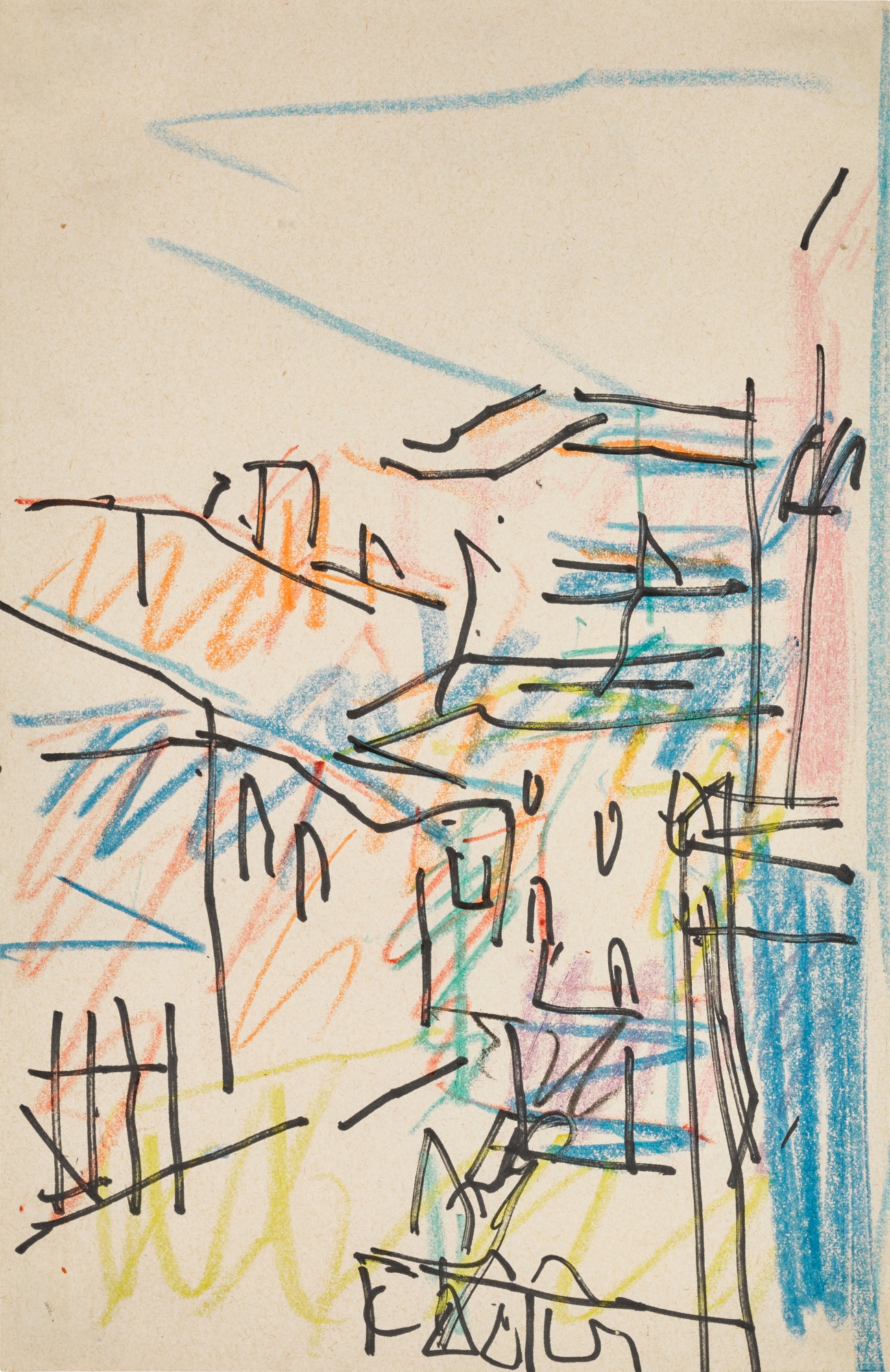
To the Studios (iii), 1979
His passing in November 2024 at the age of 93 brought an outpouring of reflection from the international art world, a moment of collective recognition that a truly irreplaceable sensibility had left us. What remains is a body of work of staggering emotional and material power. Frank Auerbach was born in Berlin in 1931 into a cultured Jewish family. When he was seven years old, his parents sent him to England on a Kindertransport, a decision that saved his life and marked him forever.
He never saw his parents again. They perished in the Nazi concentration camps. Auerbach settled in England permanently, eventually becoming a student at the Borough Polytechnic in London under the painter David Bomberg, a formative encounter that shaped everything that followed. Bomberg taught his students to seek the living form beneath the surface of things, to paint not the appearance of a subject but its essential mass and presence.
Frank Auerbach
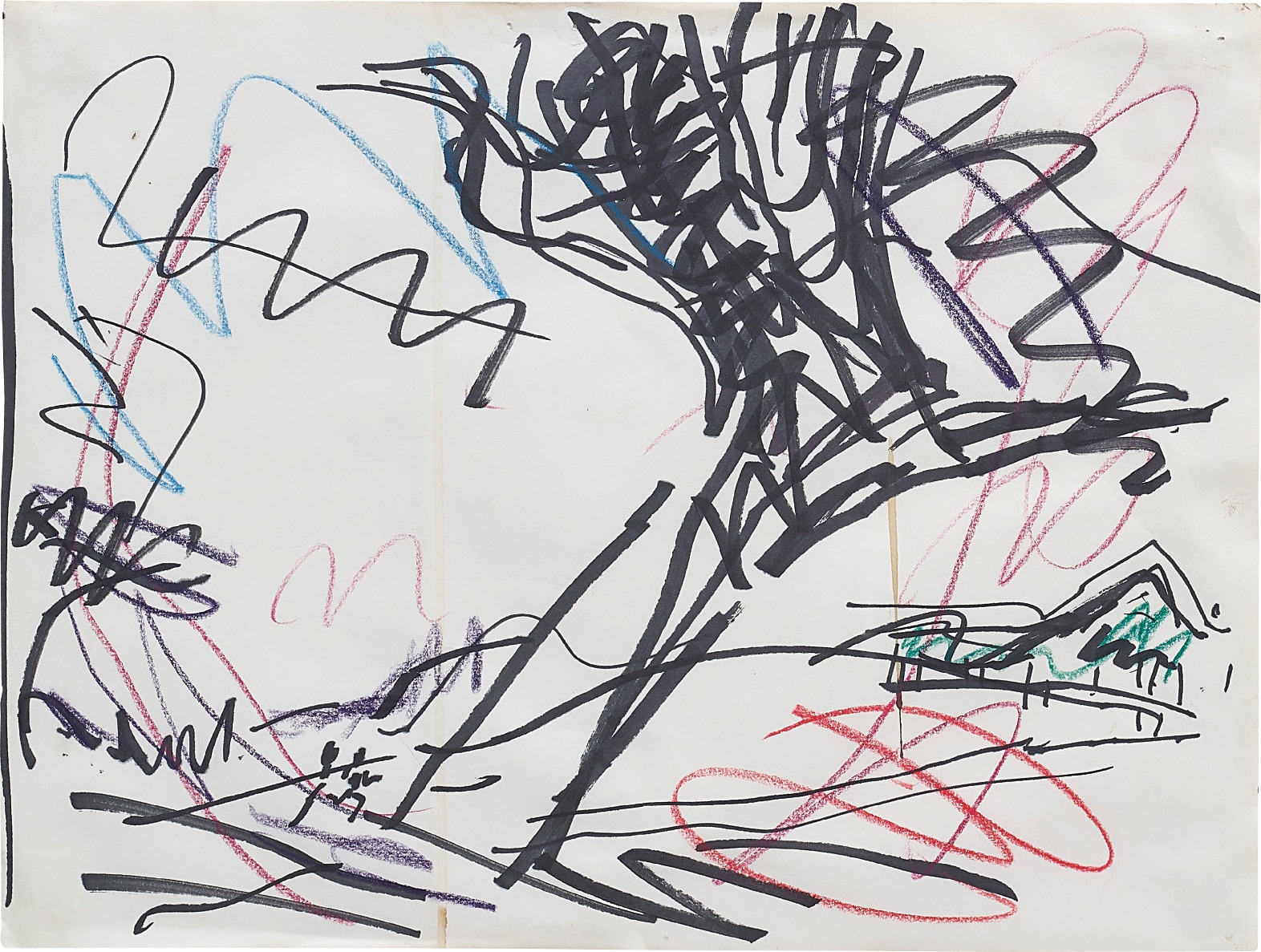
Study for Tree in Primrose Hill, 1986
Auerbach absorbed this lesson completely and spent a lifetime deepening it. He went on to study at St Martin's School of Art and then the Royal College of Art in London, completing his training in 1955 and taking a studio in Camden Town that he would occupy for the rest of his life. This extraordinary fidelity to a single working space, a cramped room layered with decades of scraped and reapplied paint, became one of the defining facts of his artistic biography. Auerbach rarely left London.
“Every day one starts from scratch. Every day is a new panic.”
Frank Auerbach
He worked six days a week without exception, painting and repainting the same small cast of subjects: the streets and parks of Camden, most famously Primrose Hill and the area around his studio, and a close group of sitters who returned to him again and again over years and even decades. This radical narrowing of subject matter was not limitation. It was method. The signature quality of Auerbach's paintings is their physical density.
Frank Auerbach
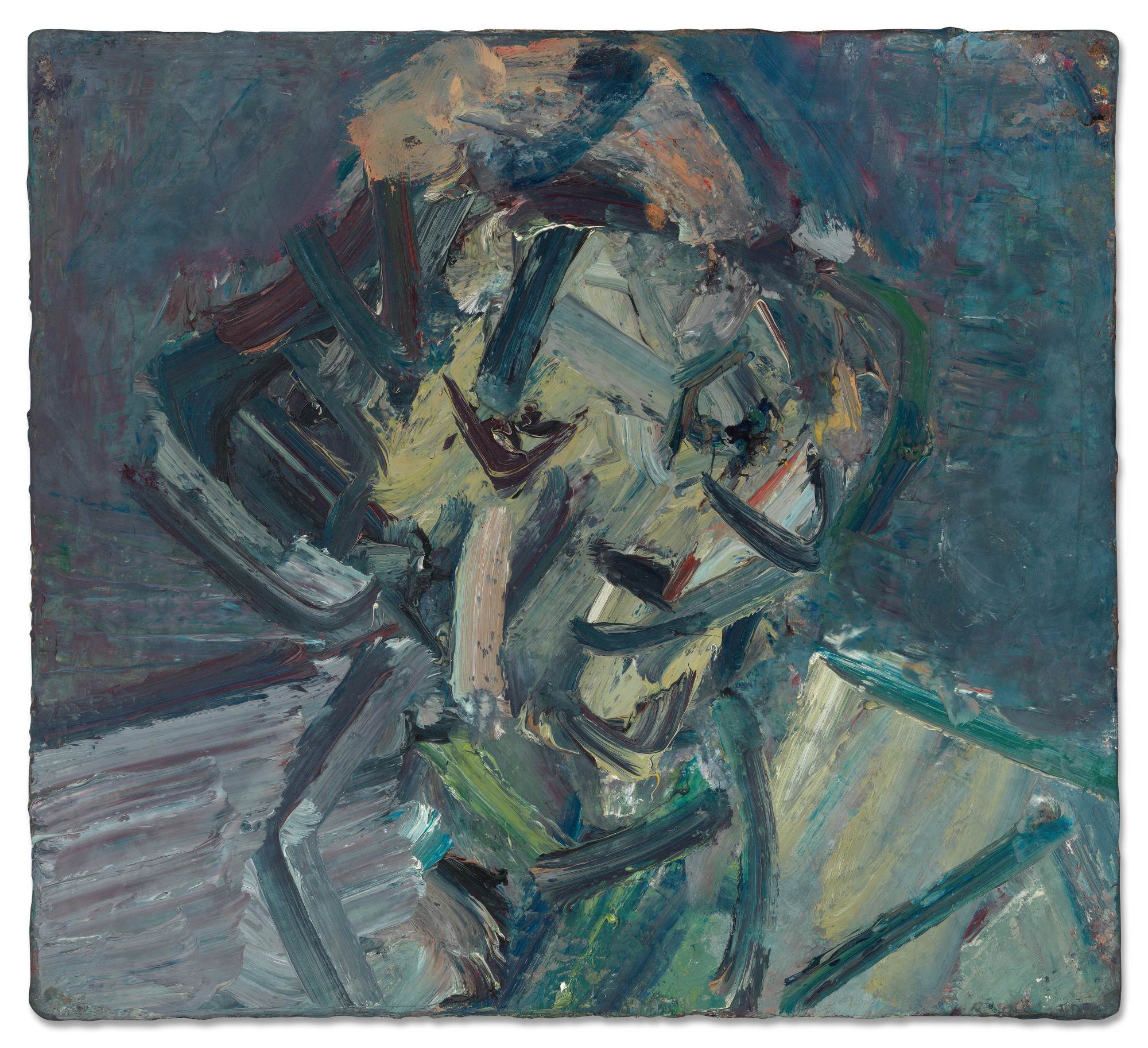
Head of Gerda Boehm, 1977
In his early years he applied paint so thickly that canvases had to be stored flat. The surfaces built up into sculptural reliefs, crusted and layered like geological strata. Over time his handling became somewhat more fluid, but the essential approach never changed: each day's work was often scraped away and begun again, the canvas or board accumulating a history of failed and revised attempts before finally yielding a resolution. This process gave his finished works an extraordinary sense of achieved conviction.
The paint itself carries the memory of struggle. Works like "From the Studios" of 1986 and the various iterations of his Primrose Hill paintings demonstrate how a single motif, revisited obsessively, can become richer and stranger with each return. The 1986 "Study for Tree in Primrose Hill" reveals how his drawing practice fed directly into his painted vision, with a nervous, searching line that locates form through accumulation rather than contour. His portraits occupy an equally important place in his practice and in art historical terms.
Frank Auerbach
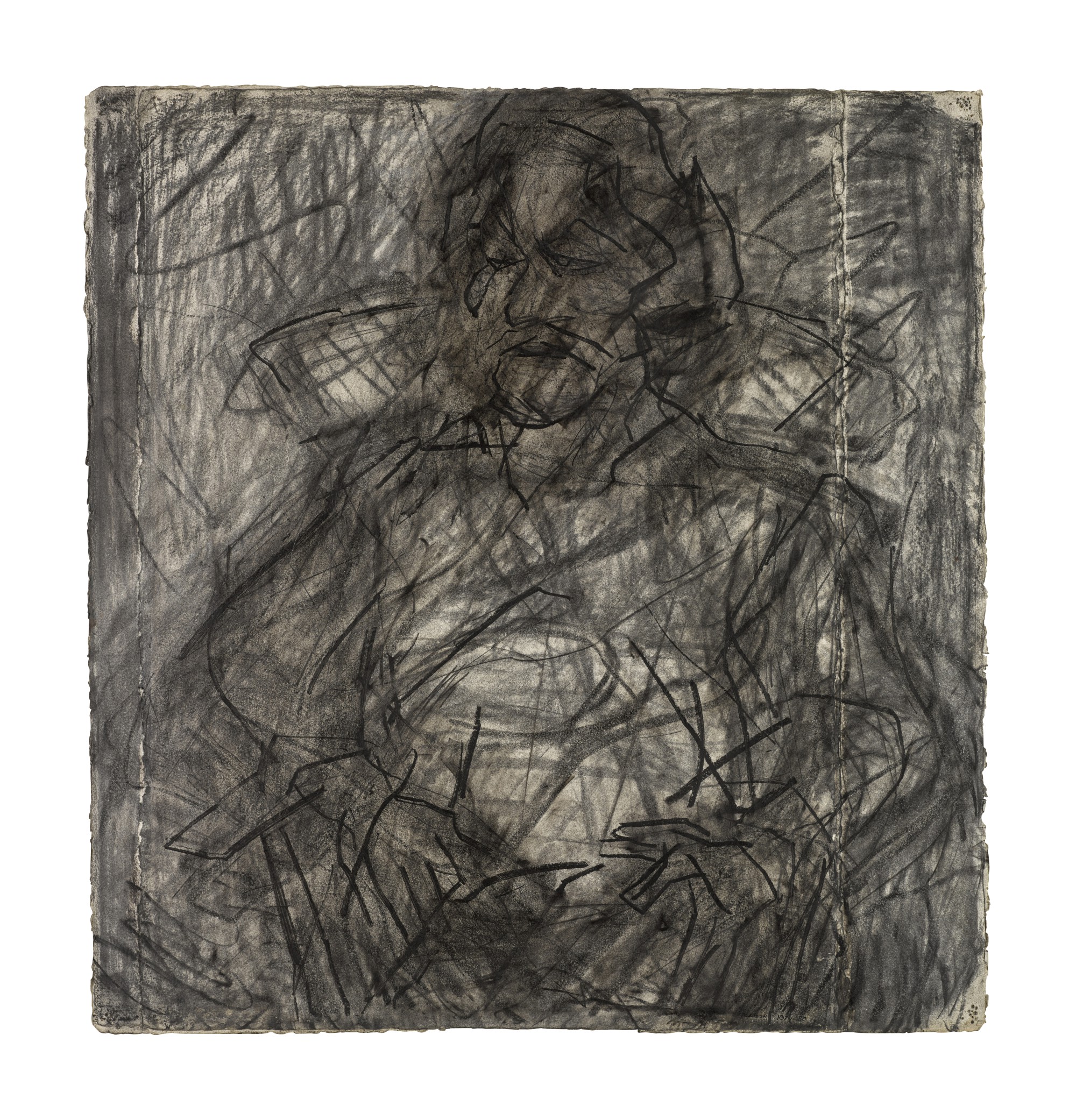
Head of Tom Phillips, 1977
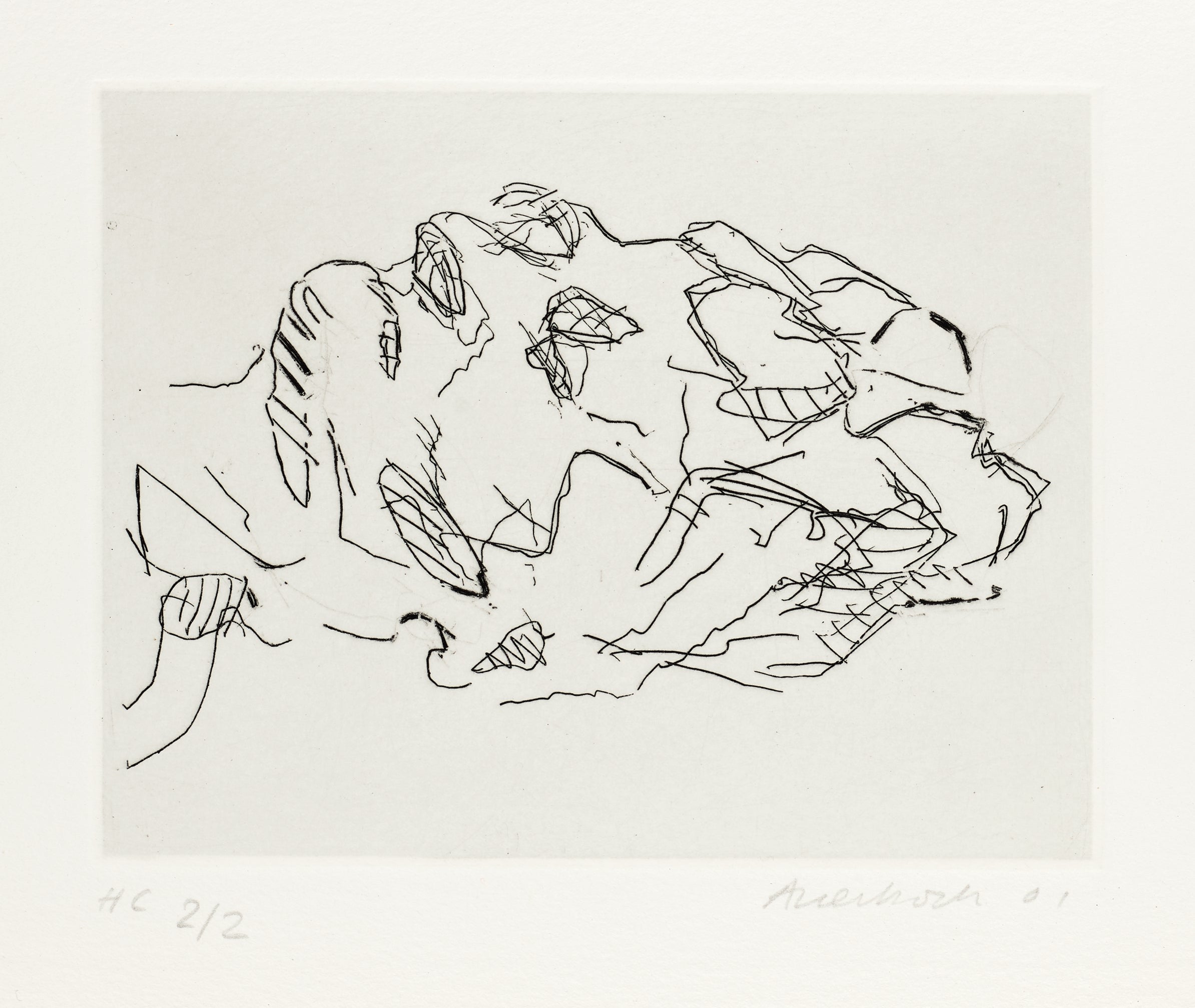
The "Head of Gerda Boehm" of 1977, painted in oil on board, and the "Head of Tom Phillips" from the same year in charcoal, illustrate his approach to the human face as a landscape of continuous discovery. His sitters sat for him repeatedly over long periods, sometimes years, and the portraits that resulted feel less like likenesses than like encounters, records of sustained attention and mutual trust. His prints, including the etching series such as "Julia, from Six Etchings of Heads" and "Michael" and "Catherine" from the Seven Portraits suite, demonstrate that even in a medium defined by fixed lines, Auerbach achieved a quality of searching, living mark making that connects directly to his painted and drawn work. These works on paper and in print are among the most accessible entry points into his vision and are deeply valued by collectors for exactly that reason.
From a collecting perspective, Auerbach's market has reflected the growing international recognition of his importance. His paintings have achieved significant results at Christie's and Sotheby's in London, with major canvases reaching into the millions at auction. Works on paper, drawings, and prints offer collectors a genuine connection to his practice at a broader range of price points, and they are in no way secondary to his ambitions. Auerbach drew and made prints with the same commitment he brought to painting, and his graphic works are held in museum collections including the British Museum and the Victoria and Albert Museum.
Collectors are drawn to him for the rarity of his absolute artistic integrity and for the way his work rewards sustained looking. These are paintings and drawings that do not reveal themselves quickly. They ask for time, and they repay it generously. To understand Auerbach fully it helps to place him in the company of his peers and predecessors.
His closest artistic relationship was with Leon Kossoff, a fellow student of Bomberg's and a lifelong friend, whose impastoed surfaces and North London subjects parallel Auerbach's own preoccupations in fascinating ways. Both painters were championed early by the critic David Sylvester and by the gallerist Helen Lessore at the Beaux Arts Gallery, the London space that was central to the School of London painters in the 1950s and 1960s. The School of London, a loose grouping that also included Lucian Freud, Francis Bacon, R.B.
Kitaj, and Michael Andrews, represented a commitment to figurative painting at a moment when abstraction dominated critical discourse internationally. Auerbach's work also resonates with the expressionist traditions of Oskar Kokoschka and Chaim Soutine, painters who understood the human form as a site of emotional as well as visual intensity. What Frank Auerbach leaves behind is a lesson in what sustained devotion can produce over a lifetime. His is an art of radical commitment: to a place, to a group of people, to a daily practice, and to the fundamental challenge of making paint describe lived experience with honesty and force.
In an era of restless artistic mobility and brand building, his example feels not antiquated but genuinely countercultural, a demonstration that depth accumulates slowly and is worth every year it takes. For collectors, for students, and for anyone who cares about what painting can do, his work remains as alive and as demanding as it ever was.
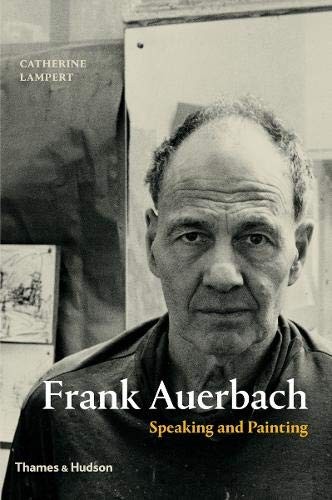
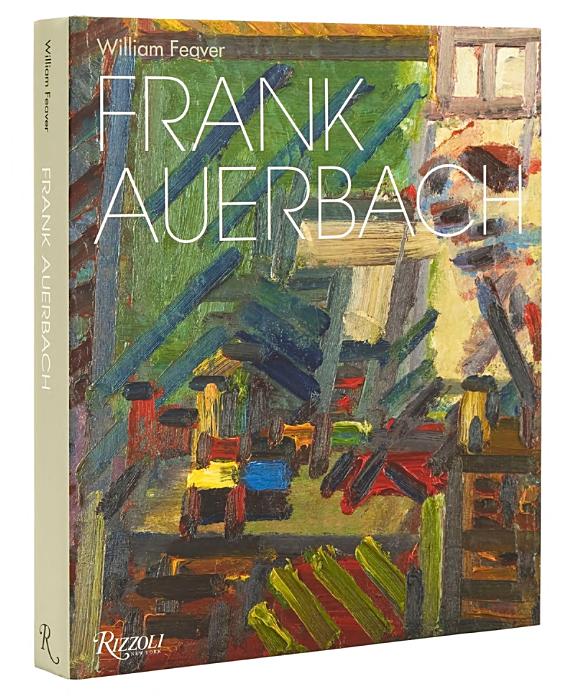
Explore books about Frank Auerbach
Frank Auerbach: Paintings and Drawings
Catherine Lampert
Frank Auerbach
Catherine Lampert
Frank Auerbach: A Catalogue Raisonné
Catherine Lampert
Frank Auerbach: Recent Paintings
Various
Frank Auerbach: Drawings
Catherine Lampert
Frank Auerbach
Michael Podro