François-Xavier Lalanne
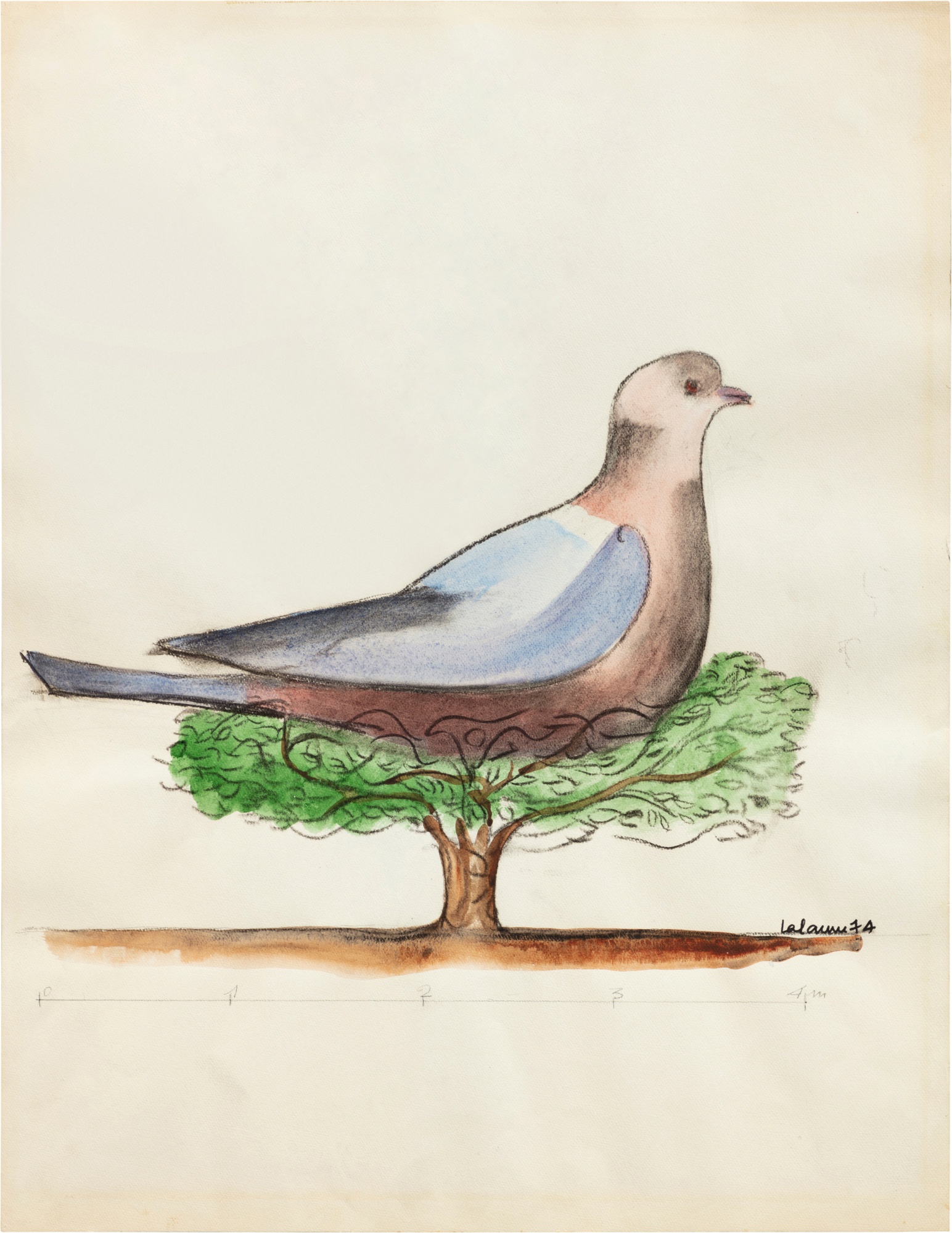
François-Xavier Lalanne, Where Wonder Never Ends
Artist Spotlight · The Collection Editorial
In the spring of 2019, Sotheby's New York staged one of the most talked about single artist sales in recent auction history, dedicated entirely to the work of Claude and François Xavier Lalanne. The sale achieved over 93 million dollars, shattering every previous record for the duo and confirming what devoted collectors had understood for decades: that François Xavier Lalanne occupied a singular and irreplaceable position in the history of twentieth century art. Bidders from Paris to Hong Kong competed fiercely for his bronzed rhinoceroses, his woolly sheep, his gilded ibexes, and his delicate birds, works that seemed to belong simultaneously to the grand tradition of European sculpture and to some private, enchanted world of the artist's own invention. The sale was not merely a market event.
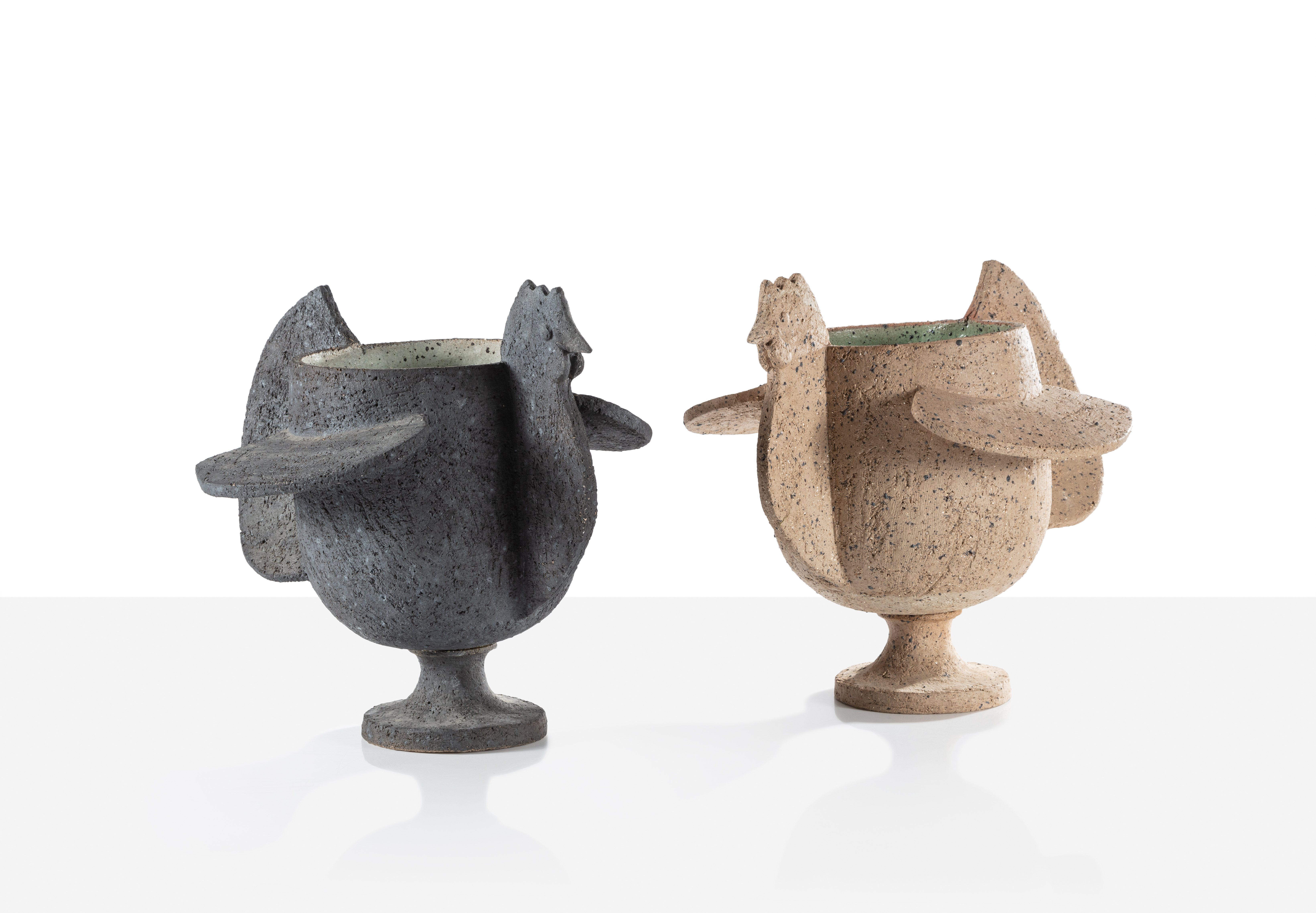
François-Xavier Lalanne
Paire de Cache-Pots Poule, Grand modèle
It was a cultural reckoning, a moment when the broader art world caught up with what connoisseurs had long cherished. François Xavier Lalanne was born in 1927 in Agen, in the Lot et Garonne department of southwestern France, a region of orchards and rivers and unhurried provincial life. He came of age during the Second World War, a formative disruption that shaped the sensibilities of an entire generation of French artists toward the human need for beauty, pleasure, and refuge. He moved to Paris in the late 1940s, drawn like so many young artists to the city's extraordinary concentration of creative energy, and found himself in the orbit of the surrealist and decorative arts communities that were then reshaping how Europeans thought about the relationship between fine art and the objects of daily life.
It was in Paris that he met Claude Dupeux, who would become Claude Lalanne, his wife and creative partner, in 1952. Their partnership would prove to be one of the most generative and enduring collaborations in postwar French art. Lalanne's early formation drew on a wide range of influences. He worked briefly as a guard at the Louvre, an experience he later described as a kind of informal education, spending hours in proximity to works spanning millennia of human making.
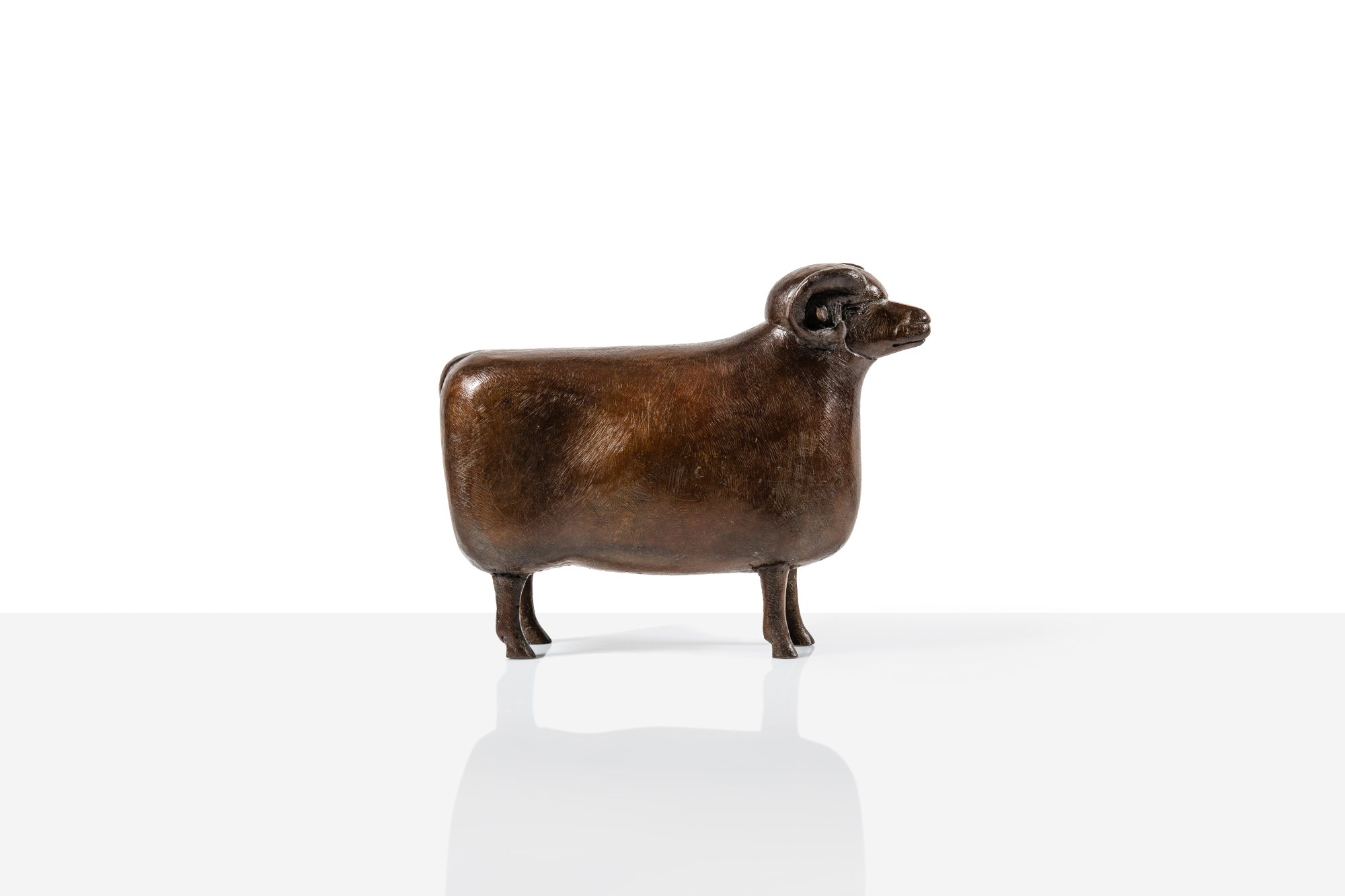
François-Xavier Lalanne
Petit Mouton de Peter
He was drawn to ancient Egyptian art, to Flemish still life painting, and to the wit and strangeness of surrealism, particularly the work of René Magritte and Max Ernst, whose ability to defamiliarize the everyday world resonated deeply with him. He was also profoundly interested in craft and fabrication, in the physical intelligence of the artisan's hand, and this interest would eventually define his mature practice. Rather than working in the purely conceptual register that dominated much postwar avant garde discourse, Lalanne committed himself to the made object, to sculpture that could be touched, used, inhabited, and loved. The breakthrough years of his career came in the 1960s and 1970s, when Lalanne began producing the animal sculptures that would make him famous.
His rhinoceros, conceived as a functioning bar with a hinged body that opened to reveal a drinks cabinet within, was first exhibited in 1964 and caused an immediate sensation. Here was an object that was funny and luxurious and conceptually audacious all at once, a piece of furniture that was also a monument, a surrealist joke that was also a feat of engineering and craft. The work announced Lalanne's essential ambition: to collapse the hierarchy between fine art and decorative art, to insist that beauty and function need not be opposed, and to bring animals, the eternal companions of human life, into the domestic interior as presences of dignity and delight. His famous Moutons de Laine, the woolly sheep rendered in patinated bronze and set loose in galleries and gardens, extended this vision into something almost pastoral, conjuring flocks of creatures that were at once utterly recognizable and completely transformed by the alchemy of art.
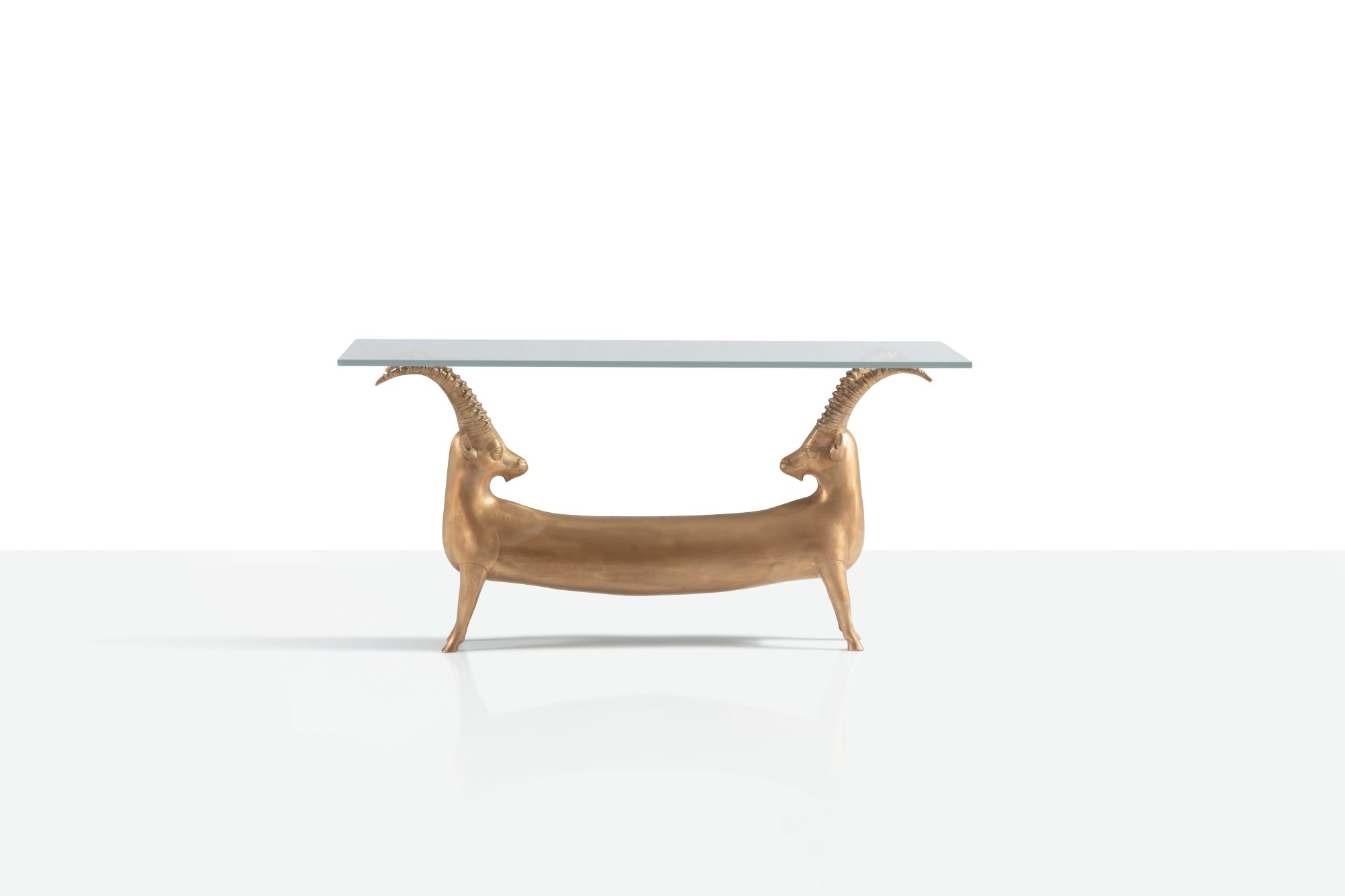
François-Xavier Lalanne
Les Deux Bouquetins Entablés
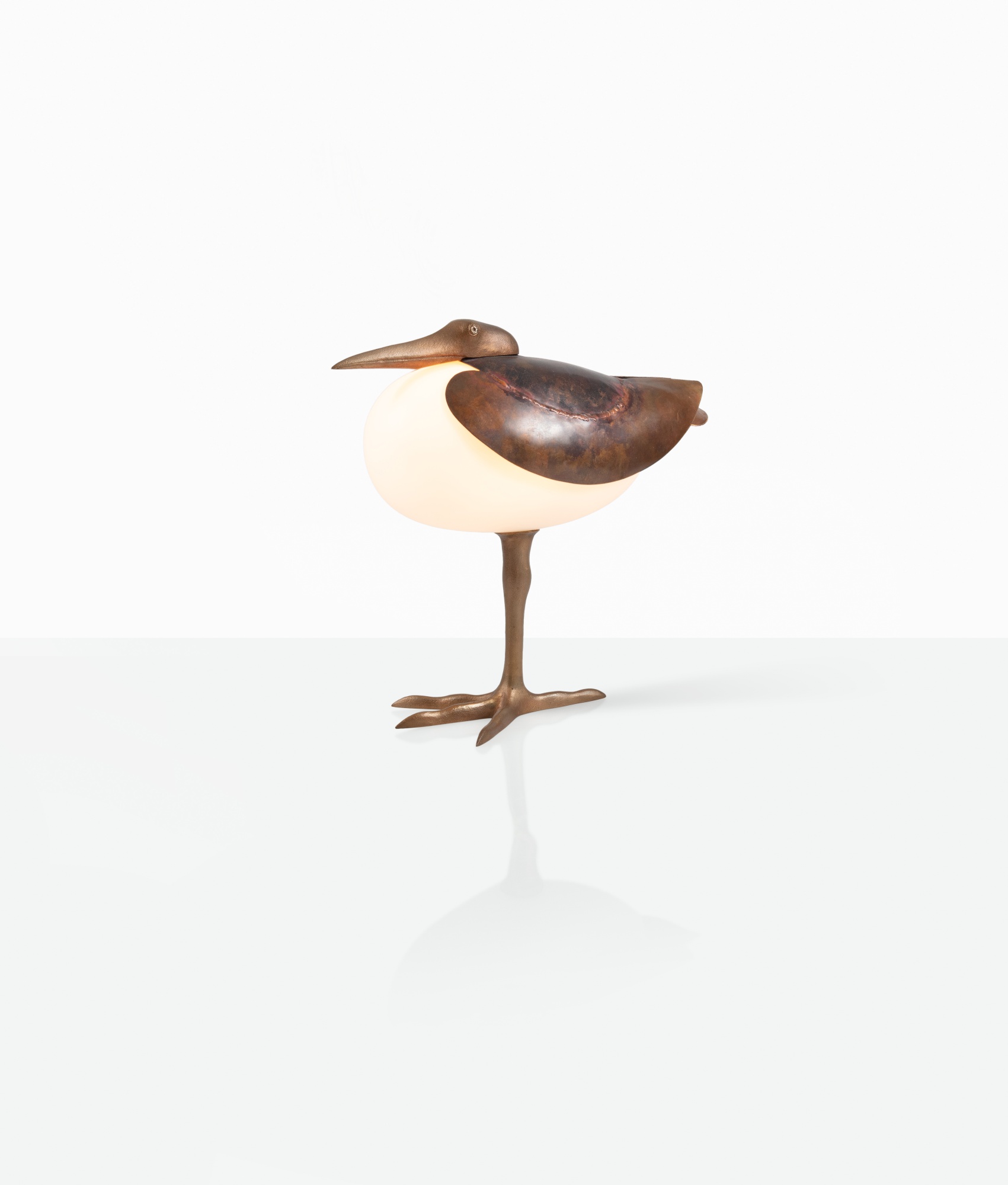
The range of works available to collectors today reveals the full breadth of Lalanne's imagination and his command of materials. The Petit Mouton de Peter in brown patinated bronze demonstrates his ability to work intimately, to distill his vision into a form small enough to hold the world in a tabletop presence. Les Deux Bouquetins Entablés, with its gilt patinated bronze and glass top, shows him at his most architecturally ambitious, creating sculpture that functions as furniture without sacrificing an ounce of its sculptural authority. The Petit Échassier, combining gilt bronze, patinated copper, and glass, speaks to his love of the wading bird as a subject, its elegant verticality a kind of natural minimalism that Lalanne translated into refined, glowing form.
Works on paper, including the Trois Dessins de Papillons in pencil and watercolor and his studies of fish, reveal a draughtsman of genuine sensitivity, someone who observed the natural world with patient, affectionate attention before transforming it in three dimensions. For collectors, the appeal of Lalanne's work operates on multiple registers simultaneously. There is the sheer joy of living with his pieces, the way a bronze sheep in a garden or a gilded ibex on a console table transforms a domestic space into something that feels both more human and more mythic. There is the intellectual pleasure of objects that reward sustained looking, that reveal their art historical references gradually, that hold their wit lightly.
François-Xavier Lalanne
Petit Échassier
And there is the market reality, now thoroughly established, that Lalanne's work holds and appreciates in value in ways that reflect genuine cultural consensus rather than speculative fashion. Collectors should pay particular attention to works in gilt patinated bronze, to unique or small edition pieces, and to works that carry clear exhibition histories. His collaborations with Claude, while distinct in authorship from his solo works, provide important context for understanding the shared creative world from which his individual vision emerged. Within the broader landscape of twentieth century art, Lalanne occupies a position that is easier to appreciate than to categorize.
He shares the surrealists' love of the uncanny object and the transformed creature, but he is warmer and more hospitable than the movement's dominant mood. He anticipates the concerns of designers like Studio 65 and the Memphis Group in his willingness to treat furniture as sculpture, but his roots are in the handmade and the unique rather than in industrial production. Artists such as Niki de Saint Phalle and Jean Tinguely, who were his contemporaries in Paris and who similarly pursued a joyful, animating approach to sculpture, offer useful points of comparison, as does the American sculptor John Chamberlain in his commitment to materials that carry their own visual energy. But Lalanne ultimately belongs to no school and no movement, which is part of what makes him so enduringly fresh.
François Xavier Lalanne died in 2008 at his home and studio in Ury, in the forest of Fontainebleau south of Paris, where he and Claude had worked for decades surrounded by the animals and landscapes that nourished his art. His legacy is one of the most quietly radical in postwar French culture: he insisted, at a moment when the art world was moving rapidly toward conceptual austerity, that enchantment was a legitimate and serious artistic ambition. He made work that people want to live with, that makes them happy, that rewards the senses as well as the mind. In a collecting culture that sometimes mistakes difficulty for depth, his example is a reminder that the greatest art is often that which gives the most generously of itself.
To own a Lalanne is to own a piece of that generosity, and to understand, in a very immediate way, why beauty continues to matter.
Explore books about François-Xavier Lalanne

François-Xavier Lalanne
Alastair Mackintosh

Les Lalanne
François Marquet
François-Xavier Lalanne: Catalogue Raisonné
Alastair Mackintosh
Lalanne: The Poetic Invention
Michel Tapié
François-Xavier Lalanne: Life and Work
Pierre Restany