François-Xavier Lalanne, 1927 - 2008
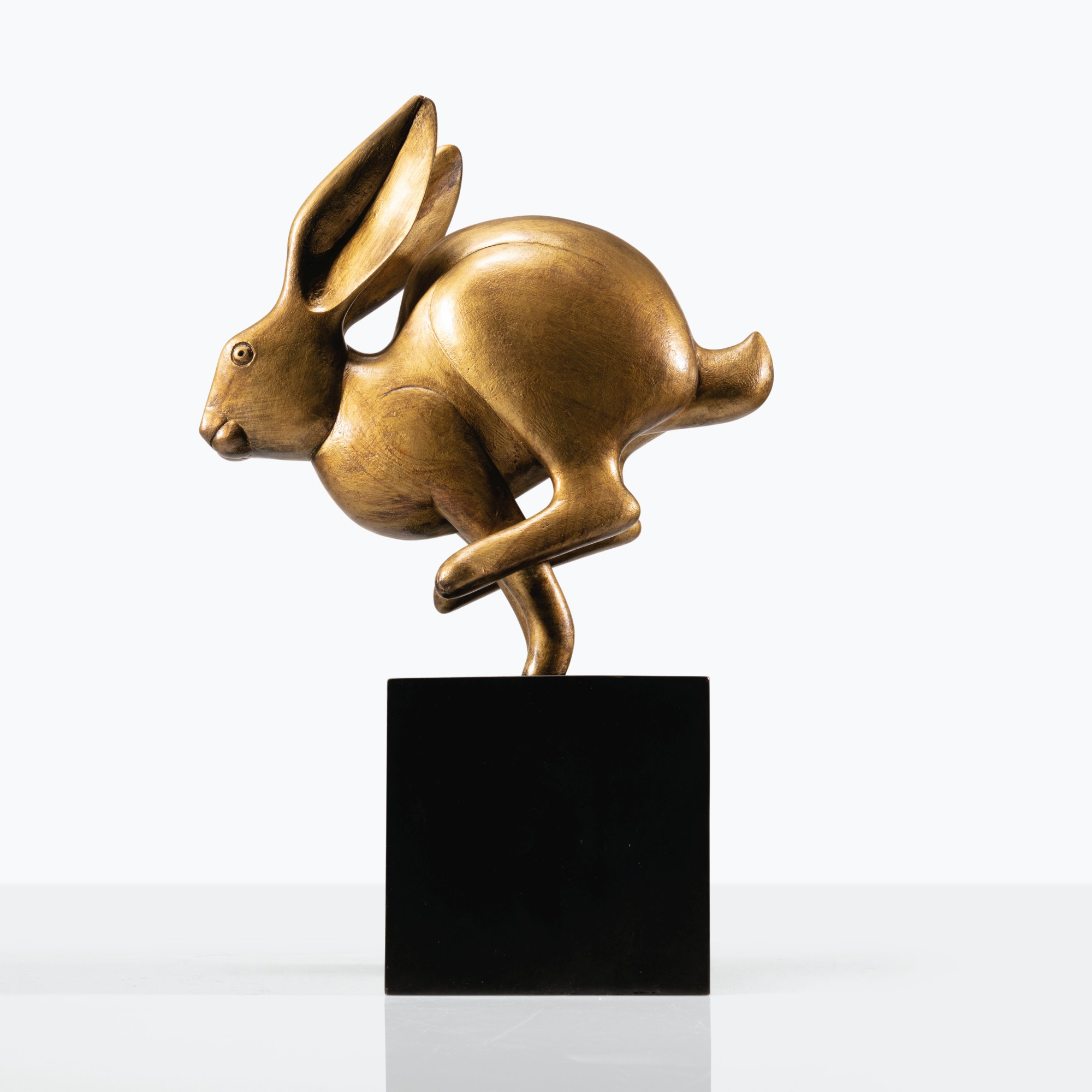
François-Xavier Lalanne, Where Whimsy Meets Wonder
Artist Spotlight · The Collection Editorial
In the grand salons of Paris and the rarefied auction rooms of New York, the name Lalanne conjures an immediate and unmistakable vision: a rhinoceros at a writing desk, a flock of woolly sheep grazing across a drawing room floor, a hare frozen mid leap in gleaming bronze. The posthumous market for François Xavier Lalanne has soared in ways that would have delighted him, with major works regularly commanding seven and eight figure sums at Christie's and Sotheby's. A 2019 sale at Sotheby's New York dedicated entirely to the estate of Hubert de Givenchy, a devoted admirer and collector, brought Lalanne's work to the widest possible audience and reaffirmed his place not merely as a decorative curiosity but as one of the most singular sculptural imaginations of the twentieth century. François Xavier Lalanne was born in Agen, in the Lot et Garonne department of southwestern France, in 1927.
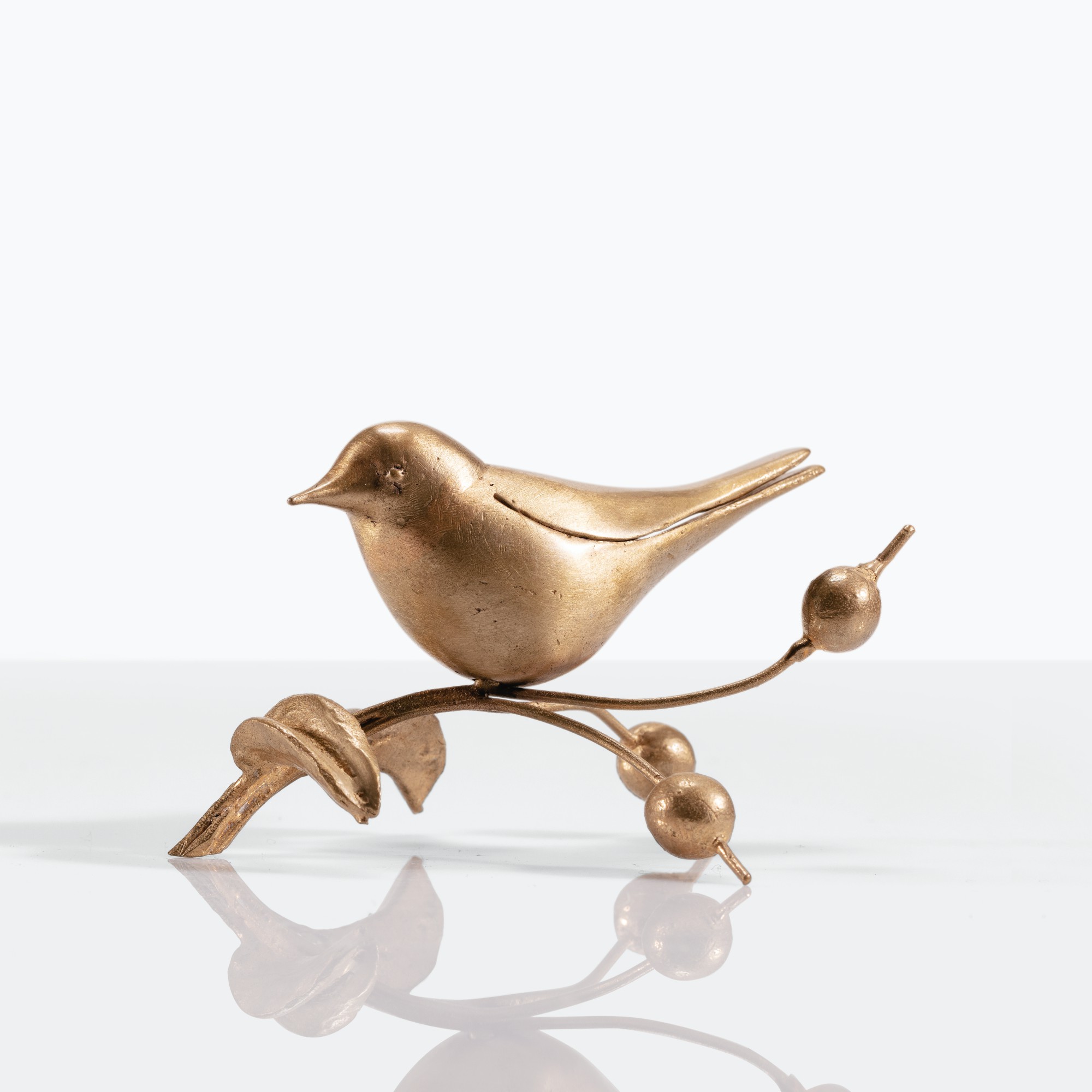
François-Xavier Lalanne, 1927 - 2008
Teeny bell
He came of age in postwar Paris, that feverish crucible of ideas where surrealism still crackled in the air and the boundaries between fine art, furniture, and fantasy were being gleefully dismantled. He arrived in the capital as a young man with no formal academic training in sculpture, which turned out to be precisely his advantage. Without the weight of received doctrine, he was free to look at the world sideways, to ask why a chair could not also be an animal, or why a bath could not take the form of a hippopotamus. His early years in Paris brought him into contact with the buzzing community of artists and intellectuals clustered around Montparnasse, and it was in this atmosphere of liberating strangeness that his instincts began to crystallize.
It was also in Paris that he met Claude Parent, who would become his wife and creative partner under the name Claude Lalanne. Their collaboration, which lasted decades and produced some of the most recognizable objects in postwar French art, was as much a conversation between two distinct sensibilities as it was a shared practice. Where Claude gravitated toward botanical forms, casting leaves and vines and human bodies in bronze with an almost alchemical patience, François Xavier turned his eye to the animal kingdom and to the great comic seriousness of functional sculpture. Together, as Les Lalanne, they exhibited jointly for the first time in 1964 at the Galerie J in Paris, a show that caused an immediate and lasting sensation.
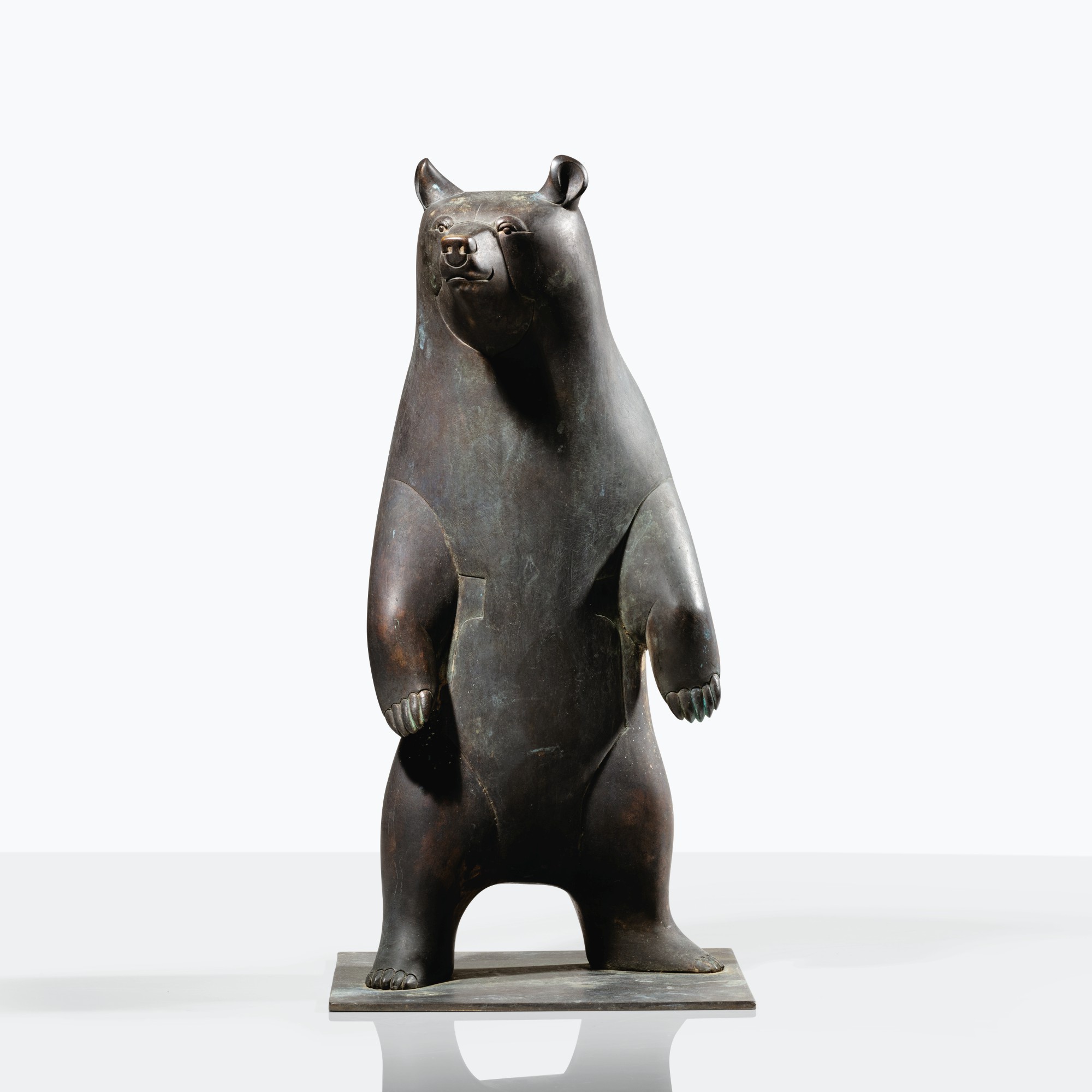
François-Xavier Lalanne, 1927 - 2008
Petit Ours
Critics and collectors alike were stopped in their tracks by the audacity of work that refused to choose between beauty and wit, between use and pure contemplation. The development of François Xavier's practice across the 1960s and 1970s reveals an artist of remarkable consistency and inventiveness. His Rhinocrétaire, a full scale rhinoceros whose back hinged open to reveal a complete writing desk, became one of the iconic objects of its era, a piece that managed to be simultaneously absurdist, functional, and deeply elegant. His sheep, the Moutons de Laine, began appearing in editions that collectors could arrange freely across their floors, transforming domestic interiors into surrealist pastures.
These works were not merely clever: they carried within them a genuine tenderness for the animal world and a philosophical proposition about the relationship between the human and natural realms. The animals in Lalanne's hands were never trophies or symbols. They were presences, companions, fellow inhabitants of a world that deserved to be looked at with fresh eyes. Among the works that define his legacy, the bronzes stand as the most enduring testament to his gifts.
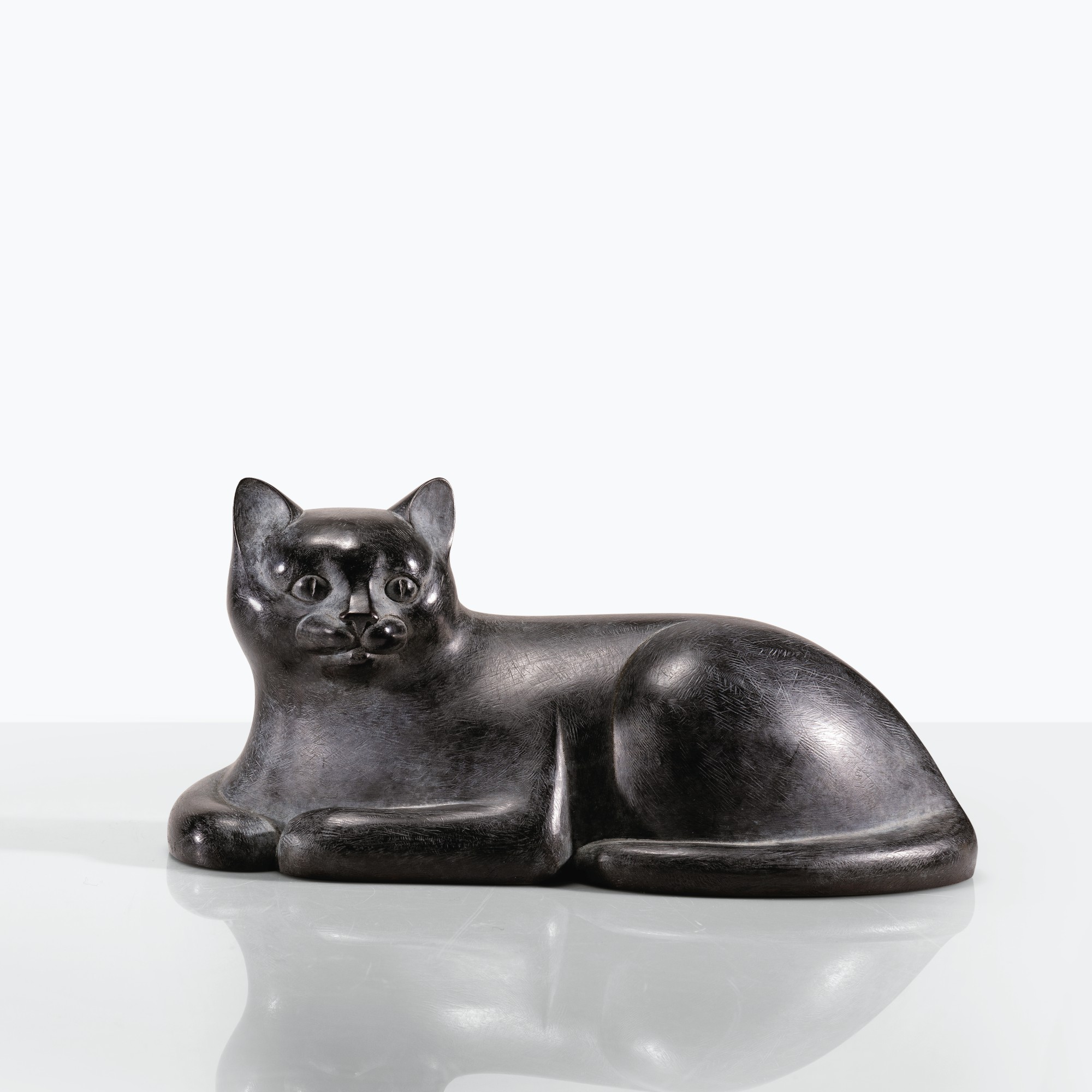
François-Xavier Lalanne, 1927 - 2008
Le Chat
Works such as Lièvre II, cast in double patina bronze, capture an almost electric stillness, the hare suspended between one moment and the next with an attention to surface and form that rewards long looking. Le Chat and Petit Ours possess that quality rare in sculpture of any era: they feel alive without straining for effect. The Bouquetin des Alpes, with its improbably magnificent horns rendered in patinated bronze, carries the weight of a natural history specimen and the lightness of a dream simultaneously. His Lapin Polymorphe and Hérisson II, the latter in gilt patinated bronze, show an artist utterly at ease with transformation, finding in the hedgehog and the rabbit not diminutive subjects but forms of genuine grandeur.
Le Minotaure, worked in patinated bronze sheet, reaches into classical mythology and emerges with something entirely his own. For collectors, Lalanne's work occupies a position of unusual desirability. The combination of sculptural integrity, material quality, wit, and liveability makes his pieces function beautifully in both museum contexts and private homes, a rarity that drives sustained demand. Editions vary in size and not all works were produced in large numbers, so provenance research and condition assessment reward careful attention.
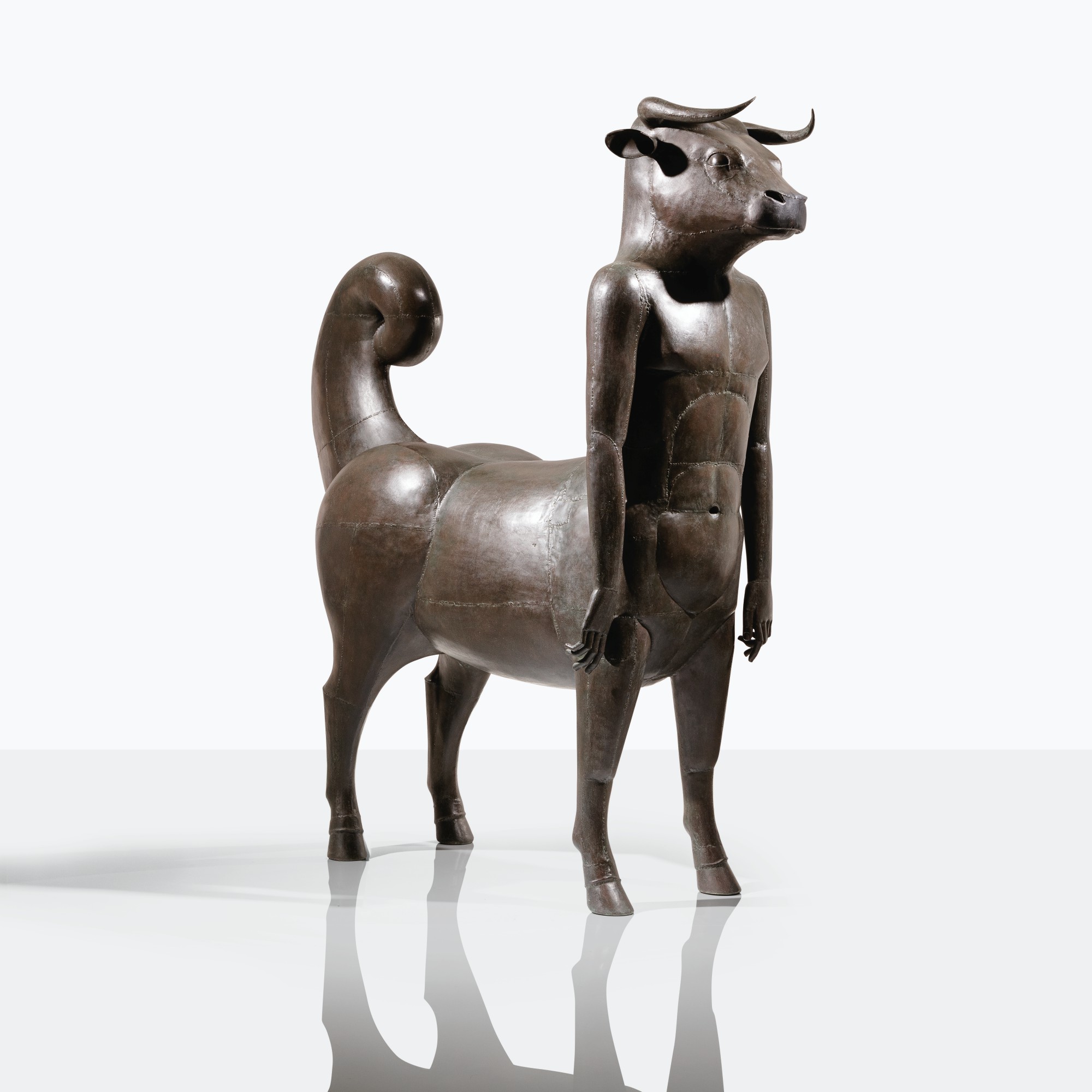
François-Xavier Lalanne, 1927 - 2008
Le Minotaure
The double patina bronzes in particular, where Lalanne achieved subtle tonal variation across a single surface, represent some of the most technically accomplished work in his catalogue. Collectors who have had the patience to acquire works across different scales and subjects find that the pieces speak to one another across a room, creating an environment that feels curated by a benevolent and witty intelligence. The market has matured considerably since his death in 2008, and institutional interest continues to validate values at the highest levels. To place Lalanne within art history is to map a constellation of related imaginations.
He was clearly nourished by the surrealist tradition, and affinities with the playful gravity of Jean Arp and the object poetry of Meret Oppenheim are easy to trace. His functional sculptures invite comparison with the designer furniture of Diego Giacometti, who shared his commitment to the animal as both formal and emotional subject. The broader movement of artists working at the intersection of sculpture and the decorative arts in postwar France, including Armand and Niki de Saint Phalle, provides further context, though Lalanne's voice remains stubbornly and joyfully distinct within any company. François Xavier Lalanne died in 2008 at his home and studio in Ury, in the forest of Fontainebleau south of Paris, the place where so much of his finest work had been made over five decades.
His legacy is the work itself, those extraordinary objects that ask nothing of the viewer except attention and openness. In an art world that sometimes takes its own seriousness too seriously, Lalanne's animals offer something genuinely rare: the reminder that imagination, deployed with complete technical mastery and a warm and curious heart, is among the most serious things an artist can bring to the world.
Explore books about François-Xavier Lalanne, 1927 - 2008

François-Xavier Lalanne
Alastair Mackintosh

Les Lalanne
Furniture and Decorative Arts Museum

François-Xavier Lalanne: Retrospective
Musée d'Art Moderne et d'Art Contemporain

The Lalannes: Creating Fantasy and Enchantment
Emmanuel Macaron
François-Xavier Lalanne: Works and Days
Pierre Restany