Francesco Vezzoli
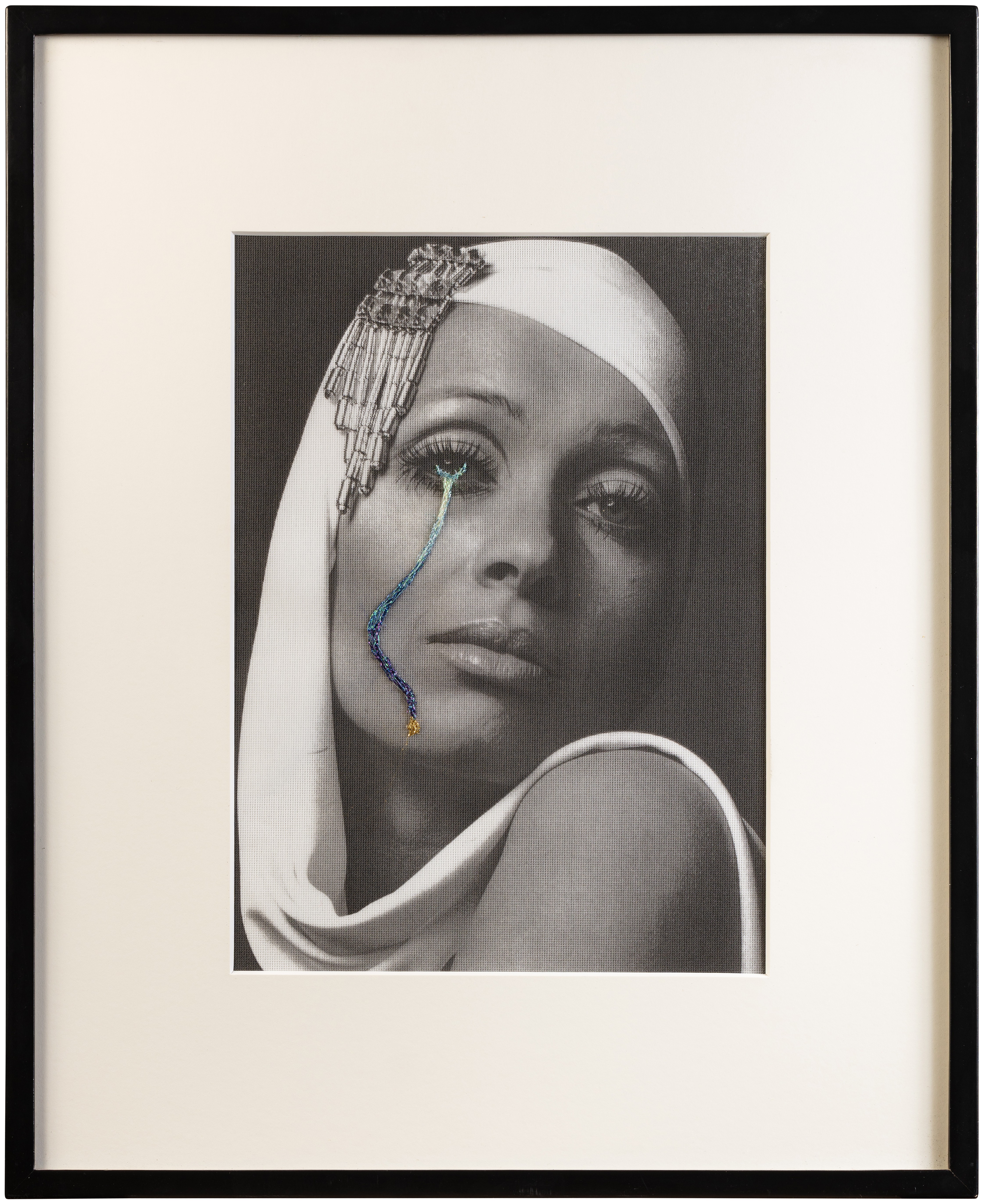
Francesco Vezzoli, Where Fame Becomes Fine Art
Artist Spotlight · The Collection Editorial
When the Venice Biennale opened its doors in 2007, one of the most talked about moments was not a painting or a sculpture but a fully staged fake campaign for a fictional American presidential election, complete with video advertisements featuring real celebrities and the unmistakable visual grammar of political media. The work was Francesco Vezzoli's, and it announced to the global art world something that a dedicated group of collectors and curators already knew: this Italian artist had developed a language so precise in its dissection of fame, desire, and spectacle that it operated simultaneously as critique and seduction. More than fifteen years on, Vezzoli's practice has only deepened in its ambition and its relevance, as the culture he anatomizes has grown more saturated, more image obsessed, and more hungry for exactly the kind of self awareness his art offers. Vezzoli was born in Brescia, in northern Italy, in 1971, and the city's proximity to the industrial wealth of the Lombard plain gave him an early intuition about the relationship between money, image, and aspiration.
Francesco Vezzoli
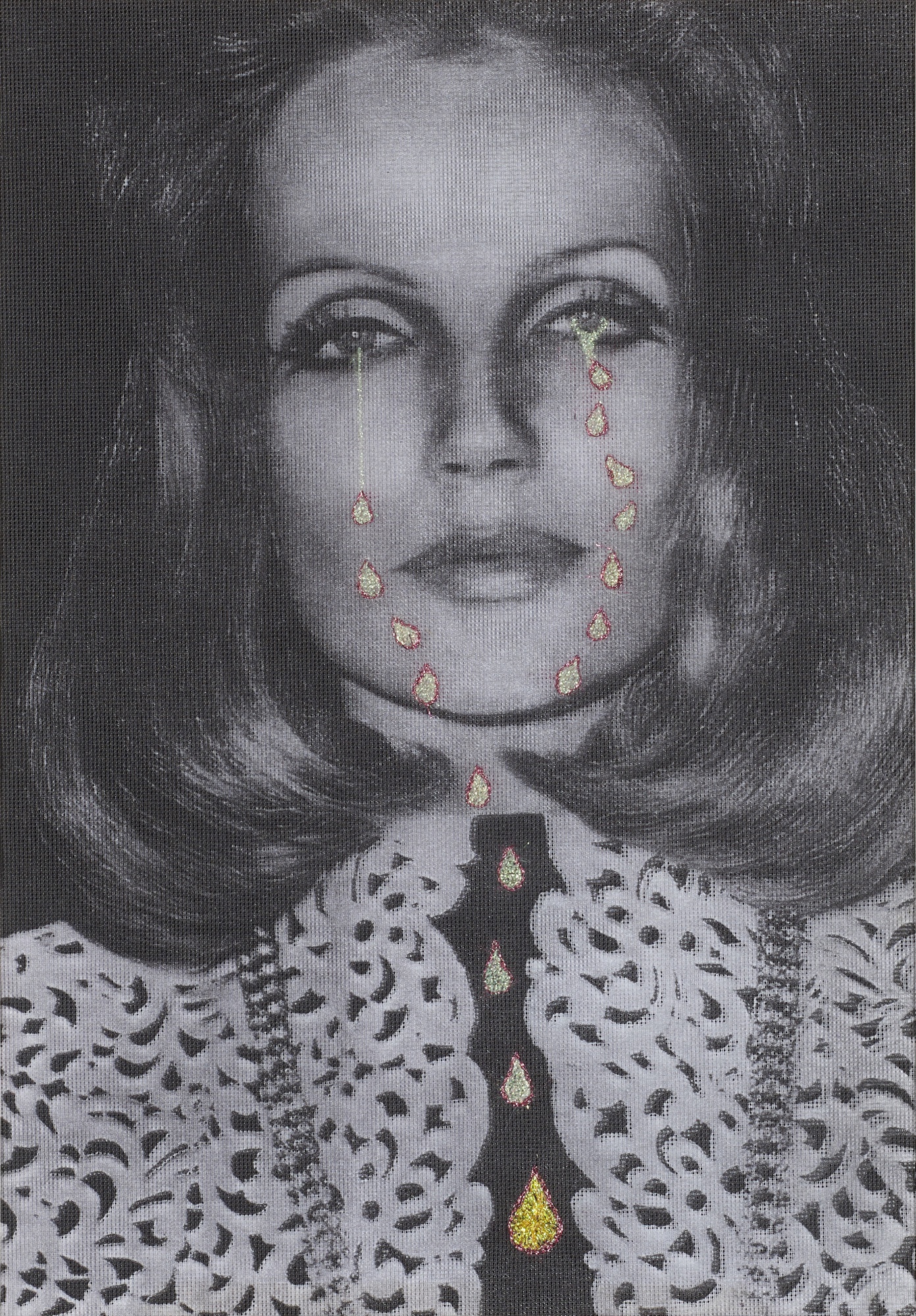
Verushka will arrive shortly, 2001
He studied at the Chelsea College of Arts in London during the 1990s, a period of enormous creative ferment in British contemporary art, and the experience of being an Italian outsider watching Anglo American celebrity culture from a slight remove proved formative. He absorbed the lessons of Pop Art, the knowing theatricality of the YBAs, and the history of Italian cinema all at once, and when he returned to work in Italy and began exhibiting internationally, his work carried that layered inheritance in every frame and every stitch. The most immediately recognizable element of Vezzoli's practice is embroidery, and it is worth pausing on what a radical choice that was for a young male artist working in the late 1990s and early 2000s. By taking up needlework, a medium associated with domesticity, femininity, and patience, and applying it to photographs of glamorous, often famous women, Vezzoli created an immediate productive tension.
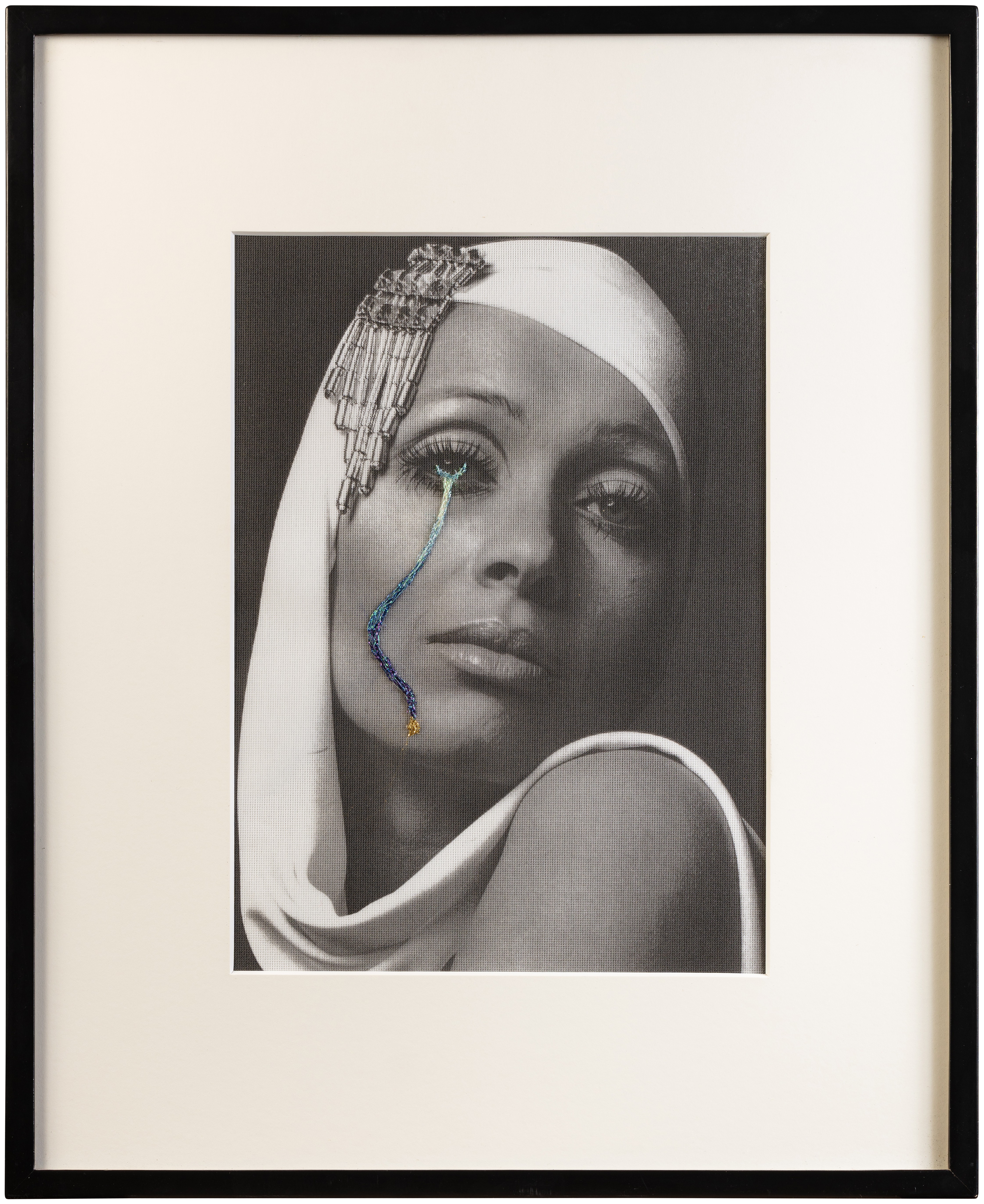
The embroidery is never merely decorative: tears trail across celebrity faces in metallic thread, halos appear, eyes are refashioned into instruments of longing or grief. The hand of the artist is literally present in the image, transforming it from a document of spectacle into something intimate and strange. This technique, which Vezzoli has maintained and refined across more than two decades, gives his work a quality that digital reproduction cannot fully capture, insisting on the physical encounter. Among his most celebrated early works are the photographs and embroideries that gathered around his fascination with fashion photography and the mythology of the supermodel.
Francesco Vezzoli
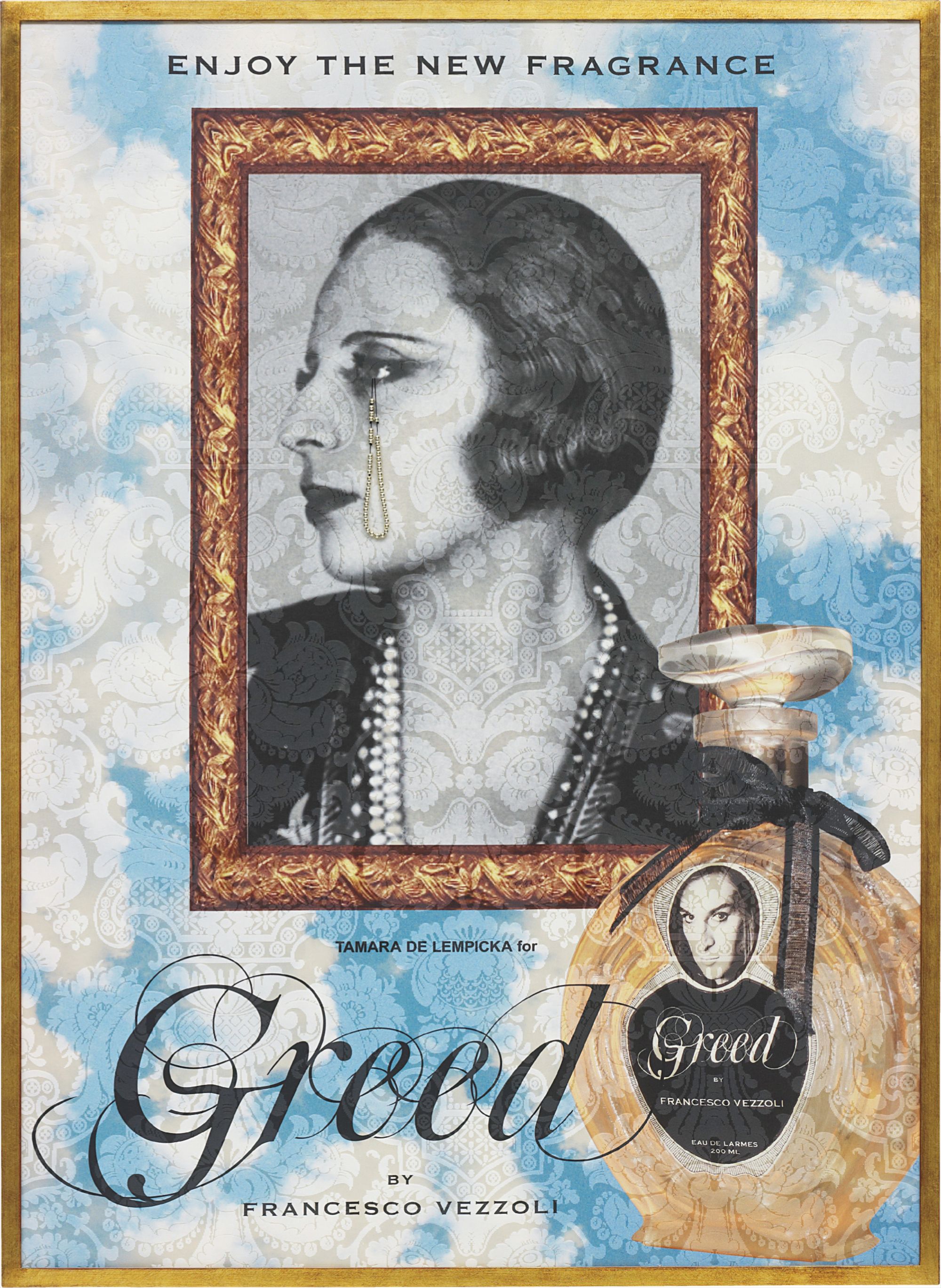
Enjoy the New Fragrance (Tamara de Lempicka for Greed)
"Verushka will arrive shortly," made in 2001, presents the legendary model and actress Veruschka in a black and white laserprint on canvas, her image then transformed by Vezzoli's metallic embroidery into something that hovers between archive and altarpiece. The work typifies his approach: a found or staged photographic image, printed onto canvas, then entered and altered by hand so that the historical or cultural icon is simultaneously honored and reimagined. His 2003 work "Isa Stoppi, Coppola e Toppo (Omaggio a Gianpaolo Barbieri)" pays similar tribute to the great Italian fashion photographer Gian Paolo Barbieri, situating the artist within a lineage of Italian visual culture that stretches from Renaissance portraiture to the pages of Vogue Italia. By 2012, in "Olga Forever (Olga Picasso, ca.
1930 I)," he had expanded his materials to include oil paint alongside laserprint and embroidery, creating collage works that feel genuinely painterly, adding yet another layer to his already complex conversation with art history. Vezzoli's video works have earned him institutional recognition at the highest level. His films, often featuring collaborations with major actresses, draw on the traditions of Italian neorealism and Hollywood melodrama simultaneously, creating short works of almost suffocating emotional intensity. Exhibitions at the Guggenheim Museum, Tate Modern, and MoMA have each confirmed his standing not merely as a provocateur but as an artist with genuine intellectual and formal rigour.
Francesco Vezzoli
Isa Stoppi, Coppola e Toppo (Omaggio a Gianpaolo Barbieri), 2003
The "Enjoy the New Fragrance" series, which includes works devoted to figures as different as Frida Kahlo and Tamara de Lempicka, takes the language of luxury advertising, with its promises of transformation and transcendence, and applies it to women whose lives were defined by genuine artistic struggle. The result is funny, unsettling, and genuinely moving in a way that pure satire never quite manages to be, because Vezzoli's admiration for these figures is as real as his critique of the culture that now markets their images. The study for the W Magazine Art Issue cover featuring Nicki Minaj as the Comtesse du Barry demonstrates the full range of Vezzoli's cultural fluency. In a single image he brings together eighteenth century French portraiture, the contemporary American music industry, the history of aristocratic self presentation, and the mechanics of magazine editorial, asking the viewer to hold all of these references at once.
It is a deeply pleasurable intellectual exercise, and it is also, simply, a beautiful and compelling image. This combination of scholarly depth and genuine visual pleasure is what distinguishes Vezzoli from artists who operate in adjacent territory and what makes his work so rewarding to live with over time. For collectors, Vezzoli's works reward close looking in a way that rewards long ownership. The embroidered surfaces reveal new details with each encounter, and the layered cultural references accumulate meaning as the years pass.
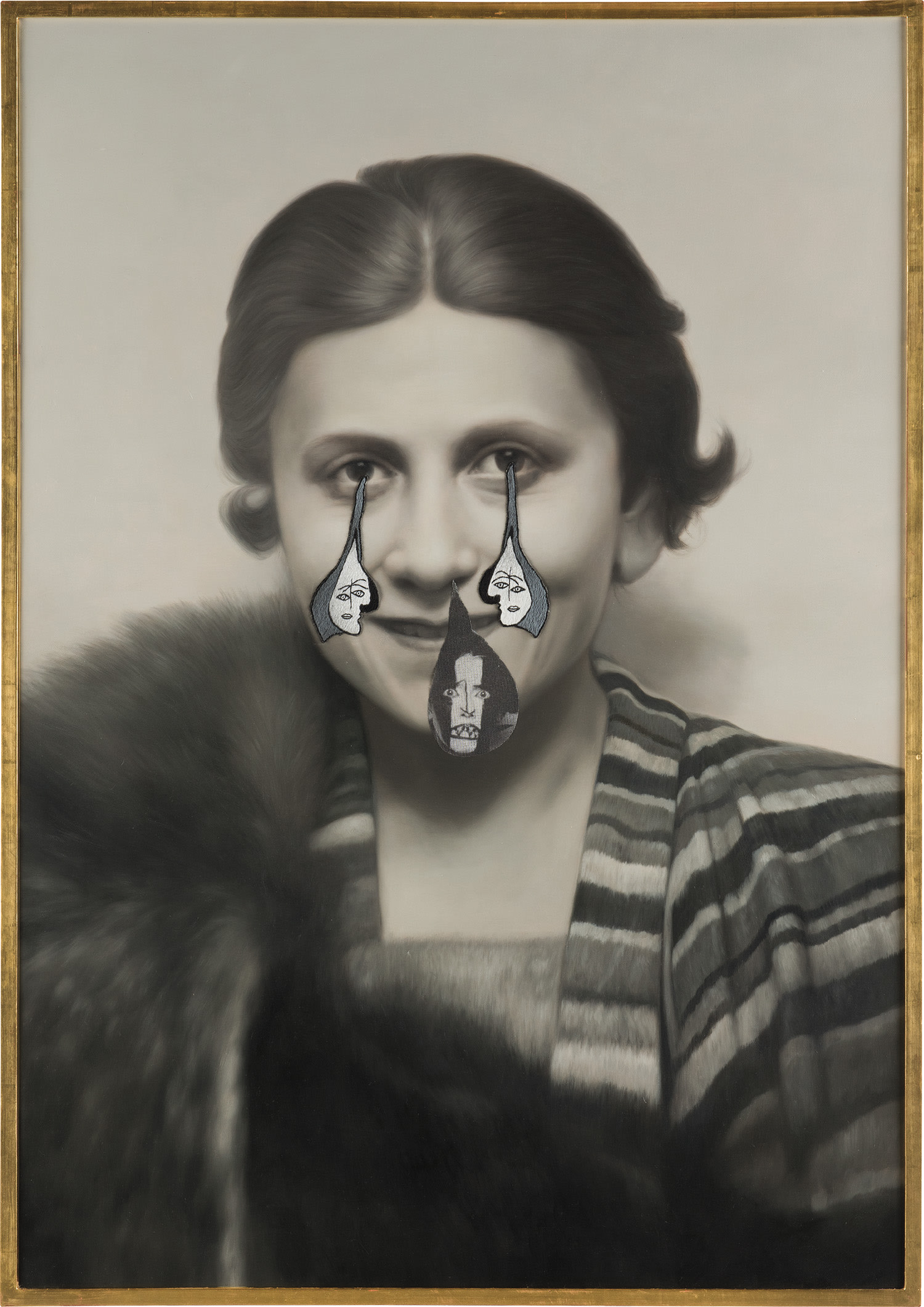
Francesco Vezzoli
Olga Forever (Olga Picasso, ca. 1930 I), 2012
Works made in the early 2000s now carry the additional weight of historical distance, as the celebrities and cultural figures they depict have themselves become subjects of nostalgia, reassessment, or renewed fascination. Collectors have found that Vezzoli works in a variety of formats and scales, from intimate embroidered photographs to large installation and video pieces, making his practice accessible across different kinds of collections. Those who have followed his career since his early exhibitions in London and Milan have watched values appreciate steadily alongside his institutional profile, and the continued interest from major museums ensures that his critical standing remains secure. In the broader context of contemporary art, Vezzoli belongs to a distinguished lineage of artists who have used mass media imagery as raw material for serious artistic investigation.
He draws comparisons to Richard Prince, whose appropriation of advertising photography asked similar questions about authorship and desire, and to Andy Warhol, whose celebrity portraits remain the essential precedent for any artist working with fame as subject matter. Yet Vezzoli's insistence on the handmade, on the time consuming labor of embroidery, gives his work a warmth and a bodily presence that sets it apart from the cooler conceptual strategies of many of his peers. He is also deeply, specifically European in his cultural references, as rooted in Italian cinema and fashion history as he is in Hollywood, and this dual inheritance gives his work a richness that rewards viewers from many different cultural backgrounds. What Vezzoli has built over the course of his career is nothing less than a sustained meditation on what it means to be looked at, admired, and consumed, on the pleasures and the costs of living in an image culture.
He does this not from a position of detachment or superiority but from one of genuine fascination and love, and it is that quality, the sense of an artist who is genuinely enchanted by the subjects he critiques, that makes his work so enduringly appealing. As the conversation about celebrity, representation, and the politics of beauty continues to intensify, Vezzoli's archive of works feels more necessary with each passing year.