Francesco Solimena
The Grand Maestro Naples Always Adored
Artist Spotlight · The Collection Editorial
In the gilded salons and hushed galleries where Baroque painting is reassessed and celebrated, one name keeps returning with fresh urgency: Francesco Solimena. The great Neapolitan master, who lived from 1657 to 1747 and shaped the visual culture of an entire era, commands renewed attention from institutions and private collectors alike. Major European museums including the Kunsthistorisches Museum in Vienna and the Palazzo Reale collections in Naples hold his monumental canvases with justified reverence, and recent years have seen a quiet but persuasive reappraisal of the Neapolitan Baroque as one of the most theatrically alive movements in Western painting. For collectors with an eye for the grand tradition, Solimena represents something rare: a painter of supreme technical ambition whose work still crackles with life.
Francesco Solimena
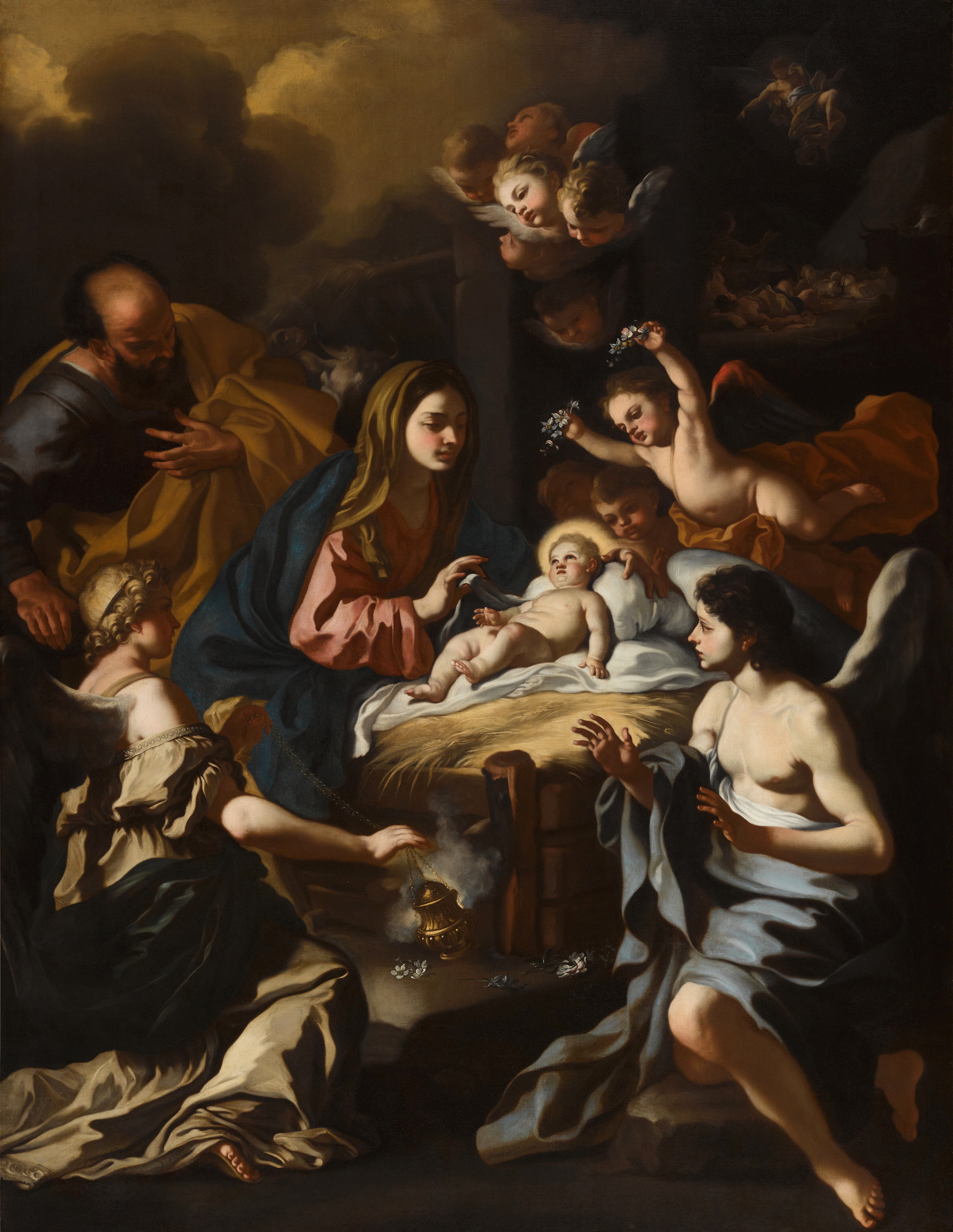
The Christ Child in the manger adored by angels
Francesco Solimena was born in 1657 in Canale di Serino, a small town in the hills of the Campania region near Avellino in southern Italy. His father, Angelo Solimena, was himself a painter of modest regional reputation, and the young Francesco received his earliest training under the family roof before making his way to Naples, the city that would define his career absolutely. Naples in the latter half of the seventeenth century was not merely a city but a crucible, a place where Spanish viceregal power, Counter Reformation fervor, and an astonishing density of artistic talent produced one of the most distinctive visual cultures in all of Europe. Solimena arrived into this world already primed to absorb its grandeur.
In Naples, Solimena immersed himself in the legacy of two towering predecessors: Luca Giordano, whose rapid, luminous brushwork and compositional fluency had set an almost impossibly high standard, and Francesco de Mura, who would later become one of Solimena's own most distinguished pupils. But it was his deep engagement with the chiaroscuro drama of Mattia Preti and the architectural severity of Pietro da Cortona in Rome that gave Solimena's early style its particular voltage. He synthesized these influences without being overwhelmed by any of them, developing a manner that was unmistakably his own: deeply shadowed grounds from which figures emerge with sculptural force, compositions structured like theatrical stage designs, and a palette that moves between warm amber and cool silver with extraordinary sophistication. By the 1690s and into the early eighteenth century, Solimena had established himself as the preeminent painter in Naples and arguably in all of Italy.
Francesco Solimena
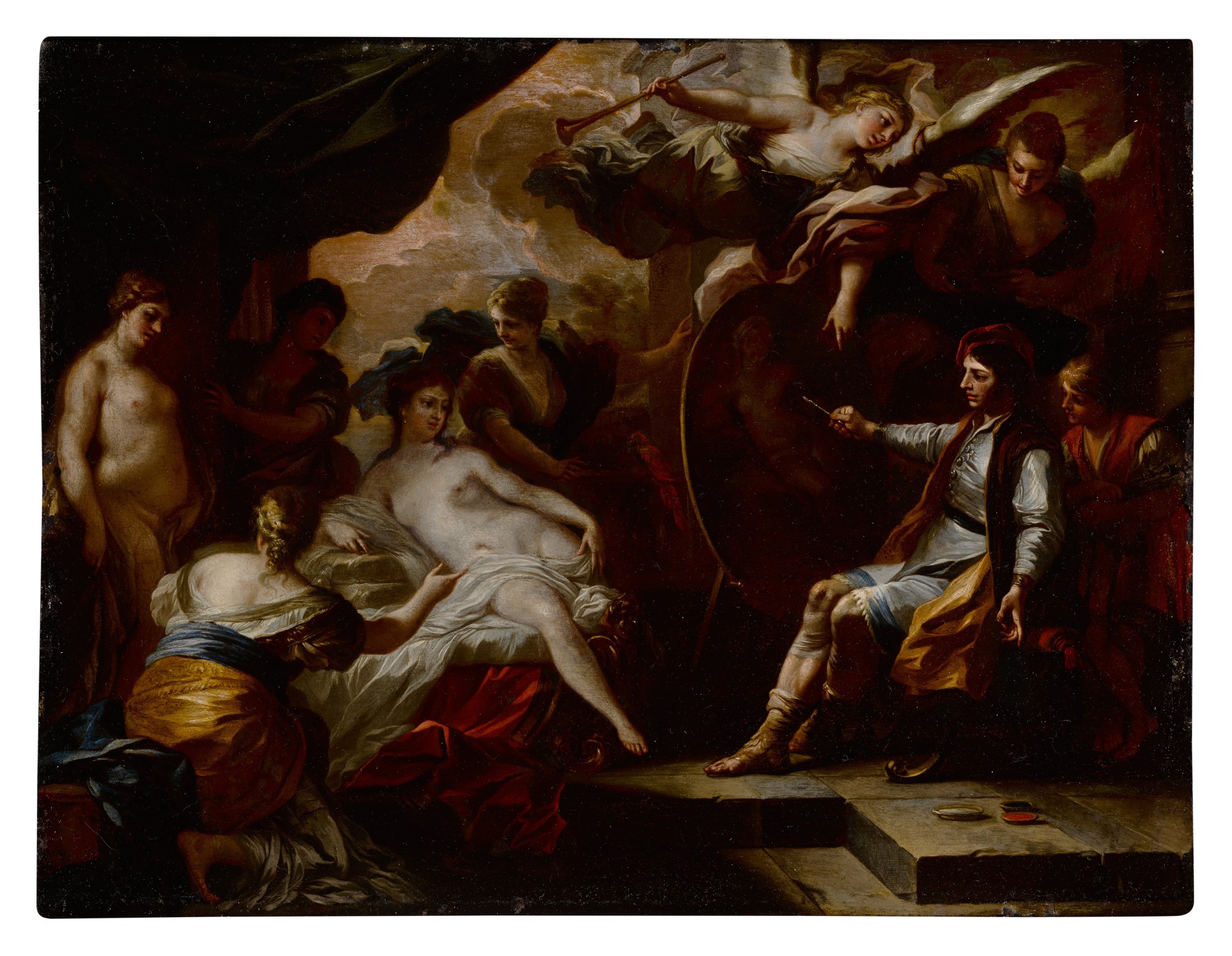
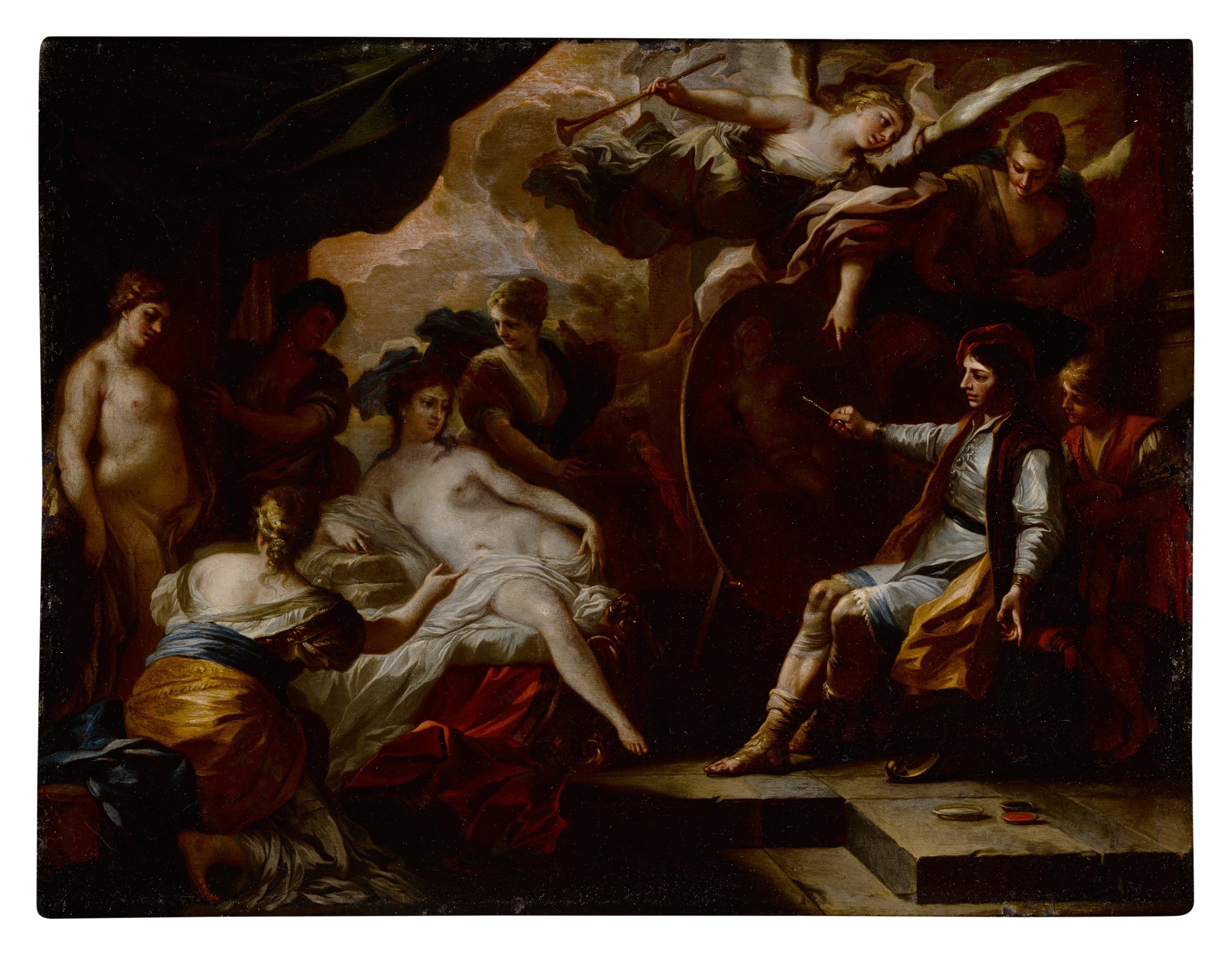
Zeuxis Painting Venus with the Maidens of Croton
His large scale fresco cycles, most notably those at the Church of San Paolo Maggiore and the Gesù Nuovo in Naples, are among the most ambitious decorative programmes of the entire Baroque period. At San Paolo Maggiore, his depiction of the Fall of Simon Magus, completed around 1690, demonstrates everything that made him so commanding: a vast churning crowd, a sky torn open with divine light, and a compositional order that holds the chaos in perfect tension. These are works that ask to be stood before, not merely looked at. They perform on a scale that few painters in any era have managed with such consistent authority.
The works available through The Collection offer a more intimate but no less revealing window into Solimena's genius. The Christ Child in the Manger Adored by Angels, executed in oil on canvas, distills his religious feeling into a tender nocturnal warmth, the angelic figures arranged with a grace that owes as much to music as to painting. Zeuxis Painting Venus with the Maidens of Croton, rendered in oil on copper, is a particularly refined example of his secular mythological work, the copper support lending the surface a jewel like luminosity that suits its self referential subject beautifully. The story of Zeuxis selecting the most perfect features from multiple models to construct an ideal Venus was a favorite conceit of Renaissance and Baroque artists reflecting on the nature of beauty itself, and Solimena handles it with knowing elegance.
Francesco Solimena
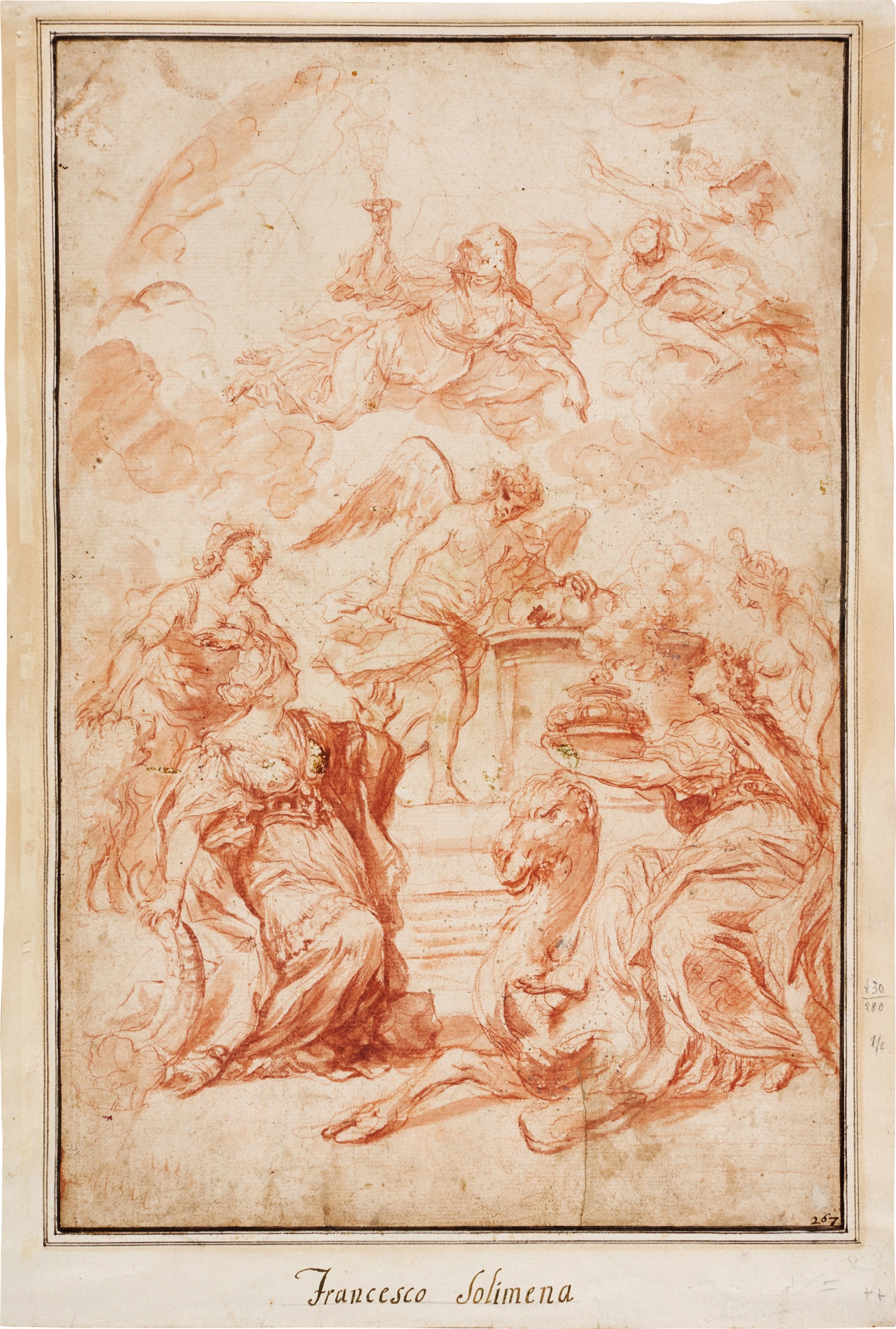
Faith triumphant over the Continents
Faith Triumphant over the Continents reads as a summation of Counter Reformation ambition, the kind of allegorical grandeur that made Solimena the natural choice for the most prestigious ecclesiastical and aristocratic patrons of his age. And the Male Head Study in oil on paper laid down on canvas reveals the working intelligence beneath the grand public manner: direct, searching, and deeply human. Solimena's market reflects his stature. Works by the master appear regularly at the major auction houses, Christie's and Sotheby's among them, where his canvases attract serious bidding from collectors who understand that late Baroque Italian painting remains one of the most intellectually and aesthetically rewarding areas of the Old Master market.
His drawings and oil sketches, often more affordable entry points into his practice, have a particular appeal because they reveal the spontaneous energy that his large finished works channel into something more controlled. Collectors are drawn to Solimena for the same reasons they are drawn to his great contemporaries Giovanni Battista Tiepolo in Venice and Charles Le Brun in France: the combination of decorative magnificence and genuine painterly intelligence is simply irresistible. What distinguishes Solimena specifically is the Neapolitan emotional temperature, a darkness and intensity that the more celebratory Venetian tradition rarely touches. To understand Solimena fully is to understand the Neapolitan School as a whole, a tradition that runs from Caravaggio's revolutionary visit to Naples in the early seventeenth century through Ribera, Preti, Giordano, and Solimena himself, before continuing in the work of his pupils including Francesco de Mura and Sebastiano Conca.
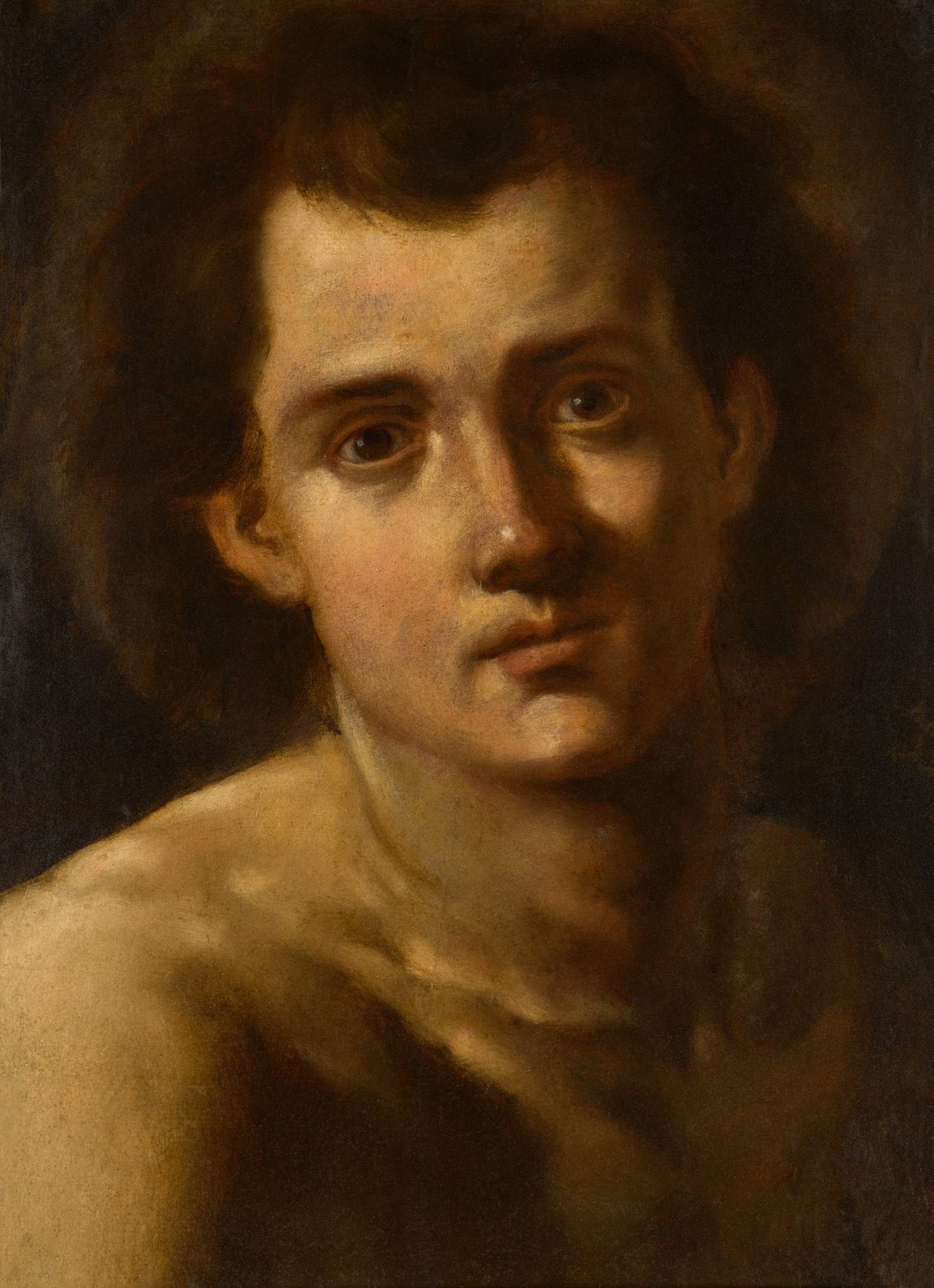
Francesco Solimena
Male head study
This is one of the great continuous lineages in European painting, and Solimena stands near its summit. His international reputation during his lifetime was remarkable, reaching collectors and patrons across Austria, France, and England, where Prince Eugene of Savoy and other grandees eagerly sought his canvases. The painter Sir Godfrey Kneller and the collector John Law were among those who owned or sought his work, testimony to a fame that crossed borders with ease. Solimena died in 1747 at the extraordinary age of ninety, having outlived most of his contemporaries and witnessed the first stirrings of the Neoclassical reaction against everything he stood for.
Yet his legacy has proven durable precisely because his virtues transcend period fashion. The drama, the technical command, the ability to make large multifigure compositions sing rather than shout: these are qualities that reward looking at any moment in history. In an era when collectors are rediscovering the full breadth of the Baroque tradition, Solimena stands as one of its most rewarding figures, warm and cerebral at once, spectacular without ever losing sight of feeling. To live with one of his works is to keep very distinguished company indeed.
Explore books about Francesco Solimena
Francesco Solimena e la cultura figurativa del Settecento meridionale
Ferdinando Bologna
Francesco Solimena 1657-1747
Michael Levey
Solimena e il Settecento napoletano
Angela Negro
Francesco Solimena. Il trionfo della pittura
Piero Boccardo, Clario Di Fabio
Francesco Solimena (1657-1747) and His World
Eleanor Heartney, ed.