Francesca Mollett
Francesca Mollett Paints the World Blooming
Artist Spotlight · The Collection Editorial
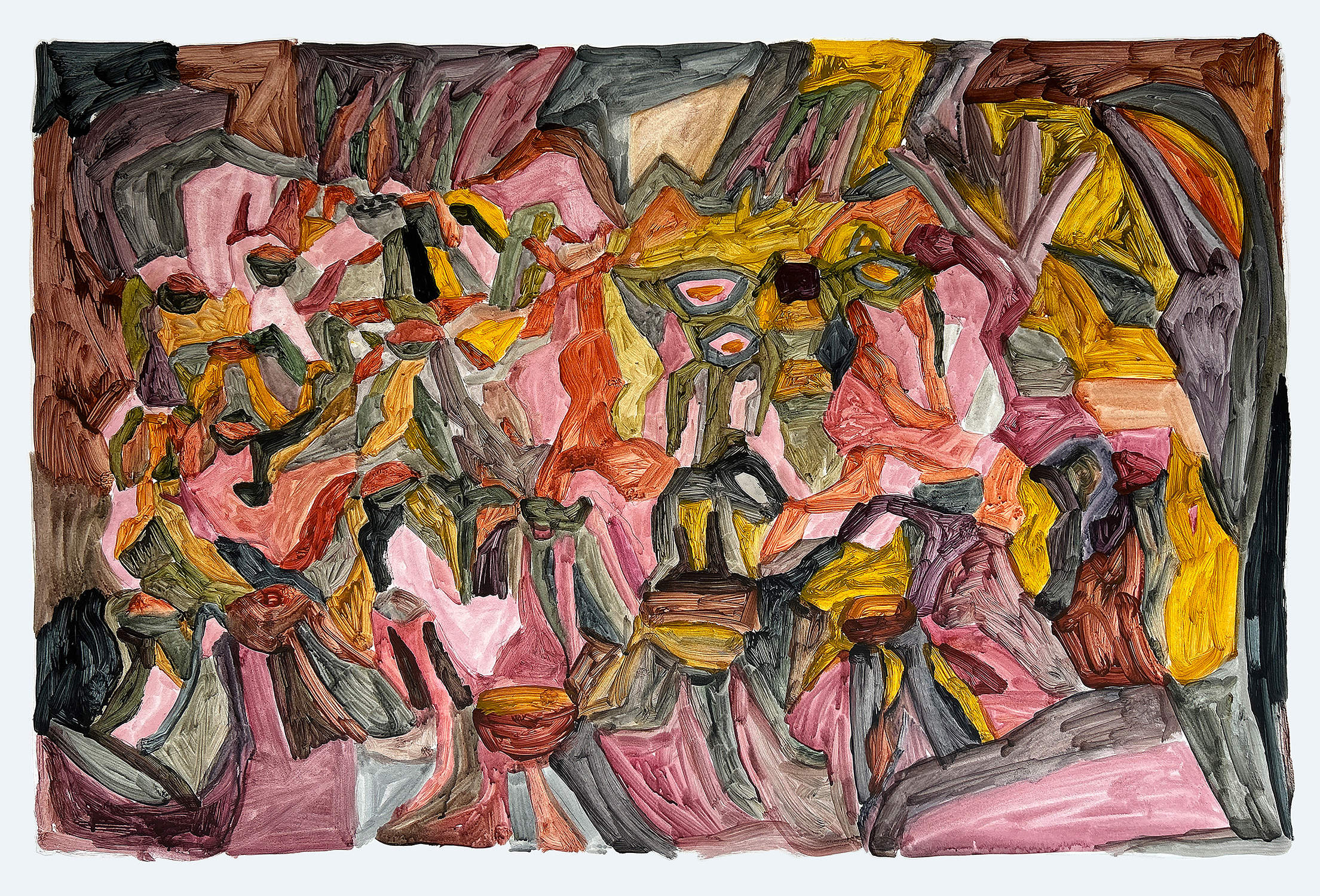
Something is happening in the world of contemporary British painting, and Francesca Mollett is very much at the centre of it. In recent years, her canvases and calico works have drawn steady and passionate attention from collectors who recognise in her a painter working at the height of her powers, someone who has found a language so distinctly her own that encountering one of her paintings feels less like viewing and more like arriving somewhere you already love. Her presence in the market has grown with quiet confidence, the kind of momentum that belongs to artists whose work earns its admirers one painting at a time. Mollett was born in 1981 and grew up steeped in the kind of sensory richness that would come to define her canvases.
Francesca Mollett
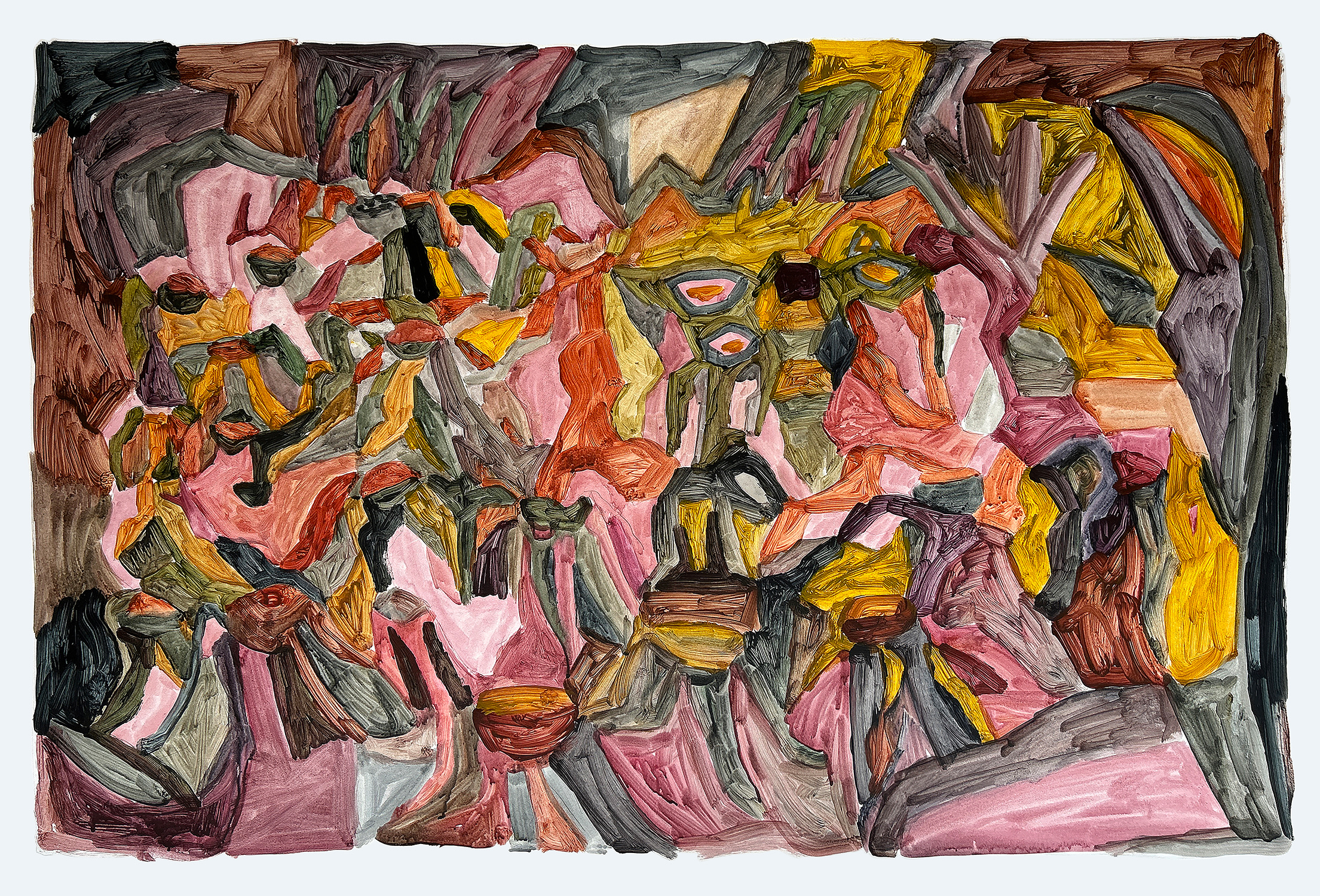
Cilia, blinking cilia, 2018
Her formation as a painter was shaped significantly by time spent in France and across the Mediterranean, landscapes where light behaves with extraordinary theatre, where gardens spill beyond their borders and colour seems to exist at a higher frequency than anywhere else. These are not merely holiday impressions absorbed passively. They are deeply felt, carefully observed, and eventually transformed into a painterly vision that carries genuine emotional weight. Her artistic development reflects a painter who has engaged seriously with the history of her medium while refusing to be imprisoned by it.
The influences of Post Impressionism and Fauvism run through her work like an underground current, surfacing in her refusal to flatten colour into description and in her insistence that paint itself carry feeling. One thinks naturally of Bonnard, of Matisse, of the way those painters understood that a garden or an interior was never merely a subject but a field of sensation. Mollett has absorbed these lessons and made something genuinely contemporary from them, a practice rooted in tradition but alive to the present moment. Her signature works reveal a painter of considerable range and ambition.
Francesca Mollett
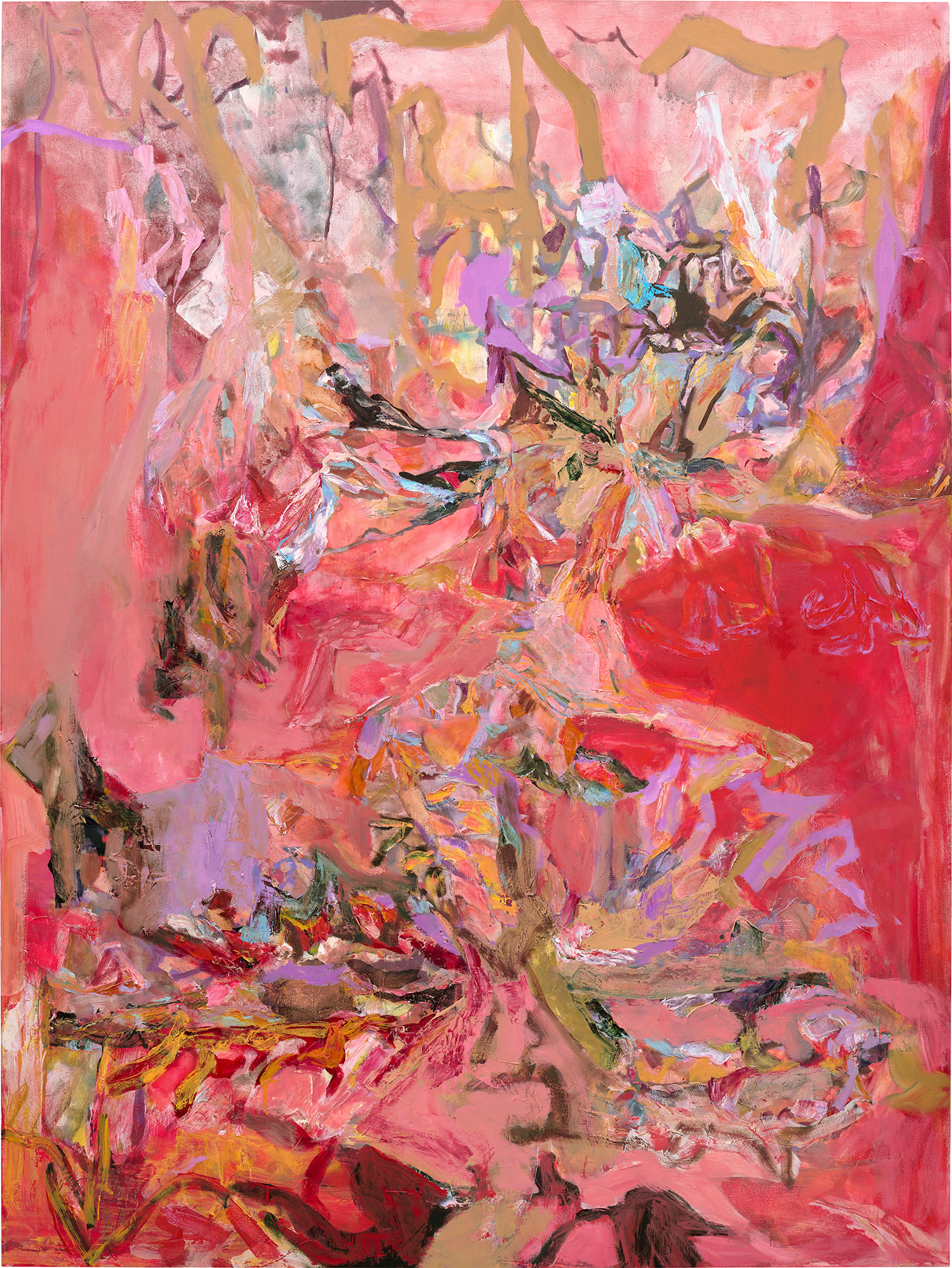
Two Thistles, 2021
Works on calico have become a particularly important thread in her output, the material lending a warmth and texture that suits her gestural, layered approach beautifully. "Two Thistles" from 2021 is a compelling example of her ability to find monumentality in botanical subjects, while "Maiden, Mother, Hag" from 2020 demonstrates a more mythic register, suggesting that her engagement with landscape carries genuine psychological depth. "Sancreed" from 2020 points to the importance of Cornwall in her practice, a landscape with its own long and storied relationship to British painting. Works such as "Cadence" from 2022 and "The Place I Chose to Stand" from 2021 show a painter growing more assured with each passing year, the compositions more resolved, the colour more precisely daring.
Earlier works like "Overlay" from 2017 and "Cilia, blinking cilia" from 2018, the latter rendered in acrylic and graphite on paper, hint at the experimental curiosity that underpins even her most lushly decorative pictures. Mollett is not a painter content to repeat a formula. The mixed media approach she favours, often combining oil and acrylic on calico or canvas, speaks to an ongoing investigation into what paint can do and how different materials in combination can extend the possibilities of a surface. "Divers" and "Seams of Marl", both from 2020, suggest a painter equally comfortable with the aquatic and the geological, with subjects that ask us to think about depth and layering, both as physical realities and as metaphors for the act of painting itself.
Francesca Mollett
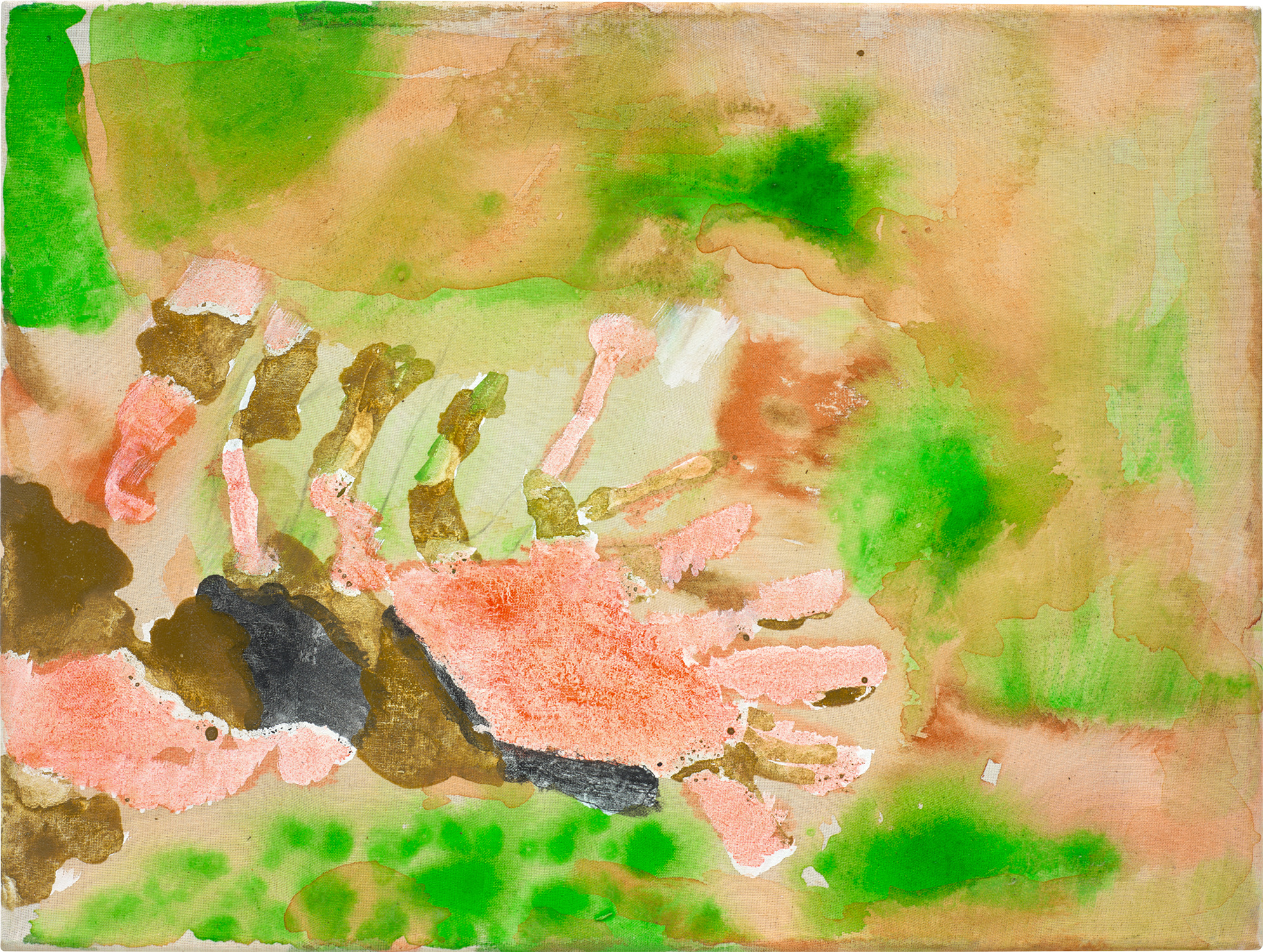
G.h., 2019
For collectors, Mollett represents the kind of opportunity that presents itself only when a genuinely serious painter is still in the ascendant phase of her recognition. Her works on calico in particular have attracted strong interest from those who appreciate the material intelligence behind her choices, the way the support becomes an active participant in the finished image rather than a neutral ground. Collectors drawn to the School of London tradition, to the work of painters like Celia Paul or Cecily Brown, or to the broader landscape of contemporary British figurative painting will find in Mollett a natural point of connection. Her work also sits comfortably in dialogue with painters working in France and across Europe who share her commitment to colour as a primary expressive tool.
Within the broader context of art history, Mollett belongs to a rich and living tradition of painters for whom the garden and the interior are never merely decorative subjects. From the late Impressionists through to the mid century colourists, the domestic and natural world has served as the arena in which some of the most ambitious painting has been made. Mollett understands this lineage intuitively and contributes to it with genuine originality. Her bold palette, her loose and confident brushwork, her willingness to let a composition breathe and even to let paint move in ways that exceed strict description, these are the marks of a painter who has earned her confidence through sustained and serious looking.
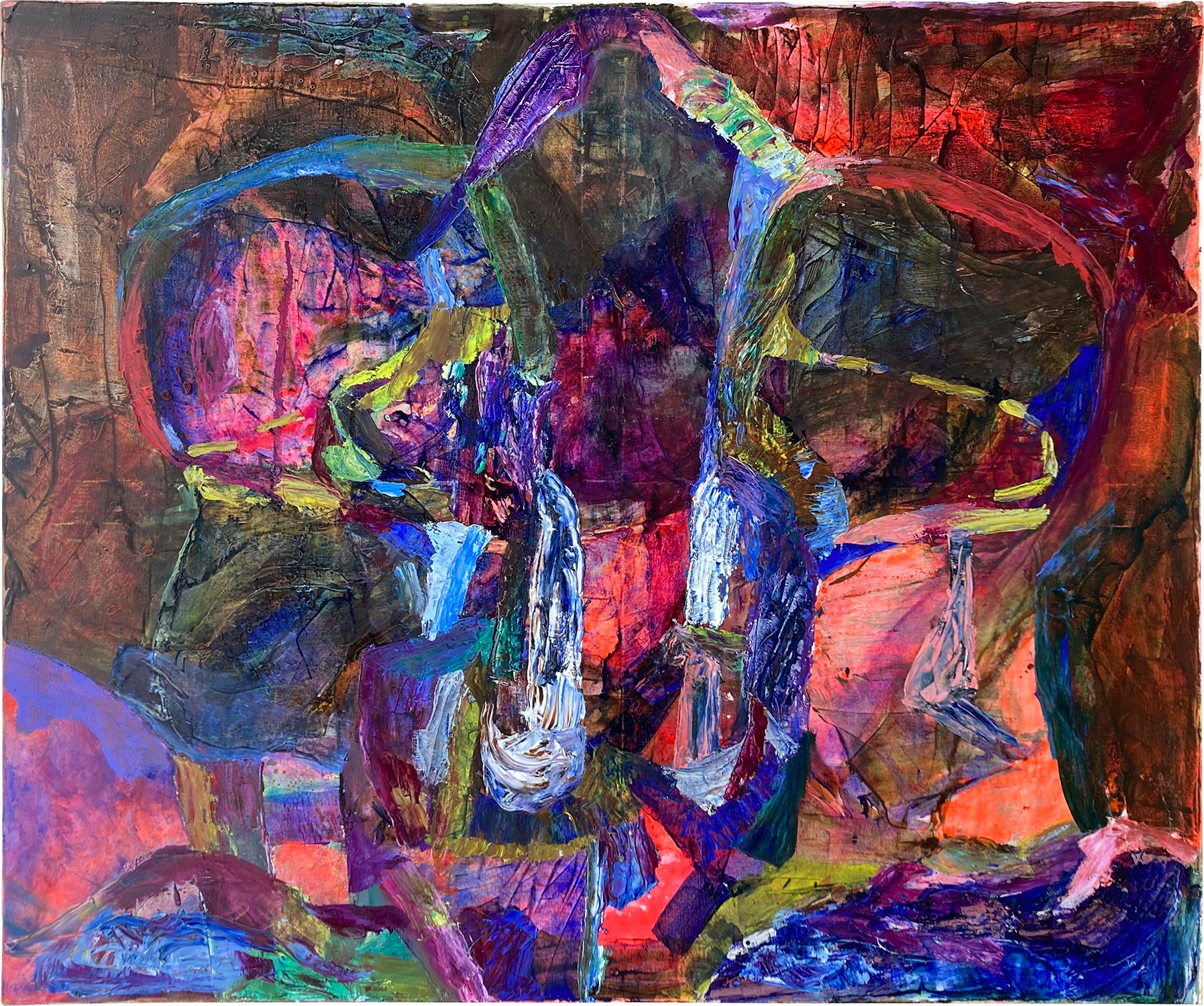
Francesca Mollett
Maiden, Mother, Hag, 2020
What makes Mollett matter today is precisely this combination of deep rootedness and contemporary aliveness. She is a painter who can hold the memory of a sun soaked French garden and the physical reality of a Cornish hillside in the same sustained gaze, finding in both the same quality of intense, grateful attention. In an art world that often rewards novelty over depth, her commitment to the act of painting itself, to colour, to light, to the particular way the world presents itself to an eye trained to receive it fully, feels not only admirable but necessary. Collectors who find her work now will find themselves in the company of a painter who is only becoming more fully herself with every canvas she completes.