Florentine School, 17th Century
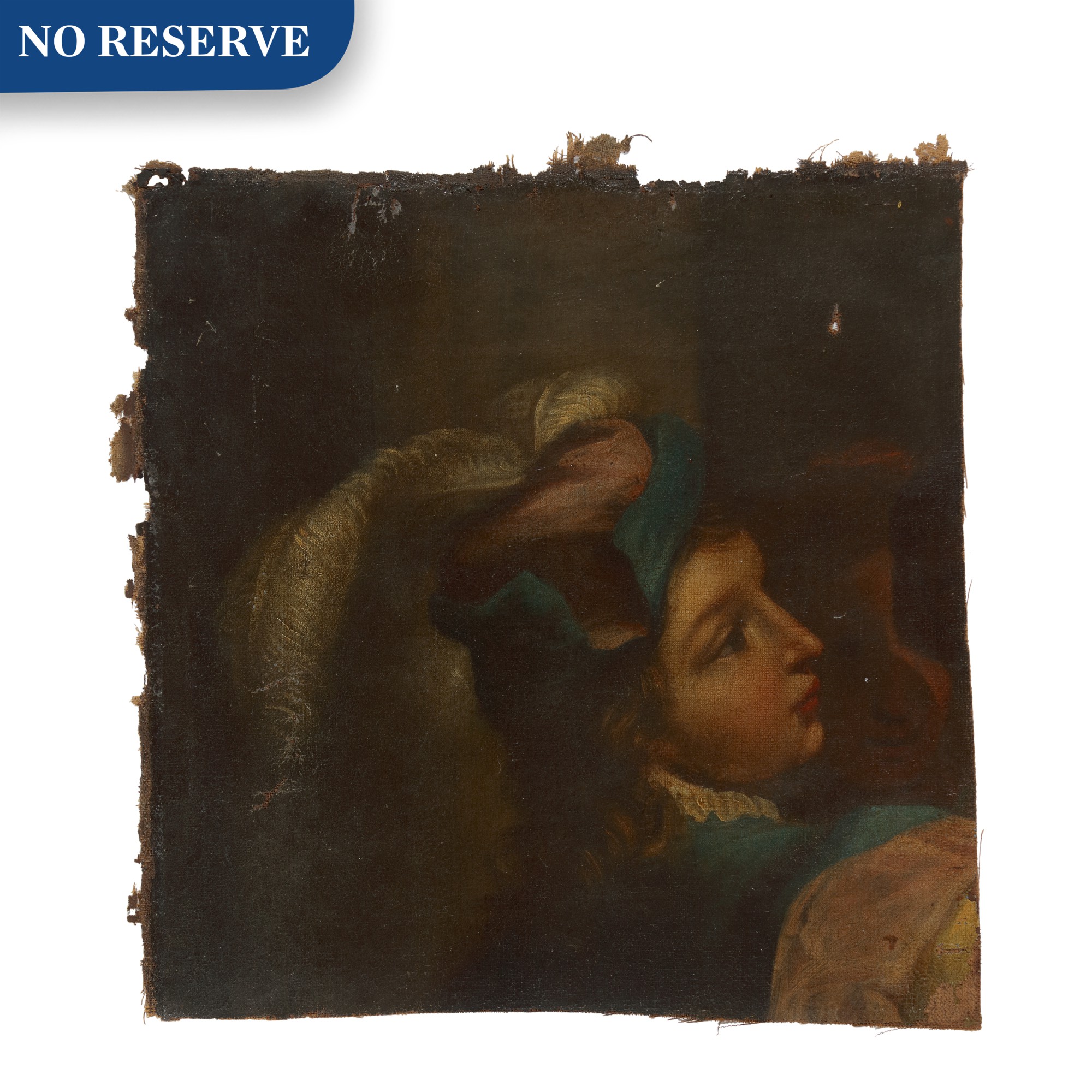
Florence Forever: Elegance, Mastery, and Enduring Grace
Artist Spotlight · The Collection Editorial
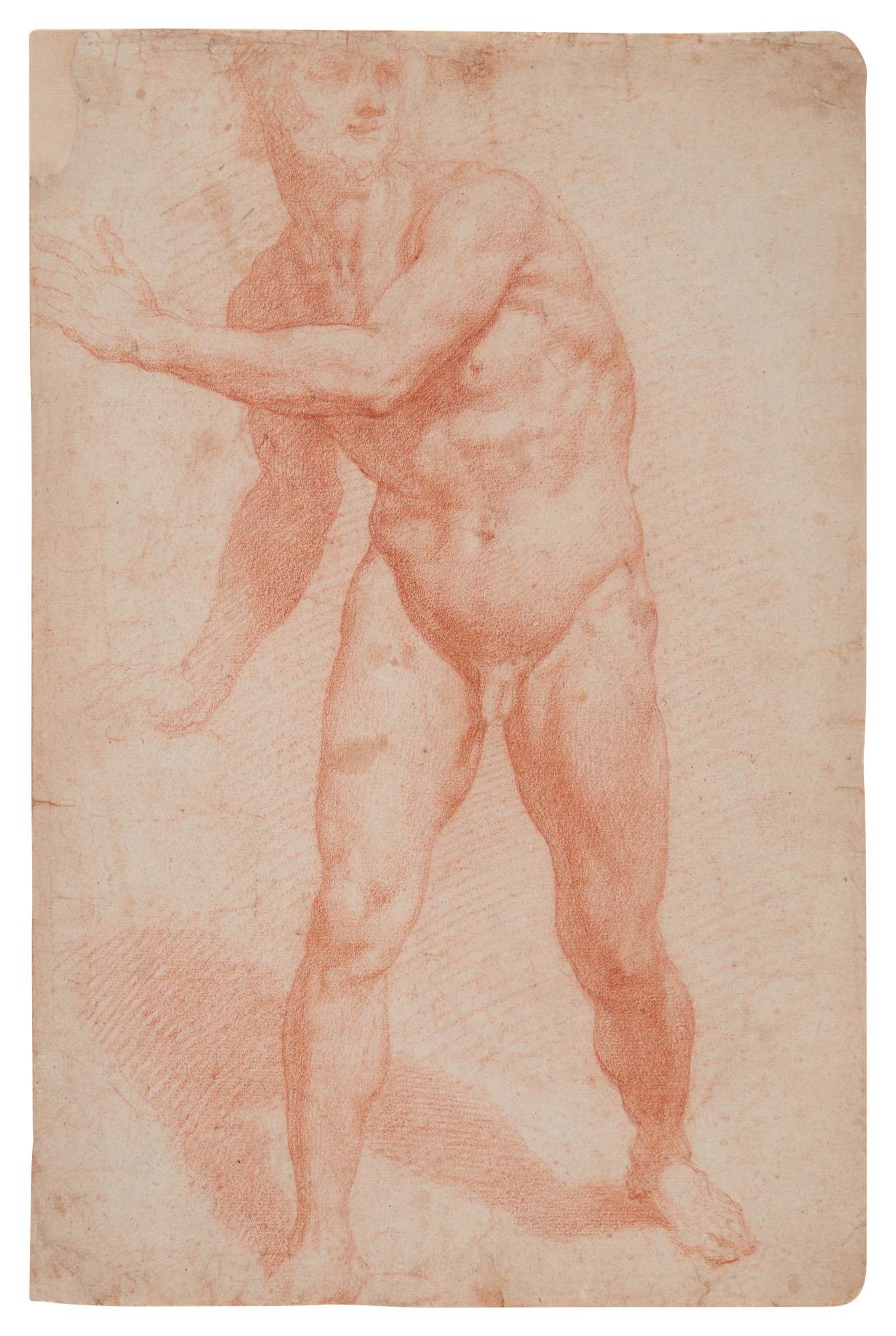
Imagine standing in the Uffizi Gallery in Florence on a crisp January morning, the light filtering through tall windows and falling across a drawing of a standing male nude rendered in confident, precise strokes. The figure is monumental yet tender, the line work betraying a mind trained in the most demanding academic tradition in the history of Western art. This is the world of the Florentine School of the seventeenth century, a constellation of artists who carried forward one of civilization's greatest artistic inheritances and shaped it into something distinctly their own. Their work continues to command serious attention from scholars, institutions, and collectors who recognize in it the quiet authority of a tradition that never truly fades.
Florentine School, 17th Century
Two Academy studies: A) Standing male nude B) Double sided academy study
To understand the Florentine School of the seventeenth century, one must first reckon with the sheer weight of what came before it. Florence had been the laboratory of the Renaissance, the city where Brunelleschi decoded perspective, where Botticelli gave mythology its most lyrical face, where Leonardo and Michelangelo redefined the human figure and its capacity to carry spiritual meaning. By the time the seventeenth century arrived, this inheritance was not a burden but a living conversation. Young artists trained in Florentine workshops absorbed the lessons of these giants as naturally as they learned to mix pigment, and that absorption gave their work a depth and seriousness that set it apart from much of what was happening elsewhere in Italy and across Europe.
The formation of a Florentine painter in this period was rigorous and deliberate. The academy model, which had been formally institutionalized with the founding of the Accademia delle Arti del Disegno in 1563 under the patronage of Cosimo I de Medici and with Giorgio Vasari as one of its principal architects, placed drawing at the absolute center of artistic education. Disegno, the Italian word for drawing that also carries connotations of design and intellectual conception, was understood as the foundation of all visual art. Students spent years making what were called academy studies, working from live models to understand the architecture of the human body from every angle and in every attitude.
Florentine School, 17th Century
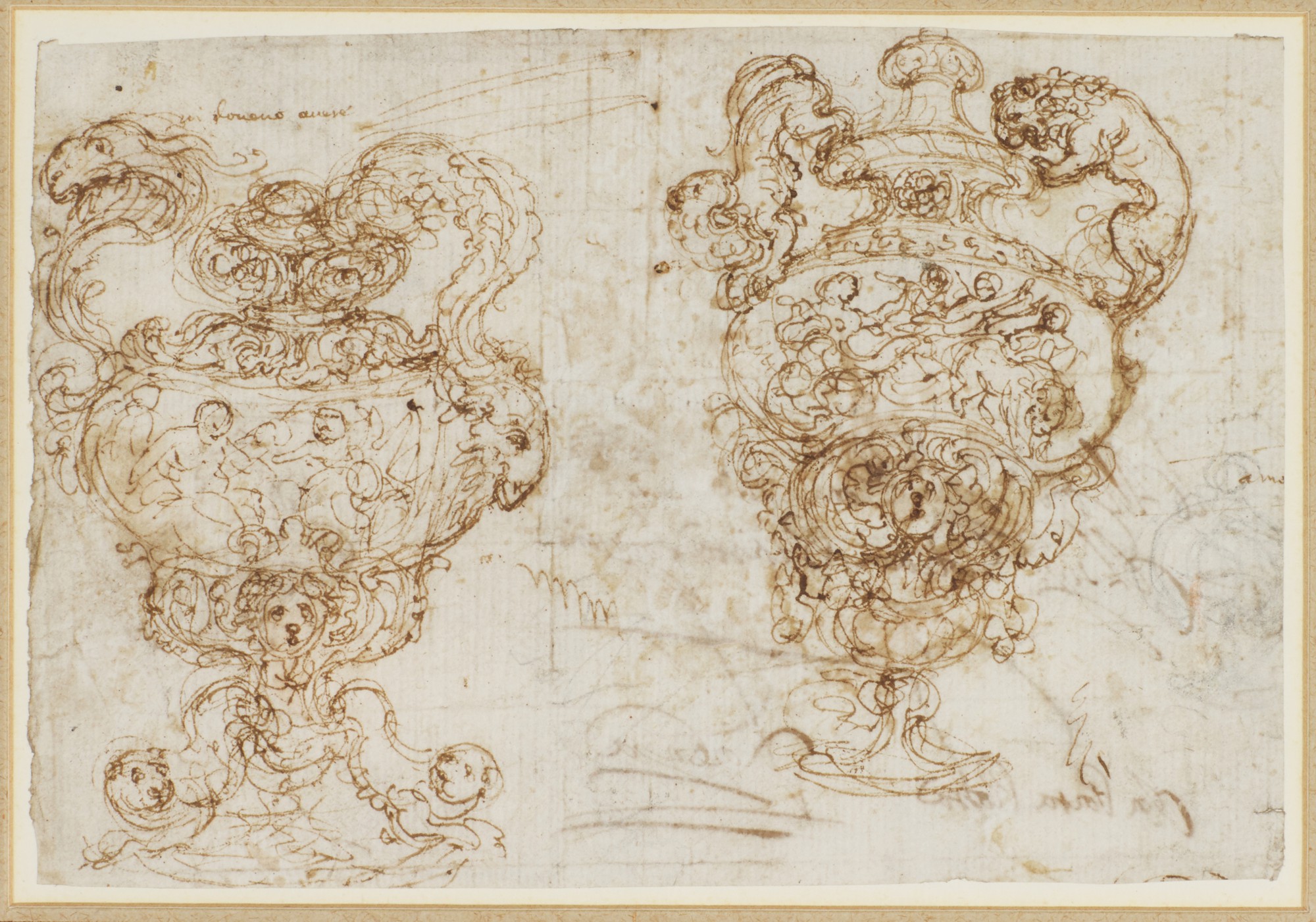
Two Designs for an urn
The double sided academy study that survives in the Florentine School tradition speaks directly to this culture of relentless practice, where even the reverse of a sheet of paper was too valuable to leave blank. By the seventeenth century, the Florentine approach to painting had absorbed and responded to the dramatic upheavals of the Mannerist period, that self conscious and often thrillingly strange interlude that had produced artists like Pontormo, Rosso Fiorentino, and Bronzino. The painters of the new century did not abandon Mannerism's taste for elegance and its sophisticated play with color, but they tempered it with a renewed interest in naturalism and emotional clarity. Religious compositions from this period in Florence carry a devotional warmth that speaks to the climate of the Counter Reformation, where the Church called upon artists to make sacred imagery more accessible and emotionally immediate to worshippers.
Mythological scenes, meanwhile, continued to be produced for the private pleasure of an educated patrician class that relished allegory and classical learning. Among the most compelling works associated with the Florentine School from this era are the academy studies that reveal the extraordinary standard of draughtsmanship that defined the tradition. A standing male nude rendered in this context is not merely an exercise but a statement of artistic philosophy, a declaration that the human body, understood in its fullest complexity, is the primary vehicle through which meaning is made. Equally revealing are designs for decorative objects such as urns rendered in pen and brown ink, works that demonstrate how the Florentine artist's training in disegno extended naturally into the decorative and applied arts.
Florentine School, 17th Century
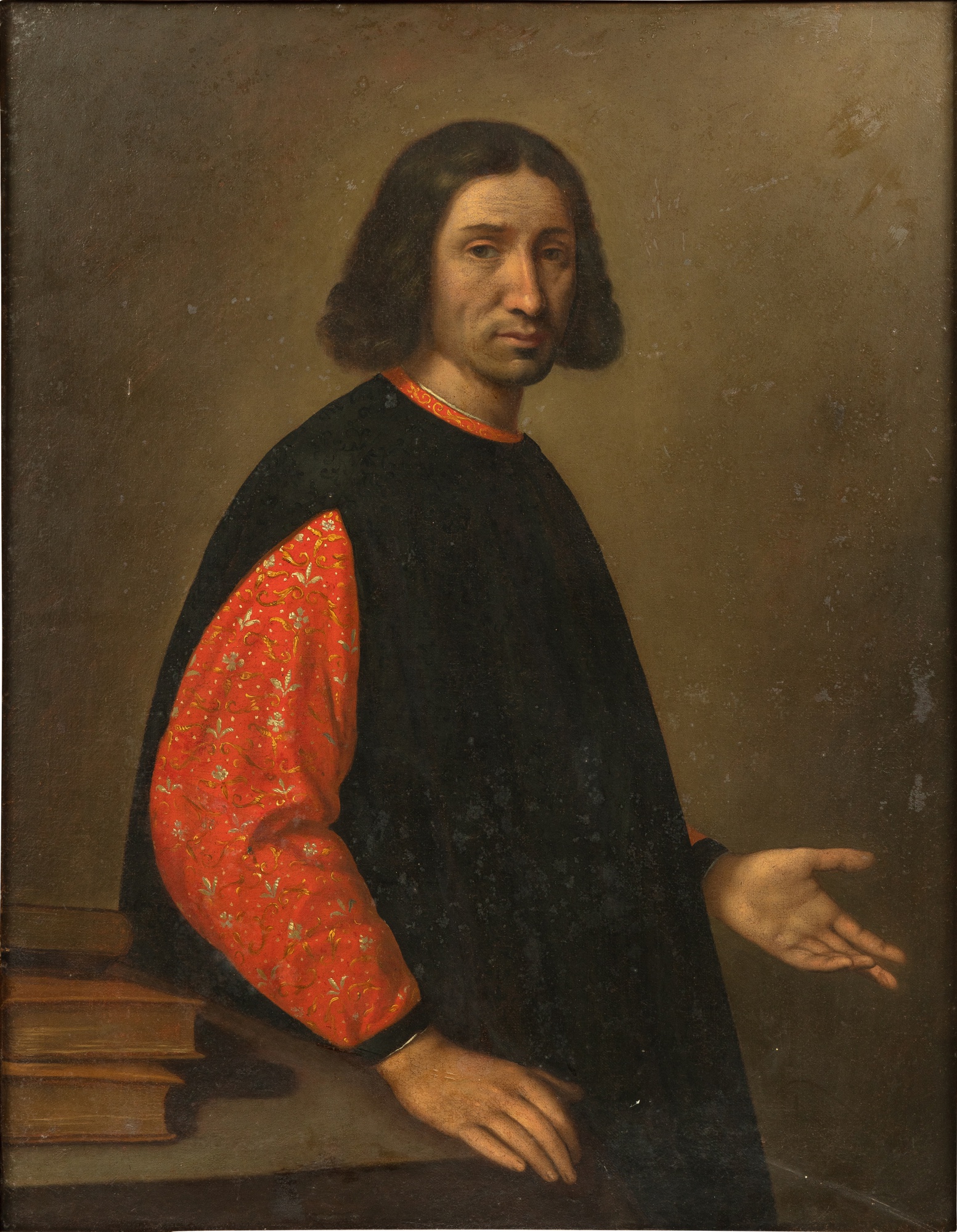
Portrait présumé de Nicolas Machiavel
These designs, refined and intellectually assured, remind us that the boundary between fine art and the broader culture of making was far more permeable in this period than later centuries would suggest. And then there is the presumed portrait of Nicolas Machiavelli in oil on canvas, a work that places the Florentine School in direct dialogue with the civic and intellectual life of the city, a tradition of portraiture that sought not just likeness but the projection of a subject's inner character and historical significance. For collectors, works from the Florentine School of the seventeenth century represent a remarkable opportunity to engage with one of the most intellectually substantial traditions in the history of art. The market for Old Master drawings and paintings has remained consistently strong at the major auction houses, with works on paper from Italian schools drawing particular interest from both institutional buyers and discerning private collectors.
Drawings, especially those with a clear academic purpose such as figure studies, carry with them the intimate thrill of seeing an artist's mind at work, the process before the finished surface. When considering works from this tradition, collectors should look for the quality of the line, the understanding of anatomy, the evidence of a trained eye working in dialogue with a living model or a deeply internalized tradition of artistic precedent. Condition is always a consideration with works on paper, but even sheets that show their age carry an authenticity and presence that reproductions can never approximate. The Florentine School of the seventeenth century exists in productive conversation with a wide range of contemporaries and near contemporaries whose work collectors and enthusiasts often explore in parallel.
The Bolognese School, represented most magnificently by the Carracci family and Guido Reni, shares with Florence a commitment to academic rigor and classical beauty while inflecting it with a more overtly lyrical emotional register. Roman painters of the period, working in the shadow of both ancient sculpture and the revolutionary naturalism of Caravaggio, offer a compelling counterpoint to the Florentine emphasis on line and design. And the great Venetian tradition, with its voluptuous color and atmospheric light, provides yet another perspective on the rich diversity of Italian seventeenth century painting as a whole. The legacy of the Florentine School endures not simply because the works are beautiful, though they are, but because they embody a set of values about art making that continues to resonate.
The commitment to drawing as the foundation of all visual thinking, the belief that the human figure is an inexhaustible subject, the conviction that art should be both intellectually rigorous and emotionally alive: these are not merely historical positions but living ideas that continue to animate serious artistic practice today. To collect work from this tradition is to participate in one of Western culture's most sustained and fruitful conversations, a dialogue between artists and their world that began on the banks of the Arno and still has things to say to anyone willing to look closely and with care.
Explore books about Florentine School, 17th Century
The Florentine School of Painting
Roger Freud
Painting in Florence and Siena after the Black Death
Millard Meiss
The Renaissance in Florence
Peter Burke
Florentine Painting of the Seventeenth Century
Mina Gregori
The Medici, Michelangelo and the Art of Late Renaissance Florence
Michael Levey
Baroque Art in Italy
Michael Levey
Florence: Art and History
Giuliano Procacci
Italian Baroque Painting
Wittkower Rudolf and Margot Wittkower