Florence Henri
Florence Henri, Light Reimagined Through Mirrors
Artist Spotlight · The Collection Editorial
There is a photograph that stops you cold. A woman's face, or perhaps two women's faces, reflected and refracted across a tilted mirror so that identity itself seems to splinter into something both more and less knowable. Made in Paris around 1928, Florence Henri's experimental self portraits announced a new visual language at a moment when modernism was still finding its grammar. Decades later, when the Centre Pompidou and major European institutions began revisiting the pioneering women of the avant garde, Henri's name emerged as one of the most consequential voices to have been undervalued for too long.
Florence Henri
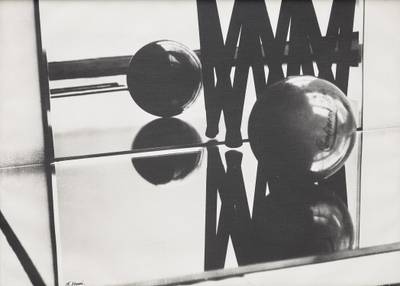
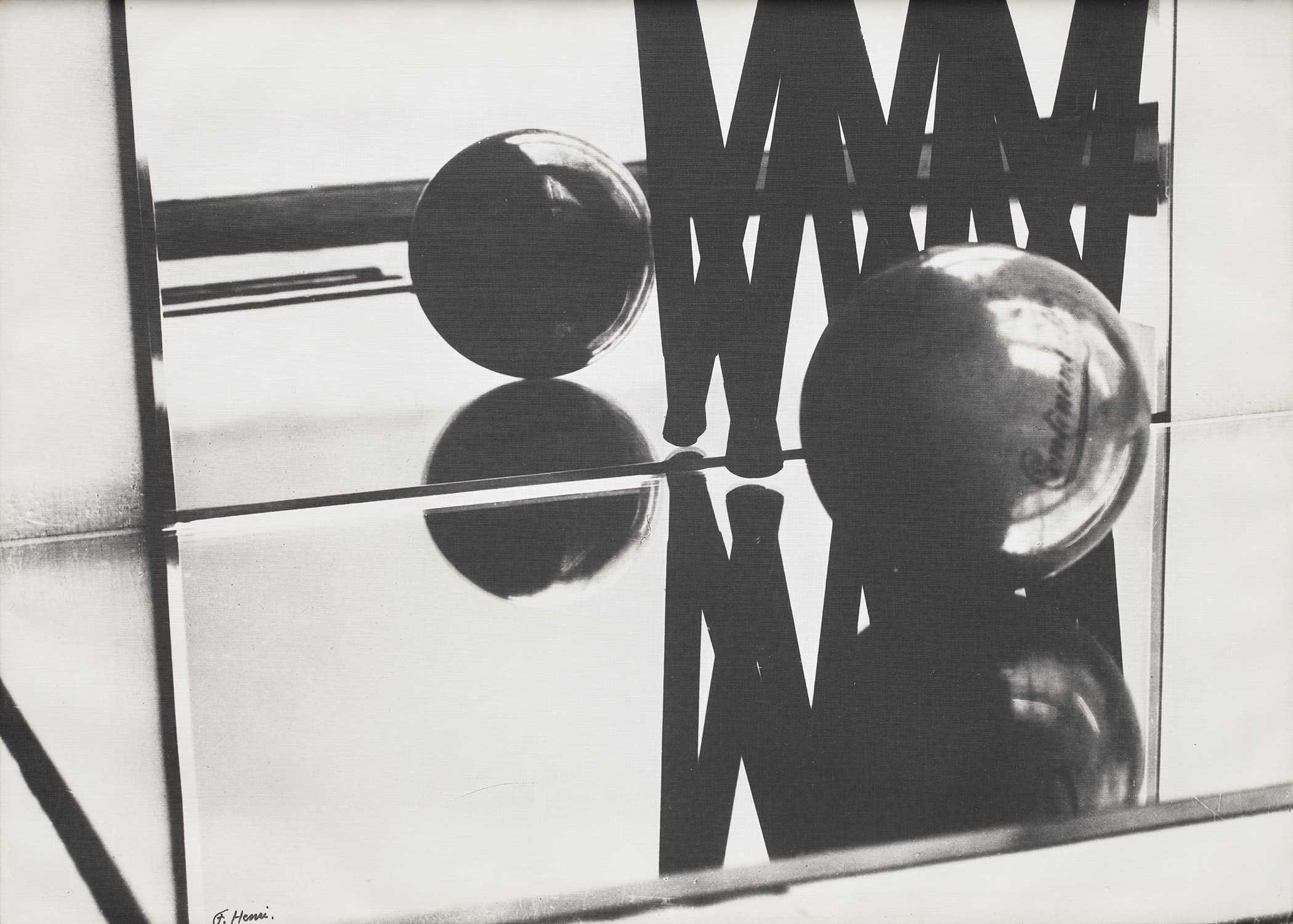
Still Life Composition (No. 76)
Her work is now understood not as a footnote to modernism but as one of its foundational texts. Florence Henri was born in New York in 1893 to a French father and a German mother, and her early life was defined by restless movement across continents. She lost her mother as a child, and her upbringing shuttled between England, Germany, and France, giving her a cosmopolitan sensibility before she had any formal artistic training. She studied piano seriously in Rome and Berlin, and music remained a structural influence on her thinking about rhythm, repetition, and composition throughout her life.
It was only in her late twenties that she turned decisively toward the visual arts, studying painting in Paris and then in Munich before arriving at what would be the defining chapter of her formation. In 1927, Henri enrolled at the Bauhaus in Dessau, where she studied under László Moholy Nagy and Paul Klee. The Bauhaus experience was transformative in ways that went beyond technical instruction. Moholy Nagy's insistence on light as a primary medium and his explorations of photography as a tool for spatial investigation unlocked something in Henri that painting alone had not reached.
Florence Henri
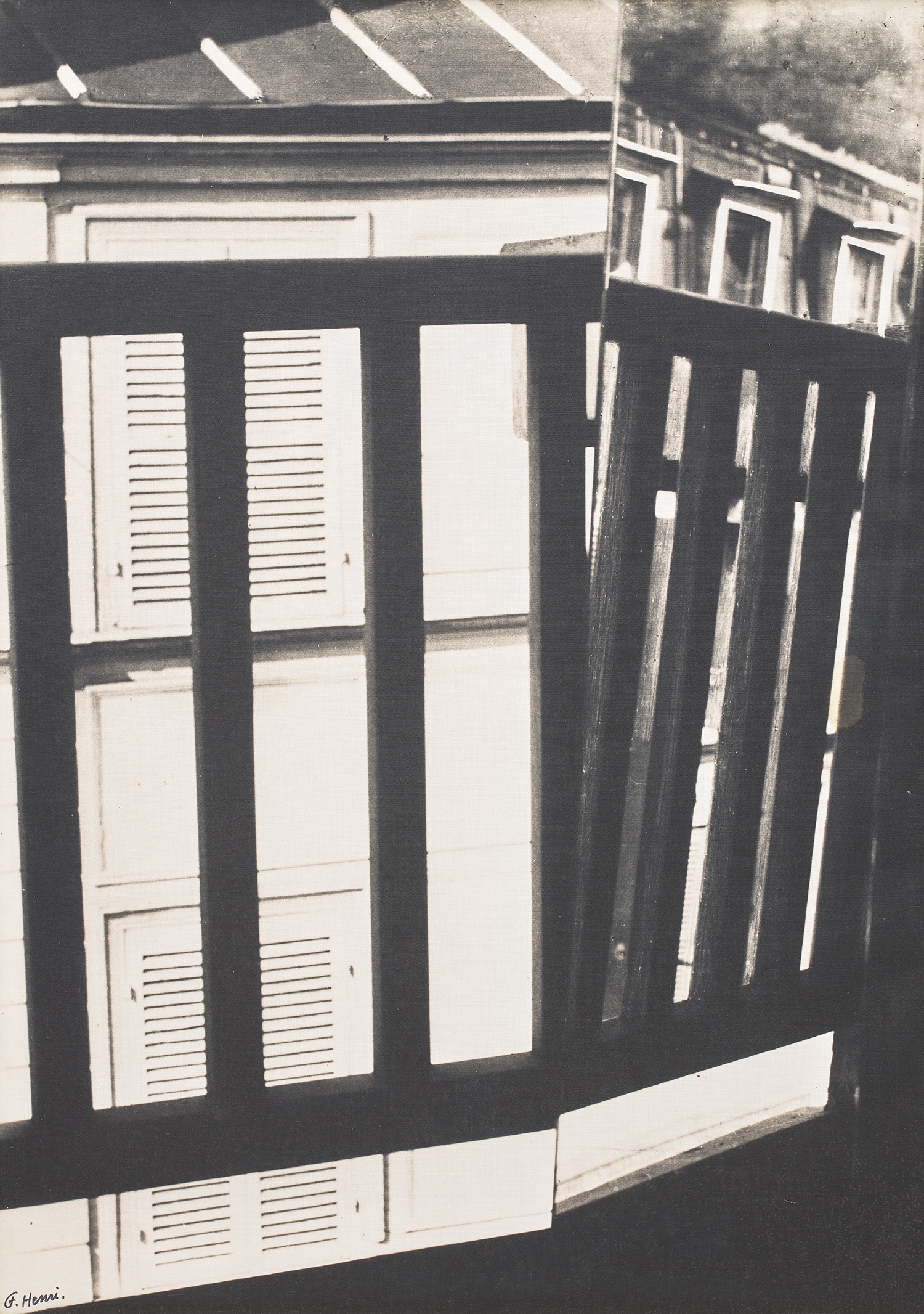
Windows
She absorbed the school's interdisciplinary spirit, its belief that art, craft, design, and science could speak a common language, and she carried that conviction back to Paris, where she established her studio and began the photographic experiments that would define her legacy. Her time at the Bauhaus was brief, a single summer session, but its imprint was permanent and profound. The mirror became Henri's signature instrument and her most searching philosophical tool. Beginning around 1927 and extending through the early 1930s, she constructed tabletop still lifes and portrait compositions in which mirrors were positioned to multiply, fragment, and reframe objects and figures within the frame.
A glass ball, a pair of hands, a cosmetics jar, these everyday items became actors in spatial dramas that questioned where an object ended and its reflection began. Her compositions drew on constructivism and the formal rigour she had absorbed at the Bauhaus, but they also carried a sensuous, almost theatrical quality that was entirely her own. The self portraits from this period, in which she appears as both subject and observer, caught within intersecting planes of reflection, are among the most psychologically complex images produced in interwar Europe. Beyond the mirror works, Henri built a substantial commercial practice in Paris during the late 1920s and 1930s, producing advertising photographs for publications and a range of clients at a time when photography was only beginning to be taken seriously as a medium for image making at that level.
Florence Henri
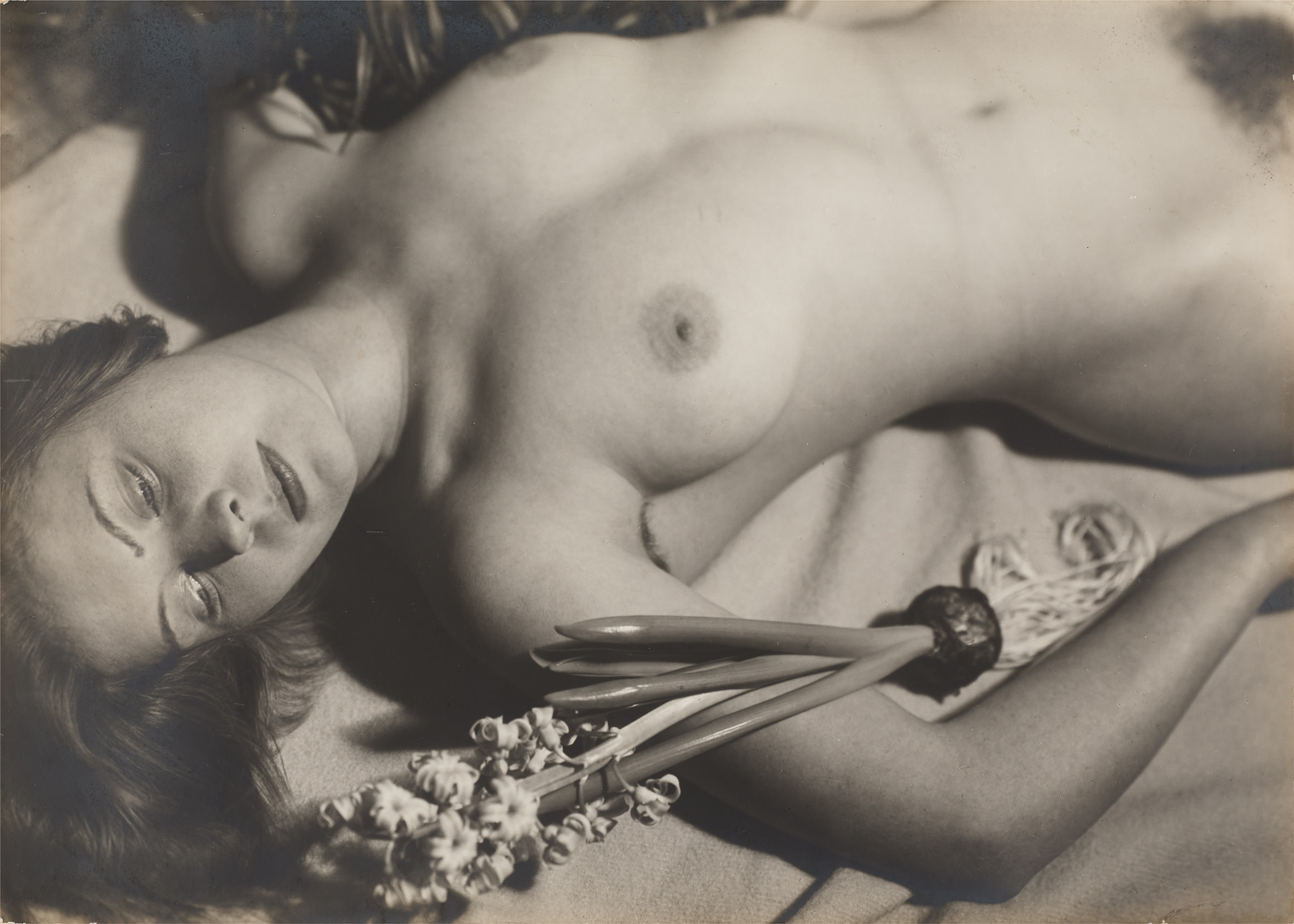
Nude
Her commercial work, including pieces that engaged with product and brand imagery such as the striking Reklamephoto series, demonstrated her ability to bring the same formal intelligence she applied to her fine art practice into applied contexts. Works like Reklamephoto (La Lune Pasta) reveal how fluidly Henri moved between the avant garde and the commercial world, treating both with equal seriousness and craft. Her gelatin silver prints from this era have a tonal depth and compositional precision that remain arresting nearly a century later. For collectors, Henri's work offers a rare combination of art historical significance and genuine visual power.
The gelatin silver prints available on The Collection, including Still Life Composition (No. 76), Windows, Window Composition, and Still Life Composition, represent the sustained later phase of her practice, with prints produced in the 1960s and mounted to stretchers in a format that bridges photography and painting in a way that feels entirely intentional. This mode of presentation speaks to Henri's enduring belief that the photographic image deserved the same physical weight and presence as a canvas. The Nude, a flush mounted gelatin silver print, demonstrates her sensitivity to the human form within the same spatial logic she brought to objects and architecture.
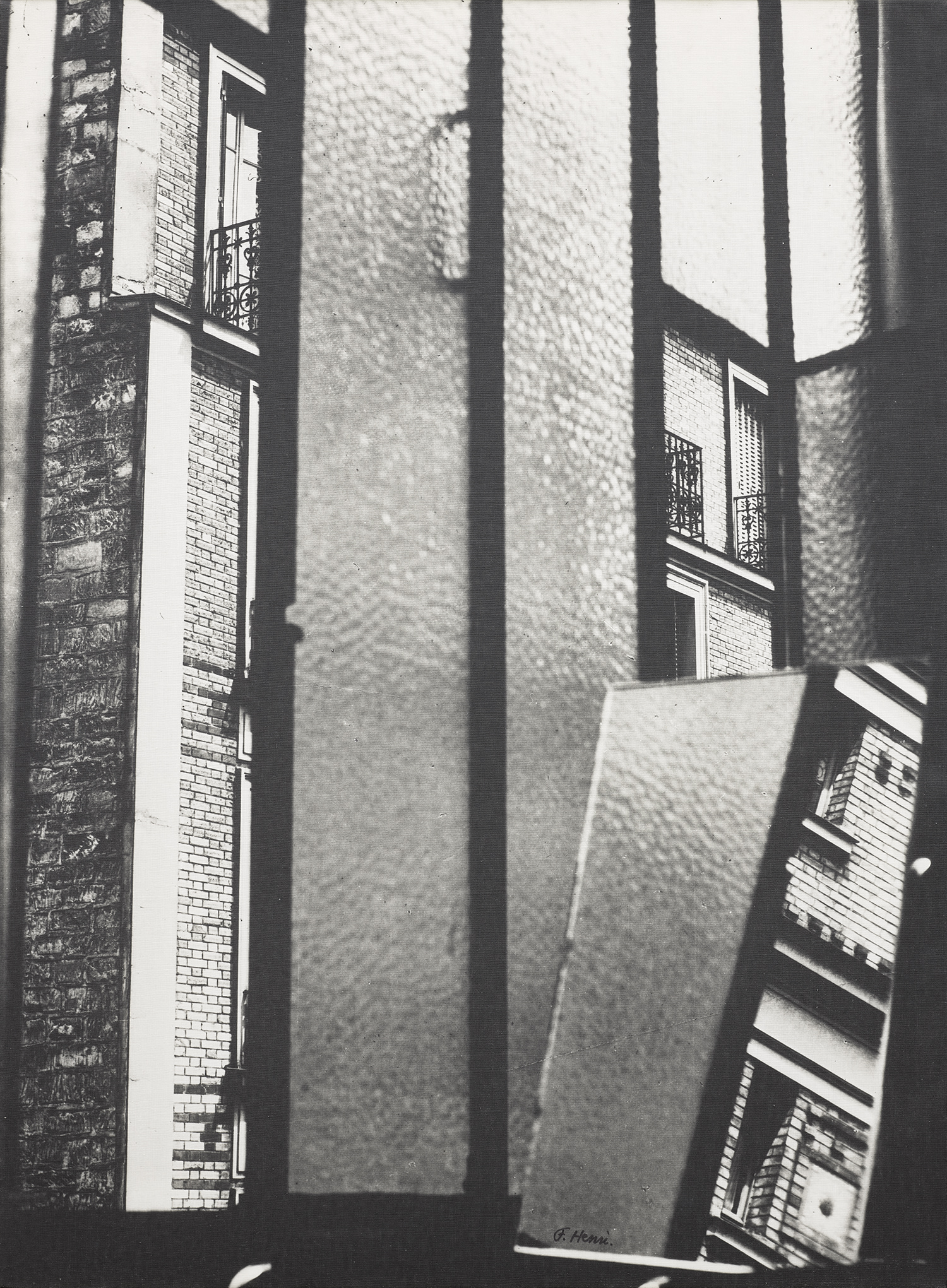
Florence Henri
Window Composition
Collectors drawn to the interwar avant garde, and to artists who worked at the intersection of Bauhaus thinking and Parisian modernism, will find in Henri a figure whose market presence has grown steadily as institutional attention has increased. Henri's place within the broader constellation of modernist photography is now firmly established. Her work invites comparison with that of Man Ray, with whom she shared a Parisian milieu and a fascination with light's capacity for transformation, and with László Moholy Nagy, whose photograms and light experiments provided an intellectual framework she both absorbed and surpassed in her own way. She is also a crucial figure in the history of women in modernism, alongside artists such as Claude Cahun, whose self portraiture explored identity through similarly destabilising visual strategies, and Germaine Krull, whose dynamic documentary photography helped define what the camera could do in skilled hands.
Henri's work sits at the centre of all these conversations without being reducible to any single one of them. Florence Henri died in Compiegne in 1982, having returned to painting in her later decades and having lived long enough to see renewed critical interest in her photographic work begin to build. The full scope of her achievement, as a Bauhaus trained thinker, a Paris based experimentalist, a commercial photographer of real sophistication, and a portraitist of extraordinary interiority, continues to come into focus. Institutions and private collectors alike are recognising that her mirrors did not simply reflect the world around her.
They reorganised it into something new, and the reverberations of that reorganisation are still being felt.
Explore books about Florence Henri
Florence Henri: Life and Work
Sarah Whitfield
Florence Henri: Artist-Photographer of the Avant-Garde
Melissa Harris
Florence Henri: Photographs
Florence Henri
Women Artists: A Historical, Contemporary and Multicultural Bibliography
Charlene M. Villaseñor Black