Firelei Báez
Firelei Báez Rewrites the World Beautifully
Artist Spotlight · The Collection Editorial
“I am interested in what it means to exist in a body that has been historically othered, surveilled, and made spectacle.”
Firelei Báez, Studio Museum in Harlem interview
When the 2024 Venice Biennale opened its doors to the global art world this past spring, Firelei Báez arrived not as a peripheral presence but as one of the most discussed and celebrated voices in the entire exhibition. Her inclusion in the world's most prestigious recurring art event confirmed what museum curators, collectors, and critics have understood for over a decade: Báez is one of the most vital painters working anywhere today. Her canvases do not simply depict figures or tell stories. They construct entire cosmologies, layering Caribbean history, African diasporic memory, botanical science, and feminist imagination into works of extraordinary density and beauty.
Firelei Báez
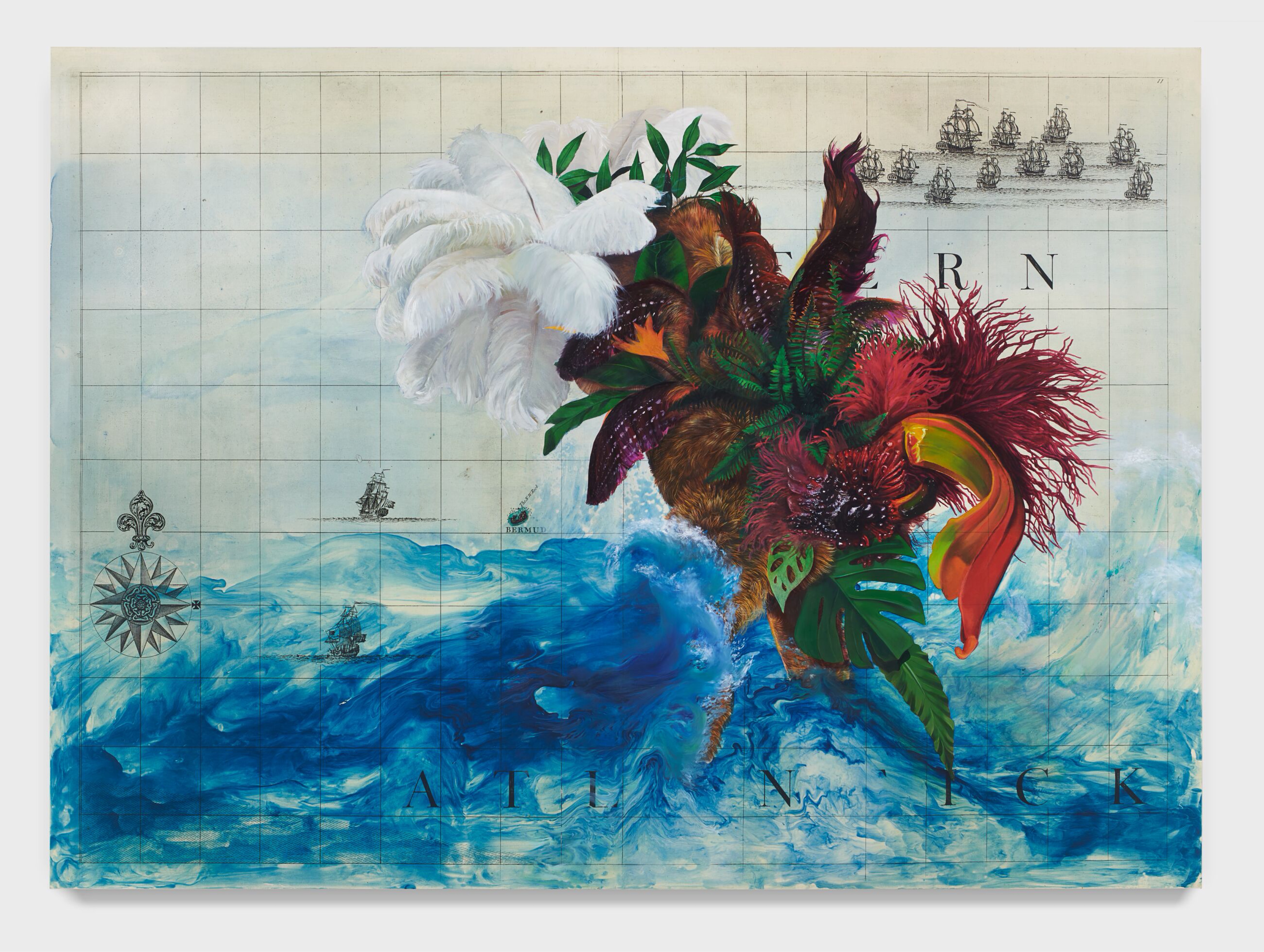
Map of the British Empire in America, 2021
Báez was born in 1981 in Santiago de los Caballeros, Dominican Republic, and grew up in Miami, Florida, navigating the particular cultural tensions of a diasporic childhood shaped by two worlds at once. That formative experience of belonging fully to neither place and imaginatively to both became the engine of her intellectual and artistic life. She pursued her MFA at the School of Visual Arts in New York City, where she began developing the rigorous research practice that underpins everything she makes. New York also immersed her in the radical curatorial and intellectual conversations happening at institutions like the Studio Museum in Harlem, which would become one of her most important early institutional champions.
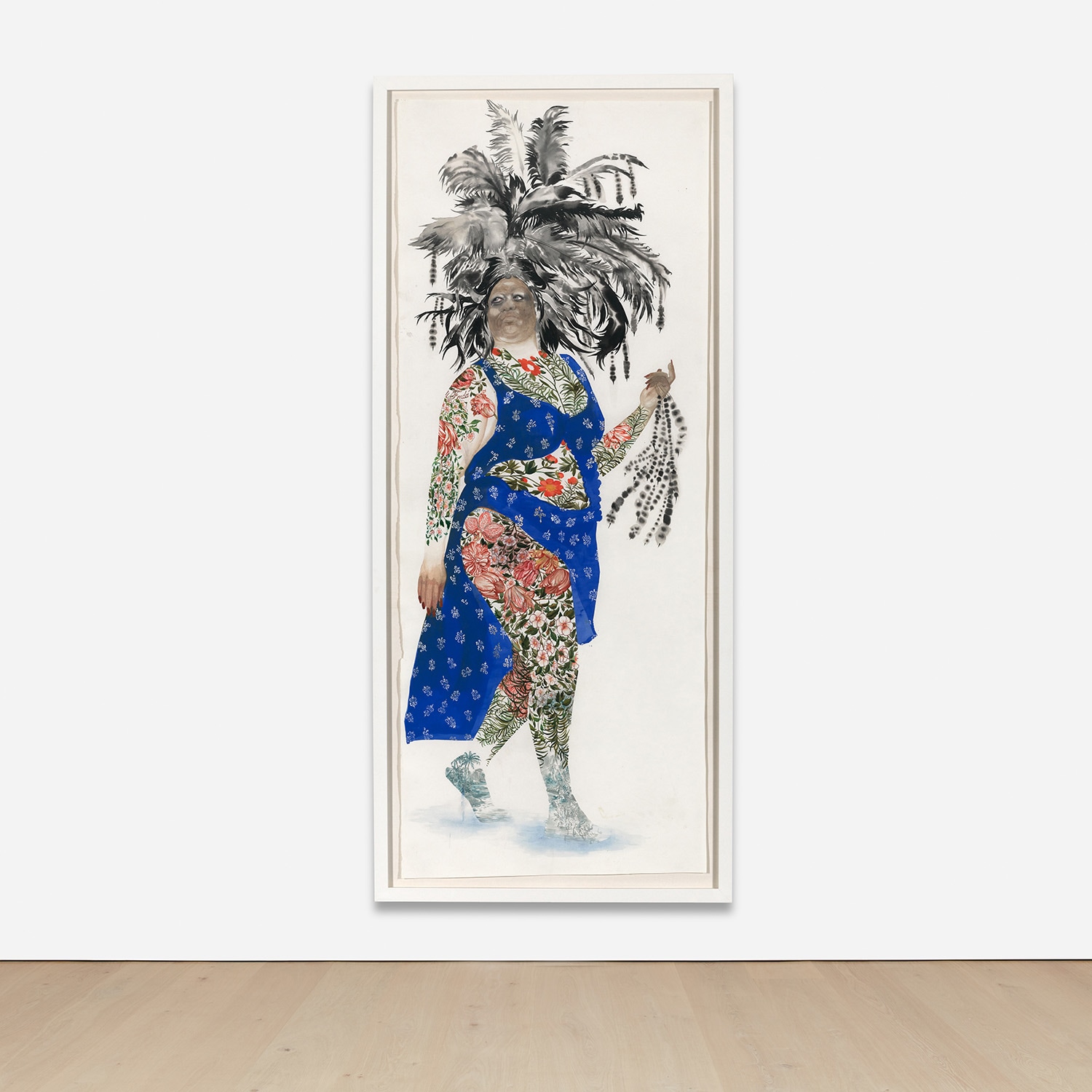
Her early career was defined by an insistent focus on portraiture rooted in the specificity of Black and Afro Caribbean womanhood. Works from the late 2000s and early 2010s, including pieces from her series Geographic Delay, introduced viewers to figures rendered in lush gouache and ink on paper. "Demetrea," from 2010, exemplifies this early period: a monumental head and torso emerge from swirling ornamental patterns drawn from textile traditions and natural history illustration. The figure is at once intimate and archetypal, a specific person and a vessel for an entire suppressed historical lineage.
Firelei Báez
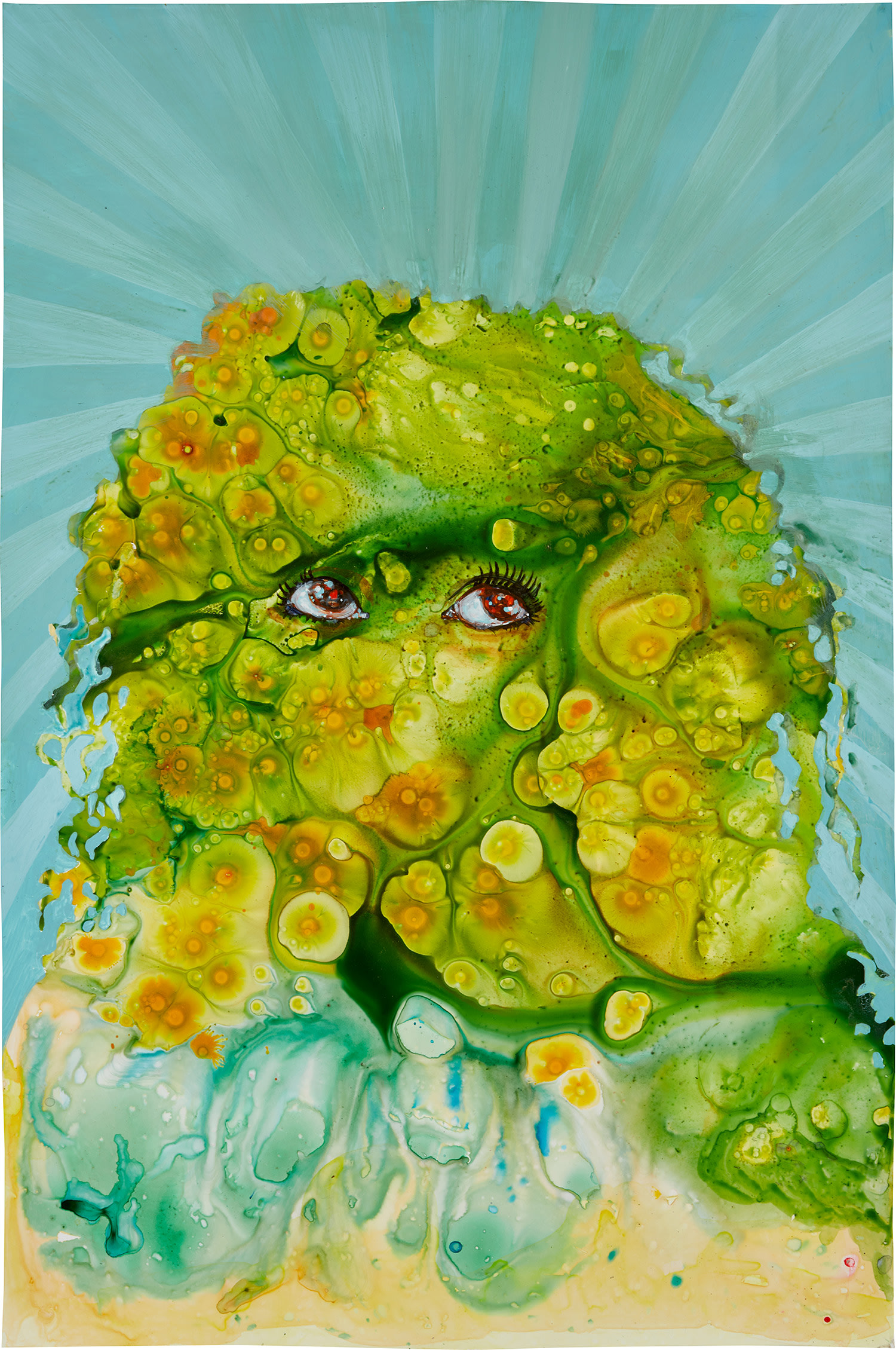
Megan (lugar a dudas), 2017
These works announced Báez as a portraitist of unusual ambition, one who understood that to paint a Black woman was to enter into an argument with centuries of erasure. As her practice deepened through the mid 2010s, Báez began layering her figures onto surfaces charged with explicit historical content. Works on Yupo paper from this period, including "Patterns of Resistance" from 2015 and "Fragments of a Crossroad" from 2016, show her expanding vocabulary with extraordinary confidence. Yupo, a synthetic paper with a slick, almost luminous surface, allowed her to achieve the kinds of bleeding, pooling effects that make her compositions feel both meticulously controlled and gloriously alive.
The figures in these paintings are surrounded by and sometimes absorbed into decorative systems derived from colonial botanical charts, cartographic projections, and architectural schematics. The effect is not chaos but counternarrative: official documents of empire reclaimed by the very people those documents were designed to surveil and suppress. The culmination of this investigation arrived with a body of large scale work that brought her to international prominence. "Map of the British Empire in America" from 2021 is among the most important paintings of the current decade.
Firelei Báez
Demetrea (from the series Geographic Delay), 2010
Executed in acrylic and oil on archival printed canvas, the work places a monumental female figure directly onto the surface of an antique imperial map. The figure does not decorate the map or illustrate it; she overwhelms it, her body and its attendant mythology far exceeding the colonial geography beneath her. It is a work of genuine historical reckoning rendered with the fluency and sensuality of a painter completely in command of her medium. For collectors fortunate enough to have acquired works from this period, the significance only deepens with time.
Báez has shown extensively at institutions that have shaped contemporary art's engagement with diasporic and decolonial thought. Her exhibitions at the Whitney Museum of American Art and the Studio Museum in Harlem placed her within a lineage of artists rethinking what American art is and who it belongs to. Her installations, which often extend the logic of her paintings into architectural space, have demonstrated that her vision is not limited to the picture plane. She has an instinct for the immersive and the transformative that makes her one of the rare painters who can also credibly claim the title of installation artist.
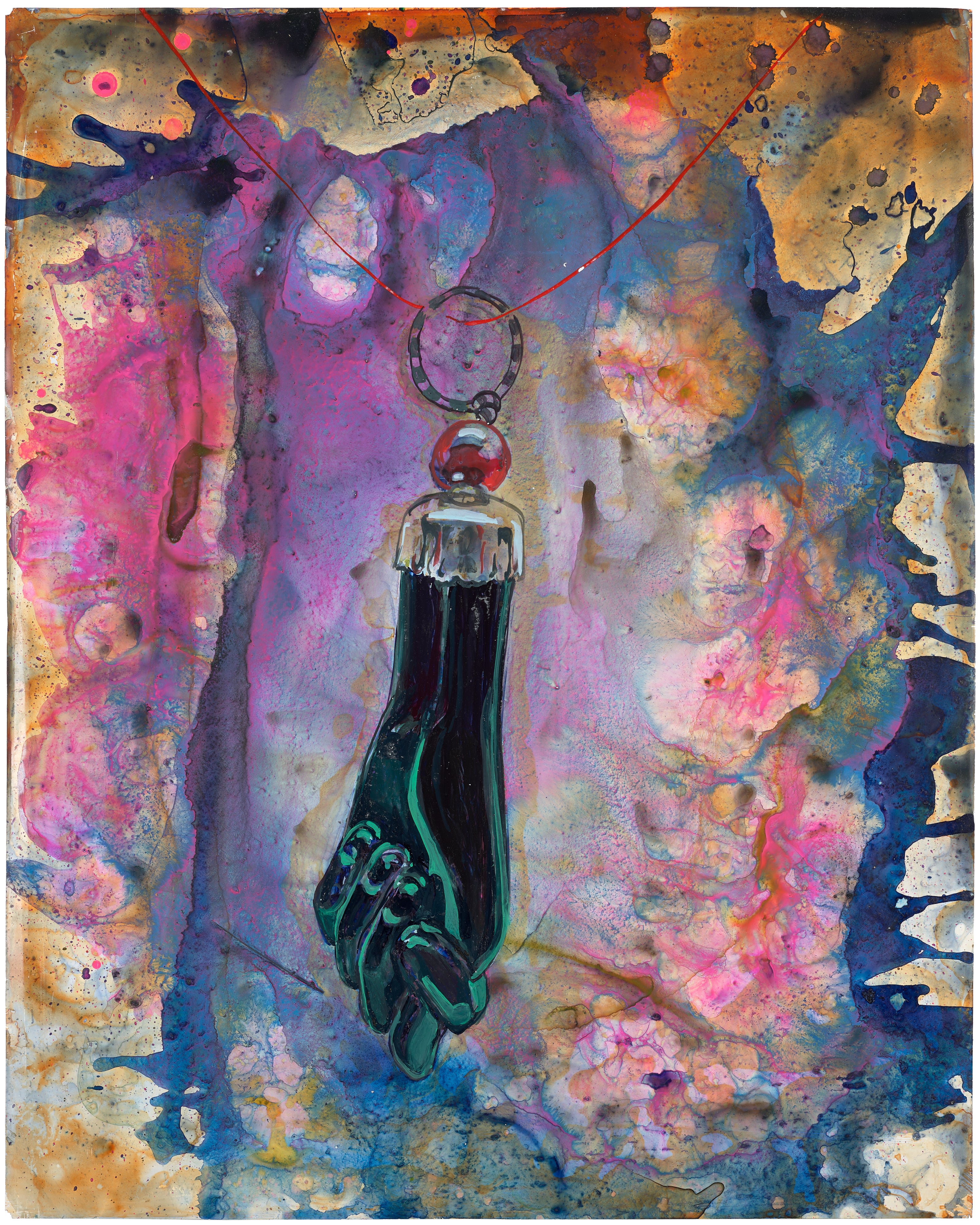
Firelei Báez
Fragments of a crossroad, 2016
From a collecting perspective, Báez occupies a position of unusual strength. Her work on paper, including early pieces in gouache and ink, represents an entry point into a practice that has consistently appreciated in institutional and critical standing. Her larger canvases and Yupo works are increasingly sought after by major collections in the United States and Europe. What distinguishes her market from those of some of her peers is the genuine breadth of her audience: she is collected by institutions, by dedicated contemporary art collectors, and by individuals drawn to the intersection of beauty and historical conscience that her work so consistently achieves.
Works from her key series, particularly those from the mid 2010s onward, carry the strongest long term resonance. In the broader sweep of art history, Báez belongs to a generation of painters that includes artists like Titus Kaphar, Toyin Ojih Odutola, and Amy Sherald, all of whom have interrogated portraiture as a site of historical and political meaning. But Báez's particular synthesis of Caribbean cosmology, natural history, and feminist theory gives her work a character entirely her own. Her closest intellectual ancestors might be found in the Afro surrealism of Cuban painter Wifredo Lam or in the layered cultural negotiations of Kehinde Wiley, though her voice is too singular to rest comfortably in any comparison.
What Firelei Báez has built over the past fifteen years is not simply a body of work but a new visual language for thinking about history, belonging, and the radical act of centering lives that official record keeping preferred to ignore. Her presence at Venice in 2024 was not an arrival so much as a confirmation. She has been doing this work with devotion and brilliance for years, and the world is still catching up to the full measure of what she has already made. For collectors and admirers who understand that the most meaningful art holds beauty and conscience in equal tension, Báez is essential.
Explore books about Firelei Báez