Felipe Baeza
Felipe Baeza: Bodies Blooming Into Brilliant Being
Artist Spotlight · The Collection Editorial
In the past several years, Felipe Baeza has emerged as one of the most urgently discussed figurative artists working in New York today. His solo exhibition at Maureen Payne Hirchl and later presentations through Nino Mier Gallery brought sustained critical attention from Artforum, Frieze, and the New York Times, each publication reaching for new vocabulary to describe work that refuses easy classification. Museums and institutions including the Whitney Museum of American Art have included his work in group exhibitions examining contemporary figuration and queer identity, placing him in conversation with artists a generation older while confirming him as a vital voice in his own right. The art world has taken notice in a decisive way, and the collecting community is following closely.
Felipe Baeza
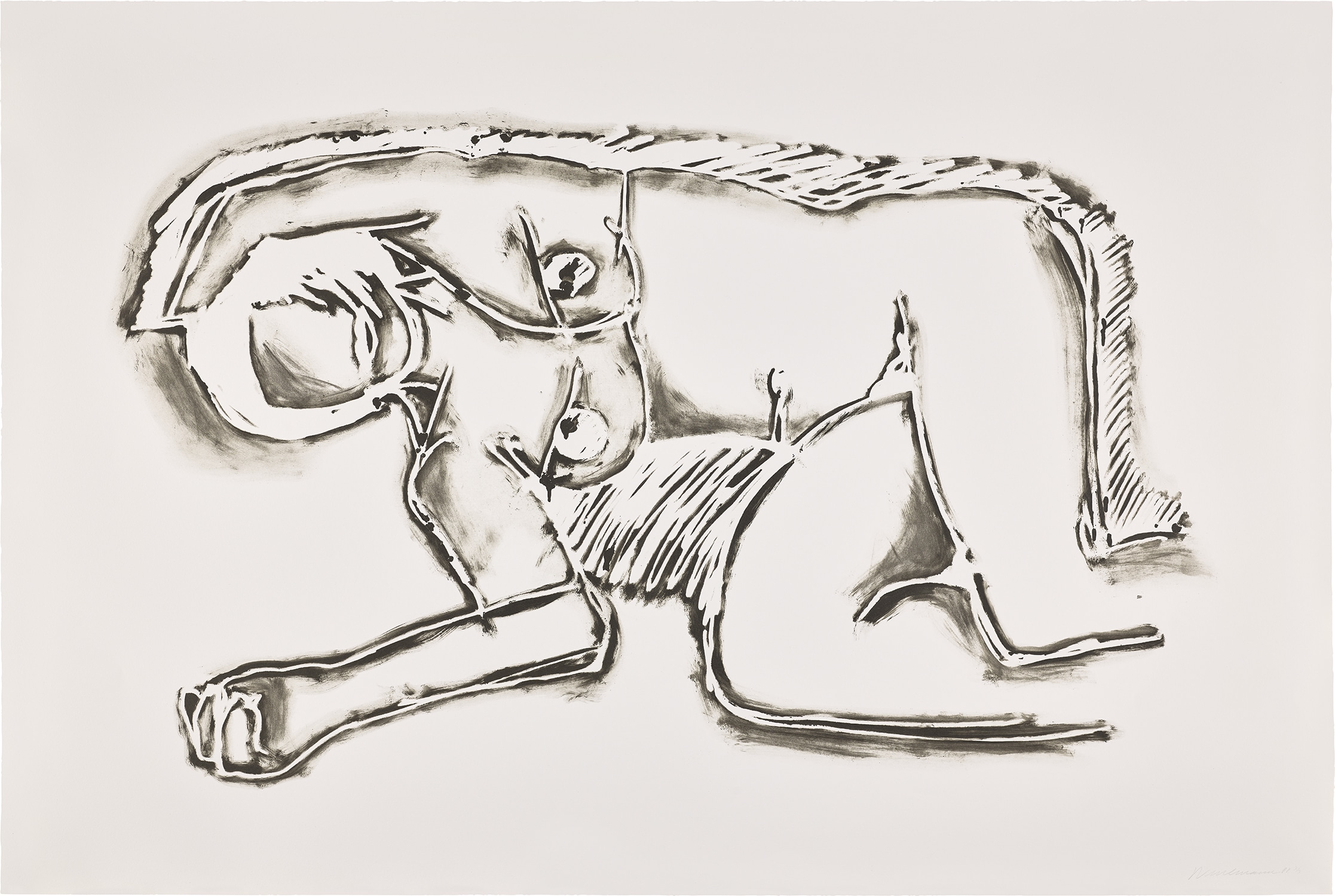
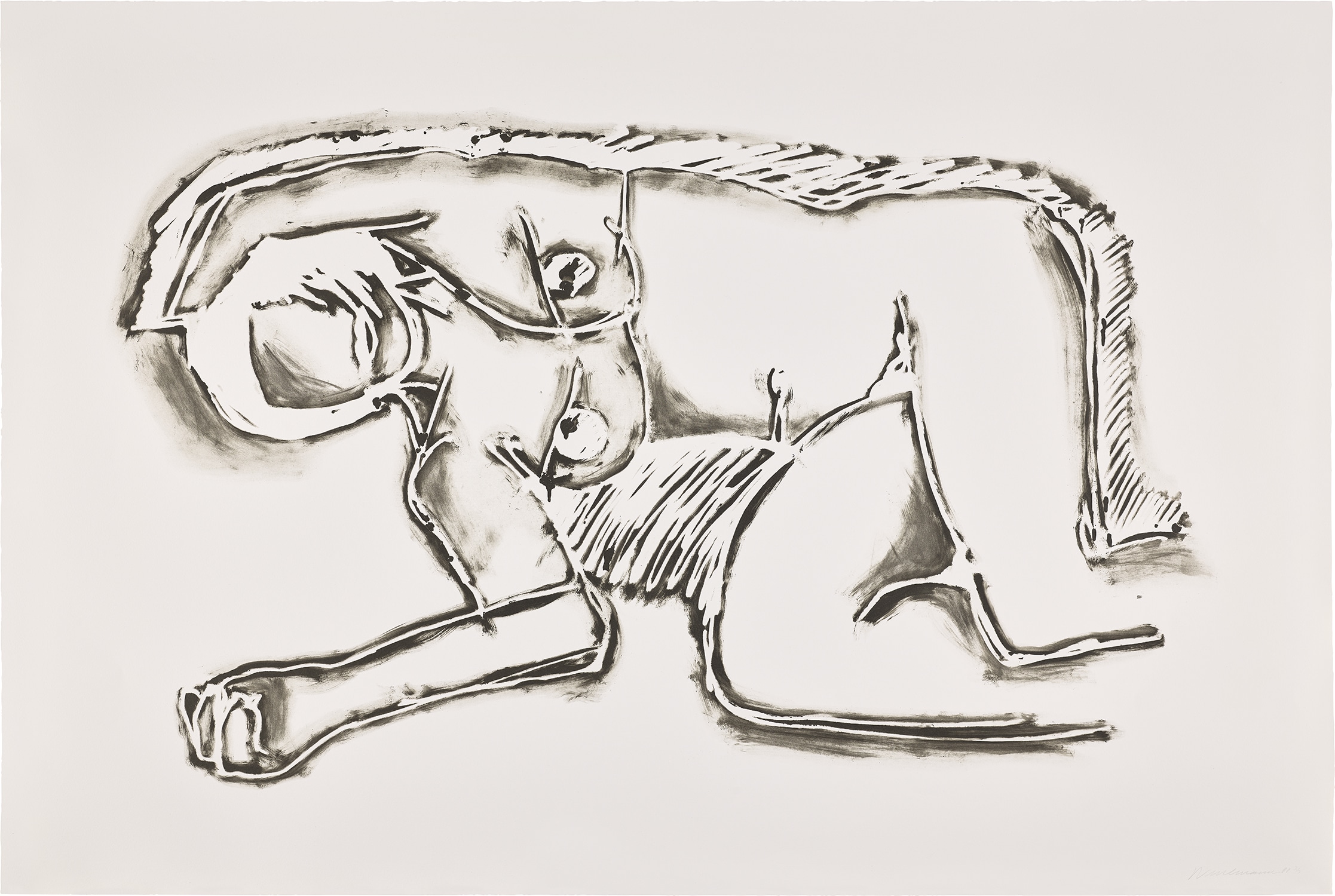
SK Look
Baeza was born in Mexico in 1987 and came to the United States as a young person, an experience that would come to shape everything about his artistic sensibility. The displacement and negotiation of identity that accompany migration became not just a biographical footnote but a living formal language, one he has spent years translating into ink, graphite, and collage on paper. He studied at the School of the Art Institute of Chicago and later at Yale University, where he received his MFA, training that gave him rigorous technical grounding while sharpening his instinct for the kinds of images that existing art history had not yet made space for. The combination of a deeply personal subject matter and a genuinely ambitious formal education produced an artist of uncommon seriousness.
His development has been marked by an increasing density and confidence. Early works showed a fascination with the fragmented body and with organic growth as a metaphor for survival and becoming, but over time these concerns have deepened into something richer and more cosmologically expansive. He draws on Mesoamerican mythologies, queer theory, botanical illustration, and the visual traditions of the diaspora, weaving these references into compositions that feel simultaneously ancient and urgently contemporary. The paper itself becomes a kind of ground that is never passive.
Felipe Baeza
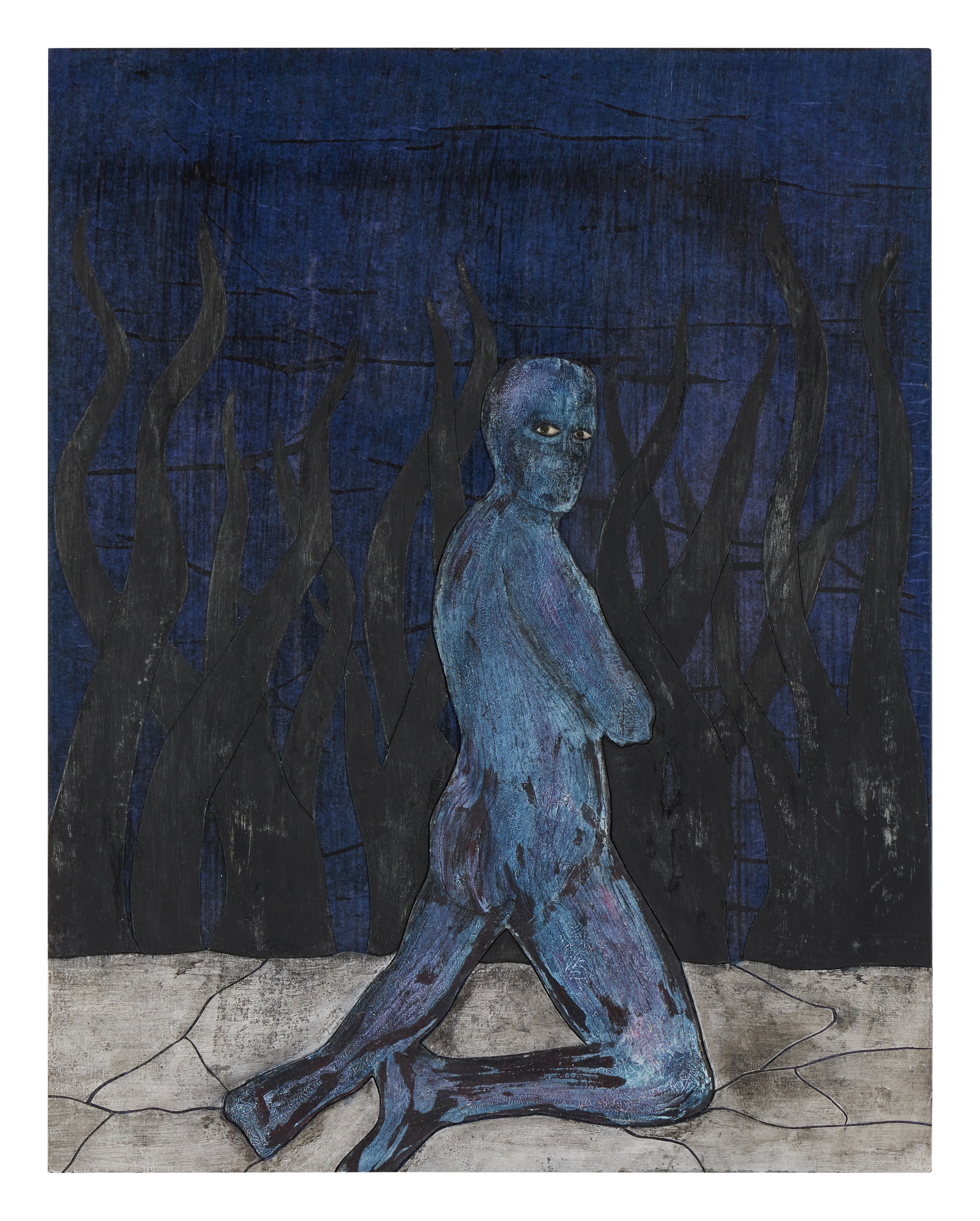
La Luz En Lo Obscuro, 2018
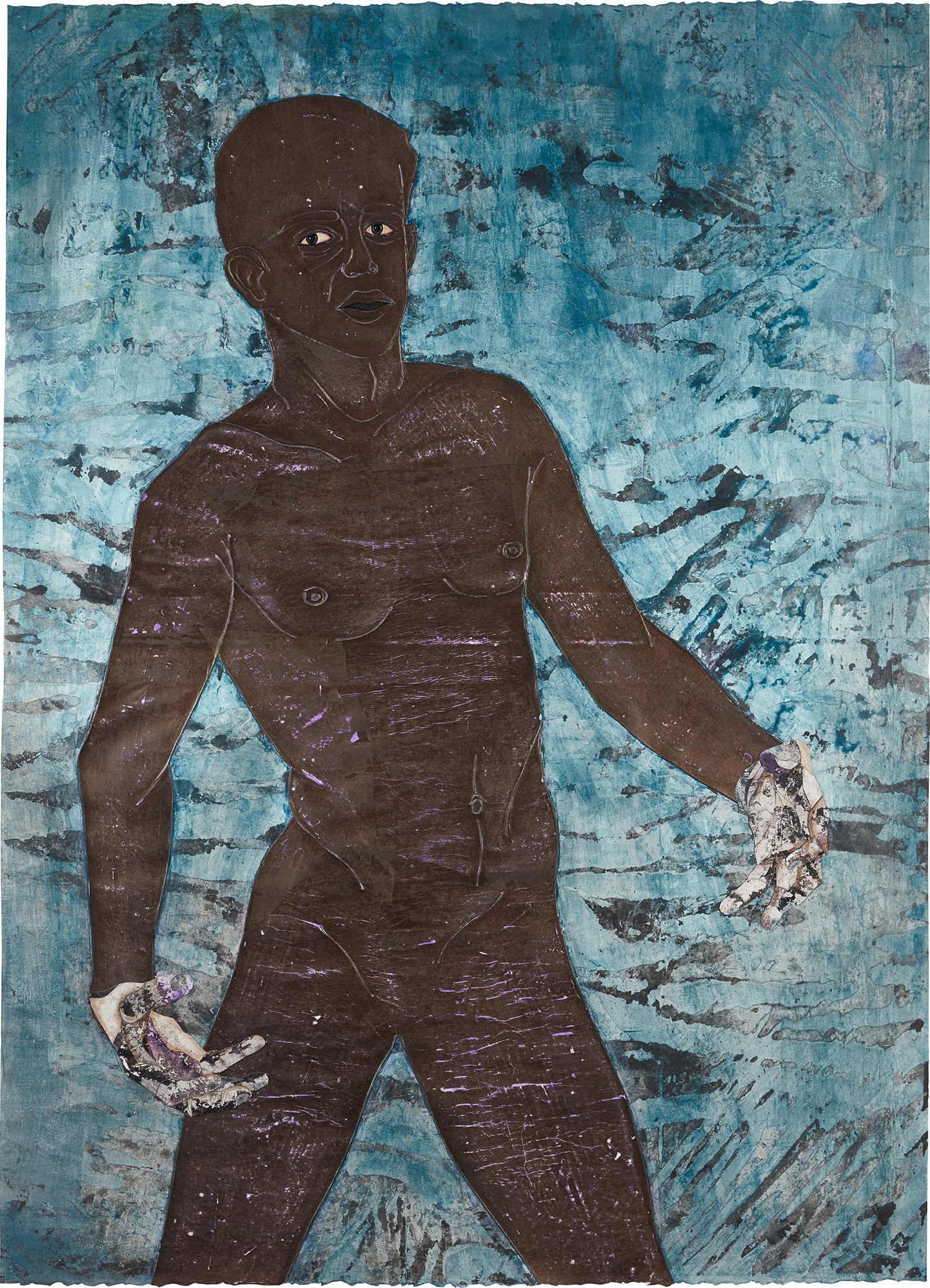
He works across sheets that are adjoined, cut, layered, and built up with materials including egg tempera, twine, glitter, and acrylic, producing surfaces that reward sustained looking in the way that only genuinely complex works can. Among his most celebrated works are the two 2017 panels known as Xipe Totec Rojo and Xipe Totec Morado, both executed in ink, graphite, acrylic, twine, glitter, cut paper, and egg tempera across two adjoined sheets. These works invoke the Aztec deity of agriculture, renewal, and the cycle of death and regeneration, a figure associated with the shedding of skin as a symbol of transformation. In Baeza's hands, this mythological reference becomes something personal and political simultaneously: the body that sheds and survives is the migrant body, the queer body, the body that has been asked to become something other than itself and has instead chosen its own form of becoming.
La Luz En Lo Obscuro, a 2018 work on panel combining graphite, acrylic, watercolor, cut paper, and egg tempera, extends this inquiry into luminosity itself, a figure caught in or perhaps generating its own light from within darkness. The title, which translates loosely as the light in the obscure, carries the resonance of Gloria Anzaldua's landmark text and signals the depth of intellectual and literary engagement that underpins Baeza's visual practice. For collectors, Baeza's works on paper and his etchings represent a particularly compelling area of focus. His printmaking practice, including etchings and aquatints produced on Hahnemuhle and wove papers, some with glitter additions as in the Ahuehuete en La Noche series, extends the visual complexity of his unique works into editions that allow broader access without any diminishment of feeling.
Felipe Baeza
Xipe Tótec Morado, 2017
The Ahuehuete, a sacred cypress tree native to Mexico and one of the oldest living organisms in the Americas, appears in these prints as a figure of monumental memory and quiet endurance, qualities that collectors consistently find resonant. Works like SK Look, realized as an etching and aquatint in colors, demonstrate his ability to translate his layered sensibility into the printmaking medium with full integrity. Prices for works on paper and editions remain accessible relative to where critical attention suggests they are heading, and advisors who have followed his career closely regard this moment as genuinely significant for collectors building thoughtful, historically aware collections. In the broader context of contemporary art, Baeza belongs to a generation of artists renegotiating the terms of figuration after decades in which painting and drawing of the human body were either declared exhausted or confined to narrow acceptable modes.
He is in productive dialogue with artists such as Tiona Nekkia McClodden, Firelei Baez, and Henry Taylor, each of whom approaches the body as a site of history, imagination, and political possibility. The influence of Kara Walker's engagement with silhouette and shadow can be felt in his use of cut paper, while his layering of mythological and personal reference recalls the synthetic ambition of Jean Michel Basquiat. Yet Baeza is emphatically his own proposition, and the specificity of his iconographic world, rooted in Mexican cosmology, queer experience, and the lived texture of undocumented life, is not reducible to any single predecessor. What Baeza ultimately offers is a vision of the body not as a fixed thing but as an ongoing event, something that is always in the process of becoming, always entangled with the natural world, with other bodies, with histories that precede it and futures it cannot yet name.
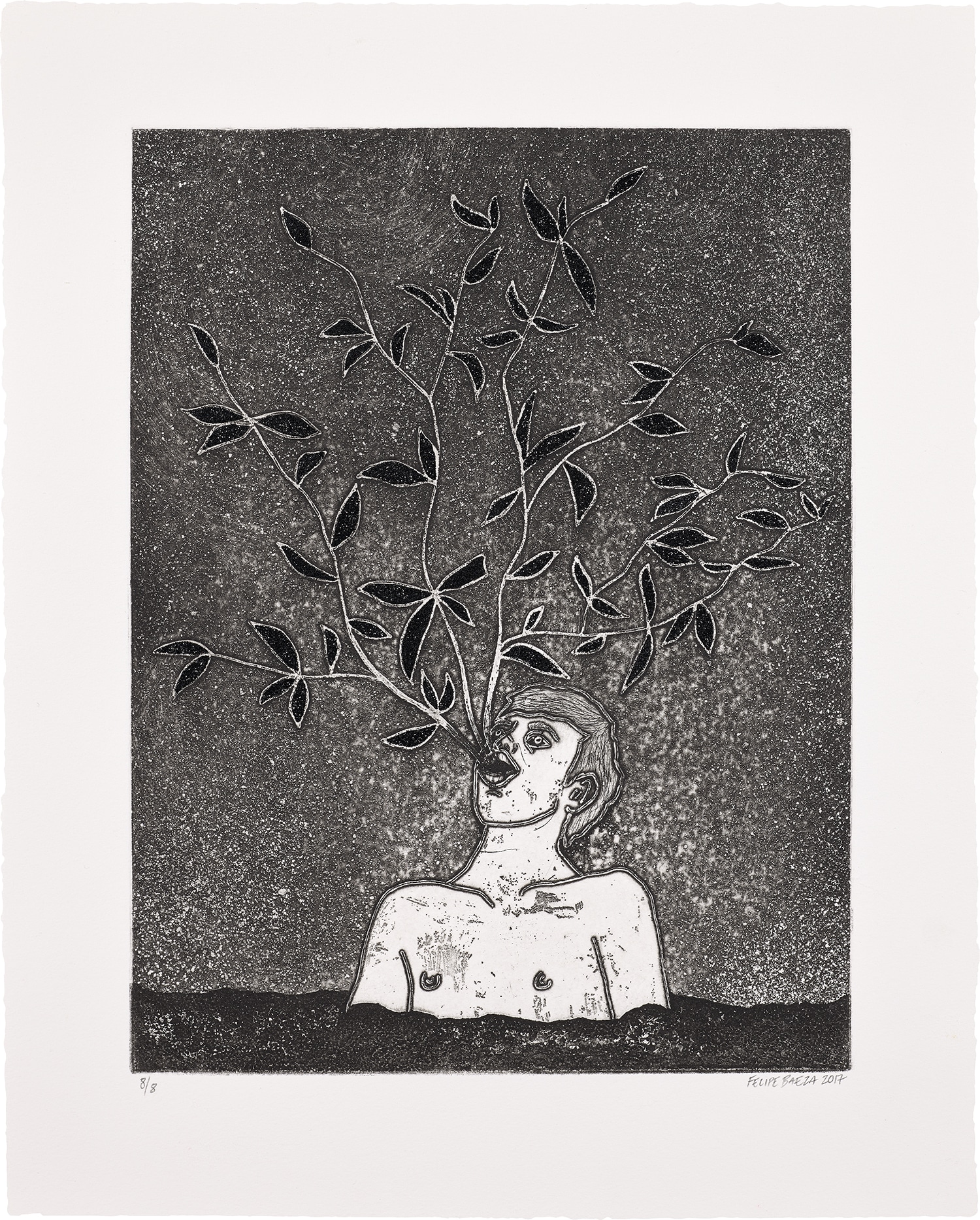
Felipe Baeza
Ahuehuete en La Noche (Ahuehuete at Night)
In a cultural moment that is grappling seriously with questions of migration, belonging, and who gets to be seen as fully human, his work arrives with the force of necessity. Collectors who acquire Baeza's work are not simply adding a beautiful object to a wall, though his works are undeniably beautiful. They are participating in an artistic project of genuine moral and aesthetic seriousness, one that is still very much in motion and that promises, given the trajectory of his first decades, to grow only more extraordinary with time.