何藩 Fan Ho
Fan Ho: Light, Shadow, and Pure Magic
Artist Spotlight · The Collection Editorial
“I tried to paint with light, using the camera as my brush.”
Fan Ho
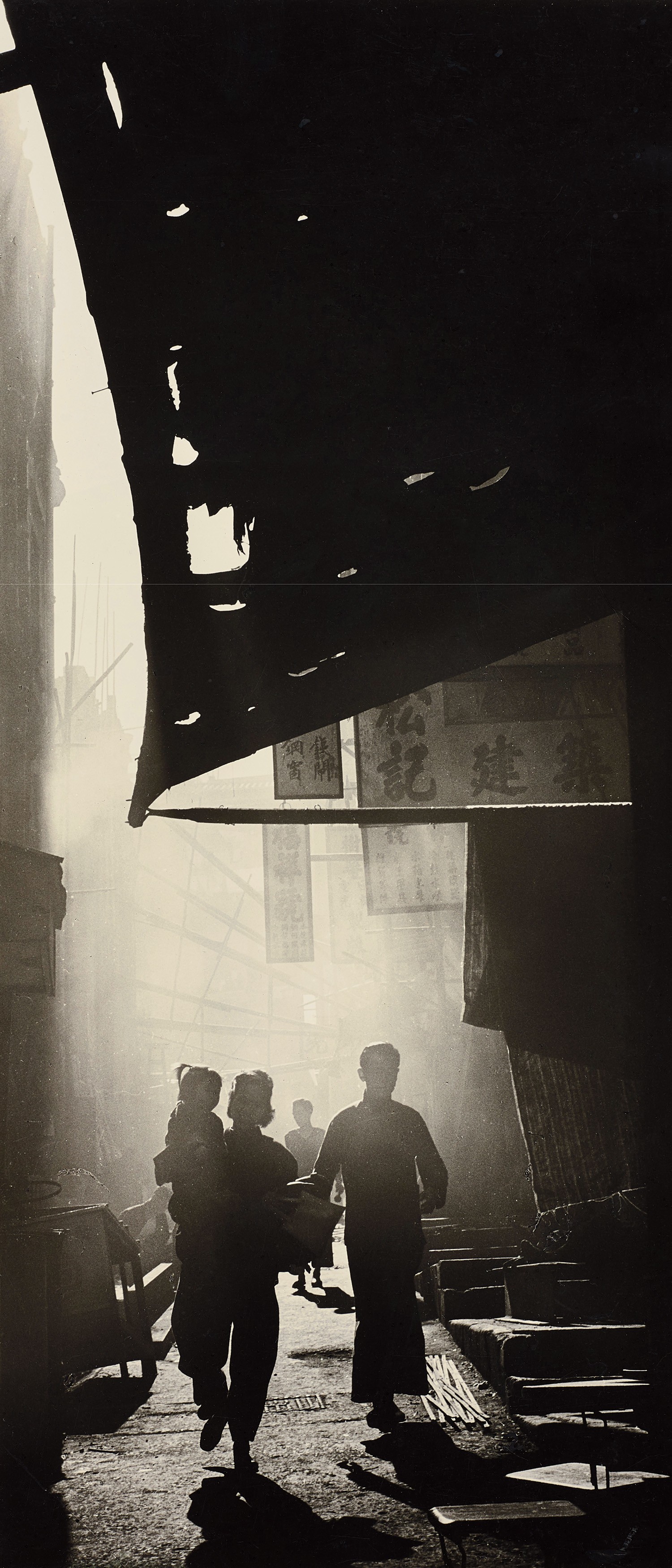
There is a photograph that stops you cold. A lone figure moves through a Hong Kong alleyway, head bowed against the rain, while shafts of silver light cut through the humid air above. The image is called "It's Raining," and it was made sometime in the 1950s by a young man who had picked up a camera and, almost immediately, begun to see the world differently from everyone else. Fan Ho, known in Chinese as 何藩, spent roughly a decade walking the streets of Hong Kong with a Rolleiflex and an eye trained on the fleeting, the luminous, and the deeply human.
何藩 Fan Ho
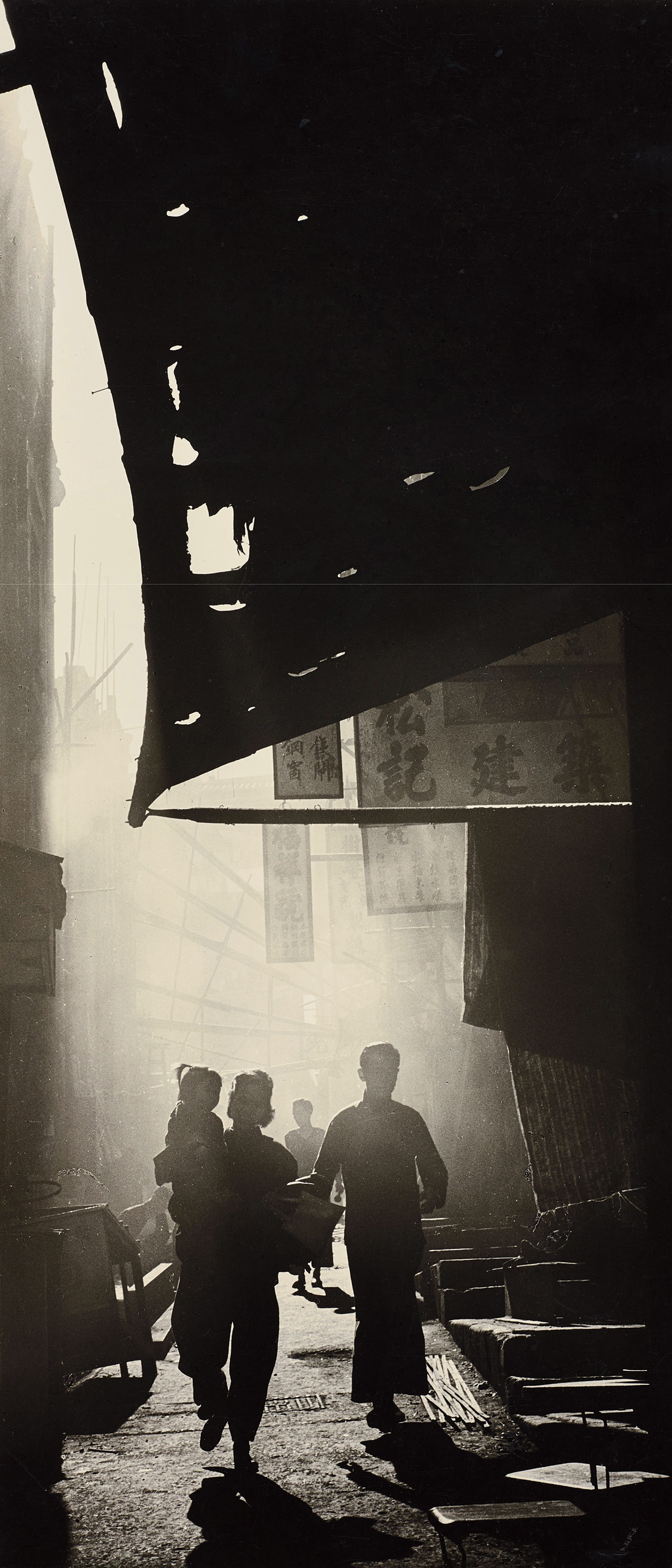
Hurrying Home
The resulting body of work stands as one of the great achievements in twentieth century photography, and its influence continues to grow with every passing year. Fan Ho was born in Shanghai in 1931, into a family that nurtured his early interest in the arts. His father gave him his first camera when he was a teenager, and the gift proved transformative. When the family relocated to Hong Kong in 1949 amid the upheaval that reshaped mainland China, Fan Ho found himself in a city that was itself in flux: densely populated, industrially alive, layered with poverty and energy and an extraordinary quality of morning light that filtered through tenement staircases and market stalls in ways that seemed almost designed for the photographic eye.
He was, by fortune and by instinct, exactly the right person in exactly the right place. His formation as an artist was largely self directed. He studied the work of Henri Cartier Bresson and was moved by the decisive moment philosophy, though Fan Ho would develop something more meditative and architecturally composed than the rapid instinct Cartier Bresson prized. He was equally drawn to the traditions of Chinese ink painting, and one can feel that inheritance in the tonal range of his gelatin silver prints: the deep blacks that anchor a composition, the luminous mid tones that suggest rather than describe, the negative space that breathes.
何藩 Fan Ho
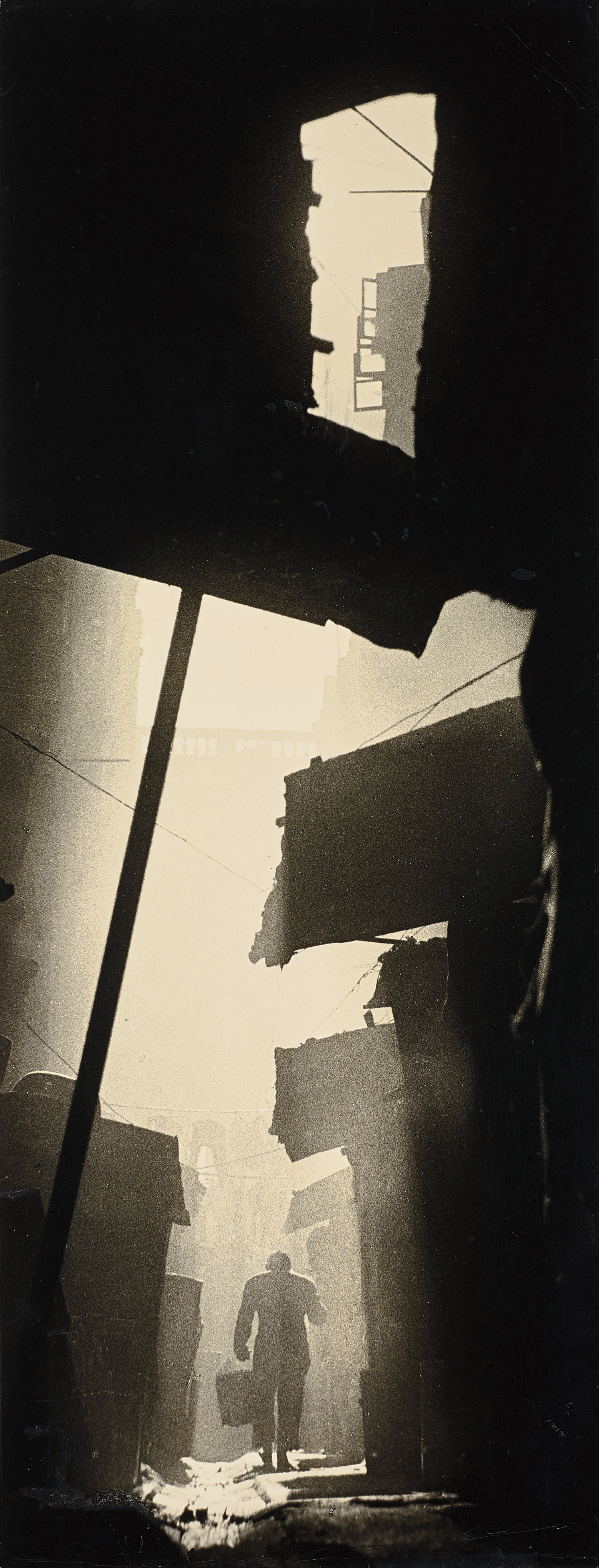
Hong Kong Slum
He entered his photographs in international salons and competitions throughout the 1950s and 1960s and won over 280 awards from photographic societies around the world, a staggering record that established him as a figure of genuine global standing. The work for which Fan Ho is best remembered centers on the streets, markets, harbors, and rooftops of Hong Kong before modernization transformed the city beyond recognition. "Hurrying Home" captures a woman moving through a colonnade of light and shadow, her silhouette precise against the luminous ground, the geometry of the scene as considered as anything in classical painting. "Hong Kong Slum" turns the grim facts of poverty into something unexpectedly tender and monumental, finding dignity in the stacked textures of a hillside settlement.
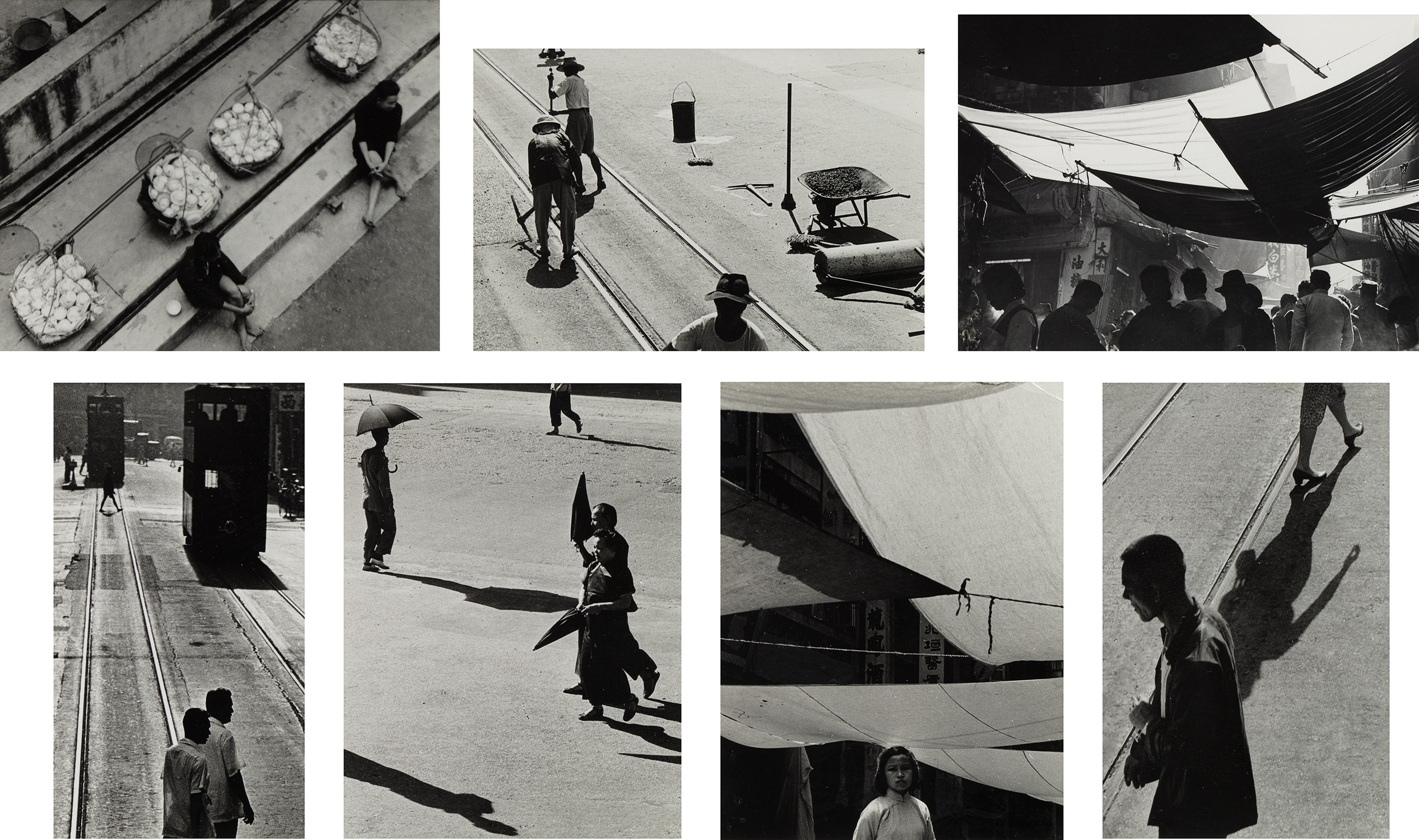
"Road Workers" frames laborers within an almost abstract grid of industrial light, honoring their presence while elevating the image to the condition of sculpture. These are not documentary photographs in any purely journalistic sense. They are composed pictures, made by someone who understood that the street was a stage and that patience, positioning, and an absolute command of available light could produce images of lasting consequence. What makes Fan Ho's prints so technically distinctive is his mastery of what photographers call available light in its most dramatic and directional forms.

何藩 Fan Ho
Road Workers
He sought out the moments when sunlight plunged between narrow buildings at acute angles, when smoke from street vendors or cooking fires diffused the background into a silvery atmospheric haze, when a single shaft of illumination isolated a human figure against darkness and gave that figure an almost sacred weight. Comparisons to the paintings of Rembrandt van Rijn are not fanciful. The emotional architecture of light in Fan Ho's work has the same quality of revealing character through illumination, of suggesting that something important is happening just at the edge of what the eye can hold. For collectors, Fan Ho's market has deepened considerably since the late 2000s, when a new generation of curators, collectors, and institutions began reassessing the history of Asian photography with fresh seriousness.
His gelatin silver prints, particularly those printed during his most active years in the 1950s and 1960s as well as carefully supervised later printings, are held in private collections across Hong Kong, mainland China, the United States, and Europe. Works such as the "Selected Images (Hong Kong)" series in seven gelatin silver prints represent an excellent entry point for collectors who want to understand the full range of his vision across a single acquisition. Auction results at major houses have reflected growing demand, with prices rising steadily as the art world has come to situate Fan Ho alongside the canonical figures of twentieth century street photography. The relative scarcity of vintage prints only deepens the appeal.
何藩 Fan Ho
Selected Images (Hong Kong)
Fan Ho's place in art history is best understood within two overlapping conversations. The first is the global tradition of humanist street photography that includes Henri Cartier Bresson, Brassai, Vivian Maier, and Saul Leiter, all of whom found the city to be an inexhaustible theatre of light and human gesture. The second is the emerging critical reassessment of Asian modernism, which has brought figures such as Japanese photographer Ikko Narahara and Taiwanese photographer Chang Chao Tang into the same frame of serious international discourse that Fan Ho increasingly occupies. He was never a peripheral figure in this history.
He was always central to it, and the current moment is simply catching up to what those who knew his work understood from the beginning. Fan Ho went on to have a remarkable parallel career as a filmmaker in Hong Kong cinema, directing and acting in numerous productions through the 1960s and 1970s, but it is the photographs that have secured his immortality. He died in 2016, leaving behind an archive that feels, if anything, more urgent and more beautiful with the passage of time. The Hong Kong he photographed is largely gone, replaced by the glass and steel of one of the world's most vertical cities.
That makes his images function simultaneously as art and as memory, as pure visual music and as irreplaceable historical testimony. To collect Fan Ho is to hold something that cannot be remade: a particular quality of light falling on a particular street at a particular moment in a city that was alive in ways the camera alone could fully see.
Explore books about 何藩 Fan Ho