Eve Sussman
Eve Sussman Rewrites Time Through Cinema
Artist Spotlight · The Collection Editorial
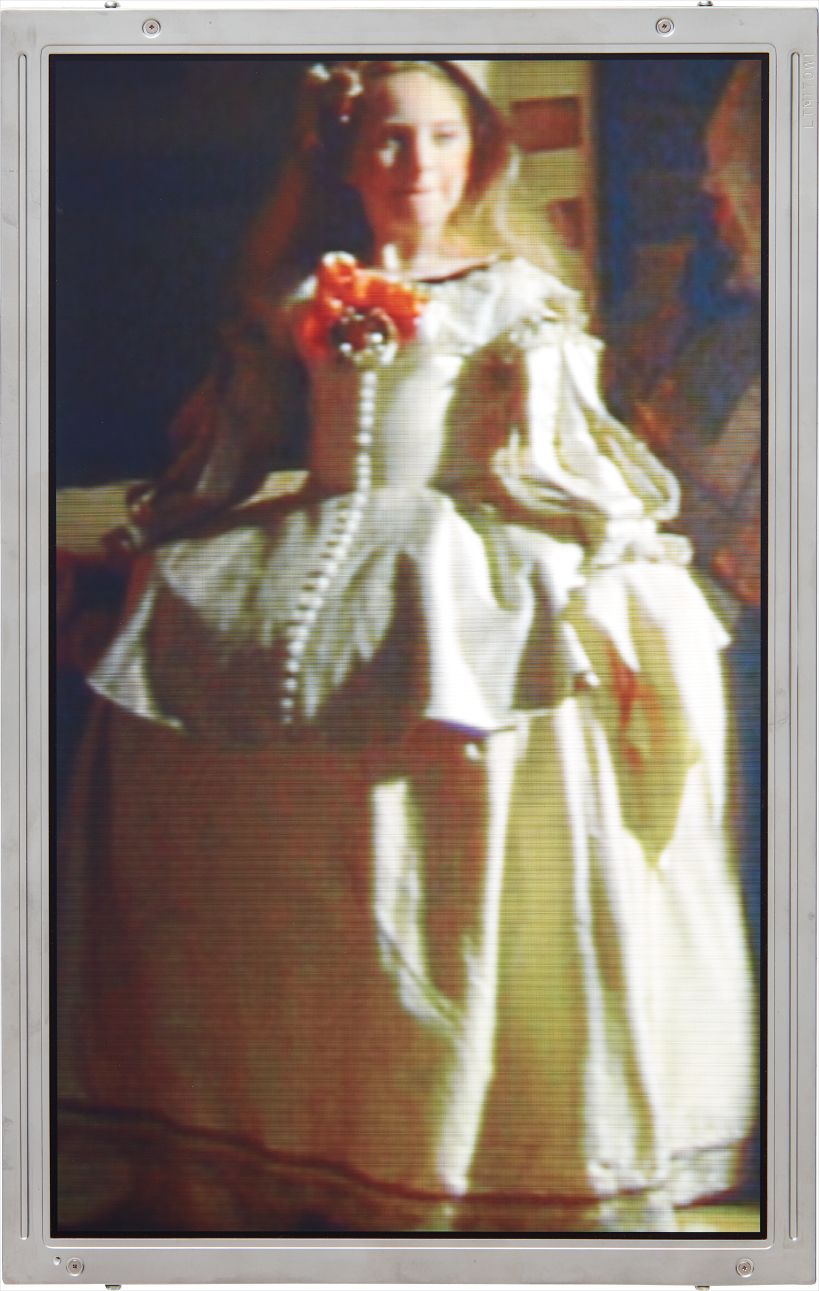
When '89 Seconds at Alcázar' premiered at the Whitney Biennial in 2004, it stopped visitors in their tracks. The six minute looping video installation depicted the moments before and after Velázquez painted 'Las Meninas' in 1656, conjuring the Spanish court with an uncanny stillness and sensory precision that felt simultaneously ancient and radically contemporary. Critics reached for superlatives. Museum directors took note.
Eve Sussman
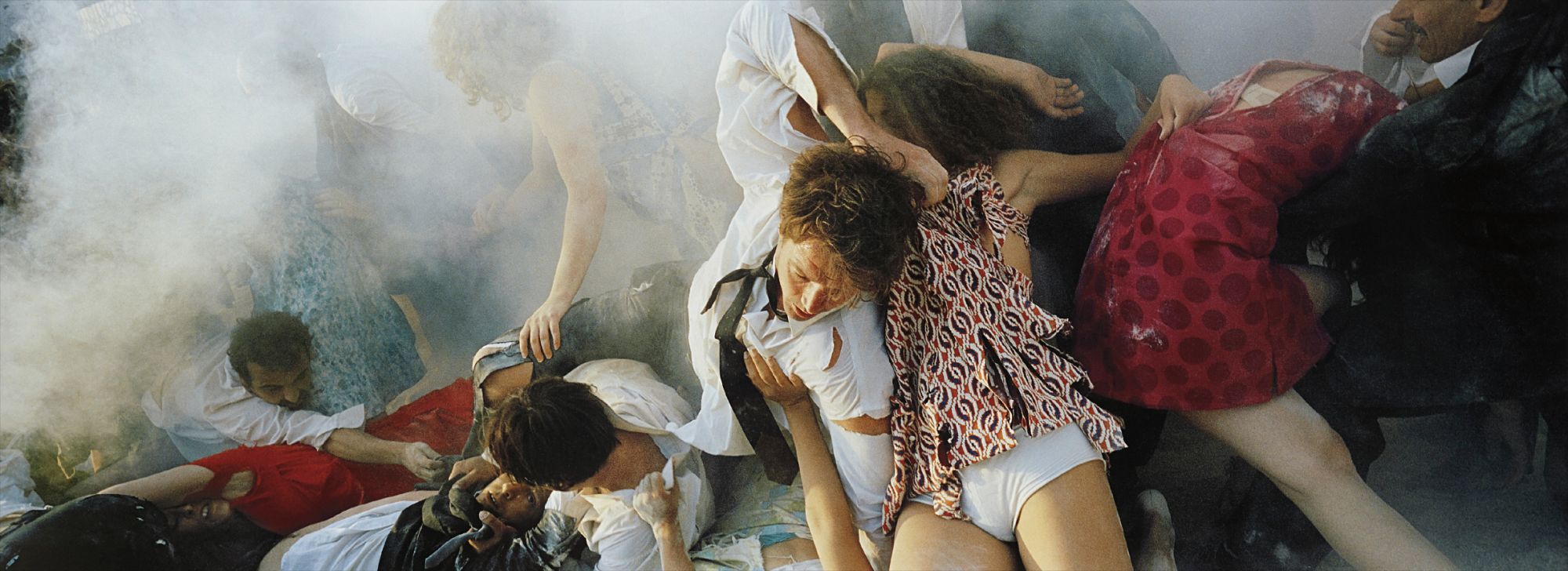
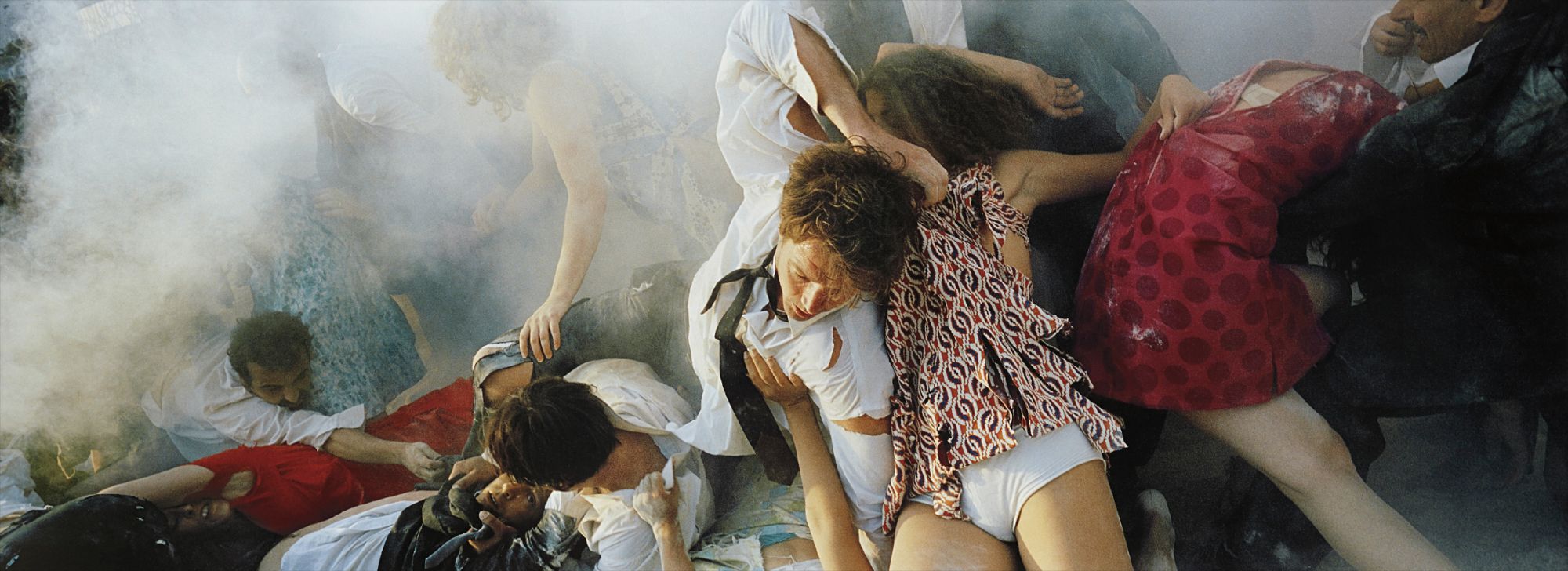
Grayson Rises (photographic still from The Rape of the Sabine Women)
And a conversation began about what it means to enter a painting rather than simply observe it, a conversation that Eve Sussman has continued to drive for more than two decades. Sussman was born in 1961 and came of age in an America where the boundaries between disciplines were being actively dismantled. Her formation drew from film, performance, and visual art in equal measure, and she has spoken of her deep interest in the way cinema constructs reality, not merely records it. That sensibility, the idea that a moving image can be a philosophical proposition rather than simple documentation, became the animating principle of her practice from its earliest stages.
She studied in the United States and spent formative time in Europe, absorbing the visual cultures of both, and the tension between American conceptualism and European art historical tradition runs as a productive undercurrent through everything she makes. Her collaborative model has been central to how she works. The Rufus Corporation, the collective she founded and leads, functions less like a production company and more like a research laboratory. It brings together artists, writers, musicians, architects, and technologists to develop projects of genuine ambition, works that require months or years of preparation and that resist easy categorization.
Eve Sussman
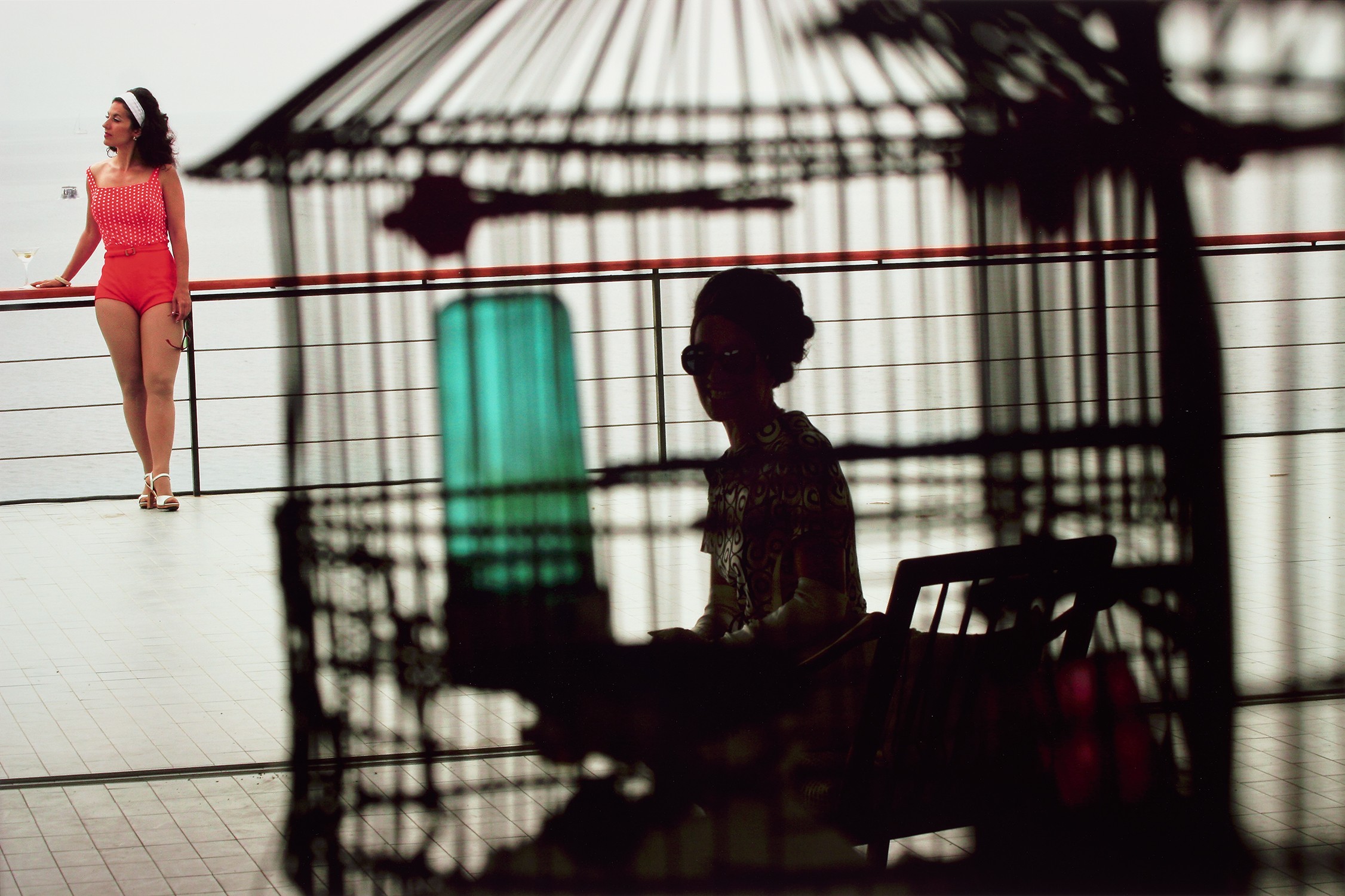
Themis in the Birdcage (film still from Rape of the Sabine Women)
This openness to collaboration reflects both a philosophical commitment and a practical recognition that the kinds of questions Sussman wants to ask require more than one kind of expertise to answer. The result is work that feels expansive and rigorously thought through, never the product of a single sensibility working in isolation. The breakthrough of '89 Seconds at Alcázar' transformed her international profile almost overnight. The work entered the collection of the Whitney Museum of American Art and was subsequently shown at venues including the Sundance Film Festival and art institutions across Europe.
Its achievement was conceptual as much as aesthetic: by imagining the periphery of one of Western painting's most analyzed images, Sussman found a way to ask profound questions about visibility, power, gender, and the act of representation itself. Who is seen, who watches, and who decides the frame of looking? These questions animate the work with an urgency that transcends its period setting. The costumes, the light, the spatial choreography, and the sound design all serve a larger intellectual proposition without ever feeling academic or dry.
Eve Sussman
The Infanta Portrait (from 89 Seconds at Alcázar), 2004
The photographic stills from her subsequent project, 'The Rape of the Sabine Women,' extend these concerns into a completely different register. Works such as 'Grayson Rises,' 'Themis in the Birdcage,' and 'The Wolf in Tempelhoff' exist simultaneously as autonomous art objects and as documents of a larger cinematic undertaking. Printed as digital chromogenic prints and flush mounted on aluminum, they carry the material confidence of the medium at its most resolved. The images draw on the mythological subject while transposing it into contemporary and mid twentieth century European settings, creating a layered visual argument about violence, historical memory, and the persistence of classical narrative in modern experience.
Each print rewards sustained looking, offering details that accumulate meaning the longer you spend with them. 'whiteonwhite:algorithmicnoir,' developed with the Rufus Corporation and released in the early 2010s, marked another significant evolution in her practice. The work is a generative film, meaning that its narrative is never identical across viewings, assembled in real time by an algorithm drawing on a vast library of filmed footage. Shot in post Soviet Central Asia and structured around noir conventions, it is both a meditation on machine intelligence and a genuinely atmospheric cinematic experience.
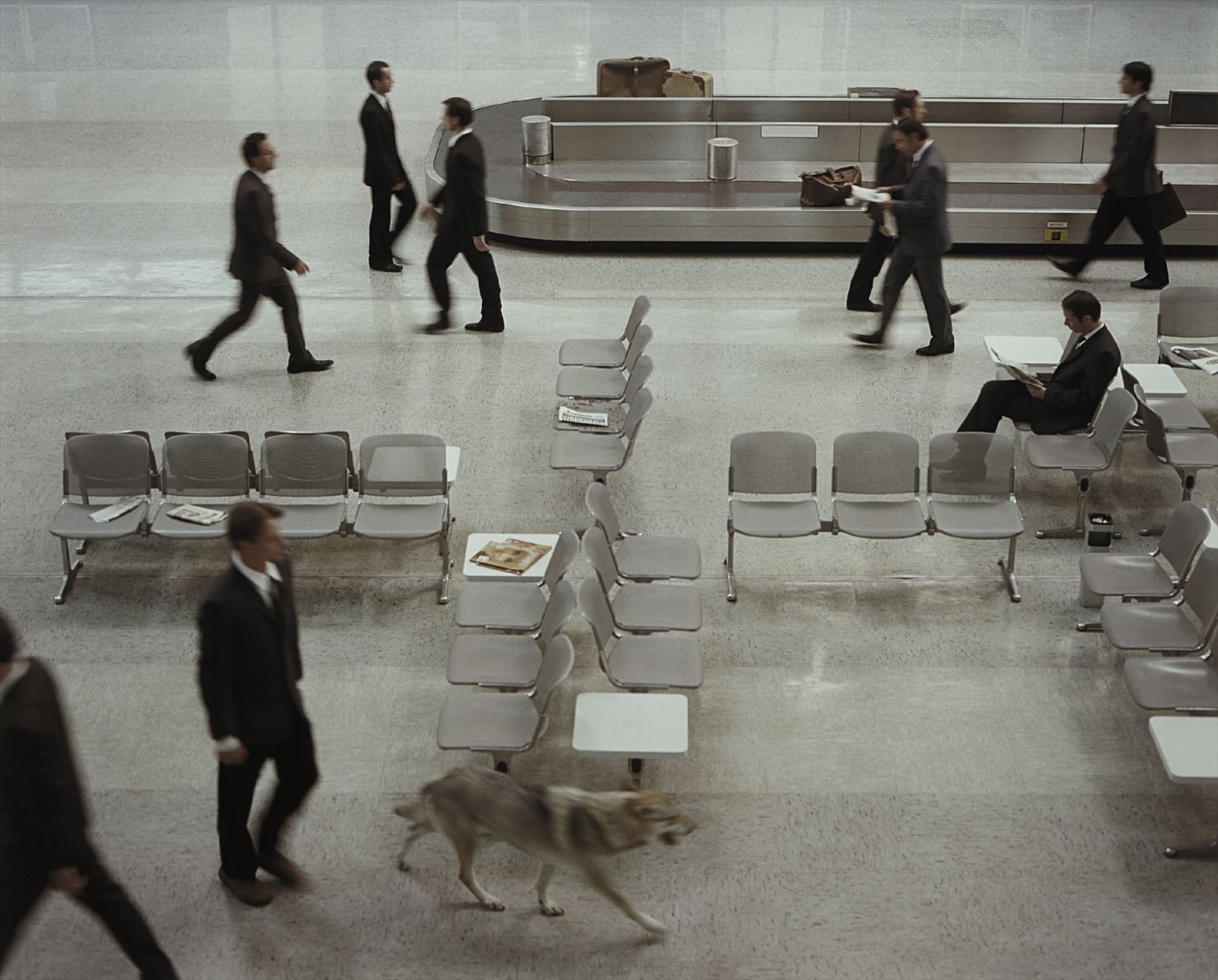
Eve Sussman
The Wolf in Tempelhoff from The Rape of the Sabine Women
At a moment when conversations about artificial intelligence and creative authorship have become urgent cultural preoccupations, this work feels not only prescient but newly essential. Sussman was asking questions about algorithmic construction of reality long before those questions became mainstream. For collectors, her work presents an unusually rich range of entry points. The photographic stills offer an opportunity to live with her visual thinking in an intimate and daily way, bringing the conceptual gravity of her video practice into domestic or private spaces.
These prints are not secondary objects or mere merchandise produced alongside the primary work. They are independent propositions, formally resolved and intellectually substantial. The flush mounting on aluminum gives them a physical presence and luminosity that rewards the kind of sustained attention fine photography demands. Collectors drawn to artists working at the intersection of cinema, conceptual art, and art historical dialogue will find her work in natural conversation with artists such as Cindy Sherman, Stan Douglas, and Omer Fast, all of whom share an interest in constructed narrative and the politics of the image.
Within the broader arc of art history, Sussman occupies a genuinely distinctive position. She is neither a straight video artist nor a photographer nor a filmmaker, but someone who has used all of these forms to pursue a consistent and deepening set of questions. Her relationship to painting, particularly to the canonical works of European art history, is not one of deference or pastiche but of genuine critical engagement. She takes those images seriously enough to interrogate them, to ask what they conceal as well as what they reveal, and to find in them a set of tensions that are still alive and still urgent.
That combination of art historical literacy and conceptual ambition places her in rare company. Sussman's legacy is still being written, which is part of what makes collecting her work now feel particularly meaningful. She has shown at major international biennials and in prestigious institutional collections, and her influence on a generation of artists working with time based media has been significant and largely unsung. As the art world continues to reckon with questions of representation, algorithmic culture, and the ethics of looking, her practice reads less like a historical achievement and more like a living resource.
To own her work is to participate in one of the most searching ongoing conversations in contemporary art.
Featured Works
Explore books about Eve Sussman