Eva Hesse
Eva Hesse: Form, Feeling, and Forever
Artist Spotlight · The Collection Editorial
“Excellence has no sex. I am Eva Hesse, sculptor. Not woman sculptor.”
Eva Hesse, diary entry
In 2023, the Tate Modern in London devoted significant attention to Eva Hesse's legacy as part of its ongoing commitment to reassessing the postwar avant garde, and her presence in major institutional collections from the Museum of Modern Art in New York to the Kunstmuseum Basel continues to feel urgent and alive. Her works hang in rooms alongside those of the most celebrated names of the twentieth century, and yet Hesse retains something singular, something that resists easy categorization. She was an artist who made the body feel present in materials that have no body of their own, who turned latex and fiberglass and rope into something trembling and human. To encounter her work is to understand that sculpture could be vulnerable, and that vulnerability could be a form of strength.
Eva Hesse
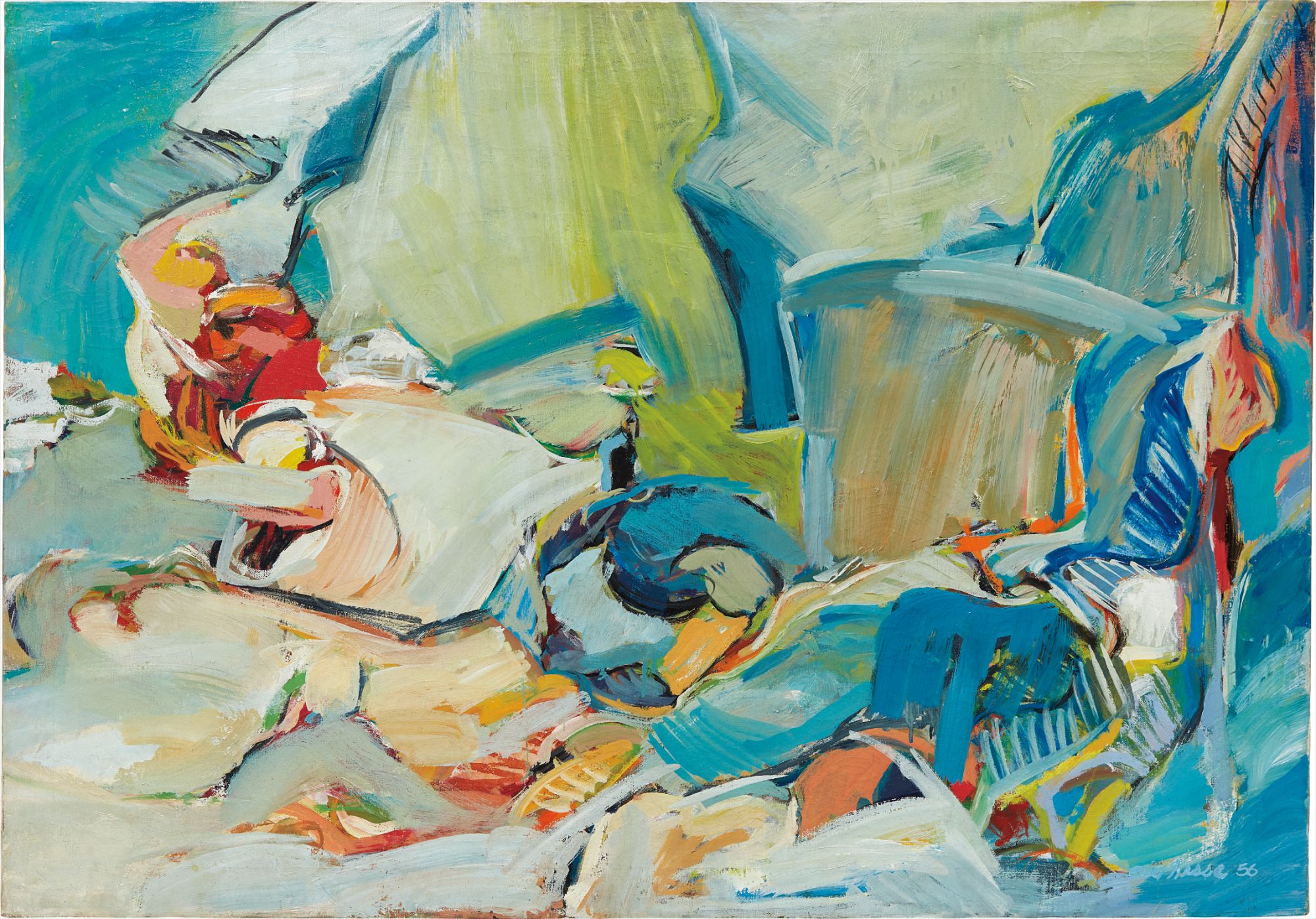
“A painting can only be as much as its creator, a mirror of himself, not merely an outburst of an emotion or mood...The essential forces directing me presently are motivated by the desire of being a painter. The word painter connotes significant meaning, a way of approaching life, living fully not merely existing. A painting must be approached with fully awakened eyes and mind.”, 1956
Eva Hesse was born in Hamburg, Germany, in 1936, the daughter of a Jewish family whose escape from Nazi persecution brought them first to the Netherlands and then, in 1939, to New York City. The early years of her life carried an almost unbearable weight: the flight from Germany, the dissolution of her parents' marriage, and the death of her mother by suicide when Hesse was only ten years old. These experiences left their mark not as wounds she displayed but as a depth of emotional seriousness that runs beneath everything she made. She became an American artist, shaped by New York, but she carried within her the memory of displacement and loss, and those memories informed her insistence on making work that was genuinely felt rather than merely constructed.
Hesse studied at the Pratt Institute in Brooklyn before transferring to the Cooper Union in New York, and she completed her formal education at the Yale School of Art and Architecture in 1959, where she studied under Josef Albers. That encounter with Albers, one of the great pedagogues of twentieth century art, gave her a rigorous foundation in color theory and compositional thinking that would remain legible in her work even as she moved far beyond painting. From Yale she returned to New York, immersing herself in the downtown art scene of the early 1960s, forming friendships with artists including Sol LeWitt, who became one of her closest confidants, and engaging with the conversations around Minimalism that were reshaping the ambitions of a generation. It was during a residency in Kettwig, West Germany, from 1964 to 1965, where she accompanied her husband, the sculptor Tom Doyle, that something shifted decisively in Hesse's practice.
Eva Hesse
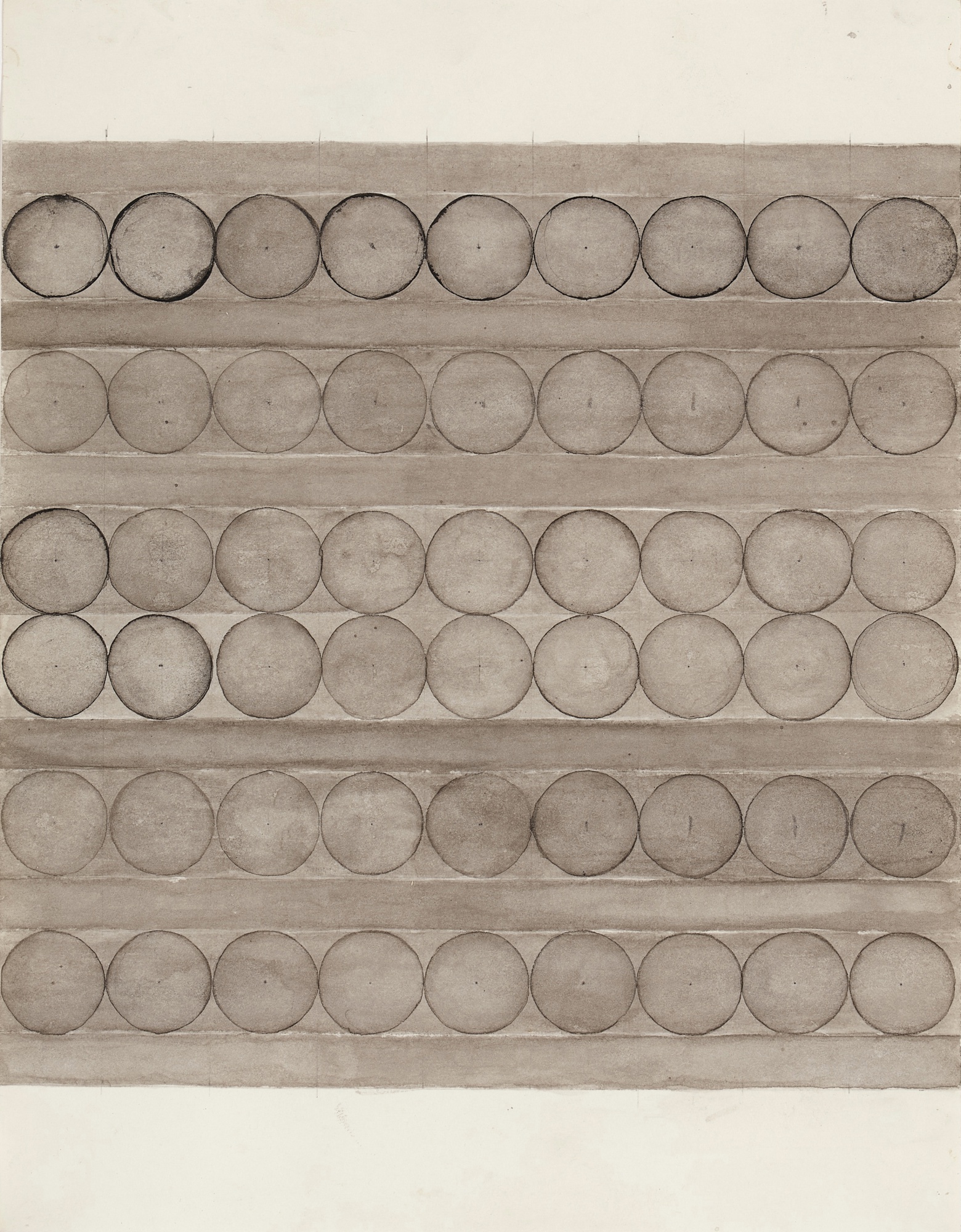
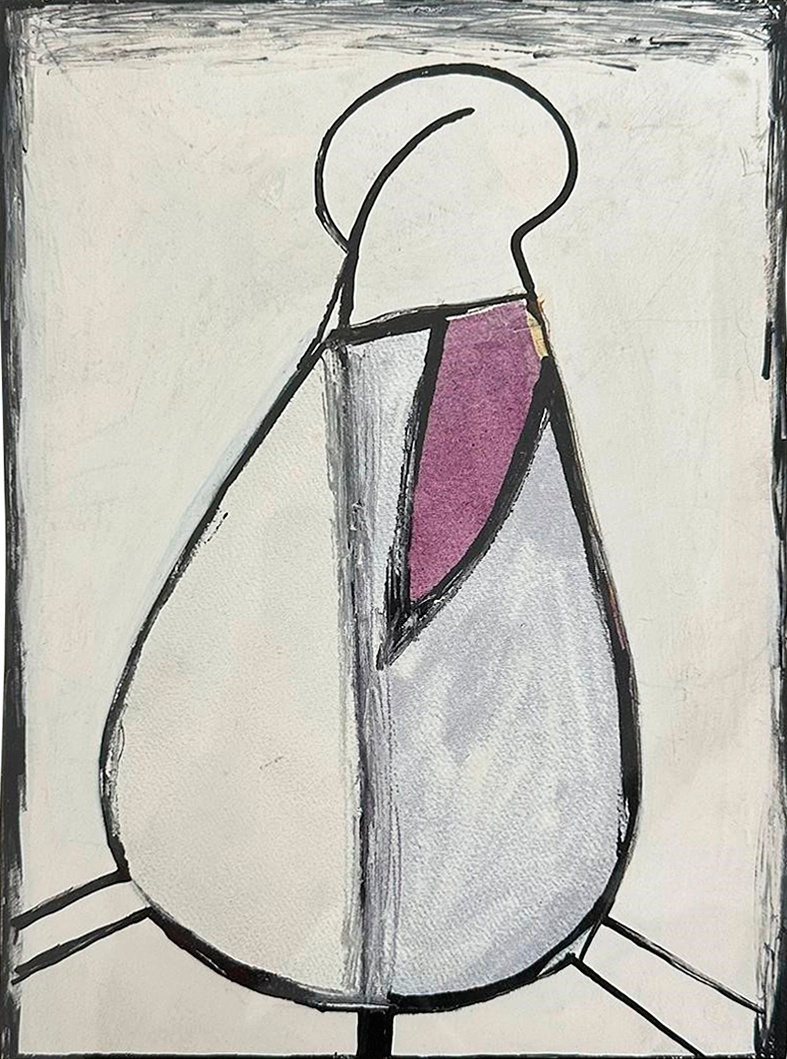
One above, 1965
Working in an abandoned textile factory, surrounded by industrial materials and strange found objects, she began making her first relief sculptures and mixed media works on paper. These pieces, produced in a moment of profound creative discovery, show an artist finding her true voice: playful and anxious at once, rigorous in their thinking but visceral in their presence. The works on paper from this period, including the luminous watercolors and ink drawings that collectors prize today, reveal the intimacy of her working process and the fertility of her imagination at a turning point. Hesse returned to New York in 1965 and threw herself into making sculpture with an intensity that was almost reckless in its ambition.
“Absurdity is the key word. It has to do with contradictions and opposites.”
Eva Hesse, interview with Cindy Nemser, 1970
She worked with latex poured into molds, with fiberglass sheets, with rope and cord and wire, creating works that seemed to sag and droop and breathe. Where the Minimalists around her were pursuing geometric perfection and industrial production, Hesse introduced accident and imperfection, insisting that the handmade quality of an object carried meaning. Works like Accession II from 1968 and Contingent from 1969 established her as one of the defining voices of what critics would come to call Postminimalism, an art that took the formal language of its moment and ran it through a deeply personal, bodily, and emotional sensibility. Her practice was rigorous and intuitive in equal measure, and the combination proved revolutionary.
Eva Hesse
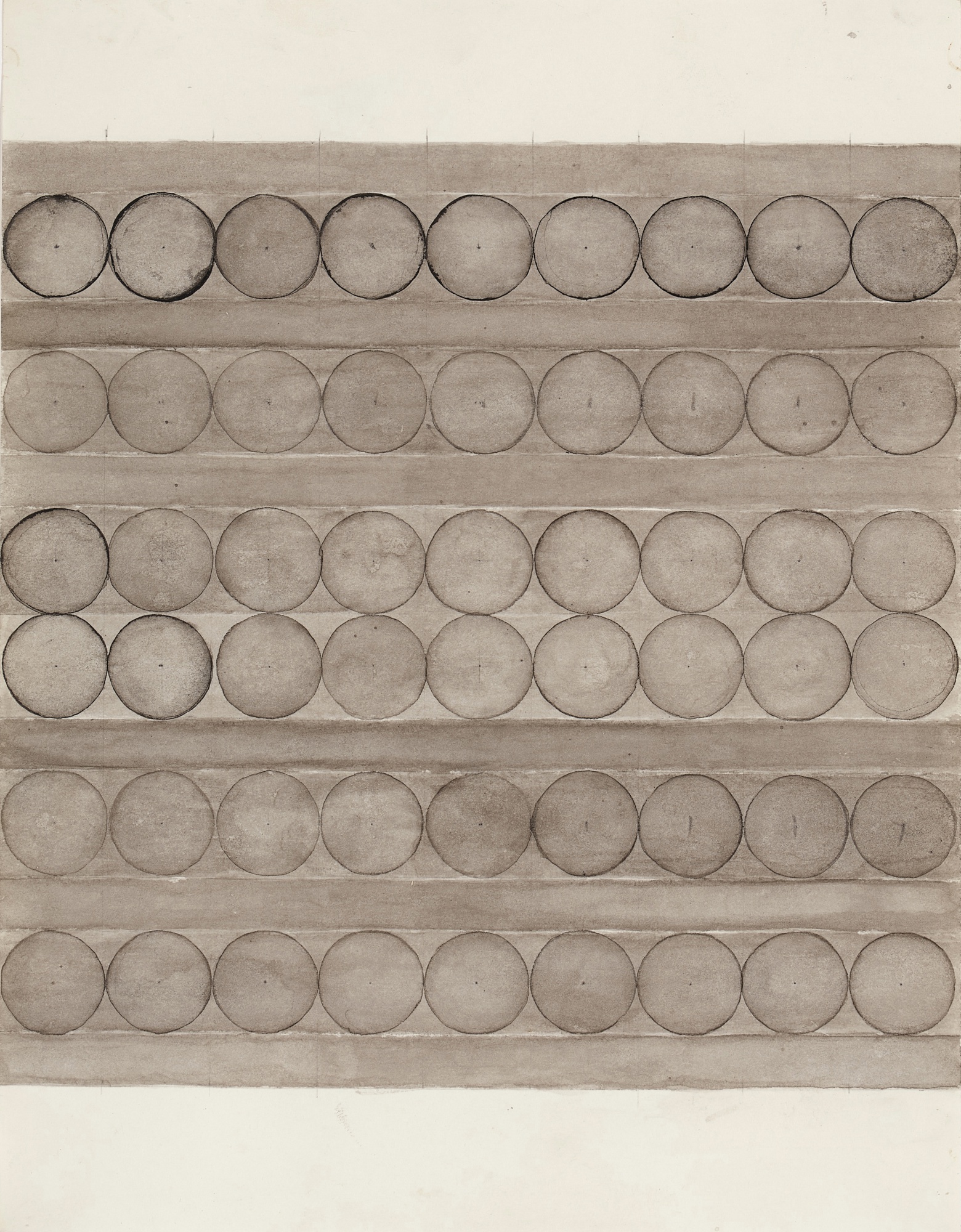
No Title, 1965
The works on paper and early canvas works that survive from the 1950s and mid 1960s offer collectors a remarkable window into an artist in formation. Her 1965 works on paper, executed in watercolor, gouache, ink, and paper collage, carry within them the seeds of everything that followed: the interest in organic form, the sensitivity to texture and surface, the willingness to let a work be open rather than resolved. A painting made during her student years, in which she reflected on the act of painting as a way of approaching life fully rather than merely existing, reveals the philosophical seriousness with which she understood her vocation from the very beginning. Collectors who have pursued these works on paper have recognized that they are not minor pieces relative to the sculptures but rather essential documents of one of the most original minds of the postwar period.
“Life doesn't last. Art doesn't last. It doesn't matter.”
Eva Hesse
In the auction market, Hesse's works command serious attention whenever they appear. Her sculptures from the late 1960s, when they come to market, attract competition from major institutional buyers and private collectors alike, reflecting both their rarity and their canonical status. Works on paper, while more accessible in price, have seen consistent appreciation as collectors and curators have come to understand how fully they embody her vision. The advice of many experienced advisors is to look closely at the paper works and early paintings, where Hesse's intelligence and feeling are present in every mark, and where the collector can live with her in a more intimate register than the large sculptural installations allow.
Artists who share something of her sensibility include Louise Bourgeois, whose exploration of memory and the body in unconventional materials makes her a natural companion to Hesse in any collection, as well as Robert Morris, Bruce Nauman, and the Arte Povera practitioners in Italy, all of whom were engaged in the same reimagining of what sculpture could be and mean. Eva Hesse died in New York in May 1970, at the age of thirty four, following surgery for a brain tumor. She had been working at full intensity almost until the end, and the body of work she left behind is extraordinary not only for its quality but for the completeness of its vision. In the decades since her death, her reputation has grown steadily and is now unassailable.
She is understood as a figure who changed the possibilities of sculpture, who insisted that rigorous formal thinking and deep personal feeling are not opposites but partners, and who made work of such generosity that it continues to find new viewers who feel, standing before it, that they have been genuinely seen. That is the rarest kind of legacy, and Eva Hesse earned it fully.
Featured Works
“A painting can only be as much as its creator, a mirror of himself, not merely an outburst of an emotion or mood...The essential forces directing me presently are motivated by the desire of being a painter. The word painter connotes significant meaning, a way of approaching life, living fully not merely existing. A painting must be approached with fully awakened eyes and mind.”
1956
One above
1965
No Title
1965
Explore books about Eva Hesse
Eva Hesse: A Retrospective
Helen A. Cooper
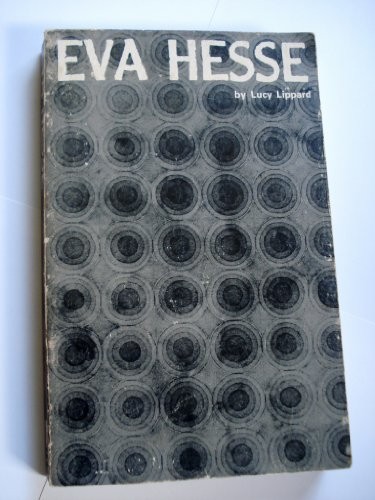
Eva Hesse
Lucy R. Lippard
Eva Hesse: Diaries and Documents
Karen Webhel
Eva Hesse: Sculpture
Briony Fer

Eva Hesse: The Complete Drawings
Mel Gooding
Eva Hesse
Janet Kraynak
Eva Hesse: Light Surround
Elisabeth Sussman
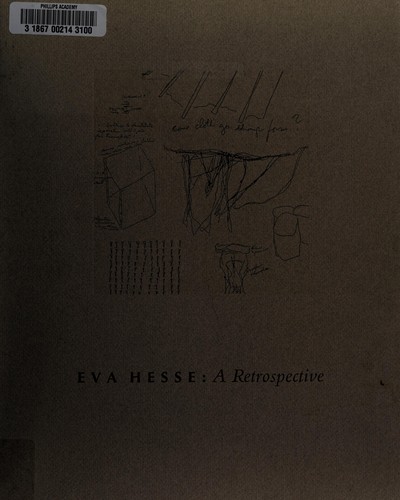
Eva Hesse: The Retrospective
Helen A. Cooper and others