Eva Beresin
Eva Beresin Paints the Feeling Underneath
Artist Spotlight · The Collection Editorial
Something has shifted in the way London's art world speaks about Eva Beresin. Over the past several years, her paintings have moved from the walls of intimate gallery presentations into the rooms of serious collectors and onto the floors of notable auction houses, where bidders have responded with growing enthusiasm to her brand of raw, emotionally loaded figuration. That momentum feels less like a sudden discovery and more like a recognition long overdue, the art world finally catching up with a painter who has been quietly building one of the most psychologically compelling bodies of work in contemporary British painting. For those already following her practice, the excitement is not surprise but vindication.
Eva Beresin
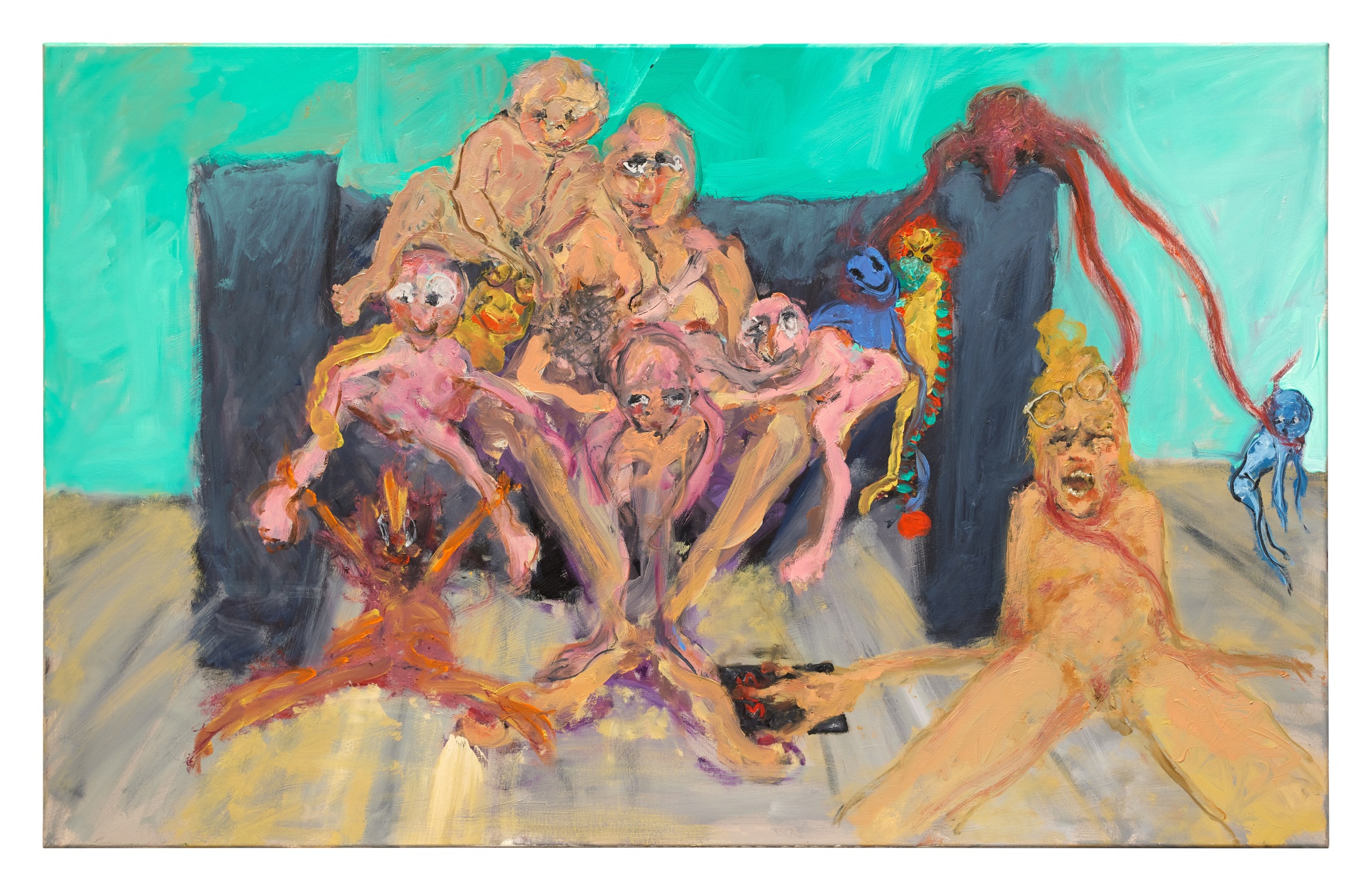
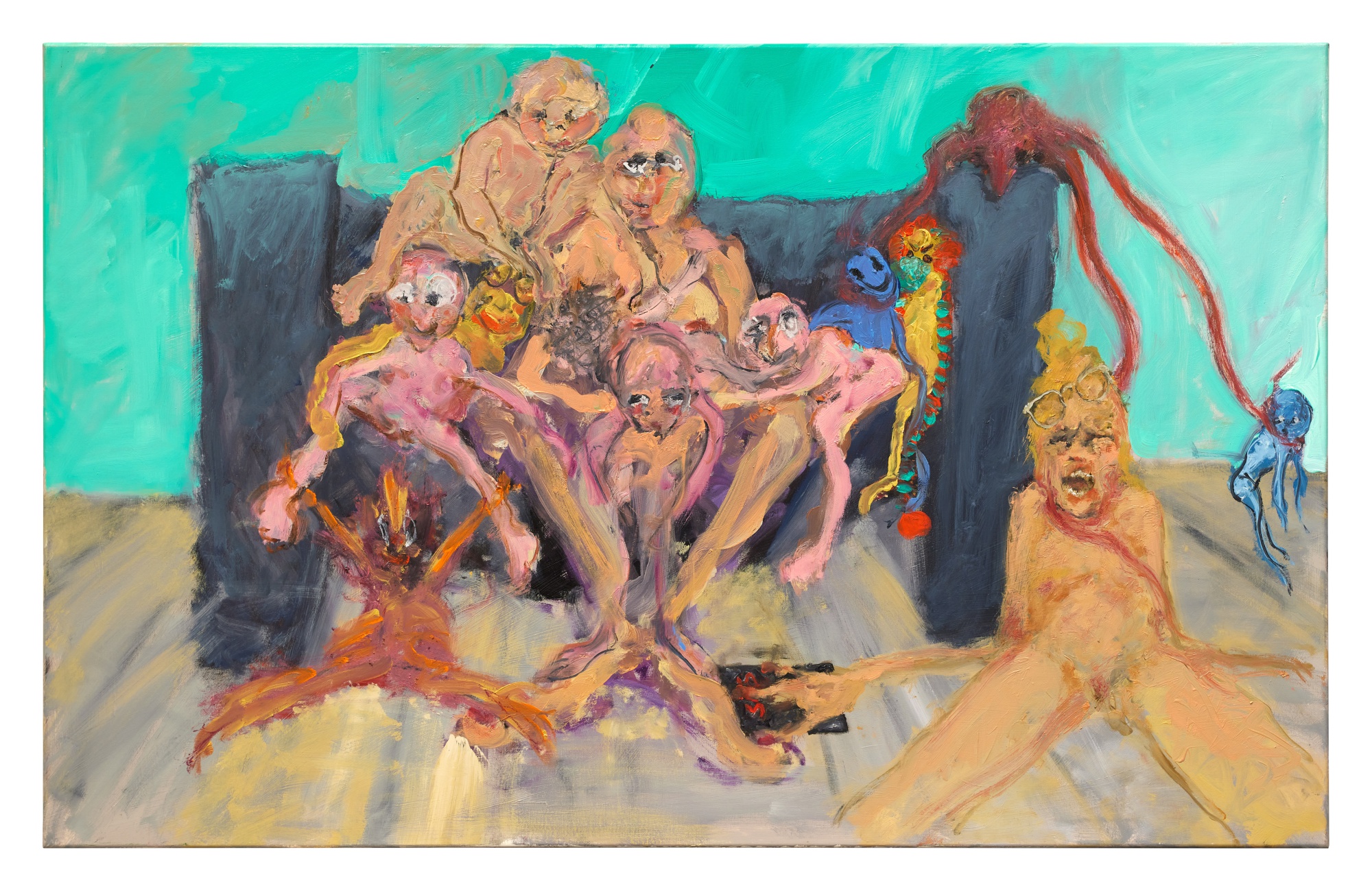
Once the genie is summoned, you can't put it back in the bottle, 2021
Beresin was born in 1974 and has spent much of her life embedded in the cultural fabric of London, a city whose contradictions, its tenderness and its abrasion, seem to have seeped directly into the mood of her canvases. London is a place that holds intimacy and alienation in close proximity, and that tension runs like a current through everything Beresin makes. While the specifics of her formal training remain less publicly documented than her reputation deserves, her work speaks to an artist who has absorbed the great traditions of European figurative painting and then deliberately loosened their grip, finding more honesty in the unresolved mark than in the perfected one. The development of Beresin's practice is a study in deepening rather than radical reinvention.
She has remained committed to the figure across her career, but the quality of her attention has grown richer and more nuanced with each body of work. Her early canvases established the emotional register she would continue to inhabit: figures caught in states of suspension, neither fully at rest nor fully in motion, occupying spaces that feel both familiar and psychologically charged. Over time, her brushwork has grown more assured in its apparent looseness, each gestural passage carrying more weight precisely because it refuses to explain itself fully. This is painting that trusts the viewer to meet it halfway.
Eva Beresin
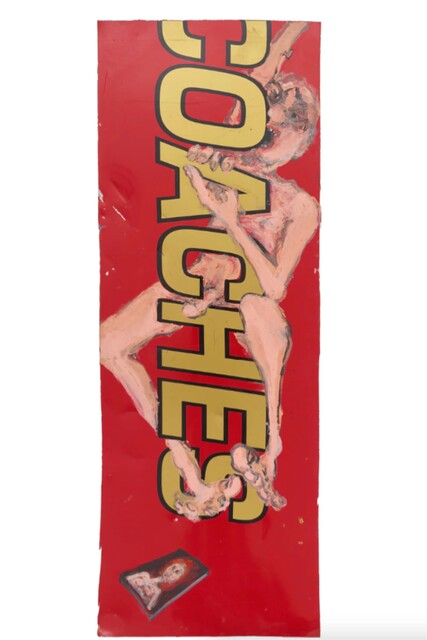
Untitled, 2022
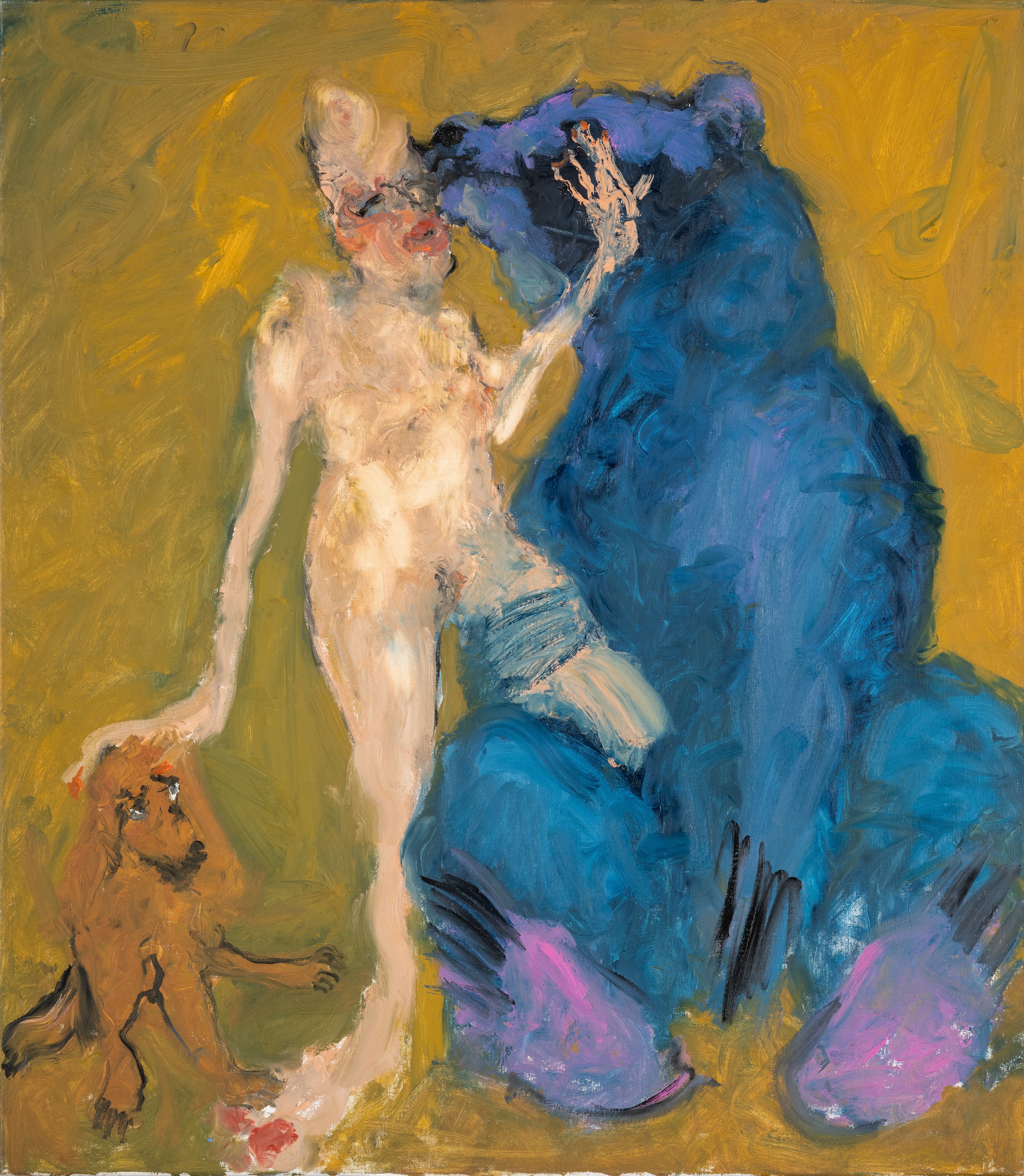
Among her most discussed works are two paintings from 2021 that demonstrate the full range of her ambition. "Once the genie is summoned, you can't put it back in the bottle" is an oil on canvas whose title alone announces Beresin's gift for language as an extension of image, evoking the irreversibility of feeling, of knowledge, of emotional consequence. The painting sits in that space where the domestic and the mythic overlap, a territory Beresin navigates with unusual authority. Equally resonant is "Not knowing the value of a moment until it becomes memory," another 2021 oil whose title reads almost like a journal entry and whose emotional logic is that of retrospection, of tenderness applied in hindsight.
Both works demonstrate how Beresin uses titling not as description but as a second layer of meaning, a conversation between language and paint. Perhaps the most formally inventive work in her recent output is an untitled 2022 piece executed in oil paint on a repurposed London bus panel. This choice of support is not arbitrary or merely eccentric. The bus panel arrives pre loaded with history, with the accumulated journeys of strangers, with the texture of public life, and Beresin paints onto it with the intimacy she usually reserves for the most private of domestic scenes.
Eva Beresin
Not knowing the value of a moment until it becomes memory, 2021
The result is a work that holds public and private life in a kind of productive friction, the city and the self meeting on a surface that belongs, in some sense, to everyone. It is the kind of formal decision that reveals a painter thinking seriously about what painting can do beyond the conventions of stretched linen. For collectors, Beresin represents a compelling proposition at a particular moment in the market for contemporary figurative painting. The broader appetite for emotionally direct, psychologically complex figuration has been one of the defining collecting stories of the past decade, with painters such as Cecily Brown, Lynette Yiadom Boakye, and Jadé Fadojutimi attracting sustained institutional and market attention.
Beresin occupies a related but distinct space within this conversation, her work sharing with these artists a commitment to the figure as a vehicle for interior experience while maintaining a voice that is unmistakably her own. Her paintings reward close and repeated looking, which is precisely the quality that makes them live well in collections over time. The auction visibility her works have begun to attract suggests that the market is in the process of calibrating a value that private collectors have already intuited. Works from 2021 and 2022 represent a particularly significant period in her output, one in which her formal and thematic concerns seem most fully integrated.
Collectors approaching her practice now are engaging with an artist whose market is still in a formative phase, which historically has represented both an opportunity and a responsibility, the responsibility to support work that genuinely matters rather than simply following momentum. With Beresin, the case for both is strong. What makes Eva Beresin's work matter in the longer arc of British painting is the seriousness with which she holds the question of human vulnerability. At a moment when painting is sometimes asked to be legible, comfortable, or immediately gratifying, her canvases insist on remaining open, unresolved in the way that genuine feeling is unresolved.
She paints figures who are present but not explained, spaces that are familiar but not entirely safe, and she does so with a gestural language that feels earned rather than adopted. That commitment to difficulty, to the kind of emotional truth that cannot be tidied up, is what separates her practice from the merely accomplished. It is also, in the end, what will ensure that her work continues to find the serious attention it has always deserved.