Eugène Printz
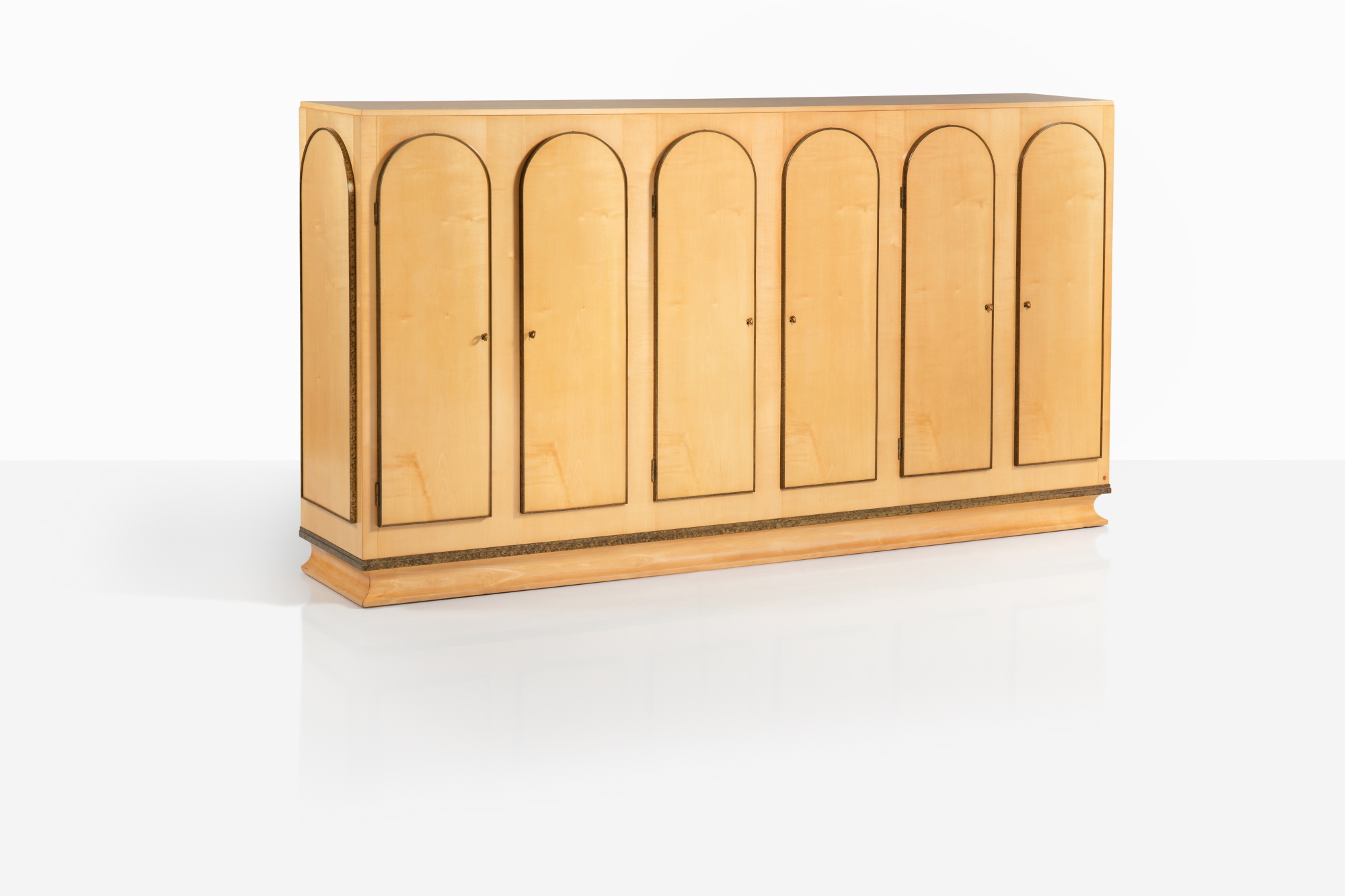
Eugène Printz, The Master of Refined Luxury
Artist Spotlight · The Collection Editorial
When Christie's Paris brought a Printz commode to auction in recent years, the room quieted in a particular way that seasoned decorative arts collectors will recognize. It is the hush of people confronting something that has aged not merely well but triumphantly, an object that looks, if anything, more vital and more necessary than it did when it left his Parisian workshop nearly a century ago. Eugène Printz occupies a singular position in the canon of French Art Deco furniture: celebrated enough to command serious prices at the major auction houses, yet still possessed of a quiet mystique that rewards closer looking. For collectors who prize the intersection of sculptural ambition and flawless craft, his work represents one of the great pleasures available in the decorative arts market today.
Eugène Printz
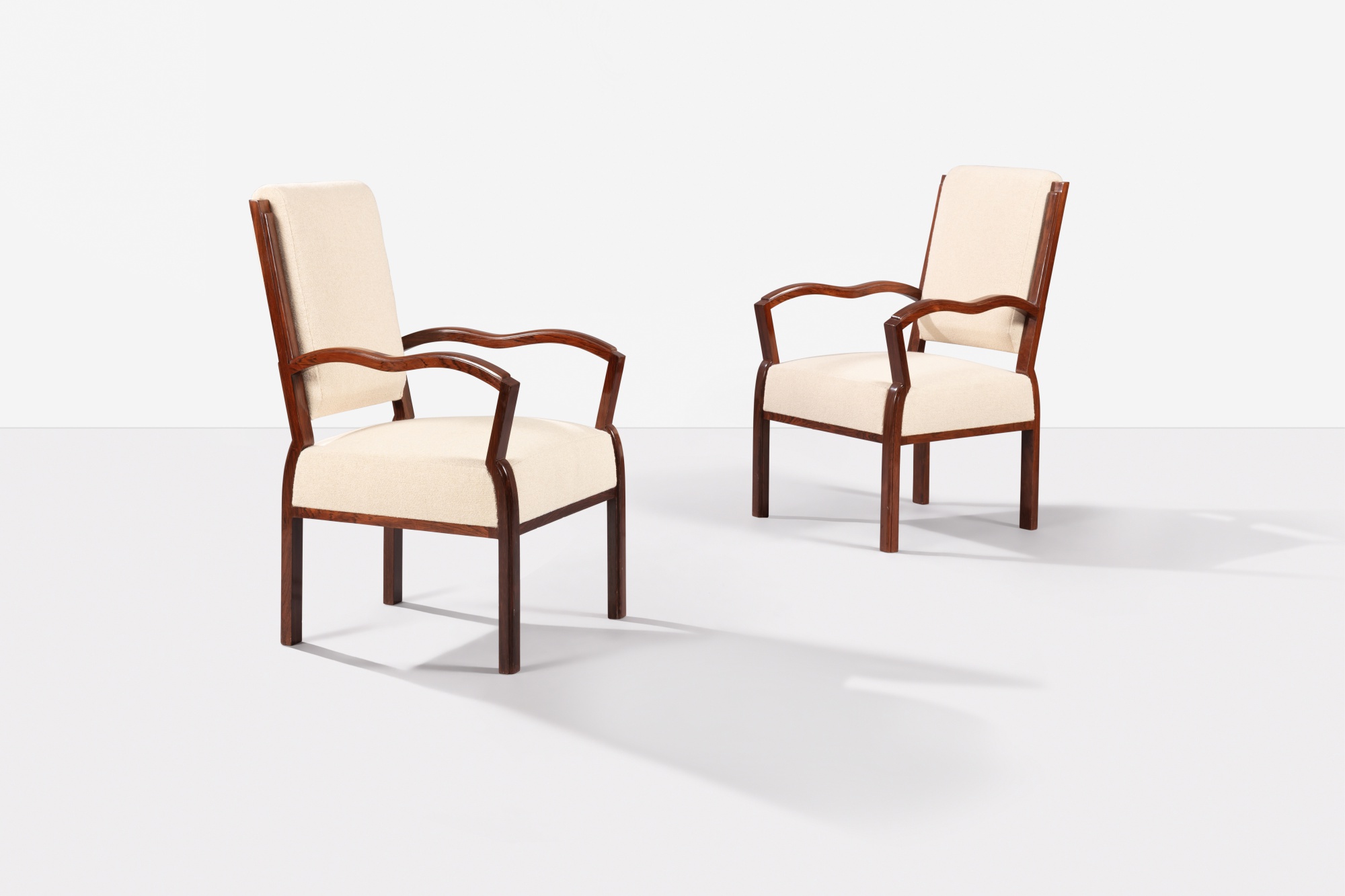
Paire de fauteuils
Printz was born in 1889 into a Paris that was already beginning to tremble with modernist possibility. France in the final decades of the nineteenth century and the opening years of the twentieth was a country renegotiating its relationship with beauty, industry, and the applied arts. The grandes expositions had made Paris the undisputed capital of luxury making, and the ateliers and workshops of the city were alive with a spirit of ambitious reinvention. Printz came of age in this environment, absorbing both the discipline of traditional French cabinetmaking, with its roots in the glorious ébénisterie of the ancien régime, and the new appetite for bold geometry, exotic materials, and a frankly modern sensibility.
He inherited a workshop from his father and transformed it, over the course of the 1920s and 1930s, into one of the most respected addresses in Parisian decorative arts. The development of his artistic voice was neither sudden nor accidental. Printz worked through the early years of the Art Deco movement with the patient intelligence of a craftsman who understood that style without structure is merely fashion. What distinguished him from many of his contemporaries was his insistence on material honesty: every piece he produced announced its ingredients openly and proudly.
Eugène Printz
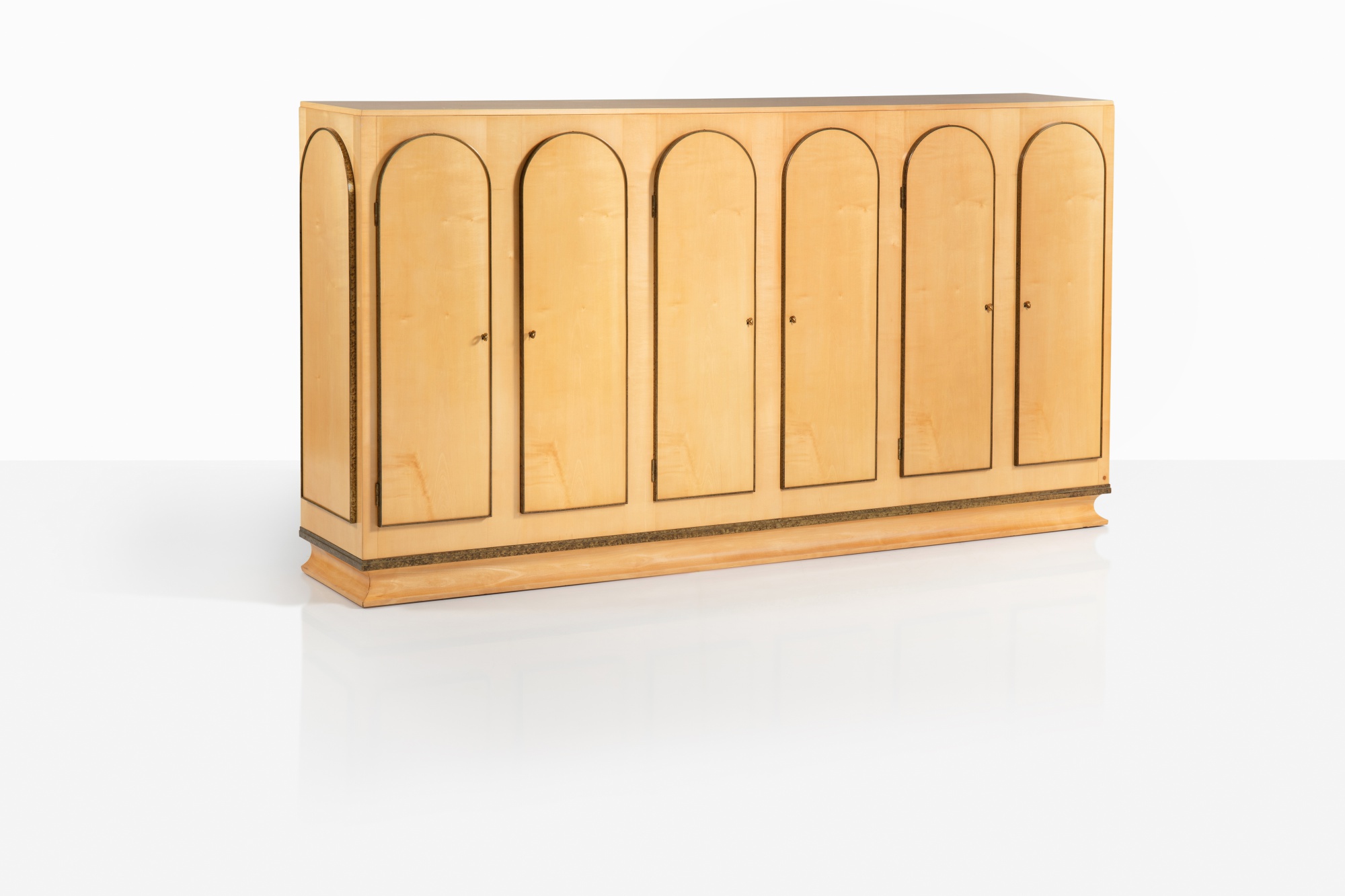
Meuble d'appui
He became particularly celebrated for his use of exotic and richly figured woods, palmwood and Madagascar rosewood among them, which he allowed to speak for themselves rather than overwhelming their natural drama with excessive ornament. At the same time, he developed a mastery of metal work, incorporating brass, bronze, and patinated finishes with a confidence that few of his peers could match. The result was furniture that felt simultaneously ancient and startlingly new. Among the works that best define his vision, the Table Bibliothèque stands as a particularly eloquent example.
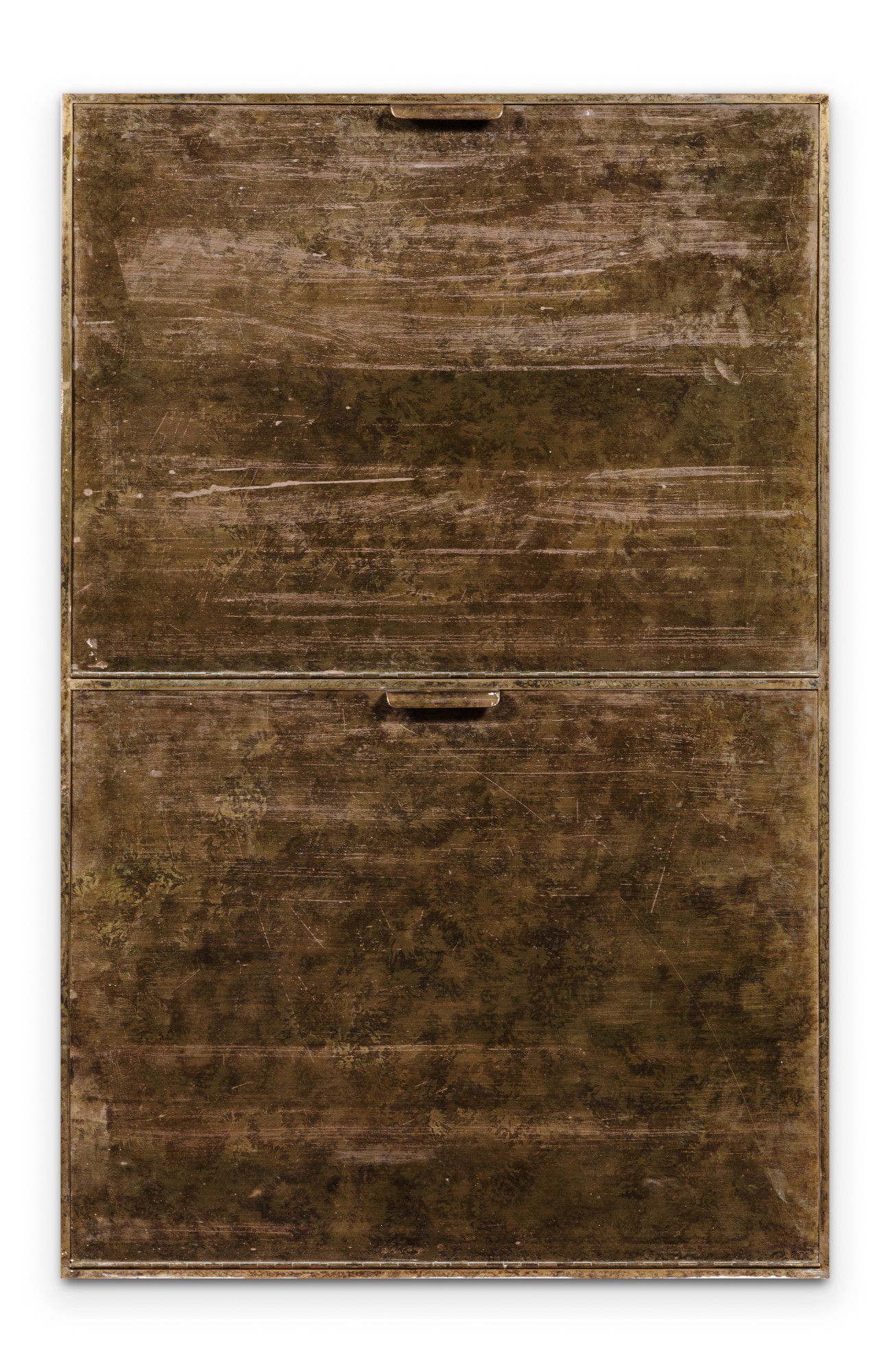
Constructed in palmwood with brass detailing, it demonstrates his ability to negotiate between the warmth of natural material and the cool precision of industrial metal, achieving a tension that is deeply satisfying rather than unresolved. His pairs of fauteuils, upholstered and framed in Madagascar rosewood, show how thoroughly he understood the human body and the social ritual of seated conversation. These are not chairs that merely support; they invite. His bronze and patinated brass double doors, dating to around 1930, reveal yet another dimension of his practice: a command of architectural scale and a sensitivity to surface treatment that places him in the company of the great ensembliers of his era.
Eugène Printz
Two double doors, circa 1930
And his sideboards, monumental in presence yet never heavy in spirit, demonstrate that he could design furniture intended to anchor a room without dominating it into silence. The collecting world has recognized the particular pleasures of Printz for decades, and his work appears regularly at the major decorative arts sales in Paris, London, and New York. Christie's, Sotheby's, and Artcurial have all handled significant examples of his furniture, and his pieces attract both specialist collectors of French Art Deco and broader collectors drawn to exceptional craft wherever it appears. What distinguishes a strong Printz acquisition is usually the quality of the wood selection, which in his finest pieces shows a connoisseur's eye for figure and grain, combined with the integrity of the metal elements, which should be original and unrestored wherever possible.
Collectors new to his work are often advised to pay particular attention to the joinery: Printz was trained in the fullest tradition of French cabinetmaking, and the interior construction of his pieces is as considered as the exterior presentation. Pieces with clear workshop provenance and original surface patination command the greatest premiums. To understand Printz fully is to understand the extraordinary ecosystem of French Art Deco furniture making in which he operated. He worked in a period and a city that produced Jacques Émile Ruhlmann, perhaps the most celebrated of all Art Deco furniture designers, as well as Jules Leleu, Jean Dunand, and Armand Albert Rateau.
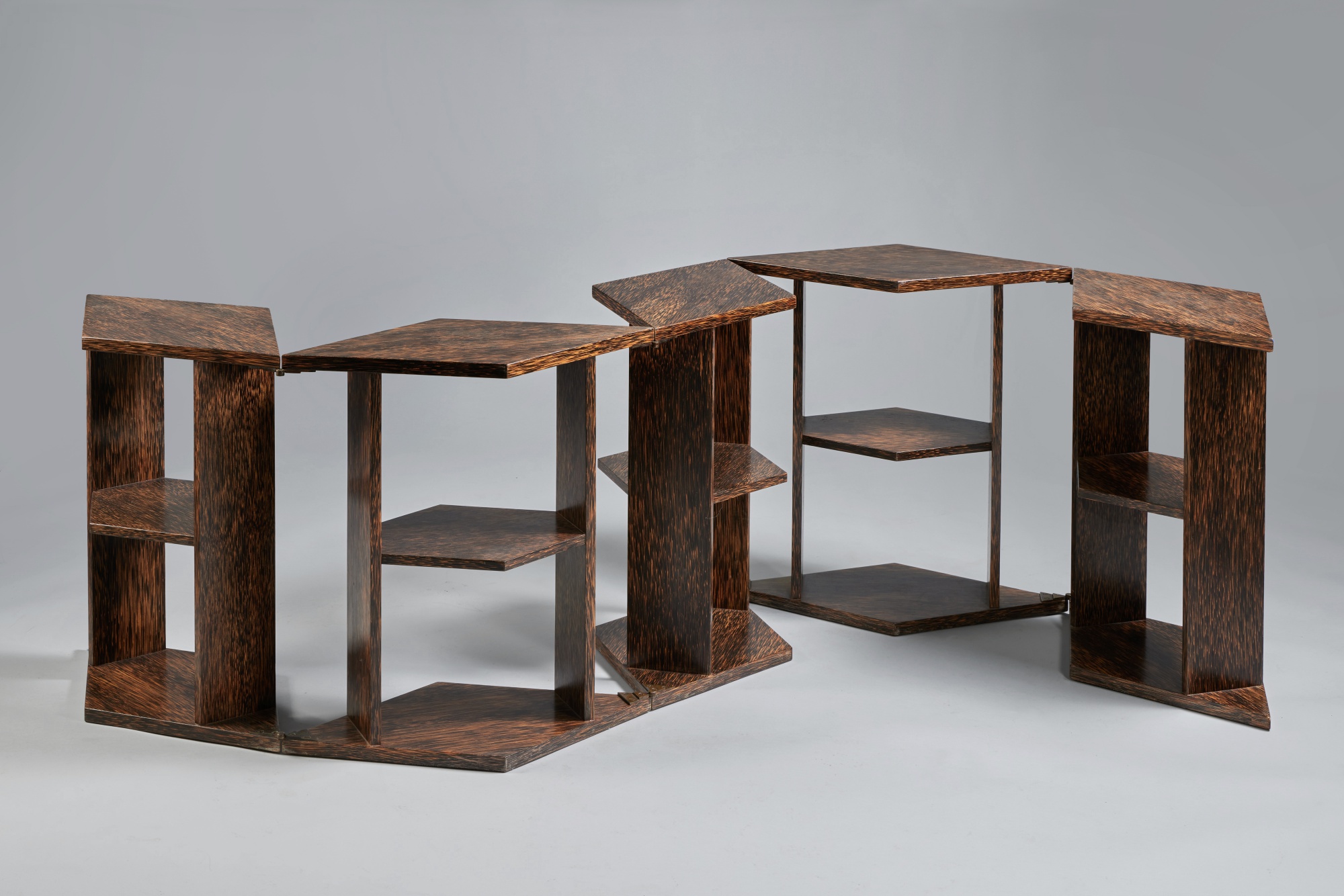
Eugène Printz
Table-Bibliothèque
Like Ruhlmann, Printz was committed to the idea of luxury as something earned through excellence of material and making rather than through mere expense of ornament. Like Dunand, he understood that metal and lacquer were not decorative afterthoughts but structural and expressive elements in their own right. What makes him distinct within this remarkable generation is a certain severity of line that reads, from the distance of a century, as almost prophetic: his geometry anticipates the mid century modernism that would follow, while his material richness anchors him firmly in the grand French tradition. The legacy of Eugène Printz, who died in 1948 just as the post war world was beginning to reshape taste in ways that would take decades to fully absorb, is one of quiet but persistent influence.
His work has never fallen out of serious collections, and the institutions and private collectors who have held his pieces with care are now seen as having exercised exactly the kind of long vision that defines great collecting. In an era when the decorative arts are being reassessed with fresh energy, when museum curators and younger collectors alike are returning to the material intelligence of the pre war decades with renewed admiration, Printz emerges as one of those figures whose reputation does not need rehabilitation because it was never truly diminished. His furniture was made to last, in every sense: physically, aesthetically, and as a testament to what human hands, guided by genuine vision, are capable of producing.
Explore books about Eugène Printz
Eugène Printz: Mobilier et Décoration
Alastair Duncan
Eugène Printz: Ensemblier des Années 1930
Pierre Kjellberg
Art Deco 1910-1939
Charlotte Benton
French Furniture Makers: The Art Deco Era
Olivier Boissière
Eugène Printz et l'Art Déco
Florence Camard