Erwin Olaf
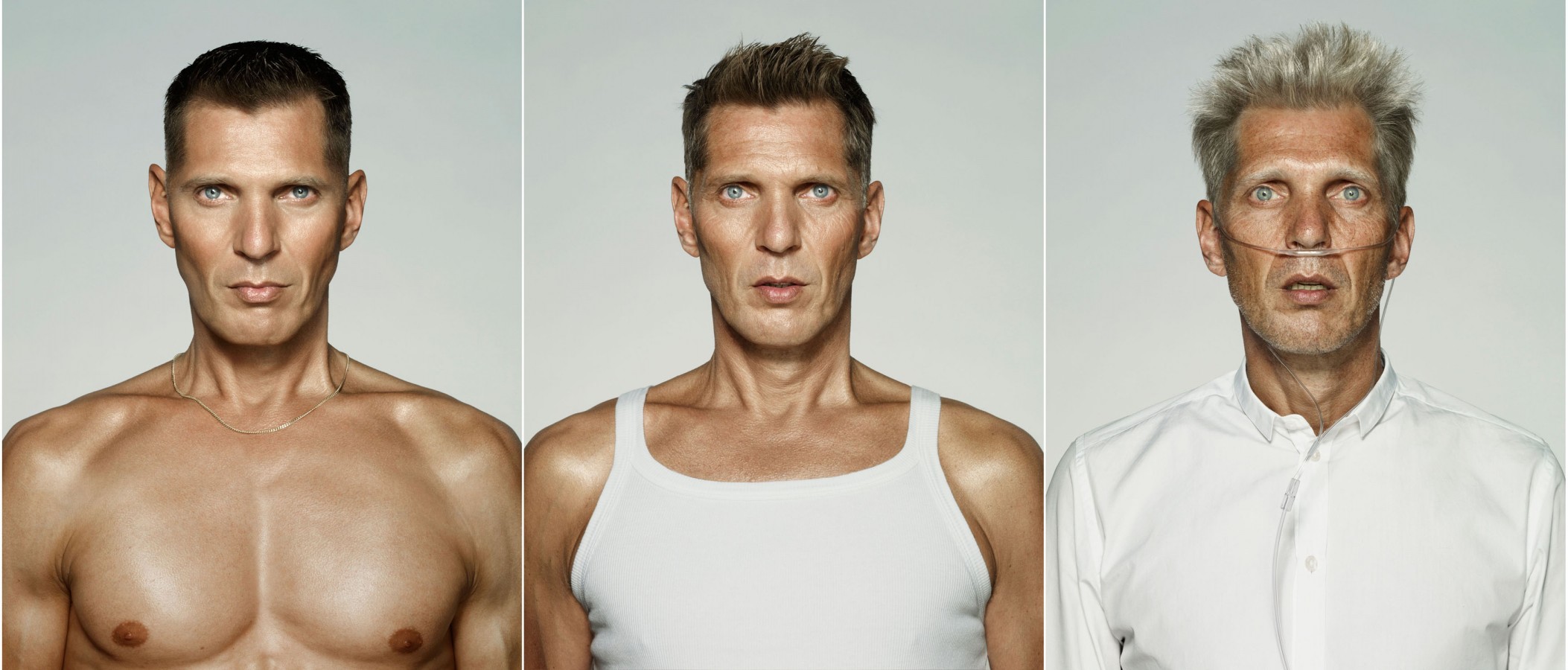
Erwin Olaf: Master of the Perfectly Staged Moment
Artist Spotlight · The Collection Editorial
“I want to seduce the viewer into my world. Then, once they are inside, I show them something they did not expect.”
Erwin Olaf
In the years since his passing in September 2023, the art world has paused to take full measure of what Erwin Olaf gave us across four remarkable decades of image making. Memorial exhibitions, retrospective surveys, and renewed critical attention have placed his photographs back at the center of conversations about identity, beauty, and what it means to truly see another human being. Galleries and institutions that championed him during his lifetime have continued to advocate for his legacy, and the secondary market has responded with sustained collector interest that speaks to the enduring power of his vision. Olaf was not simply a photographer.
Erwin Olaf
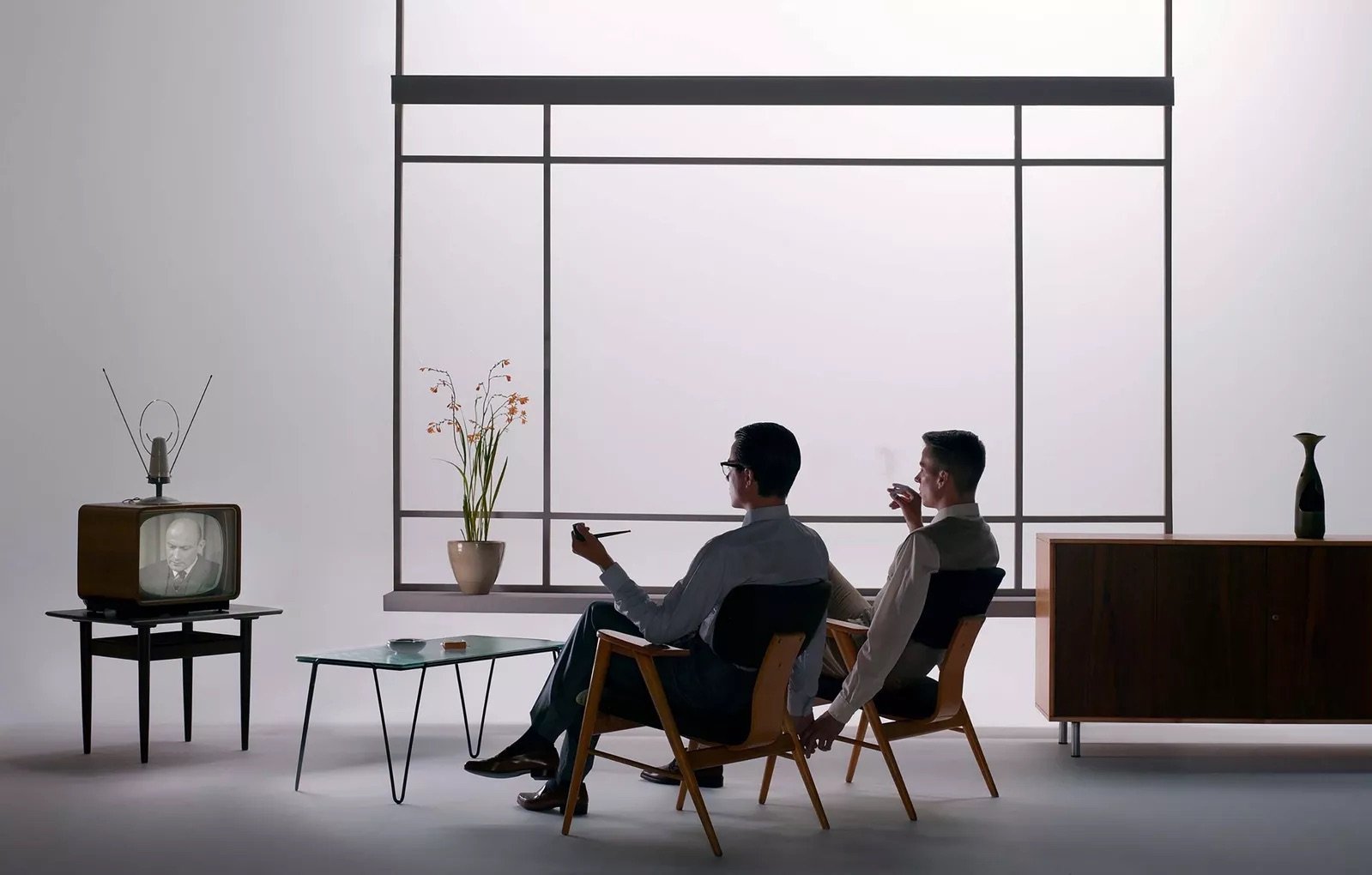
Broadcast, Benno Premsela, 2015
He was a world builder, and those worlds remain utterly alive. Erwin Olaf Springveld was born in 1959 in Hilversum, a city in the Netherlands that happened to be the country's broadcasting and media center, a biographical detail that feels almost too fitting in retrospect. He studied journalism at the School of Journalism in Utrecht, and it was there that an early pull toward image making began to crystallize into something more consuming and more urgent. The Netherlands of the late 1970s and early 1980s was a place of genuine social ferment, and for a young gay man who would go on to become one of the most visible LGBTQ artists of his generation, that context shaped everything.
Amsterdam's open culture gave Olaf permission to be bold, and he took that permission seriously from the very beginning. His early career announced itself with characteristic audacity. In 1988 he won the Young European Photographer award, a recognition that confirmed what the Dutch art scene was already beginning to sense: here was someone with total command of the camera and a fearless appetite for provocation. His work in this period engaged directly with sexuality, queerness, and the body in ways that were designed to unsettle comfortable assumptions.
Erwin Olaf
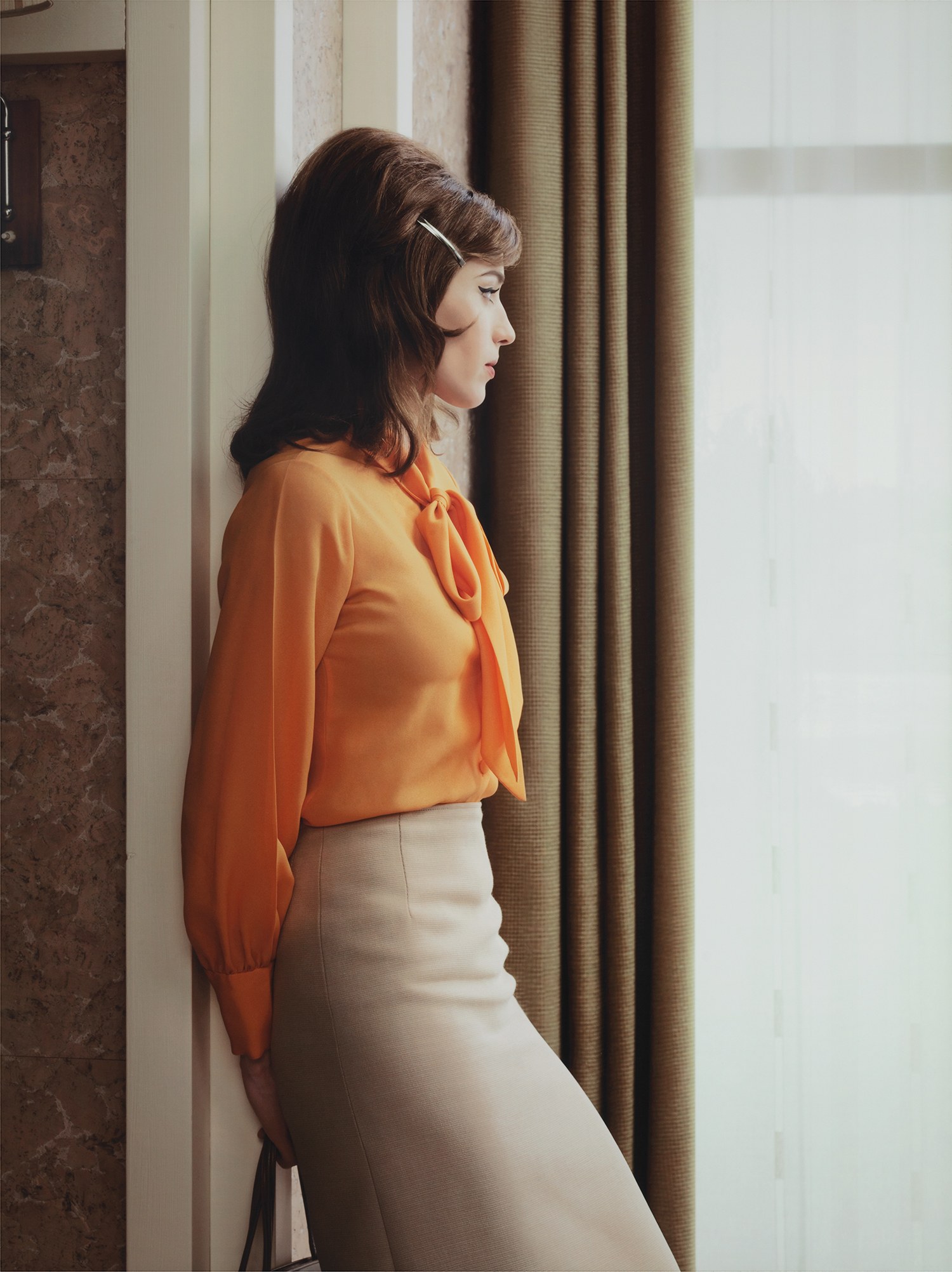
Caroline (Portrait) from Grief
He was never gratuitous for its own sake, however. Even the most confrontational early images were structured with a theatrical precision that revealed a deeply cinematic sensibility, one that would mature magnificently in the decades ahead. He was already thinking in terms of narrative and atmosphere, not merely surface. The series that brought Olaf to sustained international attention demonstrated his gift for constructing entire emotional landscapes within a single frame.
His "Grief" series, produced in the mid 2000s, remains among the most quietly devastating bodies of work in contemporary photography. Images such as "Caroline (Portrait) from Grief," "Troy (Portrait) from Grief," "Sarah from Grief," and "Victoria (Portrait) from Grief" place solitary figures in immaculately designed domestic interiors where something has clearly, irrevocably gone wrong. The grief is never named or explained. It radiates instead from the tilt of a head, the quality of afternoon light through mid century modern curtains, the stillness of a hand.
Erwin Olaf
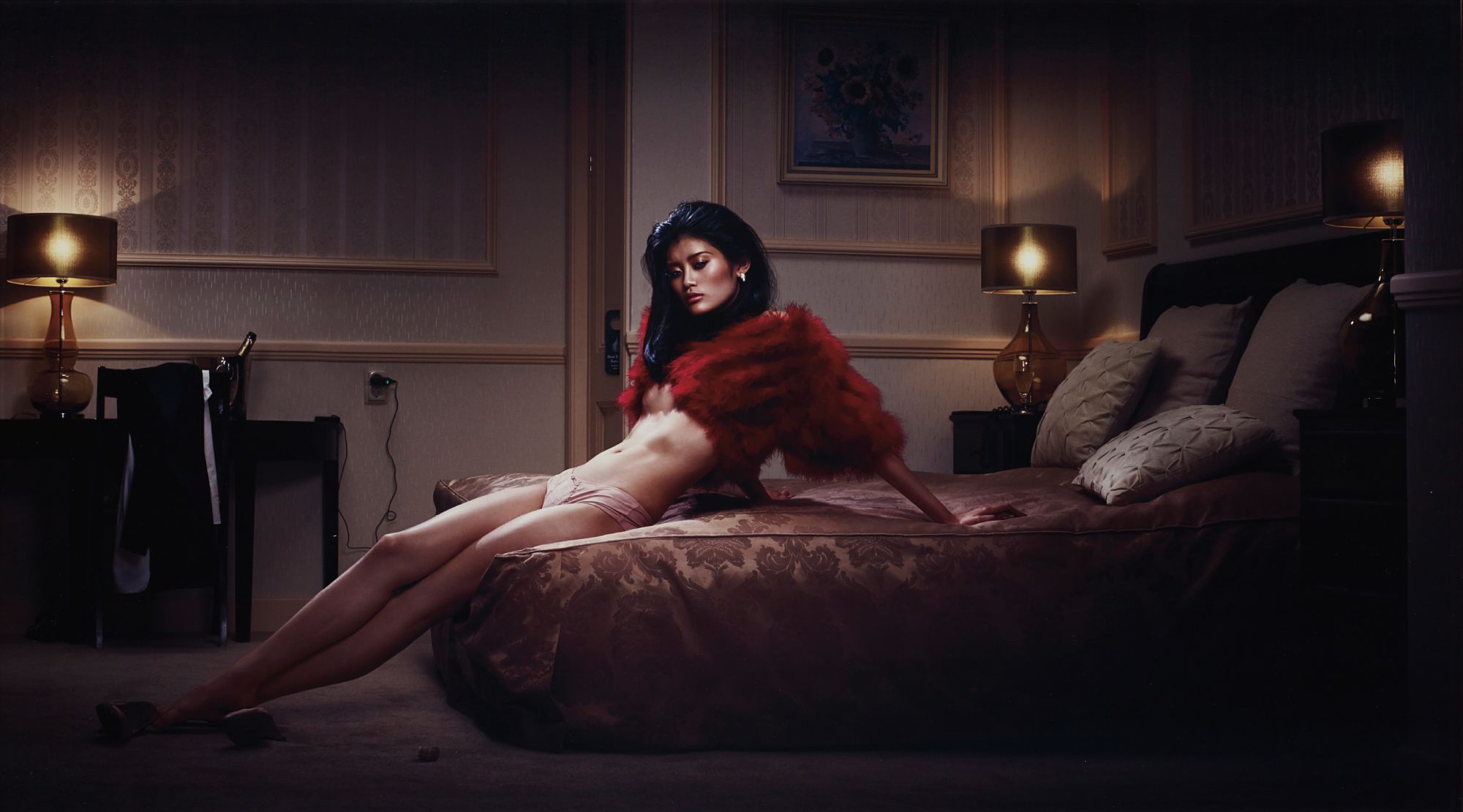
Hotel, Moscow, Room 168
These chromogenic prints, flush mounted with the kind of technical care that rewards close looking, belong to the great tradition of Dutch interior painting while remaining absolutely of their own contemporary moment. Olaf continued to push the boundaries of his practice with equal parts ambition and discipline. The "Hope" series explored the fraught social landscape of America during the Obama era, setting carefully staged scenes in convincingly period accurate American interiors that spoke to race, expectation, and the complicated architecture of the American dream. "Royal Blood, Marie Antoinette 1793" demonstrated his ability to move between intimate portraiture and grand historical tableau, bringing to the doomed French queen the same cool forensic empathy he extended to his contemporary subjects.
His "Berlin Portrait 01" series found him working with a more documentary adjacency, though the artist's instinct for composition and psychological depth was never absent. The 2015 work "Broadcast, Benno Premsela" paid tribute to the celebrated Dutch designer and Jewish resistance figure, reflecting Olaf's deep investment in Dutch cultural memory and queer history simultaneously. For collectors, the appeal of an Erwin Olaf photograph is layered and genuinely lasting. On the immediate level there is the sheer beauty of his technical production: large format chromogenic prints, precisely Diasec or flush mounted, with color saturation and tonal control that hold their own against any photographic work being made anywhere in the world.
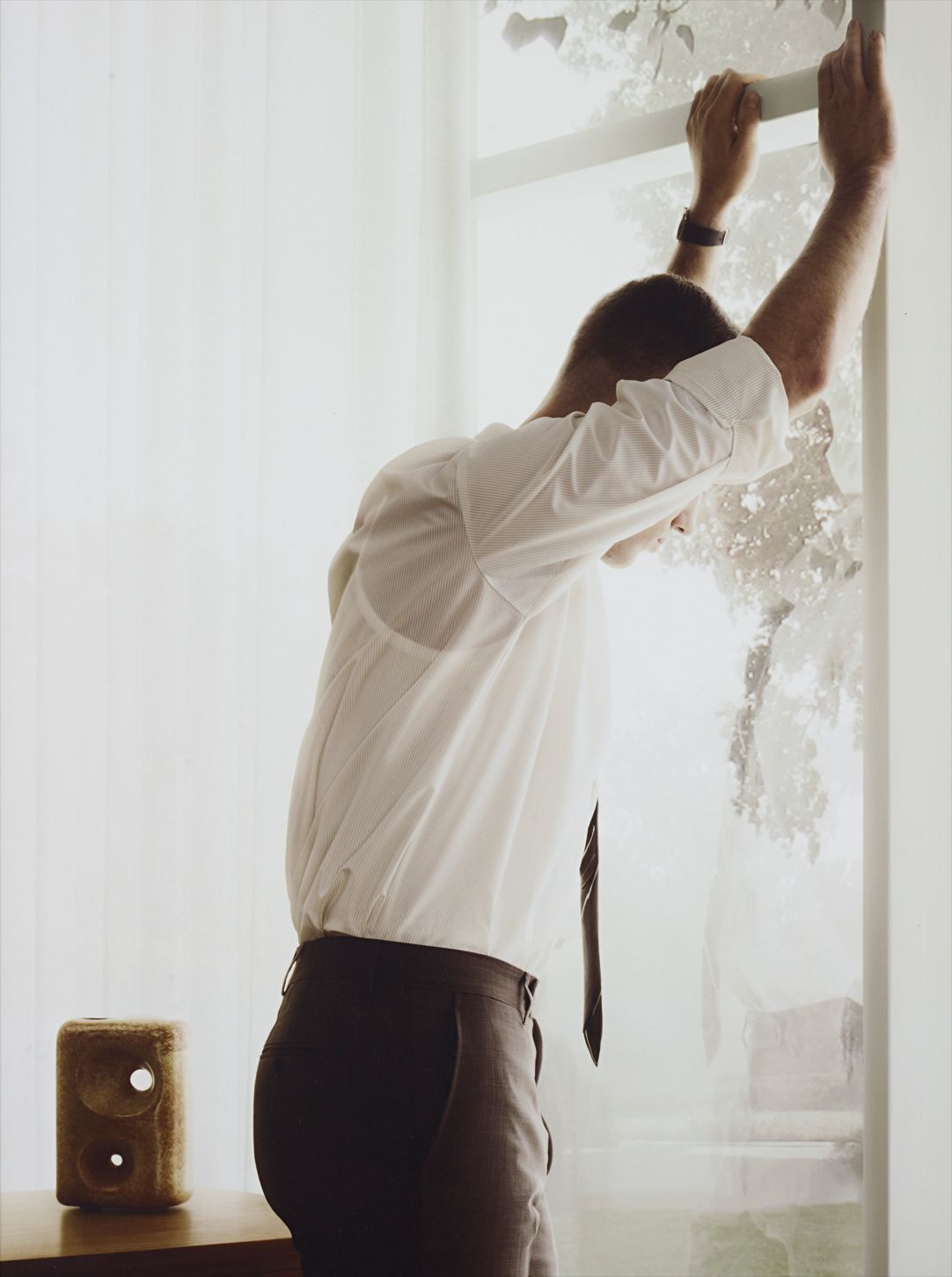
Erwin Olaf
Troy (Portrait) from Grief
Below that surface, however, is the conceptual architecture that gives these images their staying power. An Olaf photograph rewards return visits in the way great paintings do. You notice something new each time, a detail in the background, a shadow that shouldn't be there, an expression that seems to shift depending on your own mood. His editions are thoughtfully limited, typically in runs of eight to twelve, which has made well provenanced examples from key series genuinely competitive on the secondary market.
Works from "Grief," "Hope," and his portrait commissions represent particularly strong pillars of any collection. To place Olaf within the broader landscape of contemporary photography is to understand how distinctly his contribution stands. He shares with Cindy Sherman a fundamental interest in the constructed self and the performance of identity, and with Gregory Crewdson a love of theatrical lighting and narrative ambiguity. His chromogenic technique and commitment to large format printing connects him to the tradition established by the Dusseldorf School photographers, figures such as Andreas Gursky and Thomas Ruff, though Olaf's emotional temperature runs considerably warmer than that lineage might suggest.
He remained always grounded in the human figure, in the face, in the small private drama playing out behind the eyes of his subjects. That humanism is what separates him and what makes his work so immediately, viscerally affecting. Erwin Olaf died in Amsterdam in September 2023, and the tributes that followed from across the art world were remarkable for their personal warmth alongside their professional admiration. He was sixty three years old, and the body of work he left behind is extraordinary in its breadth, its consistency, and its courage.
His photographs will continue to enter major museum collections, to anchor important auction sessions, and to occupy the walls of collectors who understand that great art is not decoration but a form of ongoing conversation. On a platform dedicated to serious collecting and genuine engagement with contemporary practice, Olaf represents precisely the kind of artist whose work deepens with time and rewards every form of sustained attention. The world he built, frame by careful frame, is one worth inhabiting.