Erwin Blumenfeld
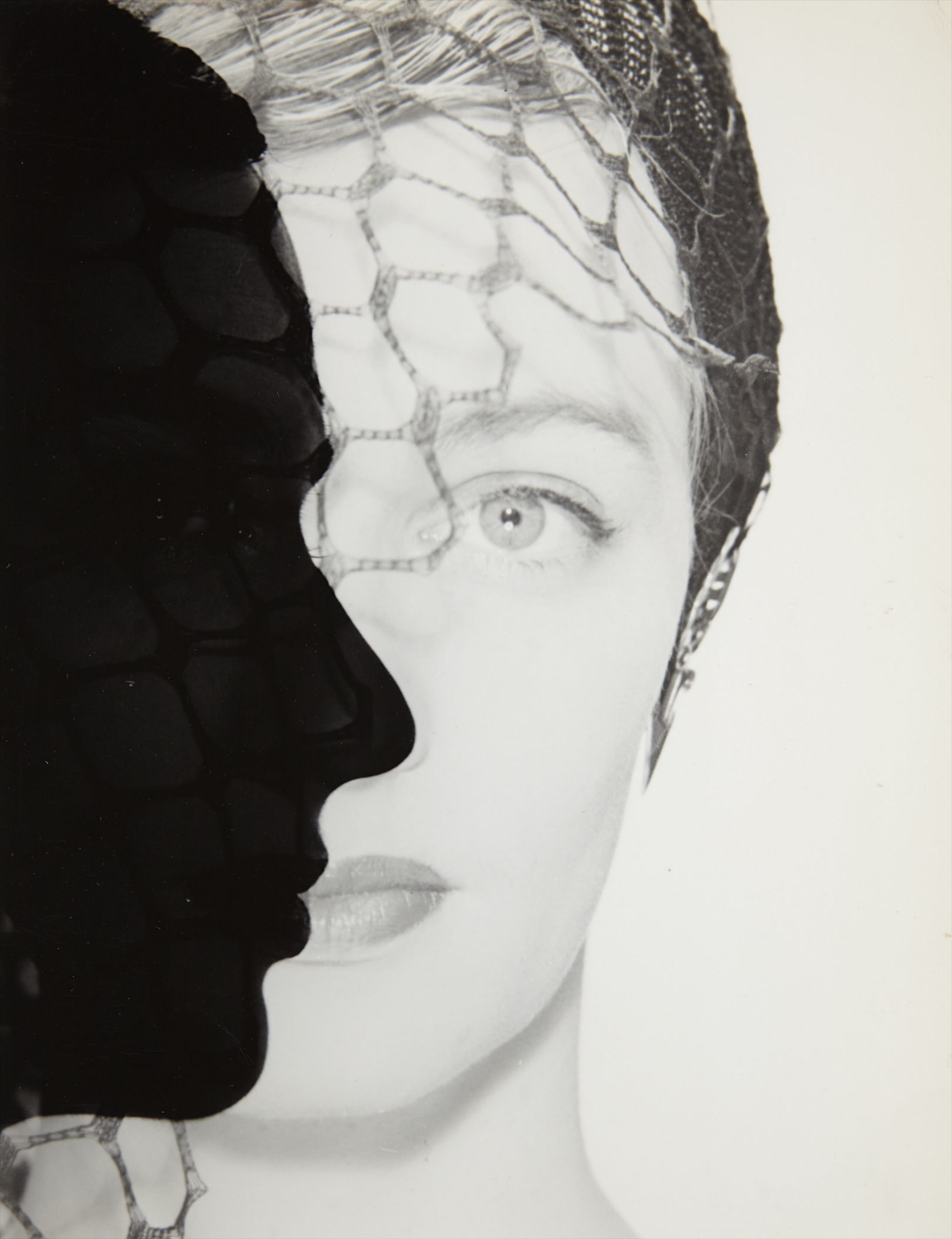
Erwin Blumenfeld: Photography's Most Audacious Visionary
Artist Spotlight · The Collection Editorial
“My whole life I have only wanted to do one thing: make beautiful images.”
Erwin Blumenfeld, Eye to I, 1975
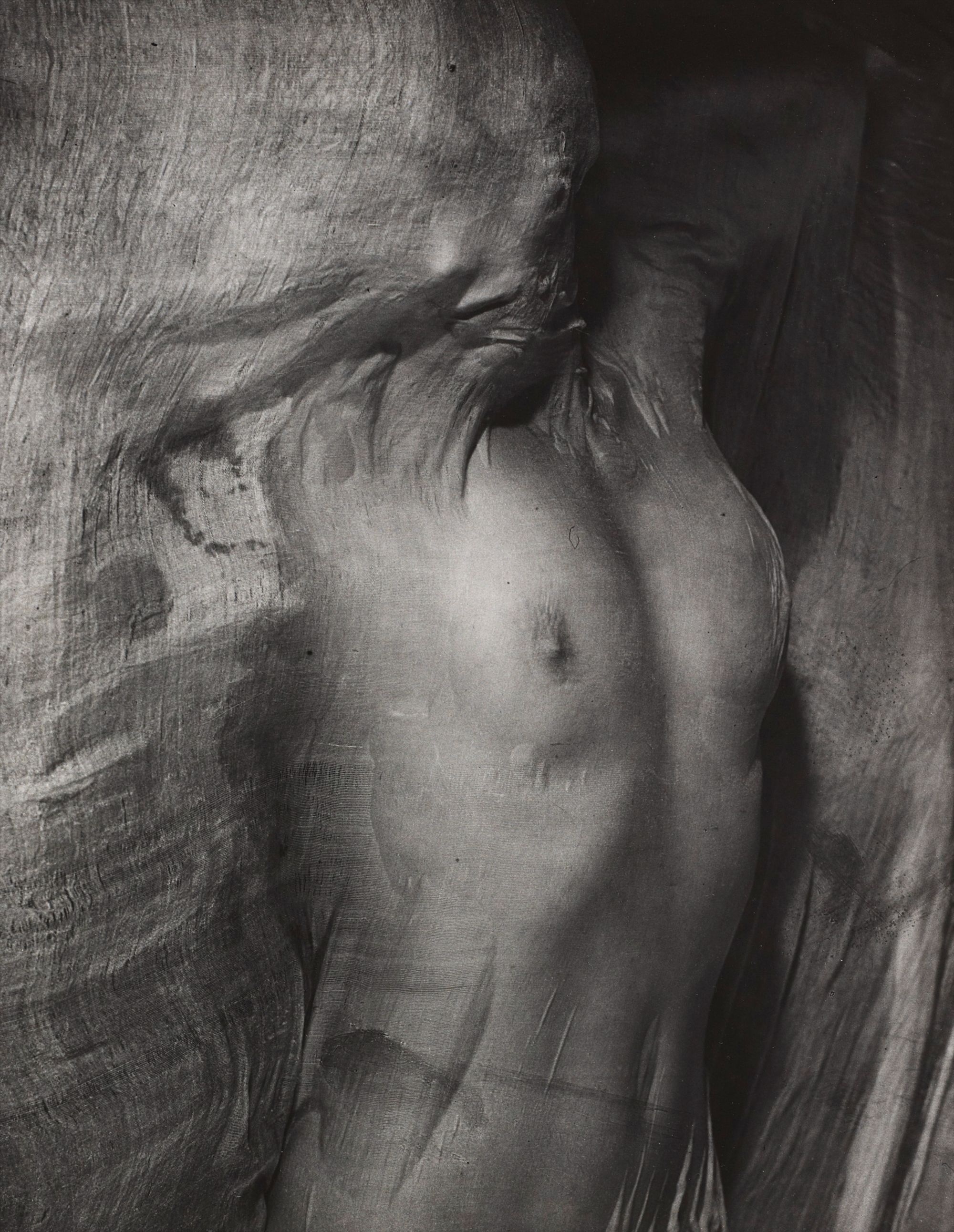
There is a photograph that stops you cold. A nude figure seen through wet silk, the fabric clinging and dissolving the body into something between dream and sculpture, between the tangible and the imagined. Erwin Blumenfeld made this image in Paris sometime in the 1930s, and it still feels startlingly contemporary, as though it arrived from a future that photography is only now catching up to. When major institutions revisit the golden age of fashion and fine art photography, Blumenfeld's name appears with a frequency that confirms what his most devoted collectors have long understood: this was one of the most formally inventive image makers of the twentieth century, a figure whose experiments with light, chemistry, and perception changed the grammar of the photographic medium itself.
Erwin Blumenfeld
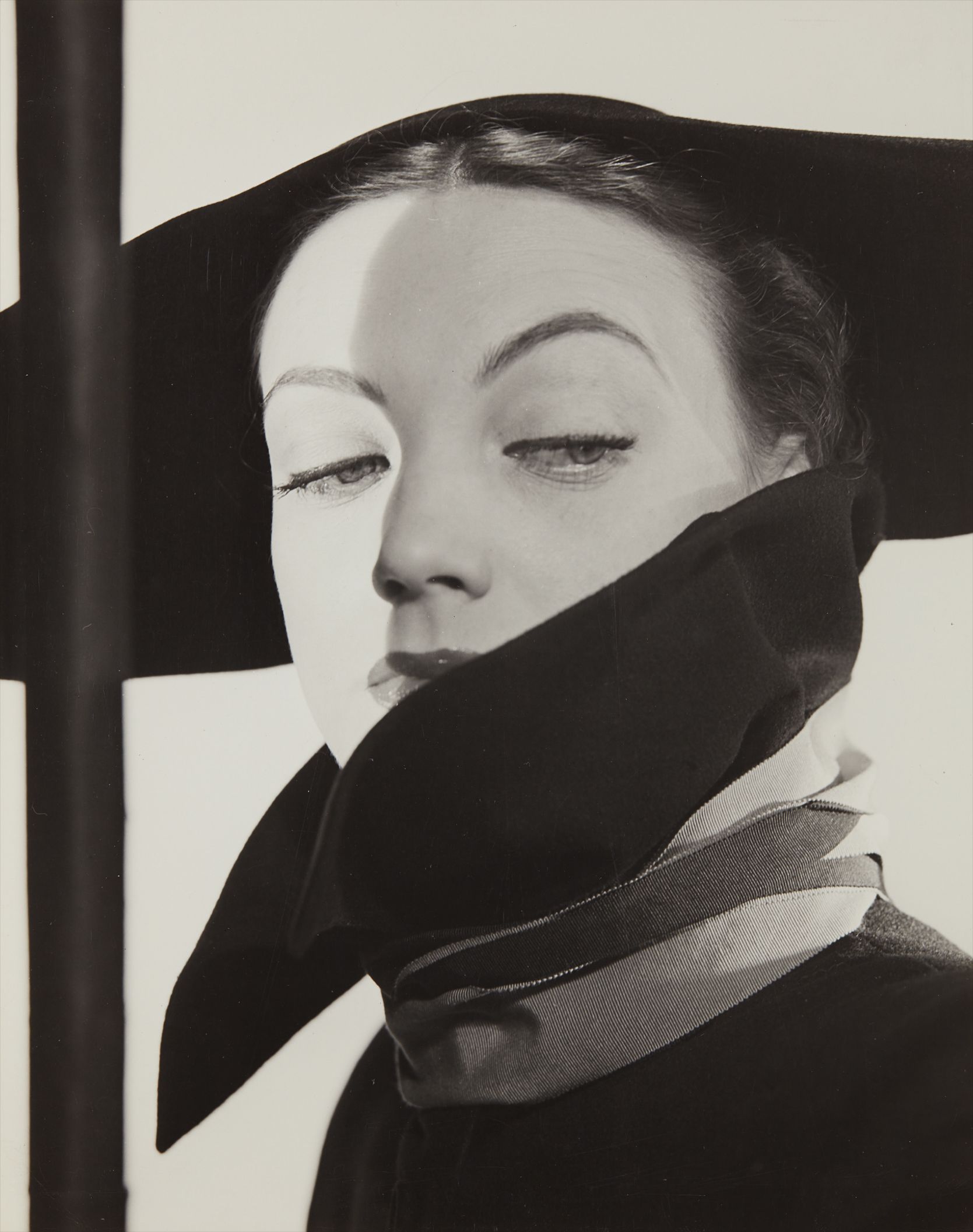
Hat Fashion, Dior, New York
Blumenfeld was born in Berlin in 1897 into a middle class Jewish family, and his early years were shaped by the ferment of Weimar era culture. As a young man he absorbed the energies of Dadaism and Expressionism, moving in circles that prized disruption and wit over academic convention. He became close with the Dutch writer Com van den Berg and nurtured a deep admiration for Charlie Chaplin and the broader culture of satirical irreverence. These early affinities were not incidental.
They formed the philosophical core of an artistic sensibility that would consistently refuse the straightforward, the literal, and the merely decorative in favor of images that provoke, unsettle, and enchant simultaneously. His path to photography was circuitous. Blumenfeld worked for years as a leather goods dealer in Amsterdam after World War One, a period of commercial drudgery that he endured with characteristic sardonic humor while quietly developing his skills as a photographer and collagist. Amsterdam in the 1920s and early 1930s was nonetheless a productive environment.
Erwin Blumenfeld
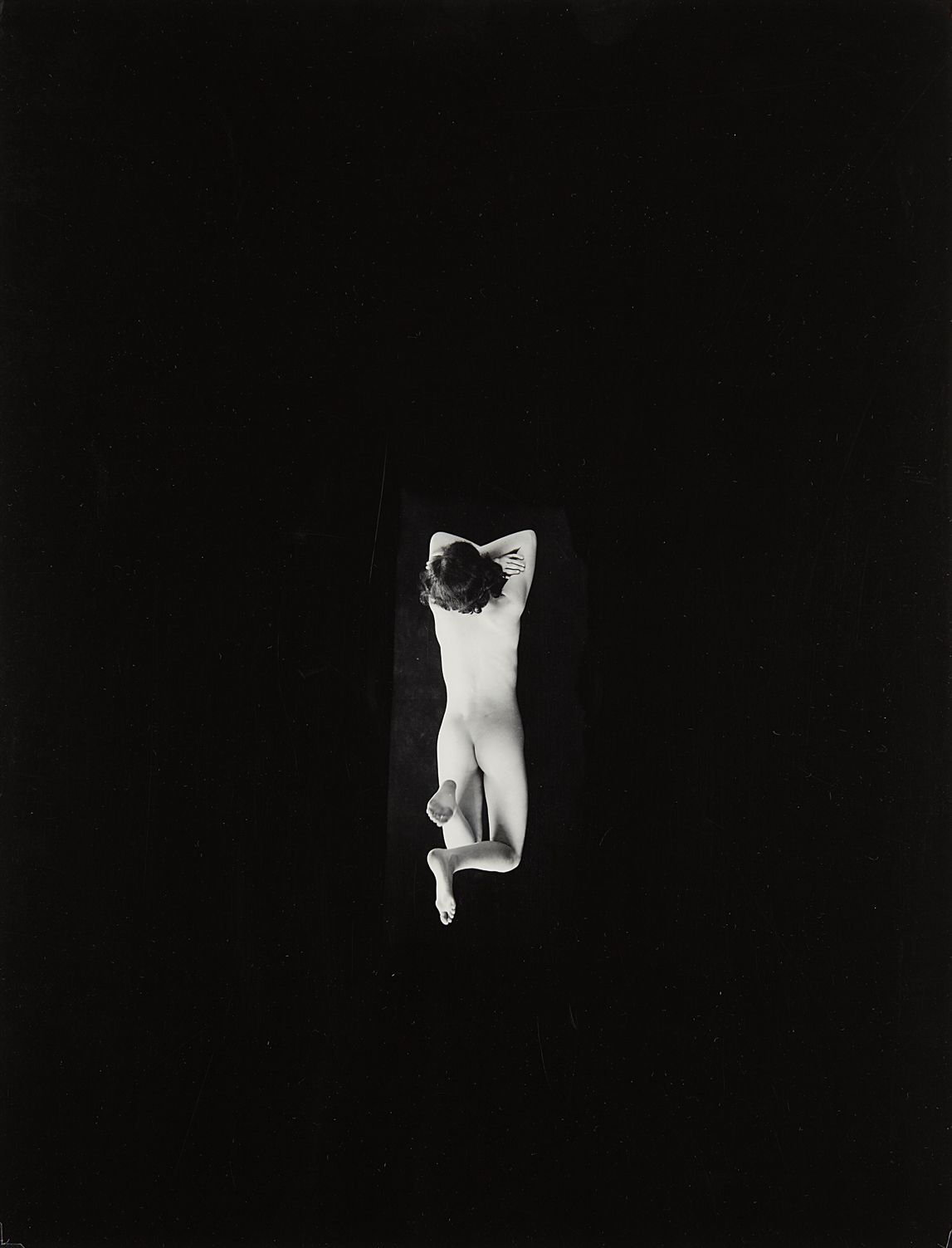
Lisette, Paris
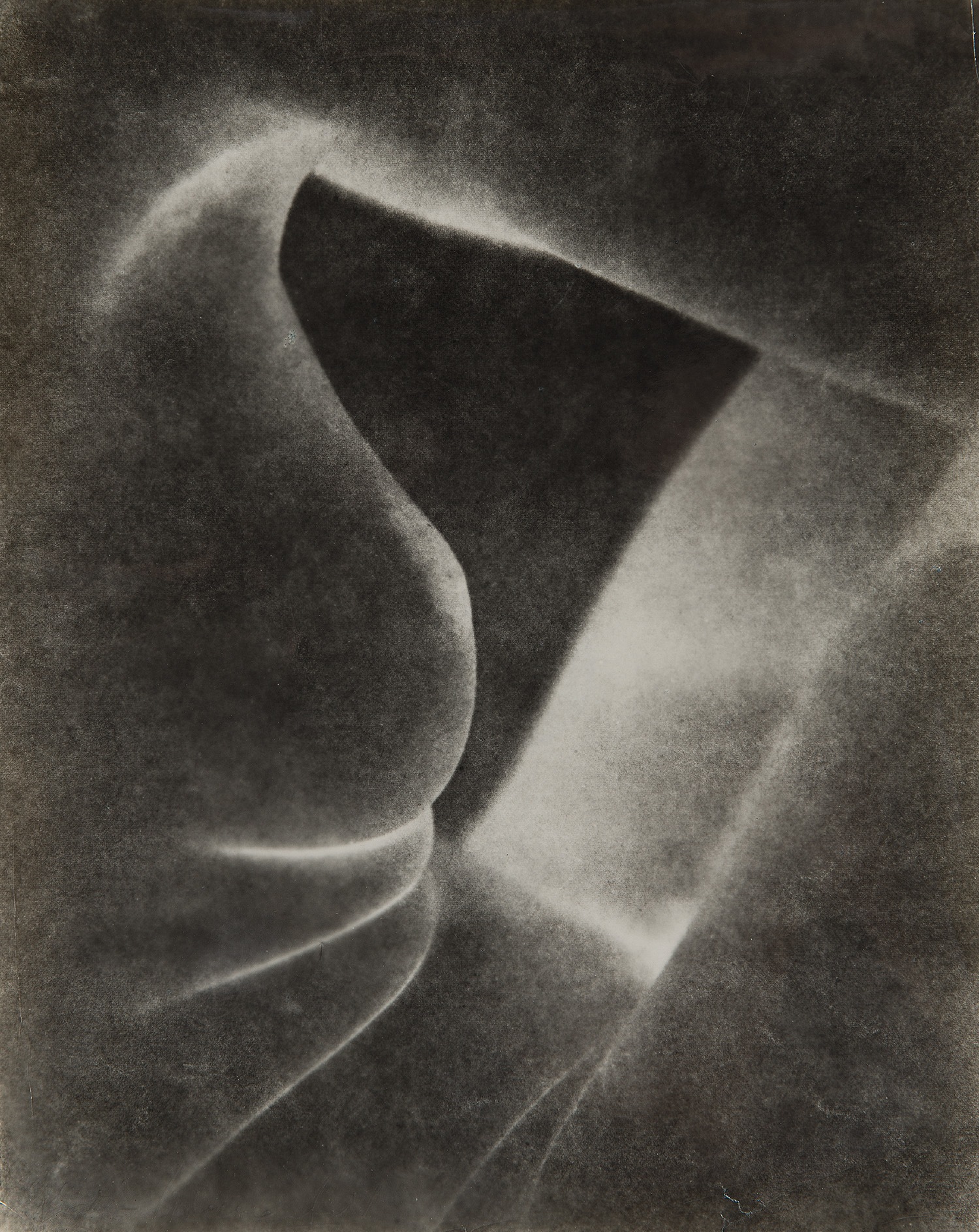
It was there that he created some of his earliest surviving photographic experiments, including the remarkable solarized gelatin silver print simply titled Amsterdam, a unique work made from a paper negative that demonstrates his early mastery of darkroom alchemy. These Amsterdam years produced images of surprising formal confidence, portraits and abstractions that show a mind already thinking beyond the frame. The decisive transformation came when Blumenfeld moved to Paris in 1936. The city was then the undisputed center of avant garde photography, and Blumenfeld threw himself into its possibilities with enormous energy.
He befriended Cecil Beaton and worked in proximity to the Surrealist movement, whose influence on his aesthetic was profound even if he never formally aligned himself with any single group. His Paris work grew increasingly experimental: solarization, multiple exposures, printing from paper negatives, and the manipulation of light through translucent materials all became tools in a visual vocabulary that was entirely his own. Works from this period, including Manina Paris and Nude behind Screen Paris, demonstrate the full range of his ambitions, blending the erotic and the formal, the documentary and the hallucinatory. His commercial career accelerated dramatically after he escaped wartime Europe and arrived in New York in 1941, following internment in French concentration camps, a period of suffering he later described with characteristic mordant clarity in his autobiography.
Erwin Blumenfeld
Amsterdam
In New York, Blumenfeld became one of the most sought after photographers working in fashion and portraiture, contributing legendary images to Vogue and Harper's Bazaar and collaborating on campaigns associated with the House of Dior among other leading fashion houses. Hat Fashion Dior New York is among his most celebrated works from this era, a composition of such formal elegance that it reads simultaneously as commercial art and as pure visual philosophy. His cover for Vogue in January 1950, featuring a dramatically lit face reduced almost to pure geometry, remains one of the most reproduced magazine covers in the history of American publishing. Yet Blumenfeld always insisted that his commercial and fine art practices were expressions of the same underlying vision, not separate careers but a single restless inquiry into what photography could do and what it could mean.
For collectors, the appeal of Blumenfeld's work operates on several levels at once. His prints are objects of genuine rarity: many of the most significant works exist as unique prints or in very small numbers, and those made directly from paper negatives carry an irreplaceable aura of singularity. The gelatin silver prints from his Paris and New York periods, particularly those showing evidence of his solarization techniques, represent some of the most technically sophisticated photographic objects produced in the mid twentieth century. Auction houses including Christie's and Sotheby's have seen consistent demand for his work, with rare vintage prints commanding significant premiums over later printed editions.
Erwin Blumenfeld
Nude Under Wet Silk, Paris
Collectors drawn to the intersection of Surrealism, modernist design, and the golden age of magazine culture find in Blumenfeld a uniquely satisfying figure: he belongs fully to each of those worlds while being reducible to none of them. The PPS Galerie F.C. Gundlach in Hamburg, which produced a landmark publication of his color work in 1984, played an important role in bringing renewed critical and market attention to his practice in the decades following his death.
In the longer history of photography, Blumenfeld occupies a position analogous to that of Man Ray, Brassai, and Andre Kertesz, contemporaries who similarly refused the boundary between fine art ambition and the working life of the commercial image. Like Man Ray he pursued solarization as both technique and metaphor, using the chemistry of light reversal to suggest that reality and its opposite are always closer than they appear. Like Kertesz he brought a poet's sensitivity to the formal qualities of everyday subjects. And like Helmut Newton, who came after him and acknowledged the influence, Blumenfeld understood that fashion photography at its best is not illustration but invention.
What distinguishes him within this company is a particular quality of warmth and wit that prevents even his most formally austere images from feeling cold. There is pleasure in looking at Blumenfeld, genuine sensory delight, and that pleasure is inseparable from his seriousness as an artist. Blumenfeld died in Rome in 1969, leaving behind a body of work that his son Yorick and the broader Blumenfeld estate have worked to preserve and champion in the decades since. His autobiography, Eye to I, published posthumously in 1975, revealed the full depth of his literary intelligence and confirmed that his photographs had always been the visual expression of a genuinely philosophical mind.
Today, as institutions and collectors alike reassess the full breadth of twentieth century photography beyond the canonical names, Blumenfeld emerges with ever greater clarity as an artist of the first rank: technically virtuosic, conceptually daring, and possessed of a vision that time has only made more luminous.
Explore books about Erwin Blumenfeld
Erwin Blumenfeld: My One Hundred Best Photographs
Erwin Blumenfeld
Erwin Blumenfeld: A Retrospective
Constance Sullivan (editor)
Erwin Blumenfeld: Photographs
Erwin Blumenfeld
Erwin Blumenfeld: Man Ray and Others
Various authors
The Art of Erwin Blumenfeld
Terence Pepper
Erwin Blumenfeld: Photojournalist
Peter Beye