Ernie Barnes
Ernie Barnes: The Poet of Black Joy
Artist Spotlight · The Collection Editorial
“I paint the beauty I see in my people. I want us to know we are beautiful.”
Ernie Barnes
There is a particular moment in American cultural memory that belongs entirely to Ernie Barnes. On the closing credits of the beloved television series Good Times, a canvas filled with swirling, ecstatic dancers froze the nation in its tracks. The painting was called The Sugar Shack, and it depicted something that fine art had rarely dared to celebrate so openly: the pure, embodied pleasure of Black people at leisure, in motion, alive with rhythm and community. When Marvin Gaye chose the same image for the cover of his 1976 album I Want You, the painting crossed from living room television screens into record stores across the world.
Ernie Barnes
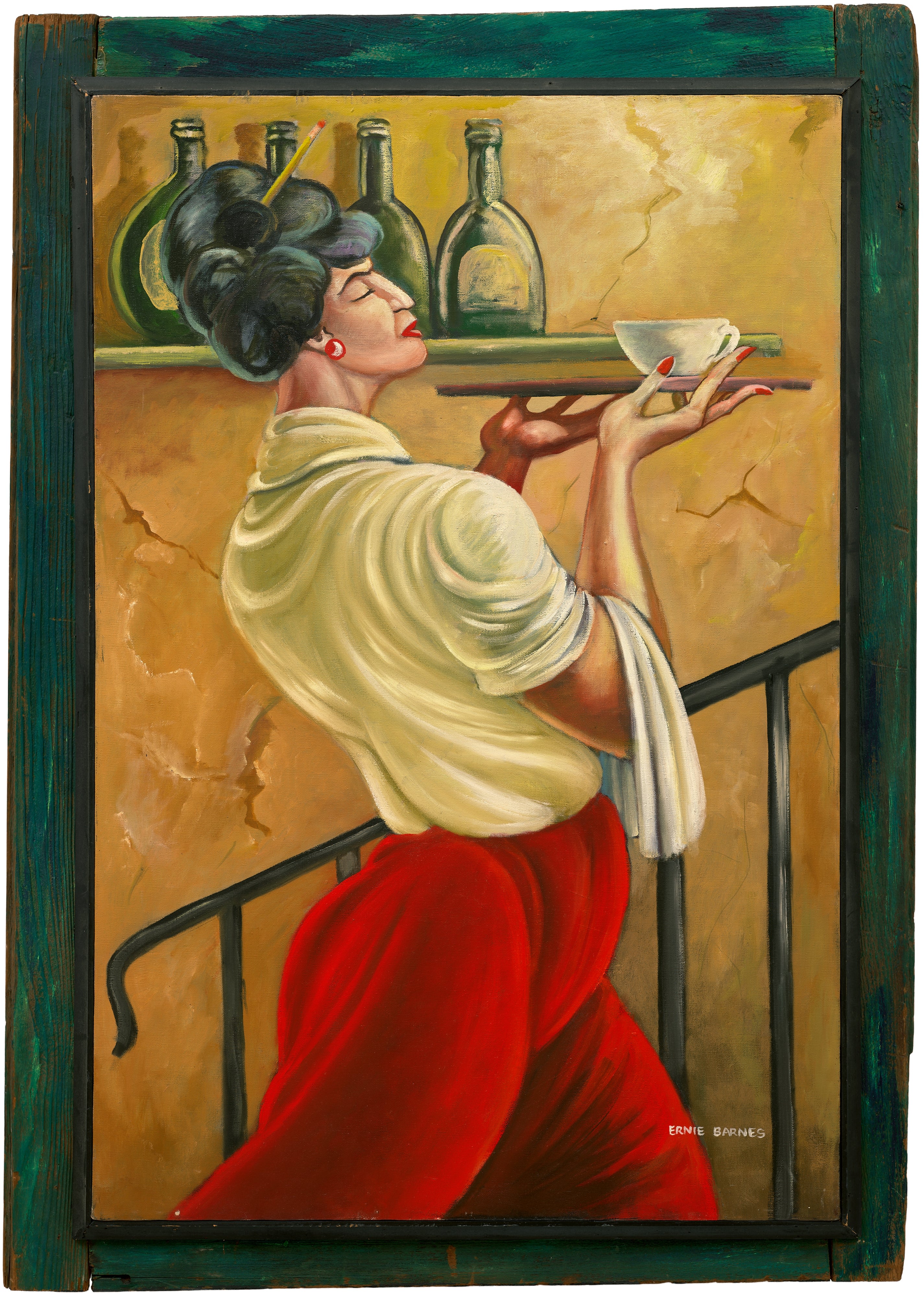
Today a Waitress, 1990
Barnes was not yet fifty years old, and he had already created one of the most recognized images in American popular culture. Ernest Eugene Barnes Jr. was born in Durham, North Carolina in 1938, into a world that placed strict limits on what a Black man could dream. He grew up in a segregated South where the boundaries of daily life were enforced with both law and violence, yet Barnes moved through that world with his eyes wide open, absorbing the textures of community gatherings, the dignity of working people, and the grace that flourished quietly beneath the pressures of Jim Crow.
Art became his private language early. He studied figurative painting and found in the human body a subject of inexhaustible richness, particularly the bodies of people who looked like him and the people he loved. Before he was a painter of any professional renown, Barnes was a professional football player. He played offensive lineman in the American Football League during the early 1960s, with stints including time with the San Diego Chargers and the Denver Broncos.
Ernie Barnes
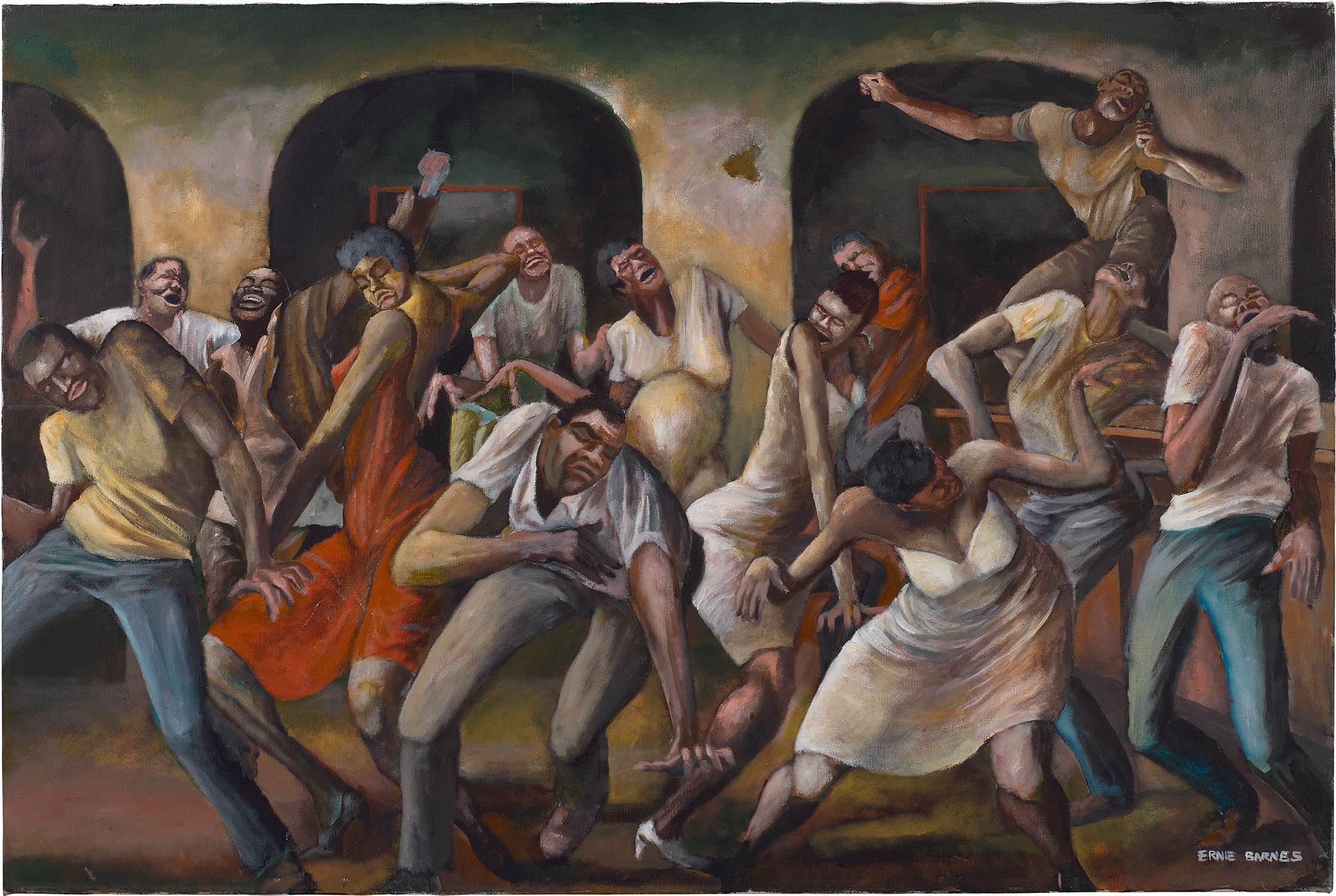
Human Celebration, 1960
This experience was not a detour from his artistic life but its foundation. On the field and in the locker room, he watched bodies under pressure, in contest, in collaboration. He observed how effort and grace coexist in athletic performance, how the human form bends and strains and soars. He sketched constantly.
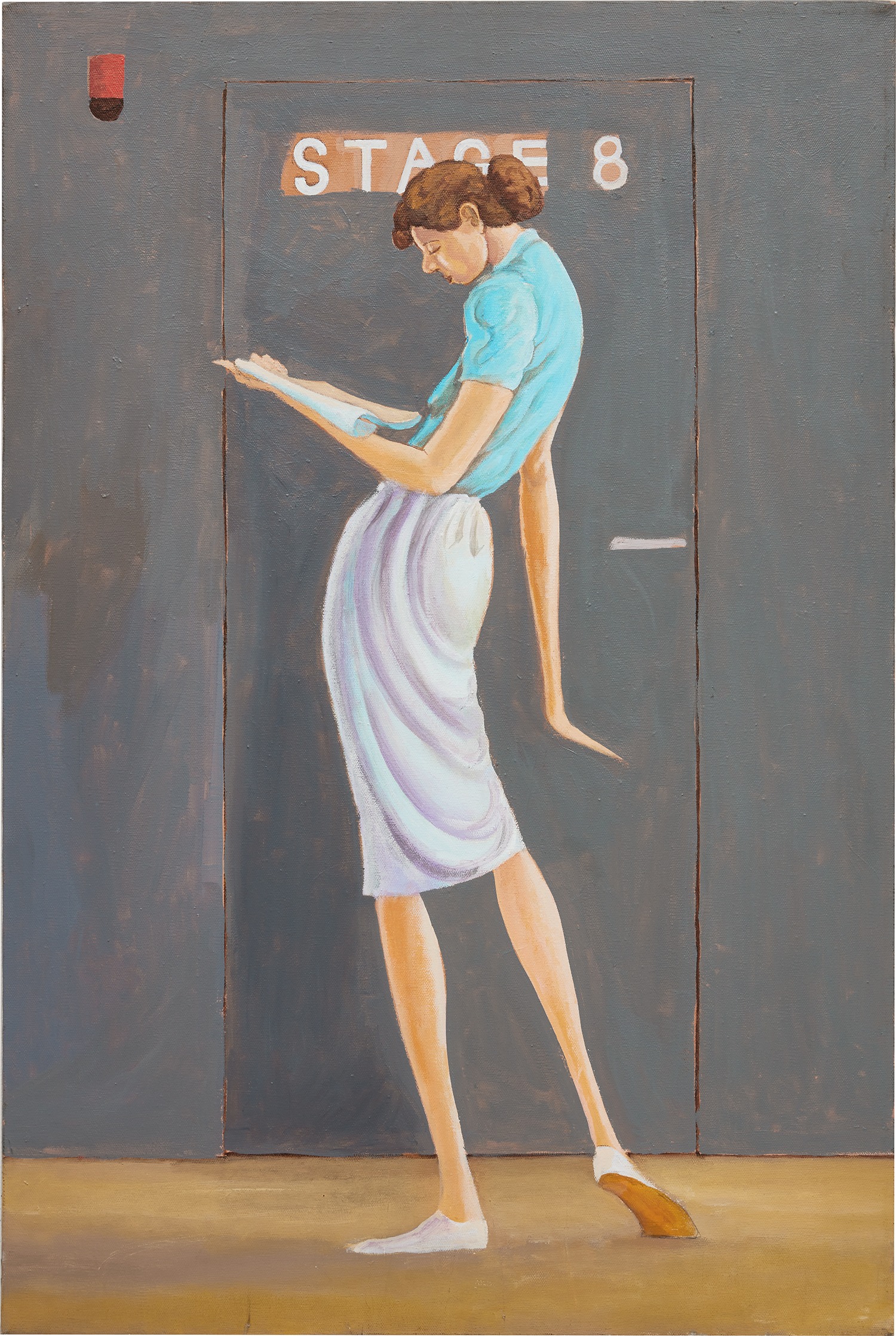
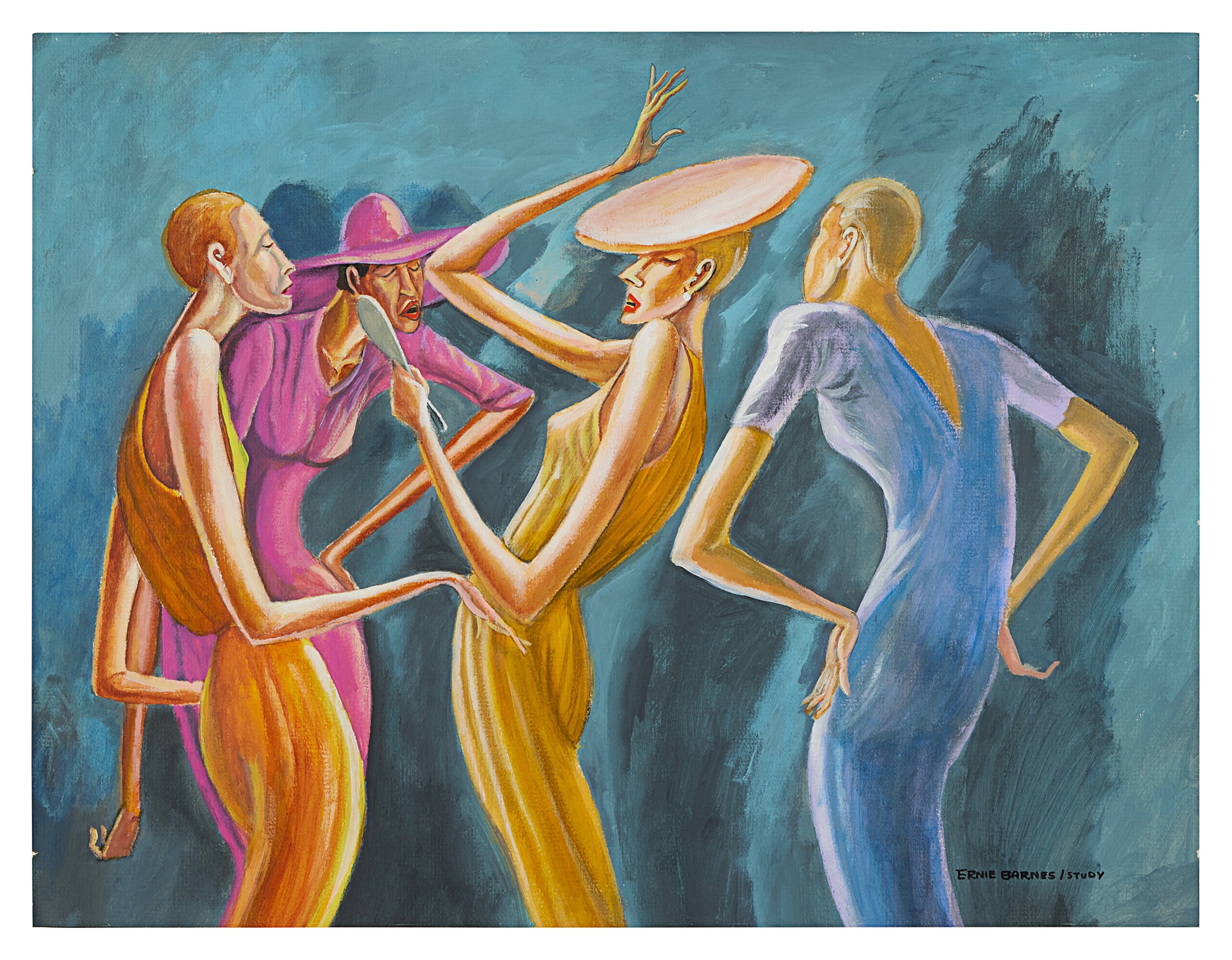
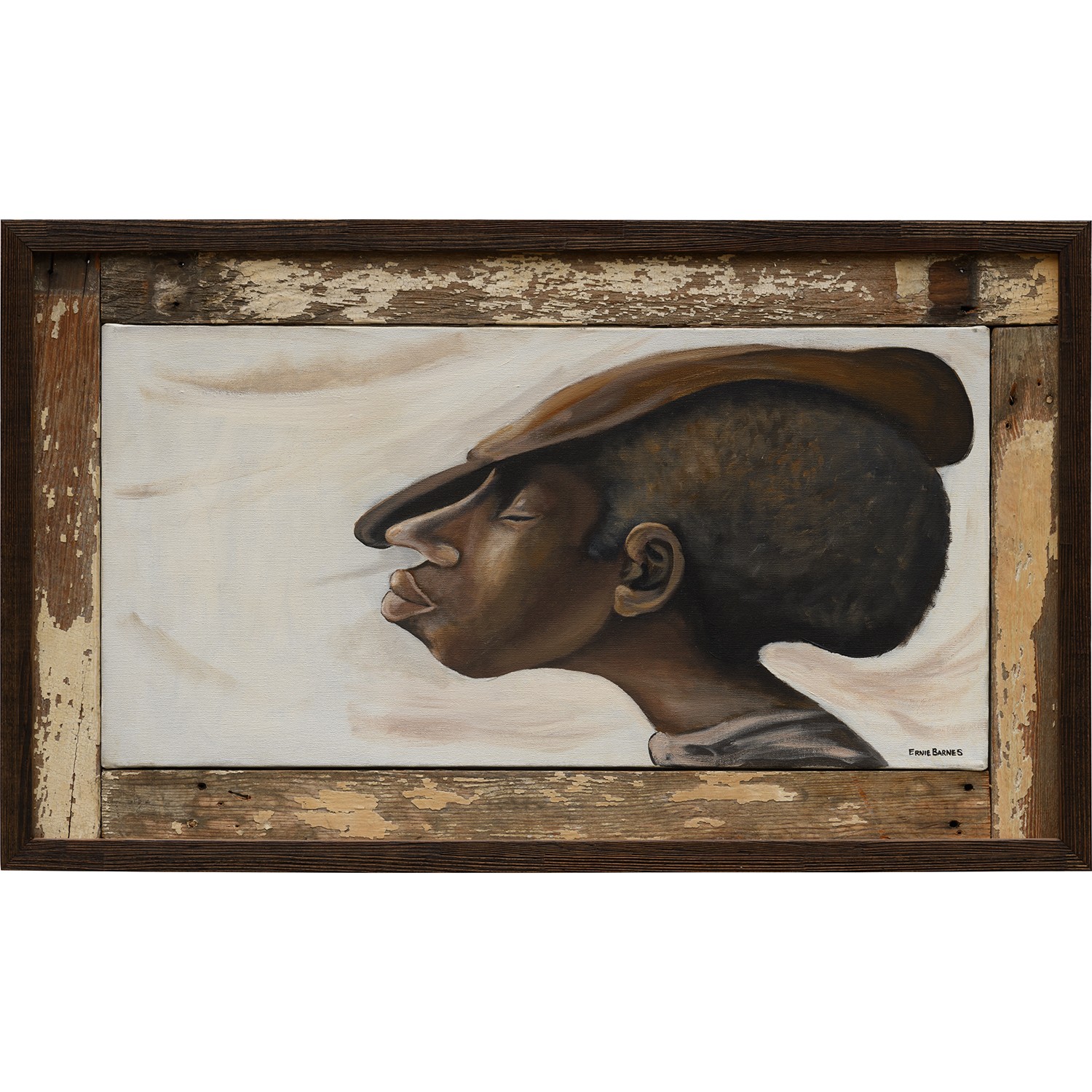
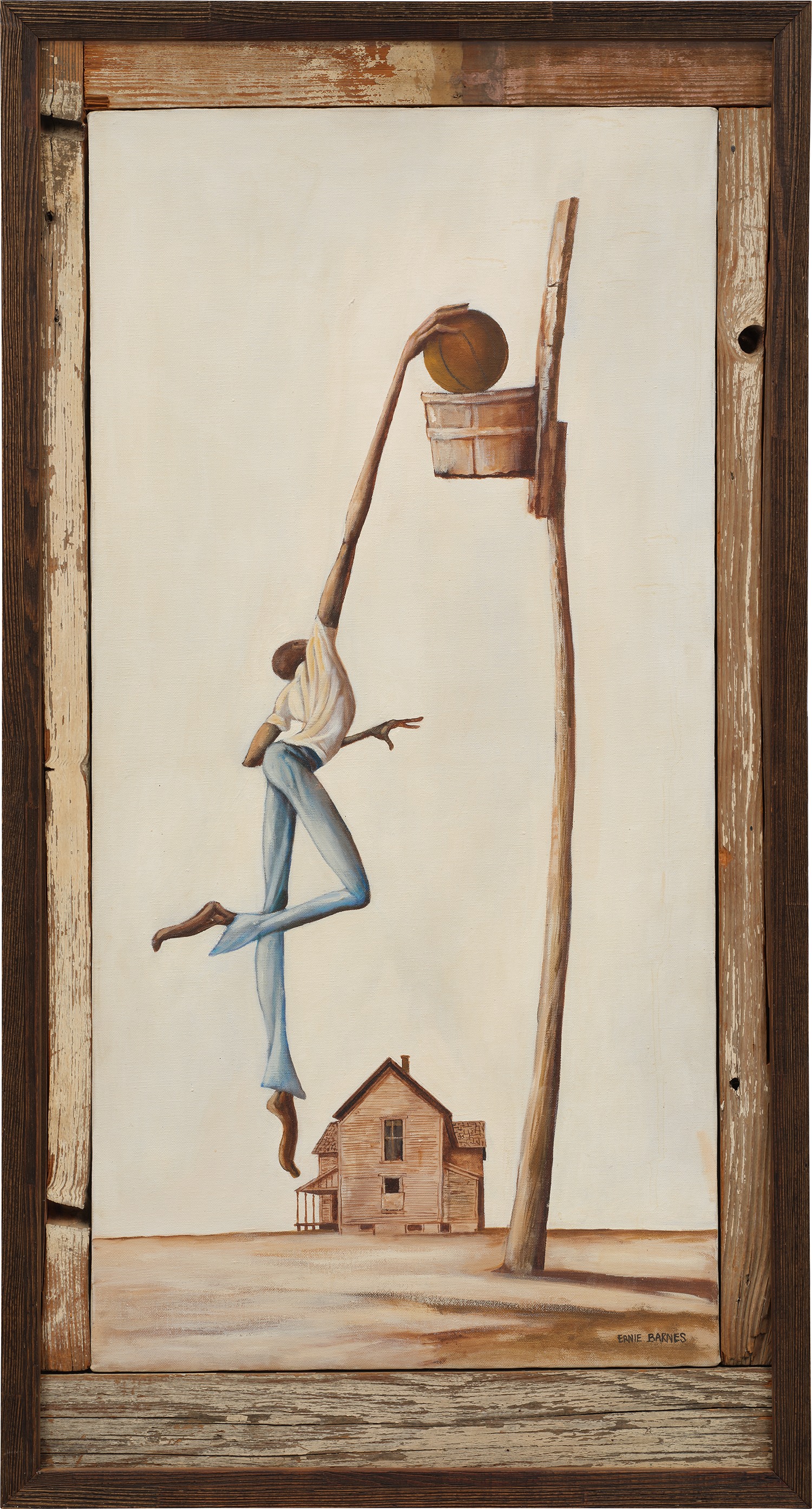
When he retired from professional football, he carried that education directly onto canvas, and the results were unlike anything being produced in American figurative painting at the time. The visual language Barnes developed is immediately recognizable and entirely his own. His figures are elongated, their limbs stretching beyond anatomical convention toward something closer to spiritual expression. Eyes are often closed or cast downward, as though his subjects are turned inward even in the midst of communal activity.
Ernie Barnes
Stage 8, 1982
There is a quality of trance in his work, of transcendence reached through physical and musical immersion. This was a deliberate choice, not a stylistic quirk. Barnes believed that the figures he painted existed in a state of heightened being, and he structured their bodies to reflect that elevation. The compositions are dense and layered, figures pressing close together, creating a sense of collective energy that feels almost audible.
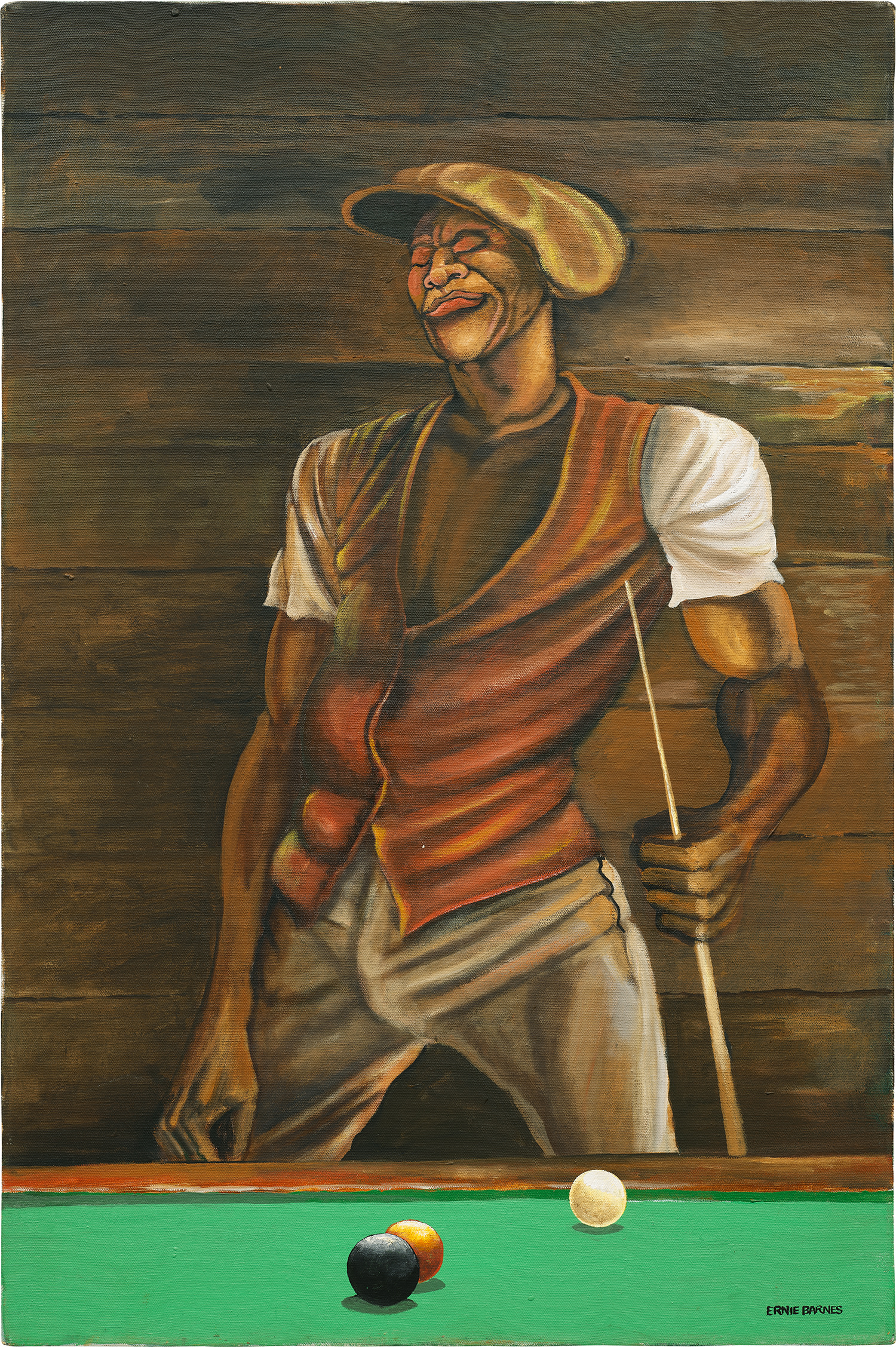
Among the works available through The Collection, this visual philosophy is evident across decades of his output. Pool Player from 1970 captures a solitary figure in concentrated stillness, the geometry of the pool table providing a cool counterpoint to the warmth Barnes always brought to his subjects. Dressing Room from 1965 is an earlier and particularly intimate work, offering a glimpse into the private rituals that precede public performance, a subject Barnes returned to throughout his career with consistent tenderness. Life After Sundown from 1979 and Slam Before the Storm from the same year show Barnes at the height of his powers, the compositions tightly wound with anticipation and release.
Ernie Barnes
Four Ladies with Gold Hat, 1998
The Ron Mix Football Portrait from 1966, created during or shortly after his playing years, is a document of rare authenticity: an athlete painting athletes, with an insider's understanding of what the game costs and what it gives. The market for Barnes has grown steadily and substantially since his passing in 2009, with his estate attracting serious collector attention at auction houses including Swann Galleries and Christie's. Works that once traded modestly have seen prices climb into the hundreds of thousands of dollars, reflecting both the broader reassessment of Black American artists whose work was undervalued during their lifetimes and the particular cultural weight that Barnes's imagery carries. Collectors are drawn to the joyfulness of his work, which is a quality that can feel deceptively simple but is in fact extremely difficult to sustain across a body of work without descending into sentimentality.
Barnes never became sentimental. His joy is hard won, rooted in specific historical circumstances, and painted with formal rigor. For those building collections with an eye toward both cultural significance and long term value, works on paper such as the Study Sketch for Pool Hall and Study Sketch for Tennis offer accessible entry points into his practice while demonstrating how carefully he prepared his compositions. Barnes occupies a distinct position within the broader tradition of African American figurative painting.
His commitment to depicting Black leisure and Black community life connects him in spirit to artists like Archibald Motley Jr., whose Bronzeville nightlife scenes from the 1920s and 1930s similarly celebrated Black social worlds with warmth and sophistication. There are also resonances with the social realism of Charles White and the narrative density of Jacob Lawrence, though Barnes arrived at his own synthesis entirely independently. In the context of his moment, when the art world was largely consumed by abstraction and conceptualism, his insistence on figurative painting and on the particular figures he chose to paint was itself a quiet act of cultural argument.
What makes Barnes essential today, more than fifteen years after his death, is the combination of his historical specificity and his emotional universality. He painted African American life in the second half of the twentieth century with documentary intimacy and lyrical ambition. He gave that life a visual grandeur it had rarely received from the institutions of fine art. And he did it with a painterly intelligence that rewards close looking, with surfaces built up in acrylic that hold light and movement in equal measure.
His legacy is not simply that he made one iconic painting or that his work appeared on an album cover. His legacy is a sustained vision of human dignity expressed through bodies in motion, a vision that feels as necessary now as it did when he first put brush to canvas in Durham, North Carolina, and dared to believe that what he saw around him was worth painting.
Featured Works
Explore books about Ernie Barnes