Erik Bulatov
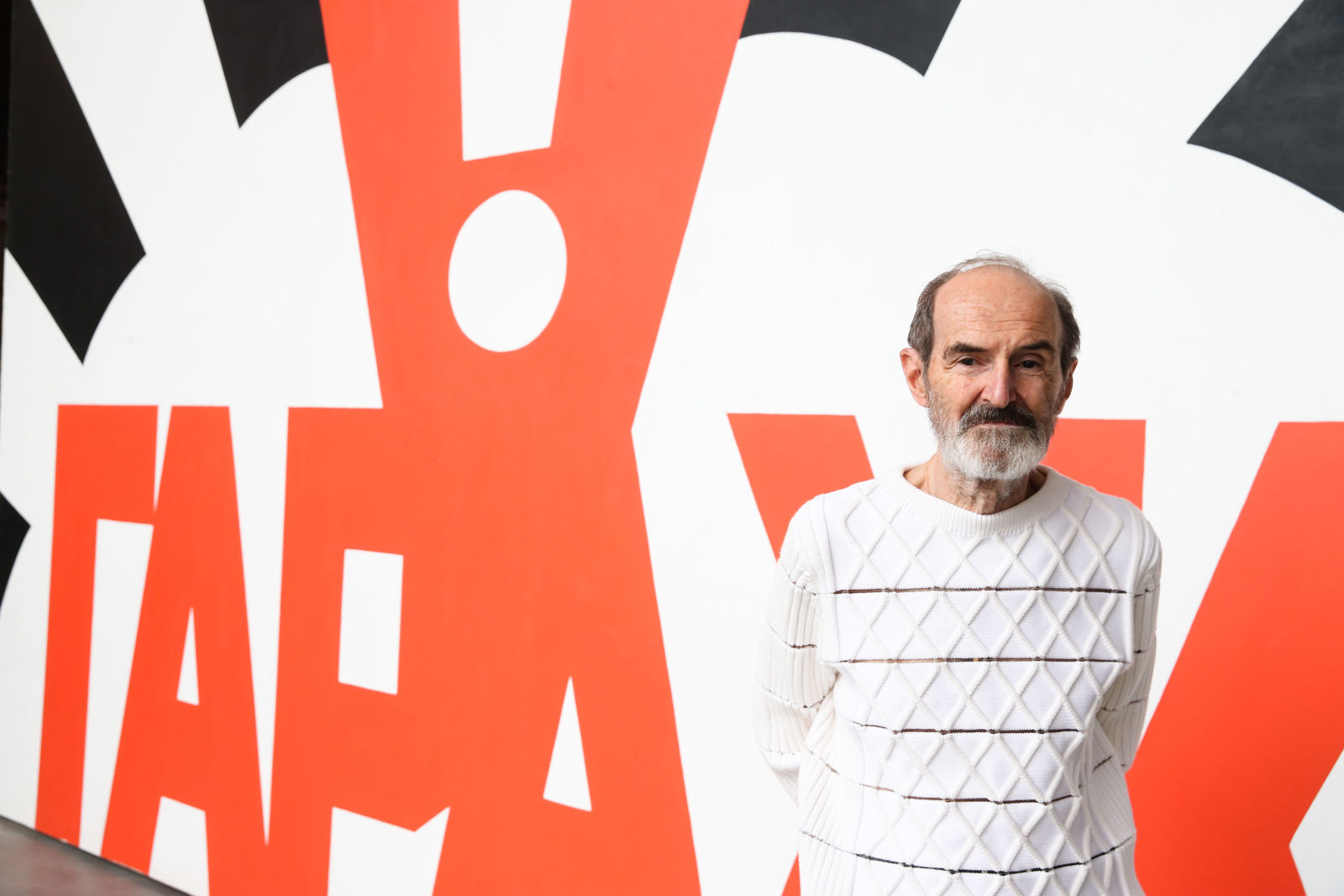
Erik Bulatov: Where Freedom Meets the Canvas
Artist Spotlight · The Collection Editorial
“I paint the space of freedom inside the space of constraint. That is the whole subject.”
Erik Bulatov
In the months following Erik Bulatov's passing in early 2025, the international art world paused to take full measure of a legacy that had been quietly reshaping how we think about language, space, and political consciousness in painting. Major institutions from Paris to New York began reassessing their holdings and loan requests multiplied. The Pompidou Centre, which had long championed Bulatov as one of the defining figures of Soviet nonconformist art, found renewed attention drawn to its collection. The moment felt less like mourning and more like a long overdue reckoning with an artist who had spent decades insisting that the canvas was, above all else, a space where the viewer could breathe.
Erik Bulatov
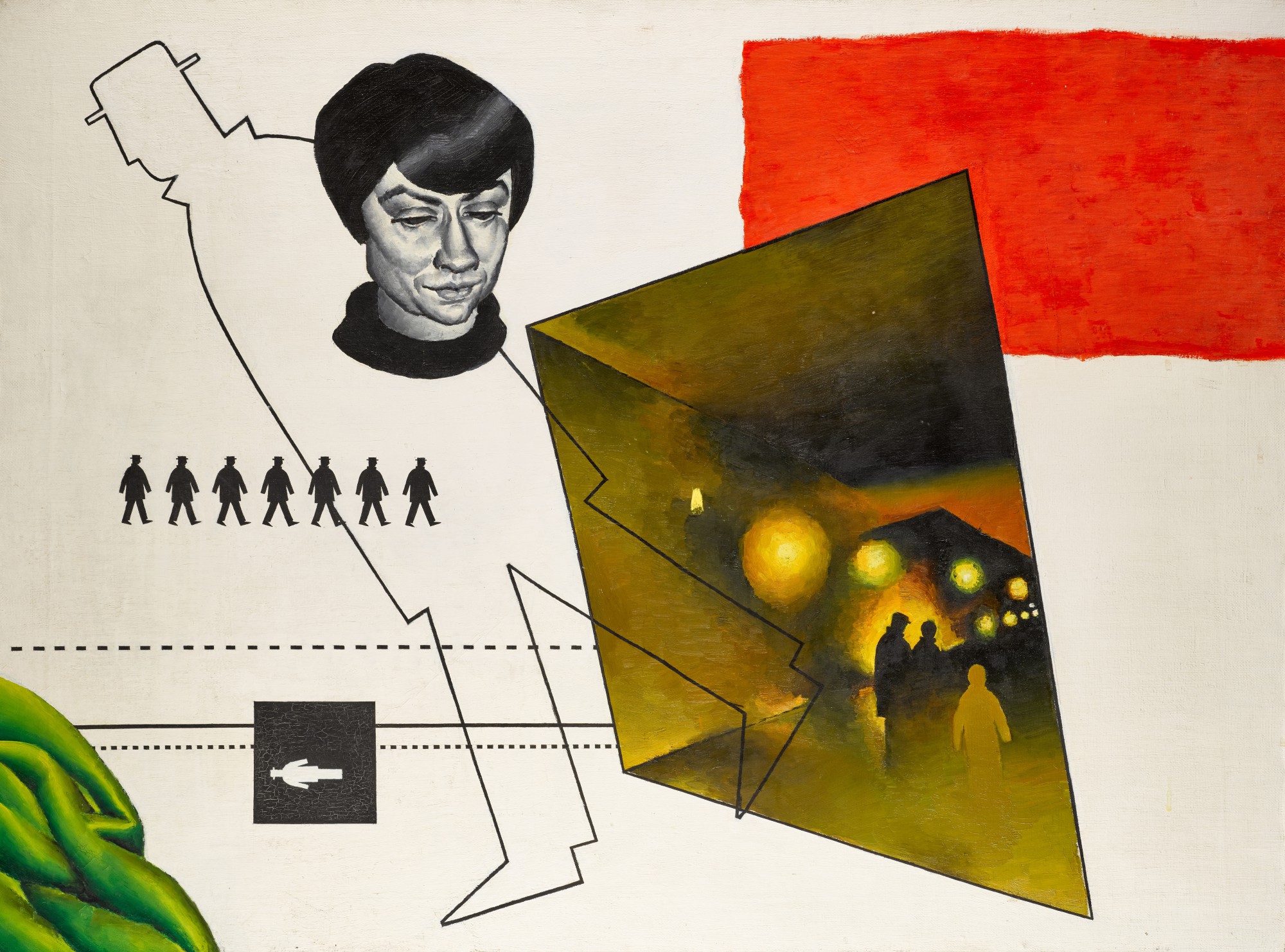
Urban Painting
Bulatov was born in Sverdlovsk, in the Soviet Union, in 1933, and came of age in Moscow during the postwar Stalinist era. He studied at the Surikov Art Institute under the painters Robert Falk and Vladimir Favorsky, two figures whose rigorous attention to pictorial construction and deep respect for the European tradition left a permanent mark on his sensibility. Falk in particular, an heir to the Russian Cézannist tradition, taught Bulatov to think about painting as a problem of perception rather than mere representation. These lessons would take decades to fully unfold, but their roots are visible even in the early figurative drawings and studies that now circulate among serious collectors.
To survive professionally in Soviet Moscow, Bulatov spent the 1960s and 1970s working as an illustrator of children's books alongside his close friend and collaborator Oleg Vassiliev. It was painstaking, commercially driven work that nonetheless gave him an intimate understanding of graphic space, text, and how images communicate to mass audiences. During this same period, he was developing his private artistic practice entirely outside official Soviet channels, part of a loose community of nonconformist artists that included Ilya Kabakov, who would become one of the most celebrated conceptual artists of the twentieth century. These figures found ways to make profound, searching work under conditions of censorship and cultural control, and their solidarity with one another was as important as any formal influence.
Erik Bulatov
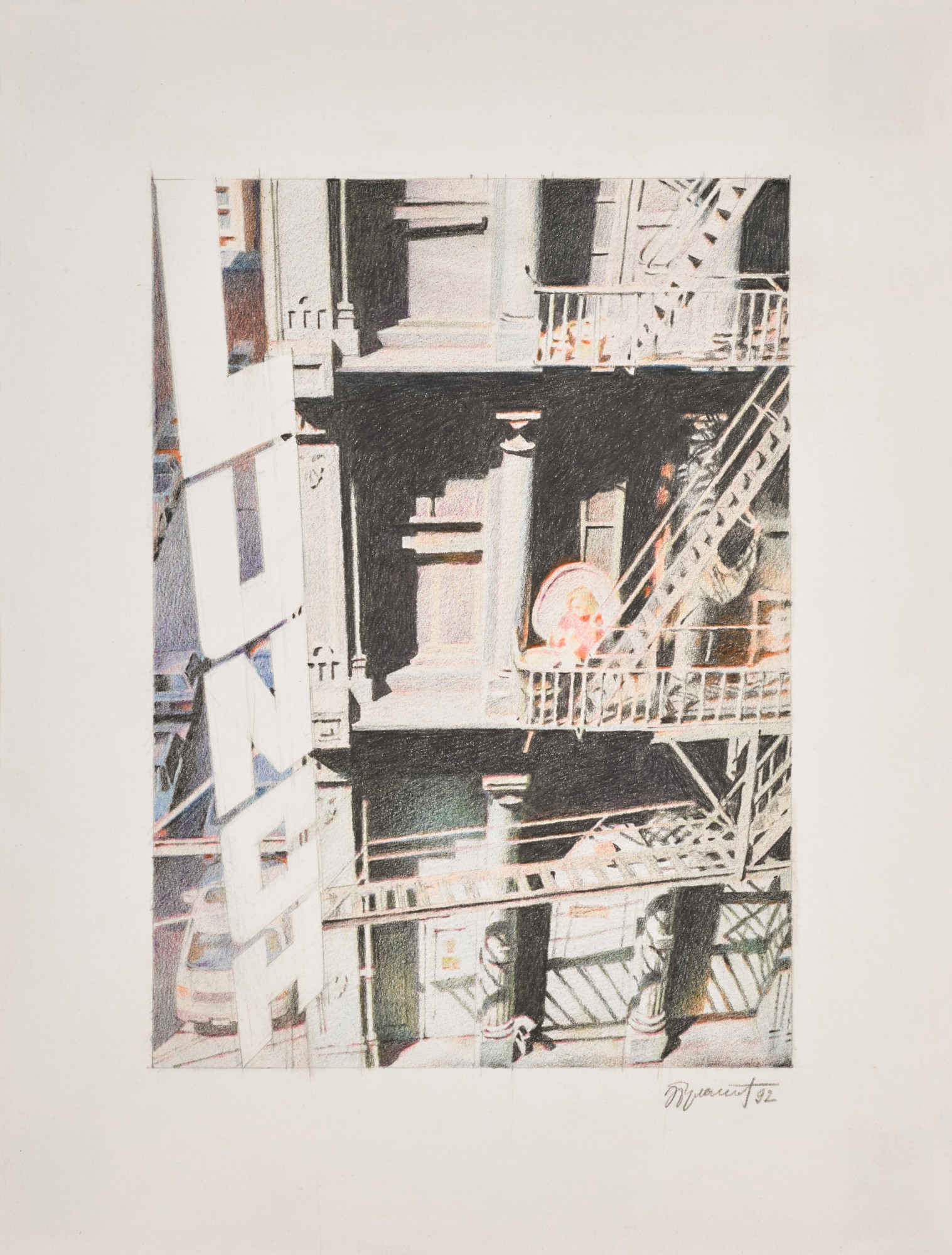
Lunch
The breakthrough that defined Bulatov's mature practice was his radical fusion of Soviet visual language with painterly space. Beginning in the late 1960s and accelerating through the 1970s, he began embedding text directly into large scale oil paintings, overlaying photorealistic scenes of everyday Soviet life with slogans, official phrases, and political declarations rendered in bold, flat lettering. The effect was profoundly disorienting and entirely new. The painted space behind the text seemed to recede into genuine depth, even infinity, while the words floated on the surface like a barrier or a veil.
Works from this period such as the iconic "Glory to the CPSU" confronted viewers with the visual grammar of Soviet propaganda and simultaneously stripped it of authority by placing it inside the existential openness of painterly space. This was not satire exactly, and it was not celebration. It was something stranger and more lasting: an anatomy of how ideology colonizes vision. The works available through The Collection offer a remarkable range across Bulatov's career and illuminate both his thematic preoccupations and his technical versatility.
Erik Bulatov
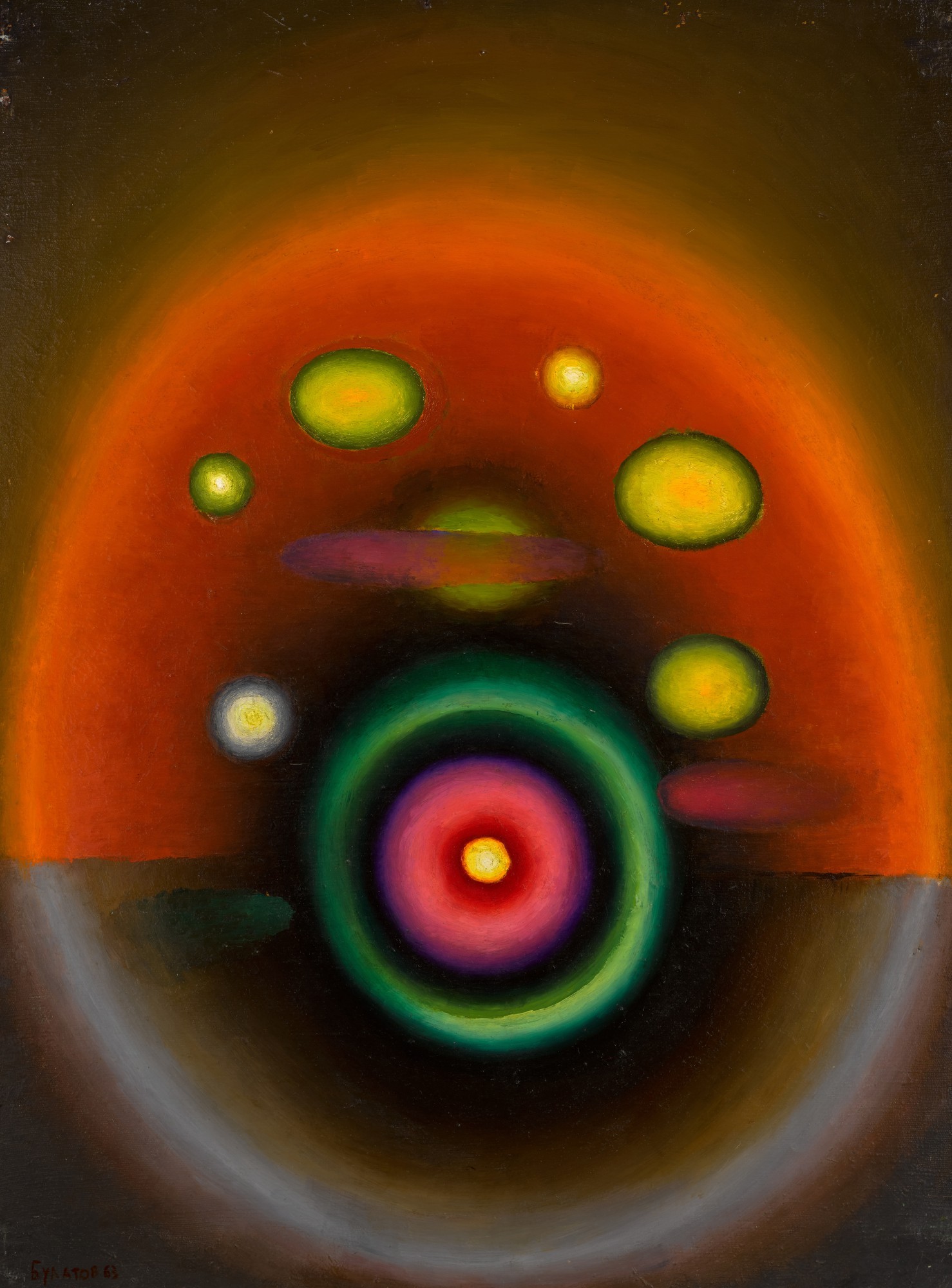
Bouquet of Flowers
"Urban Painting" and "Street at Night" demonstrate his sustained engagement with the Soviet cityscape as a site of both containment and yearning, while "Sky and Sea" reveals his almost meditative attention to natural space as a symbol of freedom and escape. "Happy New Year," from 1990, arrives at a hinge moment in history, painted as the Soviet world was dissolving, and carries the charged ambiguity of a greeting that could be sincere, ironic, or both at once. The coloured pencil works on paper, including "The Nation and the Party Are United" and "Revolution and Perestroika," show an artist working with intimacy and precision in a smaller register, and they remind collectors that Bulatov's graphic sensibility was never merely a preparation for oil painting but a fully realised mode of thinking in its own right. "Decoration of Space," the diptych executed in oil and gold paint on canvas, is among the most formally ambitious works in this group, using gold's traditional associations with the sacred to create a pointed dialogue with secular Soviet iconography.
For collectors, Bulatov occupies a fascinating position in the market. His work has been represented and championed by Galerie Thaddaeus Ropac, one of Europe's most respected galleries, which brought sustained international attention to his practice. His paintings have appeared at major auction houses and have found homes in significant private and institutional collections across Europe, Russia, and the United States. The relative scarcity of his large format oil paintings makes them particularly sought after, and the works on paper represent an accessible but genuinely important entry point for collectors building a serious engagement with the nonconformist tradition.
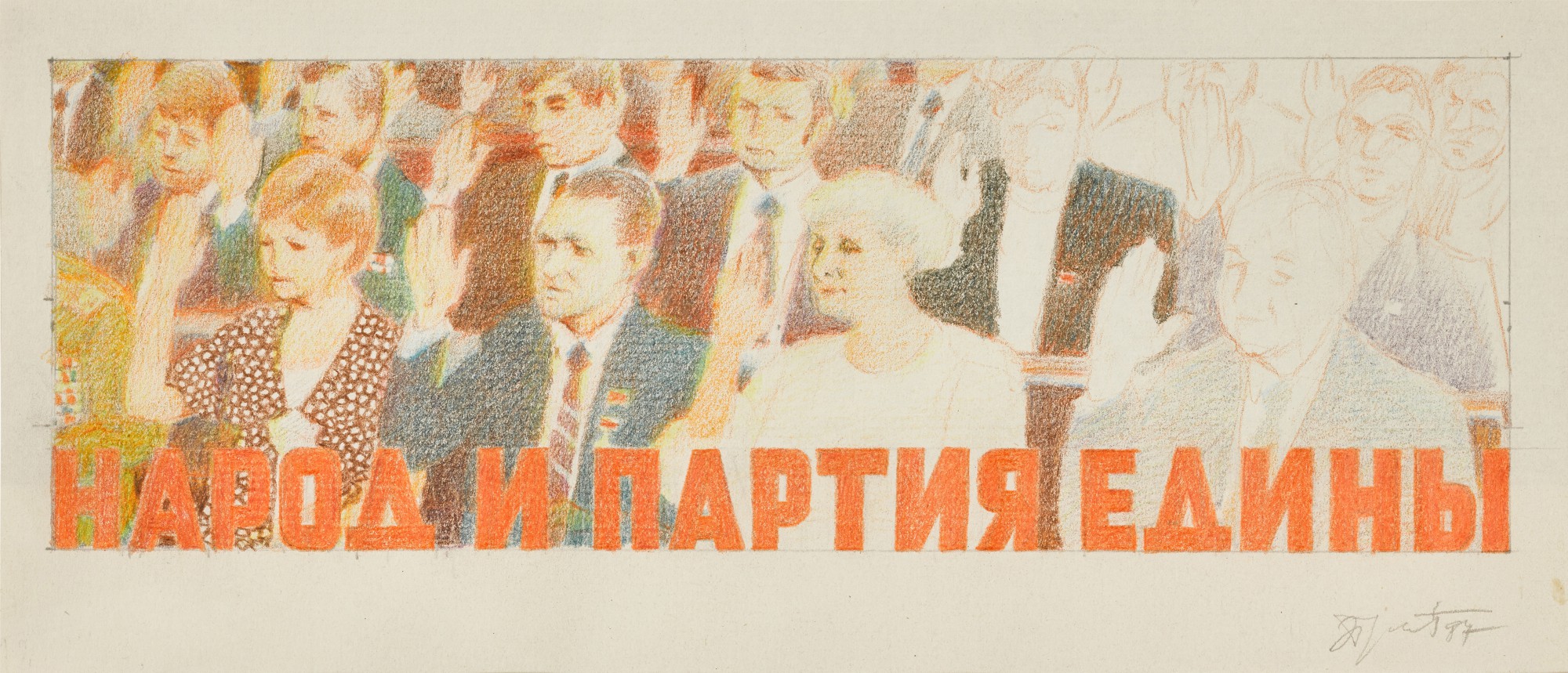
Erik Bulatov
The Nation and the Party Are United
As interest in Soviet era art continues to grow, driven in part by the extraordinary critical and market success of artists like Kabakov and Komar and Melamid, Bulatov's position becomes ever more clearly essential rather than peripheral. Historically, Bulatov is best understood alongside the generation of artists who navigated late Soviet culture with intelligence and wit. Ilya Kabakov shares with him the use of official Soviet language and visual culture as artistic raw material. The American Pop artists, especially Jasper Johns with his flags and targets, offer a useful Western parallel: both Johns and Bulatov were interested in what happens when a culturally loaded image is treated with the full gravity of painterly attention.
But Bulatov's work carries an additional existential dimension, a preoccupation with the horizon, with space that opens rather than closes, that sets him apart and gives his paintings their peculiar, searching quality. The legacy of Erik Bulatov is ultimately a legacy of insisting on freedom inside the most constrained conditions imaginable. He did not flee his subject matter or sublimate it into abstraction. He looked directly at the visual language of a totalitarian state and found within it, and beyond it, a space where the individual consciousness could move.
That achievement belongs to art history now, but it speaks with particular force to our current moment, when questions about propaganda, image, and truth feel urgently alive. To spend time with a Bulatov painting is to understand that the horizon is always there, just past the words, waiting.