Enrico Baj
Enrico Baj, Gloriously Unruly and Forever Vital
Artist Spotlight · The Collection Editorial
“I have always thought that art should be a continuous provocation, a game that is also a critique.”
Enrico Baj
In the spring of 2004, just months after Enrico Baj's death in June 2003, the Palazzo Reale in Milan mounted a sweeping retrospective that drew thousands of visitors through rooms filled with beribboned generals, collaged monsters, nuclear nightmares rendered in wallpaper and velvet, and tender portraits assembled from buttons and braid. Standing in those galleries, it became impossible to look at twentieth century European art the same way again. Baj had spent half a century dismantling the pretensions of the art world from inside it, armed with humor, fury, and an inexhaustible appetite for materials that nobody else would think to put on a canvas. Enrico Baj was born in Milan in 1924, into a comfortable bourgeois family that gave him access to a classical education and, eventually, to the Brera Academy and the Faculty of Law at the University of Milan.
Enrico Baj
The General
He completed his legal studies but the courtroom never stood a chance. By the late 1940s, Baj was wholly consumed by painting, and by the swirling energies of a European avant garde trying to rebuild itself from the rubble of fascism and war. Milan in those years was electric with possibility and argument, and Baj thrived on both. In 1951, alongside the painter Sergio Dangelo, Baj co founded the Nuclear Painting movement, known in Italian as Arte Nucleare.
The movement was a direct response to the atomic age, to Hiroshima and Nagasaki, to the cold dread that had settled over postwar civilization. The manifesto of Arte Nucleare called for a painting that would destroy all the isms, that would begin again from a primal, irradiated zero. These early works were gestural, raw, and deliberately transgressive, and they immediately put Baj in conversation with the international avant garde. He connected with Asger Jorn and the CoBrA group, with the Lettrist International, and later with the Situationists, friendships and arguments that would shape his thinking for decades.
Enrico Baj
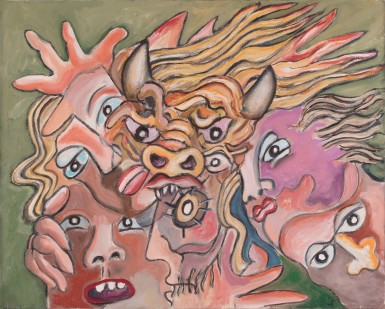
Groupe a la Chevelure, 1985
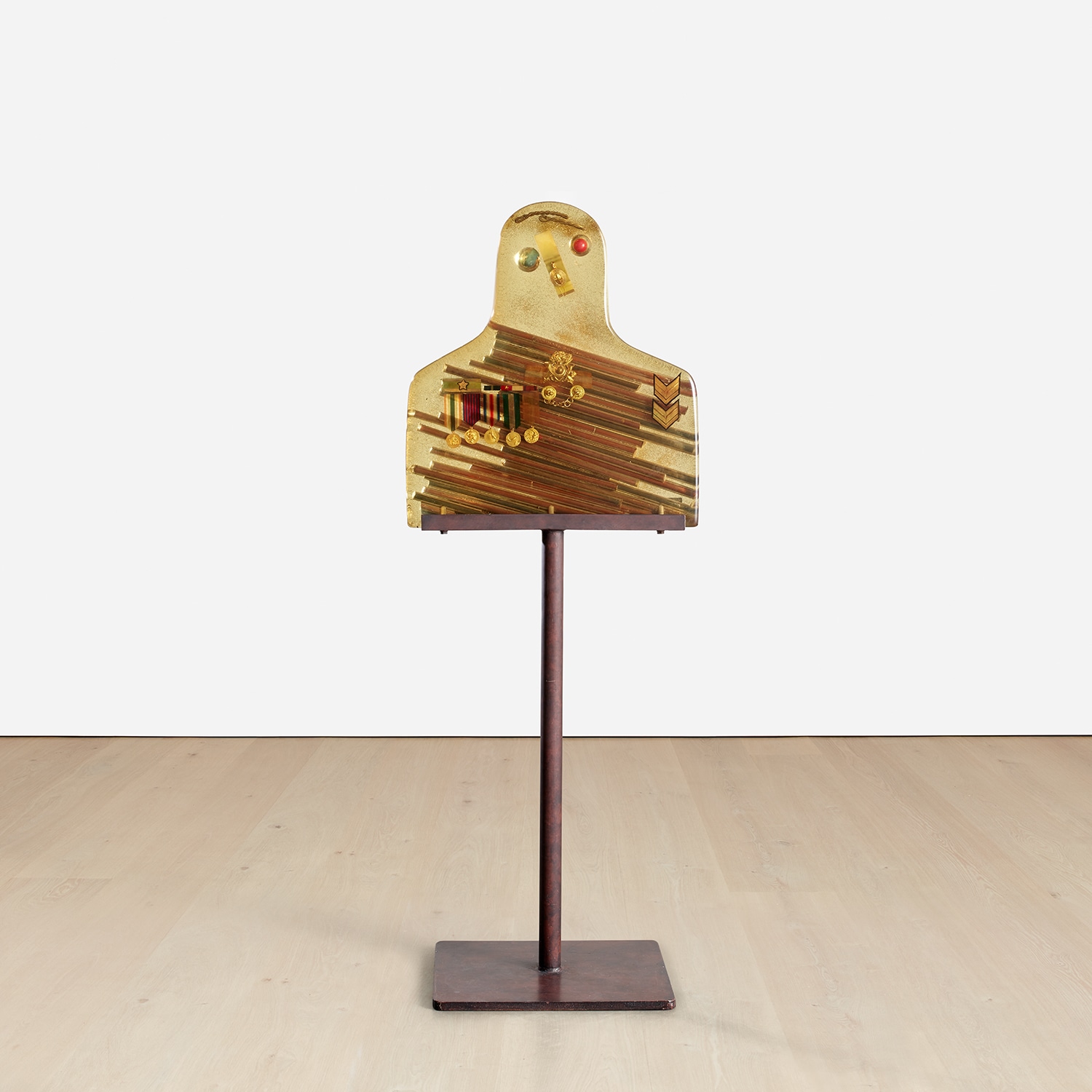
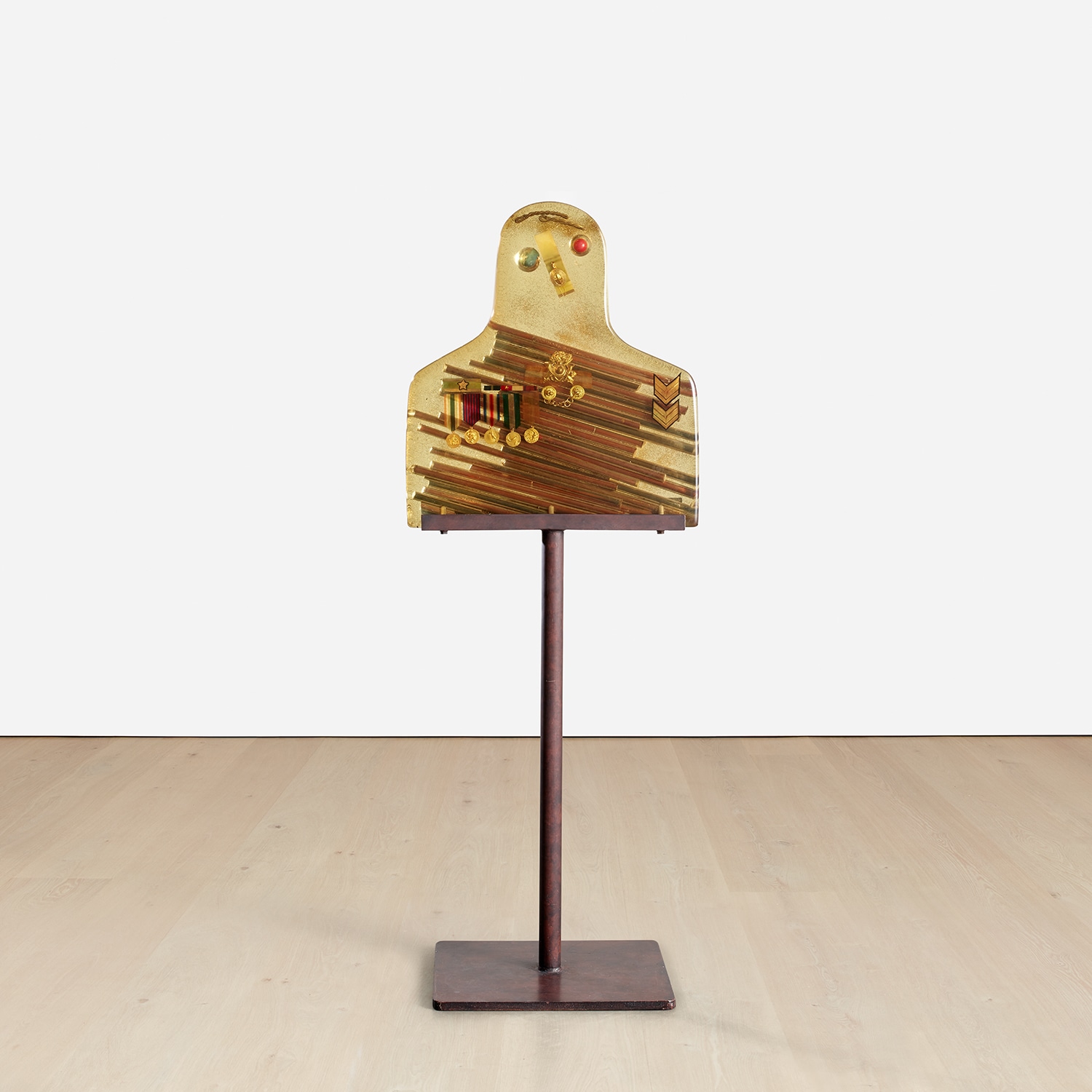
By the mid 1950s, Baj's practice began to take the form that would make him famous. He started incorporating found materials into his paintings, fabrics, military decorations, furniture upholstery, plastic gewgaws, and lengths of decorative cord, assembling them into figures of absurdist authority. The Generals arrived, his most celebrated and enduring series: portly military figures constructed from medals, braided epaulettes, and other paraphernalia of official power, their faces painted with gleeful grotesquerie. Works from this series, including the magnificent piece simply titled The General, with its accumulation of real medals, jewellery, metal cord, and plastic elements set in resin on a metal stand, are among the most recognizable images in postwar Italian art.
They are simultaneously hilarious and scalding, a one man assault on militarism conducted entirely in the language of excess and decoration. Baj was also a committed intellectual, a friend and collaborator of Umberto Eco, who wrote about his work with genuine enthusiasm, and of Raymond Queneau, Edoardo Sanguineti, and many others in the overlapping worlds of literature, philosophy, and the visual arts. This intellectual richness gave his work a density that rewards close looking. The Nose Trio from 1973, constructed from acrylic, handmade paper, cloth, wood, felt, metal, and found objects on board, is a perfect example of how Baj layered material, wit, and formal invention into objects that operate on multiple registers at once.
Enrico Baj
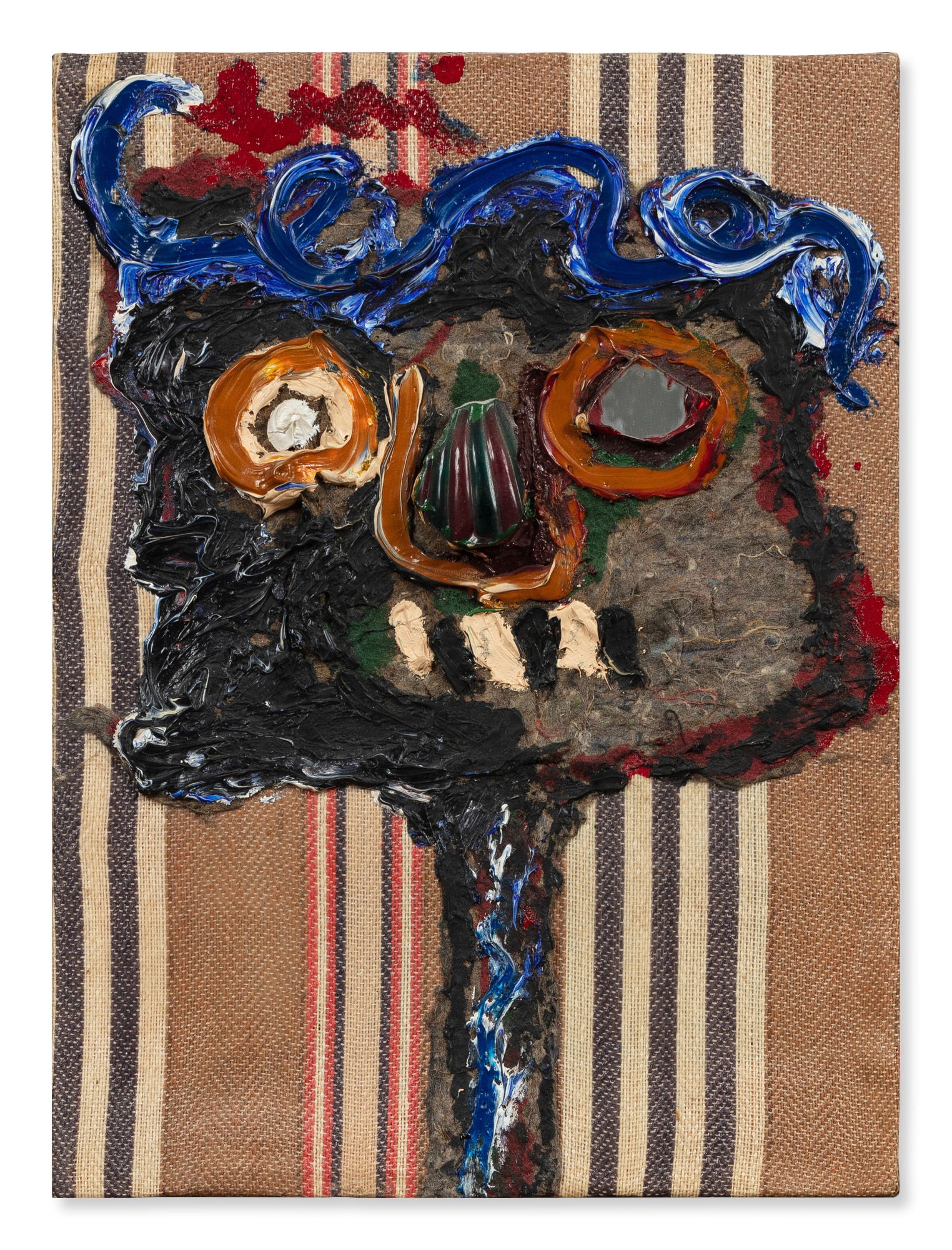
Untitled
The noses, those most Gogolian of features, protrude and assert themselves like small declarations of stubborn individuality. The Groupe a la Chevelure of 1985, with its acrylic and collage on canvas, shows a later Baj still gloriously restless, gathering figures into compositions that buzz with collective energy and chromatic boldness. For collectors, Baj represents one of the great pleasures of the postwar Italian market: a major artist whose reputation among scholars and curators is unimpeachable, but whose work still rewards careful seeking. His output was large and genuinely various, from intimate works on paper to monumental assemblages, and the range of entry points is correspondingly generous.
The Generals remain the most sought after works, and strong examples appear regularly at the major auction houses in Milan, London, and Paris, where they consistently attract both European and international bidders. But the collages and mixed media works on fabric and board, pieces like the Untitled mixed media on fabric and the Profilo, offer collecting opportunities that can be equally rewarding in terms of quality and artistic ambition. What to look for: the confidence of the material choices, the internal coherence of the collaged elements, and always that characteristic Baj wit, which is never merely decorative but always in the service of something sharper. Baj's place in art history sits at a productive crossroads.
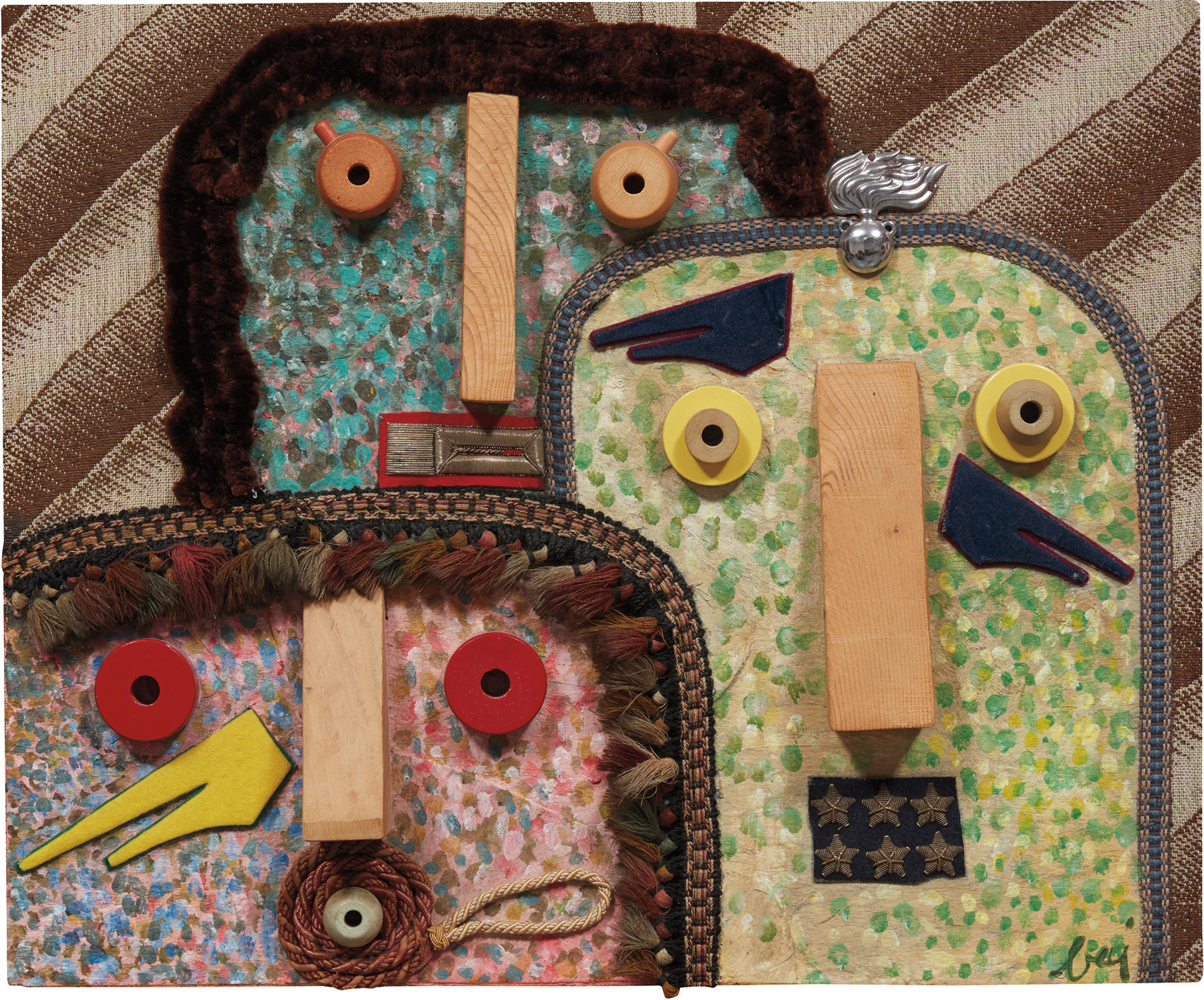
Enrico Baj
The Nose Trio, 1973
He shares the ironic deployment of kitsch and consumer detritus with his friend and rough contemporary Asger Jorn. His political satire through portraiture rhymes with the work of George Grosz a generation earlier. His love of found materials and vernacular beauty anticipates aspects of Arte Povera, though Baj was always too fond of color and comedy to be mistaken for that movement. He was also an important bridge between the Italian avant garde and the international Fluxus and neo Dada currents, a connector figure whose generosity of spirit and genuine curiosity brought movements and individuals into productive contact.
What makes Baj essential today is precisely his refusal to be solemn about serious things, or frivolous about delightful ones. In an era when art can feel either crushingly earnest or strategically ironic, his work models a third way: committed, playful, politically awake, and genuinely joyful in its making. The assemblages ask us to look at authority and find it ridiculous, to look at discarded materials and find them beautiful, to look at the world with the eye of someone who has read everything and is not fooled by anything. Collectors who live with a Baj, who wake up to one of those preposterous generals surveying the room from behind a chest full of ribbons, report that the work never stops giving.
That is the real measure of an artist's legacy, and by that measure, Enrico Baj is richer than ever.
Explore books about Enrico Baj
Enrico Baj: Catalogue Raisonné
Giordano Falzoni
Enrico Baj: 1924-2003
Franco Russoli
Enrico Baj: Drawings and Collages
Marco Meneguzzo
Baj: Art and Protest
Luciano Caramel
Enrico Baj: The Art of Kitsch and Provocation
Arturo Carlo Quintavalle