Emmanuel Taku
Emmanuel Taku Finds Beauty in Bold Collisions
Artist Spotlight · The Collection Editorial
Something is stirring in conversations among collectors who track contemporary African art with genuine attention. Emmanuel Taku, the Ghanaian painter and collagist whose work pulses with rhythm, color, and an almost cinematic sense of Black life, has been drawing quiet but devoted admiration from a growing circle of discerning eyes. His canvases arrive fully charged, carrying the energy of street culture, communal memory, and a deeply personal visual language that feels utterly of this moment. Taku works from Ghana, a country whose contemporary art scene has undergone a remarkable transformation over the past decade.
Emmanuel Taku
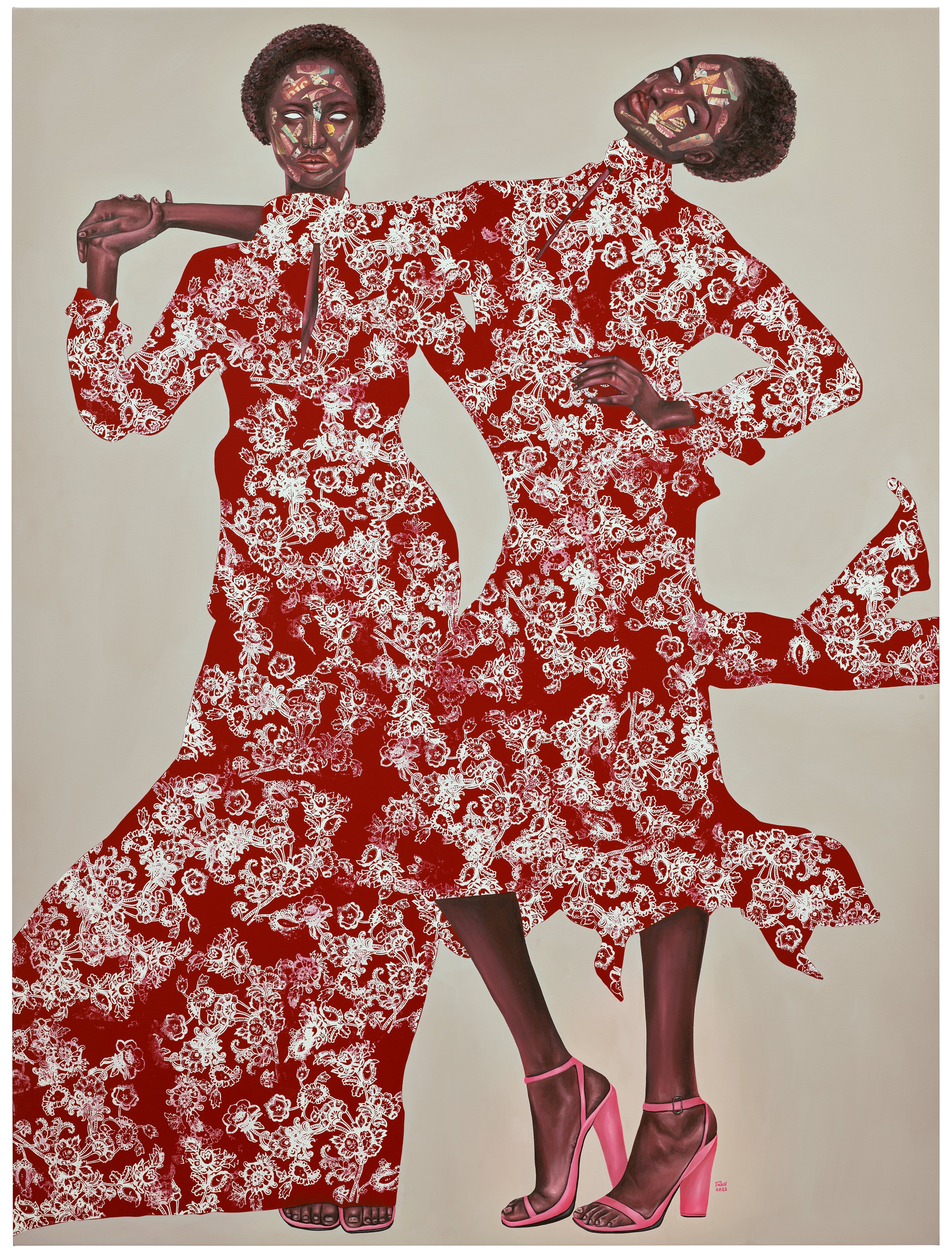
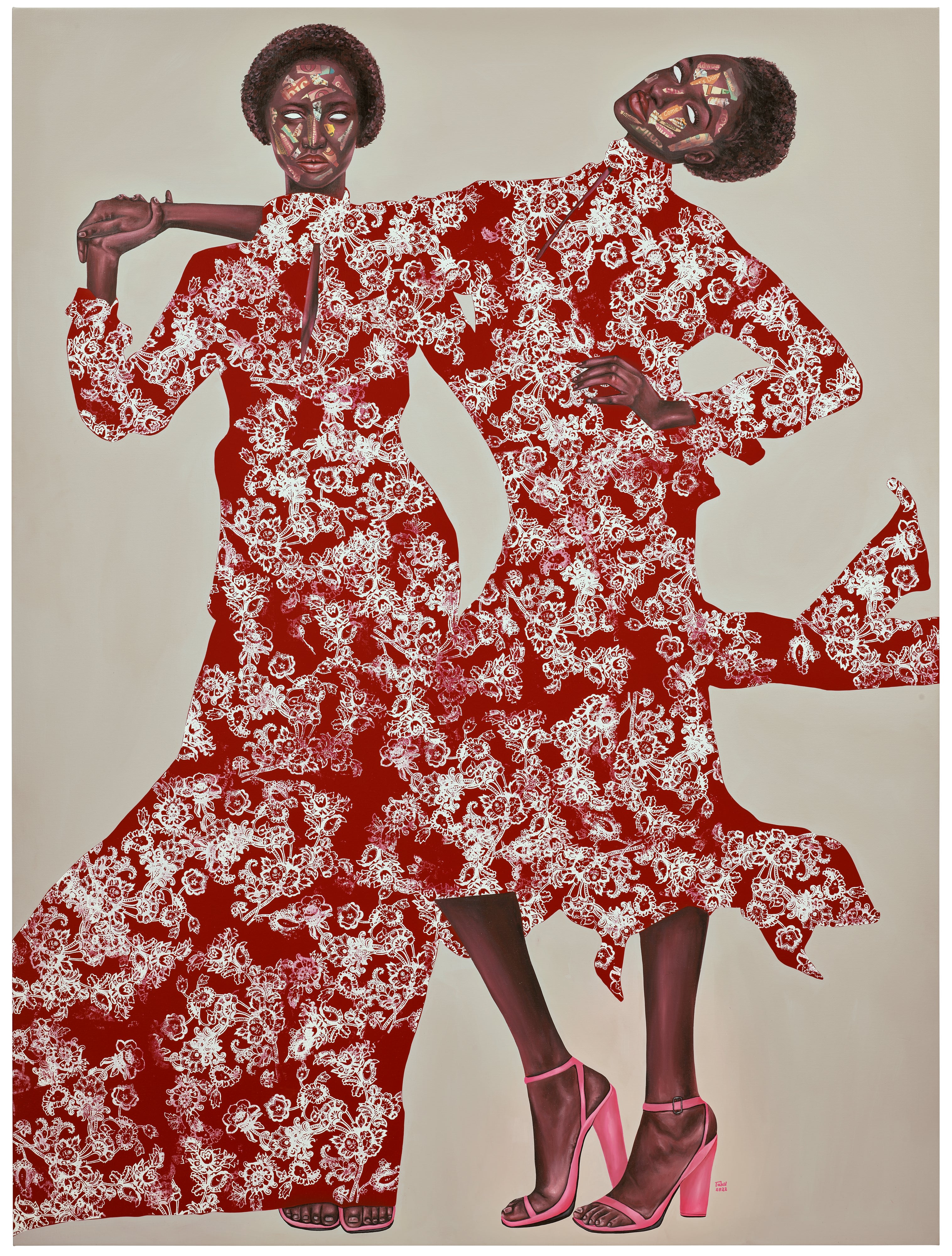
High arms, 2022
Accra in particular has emerged as one of the most generative centers of artistic production on the African continent, producing painters whose work speaks both to Ghanaian lived experience and to global conversations about identity, figuration, and the politics of representation. It is within this fertile context that Taku has developed his practice, drawing on the textures and stories of everyday life around him while reaching toward something universal in his depictions of people, connection, and presence. His formation as an artist reflects the self determined, resourceful spirit that characterizes so much of the most compelling work coming out of West Africa right now. Taku developed a practice rooted in keen observation and an instinct for material experimentation.
Rather than leaning solely on paint, he discovered early that the world around him was already full of visual material waiting to be transformed. Newspapers, printed paper, found ephemera, these became not mere additions to his canvases but active participants in the meaning his work generates. The collision between painted surface and collaged material gives his figures a layered humanity, as though they carry their social and cultural context literally within their bodies. The work that has brought Taku the most sustained attention is his series of figural paintings depicting Black men and women in moments of leisure, intimacy, and stylized presence.
Emmanuel Taku
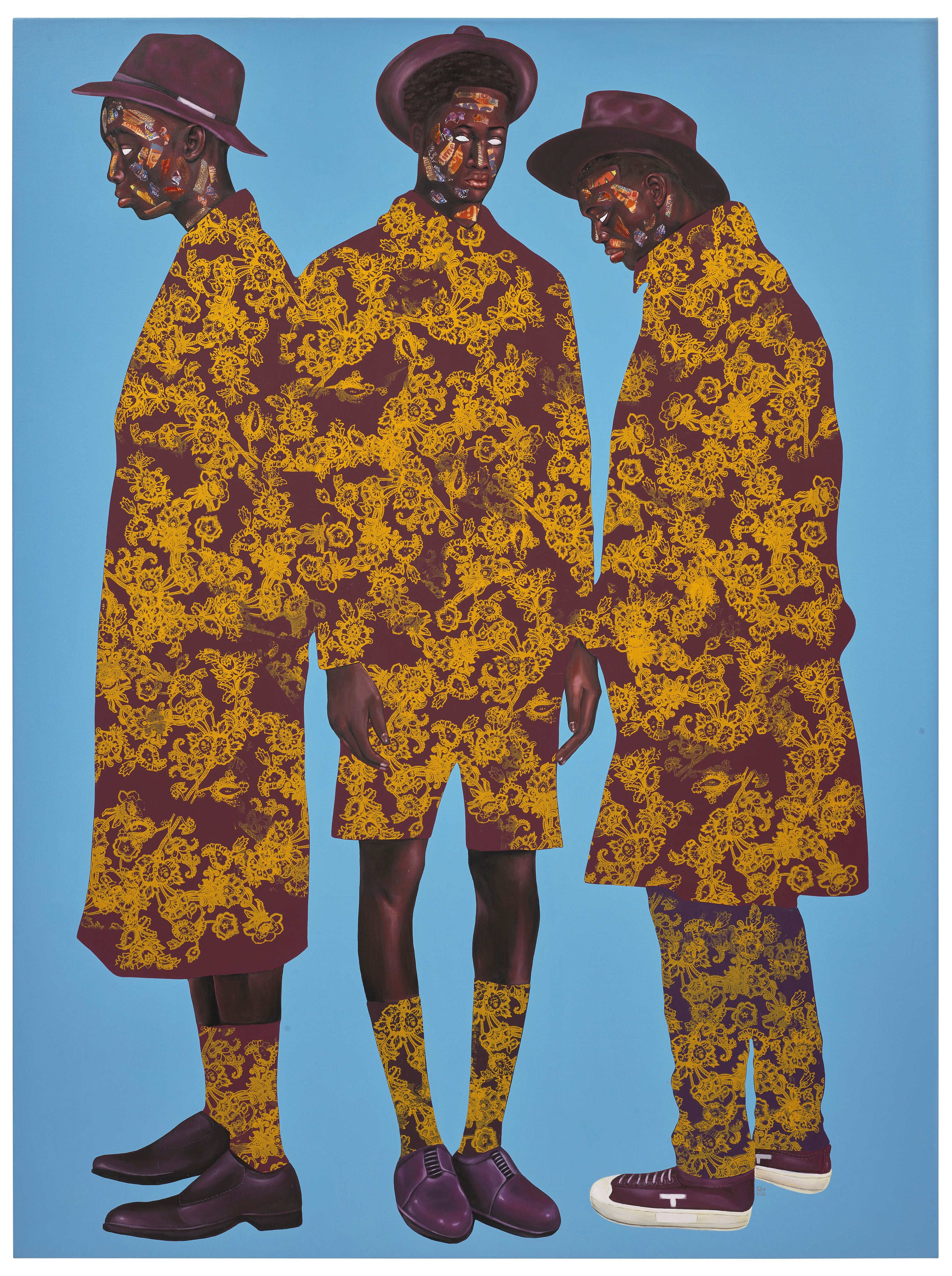
Dusk stylers, 2022
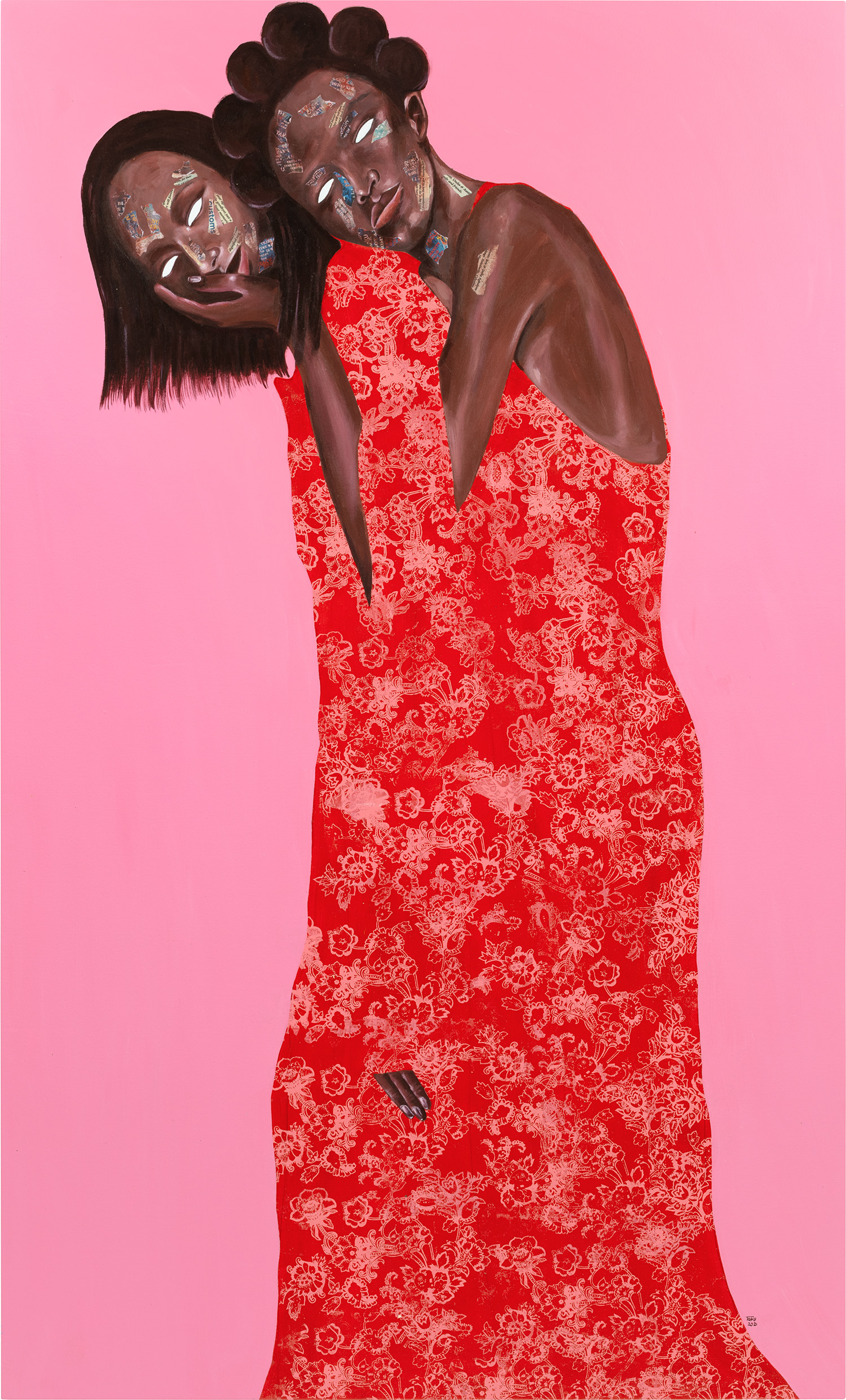
Paintings such as High Arms from 2022 and Dusk Stylers from 2022, both created using acrylic and paper collage on canvas, exemplify the quality that makes his practice so distinctive. His figures are rendered with expressive confidence rather than rigid precision, their forms built up through layers of paint and collaged paper that create a richly textured surface. There is a joyfulness to these depictions that feels earned rather than imposed, a celebration of Black aesthetics and social life that never tips into caricature or sentimentality. Crimson Cuddle from 2021 reveals another dimension of Taku's sensibility: his ability to capture intimacy and tenderness between figures with remarkable economy of means.
The work uses his signature combination of acrylic and collage to render two figures in an embrace that feels both specific and archetypal. Blue Hysteria from 2022 shows his comfort with color as an expressive tool independent of naturalism, the cool blues carrying emotional weight that extends well beyond their descriptive function. Brothers in Red from 2020, one of his earlier works that collectors have found compelling, incorporates newspaper into its collage elements in a way that grounds the painting in documentary reality even as the overall composition reaches toward something lyrical. The Amethyst Pair from 2020 demonstrates his long standing interest in duos and pairings, in the way two figures can create a field of meaning between them that neither could generate alone.
Emmanuel Taku
Crimson Cuddle, 2021
For collectors approaching Taku's work, several qualities deserve particular attention. First is his exceptional facility with color, which is never accidental and never merely decorative. Each palette decision in his paintings carries intention, whether he is working in the warm reds and browns of Brotherhood compositions or the cooler, more contemplative tones of his blue inflected canvases. Second is the materiality of his surfaces, which rewards close looking in person.
The interplay between painted passages and collaged elements creates a visual depth that reproductions can suggest but never fully convey. Collectors who have seen his work in person consistently report that the physical presence of the canvases exceeds what even excellent photography prepares them for. Third is the consistency and discipline of his thematic vision: Taku is an artist who knows what he is interested in and pursues it with focus, which gives his body of work a coherence that collectors and institutions alike find appealing. Within the broader landscape of contemporary African figuration, Taku occupies a distinctive position.
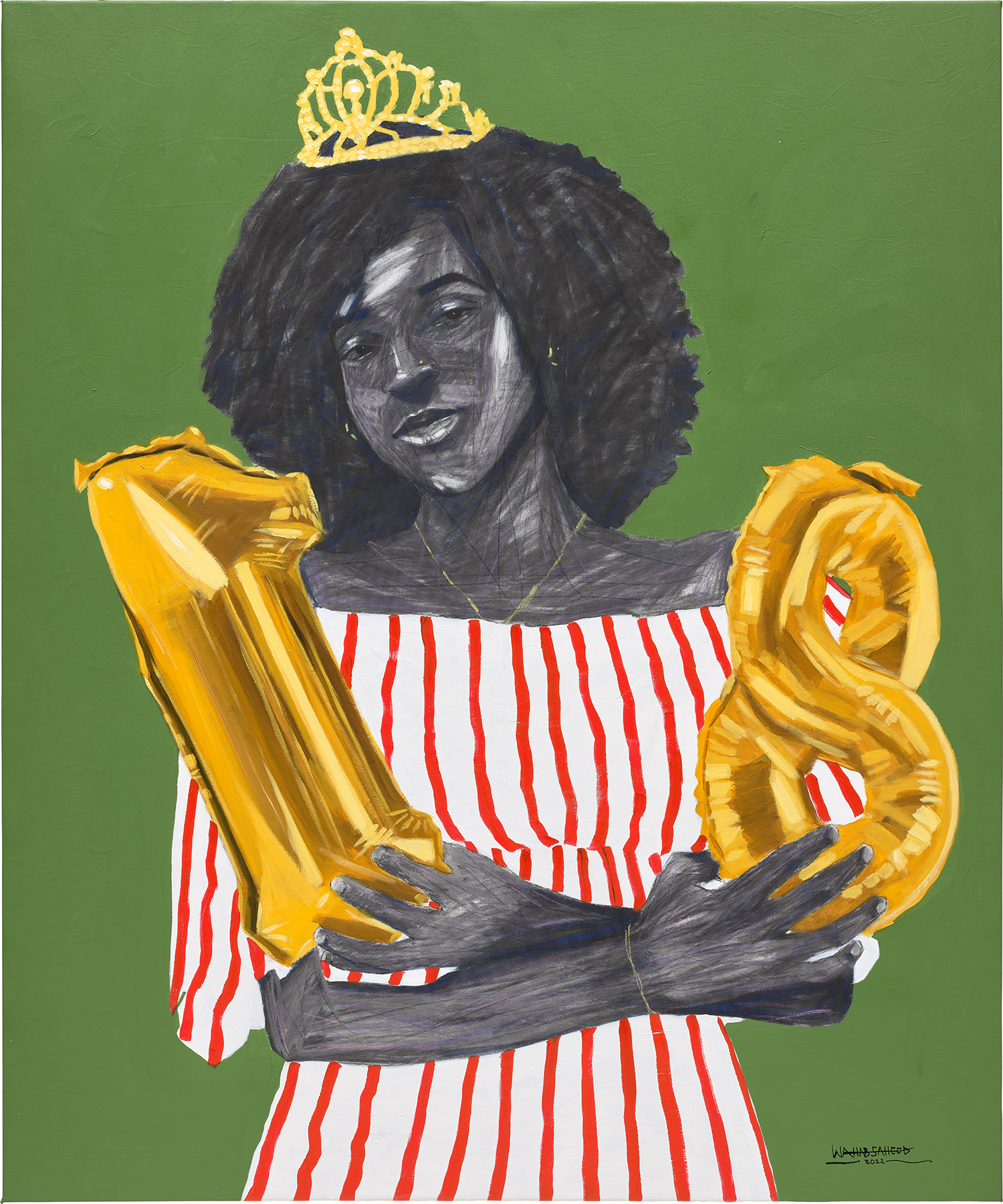
Emmanuel Taku
Blue Hysteria, 2022
His work enters into conversation with a generation of painters who have reimagined what it means to depict Black figures on canvas, artists such as Amoako Boafo, whose bold finger painted portraits brought Ghanaian figuration to international auction rooms, and Otis Kwame Kye Quaicoe, whose luminous figurative paintings have found homes in major private collections. Taku shares with these artists a commitment to centering Black subjectivity without apology, to depicting Black people not as subjects of anthropological study but as full human beings with interior lives, style, humor, and grace. At the same time, his use of collage gives his practice a material specificity that distinguishes it within this generation. The market for thoughtfully collected contemporary African art has matured considerably since the early 2010s, when institutional and commercial interest first began to expand beyond a small circle of specialists.
Today, collectors who positioned themselves early in the careers of West African figurative painters have seen both the cultural and financial value of those decisions affirmed. Taku represents exactly the kind of opportunity that serious collectors recognize: an artist whose work is visually compelling, conceptually coherent, and deeply rooted in a living cultural tradition, at a stage in his career where genuine collecting relationships can still be formed. Emmanuel Taku matters because he is doing something simple and ambitious at the same time. He is painting the people around him with love, rigor, and a material inventiveness that transforms his immediate world into something that resonates far beyond any single place or moment.
In a period when figuration has reasserted itself as one of the dominant modes of serious painting globally, Taku's work arrives with its own distinct vocabulary, shaped by the streets, colors, textures, and people of Ghana and speaking with authority to audiences everywhere. The collectors and institutions who find their way to his canvases now are not merely acquiring paintings. They are entering into a relationship with an artist whose vision is still deepening and whose best work, by every indication, is continuing to unfold.