Emma Webster
Emma Webster Paints the World Dreaming
Artist Spotlight · The Collection Editorial
Something quietly momentous has been happening in contemporary painting, and Emma Webster is at the center of it. Over the past several years, her richly layered oil canvases have moved from gallery walls into the collections of serious, discerning collectors who recognize in her work a rare combination of art historical fluency and genuine psychological originality. Her paintings do not simply depict nature; they reimagine it as a place where the unconscious mind has been given permission to rearrange the light, deepen the shadows, and let the foliage breathe with something close to intention. In an era when painting is perpetually declared exhausted, Webster has arrived as a persuasive and luminous argument to the contrary.
Emma Webster
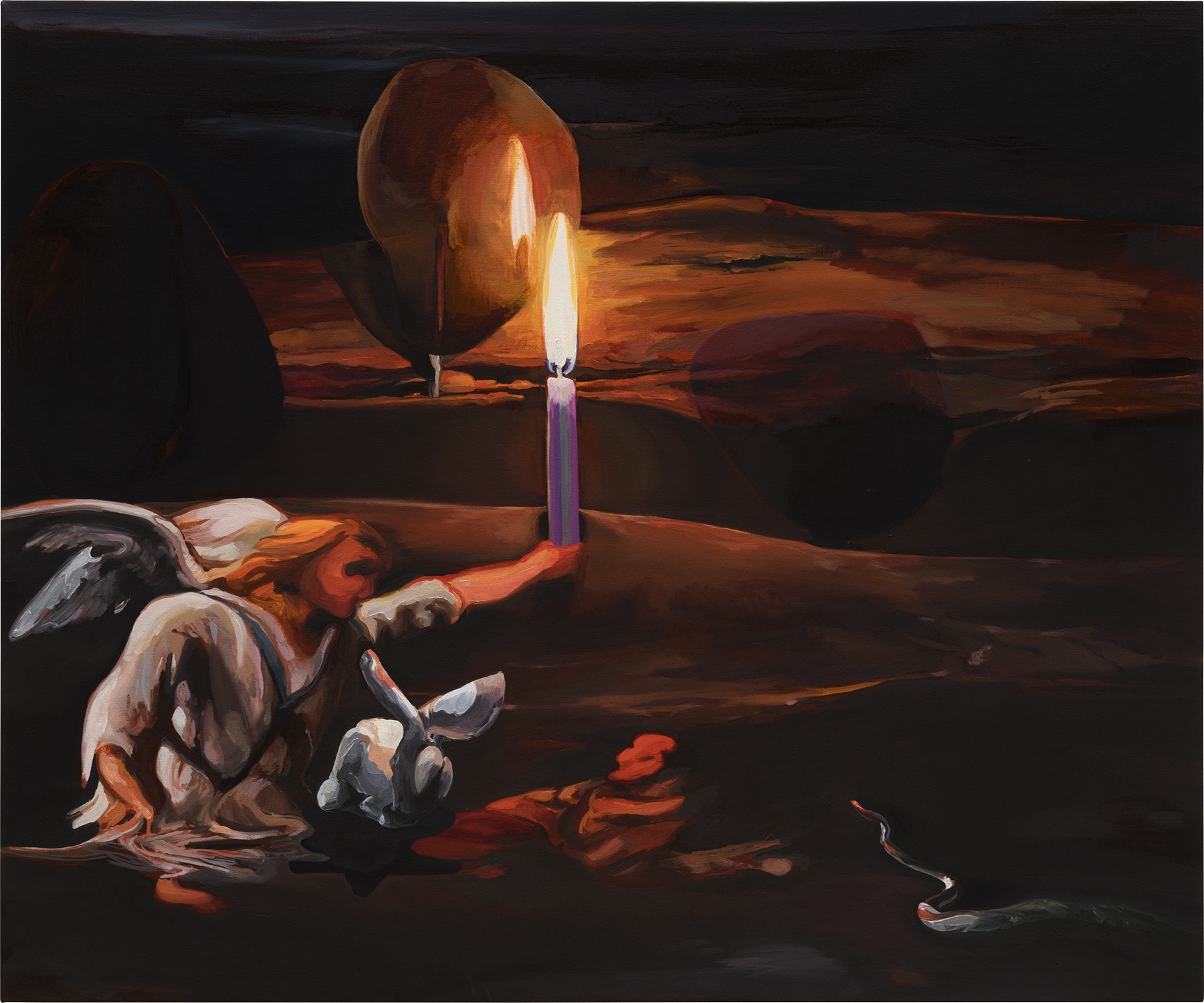
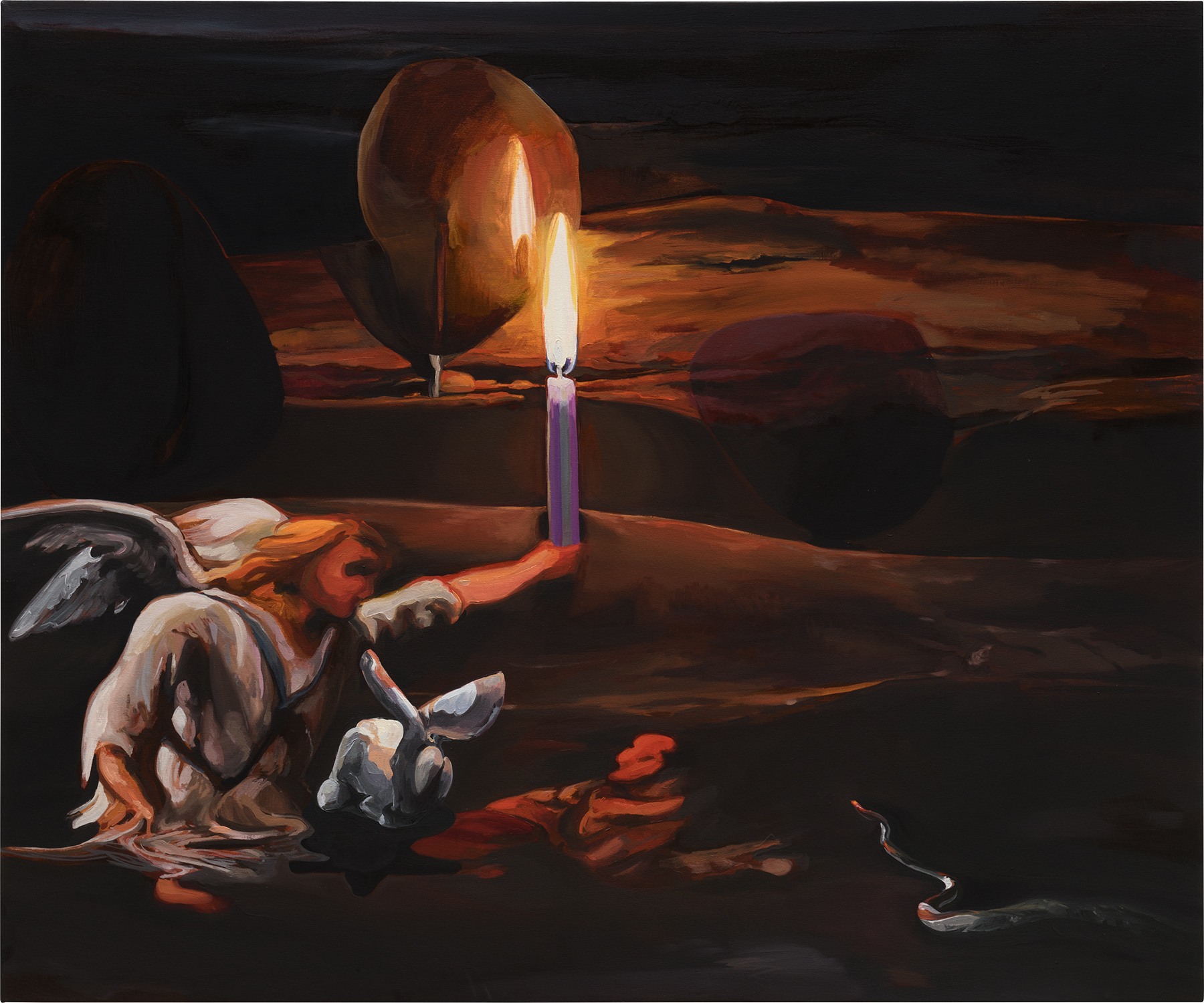
Vespers, 2018
Webster was born in 1987 in the United States, and her formation as a painter reflects a generation that came of age absorbing both the immediate visual saturation of digital culture and the long, rich traditions of Western European and American landscape painting. She studied painting with genuine seriousness, developing a command of oil as a material that would eventually allow her to build surfaces of extraordinary depth and luminosity. The education she received was one that took craft seriously, and that investment is visible in every canvas she has produced. What set her apart from many of her contemporaries from the beginning was her instinct to use technical mastery not as an end in itself but as a vehicle for something stranger and more interior.
The development of her practice has followed a logic that feels both deliberate and organic. Early on, Webster established her commitment to landscape as a primary subject, but it became clear quickly that her landscapes were never straightforwardly observed. They draw on the tradition of plein air painting and the close attention to light and atmosphere that runs from Constable through the Hudson River School and into American regionalism, yet they fold these references into something that feels genuinely novel. Her palette tends toward the saturated and the luminous, with greens and golds and deep purples that carry an emotional charge beyond pure description.
Emma Webster
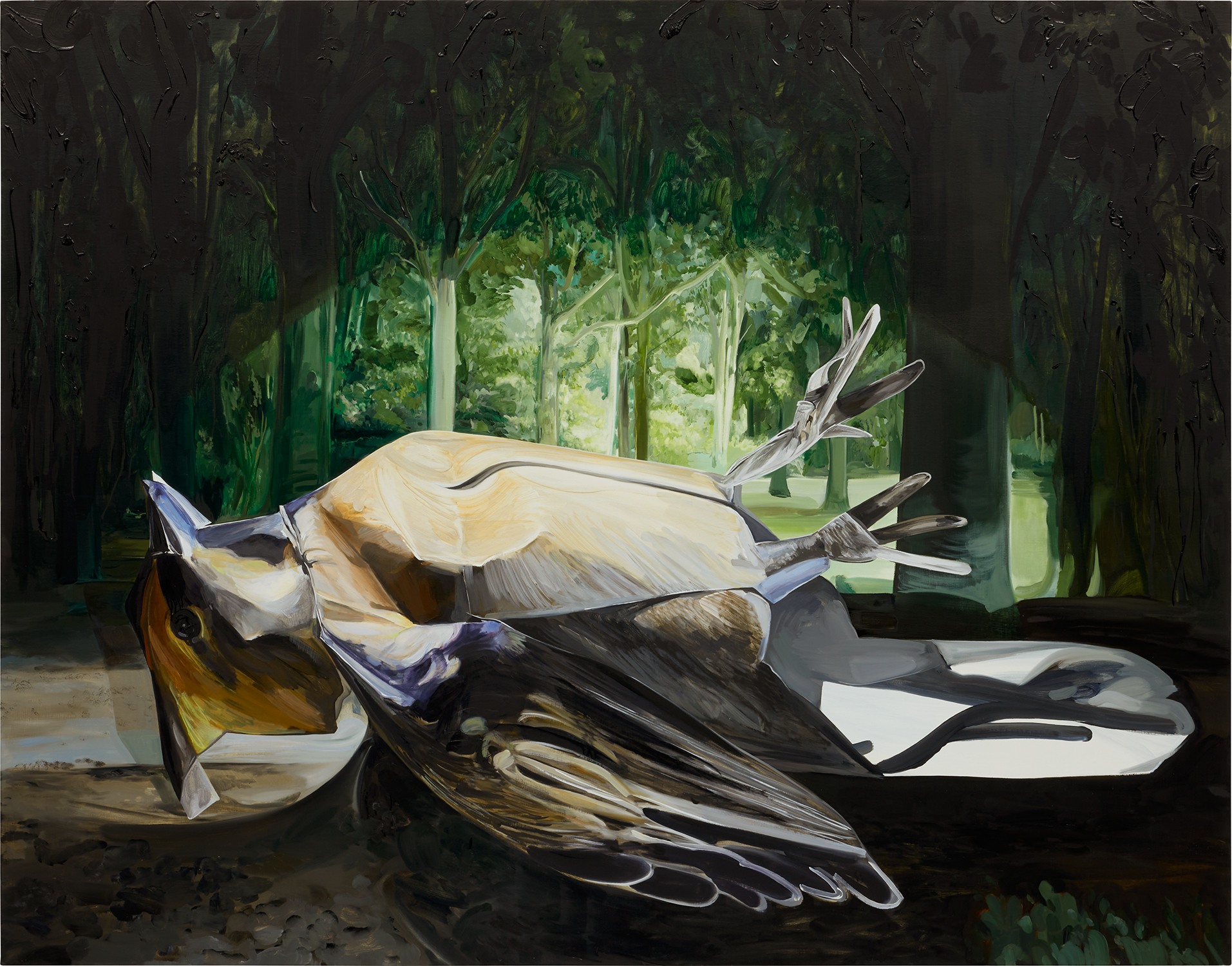
Ophelia, 2020
Over time her compositions have grown more complex and more confident, layering observed botanical detail with figures, water, and atmospheric phenomena in ways that feel simultaneously inevitable and surprising. Among the works that define her practice, Vespers from 2018 stands as a particularly powerful example. Painted in oil on canvas, it captures the quality of fading light with an intensity that feels almost devotional, its title gesturing toward the evening prayer tradition and suggesting that Webster is interested in landscape not merely as scenery but as a site of spiritual and emotional reckoning. Ophelia from 2020, executed in oil on linen, places her directly in conversation with one of the most charged subjects in the Western pictorial tradition, the figure of Shakespeare's drowned heroine as imagined by the Pre Raphaelites and subsequently reworked by generations of painters and photographers.
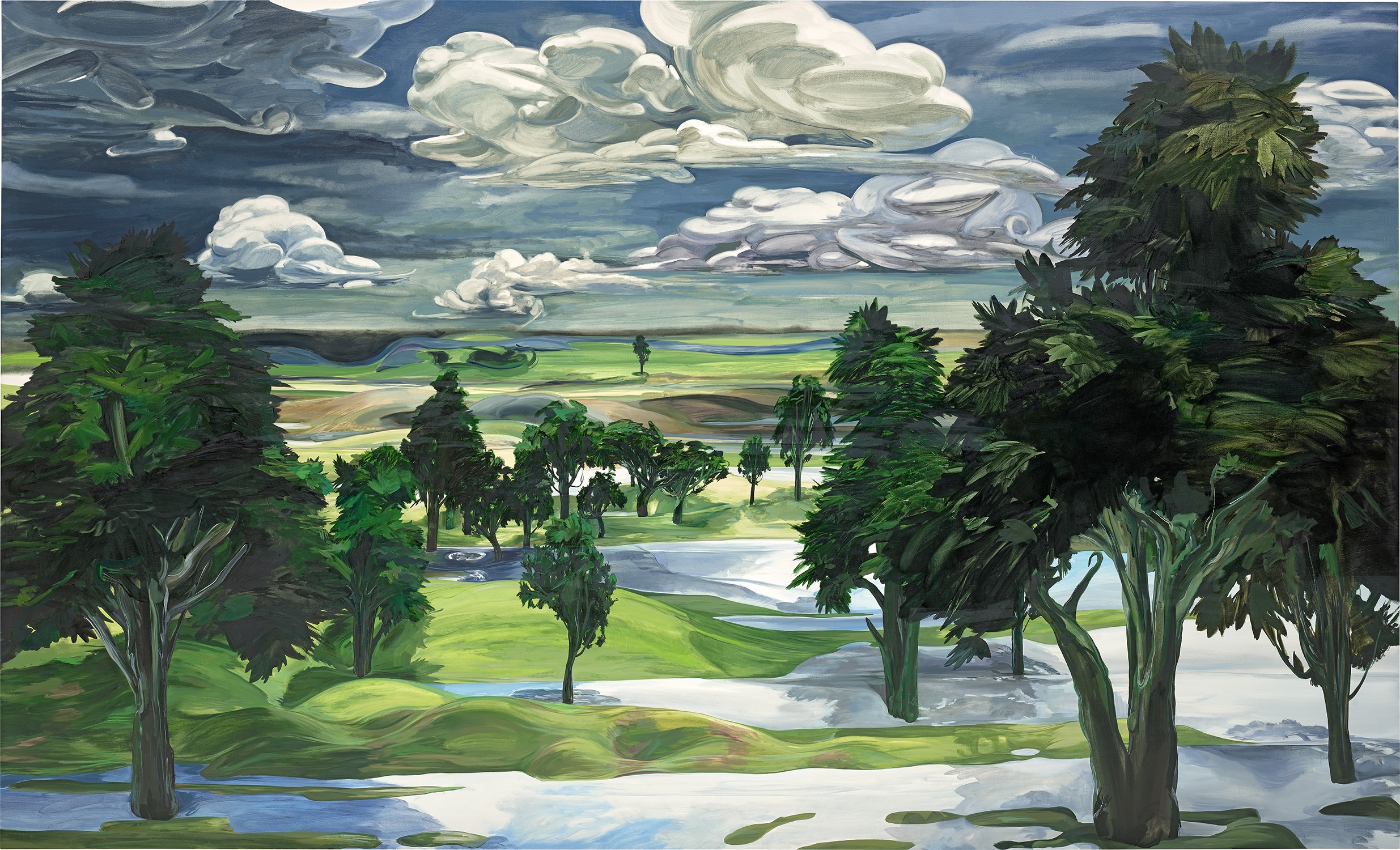
Webster's version is neither illustration nor pastiche; it is a genuine reimagining that uses the myth to explore questions of submersion, surrender, and the relationship between the human body and the natural world. Primavera from 2019 and Baptism from 2020 extend this engagement with ritual and seasonal transformation, while Background's Backdrop from 2020 introduces a self reflexive dimension that reveals her thinking about the constructed nature of pictorial space itself. The work La Nouvelle Epoque, a lithograph in colors with extensive hand coloring in ink and watercolor on wove paper, demonstrates a different but equally compelling dimension of Webster's practice. The decision to work on paper, to use printmaking as a foundation and then animate the surface with hand applied color, speaks to her understanding of art history and her willingness to work across media when the subject demands it.
Emma Webster
Baptism, 2020
The title, which translates as The New Era, carries a programmatic weight that feels both ironic and sincere, a characteristic register for Webster, who is capable of holding ambiguity with considerable grace. For collectors, Webster's work represents an opportunity that remains genuinely open even as her reputation grows. Her paintings command attention in any room they inhabit, not through scale or aggression but through an insistent luminosity and psychological presence that rewards sustained looking. The linen supports she favors for many of her oils have a texture that contributes to the surface quality of the finished work, and her layering technique means that the paintings reveal new details and relationships over time.
Auction appearances have confirmed that the market is paying close attention, and the trajectory of interest in her work suggests that collectors who acquire now are doing so at a moment that future buyers will look back on with considerable envy. Works on paper, including pieces like La Nouvelle Epoque, also represent an accessible point of entry that should not be underestimated; her hand coloring transforms the printed foundation into something unique and deeply personal. Webster operates in a broader conversation that includes painters such as Neo Rauch, whose enigmatic and densely layered figurative landscapes share her interest in the psychological uncanny, and Cecily Brown, whose painterly surfaces and art historical fluency offer a useful parallel. The tradition of magic realism in painting, running from the Symbolists through the Surrealists and into contemporary practice, provides important context, as does the rich American tradition of landscape painting that she both honors and complicates.
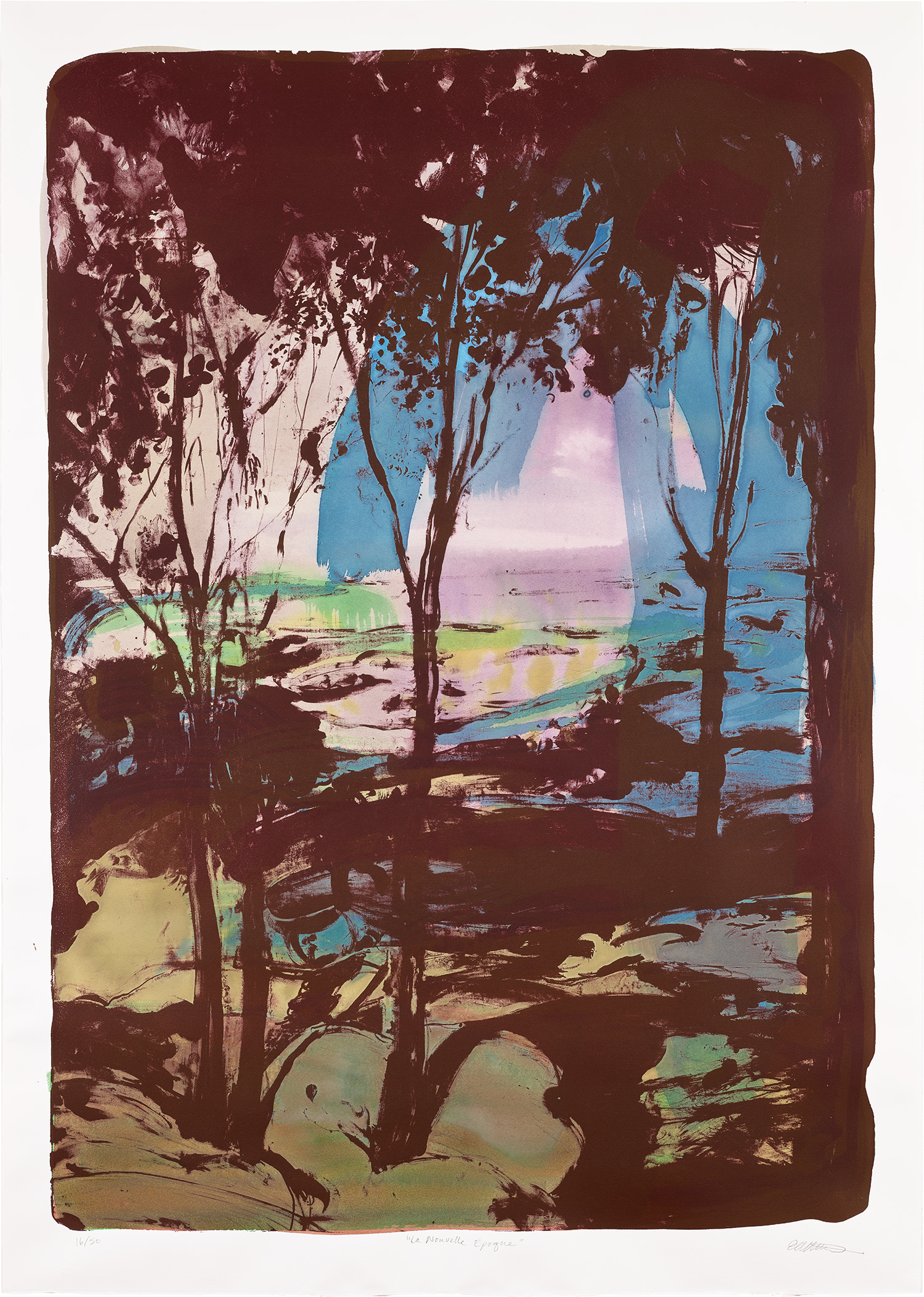
Emma Webster
La Nouvelle Epoque (The New Era)
She is also in dialogue with painters like Lisa Yuskavage and Amy Sillman, artists of her generation and the generation before who have demonstrated that painting can hold intellectual ambition and sensory pleasure in productive tension. What Webster offers, finally, is something that the best painting has always offered and that no other medium can quite replicate: the experience of entering a world that is both recognizably connected to our own and governed by different rules. Her landscapes are places where the weather is always charged with meaning, where the light has been arranged to produce a particular quality of feeling, and where the boundary between the observed and the imagined has been allowed to dissolve in the most productive way. She is a painter at the height of her powers, working with increasing confidence and ambition, and the collectors who have placed their trust in her vision are in very good company indeed.