Emma Stern
Emma Stern Renders the Digital Soul Beautiful
Artist Spotlight · The Collection Editorial
There is a particular kind of electricity in the air when Emma Stern's paintings enter a room. Her canvases arrive with the vivid confidence of someone who has thought deeply about what it means to exist simultaneously in physical and virtual space, and who has chosen, emphatically, to celebrate that existence rather than mourn it. Over the past several years Stern has moved from a compelling presence in New York's downtown gallery scene to a genuinely cross cultural phenomenon, with her work finding devoted audiences among traditional fine art collectors, digital art enthusiasts, and a generation of younger viewers who recognise in her luminous, avatar like figures something that looks unmistakably like themselves. Stern was born in 1990, placing her formative years squarely within the first great flowering of internet culture and the golden age of console gaming.

Emma Stern
Heather, 2020
Growing up in the United States during that particular window meant absorbing a visual vocabulary that was entirely new to art history: the saturated palettes of Japanese role playing games, the expressive stylisation of anime character design, the peculiar intimacy of online avatars and personalised digital personas. Where an earlier generation of painters might have dismissed these influences as low or commercial, Stern embraced them with intellectual seriousness. She studied painting with genuine rigour, developing the technical foundations in oil that would later allow her to bring an almost uncanny luminosity to her digitally inspired imagery. Her artistic development followed a path that felt both inevitable and quietly radical.
Stern began working through the tension between the physical and the virtual long before that tension became fashionable in critical discourse. She understood intuitively that oil paint, with its capacity for translucency and depth, was uniquely suited to capturing the particular glow that screens emit, the way light seems to come from within a digital image rather than falling upon it from without. This insight became the engine of her practice. Her figures do not merely reference video game aesthetics; they seem to inhabit a space between painted reality and rendered simulation, and they do so with a warmth and psychological presence that purely digital work often struggles to achieve.

Emma Stern
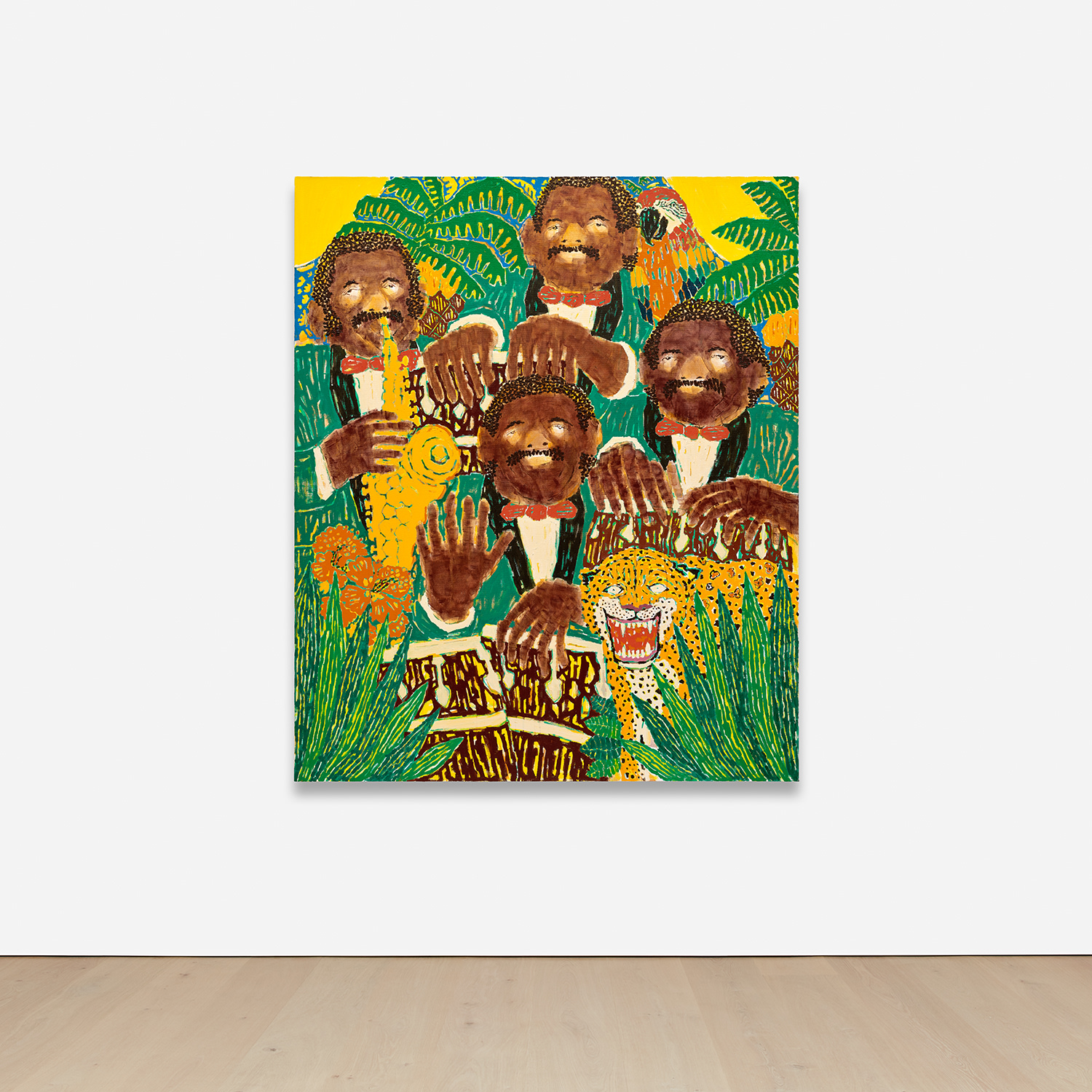
Eve 2 夏娃 2
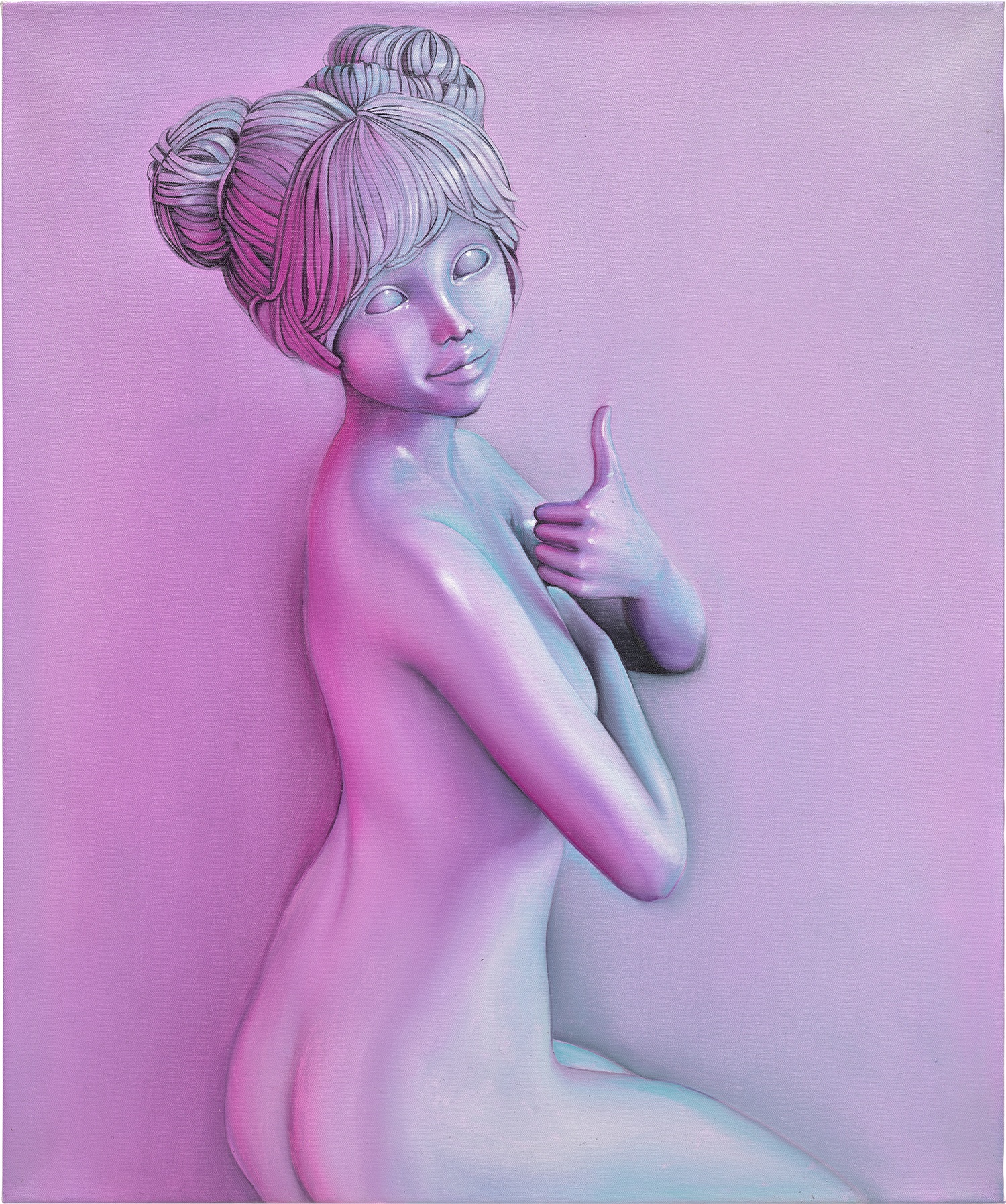
The paintings from 2020 represent a particularly important moment in Stern's evolution. Works such as Gabbi and Susan, Heather, Amber 2, and Naomi 3, all executed in oil on canvas, demonstrate her practice at a point of real maturity and confidence. These are portraits in the fullest sense of the word, attending to individual presence and particularity even as the figures they depict carry the stylised features and idealised proportions of game characters or animated heroines. The vivid, saturated colour that defines these canvases is not decoration; it is the primary means by which Stern communicates emotional register, using the heightened reality of digital aesthetics to access something genuinely felt.
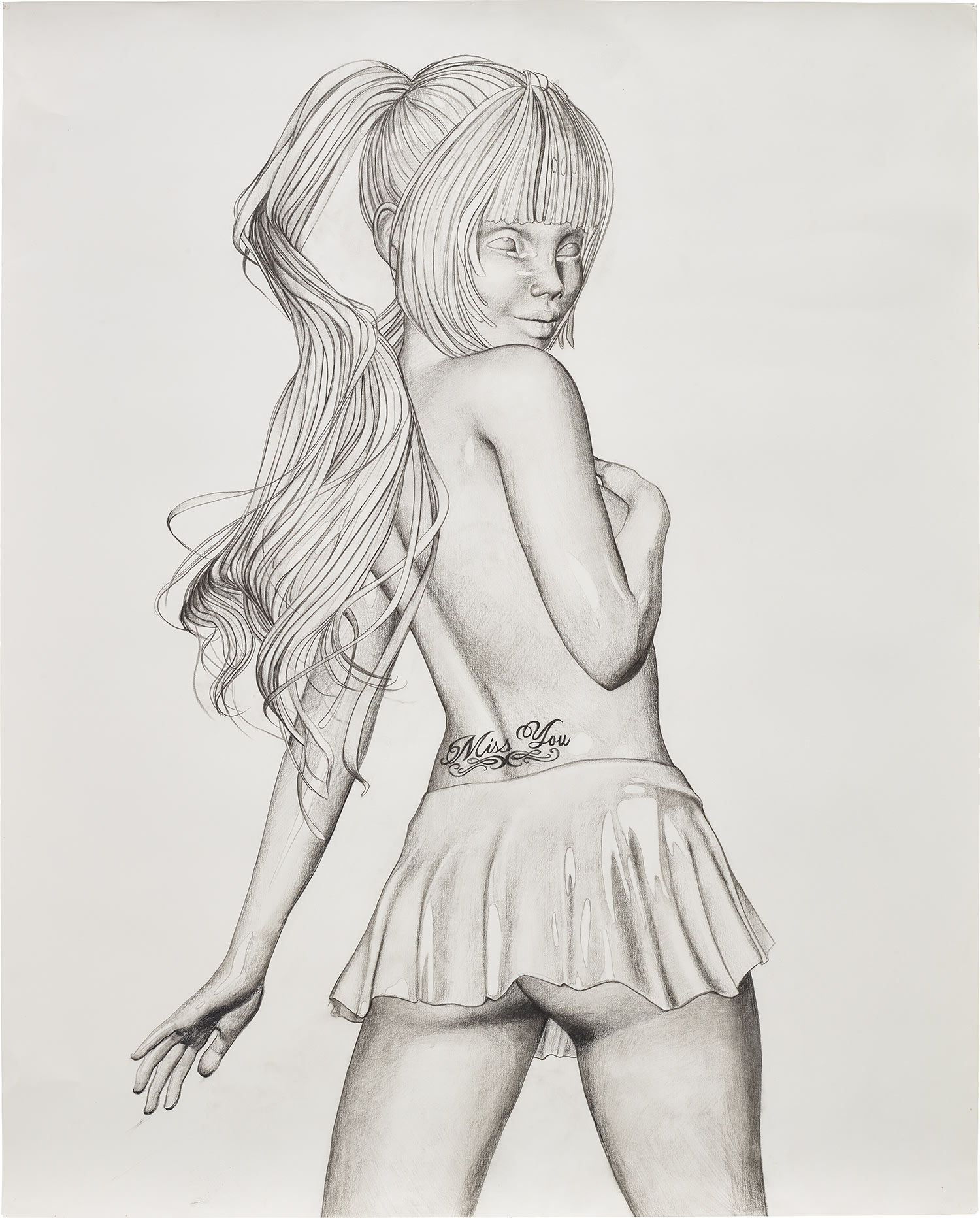
April (Miss You), a 2020 work in graphite and charcoal on paper, shows another dimension of her practice, a quieter, more intimate register that demonstrates her command of drawing as an independent discipline. Eve 2, subtitled with the Chinese characters for Eve in what reads as a meaningful gesture toward the global and cross cultural dimensions of digital identity, extends Stern's inquiry into the mythologies we build around femininity. The choice of Eve as a subject is rich with implication. Stern's avatar like figures are not passive objects of a gaze; they are agents of their own image, figures who have chosen their appearance with the deliberate intentionality that digital culture makes available to everyone.
Emma Stern
Amber 2, 2020
This reading aligns Stern with a broader conversation about contemporary femininity and self representation that has been energised by the internet age, and it gives her work a critical edge that sits comfortably alongside its considerable visual pleasure. For collectors, Stern's work occupies an unusually advantageous position. She emerged at precisely the moment when the art market began taking seriously the question of what digital influence looks like when realised through traditional media, and her oil paintings offer the material permanence and tactile richness that collecting has always prized, combined with a cultural currency that is genuinely of this moment. Her engagement with the NFT space alongside her gallery practice has expanded her audience dramatically, bringing her into contact with a collecting community that is younger, more internationally distributed, and in many cases encountering serious art for the first time through her work.
This is not a liability; it is a sign of an artist with unusual reach. In the broader context of contemporary painting, Stern's closest affinities are with artists who have similarly refused to treat digital culture as a contaminant to be kept out of the studio. She shares with certain painters of her generation a conviction that the visual languages of screens, games, and online life are legitimate and even urgent subjects for fine art, and that engaging with them seriously requires formal and technical ambition rather than mere appropriation. Her work rewards comparison with painters who have explored the boundaries between illustration and fine art, between popular visual culture and the gallery, and who have used figuration as a vehicle for thinking about identity, representation, and desire in contemporary life.
Emma Stern
April (Miss You), 2020
What makes Stern genuinely important, rather than merely timely, is the seriousness and tenderness she brings to her subjects. Her figures are not ironic citations of a cultural moment; they are presences. They look out from the canvas with a directness and an interiority that commands attention. In choosing to paint the aesthetics of digital femininity with the same devotion that earlier painters brought to portraiture or the nude, Stern is making an argument about what deserves to be taken seriously and who deserves to be seen.
That argument, made in the language of luminous, technically accomplished painting, is one that grows more resonant with each passing year.