Emilio Vedova
Emilio Vedova: Energy That Refuses to Rest
Artist Spotlight · The Collection Editorial
“Painting for me is a necessity, like breathing. It is not a choice but a condition of existence.”
Emilio Vedova
In the grand nave of the Palazzo Fortuny in Venice, where Vedova showed some of his most ambitious late work, visitors have described a sensation less like looking at paintings and more like being caught inside a storm. The walls seemed to breathe. The canvases, enormous and restless, appeared to move. That quality, that refusal to be still, is perhaps the most defining truth about Emilio Vedova, one of Italy's towering postwar painters and a figure whose reputation continues to grow with each passing decade.
Emilio Vedova
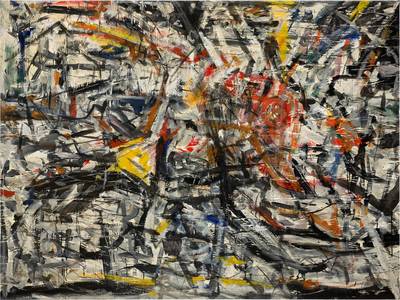
Ciclo della Protesta (Brasile '56), 1956
His work belongs to a moment of radical possibility in European art, and yet it never feels like history. It feels alive, urgent, and unfinished in the best possible sense. Vedova was born in Venice in 1919, and the city never fully left him, even as his ambitions became international and his canvases became battlegrounds of form and feeling. He came from a working class family, and he trained not in academies but in the streets and museums of Venice, copying old masters and absorbing the city's extraordinary visual culture.
There was no comfortable bourgeois path into art for Vedova. He came to painting through necessity and passion, and that rawness would mark everything he made. His political consciousness awakened early too, sharpened by the rise of fascism and the brutal experience of World War II, in which he participated in the partisan resistance. These were not abstract concerns for him.
Emilio Vedova
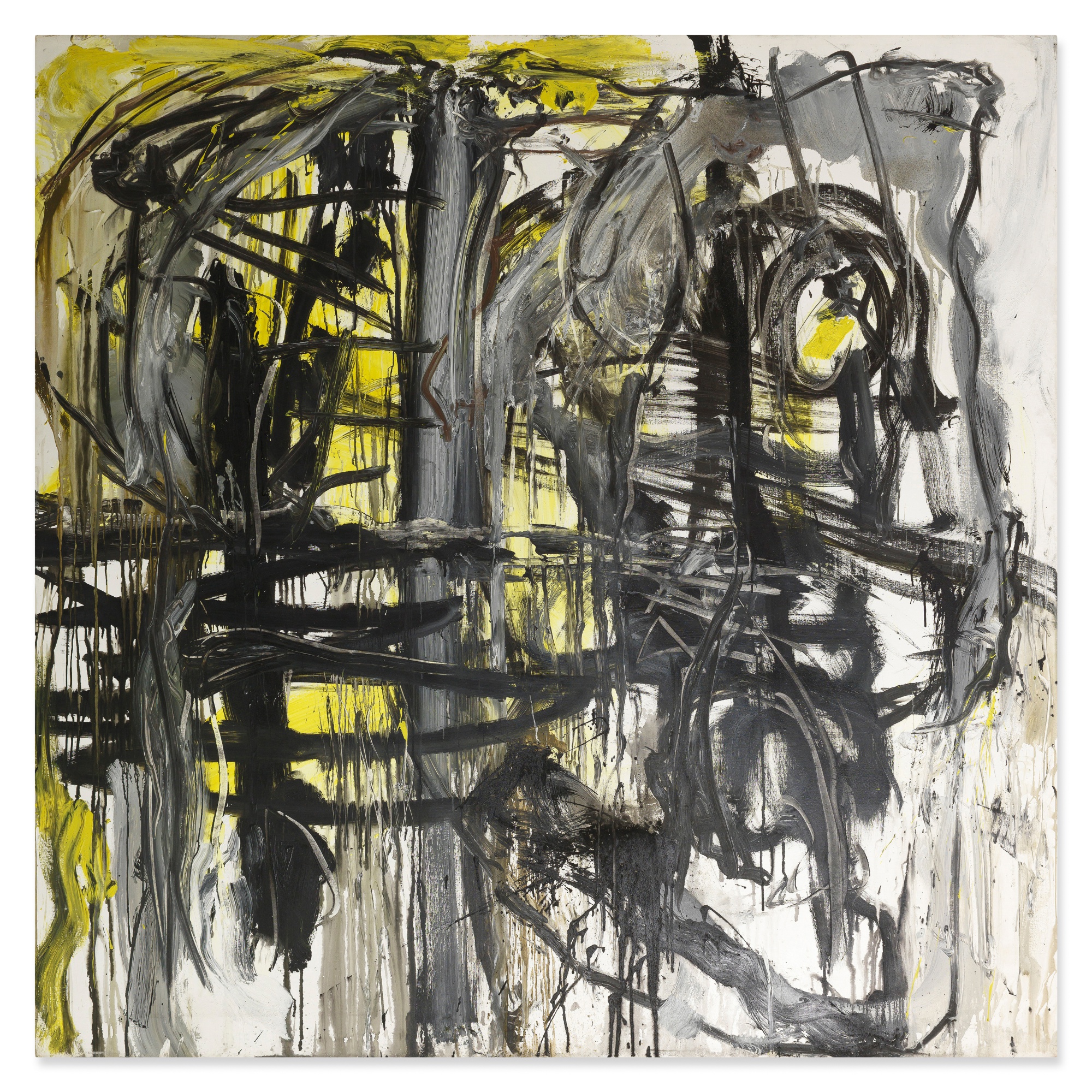
Emergency, 1983
They were lived, bodily, dangerous truths. In the years immediately following the war, Vedova found himself at the center of a remarkable generational awakening in Italian art. He was a founding member of the Fronte Nuovo delle Arti in 1946, a coalition of painters and sculptors who believed that modernism and political engagement were not merely compatible but inseparable. He signed the Manifesto Oltre Guernica in 1946 alongside Renato Guttuso and others, a document that announced the urgency of a new figurative and abstract language for a shattered Europe.
But Vedova moved quickly beyond collective manifestos. By the early 1950s, he had developed a style of pure gestural abstraction that owed something to Art Informel, something to the raw energy of American Abstract Expressionism, and a great deal to his own volcanic temperament. What Vedova arrived at was unlike anything else being made in Europe at the time. His canvases are organized around conflict itself: great sweeping arcs of black paint collide with white ground, diagonal slashes cut across the surface, charcoal smears bleed into pooled oil.
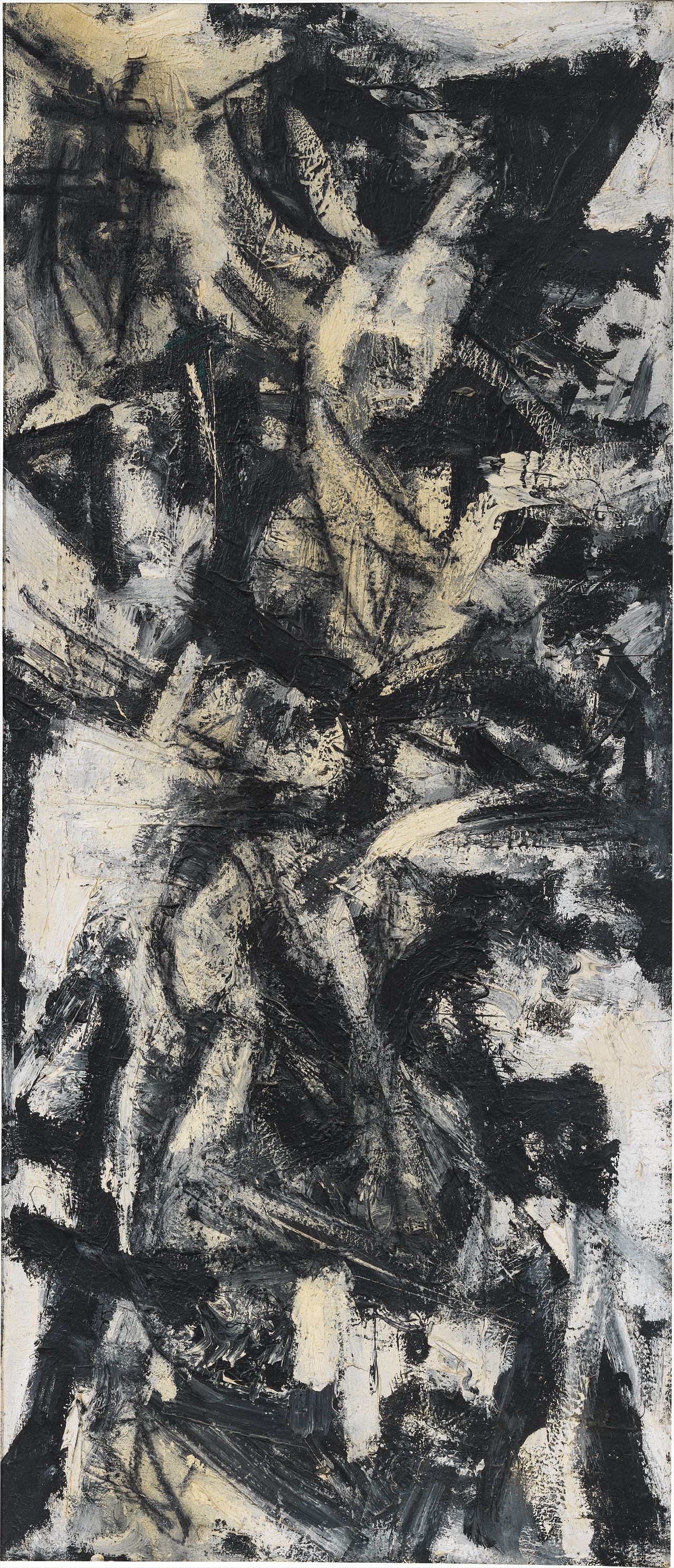
Emilio Vedova
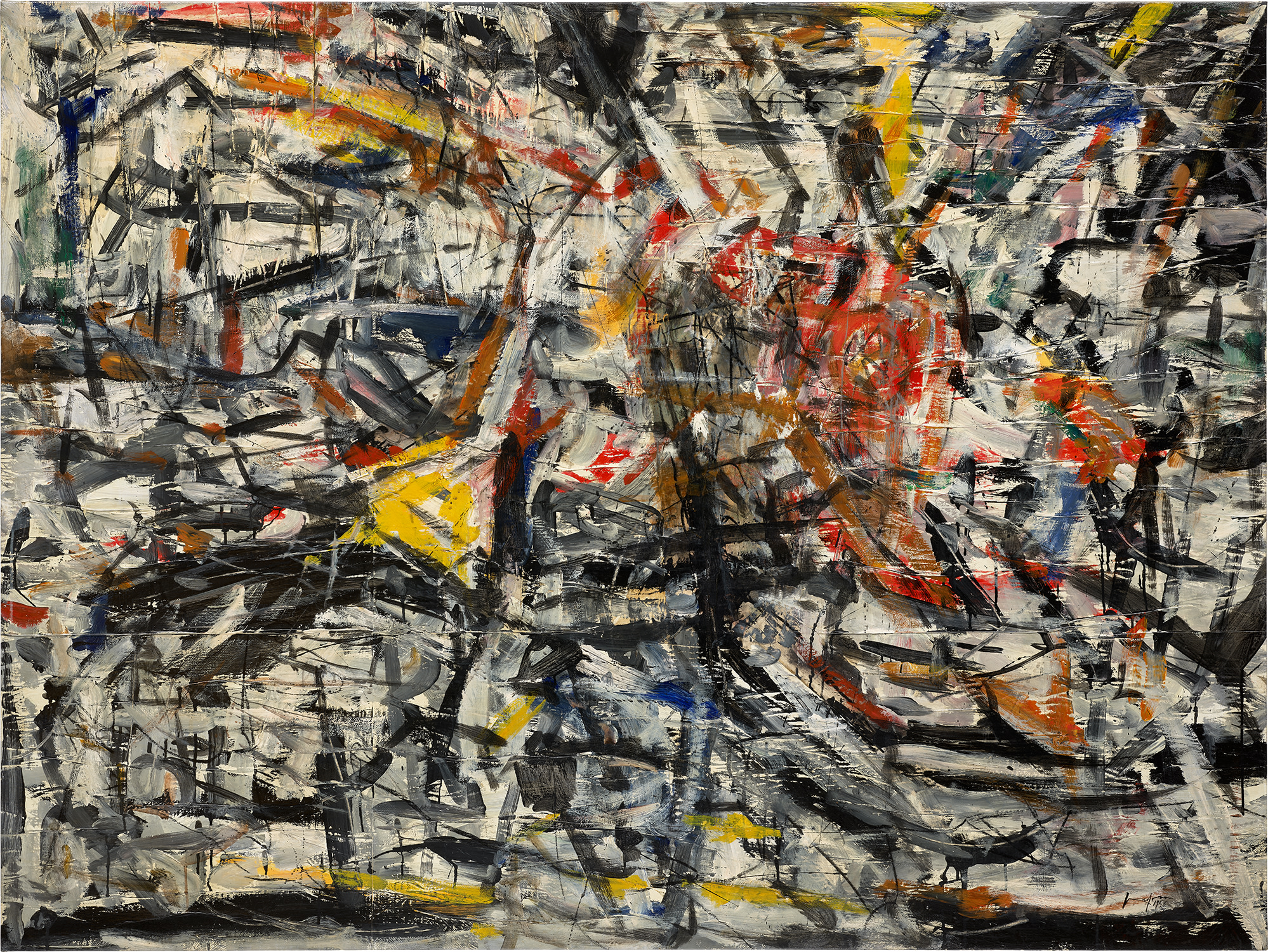
Presenza N7V, 1959
There is a theatrical violence to his compositions that never tips into decoration or mannerism. He was not performing aggression. He was translating it, finding in abstraction a language precise enough to carry the weight of political memory, grief, and defiance. His celebrated Ciclo della Protesta series, to which the 1956 work Ciclo della Protesta (Brasile 56) belongs, is among the most powerful bodies of politically engaged abstract painting produced in the twentieth century.
Each work in the cycle responds to a specific historical crisis or moment of injustice, without ever illustrating it. The paintings protest through form, through pressure, through the sheer physical fact of the paint. Presenza N7V from 1959 represents another peak in Vedova's output, a canvas in which oil and charcoal are worked together with extraordinary confidence. By this point Vedova was internationally recognized, having shown at the Venice Biennale multiple times and exhibited across Europe and the United States.
The late work Emergency from 1983 demonstrates how his energy never diminished with age. If anything, the later paintings carry an even more compressed intensity, as though decades of conviction had been concentrated further. His shaped canvases and his Plurimi, the series of hinged, three dimensional painted panels he developed through the 1960s, showed that Vedova was always expanding the boundaries of what painting could be and where it could exist in space. For collectors, Vedova occupies a singular and still somewhat underappreciated position in the market for postwar European masters.
His work is held in major institutional collections including the Museo del Novecento in Milan, the Peggy Guggenheim Collection in Venice, and the Fondazione Emilio e Annabianca Vedova, also in Venice, which preserves his studio and a remarkable archive. Auction appearances of significant works, particularly from the Ciclo della Protesta and Plurimi series, have drawn serious attention from European and international buyers. The Foundation has also done exemplary work in staging careful retrospectives that have reintroduced Vedova to younger audiences and new collecting contexts. For those drawn to postwar abstraction, his work offers the rare combination of genuine historical weight and sustained aesthetic power.
In the broader landscape of postwar art, Vedova sits naturally alongside Franz Kline and Willem de Kooning in his command of black and white gestural painting, and beside Hans Hartung and Pierre Soulages among European masters of expressive abstraction. Yet he is distinctly Italian, distinctly Venetian, and distinctly his own. His political sincerity sets him apart from contemporaries who embraced abstraction as pure formalism. Vedova always insisted that the act of painting was a moral act, that the choices made on a canvas had ethical consequences.
That conviction gives his work a seriousness that collectors and curators continue to respond to with admiration. Emilio Vedova died in Venice in 2006, the city where he was born and where so much of his most important work was made and shown. He left behind a body of work that remains genuinely challenging, not because it is obscure, but because it demands something from the viewer. It asks for attention, for patience, for a willingness to stand in the presence of strong feeling and let it register fully.
That is a rare quality in any art, and it is what makes Vedova's paintings feel not like artifacts of a particular moment in history but like permanent statements about what it means to be human, to resist, and to make something beautiful out of difficulty.
Explore books about Emilio Vedova