Elsa Gramcko
Elsa Gramcko: Venezuela's Radiant Abstract Visionary
Artist Spotlight · The Collection Editorial
In the permanent collection of the Galería de Arte Nacional in Caracas, a work by Elsa Gramcko commands the wall with an authority that feels both ancient and urgently contemporary. Its surface is layered, scarred, luminous, the result of a practice that refused to accept the boundary between painting and sculpture, between order and eruption. For those who have stood before it, the experience is difficult to describe but impossible to forget. That quality, the sense of an intelligence working at the very edge of what materials can say, is what has secured Gramcko's reputation as one of the most singular figures in twentieth century Latin American art.
Elsa Gramcko
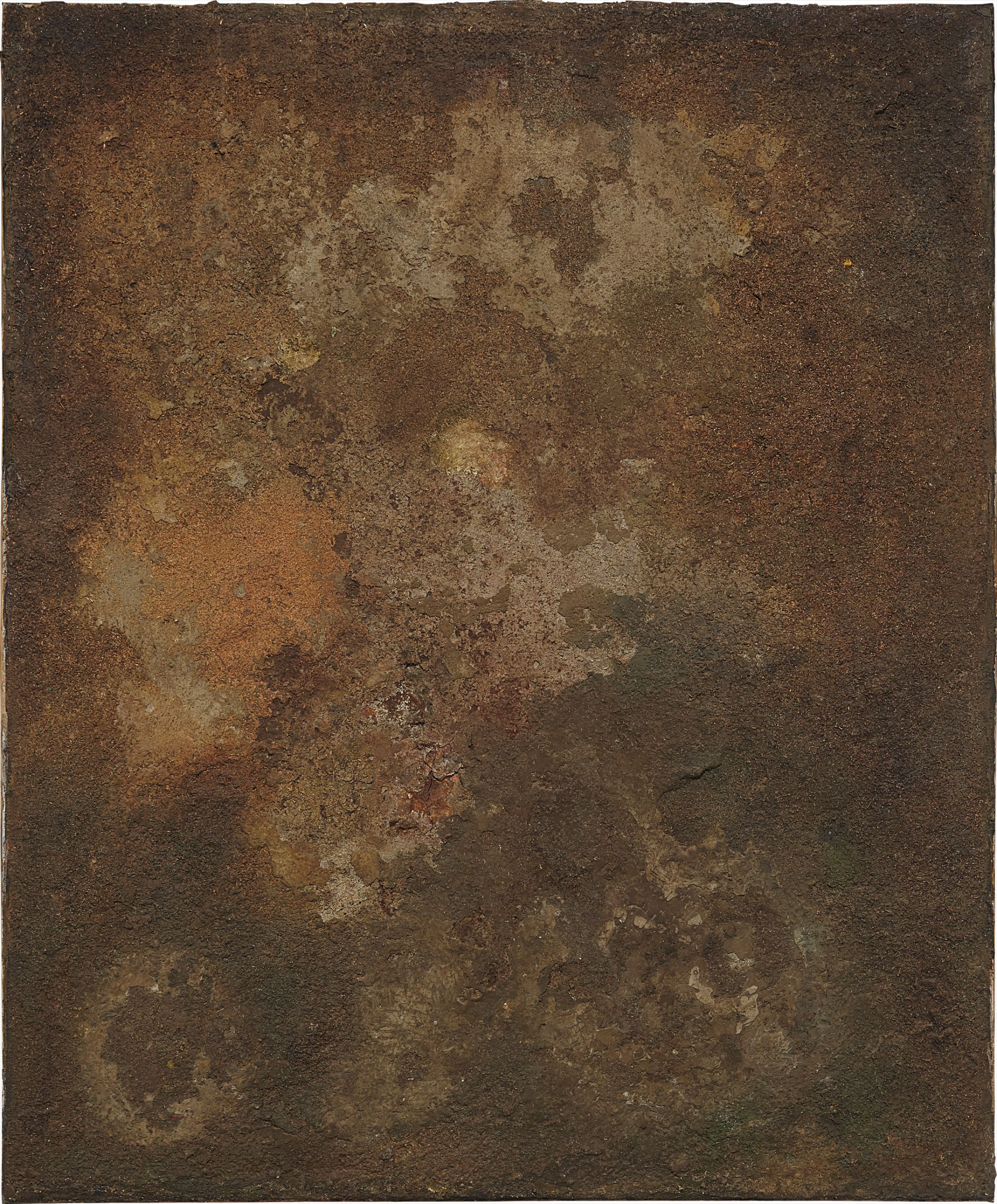
R-49
Elsa Gramcko was born in Puerto Cabello, Venezuela, in 1925, a coastal city whose industrial harbor and Caribbean light would leave a permanent imprint on her visual imagination. She came of age during a period of extraordinary transformation in Venezuela, as oil wealth and modernization remade the country's cities and its cultural ambitions in equal measure. Caracas in the 1950s was a city in the act of inventing itself, commissioning architecture from the world's avant garde and establishing institutions that would nurture a generation of artists hungry for a language equal to their moment. Gramcko was among the most gifted of that generation, and she moved through its networks with both curiosity and independence.
Her formation was shaped by the intellectual ferment of Caracas's art world during the postwar decades, a scene that was deeply connected to European modernism while insisting on its own identity. She studied and engaged with the currents of geometric abstraction and kinetic art that defined Venezuelan modernism in that era, movements associated with figures such as Jesús Soto and Carlos Cruz Diez. Yet Gramcko's sensibility pulled in a different direction, toward the rougher, more visceral energies of European Art Informel and the textural experiments of artists like Jean Dubuffet and Antoni Tàpies. Where her contemporaries often pursued optical precision and the poetry of movement, she embraced material accumulation, the painting as a physical fact as much as a visual one.
Elsa Gramcko
Elsa Gramcko
The evolution of her practice through the 1960s and 1970s represents one of the most compelling artistic journeys in Latin American modernism. She worked with an exceptional range of materials, incorporating industrial substances, resins, sands, and found elements into her canvases to build surfaces of remarkable density and tactile presence. Her compositions operate on a tension between geometric structure and informal gesture, between the grid and the wound, between control and release. This tension is not a contradiction in her work but its very subject matter, the negotiation between thought and feeling that is the central drama of abstract painting.
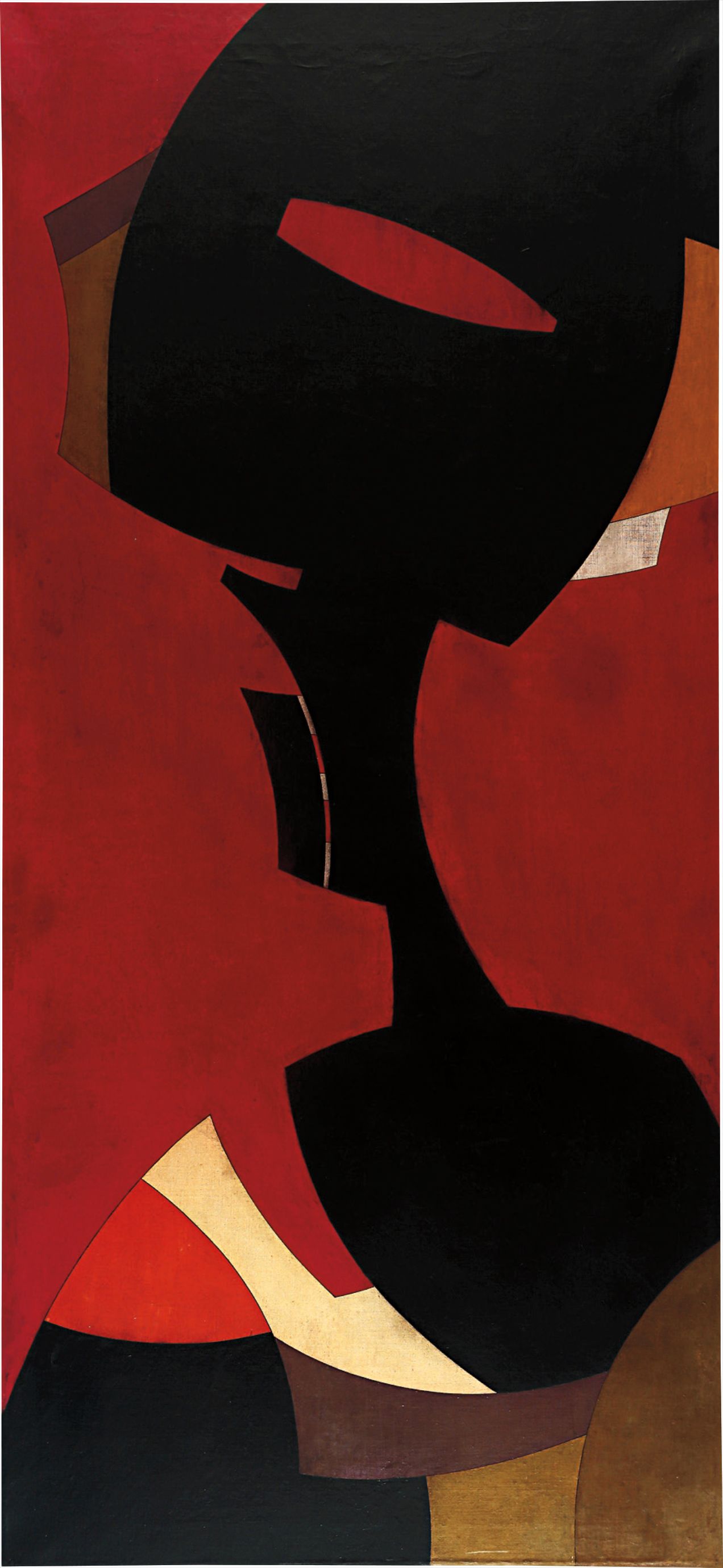
She brought to this drama a rigor and a sensuality that were entirely her own. Among the works that best illuminate her achievement, "Abstracto No. 9" in oil on canvas offers a concentrated demonstration of her formal intelligence. The painting rewards close attention, revealing a layered complexity beneath its apparent immediacy, planes of color that advance and recede, edges that dissolve or harden according to the light.
Elsa Gramcko
Abstracto No. 9
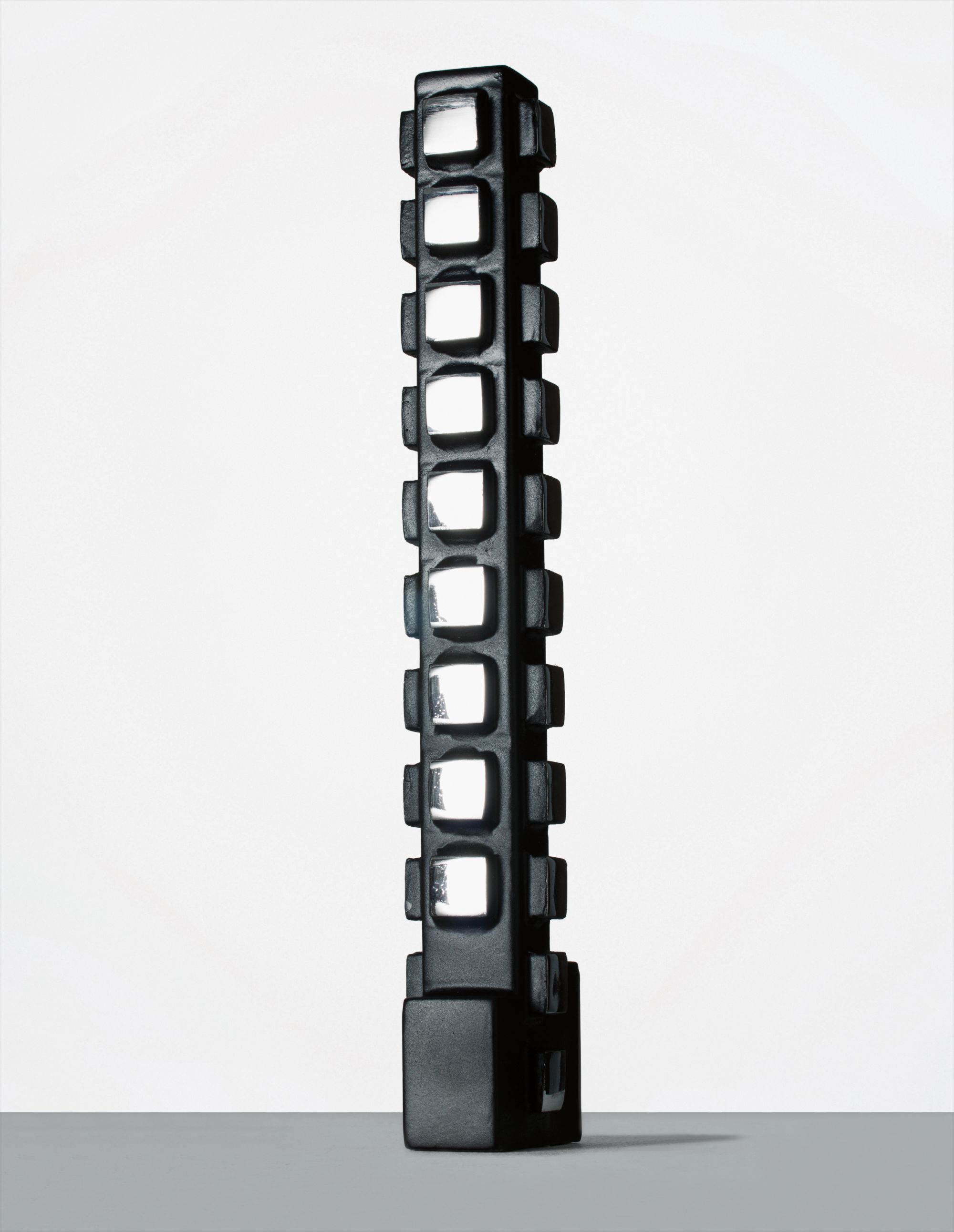
"R 49," a mixed media work on canvas, shows the full range of her material ambition, its surface accreted and worked over time in a manner that makes the painting feel less like a finished object than a record of sustained thought. Perhaps most striking is the stainless steel work that bears her name, a venture into three dimensions that confirms how consistently she understood making as an investigation of substance itself, not merely of image. For collectors, Gramcko's work presents an opportunity of real significance. Her position within the Venezuelan avant garde is firmly established in art historical scholarship, and her work appears in major institutional collections across Venezuela and Latin America.
Yet outside the region she remains less widely known than her achievement warrants, which means that those who seek out her work now are acquiring not only a masterful object but a piece of a story that the international art world is still fully discovering. Works on paper and smaller canvases provide entry points for collectors building a thoughtful Latin American modernism holdings, while her larger mixed media compositions represent the full ambition of her vision. The relative rarity of her work on the international market adds to its long term appeal. To place Gramcko within art history is to understand how rich and various the Latin American modernist tradition truly is.
Her work invites comparison with Lygia Clark of Brazil, who similarly interrogated the limits of the painted object, and with the Chilean painter Roberto Matta, whose surrealist abstraction shares something of Gramcko's investment in psychic depth. Within Venezuela itself, her practice stands as a necessary counterweight to the kinetic and geometric traditions, a reminder that abstraction in the region was never a single story. She corresponded in spirit with European practitioners of material painting, and her work belongs in any serious account of global abstract art in the second half of the twentieth century. Elsa Gramcko died in Caracas in 1994, leaving a body of work whose full measure is still being taken.
In recent years, renewed scholarly attention to Latin American modernism has brought her practice into sharper focus, and exhibitions and publications dedicated to women artists of the Venezuelan avant garde have given new generations the chance to encounter her vision. Her work speaks with particular force to a contemporary moment preoccupied with materiality, with the politics of surface, and with the question of what abstraction can hold. She answered those questions decades ago, with paint and resin and steel and an uncompromising intelligence, and her answers remain as alive as ever.