Elliott Erwitt
Elliott Erwitt: A Life Beautifully Observed
Artist Spotlight · The Collection Editorial
“I have a cat and two dogs. I do like dogs. I photograph them because they are funny and touching and often wiser than people.”
Elliott Erwitt, interview
There is a photograph of a small dog in New York City, its tiny legs barely visible beneath the hem of a winter coat, standing beside the towering legs of its owner and a much larger dog. The image is absurd, tender, and immediately unforgettable. It is also quintessentially Elliott Erwitt, a photographer who spent more than seven decades reminding us that the most profound truths about human existence are found not in grand gestures but in the blink of an eye, the tilt of a head, the accidental poetry of an ordinary afternoon. When Erwitt passed away in November 2023 at the age of ninety five, the photography world lost one of its last great humanists, and the tributes that followed from institutions including Magnum Photos, the International Center of Photography in New York, and museums across Europe confirmed what collectors and curators had long understood: his legacy is not only intact but growing in stature with every passing year.
Elliott Erwitt
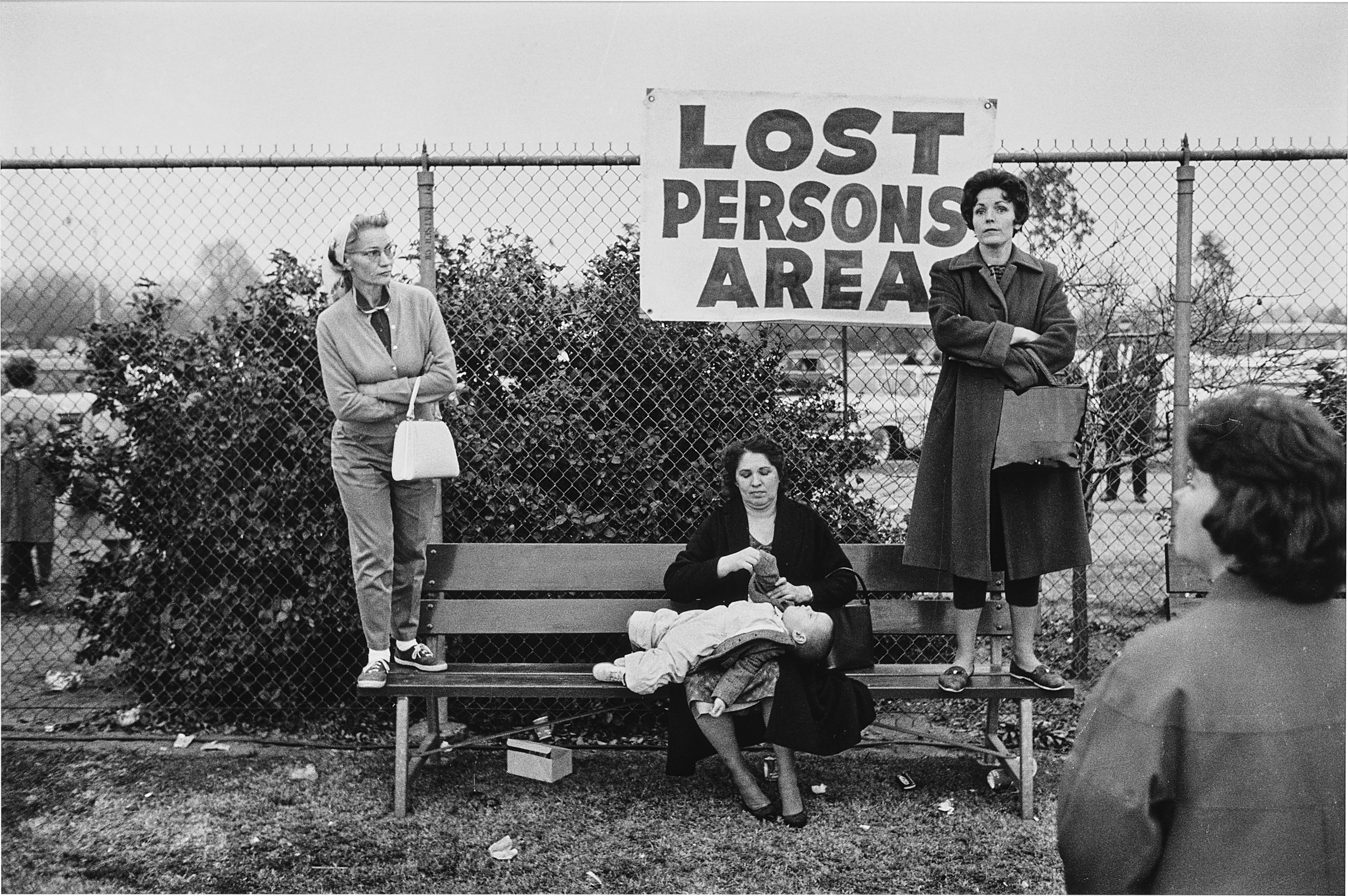
Pasadena
Erwitt was born in Paris in 1928 to Russian Jewish emigre parents, and his early life was shaped by the kind of displacement that breeds acute powers of observation. The family moved to Milan, then fled the gathering storm of European fascism, eventually settling in the United States in 1939. Erwitt spent his formative years in Hollywood, California, a place that gave him an early education in image making and the constructed nature of appearance, before moving to New York City as a young man. He studied photography at the New School for Social Research, where he encountered a community of serious, politically engaged image makers who believed photography could bear witness and even change minds.
That intellectual grounding never left him, even as his work evolved toward a register that was warmer and more playful than the documentary tradition from which he came. His professional formation accelerated rapidly. In the early 1950s, a chance meeting with Edward Steichen and the mentorship of Robert Capa proved decisive. Capa invited Erwitt to join Magnum Photos in 1953, the cooperative agency that Capa had co founded with Henri Cartier Bresson, David Seymour, and George Rodger in 1947.
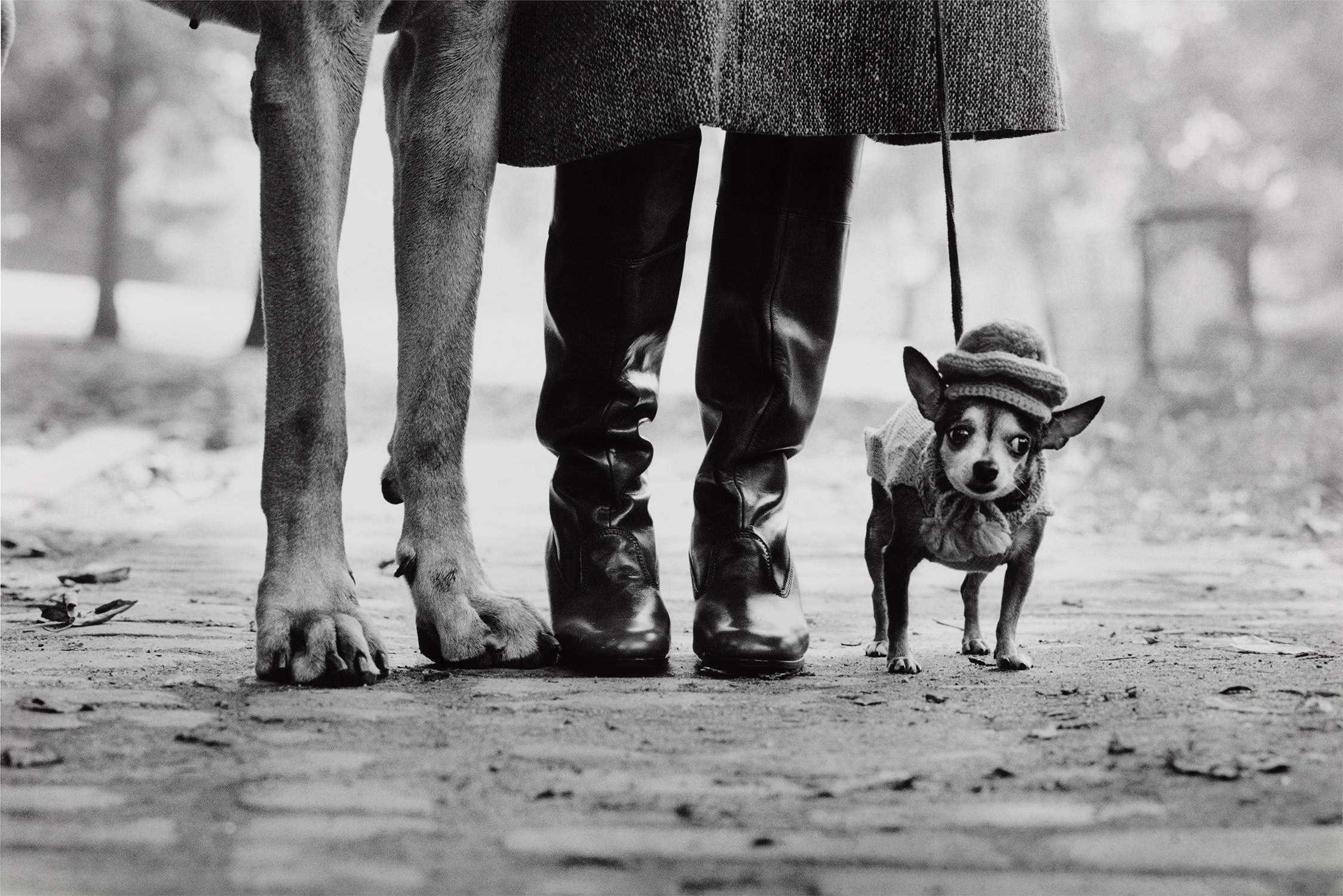
Elliott Erwitt
Dog Legs, New York City
Membership in Magnum was not merely a professional affiliation. It was an artistic and ethical commitment, a declaration that photography was a discipline worthy of the same seriousness as painting or sculpture. Erwitt thrived within that community and eventually served as Magnum's president, bringing both organizational acumen and a quietly radical aesthetic sensibility to the institution. The 1950s and 1960s were the years in which Erwitt's signature voice fully crystallized.
“You can find pictures anywhere. It is simply a matter of noticing things and organizing them.”
Elliott Erwitt
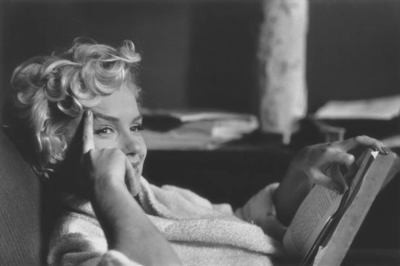
He photographed politicians and celebrities with the same attentive curiosity he brought to strangers on the street, and the results were often disarmingly intimate. His 1959 image of Nikita Khrushchev and Richard Nixon during the famous Kitchen Debate in Moscow is one of the defining political photographs of the Cold War era. Nixon leans in, finger pointed, and yet Erwitt's framing subtly deflates the theatricality of the moment, finding the human comedy beneath the geopolitical tension. His portrait of Marilyn Monroe in New York City similarly captures something unguarded and luminous, a woman of extraordinary magnetism caught in a moment of quiet self possession rather than performance.
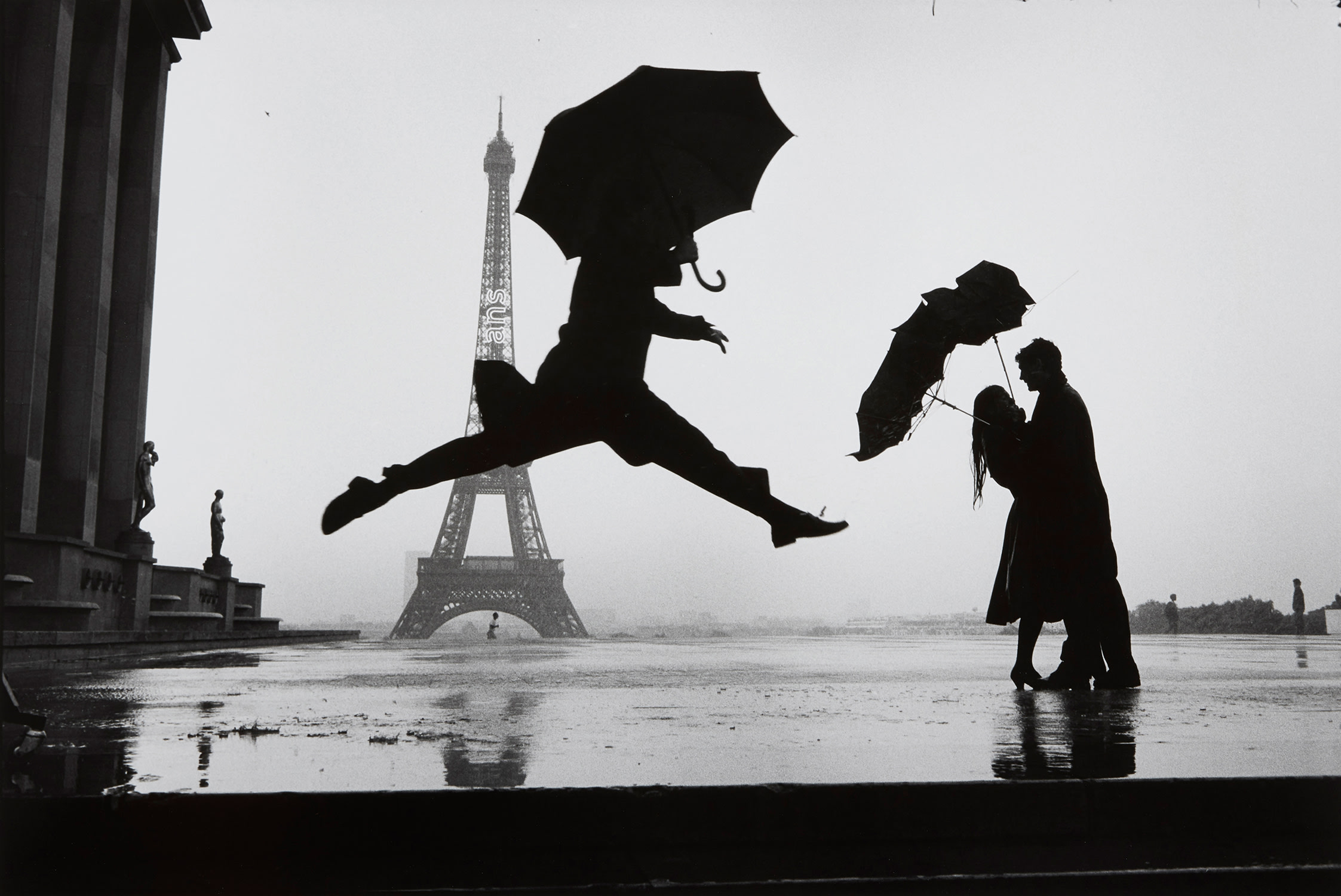
Elliott Erwitt
Paris, France
These images endure not because they document famous people but because they reveal something true about the nature of public life and private feeling. No survey of Erwitt's work is complete without his photographs of dogs, a body of work that became one of the most beloved and critically engaged projects in twentieth century photography. For decades he returned to dogs as subject matter, accumulating a body of images that functioned simultaneously as comic observation, social commentary, and genuine affection. The dog photographs are not sentimental in any diminishing sense.
“The whole point of taking pictures is so that you don't have to explain things with words.”
Elliott Erwitt
They are structurally rigorous, formally inventive compositions that use the scale and behavior of animals to reflect back something unexpected about their human companions. Works such as Dog Legs, New York City, available as a gelatin silver print in a 2019 edition, show how Erwitt could build an entire world of meaning from a single frame, using cropping and perspective to transform the mundane into the genuinely strange and funny. His Paris and Versailles images demonstrate his European sensibility, his love of light and architecture as theatrical backdrop for spontaneous human action. For collectors, Erwitt's work offers a rare combination of art historical significance, emotional accessibility, and genuine market depth.
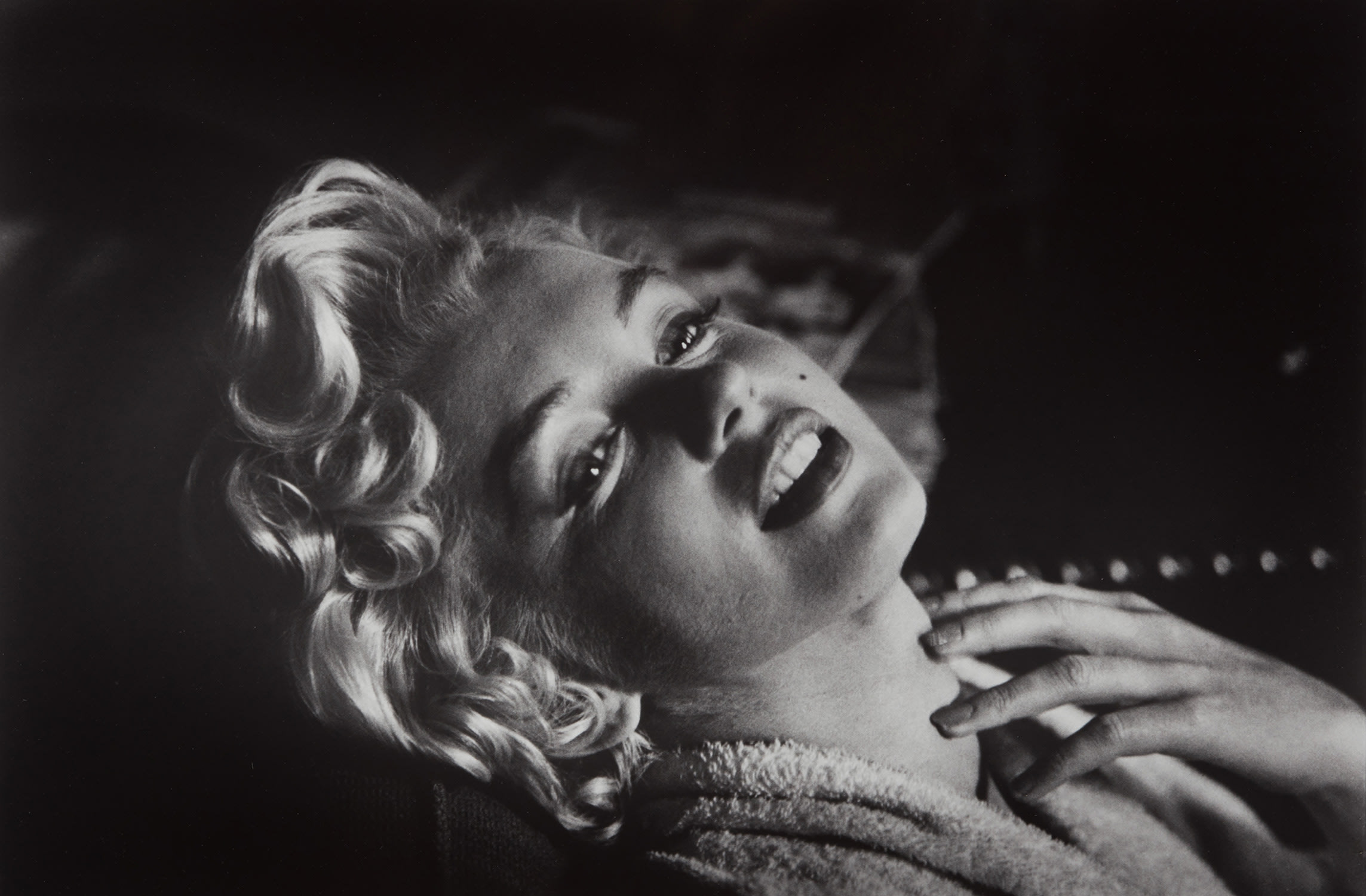
Elliott Erwitt
Marilyn Monroe, New York City
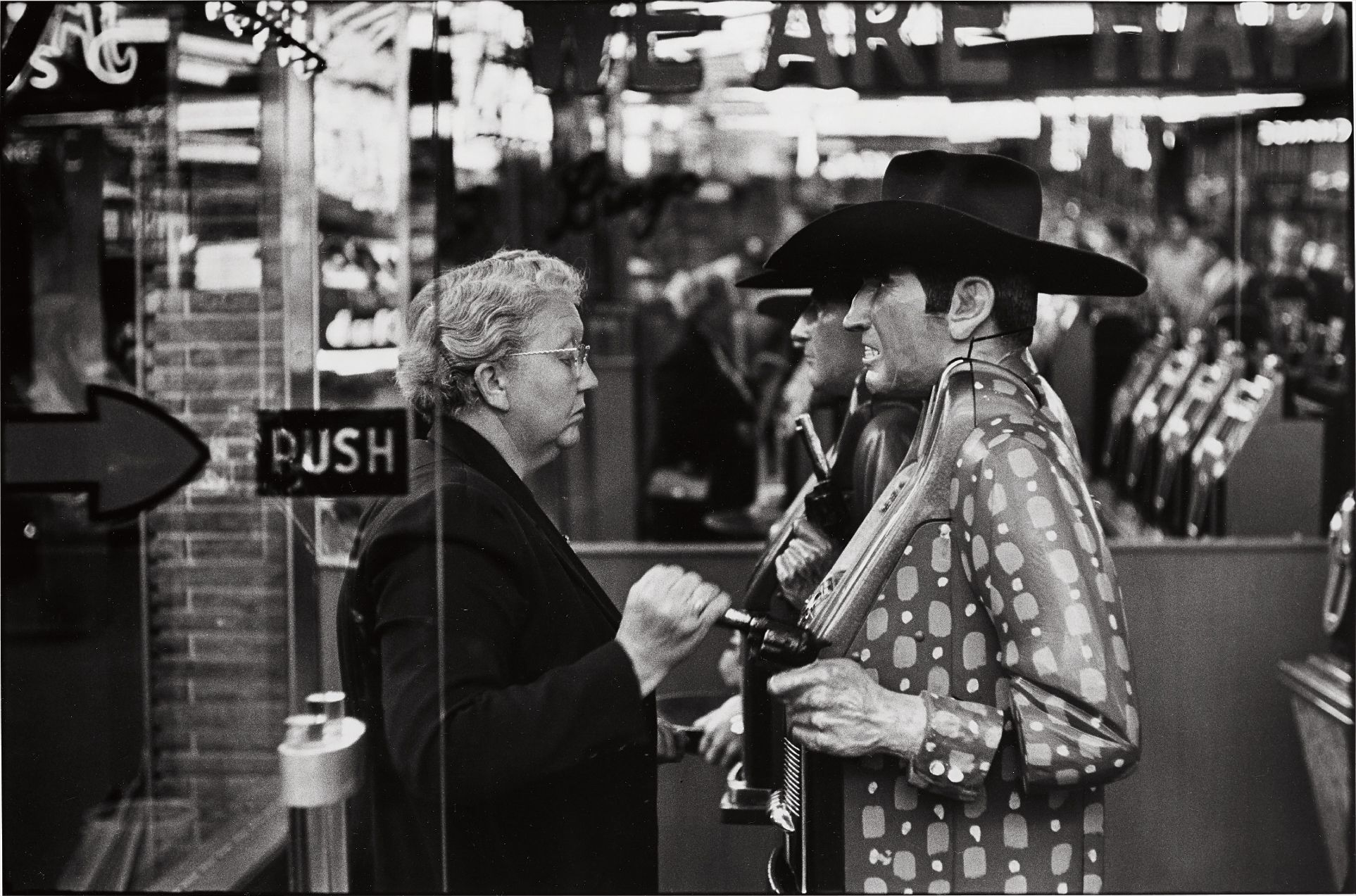
His prints appear regularly at major auction houses including Christie's and Phillips, where his most celebrated images consistently attract strong bidding from both institutional and private buyers. Gelatin silver prints, particularly those printed later under Erwitt's own supervision or produced in limited editions, represent the most collectible stratum of his output. Works such as Las Vegas, Nevada and Valencia, Spain (Robert and Mary Frank) demonstrate his range, from the neon charged American vernacular to the intimate documentary tradition. The Valencia image, depicting fellow photographers Robert and Mary Frank, carries particular art historical weight for collectors who understand the interconnected world of mid century documentary photography and the deep friendships that animated it.
Erwitt belongs to a constellation of photographers who defined what serious humanist photography could be in the postwar era. His closest peers include Henri Cartier Bresson, whose concept of the decisive moment Erwitt absorbed and then gently subverted with his preference for the slightly absurd over the purely elegant. He shares sensibilities with Garry Winogrand, whose street photography crackled with a similar sense of the world as endlessly, bewilderingly alive. Robert Frank, whose restless, melancholic vision of America influenced a generation, was a close friend and in some ways a philosophical counterpart, the darkness to Erwitt's light.
Collectors drawn to any of these figures will find in Erwitt a complement and a contrast, an artist who chose warmth and wit as his instruments while never sacrificing rigor or depth. What makes Erwitt's work so enduring, and so well suited to the walls of a thoughtful private collection, is its fundamental generosity toward the world. In an era when photography has become saturated with irony and anxiety, his images feel like a form of grace. They do not look away from difficulty or pretend that life is uncomplicated, but they insist, with great formal intelligence, that there is beauty and comedy and tenderness everywhere if you are willing to be patient and to really look.
For collectors building a body of work that reflects a belief in photography's unique power to capture the irreducible strangeness of being alive, Elliott Erwitt remains not just a historical master but an essential and joyful presence.
Explore books about Elliott Erwitt