Elizabeth Garouste et Mattia Bonetti
Where Myth and Material Become Magic
Artist Spotlight · The Collection Editorial
There is a moment, standing before a piece by Elizabeth Garouste and Mattia Bonetti, when the familiar categories of art history simply dissolve. The object in front of you is a chair, or a lamp, or a console table, and yet it is also a creature, a relic, a dream made tangible. This sensation has greeted visitors to major museum collections across Europe and America for decades, and it shows no sign of fading. If anything, as the boundaries between design and fine art continue to blur in the twenty first century, the work of this Franco Italian duo feels more prescient and more vital than ever before.
Elizabeth Garouste et Mattia Bonetti
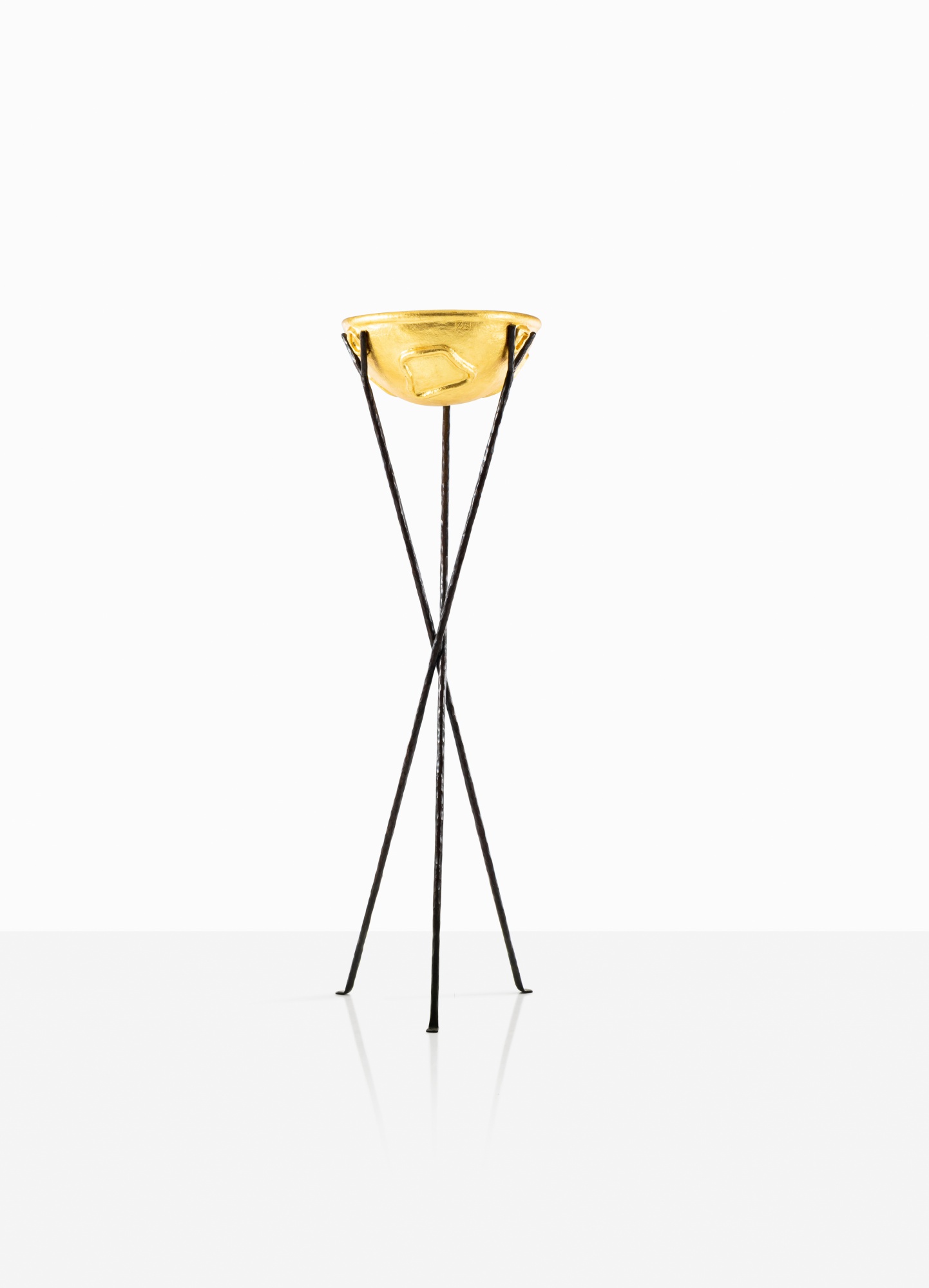
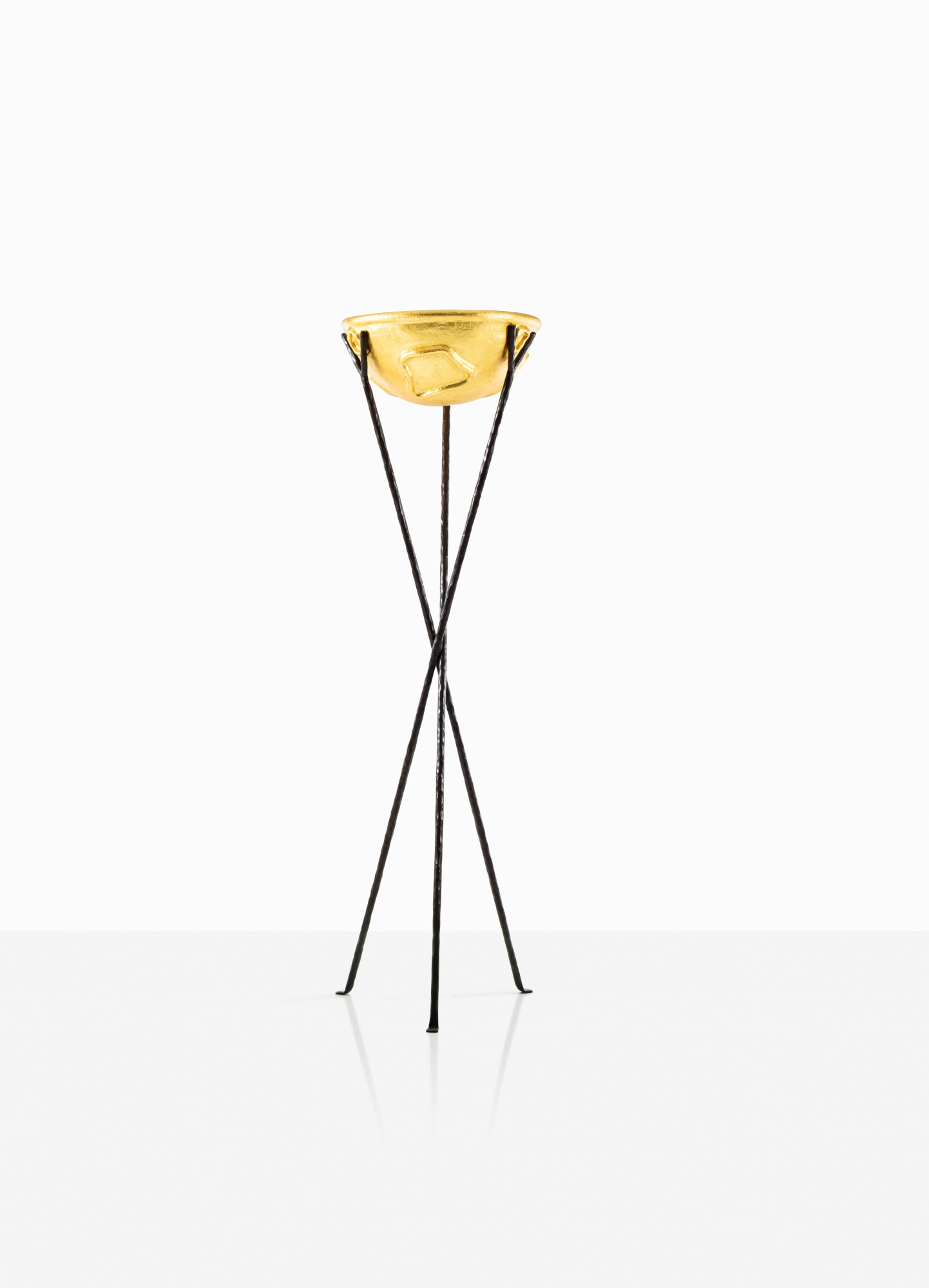
Lampadaire tripode, pièce unique
Elizabeth Garouste was born in Paris in 1949, and her formation was steeped in the theatrical and the fantastical. She trained as a stage designer and brought to her later work an instinct for spectacle, for objects that perform as much as they function. Mattia Bonetti was born in Lugano, Switzerland, in 1952, and trained in textile design in Milan before relocating to Paris, where the encounter with Garouste would reshape his practice entirely. Their backgrounds were complementary in the deepest sense: one rooted in illusion and scenography, the other in surface, texture, and material sensuality.
When they began collaborating in the early 1980s, the results were immediate and startling. Their partnership emerged at a singular moment in Parisian cultural life, when a new generation of designers and artists was pushing against the cool minimalism that had dominated the preceding decades. The gallerist Neotu, founded in Paris in 1984, became an important early home for their work, presenting pieces that seemed to arrive from an alternate history of civilization, one where baroque ornament had never been tempered by modernist restraint. Garouste and Bonetti coined the term neo barbaric to describe their aesthetic, invoking not savagery but a kind of primordial richness, the sense that ornament is not excess but necessity.
Elizabeth Garouste et Mattia Bonetti
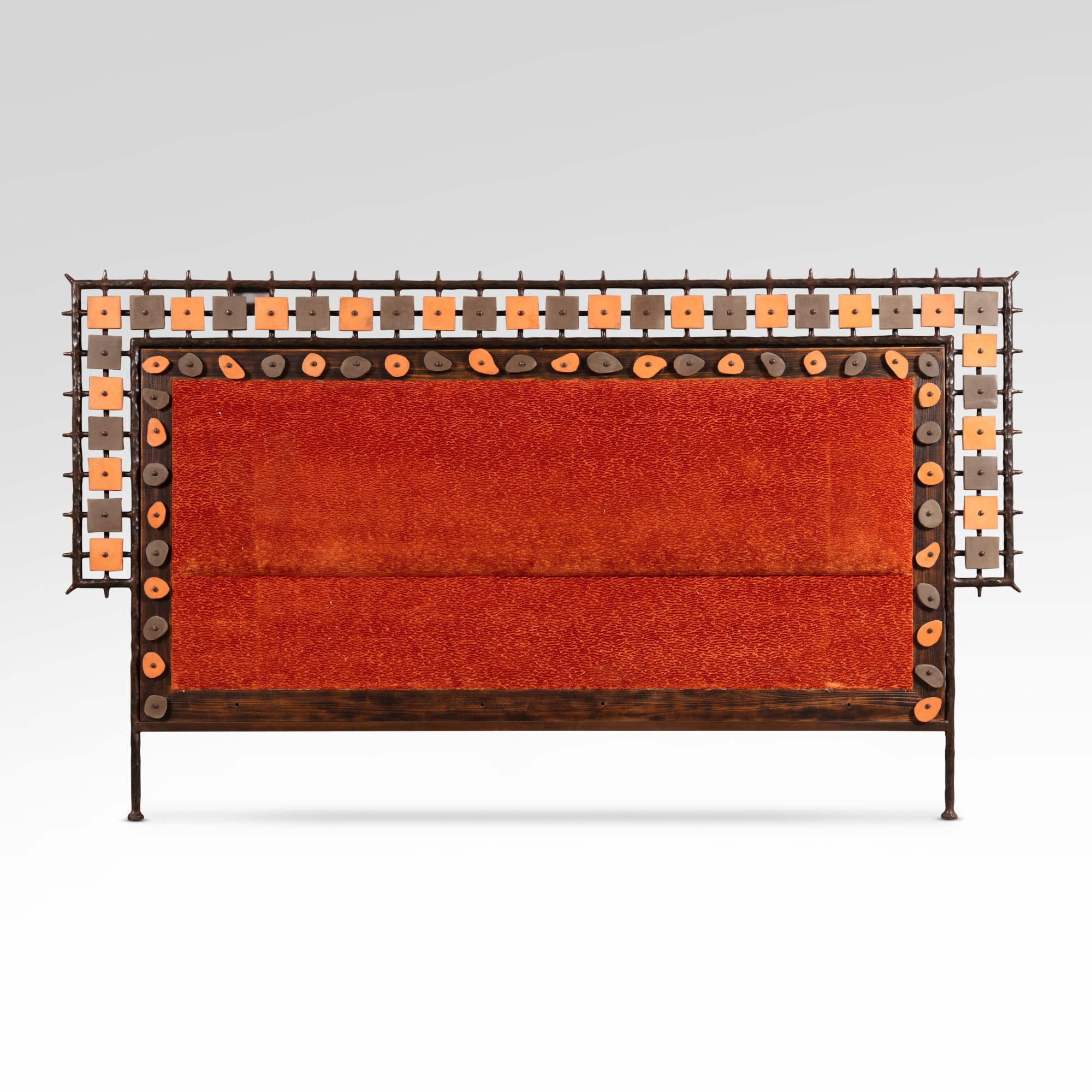
Tête de lit, pièce unique
Their furniture looked as though it had been excavated from a palace that existed somewhere between ancient Rome and a fairy tale forest. The materials they chose were as unconventional as their forms. Wrought iron twisted into branches and bones, gilded bronze cast into animal limbs and mythological fragments, raw stone used not as a support but as a protagonist. Upholstery appeared in unexpected textures, rich velvets and woven fabrics that gave pieces a bodily warmth.
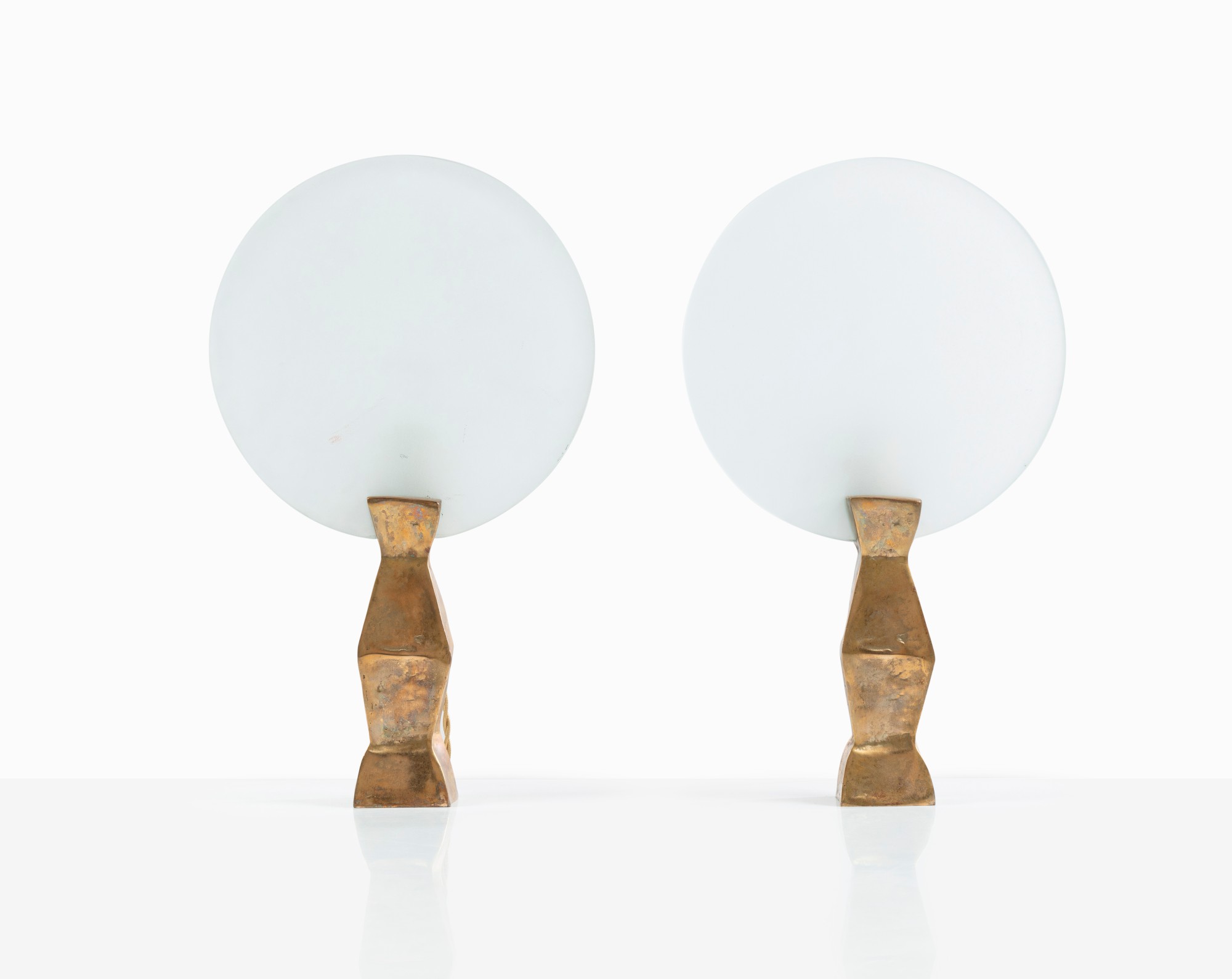
The Meridienne Koala, with its gilt bronze frame and velvet upholstery, exemplifies this sensibility perfectly: it is furniture that invites touch as much as contemplation, that seems to breathe. The Paire de Lampes Lune, in gilt bronze and sandblasted glass, achieves something rarer still, casting light that feels ancient and otherworldly at once, as though the moon itself had been asked to sit quietly in a Parisian interior. Among their most celebrated works, the Cabinet Enfer stands as a kind of manifesto object. Imposing, elaborately wrought, it draws on the visual language of medieval reliquaries and baroque altarpieces while remaining unmistakably of its time.
Elizabeth Garouste et Mattia Bonetti
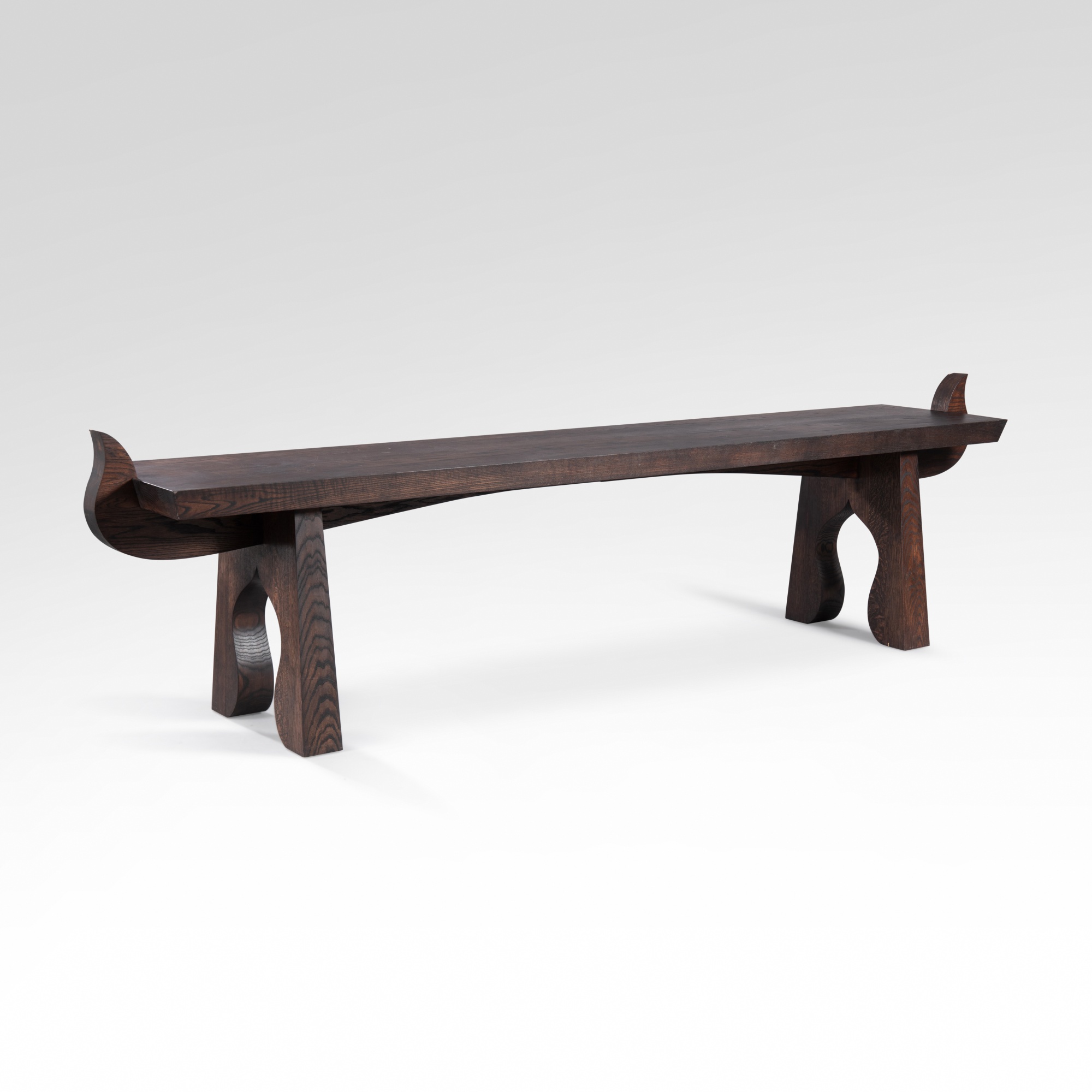
Console
The Console, spare in silhouette but rich in material presence, shows the duo's ability to distill their maximalist impulses into something approaching classicism. The Lampadaire Tripode, designated a piece unique, demonstrates their commitment to the singular object over industrial reproduction: each work they produced was intended to carry the weight of authorship, to be collected as one collects a painting or a sculpture rather than a piece of furniture. Their Tete de Lit, also a piece unique, transforms the headboard into a portal, a threshold between waking life and the realm of dreams. The market for Garouste and Bonetti has grown steadily and with conviction.
Their limited edition and unique pieces have attracted serious attention at auction houses including Christie's and Sotheby's, where major works have achieved prices that place them firmly within the territory of blue chip design. Collectors who came to them early recognized what the broader market has since confirmed: that these objects occupy a category of their own, closer to sculpture than to decorative art in the conventional sense. For a collector approaching their work today, the pieces to seek are those that most fully embody the duo's commitment to the unique and the irreproducible, works where material, form, and fantasy are in complete alignment. To understand Garouste and Bonetti within the broader sweep of art and design history is to see them as part of a distinguished lineage of makers who refused the distinction between art and object.
Elizabeth Garouste et Mattia Bonetti
Paire de lampes Lune
They belong in conversation with Carlo Mollino, whose furniture carried the weight of surrealist desire, and with Diego Giacometti, whose bronze tables and lamps transformed the decorative into the deeply personal. Closer to their own moment, they share sensibilities with Andrea Branzi and the Memphis Group, whose work in the early 1980s also challenged the dominance of functionalist modernism, though Garouste and Bonetti pushed further into myth and materiality than their Italian contemporaries. The influence of Jean Cocteau's theatrical imagination is visible in their work, as is a deep engagement with the medieval and the baroque that connects them to a specifically French tradition of ornamental extravagance. Their legacy today is both historical and living.
Major museum collections including the Musee des Arts Decoratifs in Paris hold their work, and a younger generation of designers working in the space between art and functional object owes them a profound debt. Elizabeth Garouste has continued to work as an artist and designer following the partnership, while Mattia Bonetti has pursued an acclaimed independent practice that has taken his singular vision into new territories. What endures from their collaboration is something rare in any creative field: a wholly original world, conjured with skill and conviction, that offers the collector not merely an object but an entire cosmology to inhabit.
Explore books about Elizabeth Garouste et Mattia Bonetti