Elie Nadelman
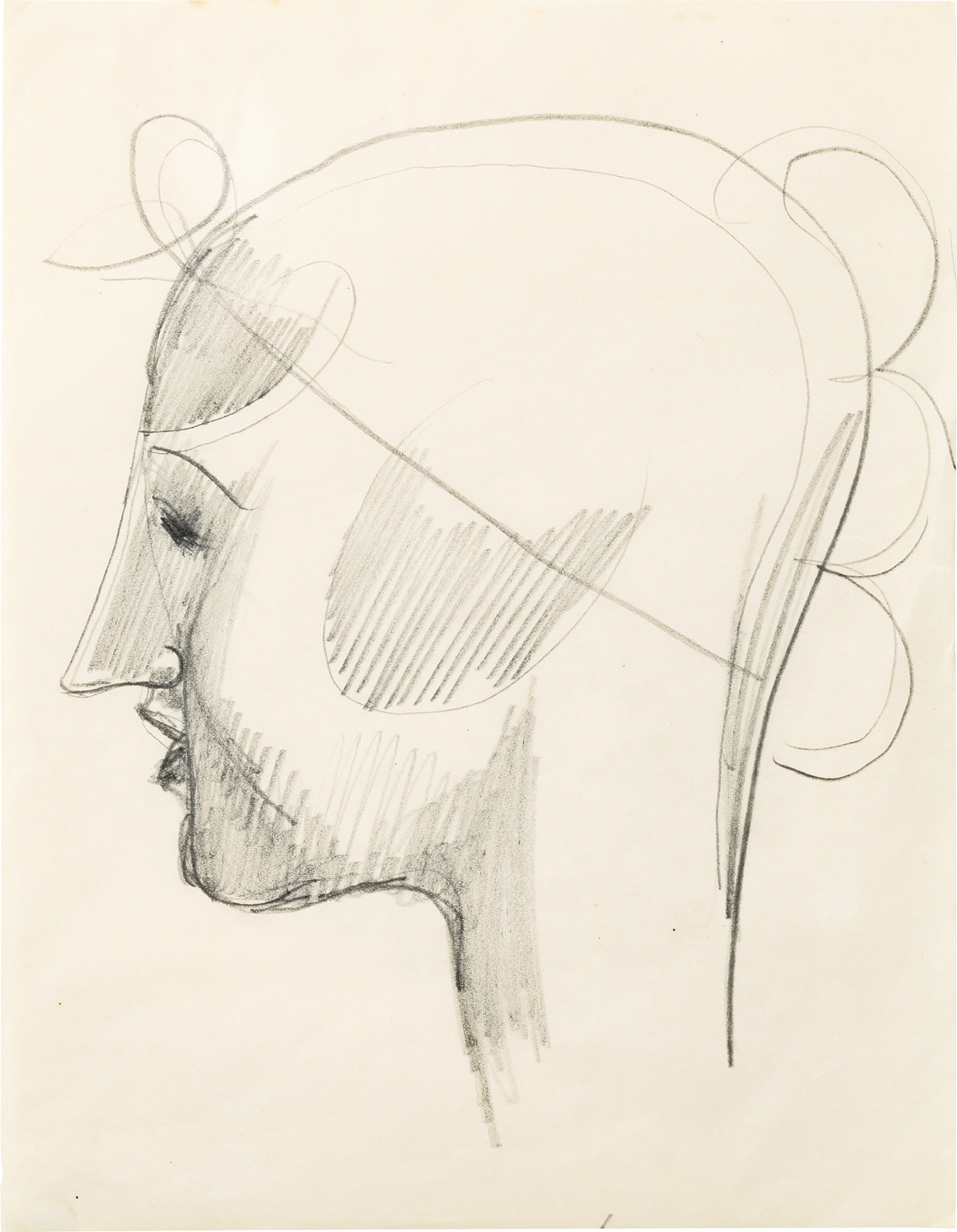
Elie Nadelman, Sculptor of Joyful Modern Grace
Artist Spotlight · The Collection Editorial
There is a particular pleasure in standing before an Elie Nadelman sculpture and feeling, almost immediately, that the world is a more elegant and witty place than you had previously allowed yourself to believe. That sensation has been drawing museum visitors and serious collectors back to his work for decades, and it shows no sign of fading. The Museum of Modern Art in New York holds significant examples of his carved and cast figures, and the Whitney Museum of American Art has long counted Nadelman among the foundational voices of American modernism. In recent years, renewed scholarly attention to the early twentieth century avant garde has placed Nadelman precisely where he belongs: at the very center of a conversation about how European classicism and American vernacular energy could be fused into something genuinely new.
Elie Nadelman
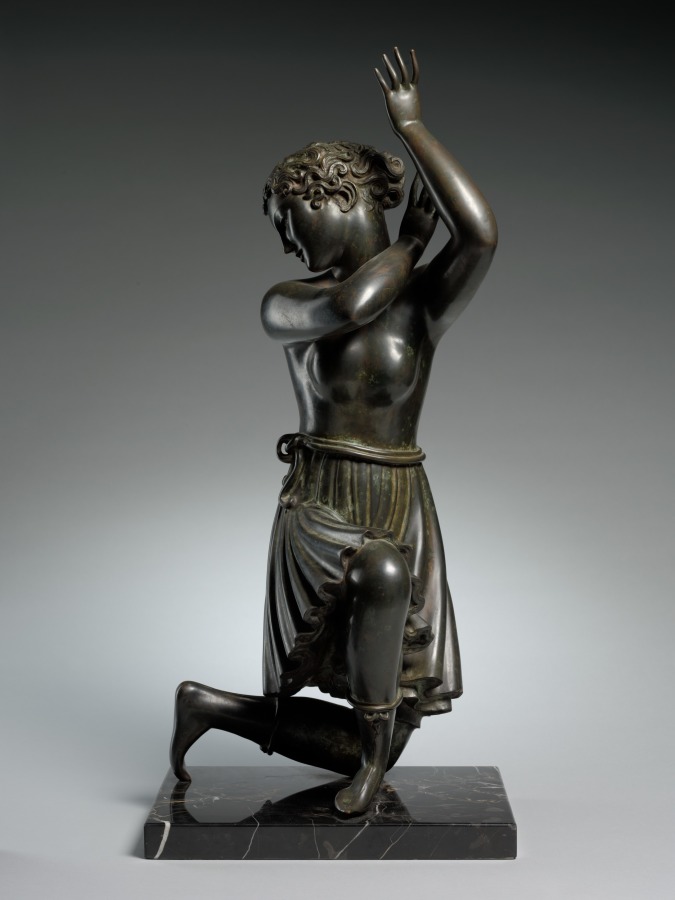
Dancing Figure, 1916
Elie Nadelman was born in Warsaw in 1882, then part of the Russian Empire, into a cultured Jewish family that encouraged his artistic ambitions early. He studied at the Warsaw Drawing Class before making his way to Munich and then, decisively, to Paris around 1904. Paris in those years was the most electrically charged city in the world for a young artist. Nadelman arrived just as Picasso was beginning the experiments that would lead to cubism, and the two men almost certainly encountered one another's ideas, though the question of mutual influence has generated considerable art historical debate.
What is clear is that Nadelman was developing his own theory of form independently, working through drawings and small sculptures that analyzed the geometry underlying classical figures with a rigor that was entirely his own. His Paris years produced a body of work that earned him serious recognition in the most ambitious circles of European modernism. He exhibited at the Galerie Druet in 1909, and the show attracted admiring attention from critics and fellow artists alike. His drawings from this period, spare and searching, reveal an artist who understood classical Greek sculpture deeply and was determined to find within it a living formal principle rather than a dead academic convention.
Elie Nadelman
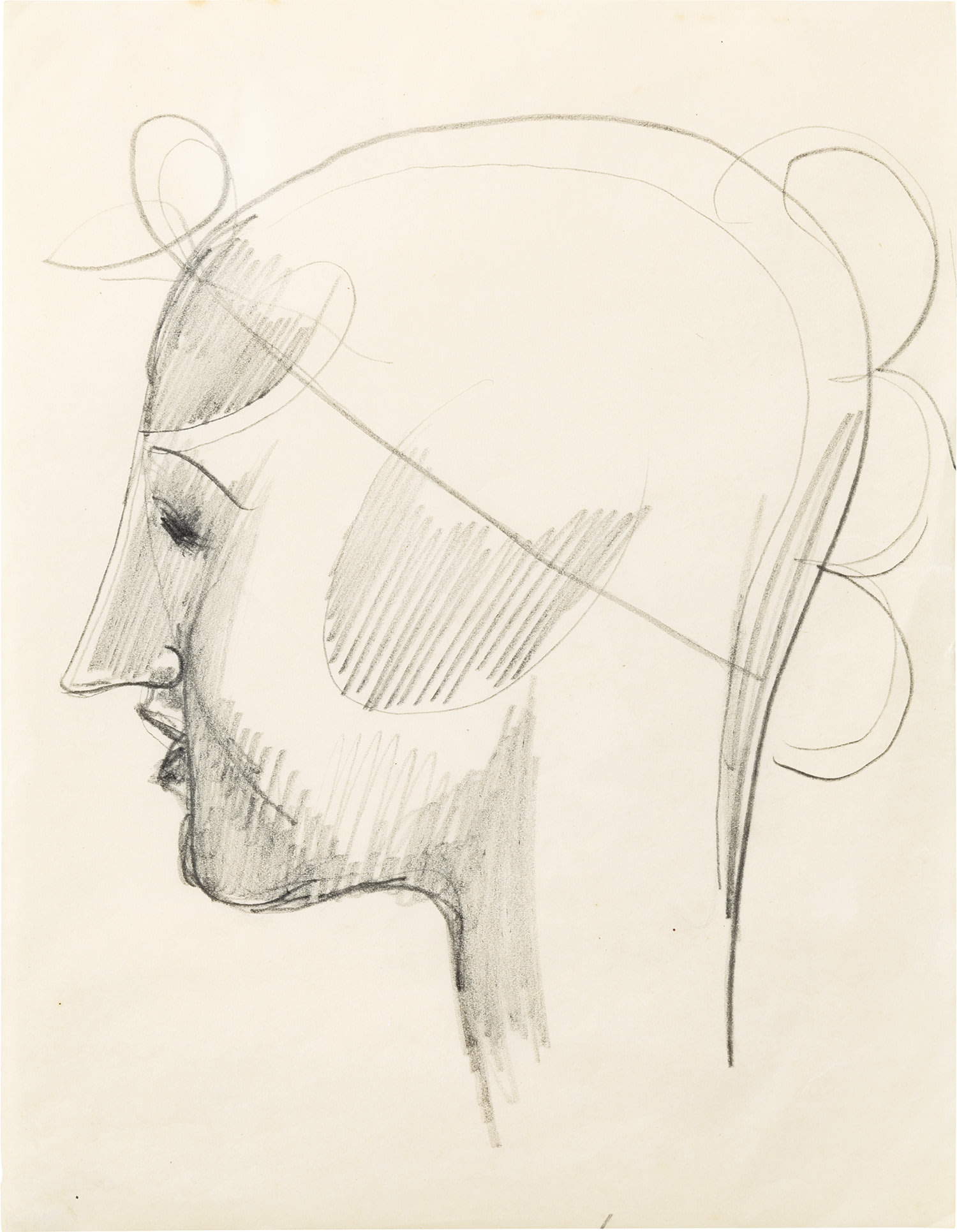
Portrait of a Girl, 1921
The key insight Nadelman pursued was that the curve was the fundamental unit of sculptural life, that forms in nature and in ideal beauty alike resolved themselves into relationships between curves. This was not mysticism but observation, carried out with the patience of a mathematician and the sensibility of a poet. In 1914, with Europe moving toward catastrophe, Nadelman emigrated to the United States, arriving with a letter of introduction to Helena Rubinstein, whose portrait he would later create and whose support helped establish him in New York society. His debut American exhibition at Alfred Stieglitz's landmark 291 gallery in 1915 was a cultural event of the first order, introducing New York audiences to a sculptor who was simultaneously more classical and more modern than almost anyone they had seen before.
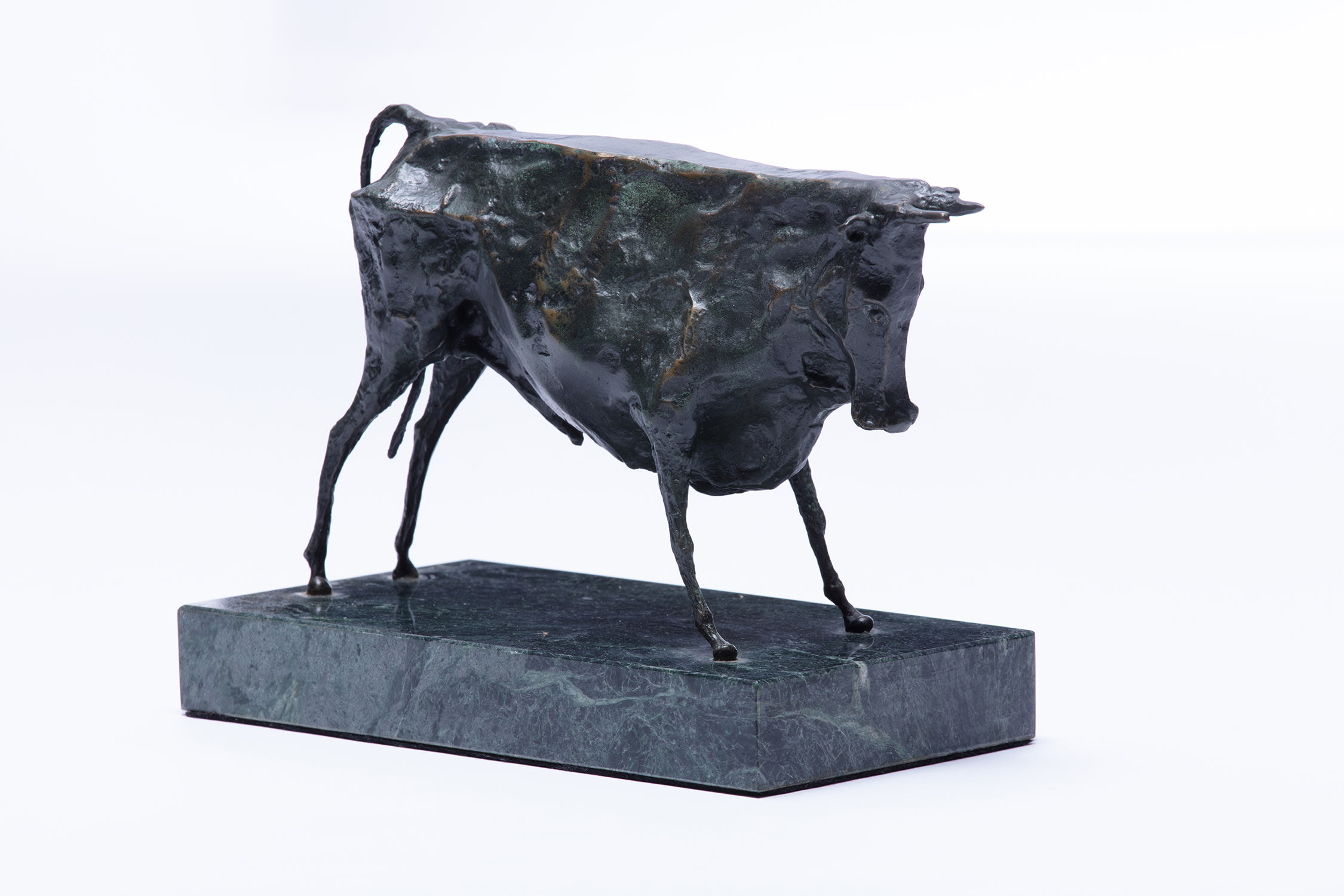
Works such as the sinuously confident Standing Bull, dating from 1915, demonstrated his capacity to take a subject from the everyday world and distill it into something monumental and timeless. The surface of that bronze carries a calm authority that makes even seasoned collectors pause. The works that define Nadelman's legacy most completely are the figures he created across the 1910s and 1920s, images of performers, dancers, and society women rendered in bronze, marble, and carved wood with a combination of knowing wit and formal perfection. Dancing Figure from 1916 in bronze captures a moment of movement with such economy that the stillness of the material seems paradoxically alive.
Elie Nadelman
Standing Bull
Portrait of a Girl from 1921 shows his gift for distilling personality into smooth, rounded form without sacrificing the sense that a specific human being is present. Then there is Chanteuse from 1925, carved and painted cherry wood with a metal coil detail, a work that reveals how fluidly Nadelman moved between the language of high modernist sculpture and the directness of American folk art. That particular piece is among the most purely pleasurable objects in twentieth century American art: it sings. Nadelman's market reflects the genuine rarity and quality of his output.
His sculptures appear at auction infrequently because so many fine examples reside in museum collections or have been held within families for generations. When significant bronzes or carved figures do come to the salesroom at Christie's or Sotheby's, they command serious prices and attract competition from collectors across the spectrum, from those focused on American modernism to those building collections of early twentieth century international sculpture. For the collector approaching his work now, the key qualities to seek are the integrity of the surface, the confidence of the form, and that quality of wit held in tension with classical seriousness that only Nadelman could sustain. Works that carry documented exhibition histories are especially prized.
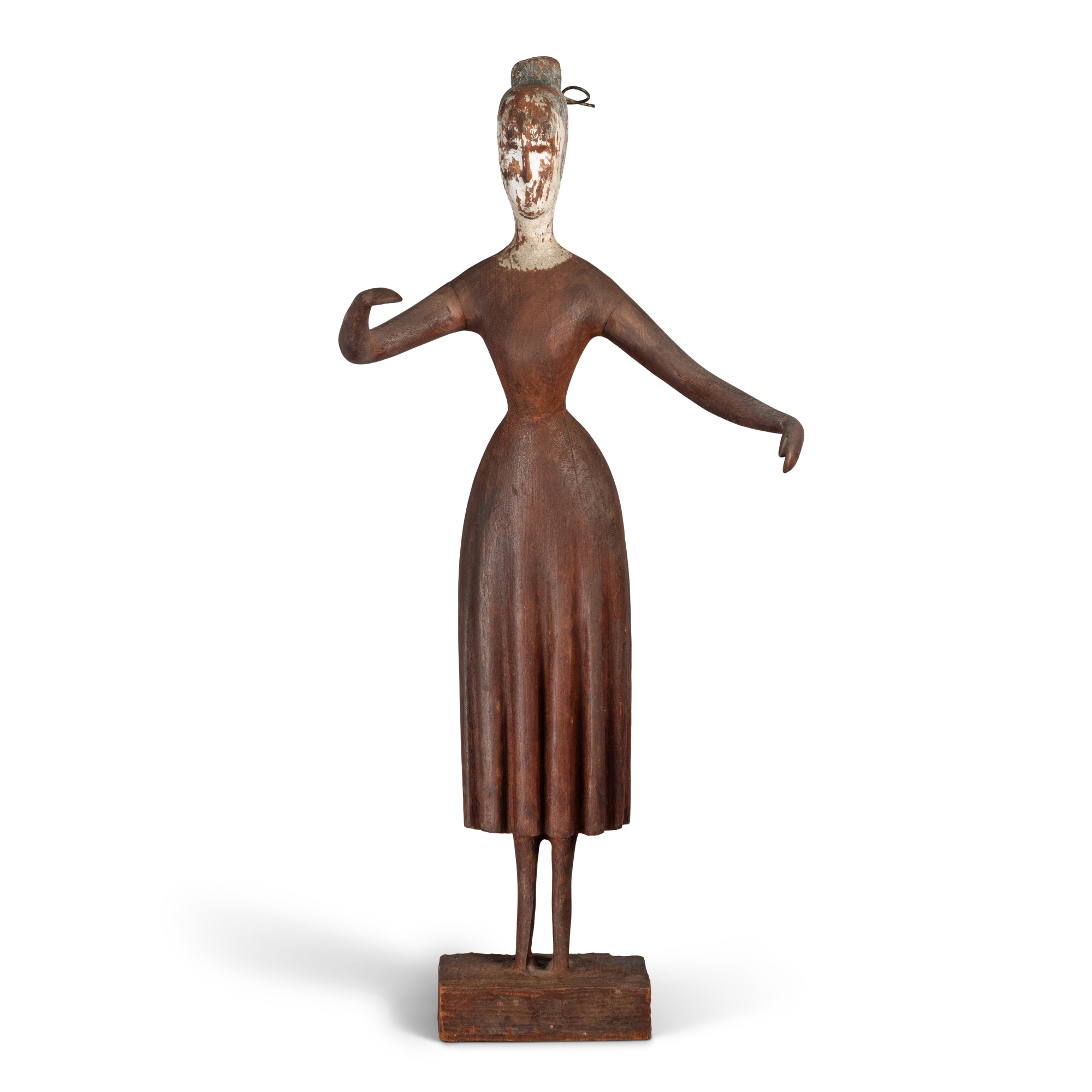
Elie Nadelman
Chanteuse, 1925
To understand Nadelman fully it helps to place him in the company of artists who shared aspects of his sensibility. Aristide Maillol pursued a related classicism in France, though without Nadelman's satirical edge. Gaston Lachaise, who came to the United States from France at almost the same moment, was a close contemporary in the American context and admired Nadelman's work. Among American artists, Paul Manship worked in adjacent territory, though Nadelman's modernist detachment gives his figures a quality of ironic observation that Manship rarely sought.
The folk art collections that Nadelman and his wife Viola assembled at their Riverdale estate also place him in meaningful dialogue with the tradition of American vernacular object making, a connection that anticipates later twentieth century conversations about the boundaries between fine art and craft. The final decade of Nadelman's life was difficult in material terms. The Depression wiped out much of the fortune he and Viola had built, and the folk art collection they had assembled with such care was sold to the New York Historical Society. Yet the work itself never faltered in its quality or ambition, and the small plaster figures he created in the 1930s and 1940s have since been recognized as among the most quietly radical objects in American sculpture.
Nadelman died in 1946, but the conversation around his achievement has only deepened with time. For collectors who want to engage with the moment when American art found its own voice within the larger story of international modernism, there is no more rewarding or more beautiful place to begin.
Explore books about Elie Nadelman
Elie Nadelman: A Retrospective
Lincoln Kirstein
Elie Nadelman: Sculptor of the Twentieth Century
Charles Millard
Elie Nadelman: The Collector
Roberta Smith
Elie Nadelman: Modern American Sculptor
Constance Schwartz