Egon Schiele
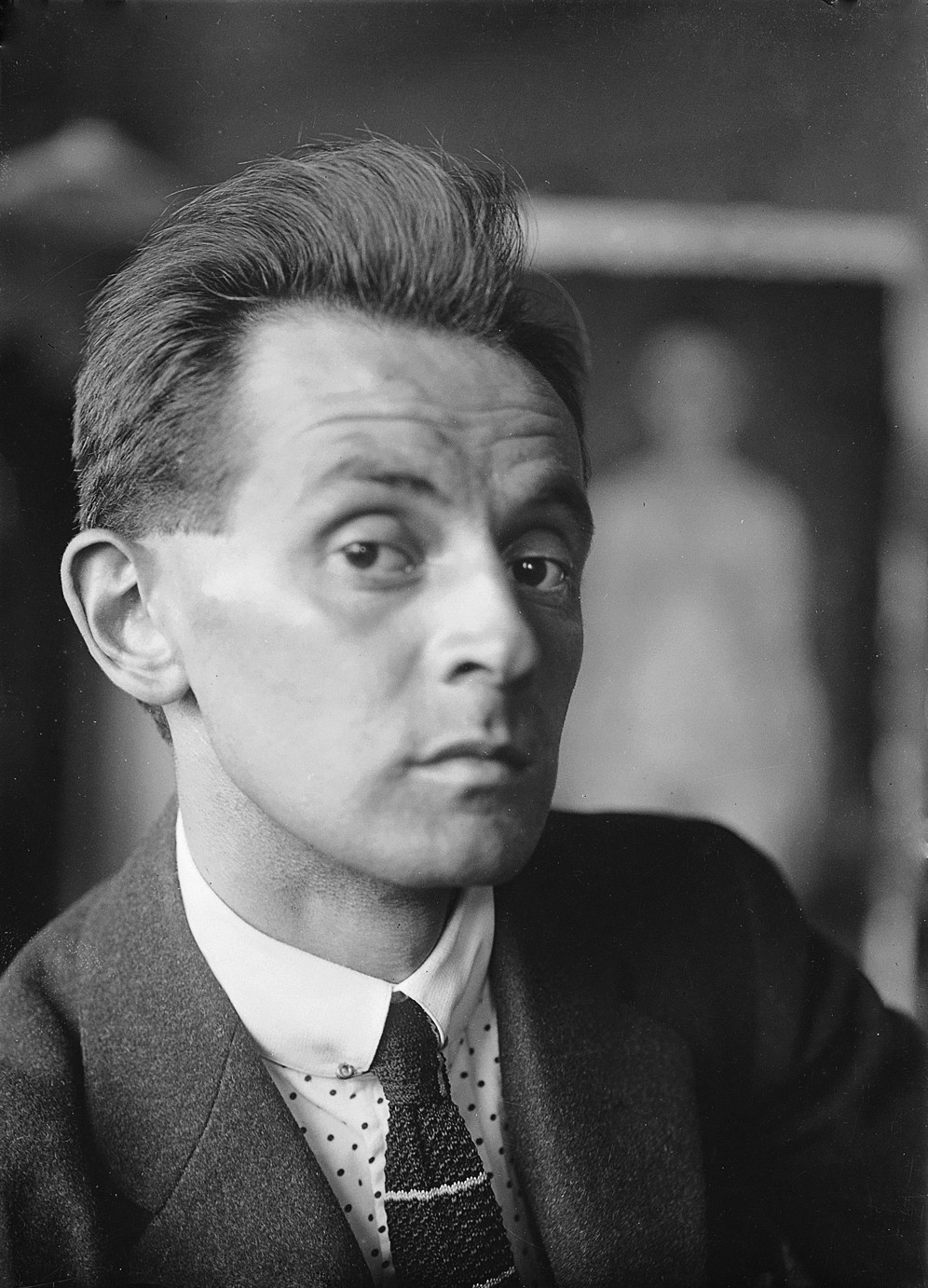
Egon Schiele: Raw Brilliance That Endures Forever
Artist Spotlight · The Collection Editorial
“I do not deny that I have made drawings and watercolors of an erotic nature. But they are always works of art.”
Egon Schiele, statement during his 1912 trial
Few artists in the Western canon have achieved what Egon Schiele accomplished in a working life of barely a decade: the creation of a visual language so singular, so charged with psychological honesty, that it continues to stop viewers cold more than a century after his death. In 2023, the Leopold Museum in Vienna, which holds the world's largest collection of his work, drew record attendance for its ongoing permanent presentation of his paintings and drawings. Meanwhile, his works continue to appear at the highest levels of the international auction market, with major institutions and private collectors competing fiercely for even modest works on paper. Schiele is no longer simply a figure of Viennese modernism.
Egon Schiele
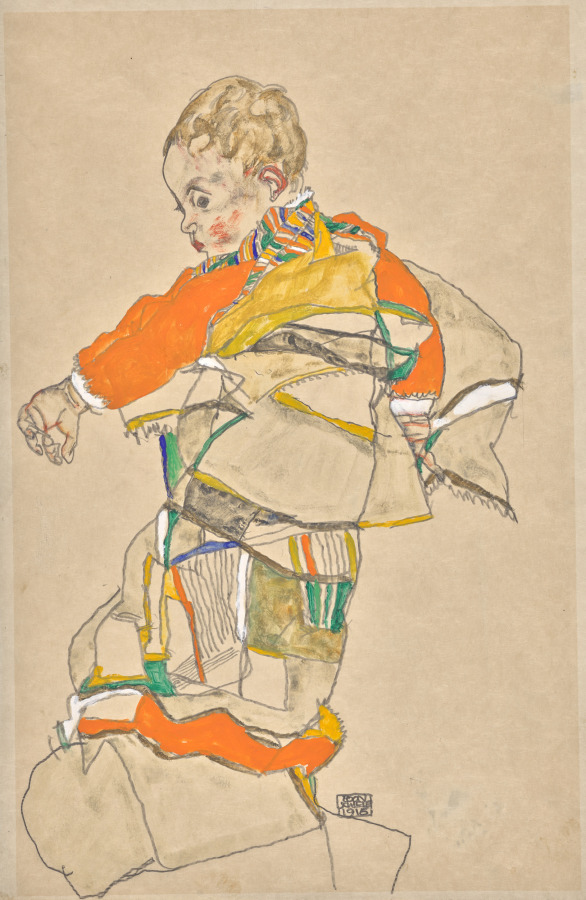
Portrait of a Child (Anton Peschka Jr.), 1916
He is, without qualification, one of the defining artists of the twentieth century. Schiele was born on June 12, 1890, in Tulln an der Donau, a small town on the outskirts of Vienna. His father, Adolf Eugen Schiele, worked as a station master for the Austrian State Railways, and the family lived in the railway station itself, an unusual childhood environment that gave the young Schiele both a sense of transience and a fascination with the figure in space. His father died of syphilis when Schiele was fifteen, a loss that cast a long shadow over the young artist's emotional life and likely deepened the introspective, almost mournful quality that would come to define his figure studies.
He was recognized early as a prodigy, and in 1906 he gained admission to the Vienna Academy of Fine Arts at the age of sixteen, making him one of the youngest students ever accepted. At the Academy, Schiele studied under Christian Griepenkerl, a conservative professor whose traditional methods chafed against the young artist's restless instincts. The decisive turning point came through his encounter with Gustav Klimt, whom Schiele approached with characteristic boldness around 1907. Klimt recognized the younger artist's gifts immediately and became a mentor, advocate, and generous friend.
Egon Schiele
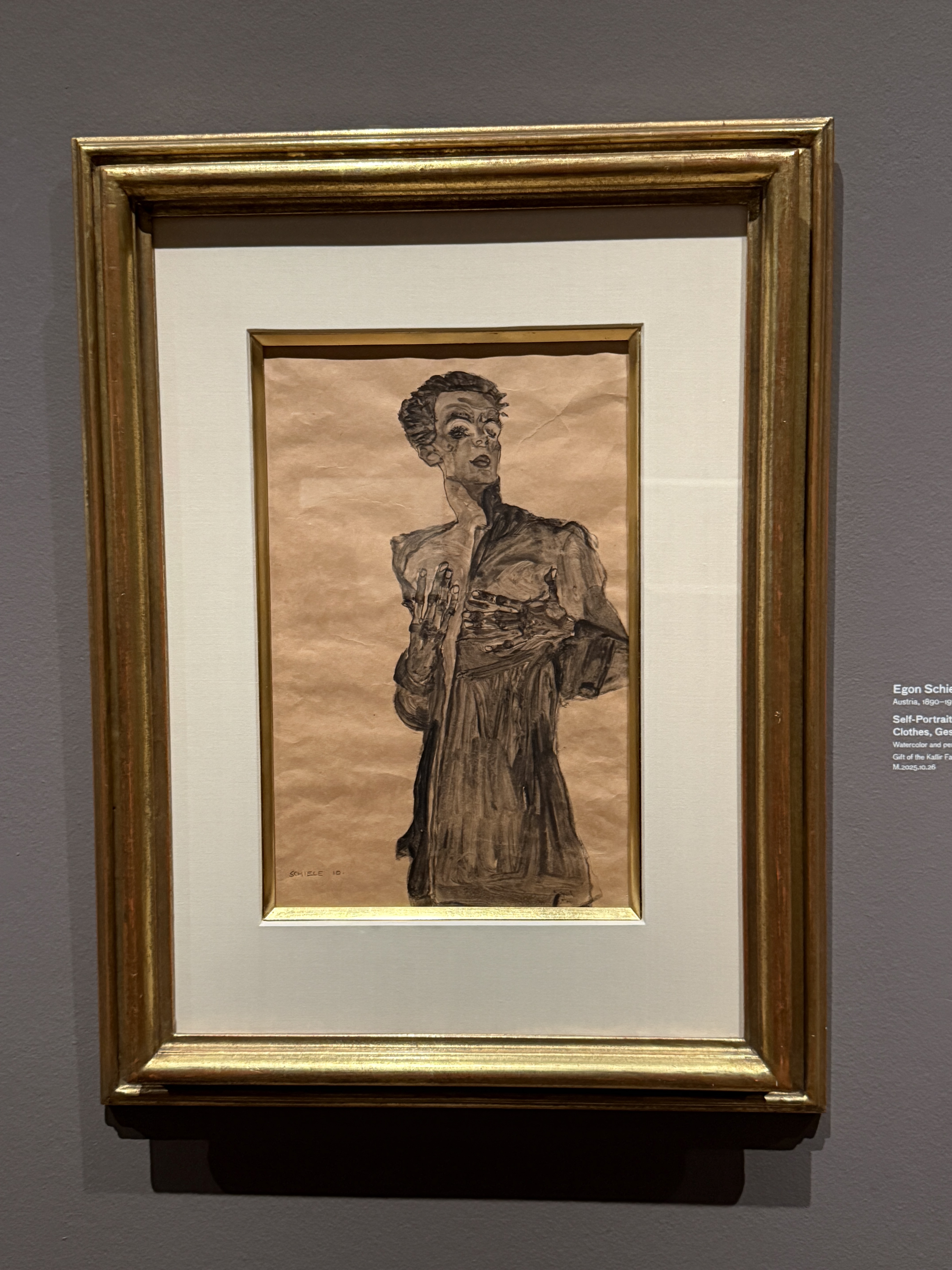
Self-Portrait in Clothes, Gesture (partial title — full title partially obscured), 1910
He introduced Schiele to patrons, to the Wiener Werkstätte, and to the broader world of Viennese Secession culture. Yet even as he absorbed Klimt's decorative refinement and his interest in the erotic as subject matter, Schiele was already developing something sharply his own: a rawer, more confrontational approach that stripped away Klimt's golden ornament to expose the figure in a state of radical psychological vulnerability. By 1909, Schiele had left the Academy and formed the Neukunstgruppe, or New Art Group, with several fellow students, signaling his intention to operate entirely outside institutional constraints. The years between 1910 and 1912 were among the most explosively productive of his career.
“Art cannot be modern. Art is primordially eternal.”
Egon Schiele
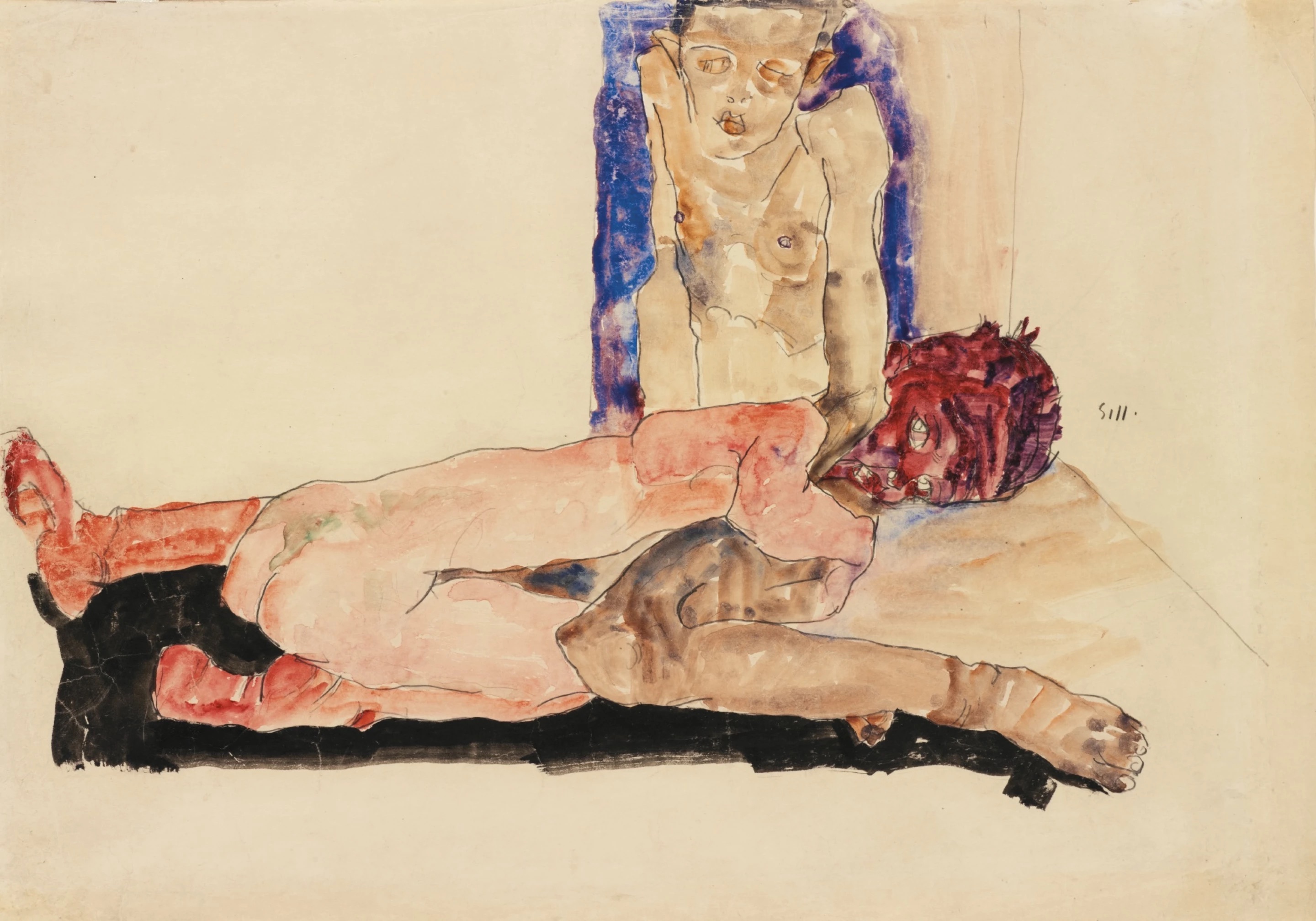
Working primarily in watercolor, gouache, and pencil on paper, he developed the contorted, almost skeletal figure style that would become his trademark. Works such as the Standing Nude from 1910, rendered in gouache and pencil with white heightening, demonstrate his command of the medium at its most uncompromising. The figure is isolated against a bare ground, limbs arranged in positions that suggest both tension and surrender. There is no background, no narrative context, only the body and its psychological interior made visible through posture and line.
Egon Schiele
Nacktes Paar (Nude Couple), 1911
The Male Nude in Profile Facing Right, also from 1910, executed in watercolor, gouache, black crayon, and charcoal, carries the same quality of unflinching attention, treating the male body with the same unflinching scrutiny he applied to his female subjects and to himself. Self portraiture was central to Schiele's practice in a way that has few equivalents in art history. From 1910 onward he produced an extraordinary series of self portraits that seem less like records of appearance than acts of self interrogation. The Self Portrait with Splayed Fingers from 1911 is perhaps the most arresting of these: the hands, taut and outspread, become almost independent presences, instruments of both creation and exposure.
In 1912, Schiele was arrested in Neulengbach on charges related to his work's depictions of nudity and his proximity to young models. He spent 24 days in detention, an experience he documented obsessively in a series of drawings made in his cell. The episode is often framed as a tragedy, but it also illuminated something important about his practice: even in confinement, even under direct threat, he continued to draw. The work was the only response he knew how to make.
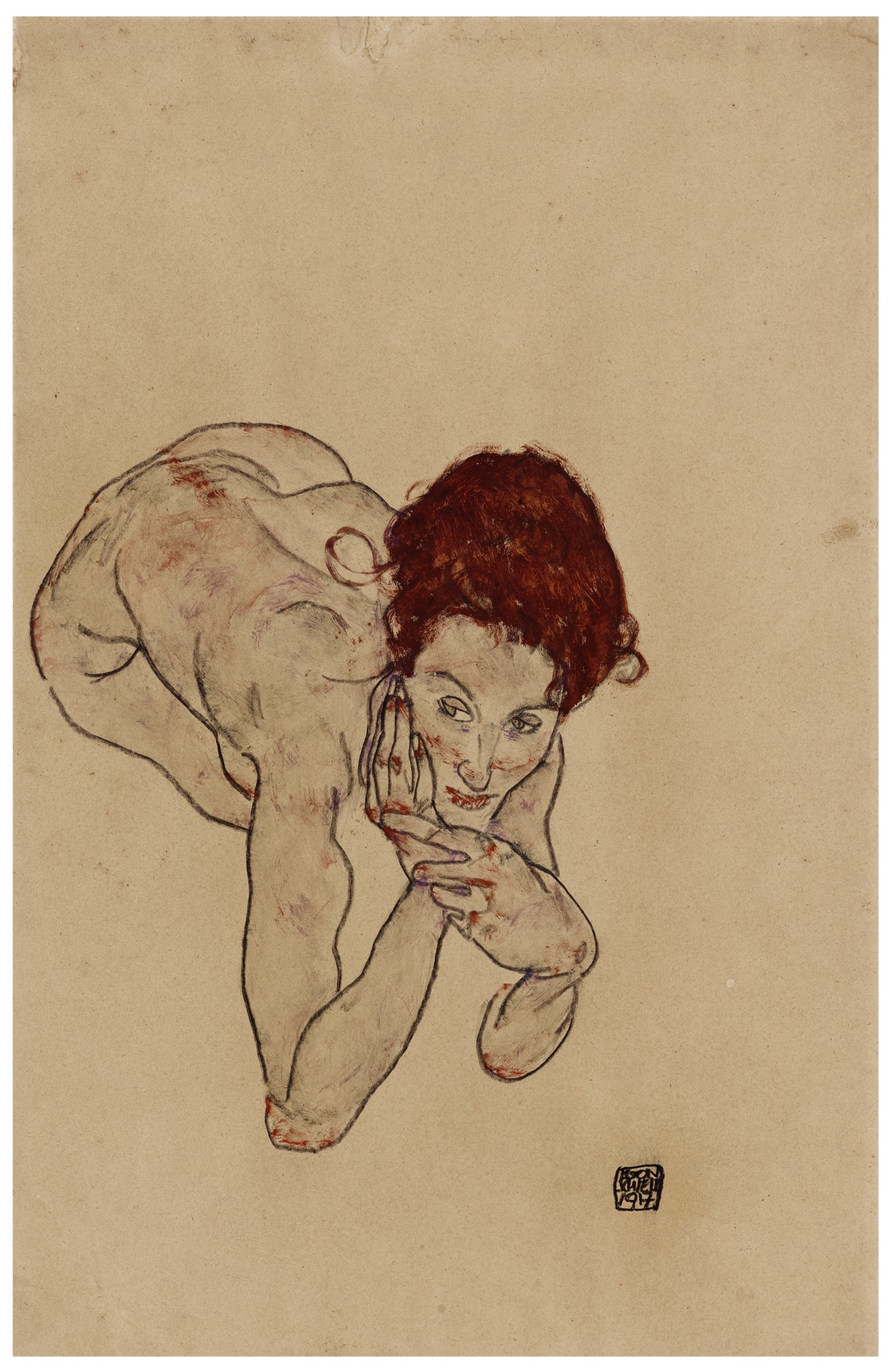
Egon Schiele
Kauernder weiblicher Akt (Crouching Female Nude), 1917
As the decade progressed, Schiele's work evolved toward a somewhat warmer and more expansive vision. The Portrait of a Child, Anton Peschka Jr., made in 1916 in gouache, watercolor, and graphite, shows a tenderness and compositional openness that marks a distinct shift from his earlier, more anguished figure studies. Anton Peschka Sr.
was a close friend and fellow artist who married Schiele's sister Gerti, and the portrait of his young son carries a genuine intimacy. By this period Schiele had also married Edith Harms in 1915 and was beginning to receive wider recognition, with significant representation through the gallerist Guido Arnot and growing patronage from collectors including Carl Reininghaus and Oskar Reichel. His 1918 exhibition with the Vienna Secession, held in March of that year, was a triumphant moment: visitors crowded around his large scale paintings, and his reputation as the leading figure of a new Austrian expressionism seemed finally assured. For collectors, Schiele's works on paper represent some of the most compelling opportunities in the market for early twentieth century European art.
His drawings and watercolors have appeared regularly at Sotheby's, Christie's, and Dorotheum, where they consistently attract serious institutional and private interest. The intimacy of works on paper, their sense of being made quickly and directly in the presence of a subject, carries an almost documentary power that his paintings cannot always match. Collectors drawn to psychological intensity, to the expressive line as a primary vehicle of meaning, and to the art historical moment when European modernism was at its most charged and searching, find in Schiele an artist who rewards sustained attention. His influence on subsequent generations, from Francis Bacon's contorted figures to the raw self presentation of later Expressionist painters, is profound and well documented.
Schiele died on October 31, 1918, at the age of twenty eight, three days after his wife Edith, both taken by the Spanish influenza pandemic that swept through Vienna that autumn. The loss was immeasurable, not least because the works of his final years suggested an artist still deepening and expanding his vision. What he left behind is a body of work of astonishing completeness and power. To encounter a Schiele drawing in person, to stand before the wiry, searching line and the bodies that seem to carry their entire inner life on the surface of the skin, is to understand why his audience continues to grow.
He saw something true about what it means to inhabit a human body, and he found a way to draw it that has never been surpassed.
Explore books about Egon Schiele

Egon Schiele: His Life and Work
Arthur Roessler
Egon Schiele
Peter Selz
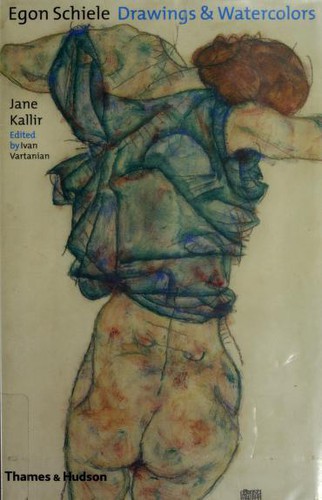
Egon Schiele: Drawings and Watercolors
Jane Kallir
Egon Schiele: The Complete Works
Jane Kallir
Schiele
Alessandra Comini
Egon Schiele: Art, Sexuality, and Viennese Modernism
Klaus Albrecht Schröder and Harald Szeemann
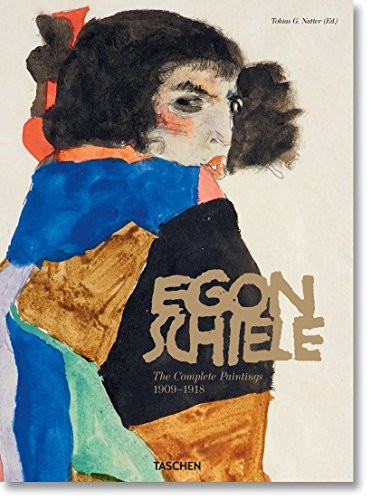
Egon Schiele
Tobias G. Natter and Elisabeth Leopold
Schiele: The Radical Nude
Dieter Buchhart