Edward Burtynsky
Edward Burtynsky Makes the Sublime Visible
Artist Spotlight · The Collection Editorial
“I set out to make images that are visually engaging, and that at the same time have something important to say about the world.”
Edward Burtynsky, TED Talk, 2005
In the spring of 2022, the Art Gallery of Ontario mounted a landmark survey of Edward Burtynsky's work that drew thousands of visitors through its galleries, many standing in silence before images that seemed to pulse with a contradictory energy: devastating and gorgeous at once. The show confirmed what the global art world had long understood, that Burtynsky occupies a singular position in contemporary photography, a place where documentary rigor meets the sweeping ambition of nineteenth century landscape painting. That moment in Toronto felt like a cultural reckoning, a recognition that the questions Burtynsky has spent four decades asking are no longer theoretical. They are the questions of our time.
Edward Burtynsky
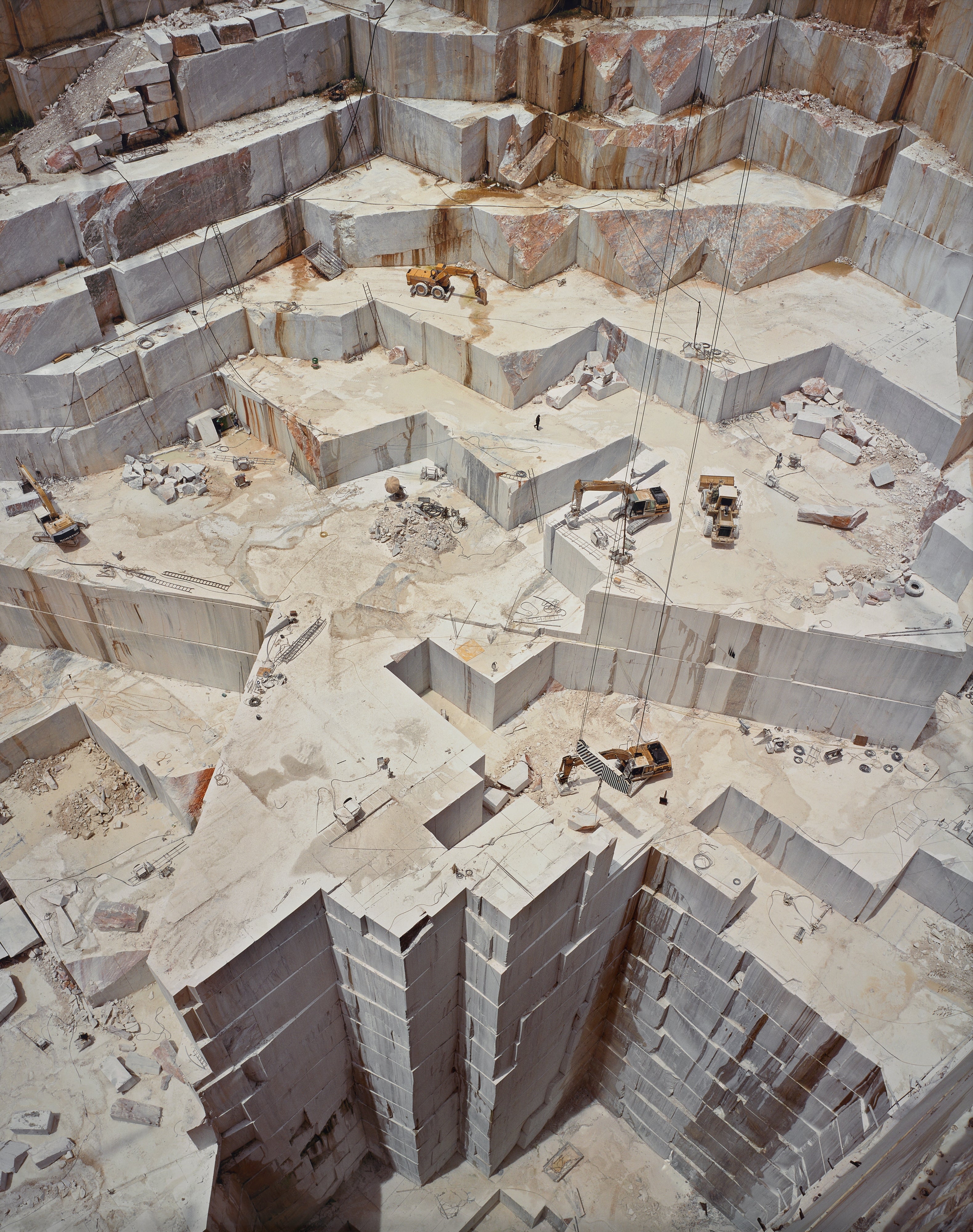
Iberia Quarries #3, Pardais, Portugal
Edward Burtynsky was born in 1955 in St. Catharines, Ontario, a city shaped by the Welland Canal and the industrial machinery of mid century Canada. His father worked in a General Motors plant, and from an early age Burtynsky understood industry not as an abstraction but as something that smelled of grease and rang with metal, something that put food on the table and also quietly reorganized the landscape around it. He studied graphic arts and photography at Ryerson Polytechnical Institute, graduating in 1982, and it was there that the formal discipline of the image began to intersect with the environmental consciousness that would define his career.
The combination was not accidental. It was the product of a young man trying to reconcile the world he had grown up in with the world he could already see changing around him. His breakthrough came through a sustained engagement with the Canadian landscape and its relationship to resource extraction. The Railcuts series, made in British Columbia, showed the Canadian National Railway carving through mountain rock with a cool, almost architectural beauty.
Edward Burtynsky
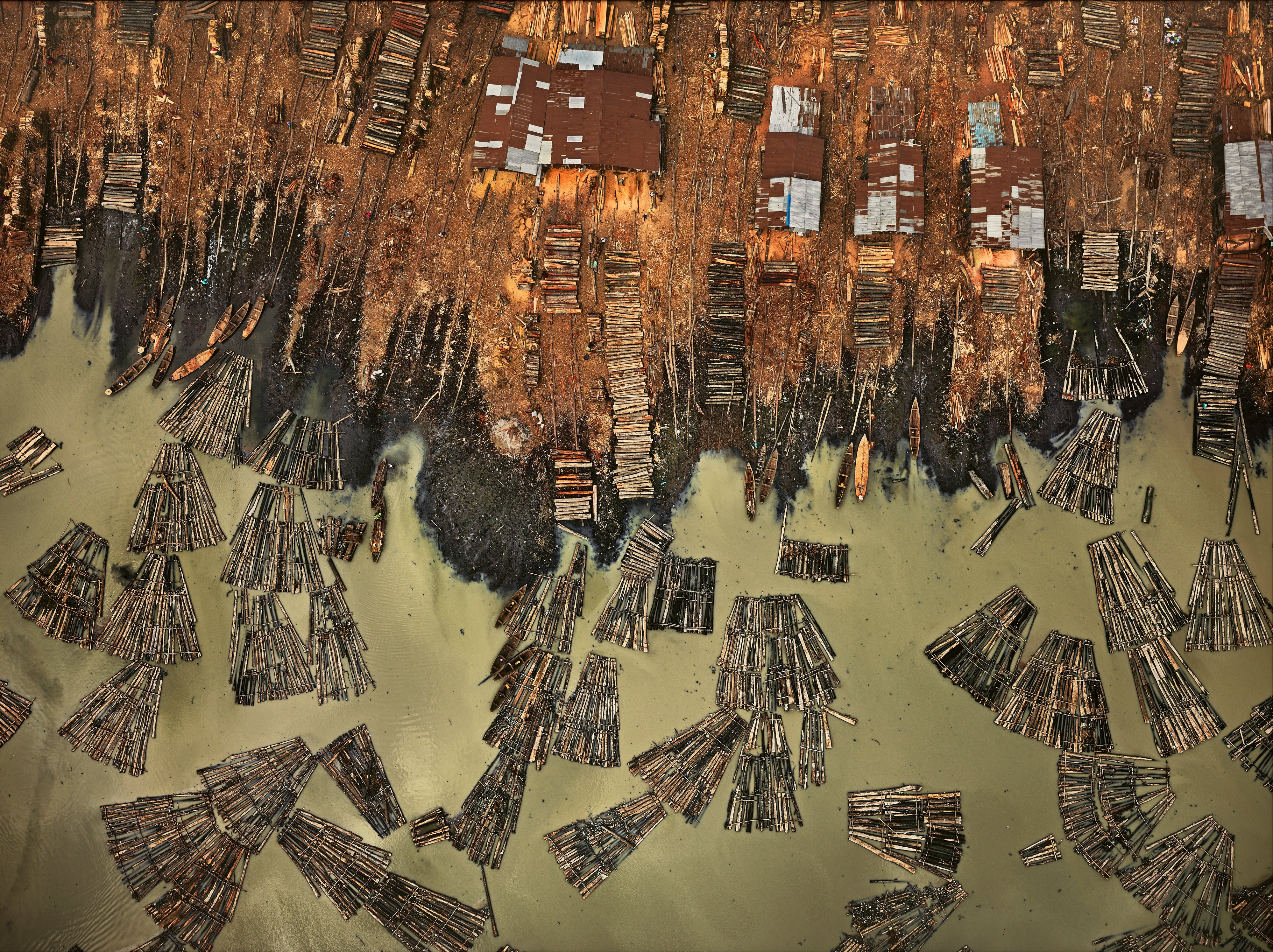
Sawmills #1, Lagos, Nigeria
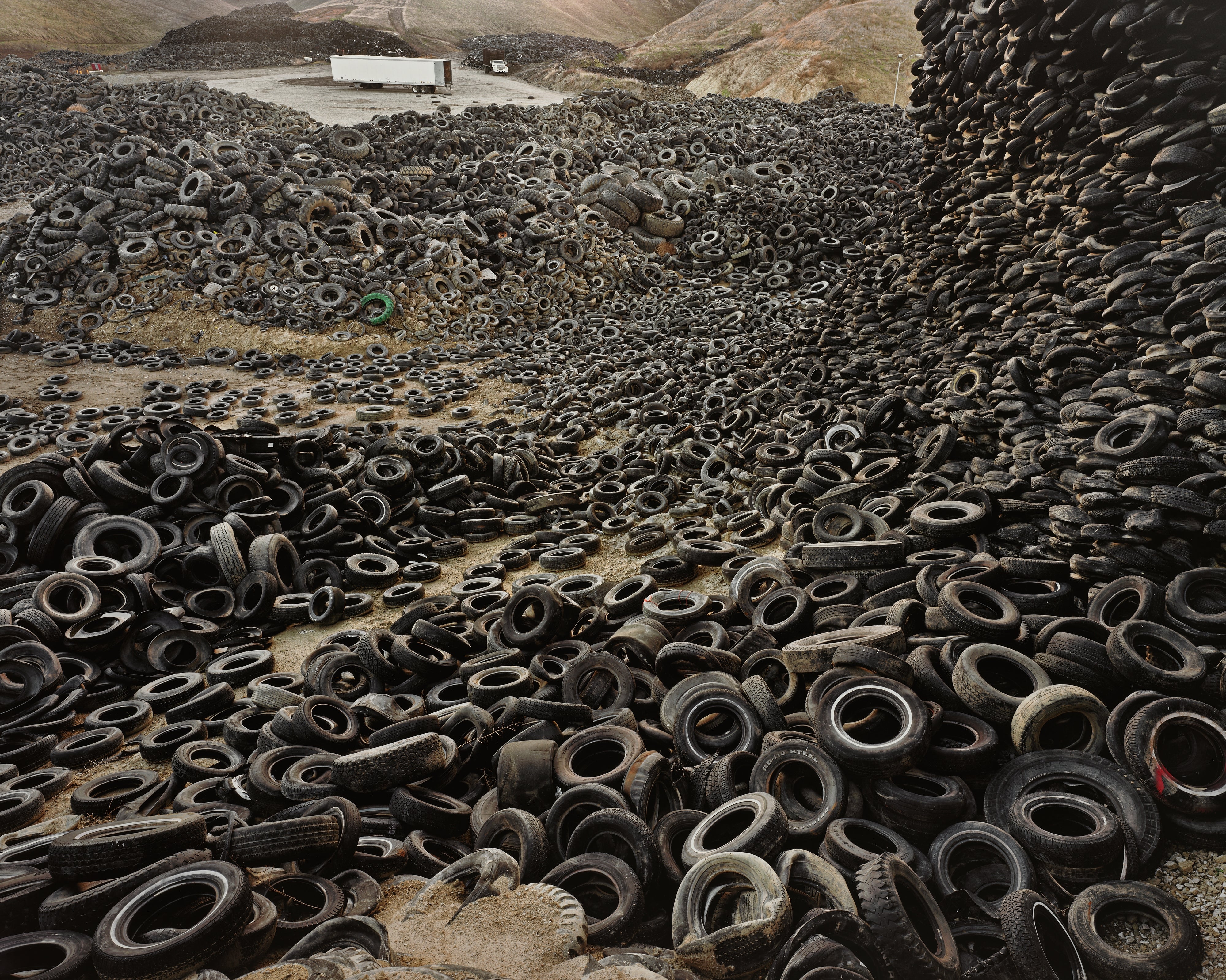
These early large format works established the aesthetic principles that Burtynsky would carry through every subsequent body of work: the elevated vantage point, the absence of individual human figures, the colour palette that turns industrial detritus into something approaching painting. By the 1990s he had developed a practice that required enormous logistical ambition, chartering helicopters, negotiating access to factories and shipyards, traveling to the places where the global economy does its most physical and consequential work. The series that cemented his international reputation arrived in waves across the 2000s and 2010s. The Oil series, completed around 2009, followed petroleum from extraction to consumption, from the sculptural complexity of oil fields in California to the tire piles of Ontario.
“I wanted to examine nature transformed through industry. I am not making a judgment. I am asking questions.”
Edward Burtynsky
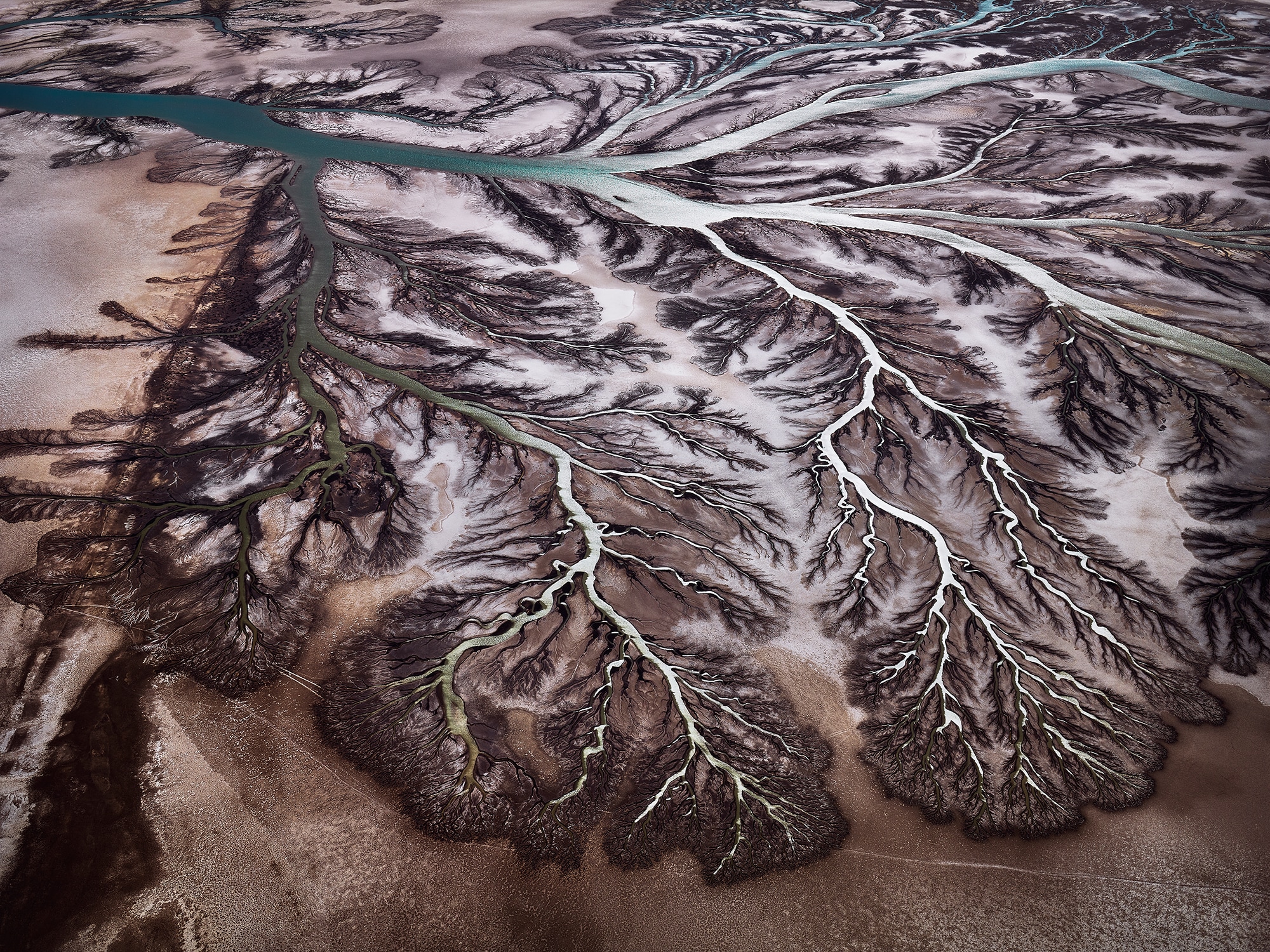
The Water series of 2013 traced the planet's most essential resource across irrigation systems in Spain and the shrinking delta of the Colorado River near San Felipe in Baja California. The Anthropocene project, which became both a book and a major exhibition in 2018, represented the fullest statement of his vision, a collaboration with filmmakers Jennifer Baichwal and Nicholas de Pencier that circled the globe documenting the geological epoch defined by human activity. Each series built on the last, deepening the philosophical argument while expanding the visual vocabulary. The individual works that collectors most prize tend to be those where the formal tension is highest, where beauty and unease are in their most productive conflict.
Edward Burtynsky
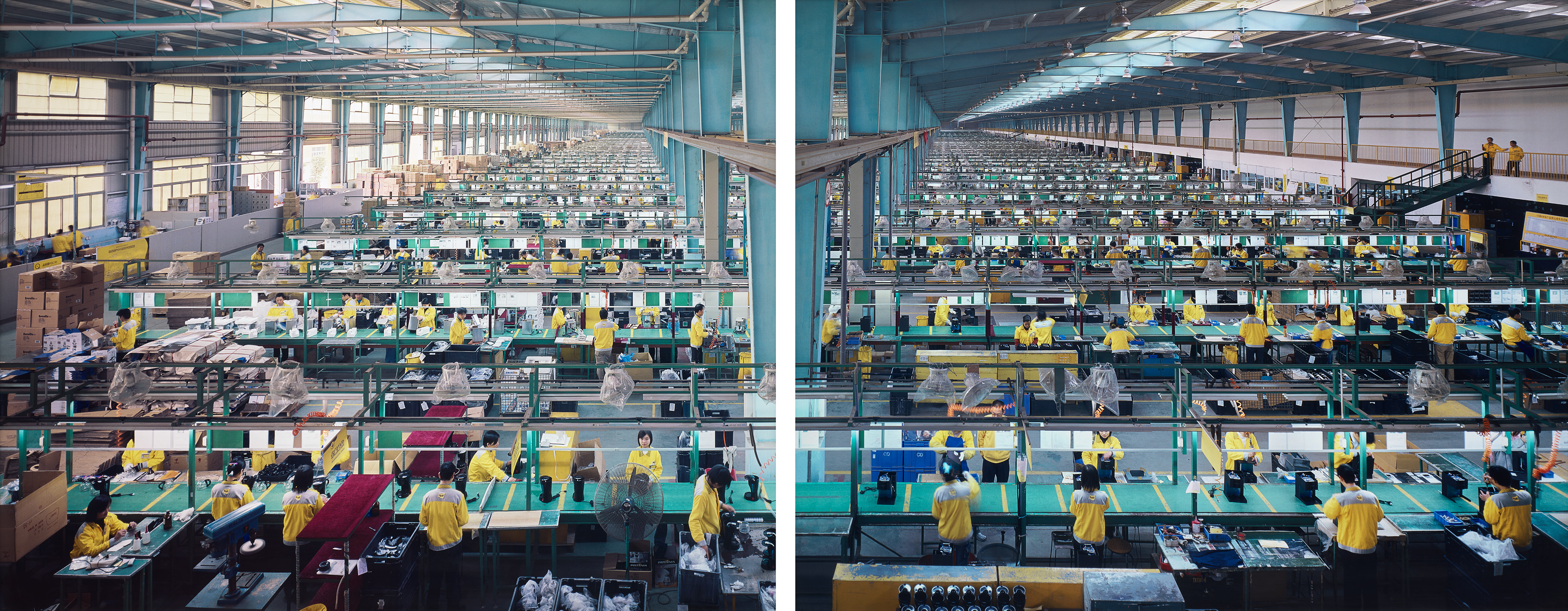
Manufacturing #10a & #10b, Cankun Factory, Xiamen City, China
The Manufacturing diptych depicting the Cankun Factory in Xiamen City draws the eye across a sea of workers with the compositional authority of a history painting. The Iberia Quarries series, made in Pardais, Portugal and printed in 2007, transforms white marble extraction into something that resembles a minimalist sculpture at enormous scale. The Wushan images along the Yangtze River hold a particular poignancy, documenting communities and landscapes that would soon disappear beneath the rising waters of the Three Gorges Dam reservoir. These are not merely beautiful photographs.
They are primary historical documents. From a collecting perspective, Burtynsky's market reflects the seriousness with which institutions and private collectors regard his practice. His prints are typically produced in editions, with larger format works commanding the greatest attention and strongest resale performance. Chromogenic prints from the Oil and Water series have performed consistently well at auction, with major works achieving six figure results at Christie's and Phillips.
Edward Burtynsky
Colorado River Delta #1, Near San Felipe Baja, Mexico
Collectors are drawn not only to the aesthetic power of the individual image but to the coherence of the larger series, and many serious collections of his work are built around thematic groupings that tell a more complete story. Works printed and flush mounted under the artist's direct supervision carry particular value, and the archival pigment prints from more recent series represent some of the most technically accomplished photographic objects being made anywhere in the world today. Burtynsky sits within a broader tradition of photographers who have used the large format camera to engage with landscape and human transformation. Andreas Gursky, whose aerial and architectural images share a similar appetite for scale and pattern, is the name most frequently placed beside his own.
Richard Misrach's work in the American West and Sebastião Salgado's epic documentations of labor and migration occupy adjacent territory, though each from a different angle. What distinguishes Burtynsky is the specific combination of environmental advocacy, formal beauty, and almost scientific comprehensiveness. Where others might photograph a refinery, Burtynsky photographs the entire system of petroleum, from well to waste. That systemic ambition places him closer to conceptual practice than to traditional photojournalism, even as his images have the immediate emotional force of the best documentary work.
The legacy Burtynsky is building is one that will only grow more significant as the decades pass. The landscapes he has documented are in many cases already gone or transformed beyond recognition, making his archive an irreplaceable record of the industrial world at its apex. The film Manufactured Landscapes, directed by Jennifer Baichwal and released in 2006, introduced his work to an audience far beyond the gallery world, and the subsequent Anthropocene documentary extended that reach further still. For collectors who wish to hold not only a beautiful object but a piece of consequential cultural history, his work offers something rare: the assurance that future generations will look at these images and understand exactly what was at stake in our moment, and that someone was paying exquisite, unflinching attention.
Explore books about Edward Burtynsky