Edward Burra
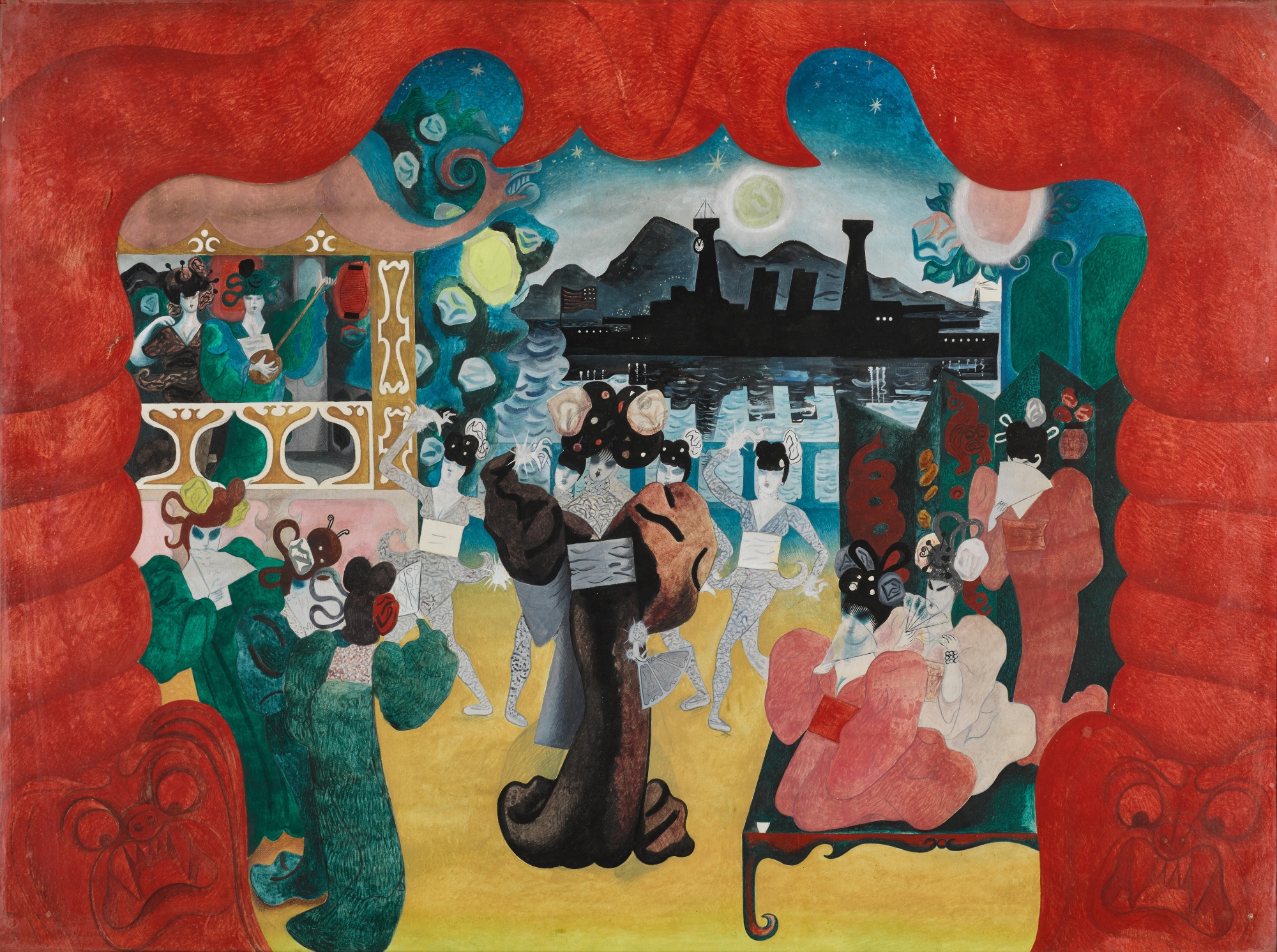
Edward Burra: Vivid, Vital, Utterly Unforgettable
Artist Spotlight · The Collection Editorial
There are artists who feel perpetually ahead of their moment, and Edward Burra is one of them. The Tate Britain retrospective of 2011, which brought together an extraordinary range of his watercolours and drawings, reminded a new generation of collectors and curators just how singular this artist truly was. Walking through those galleries, one encountered a world that was simultaneously menacing and exhilarating, tender and grotesque, rooted in the 1930s yet speaking with remarkable directness to contemporary anxieties about war, spectacle, and urban life. For collectors who discovered Burra that year or who have followed his reputation's steady rise since, the encounter carries the quality of revelation.
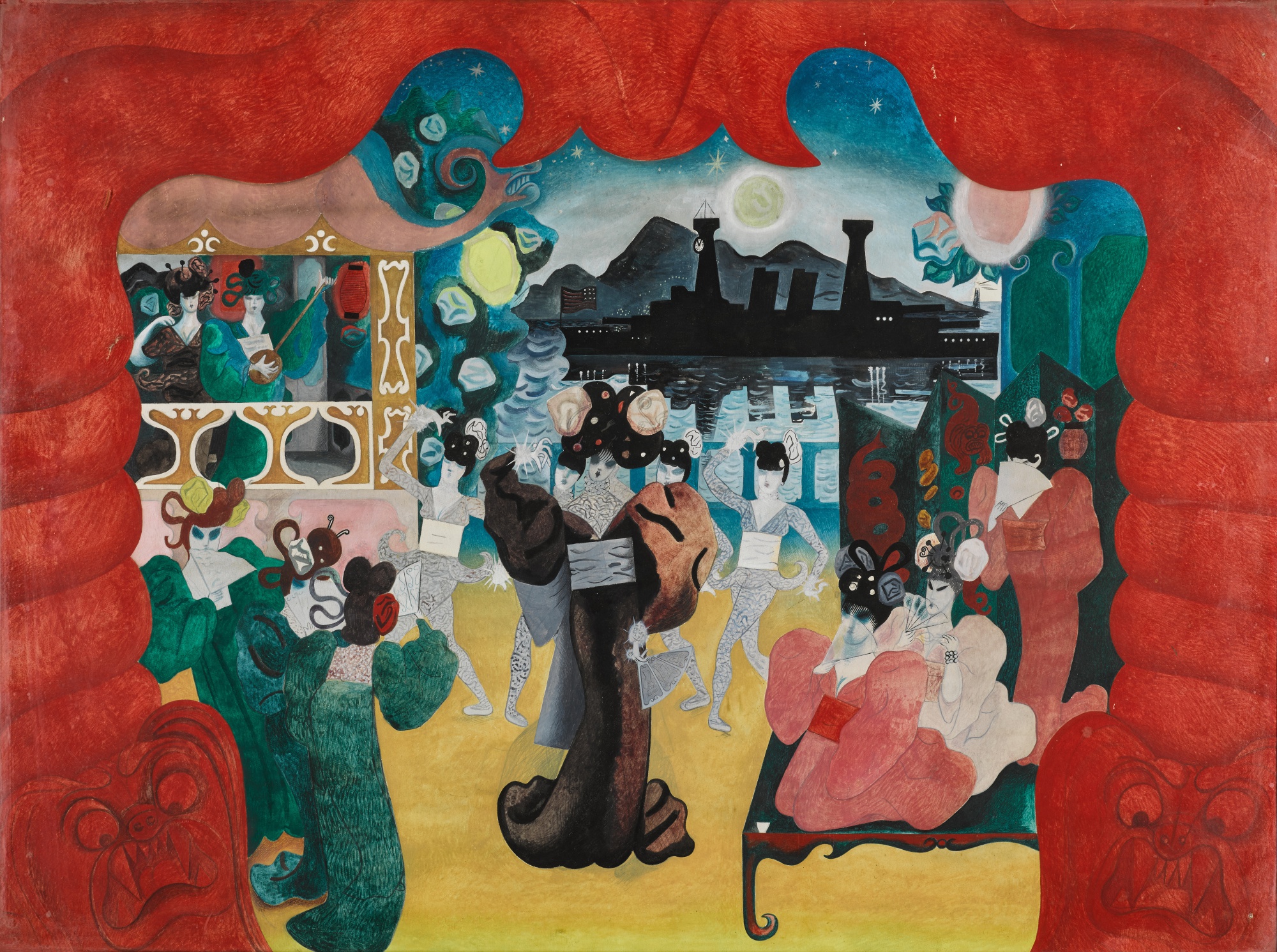
Edward Burra
Madame Butterfly, 1931
Burra was born in South Kensington in 1905 into a comfortable, educated family, and from early childhood he was beset by ill health. Arthritis and anaemia made sustained physical activity difficult throughout his life, yet these same constraints seemed to concentrate his imaginative energies with extraordinary force. He studied at the Chelsea School of Art and later at the Royal College of Art, where he encountered Paul Nash among others, but formal training never quite contained him. His real education came from looking obsessively at the world around him and from travelling, particularly to France, Spain, Mexico, and the United States, wherever he could find the vivid, slightly dangerous street life that fed his imagination.
The years between the late 1920s and the late 1930s represent the first great flowering of his practice. Burra was drawn to ports, bars, jazz clubs, and markets, the places where different cultures collided and where human desire played out with minimum pretence. His time in Harlem during the early 1930s proved transformative. He absorbed the energy of jazz culture and African American urban life with a genuine affection and fascination that set him apart from many European artists who treated such subjects with condescension or exoticism.
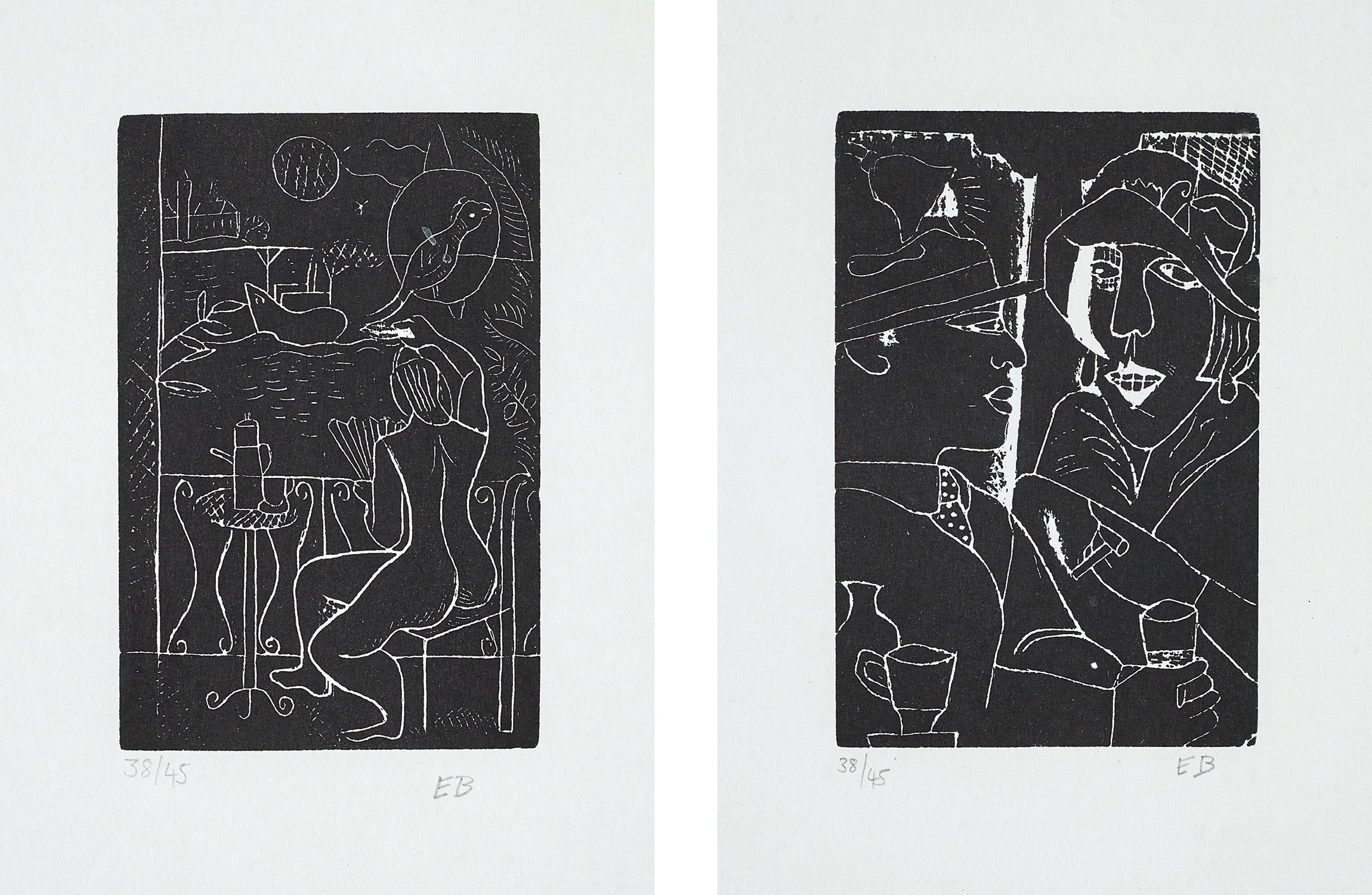
Edward Burra
Fleet's Inn; and Two at the Bar, from Woodcuts 1928-29
Works from this period pulse with music and movement, their figures pressing forward from densely layered compositions in a way that owes something to Mexican muralism and something to the cinematic close up, but which ultimately belongs to no tradition but Burra's own. What makes Burra technically remarkable is his insistence on working in watercolour at a monumental scale, a combination that most artists would consider perverse. Oil paint offers opacity and the possibility of revision; watercolour demands commitment and rewards transparency. Burra somehow achieved effects that feel simultaneously luminous and weighted, building up his large sheets with layers of pencil, ink, gouache, and watercolour to create surfaces of extraordinary density and depth.
Works such as Madame Butterfly from 1931 demonstrate this perfectly, combining delicate observation with an almost theatrical intensity of colour and gesture. Garden Ornaments with Flints from 1930 reveals another register entirely, quieter and more enigmatic, the English landscape filtered through a sensibility shaped by Surrealism and European modernism. These works on paper, once considered a lesser medium, now command the serious attention they always deserved. As the 1930s darkened politically, so did Burra's subject matter, though always with a complexity that resists simple readings.
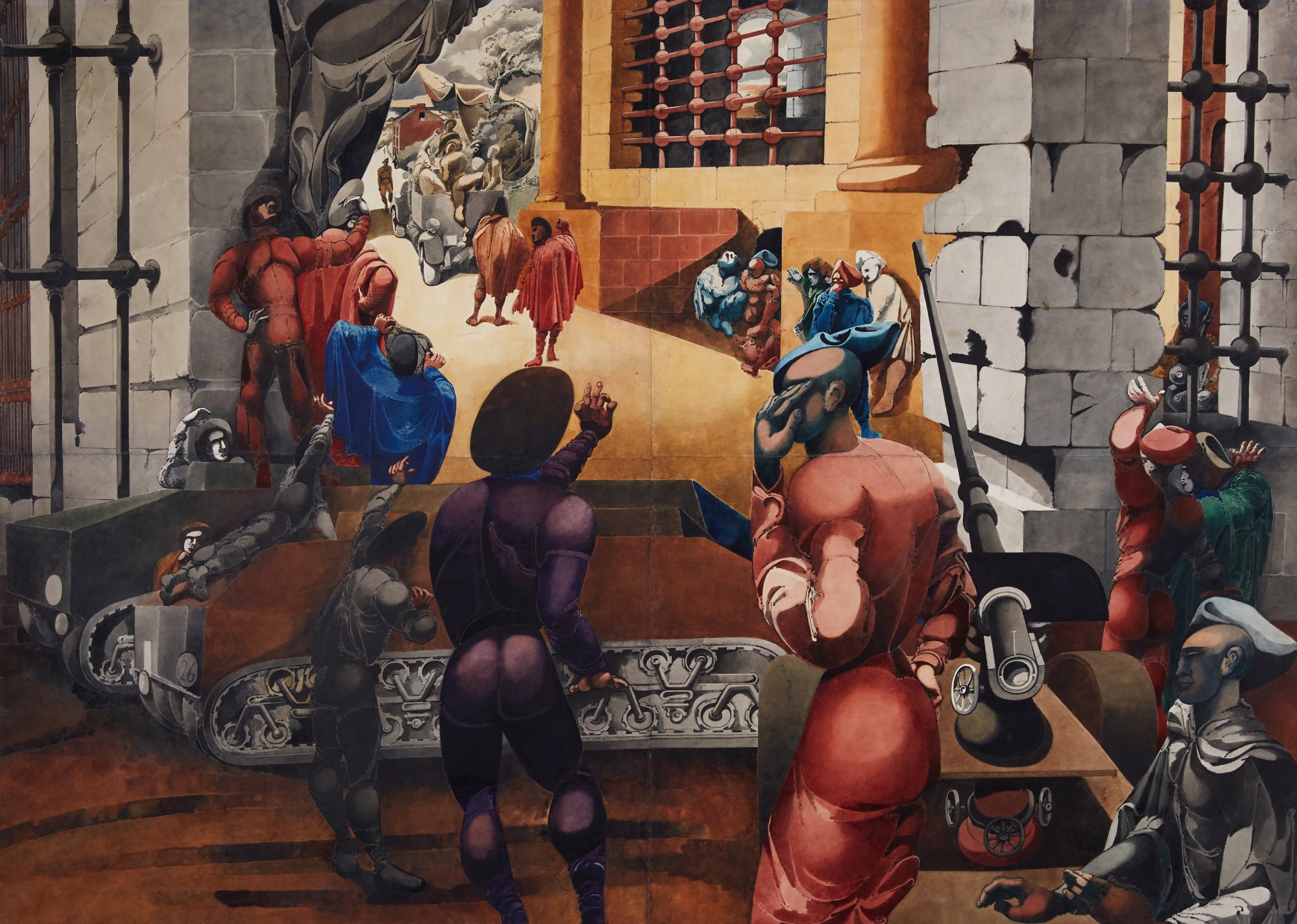
Edward Burra
War in the Sun, 1938
War in the Sun from 1938 is among the most powerful antiwar images produced by any British artist of the period. Painted in the shadow of the Spanish Civil War, it transforms conflict into something almost mythological, figures caught in an atmosphere of hallucinatory heat and violence. Yet Burra was not a propagandist and resisted easy political categorisation throughout his career. He was associated with the Surrealist movement, exhibiting in the International Surrealist Exhibition in London in 1936, but he was never entirely comfortable with any label.
His work moved according to its own logic, shifting between the carnivalesque and the elegiac, between sharp social satire and a genuine tenderness for the overlooked and marginal. For collectors, Burra represents a compelling combination of art historical significance and relative accessibility when compared to his peers. His works appear at auction with some regularity, primarily through Christie's and Sotheby's in London, and prices have strengthened considerably over the past two decades as his reputation has been reassessed. The major watercolours and gouaches command the highest attention, particularly those from the key periods of the late 1920s through the 1940s, but his prints also offer an engaging entry point.
Edward Burra
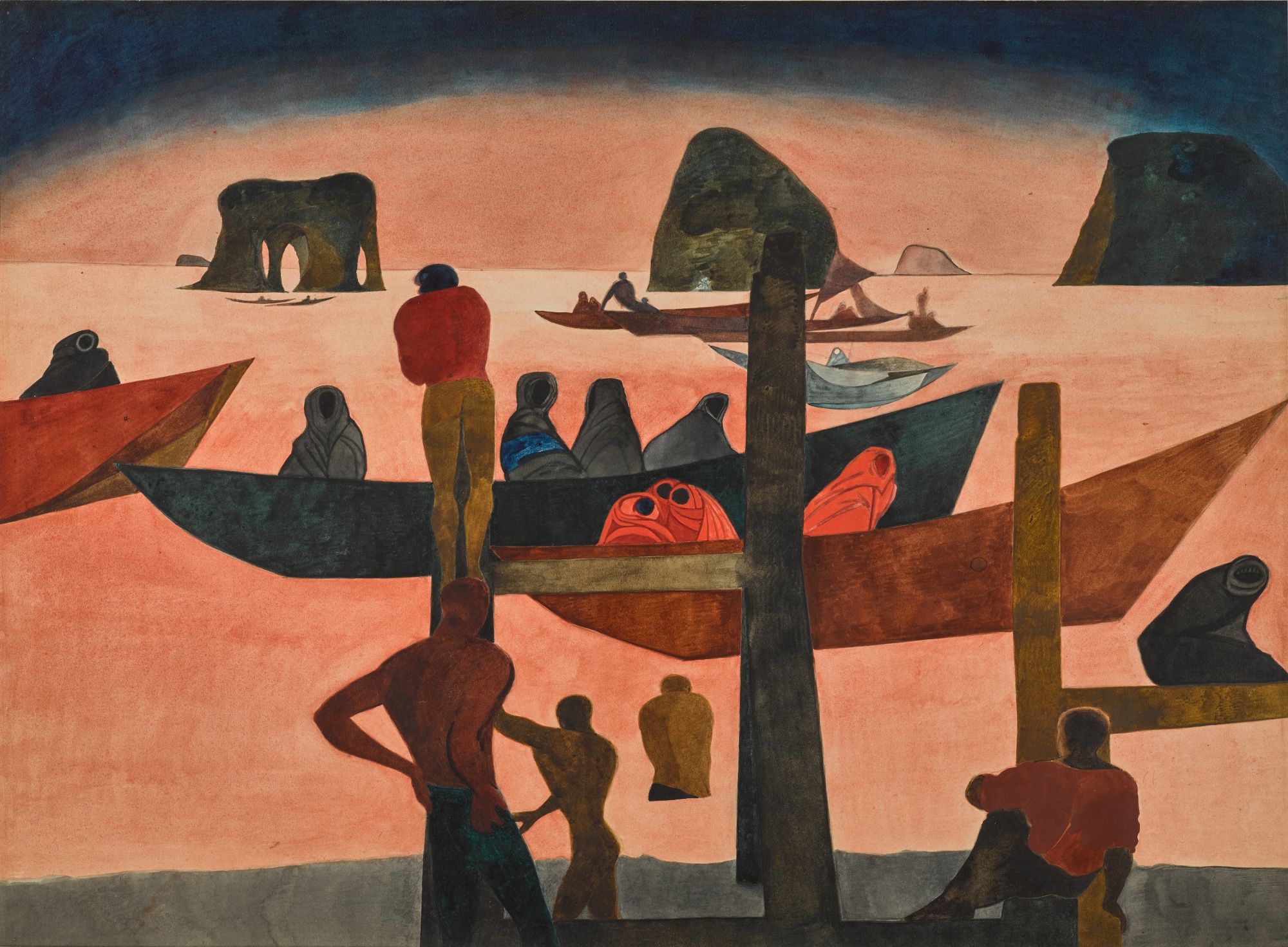
Boats and Rocks, 1952
The Fleet's Inn woodcuts from the late 1920s, for instance, carry the same satirical energy and compositional confidence as his large watercolours in a format that reflects his keen understanding of popular visual culture. Condition is paramount when considering works on paper, and provenance through established collections adds significant value, but even works from later periods such as the quietly beautiful Boats and Rocks of 1952 demonstrate the consistency of his vision and technical achievement. Burra occupies a fascinating position in the broader narrative of twentieth century British art. He is a near contemporary of Stanley Spencer and Paul Nash, and like them he absorbed the lessons of European modernism while remaining stubbornly, idiosyncratically British.
Yet his affinities cross the Atlantic as readily as they cross the Channel. His interest in American popular culture, jazz, and cinema connects him to artists as different as Stuart Davis and Thomas Hart Benton. His Surrealist sympathies link him to Salvador Dali and Max Ernst, though his wit is drier and his social observation sharper than either. Collectors drawn to the Camden Town painters or to the British Surrealists consistently find that Burra rewards extended looking in ways that few of his contemporaries can match.
Burra spent much of his adult life in Rye, the small Sussex town that also claimed Henry James, and died there in 1976. He never sought celebrity and gave few interviews, yet the body of work he left behind has only grown in stature with time. Museums including Tate, the Victoria and Albert, and the Arts Council Collection hold significant examples, and each new generation of curators seems to rediscover him with fresh enthusiasm. What endures is the sense of a completely original sensibility at work, one that transformed chronic physical vulnerability into a visual practice of exceptional vitality and courage.
To live with a Burra is to live with a window onto a world more richly observed and more honestly imagined than almost any other British artist of his era managed to provide.
Explore books about Edward Burra
Edward Burra: A Catalogue Raisonné
William Chappell
Edward Burra
Andrew Causey
Edward Burra: Paintings and Drawings
William Chappell
Edward Burra 1905-1976
Wieland Schmied
Edward Burra: Modern Painter
Charles Harrison