Edwaert Collier
Edwaert Collier: Master of Beautiful Illusions
Artist Spotlight · The Collection Editorial
Stand before one of Edwaert Collier's letter rack paintings and something remarkable happens. Your hand reaches forward before your mind catches up, convinced that the folded letters, the dangling ribbons, the curling manuscripts are genuinely pinned to a wooden board just inches from your nose. The deception is total, the craft breathtaking, and the philosophical weight considerable. This is the singular achievement of a Dutch Golden Age painter who deserves far greater recognition than the art world has traditionally afforded him, and whose work continues to astonish collectors and scholars alike whenever it surfaces in a gallery or at auction.
Edwaert Collier
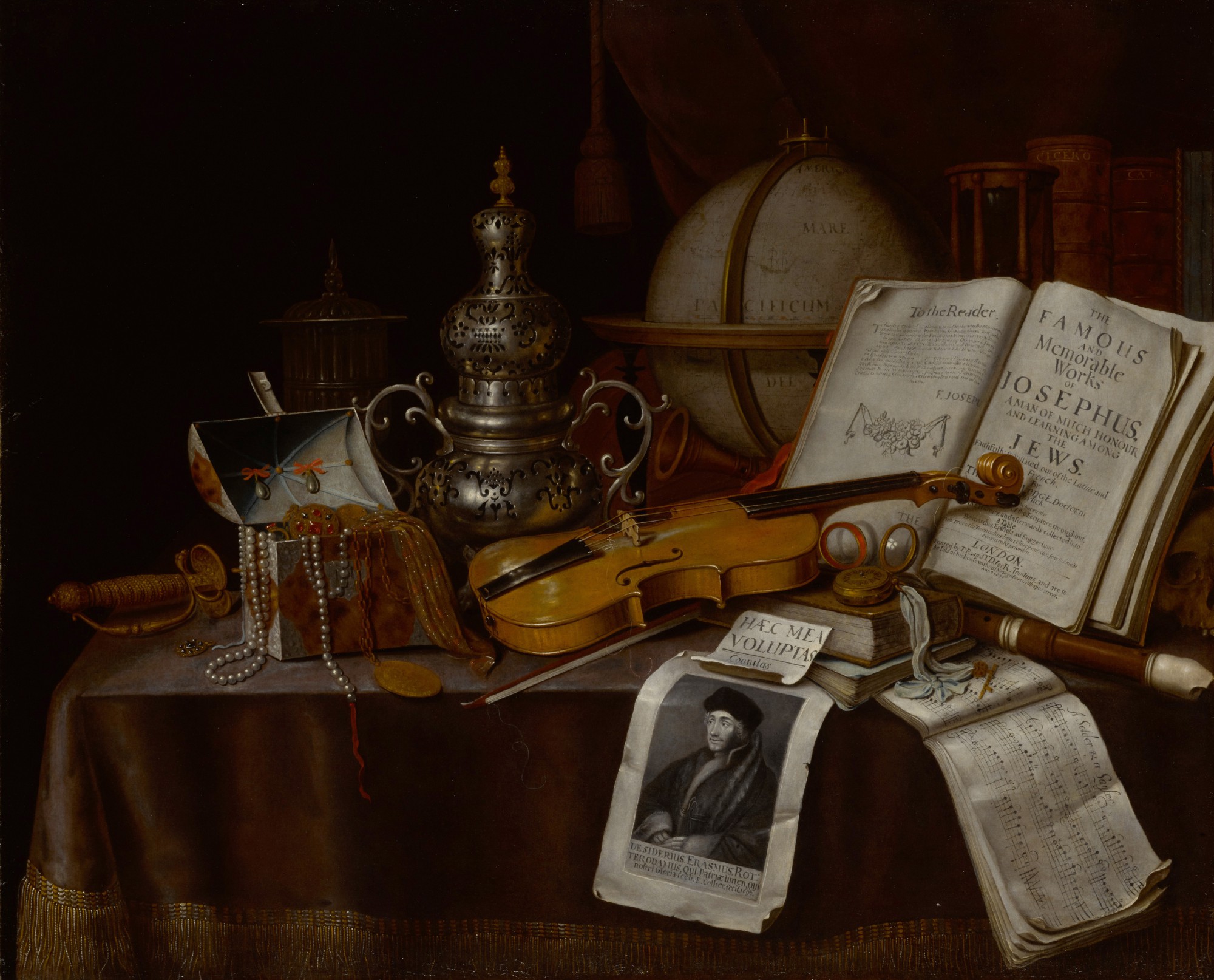
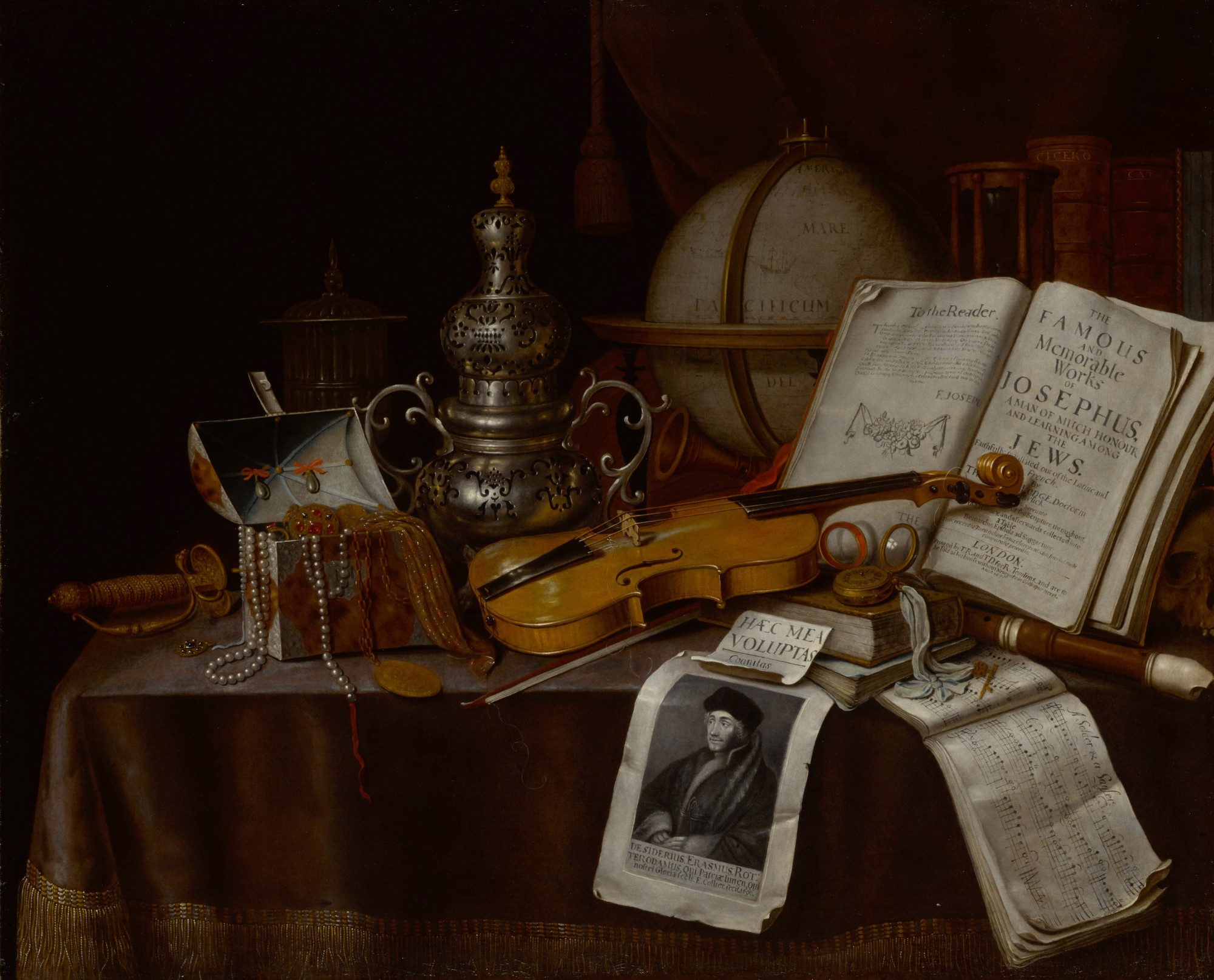
Vanitas still life with a violin, silver incense burner, globe, sword, box of jewelry, and manuscripts
Collier was born in Breda around 1642, a city in the southern Netherlands that sat at the crossroads of Spanish and Dutch cultural influence during one of the most turbulent and creatively fertile periods in European history. The Dutch Republic of the seventeenth century was a place intoxicated by commerce, learning, and the visible world, a society that had developed an appetite for painted objects so keen and so discriminating that it produced the most sophisticated still life tradition the Western world had ever seen. Collier came of age inside this tradition, absorbing its rigorous attention to surface and texture, its delight in the material world, and its persistent undercurrent of moral seriousness. Breda, though not Leiden or Amsterdam, offered proximity to the great centers of Dutch painting, and Collier made his way to Leiden, then as now a city defined by its university and its culture of humanist scholarship.
Leiden was the ideal crucible for the kind of painter Collier was becoming. The city's university, founded in 1575, had made it a European capital of learning, and its painters had responded by developing a particularly intellectually charged form of still life: the vanitas. Derived from the opening verse of Ecclesiastes, the vanitas tradition arranged objects of worldly beauty and human aspiration alongside symbols of mortality and impermanence. Skulls, snuffed candles, hourglasses, wilting flowers, and books whose pages would one day turn to dust all shared the canvas with jewels, instruments, and fine fabrics.
Edwaert Collier
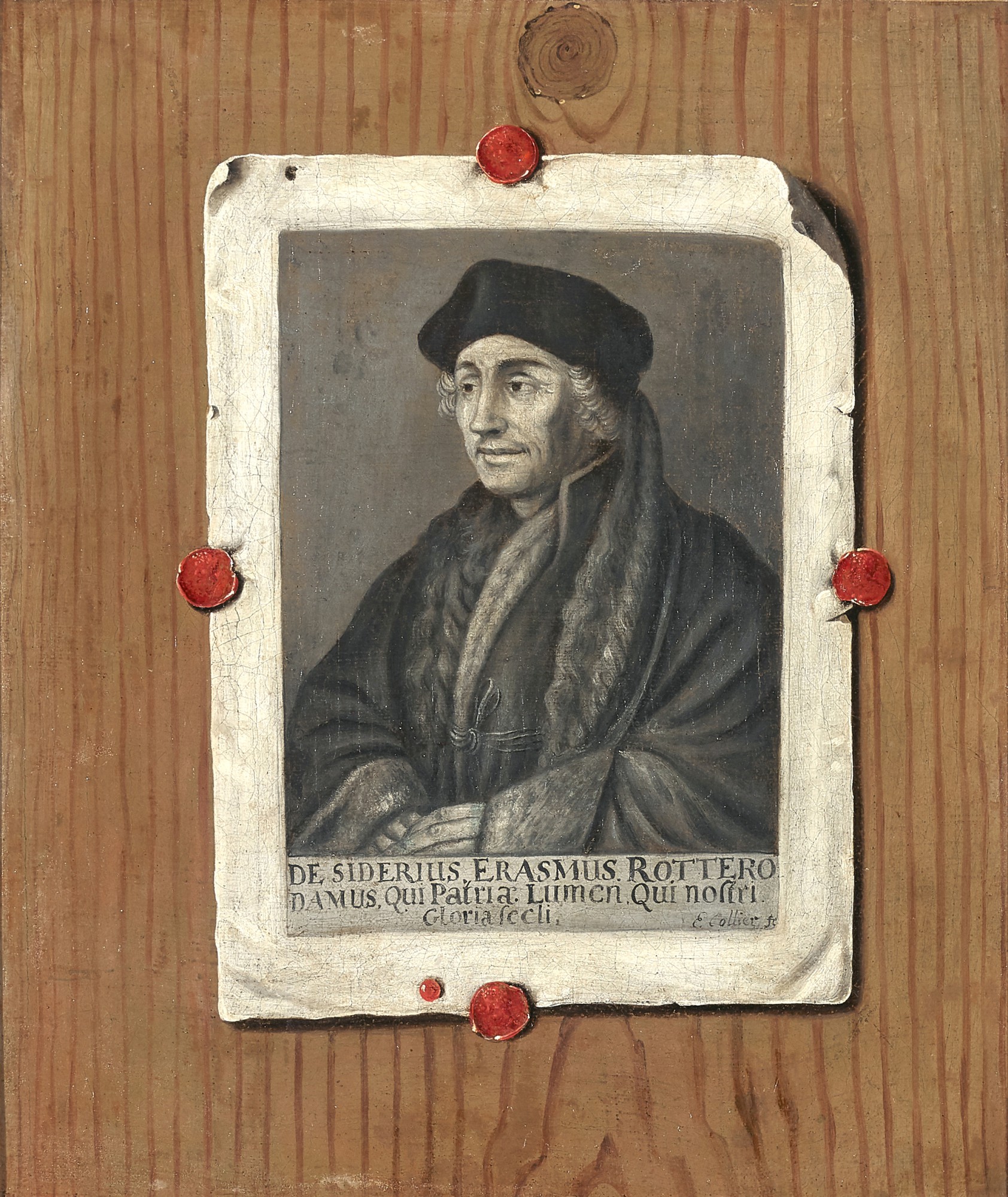
Trompe-l’œil With A Portrait Of Erasmus
Collier absorbed this tradition deeply, studying under or alongside painters working in the manner established by artists such as Pieter Claesz and Harmen Steenwijck, and he quickly demonstrated both a technical gift and a philosophical engagement that set him apart from mere craftsmen. What distinguished Collier's development as a painter was his twin mastery of two related but distinct genres. On one side stood the vanitas still life, elaborate and morally charged arrangements of objects rendered with an almost hallucinatory precision. On the other stood the trompe l'oeil, the genre whose very name, meaning to deceive the eye in French, announces its ambition.
Collier proved himself a supreme practitioner of both, and his most celebrated works slide fluidly between the two, using the deceptive techniques of trompe l'oeil to give vanitas objects a presence so vivid it borders on the uncanny. A skull that looks genuinely three dimensional, a violin whose strings seem to vibrate in the ambient light of the room: these effects deepen the moral resonance rather than merely showing off technique. The transience of life feels more urgent when the painted world seems so stubbornly, convincingly alive. Three works that appear among Collier's most celebrated productions give a clear sense of the range and ambition of his practice.
Edwaert Collier
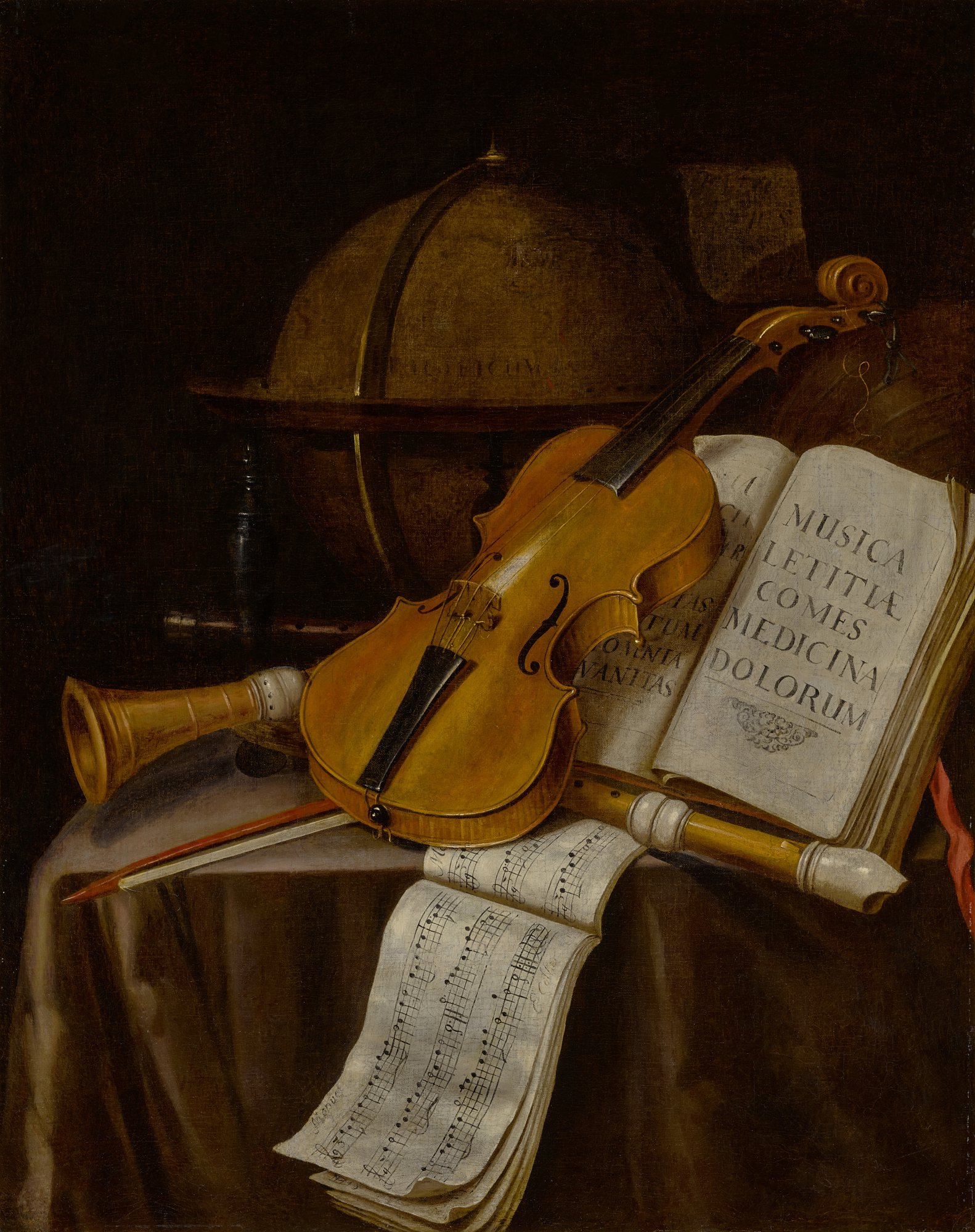
Vanitas still life with a violin, recorders, music manuscripts, and a globe
His vanitas compositions featuring a violin, a silver incense burner, a globe, a sword, a box of jewelry, and manuscripts represent his mature command of complex multi object arrangements, each element chosen to speak to the themes of worldly achievement, sensory pleasure, intellectual ambition, and inevitable dissolution. These are paintings that reward sustained looking: the globe gestures toward geographical conquest and the vastness of the known world, the musical instruments invoke sensory pleasure and the fleeting nature of sound, and the manuscripts honor learning even as they remind us that knowledge too is mortal. His Trompe l'oeil with a Portrait of Erasmus is a particularly layered work, placing the image of the great humanist scholar within an illusionistic frame of collected objects, a meditation on legacy, representation, and the limits of what art can preserve. Erasmus, whose own portrait was famously rendered by Holbein, here becomes part of a collecting culture that venerates and simultaneously mourns the great minds of the past.
Collier's decision to relocate to London in the later part of his career proved a shrewd and consequential move. England in the late seventeenth century was developing its own collecting culture, shaped by the tastes of aristocratic patrons who had encountered Dutch and Flemish painting during the years of the Commonwealth and were hungry for sophisticated Continental work. Collier found a receptive market for his letter rack paintings in particular, those extraordinary trompe l'oeil works in which sheets of paper, playing cards, printed images, and personal ephemera appear to be casually tucked behind ribbons stretched across a flat board. These works appealed to English patrons both for their virtuosic illusionism and for their intimate, personal character: a letter rack painting could be commissioned to include specific objects of personal significance, making each work uniquely resonant for its owner.
Collier worked in London until close to the end of his life in 1708, and this English chapter of his career produced some of his most inventive and charming work. For collectors approaching Collier today, several qualities repay attention. His works appear at major auction houses with some regularity, drawn from historic European and British collections, and they consistently attract serious bidding from collectors who recognize both his art historical significance and the sheer visual pleasure his paintings deliver. Condition is paramount with works of this period and this level of detail: the finest examples retain a luminosity and crispness that makes the trompe l'oeil effects fully legible.
Collectors drawn to other masters of Dutch still life and illusionistic painting will find natural companions to Collier's work in the paintings of Samuel van Hoogstraten, whose own letter rack paintings represent perhaps the closest parallel in ambition and technique, and in the broader Leiden tradition that includes Gerard Dou and the fijnschilder school of fine painters who prized microscopic precision above almost everything else. Collier's legacy is that of a painter who understood that illusion and meaning are not opposites but collaborators. His works do not merely show off what the painted surface can achieve; they use that achievement to make you feel, viscerally and immediately, the argument that all beautiful things pass. In an era when collectors and institutions are revisiting the full breadth of the Dutch Golden Age beyond the most canonical names, Collier stands as exactly the kind of discovery that rewards a curious and open minded approach to art history.
His paintings are rare enough to be genuinely exciting when they surface, technically accomplished enough to satisfy the most demanding eye, and philosophically rich enough to sustain a lifetime of looking. To collect Collier is to participate in a tradition of connoisseurship that stretches back to the very origins of the European collecting habit, and to bring into your home a painter who knew, better than almost anyone, exactly how much a beautiful surface can hold.
Explore books about Edwaert Collier
Edwaert Collier: Master of the Trompe-l'œil Still Life
Sam Segal
The Golden Age of Dutch Painting
Christopher Brown
A Prosperous Past: The Sumptuous Still Life in the Netherlands 1600-1700
William B. Jordan and Peter C. Sutton